Norway Receives Leopard 2A8 Tanks To Strengthen Land Forces
Norway’s Leopard 2A8 tanks have officially entered service, marking a major step in the country’s effort to modernize its armored capabilities and reinforce NATO’s northern flank.
The first deliveries come under a procurement program aimed at replacing older Leopard 2A4 variants, which have been in service for decades. The Leopard 2A8 represents the latest evolution of Germany’s widely deployed main battle tank platform, integrating enhanced survivability, firepower, and digital systems.
- Norway has received its first Leopard 2A8 main battle tanks as part of a broader modernization program.
- The acquisition is part of a deal signed with Germany to replace aging Leopard 2A4 tanks.
- Leopard 2A8 features upgraded protection, advanced sensors, and improved firepower for modern combat.
- The tanks are optimized for operations in Arctic and high-intensity conflict environments.
- Delivery supports NATO’s broader effort to strengthen land forces in Northern Europe.
This move reflects a broader trend across Europe, where nations are accelerating armored vehicle upgrades in response to evolving security dynamics and lessons drawn from recent conflicts.
A Modernized Platform For High-Intensity Warfare
The Leopard 2A8 tanks delivered to Norway incorporate several upgrades over previous variants. These include improved armor protection, active and passive defensive systems, and advanced targeting and sensor suites designed to operate in contested environments.
The platform retains the proven 120mm smoothbore cannon but benefits from enhanced fire control systems, allowing for greater accuracy and faster target engagement. This is particularly relevant in modern battlefields where speed, precision, and networked operations are critical.
In addition, the Leopard 2A8 is designed with digital integration in mind, enabling better coordination with other units and systems across the battlefield. This aligns with NATO’s push toward multi-domain operations, where land forces must operate seamlessly with air, cyber, and space assets.
Arctic Operations Drive Capability Requirements
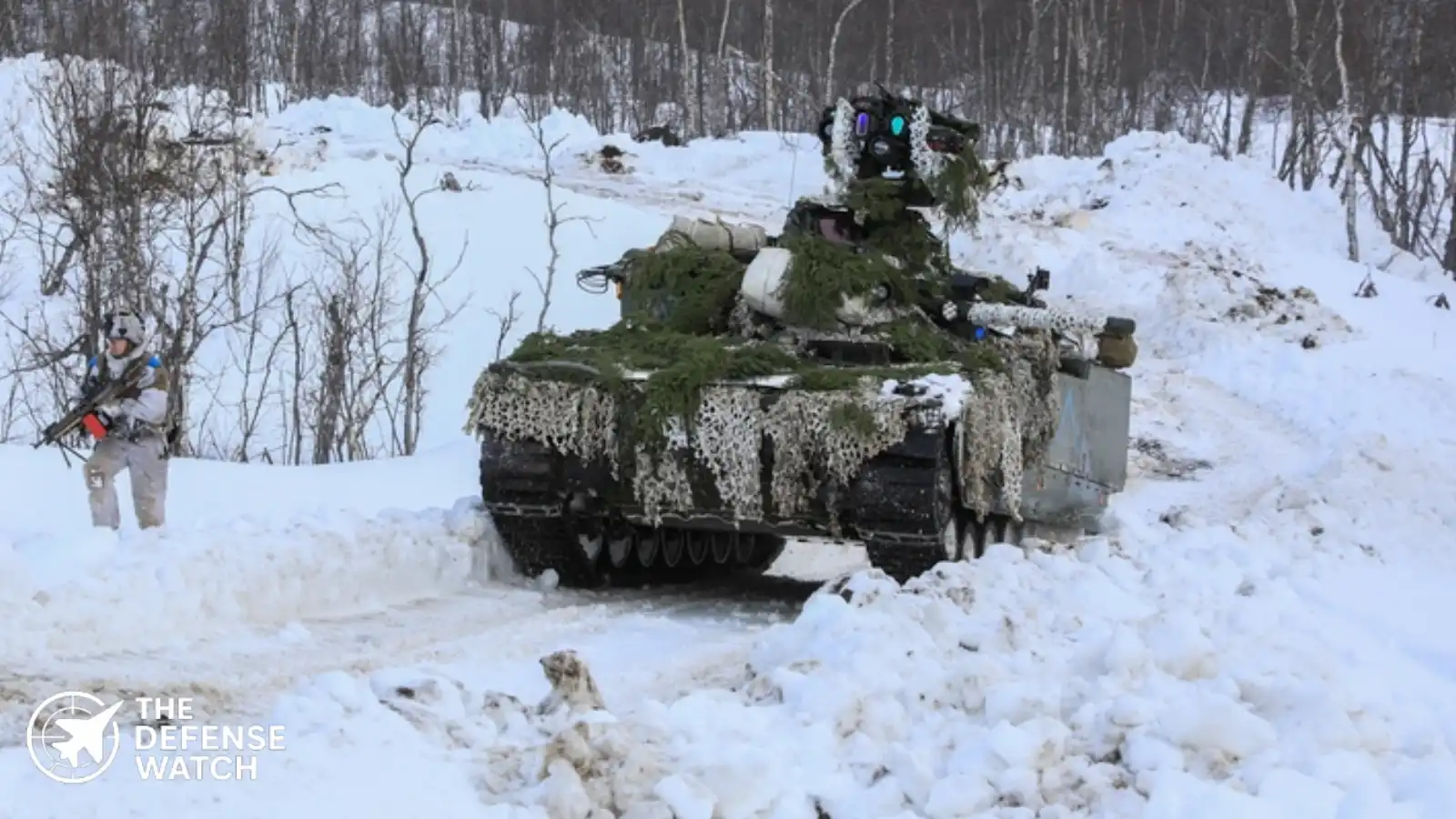
One of the defining aspects of Norway’s defense posture is its focus on Arctic and sub-Arctic operations. The Leopard 2A8 tanks are expected to play a central role in this environment, where extreme weather, rugged terrain, and limited infrastructure pose unique challenges.

Modern armored platforms must be capable of operating in freezing temperatures while maintaining mobility and reliability. Enhanced power systems, thermal management, and crew survivability features are essential in such conditions.
From an operational perspective, Norway’s investment underscores the importance of maintaining credible land combat capabilities in the High North. The region has gained increasing strategic relevance due to its proximity to Russia and its role in NATO’s collective defense planning.
Strategic Implications For NATO’s Northern Flank
The introduction of Leopard 2A8 tanks into Norwegian service has implications beyond national defense. It contributes directly to NATO’s deterrence posture in Northern Europe, where allied forces are working to strengthen readiness and interoperability.
Standardizing on advanced platforms like the Leopard 2A8 also enhances cooperation with other European armies operating similar systems. This improves logistics, training, and joint operational effectiveness.
Defense analysts note that armored forces remain a key component of deterrence, particularly in scenarios involving large-scale conventional conflict. While modern warfare increasingly incorporates drones and precision weapons, main battle tanks continue to provide critical capabilities in mobility, protection, and direct firepower.
Industrial And Procurement Context
Norway’s Leopard 2A8 acquisition is part of a broader European defense industrial effort led by German manufacturers. The program highlights ongoing collaboration between NATO allies to modernize equipment and maintain technological parity with potential adversaries.
The procurement also reflects a shift toward long-term capability planning. Rather than incremental upgrades, countries are opting for next-generation platforms that can remain operationally relevant for decades.
This approach is driven in part by the increasing complexity of modern threats, which require integrated solutions combining armor, sensors, and digital systems.
Operational Outlook
As deliveries continue, the Leopard 2A8 tanks will gradually replace older platforms within Norway’s armored units. Full operational capability is expected to be achieved over the coming years as crews complete training and integration processes.
The deployment of these tanks is likely to enhance Norway’s ability to conduct both national defense and allied operations. It also reinforces the country’s role as a key contributor to NATO’s northern security architecture.
From a broader perspective, the move signals a continued emphasis on conventional military strength in Europe, even as new domains of warfare emerge.
Ukraine Drone And Air Defense Priorities Drive Norway Partnership
Ukraine drone and air defense priorities are increasingly shaping Western military assistance, with Norway emerging as a key partner in addressing Kyiv’s most urgent battlefield needs.
Ukrainian and Norwegian officials have agreed to focus support on expanding drone capabilities and reinforcing air defense systems, reflecting the evolving nature of the conflict.
The agreement underscores a clear operational reality. Russia’s continued use of long range missiles, glide bombs, and one way attack drones has placed sustained pressure on Ukraine’s defensive network. Strengthening both drone capacity and air defense is now central to maintaining battlefield resilience.
- Ukraine and Norway have aligned priorities on drones and air defense support.
- Focus includes scaling drone production and strengthening layered air defense systems.
- The move comes amid sustained Russian missile and drone strikes across Ukraine.
- Norway continues to play a key role in European military assistance to Kyiv.
- The partnership reflects a broader shift toward counter-drone warfare and air defense resilience.
Strategic Shift Toward Drone-Centric Warfare
The emphasis on Ukraine drone and air defense priorities highlights a broader transformation in modern warfare. Drones are no longer auxiliary tools. They are central to reconnaissance, targeting, and strike operations.
Ukraine has demonstrated this shift through extensive use of unmanned systems across the front line. From first person view drones to longer range strike platforms, these systems have allowed Ukrainian forces to offset conventional disadvantages.
Norway’s support aligns with this trend. By prioritizing drone production and procurement, Oslo is contributing to a capability that offers relatively low cost, scalable battlefield impact. This is particularly important as Ukraine faces constraints in manpower and high end munitions.
At the same time, the focus on air defense reflects the need to protect critical infrastructure and urban centers. Russian aerial attacks continue to target energy facilities, logistics hubs, and population centers. Without sustained air defense coverage, Ukraine’s operational and economic stability remains at risk.
Air Defense Remains A Critical Bottleneck
While drones offer offensive and tactical advantages, air defense remains a limiting factor in Ukraine’s ability to sustain operations.
Ukraine’s existing systems, a mix of Soviet era platforms and Western supplied systems, are under constant strain. Interceptor shortages and the need for layered coverage have created gaps that adversary forces seek to exploit.
Norway’s involvement is significant in this context. The country has previously contributed to air defense initiatives and funding mechanisms supporting Ukraine. By aligning directly with Kyiv on Ukraine drone and air defense priorities, Norway is helping address one of the most pressing capability gaps.
This approach also reflects a shift among European allies. Rather than broad, generalized aid packages, support is becoming more targeted and capability driven. Air defense and drones now rank at the top of that list.
Operational Impact On The Battlefield
The combined focus on drones and air defense has direct implications for battlefield dynamics.
Improved drone capabilities enhance Ukraine’s ability to conduct surveillance, disrupt supply lines, and strike high value targets. This can slow enemy advances and increase operational costs for opposing forces.
Meanwhile, stronger air defense reduces the effectiveness of missile and drone attacks. This not only protects civilian infrastructure but also preserves military assets and logistics networks.
The integration of these two elements creates a more resilient defense posture. It allows Ukraine to absorb and respond to aerial threats while maintaining offensive flexibility through unmanned systems.
Norway’s Expanding Role In European Security
Norway’s support for Ukraine reflects its broader role within European security frameworks. As a NATO member with significant financial resources and defense expertise, Oslo has positioned itself as a consistent contributor to Ukraine’s defense effort.
The focus on Ukraine drone and air defense priorities also aligns with NATO’s increasing emphasis on counter drone capabilities and integrated air and missile defense. Lessons from Ukraine are already influencing alliance planning and procurement strategies.
Norway’s approach demonstrates how smaller but capable allies can deliver targeted impact by focusing on specific operational needs rather than broad commitments.
Analysis: Why This Shift Matters Now
The alignment on Ukraine drone and air defense priorities comes at a critical phase in the conflict.
First, the intensity of Russian aerial operations shows no sign of decreasing. Continued strikes are designed to degrade Ukraine’s infrastructure and morale. Without improved defenses, these attacks could have cumulative strategic effects.
Second, the growing importance of drones signals a long term shift in warfare. Investments made now will shape Ukraine’s capabilities well beyond the current conflict.
Third, Western stockpiles of traditional munitions remain under pressure. Drones offer a cost effective alternative that can be produced and deployed at scale.
Finally, the move reflects a maturing approach to military aid. Rather than reactive support, allies are increasingly aligning with Ukraine’s operational priorities, improving efficiency and effectiveness.
Outlook
The focus on Ukraine drone and air defense priorities is likely to deepen as the conflict continues. Additional partners may adopt similar approaches, concentrating resources on high impact capabilities.
For Ukraine, the challenge will be integrating these systems into a cohesive defense architecture while sustaining production and supply chains.
For allies like Norway, the task is to maintain consistent support while adapting to evolving battlefield requirements.
Norway To Get Arctic Version Of K239 Long‑Range Missile System
Norway will be the first nation to receive the Arctic version of the K239 long‑range missile system from South Korea’s Hanwha Aerospace, according to company and Norwegian defense sources. This marks a major step in Oslo’s effort to modernize its long‑range fires under the NorweÂgian Defence Materiel Agency long‑range precision program.
Signed in Oslo on January 30, 2026, Hanwha Aerospace’s contract with the Norwegian Defence Materiel Agency covers 16 K239 Chunmoo mobile launchers, precision‑guided missiles and integrated logistics support. The deal is valued at about 922 million US dollars as part of Norway’s broader long‑range fires moderniÂzation investment.
New Capability For Extreme Cold Environments
The Arctic version of the K239 long‑range missile system has been adapted for reliable performance in severe cold and snow typical of Northern Europe. Hanwha Aerospace says hardware modifications ensure operability in low temperatures and difficult winter terrain. The system also integrates with Norway’s existing command and fire control systems.
In Norwegian service, the K239 system will provide high‑mobility precision strike capability at extended ranges, supplementing current ground artillery and enhancing deterrence in the Nordic region. Deliveries are expected to begin in 2028 with the establishment of a dedicated rocket artillery battalion.
Proven Platform With Growing NATO Footprint
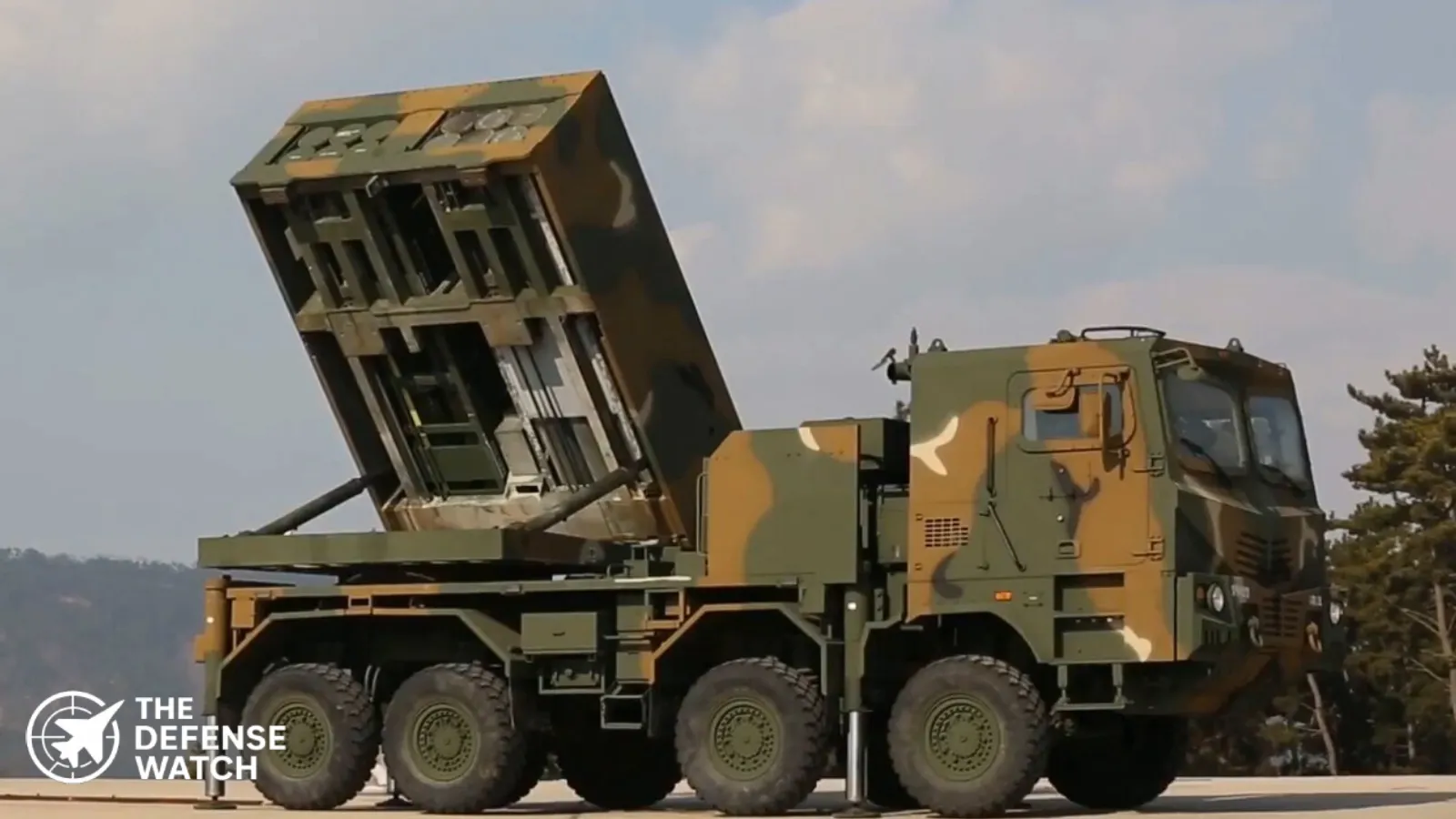
The K239 long‑range missile system, also known as the Chunmoo, is a modular, truck‑mounted multiple rocket launcher capable of firing guided rockets and tactical missiles at significant ranges. It has been selected previously by Poland, Estonia and other allied users, giving NATO a growing community of operators.
Norway’s selection process built on nearly a decade of cooperation with Hanwha Aerospace, including earlier deliveries of K9 VIDAR self‑propelled howitzers and K10 ammunition resupply vehicles. This sustained partnership helped reinforce confidence in Hanwha’s artillery systems and logistics performance.
Local Integration And Interoperability
Officials say the Arctic K239 version for Norway includes integration with local fire control and command systems, similar to earlier adaptations seen in Polish and Middle Eastern variants. While Hanwha has not published full technical specs, the inclusion of an electric drive system from the next‑generation HPRS launcher demonstrates investment in modular, lightweight design elements. (User source reporting)
Interoperability with NATO systems remains a key requirement for Oslo, ensuring that the K239 can operate alongside allied sensors and shooters across joint operations.
Strategic Outlook
With Arctic security dynamics shifting and Russia’s northern forces drawing strategic scrutiny, Norway’s upgraded missile capability adds a new dimension to NATO’s northern defenses. The acquisition reflects Oslo’s commitment to layered deterrence and long‑range fires support across extreme climates.
The expanded European user base for the K239 long‑range missile system is expected to improve logistics cooperation, align munitions supply chains and strengthen collective artillery capabilities among allied partners.
UK Commandos Sharpen Arctic Warfare Skills
Royal Marines have significantly ramped up Arctic operations in Northern Norway as approximately 1,500 UK commandos prepare for Exercise Cold Response 2026, the largest military exercise planned in Norway this year. The deployment represents a major expansion of UK commitment to NATO’s northern flank following the December 2025 Lunna House Agreement between the United Kingdom and Norway.
The two-month training period focuses on extreme cold weather warfare skills, specialized Arctic tactics, and integration of advanced technology including drones and snowmobiles. The deployment underscores UK commitment to Arctic security amid increased Russian naval activity in the North Atlantic region.
Lunna House Agreement: Foundation for Enhanced Cooperation
The current deployment stems from the Lunna House Agreement signed December 4, 2025, by UK Defense Secretary John Healey and Norwegian Defense Minister Tore O. Sandvik. This historic defense pact establishes year-round Royal Marine operations in Norway, expanding beyond traditional winter-only deployments.

Named after the Shetland Islands headquarters used by Norwegian resistance forces during World War II, the agreement creates deeper military integration between the two NATO founding members. The pact addresses growing security concerns over a 30% increase in Russian vessels detected in UK waters over the past two years, according to UK government data.
Key provisions include development of an interchangeable fleet of at least 13 Type 26 anti-submarine warfare frigates, participation in Norwegian programs for uncrewed mine hunting and undersea warfare systems, and adoption of Norwegian naval strike missiles by the Royal Navy. The £10 billion warship deal supports over 4,000 British jobs while strengthening NATO capabilities in the strategically vital Greenland-Iceland-UK gap.
Training Operations: Preparing for Arctic Combat
UK Commando Force operations are centered at Camp Viking, established in 2023 near Øverbygd, approximately 40 miles south of Tromsø. The facility serves as a permanent operations hub for British forces training in Arctic conditions.
“The UK Commando Force is stepping up readiness to war-fight alongside our allies in the High North,” stated Lieutenant Colonel Chris Armstrong, Commanding Officer of 30 Commando Information Exploitation Group. “As NATO’s cold-weather specialists, we are ruthlessly focussed on mission rehearsals with our closest partners. Fusing intelligence, bold commando tactics, and cutting-edge technology – we remain poised for operations.”
The current training regimen includes operations across Norway’s challenging terrain of coastlines, mountains, and fjords. Royal Marines are working alongside Norwegian forces and Dutch marines to develop interoperability and refine joint operating procedures in sub-zero conditions.

Commando Helicopter Force has also deployed Wildcat and Merlin helicopters from Yeovilton to Royal Norwegian Air Force Base Bardufoss as part of Operation Clockwork, an annual Arctic helicopter training exercise. Located approximately 20 miles west of Camp Viking, Bardufoss provides critical aviation support for Arctic operations.
Exercise Cold Response 2026: NATO’s Arctic Showcase
The Royal Marines will participate in Exercise Cold Response 2026, scheduled for March 9-19, 2026. The Norwegian-led exercise will involve approximately 25,000 personnel from 14 nations including the United States, Canada, Germany, France, Italy, the Netherlands, Spain, Denmark, Belgium, Sweden, Finland, and Turkey.
According to the Norwegian Armed Forces, Cold Response 2026 serves as a multi-domain operation coordinating military effects across land, maritime, air, cyber, and space domains. The exercise aims to demonstrate NATO cohesion, strengthen allied defense capabilities, and reassure populations by showcasing the alliance’s ability to defend its northern flank.
The United States is deploying approximately 4,000 personnel, including 3,000 Marines from II Marine Expeditionary Force based at Camp Lejeune, North Carolina. U.S. participation includes P-8 Poseidon maritime patrol aircraft, F-35A Lightning II fighters, and special operations forces.
Exercise activities will occur primarily in Nordland, Troms, and western Finnmark in Norway, with additional operations extending into northern Finland. The drill emphasizes rapid reinforcement capabilities, with forces training to quickly deploy across the Atlantic and integrate with Norwegian defense plans.
Strategic Context: Countering Russian Arctic Activity
The enhanced UK-Norway military cooperation comes amid growing concerns over Russian military presence in the Arctic region. NATO officials have repeatedly expressed concern about increased Russian submarine activity and potential threats to critical undersea infrastructure including communication cables and energy pipelines.
In October 2024, Admiral Rob Bauer, Chairman of the NATO Military Committee, stated: “NATO will defend its interests in the Arctic. We have a responsibility to protect all our Allies, including the seven here in this region.”
The Royal Marines deployment aligns with broader NATO efforts to strengthen deterrence and defense capabilities in the High North. Finland and Sweden’s accession to NATO in 2023 significantly enhanced the alliance’s Arctic posture by adding two nations with extensive cold-weather military expertise.
Norway’s strategic location along Russia’s northwestern border and control of critical maritime chokepoints makes the country essential to NATO’s northern defense architecture. The Barents Sea region has seen increased Russian naval activity, including submarine patrols and surface vessel operations.
Technological Modernization: Advanced Capabilities
The UK Commando Force has undergone six years of modernization incorporating artificial intelligence-enabled targeting systems, multi-domain fire capabilities, and uncrewed surface vessels. These technological enhancements aim to provide NATO with qualitative advantages in the Arctic theater.

The Lunna House Agreement accelerates adoption of autonomous systems for Arctic operations. Both nations will lead NATO efforts to integrate uncrewed platforms for mine hunting, undersea warfare, and surface patrol missions. Norwegian offshore support vessels will serve as motherships for autonomous systems, extending operational reach in harsh Arctic waters.
Royal Marines are also testing advanced cold-weather equipment including all-terrain vehicles, specialized communication systems, and improved survival gear designed for extended operations in sub-zero temperatures. The training incorporates lessons learned from five decades of Arctic operations, building institutional knowledge critical for success in extreme environments.
Allied Integration: Multinational Arctic Cooperation
Beyond UK-Norway bilateral cooperation, Exercise Cold Response 2026 emphasizes broader allied integration. Dutch marines are training alongside British and Norwegian forces, reflecting the Netherlands’ commitment to Arctic security despite its southern European geography.
The exercise provides critical opportunities for forces from warmer climates to gain Arctic experience. Italian, Spanish, and Turkish forces will operate in conditions vastly different from their home territories, building alliance-wide cold-weather competencies.
Major General Daniel L. Shipley, Commander of U.S. Marine Corps Forces Europe and Africa, emphasized the exercise’s importance: “Exercises like Cold Response 26 are crucial for ensuring Norway’s readiness and resilience, as well as demonstrating burden sharing across the Alliance. This exercise isn’t just about preparing for today’s threats; it’s about building the capabilities and strengthening the capacity necessary to deter future aggression and safeguard our shared interests.”
Historical Context: Decades of Arctic Partnership
UK-Norway Arctic military cooperation dates back over 50 years. British Royal Marines have conducted annual winter training in Norway since the early Cold War, building deep institutional relationships with Norwegian forces.
The relationship gained renewed urgency following Russia’s 2014 invasion of Ukraine and subsequent 2022 full-scale invasion. These events refocused NATO attention on territorial defense and rapid reinforcement of frontline allies.
The Lunna House Agreement represents the most significant expansion of UK-Norway military cooperation since the early Cold War period. By establishing year-round Royal Marine presence, the agreement ensures British forces maintain continuous readiness for Arctic operations rather than requiring annual reset periods.
Future Outlook: Sustained Arctic Commitment
The current Royal Marines deployment establishes a template for sustained UK presence in Norway’s Arctic regions. Beyond Exercise Cold Response 2026, British forces will continue year-round training across all seasons, developing capabilities for operations in variable Arctic conditions.
Norwegian Defense Minister Tore O. Sandvik emphasized the significance of expanded British presence: “Royal Marines have a long tradition of practicing winter operations with naval and amphibious forces in Inner Troms, Northern Norway. In the future, they will train in Norway during the other seasons as well. By being more present in Norway, the Royal Marines will be more closely integrated into the defense of Norway, and they will be able to come to our aid quickly if a crisis or war situation should arise.”
The Type 26 frigate program will further strengthen bilateral naval cooperation over the coming decade as vessels enter service. Shared logistics, maintenance facilities, and crew exchange programs will create unprecedented integration between the Royal Navy and Royal Norwegian Navy.
Analysis: Implications for NATO Arctic Strategy
The Royal Marines deployment and Exercise Cold Response 2026 signal NATO’s commitment to Arctic security amid evolving geopolitical dynamics. The alliance faces multiple challenges including climate change opening new maritime routes, increased commercial activity, and competition for Arctic resources.
Russia maintains significant military infrastructure in its Arctic regions including nuclear submarine bases, airfields, and coastal defense systems. Moscow’s Arctic capabilities present challenges for NATO maritime operations and require sustained allied presence to ensure freedom of navigation and credible deterrence.
The UK-Norway partnership model may serve as a template for other bilateral defense arrangements within NATO. By establishing deep integration at the national level, allies can achieve operational synergies beyond what alliance-wide structures alone provide.
Conclusion
Royal Marines Arctic training ahead of Exercise Cold Response 2026 demonstrates UK commitment to NATO’s northern flank and partnership with Norway. The deployment, enabled by the Lunna House Agreement, establishes year-round British presence in the High North and enhances alliance capabilities for Arctic operations.
As 25,000 NATO personnel prepare for the March exercise, the training underscores allied unity in defending European security. For the 1,500 Royal Marines currently operating in Norway’s extreme conditions, the deployment represents both continuation of a decades-long partnership and adaptation to evolving strategic challenges in one of the world’s most demanding operational environments.
Norway Acquires Advanced Korean Rocket Artillery in Major Defense Deal
The Norwegian Defence Materiel Agency has awarded Hanwha Aerospace a $922 million contract to supply the Chunmoo multiple rocket launcher system to Norwegian Armed Forces, marking a significant expansion of Nordic artillery capabilities and South Korea’s growing defense presence in Europe.
Signed in Oslo on January 30, 2026, the contract includes delivery of 16 Chunmoo launch vehicles, a precision-guided missile package, and comprehensive Integrated Logistics Support. The agreement represents Hanwha Aerospace’s first major defense contract of 2026 and continues nearly a decade of defense cooperation between South Korea and Norway.
Norwegian Defence Materiel Agency Director General Gro Jære and Hanwha Aerospace President and CEO Jae-il Son formalized the agreement in the presence of senior Korean and Norwegian officials, including Republic of Korea Chief of Staff to the President Hoon-sik Kang and Norwegian State Secretary Marte Gerhardsen.
Strategic Expansion of Nordic Artillery Capabilities
The Chunmoo multiple rocket launcher system acquisition enhances Norwegian Armed Forces’ long-range precision strike capabilities with technology specifically optimized for Arctic operations. The system has been engineered to maintain reliability in extreme low temperatures and challenging snowy terrain characteristic of Norway’s northern regions.
According to Hanwha Aerospace, the Chunmoo system is designed for full interoperability with Norway’s existing defense infrastructure and fire control systems. This integration capability builds upon the established framework created through Norway’s previous acquisition of 52 K9 VIDAR self-propelled howitzers and 14 K10 Ammunition Resupply Vehicles, delivered between 2017 and 2024.
The Norwegian contract forms part of a broader $2 billion artillery modernization program, with the Chunmoo system representing the initial major procurement phase. The precision-guided missile package included in the agreement provides Norwegian forces with enhanced standoff engagement capabilities against high-value targets.
Growing European Adoption of Korean Defense Systems
Norway becomes the fourth international customer for the Chunmoo multiple rocket launcher system, joining Poland, Estonia, and an undisclosed Middle Eastern nation alongside the Republic of Korea. This expanding user base creates opportunities for enhanced interoperability and shared logistics support among operating nations.
Poland previously committed to local production of Chunmoo missiles through a December 2024 contract, while Estonia awarded Hanwha Aerospace a €250 million contract for Chunmoo systems in December 2025. The rapid succession of European contracts demonstrates growing confidence in Korean defense technology among NATO member states.
“I believe Norway’s selection of the Chunmoo system is a result of the trust built up through the supply of K9 SPH,” stated Jae-il Son, President and CEO of Hanwha Aerospace. We remain committed to contributing to the long-term security of the Nordic region through close cooperation with Norway and further developing our role as a strategic security partner.
Technical Specifications and Operational Advantages
The Chunmoo multiple rocket launcher system offers Norwegian forces multiple caliber options and extended engagement ranges compared to legacy artillery systems. The platform’s modular design allows deployment of various munition types, including precision-guided rockets with ranges exceeding 80 kilometers.
Key operational advantages include rapid deployment capabilities, shoot-and-scoot mobility to avoid counter-battery fire, and compatibility with existing NATO communications architecture. The Arctic-optimized variant supplied to Norway incorporates specialized components to ensure reliable operation in temperatures below minus 40 degrees Celsius.
The Integrated Logistics Support package encompasses spare parts provisioning, technical documentation, training programs for Norwegian crews and maintenance personnel, and ongoing technical support throughout the system’s operational lifecycle. Hanwha Aerospace has committed to establishing local support infrastructure within Norway.
Implications for Nordic Defense Posture
The Chunmoo acquisition strengthens Norway’s position within NATO’s northern flank, providing enhanced territorial defense and deterrence capabilities. The system’s precision-guided munitions reduce collateral damage risks while improving effectiveness against dispersed targets across Norway’s extensive coastal and inland territories.
Norwegian Armed Forces Chief of Army Major General Lars Lervik attended the contract signing, underscoring the Norwegian military’s prioritization of modern artillery systems. The acquisition aligns with NATO’s emphasis on long-range precision fires and territorial defense capabilities following Russia’s 2022 invasion of Ukraine.
Defense analysts note that Norway’s selection of the Chunmoo system reflects broader European trends toward diversification of defense suppliers beyond traditional Western manufacturers. South Korean defense companies have capitalized on competitive pricing, proven performance, and willingness to support technology transfer and local production arrangements.
Industrial Cooperation and Local Partnership
Hanwha Aerospace announced plans to expand cooperation with Norwegian defense industry partners, including potential joint development initiatives and local testing programs. This approach mirrors successful partnerships established in Poland, where Hanwha operates production facilities and collaborates with local defense contractors.
The company previously partnered with Akkodis Nordics in October 2025 to develop specialized Chunmoo simulators tailored for Norwegian Armed Forces training requirements. Such collaborations demonstrate Hanwha’s strategy of building sustainable long-term relationships with European partners rather than pursuing purely transactional sales.
Norwegian defense industry representatives have indicated interest in participating in maintenance operations, component manufacturing, and potential future upgrade programs for the Chunmoo system. These arrangements could generate economic benefits for Norway while ensuring operational sovereignty over critical defense systems.
Delivery Timeline and Operational Integration
Hanwha Aerospace has committed to delivering all 16 Chunmoo launchers and associated equipment according to schedules aligned with Norwegian Armed Forces modernization timelines. Based on the company’s track record with the K9 VIDAR program, deliveries are expected to meet or exceed contractual requirements.
Norwegian forces will begin receiving Chunmoo systems following completion of crew training programs and preparation of support infrastructure. The Norwegian Defence Materiel Agency will oversee integration of the new rocket launchers with existing command and control systems, ensuring seamless operational employment alongside other artillery assets.
The precision-guided missile package will provide Norwegian forces immediate operational capabilities upon system delivery, with potential for future munition upgrades as technology advances. Hanwha Aerospace has indicated openness to developing additional munition variants based on Norwegian operational requirements.
Global Context and Defense Export Trends
The Norwegian contract reinforces South Korea’s position as a major global defense exporter, with Korean defense companies securing billions of dollars in international contracts since 2022. This export success stems from competitive pricing, proven combat-tested systems, rapid delivery capabilities, and flexible partnership arrangements.
Hanwha Aerospace competes directly with established Western defense manufacturers including Lockheed Martin, BAE Systems, and Rheinmetall in the European market. The company’s willingness to support local production and technology transfer has proven attractive to European nations seeking to develop indigenous defense industrial capabilities.
Recent geopolitical developments, including increased defense spending among European NATO members and supply chain concerns regarding traditional defense suppliers, have created opportunities for South Korean manufacturers. Norway’s Chunmoo acquisition exemplifies this trend toward diversified defense procurement strategies.
Future Prospects and Program Evolution
Norwegian officials have indicated that the Chunmoo acquisition may expand beyond the initial 16 launchers depending on operational experience and evolving security requirements. The $2 billion overall artillery modernization budget suggests potential for additional procurement phases or capability enhancements.
Hanwha Aerospace continues developing advanced munitions for the Chunmoo system, including extended-range variants, loitering munitions, and enhanced precision-guidance packages. Norwegian forces may benefit from these developments through future upgrade programs or additional procurement.
The success of the Norwegian contract positions Hanwha Aerospace for potential additional European sales, with several NATO members currently evaluating rocket artillery modernization options. The company’s growing European customer base and established support infrastructure provide competitive advantages for future competitions.
Norway Approves K239 Chunmoo MLRS for Long Range Strike Capability
Norway has approved a $1.9 billion acquisition of the K239 Chunmoo multiple launch rocket system as part of its effort to modernize long range fires and strengthen NATO deterrence. The decision marks one of Oslo’s largest recent artillery investments and expands South Korea’s growing footprint in the European defense market.
The deal, reported by Army Recognition, reflects Norway’s focus on rapid strike, survivability, and interoperability as regional security pressures increase in Northern Europe. The K239 Chunmoo will replace aging rocket artillery assets and provide extended range precision fires for the Norwegian Army.
Strengthening Norway’s Long Range Fires
The K239 Chunmoo is a tracked multiple launch rocket system developed by Hanwha Aerospace for the Republic of Korea Armed Forces. It is designed to deliver high volume and precision fires at extended ranges while operating in harsh climates, a key requirement for Norwegian terrain and Arctic conditions.
Under the approved program, Norway will procure launch vehicles, ammunition, support equipment, and related logistics and training packages. While detailed delivery schedules have not been publicly disclosed, the acquisition aligns with Norway’s broader force modernization roadmap through the late 2020s.
According to the reporting, the system will enhance Norway’s ability to conduct deep fires against high value targets, improve battlefield responsiveness, and support joint operations within NATO frameworks.
Why Norway Selected the K239 Chunmoo
Norway’s choice of the K239 Chunmoo reflects several operational and strategic factors. The system offers modular launch pods capable of firing different rocket calibers, giving commanders flexibility across mission sets. It can deploy guided rockets with ranges exceeding 80 kilometers, and in some configurations, significantly longer range strike options.
Mobility and survivability were also decisive. The K239 Chunmoo is designed for shoot and scoot operations, reducing exposure to counter battery fire. Its tracked chassis improves off road performance in snow, forest, and mountainous terrain common across Norway.
Interoperability with allied command and control networks was another priority, ensuring the system can integrate with NATO targeting and fire coordination standards.
Expanding South Korea’s Defense Exports to Europe
The Norway K239 Chunmoo MLRS decision adds to South Korea’s expanding defense export portfolio across Europe. In recent years, countries such as Poland, Romania, and Estonia have turned to South Korean systems to rapidly rebuild artillery and armored forces.
Hanwha Aerospace has positioned the Chunmoo as a competitive alternative to legacy Western rocket artillery, offering shorter delivery timelines and adaptable configurations. The Norwegian deal reinforces Seoul’s role as a key supplier to NATO aligned countries seeking fast modernization amid rising regional threats.
Defense analysts note that European demand for long range fires has increased sharply since 2022, driven by lessons from the war in Ukraine and renewed focus on deterrence by denial.
Strategic Context for Norway and NATO
Norway’s investment in the K239 Chunmoo comes as NATO emphasizes long range precision fires as a core capability for collective defense. For Oslo, the system supports national defense of its northern regions while contributing to alliance wide deterrence along NATO’s northern flank.
The acquisition complements Norway’s broader modernization efforts, including upgrades to air defense, maritime surveillance, and land based maneuver forces. It also reflects closer defense industrial ties between Norway and South Korea, expanding beyond traditional US and European suppliers.
Officials have emphasized that the program strengthens both national readiness and NATO operational depth without altering Norway’s defensive posture.
What Comes Next
With parliamentary approval secured, contract finalization and implementation planning are expected to proceed in coordination with Norwegian defense authorities and industry partners. Initial integration and training activities are likely to begin well before full operational capability is reached later in the decade.
As European armies continue to rearm, the Norway K239 Chunmoo MLRS program underscores a broader shift toward diversified suppliers and rapid fielding of proven systems.