Executive Summary:
The U.S. Air Force is integrating APKWS laser-guided rockets onto the MQ-9 Reaper to improve counter drone operations against low-cost aerial threats. The move reflects growing Pentagon efforts to develop affordable and scalable air defense options amid the rapid expansion of unmanned systems on modern battlefields.
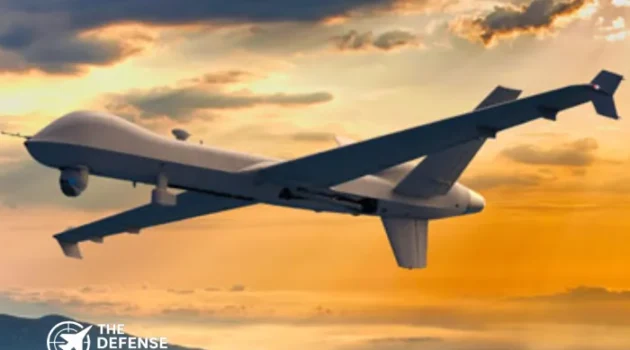
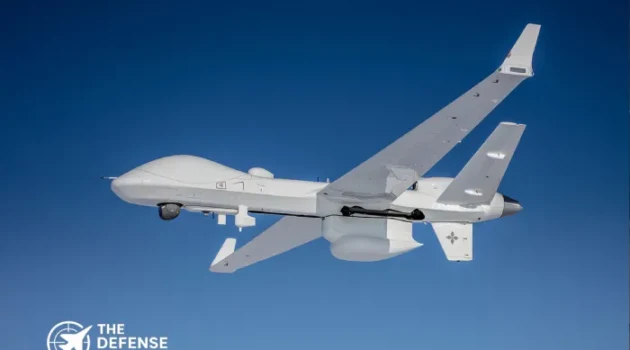
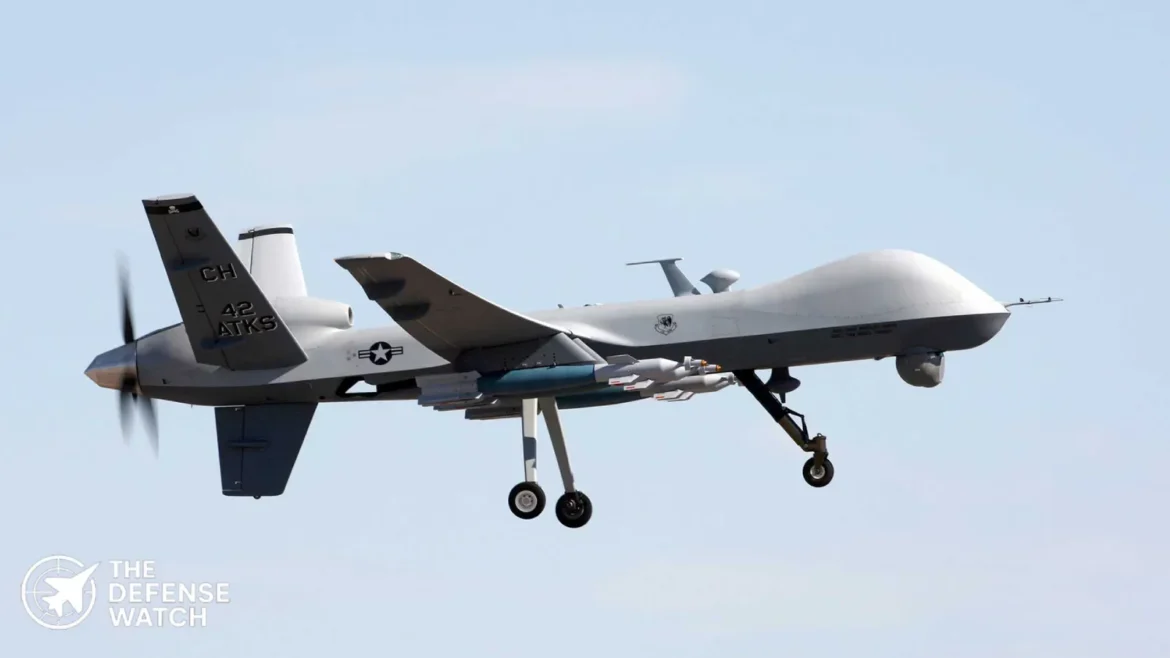
The U.S. Air Force is moving to expand the combat role of the MQ-9 Reaper by integrating Advanced Precision Kill Weapon System (APKWS) rockets for counter drone missions.
The effort highlights a broader shift in U.S. military planning as the Pentagon searches for cost-effective methods to defeat increasingly common unmanned aerial threats. Low-cost drones have become a major operational challenge in conflicts across the Middle East, Eastern Europe, and the Indo-Pacific, forcing militaries to reconsider traditional air defense strategies.
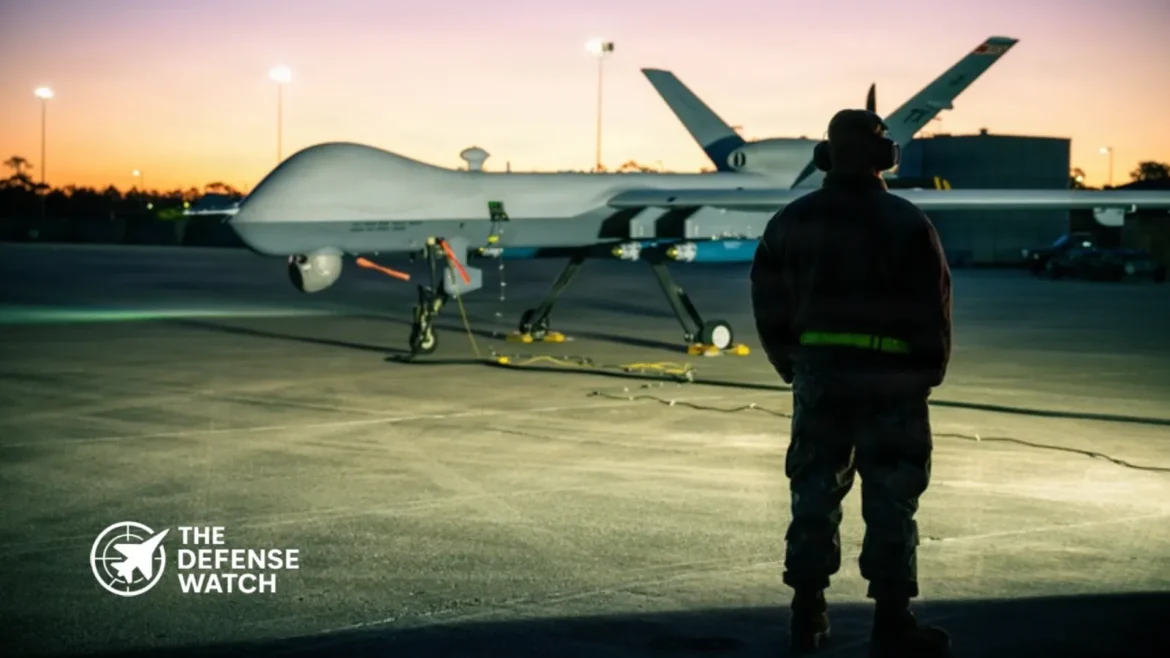
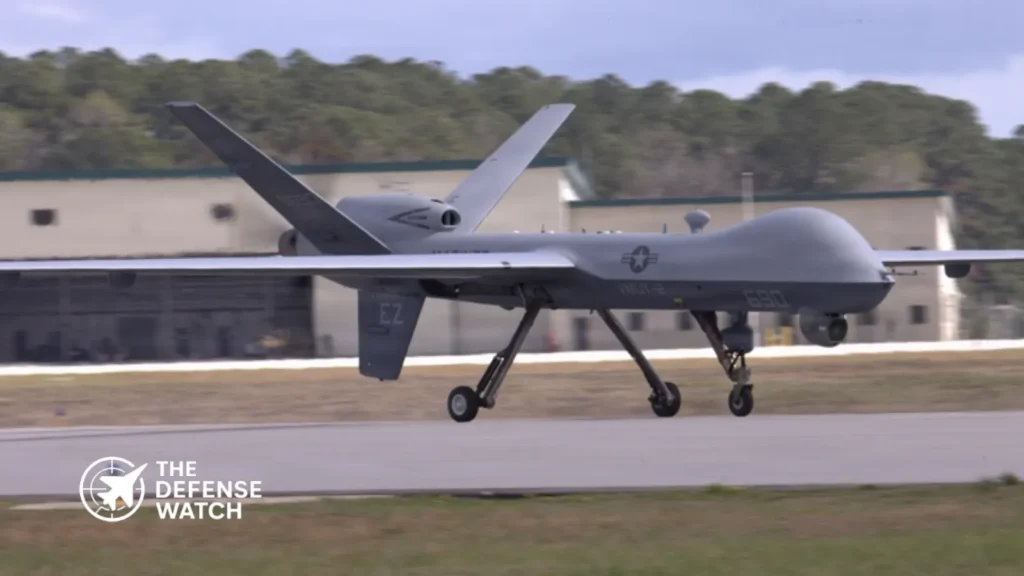
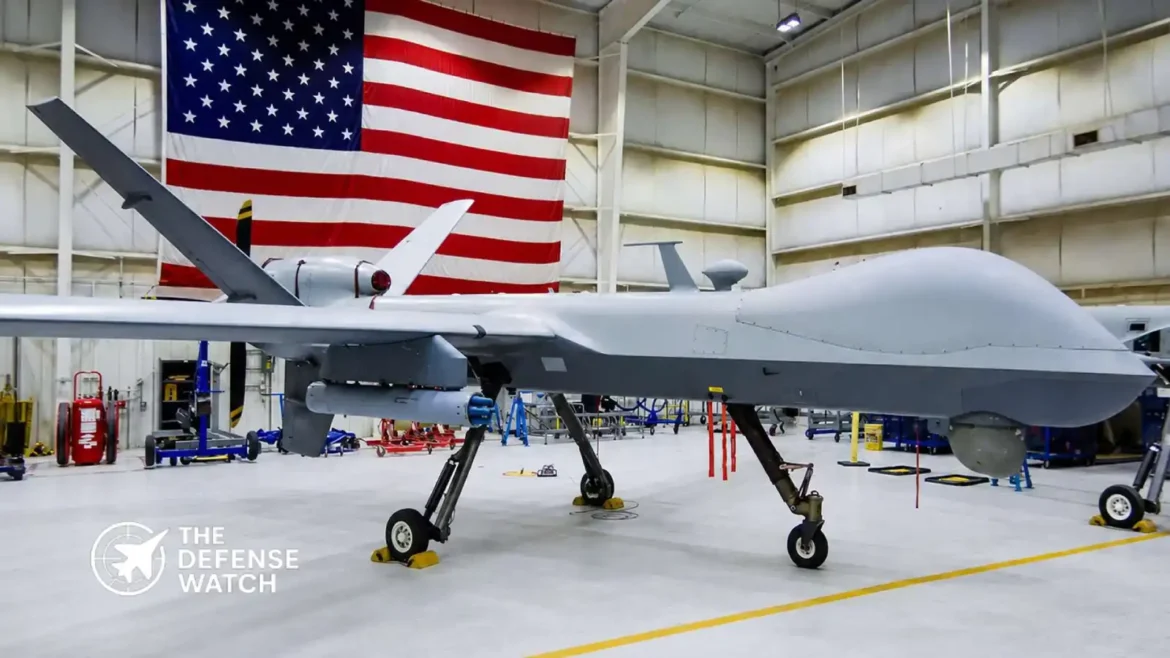
The MQ-9 Reaper, produced by General Atomics Aeronautical Systems, has historically been used for intelligence, surveillance, reconnaissance, and precision strike missions. By adding APKWS-guided rockets, the platform could gain a new role as an aerial counter drone interceptor.
The APKWS system, developed by BAE Systems, converts standard 70mm Hydra rockets into laser-guided precision munitions. The weapon is already widely used by U.S. military aircraft because it provides a lower-cost alternative to larger air-to-air or air-to-ground missiles.
Why The APKWS Matters For Counter Drone Warfare
The growing use of inexpensive one-way attack drones and commercial UAVs has created a major cost imbalance for Western militaries. In many cases, expensive interceptor missiles are being used to destroy relatively cheap drones.
That imbalance has become particularly visible in the Red Sea, Ukraine, and other contested regions where drone saturation attacks are increasingly common. The U.S. military and allied forces have accelerated efforts to field affordable intercept solutions that can operate at scale.
The APKWS offers several operational advantages in that environment:
- Lower cost compared to traditional missiles
- Precision engagement capability
- Compatibility with multiple aircraft platforms
- Reduced collateral damage risk
- Rapid integration on existing systems
Integrating the weapon onto the MQ-9 Reaper could provide a persistent airborne counter drone capability that remains on station for extended periods while engaging multiple low-cost threats.
The Air Force’s interest in this capability also reflects lessons learned from recent operational environments where drones have evolved from niche battlefield tools into central components of modern warfare.
MQ-9 Reaper Continues Mission Evolution
The MQ-9 Reaper has undergone significant modernization over the past decade. Originally optimized for counterterrorism operations, the platform is increasingly being adapted for contested operational environments involving near-peer competitors.
Recent upgrades have focused on:
- Enhanced survivability
- Expanded sensor packages
- Multi-domain integration
- Maritime surveillance
- Electronic warfare support
- Autonomous mission capabilities
The addition of APKWS rockets fits within that broader modernization path.
The Reaper’s endurance remains one of its biggest operational strengths. Unlike manned fighter aircraft that may require frequent refueling or rotation, the MQ-9 can remain airborne for long durations, making it suitable for persistent surveillance and defensive patrol missions.
Defense analysts have increasingly pointed to the value of layered counter drone architectures that combine electronic warfare, directed energy systems, kinetic interceptors, and airborne response platforms. Arming MQ-9 aircraft with APKWS rockets could provide the Air Force with a flexible middle layer between high-end missile defense systems and ground-based counter UAV tools.
Operational And Strategic Implications
The integration effort also signals how unmanned aircraft themselves are becoming part of the counter unmanned systems ecosystem.
Traditionally, drones were viewed primarily as reconnaissance or strike assets. However, the rapid proliferation of UAV threats has pushed militaries to adapt existing platforms for defensive missions as well.
For the United States and allied forces, the challenge is no longer simply deploying drones, but defending against large numbers of them in contested airspace.
The APKWS-equipped MQ-9 could potentially support several operational missions, including:
- Base defense patrols
- Maritime convoy protection
- Border security operations
- Forward force protection
- Counter swarm interception
The approach may also reduce operational strain on high-value fighter aircraft and missile defense systems currently tasked with drone interception duties.
At the same time, integrating low-cost precision weapons into unmanned platforms reflects a wider Pentagon emphasis on affordability and scalability. As drone warfare expands globally, military planners are increasingly focused on ensuring that defensive systems can sustain prolonged operations without exhausting expensive missile inventories.
Broader Pentagon Counter Drone Push
The MQ-9 APKWS integration effort comes amid wider Department of Defense investments in counter unmanned aerial system technologies.
The Pentagon has accelerated testing of:
- Directed energy weapons
- Electronic attack systems
- Autonomous interceptors
- AI-enabled tracking systems
- Mobile air defense platforms
The U.S. military has repeatedly emphasized that future conflicts are expected to involve large numbers of autonomous and semi-autonomous aerial systems operating simultaneously across multiple domains.
As a result, the need for scalable and affordable counter drone solutions has become a major defense priority.
The MQ-9 Reaper’s evolving mission profile demonstrates how existing aircraft are being adapted to meet those emerging operational demands without requiring entirely new platforms.
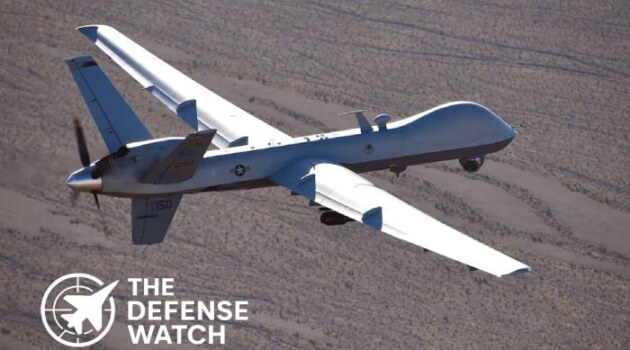
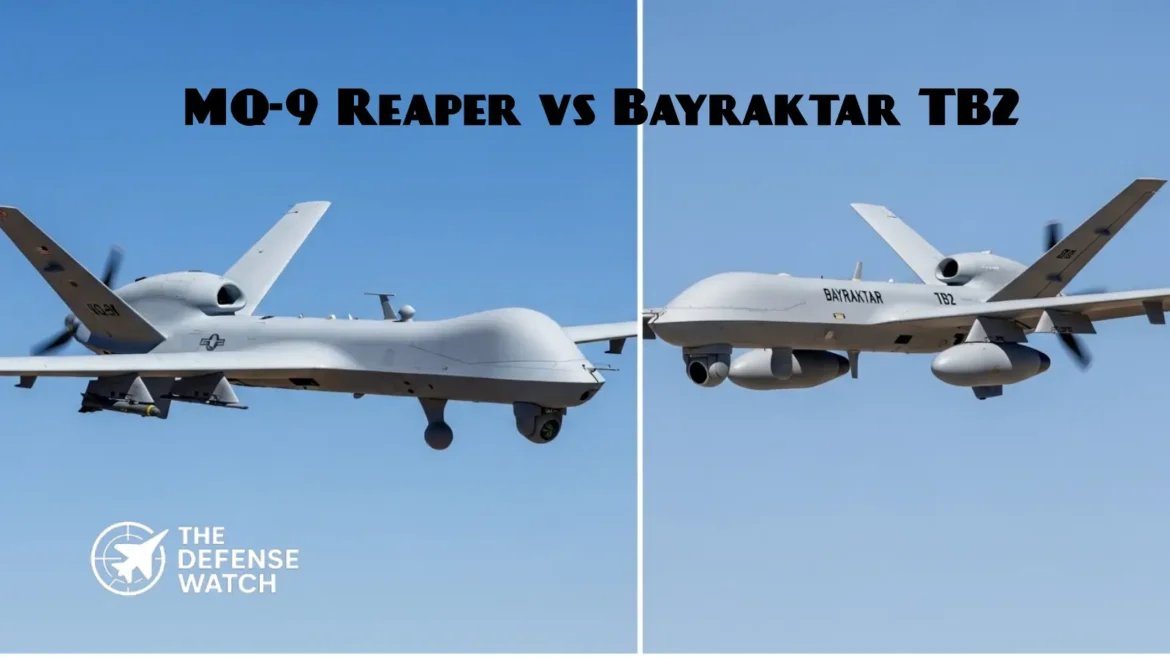
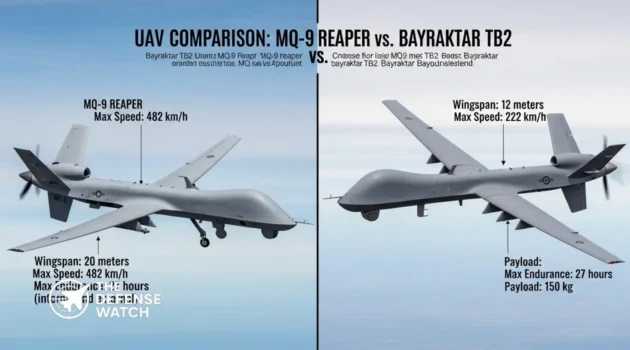
MQ-9 Reaper vs Bayraktar TB2 Payload Capacity
The MQ-9 Reaper vs Bayraktar TB2 payload capacity debate matters because armed drones now shape modern warfare. From counterterror missions in the Middle East to high-intensity conflicts in Eastern Europe, unmanned aircraft have become a core military tool. The United States built the MQ-9 Reaper as a high-end hunter-killer platform with long endurance and heavy strike capability. Turkey developed the Bayraktar TB2 as a lower-cost tactical drone designed for persistent surveillance and precision attack.
Both systems gained global attention through real combat operations. The MQ-9 became a symbol of American remote strike power. The TB2 became famous after conflicts in Libya, Nagorno-Karabakh, and Ukraine. But when comparing combat value, one key metric stands out: payload capacity.
Payload determines how many sensors, bombs, missiles, and fuel tanks a drone can carry. In simple terms, it shapes how much damage a UAV can deliver in a single sortie.
MQ-9 Reaper vs Bayraktar TB2 Specifications Table
Specification MQ-9 Reaper Bayraktar TB2 Country United States Turkey Manufacturer General Atomics Baykar Role MALE strike UAV Tactical UCAV First Service Entry 2007 2014 Max Payload 3,800 lb (1,700+ kg) 330 lb (150 kg) Max Speed 300+ mph 135 mph Endurance 27+ hours 24+ hours Wingspan 66 ft 39 ft Range Global SATCOM capable 150+ km LOS, newer SATCOM variants longer Crew Remote crew Remote crew Estimated Unit Cost $30M+ $5M to $10M (varies) MQ-9 Reaper vs Bayraktar TB2 Design and Technology
The MQ-9 Reaper is a larger and heavier aircraft built for strategic missions. It uses satellite communications, advanced electro-optical sensors, synthetic aperture radar, and multi-target tracking systems. This allows operations across continents with real-time data links.
The Bayraktar TB2 is smaller, lighter, and optimized for affordability. It focuses on battlefield surveillance and precision strikes at lower operating cost. Its smaller radar signature can help survivability, but it lacks the size and power generation of the Reaper.
In short, the Reaper is a long-range military truck in the sky. The TB2 is a lighter battlefield scout with strike capability.
MQ-9 Reaper vs Bayraktar TB2 Payload Capacity and Firepower
This is where the gap becomes clear.
MQ-9 Reaper Payload Capacity
The MQ-9 Reaper can carry roughly 3,800 pounds of payload across multiple hardpoints. That includes:
- AGM-114 Hellfire missiles
- GBU-12 Paveway II laser-guided bombs
- GBU-38 JDAM
- ISR sensor packages
- Fuel tanks and mixed loads
A Reaper can conduct surveillance and strike multiple targets in one mission.
Bayraktar TB2 Payload Capacity
The TB2 carries around 150 kilograms (330 pounds) total. Typical weapons include:
- MAM-L smart micro munition
- MAM-C lightweight guided bomb
- EO/IR sensors
This means the TB2 usually carries four small precision munitions rather than heavy bombs.
Verdict on Payload
In pure carrying capacity, the MQ-9 Reaper dominates. It can haul more than ten times the payload of the TB2.
Operational Range and Mobility
The Reaper benefits from U.S. satellite network integration. It can operate at long distances and remain on station for many hours. This gives commanders strategic reach.
The TB2 was originally line-of-sight controlled, which limited distance. Newer export variants added SATCOM options, improving range. Still, it is generally better suited for regional operations rather than global expeditionary warfare.
Combat Effectiveness in Real Conflicts
MQ-9 Reaper Combat Record
The MQ-9 has seen extensive use in:
- Afghanistan
- Iraq
- Syria
- Horn of Africa
- Maritime surveillance missions
It proved effective in ISR and precision strike roles against insurgent and terrorist targets.
Bayraktar TB2 Combat Record
The TB2 gained fame in:
- Libya
- Syria
- Nagorno-Karabakh War
- Ukraine (early conflict phase)
It helped destroy tanks, artillery, and air defense systems when enemy defenses were weak or poorly coordinated.
Battlefield Reality
Against advanced integrated air defense systems, both drones face risk. Neither is stealthy. But the larger Reaper is a higher-value target, while the cheaper TB2 is easier to replace.
Cost and Export Value
The MQ-9 Reaper is expensive and tightly controlled under U.S. export rules. Buyers include close partners such as the UK, Italy, India, and others.
The Bayraktar TB2 became a major export success because it offers lower cost and proven combat performance. Countries in Europe, Africa, the Middle East, and Asia bought it.
Turkey used TB2 exports to grow influence abroad. The United States uses Reaper sales more selectively with trusted allies.
MQ-9 Reaper vs Bayraktar TB2 Who Wins?
It depends on mission type.
MQ-9 Reaper Wins If You Need:
- Heavy payload capacity
- Long-range strategic operations
- Multi-target strike missions
- Advanced sensors and networking
- Integration with U.S./NATO systems
Bayraktar TB2 Wins If You Need:
- Lower purchase price
- Affordable operating costs
- Tactical battlefield strikes
- Rapid export delivery
- Easier fleet scaling
U.S. Defense View
The U.S. military sees the Reaper as a premium ISR-strike platform. It is not just a drone, it is part of a larger networked warfare system. The TB2 is respected as a disruptive low-cost combat UAV, but it serves a different market segment.
Conclusion
The MQ-9 Reaper vs Bayraktar TB2 payload capacity comparison is not close on raw numbers. The MQ-9 Reaper carries far more weapons, sensors, and mission equipment. It is built for strategic reach and sustained combat power.
The Bayraktar TB2, however, wins on affordability, accessibility, and export success. It offers many countries armed drone capability without U.S.-level costs.
So which system has the edge?
- For major military powers, the MQ-9 Reaper is stronger.
- For budget-conscious buyers, the TB2 is highly effective.
- For payload capacity alone, the MQ-9 Reaper is the clear leader.
FAQ: MQ-9 Reaper vs Bayraktar TB2
Which drone has higher payload capacity, MQ-9 Reaper or Bayraktar TB2?The MQ-9 Reaper by a wide margin. It carries over 3,800 pounds versus about 330 pounds for the TB2.
Is the Bayraktar TB2 cheaper than the MQ-9 Reaper?Yes. The TB2 is significantly cheaper to buy and operate.
Can the Bayraktar TB2 defeat the MQ-9 Reaper?They are not designed for direct dogfights. They serve different mission roles.
Why is the MQ-9 Reaper important to the U.S. military?It provides long-range surveillance and precision strike capability with global reach.
Why did the TB2 become famous?Its combat use in Ukraine, Libya, and Nagorno-Karabakh made it globally recognized.

Iran Claims MQ-9 Reaper Shootdowns In Operation Epic Fury
Iran MQ-9 Reaper shootdown claims are drawing renewed attention to the survivability of U.S. unmanned systems in contested airspace, following Tehran’s assertion that it downed 16 drones during what it described as Operation Epic Fury.
Iranian officials said their air defense forces successfully intercepted multiple U.S. MQ-9 Reaper unmanned aerial vehicles during recent operations. The MQ-9, produced by General Atomics Aeronautical Systems, is widely used by the United States for intelligence, surveillance, reconnaissance, and precision strike missions.
If accurate, the scale of the reported losses would mark one of the most significant single-episode attrition events involving U.S. unmanned systems in recent years.
However, U.S. officials have not publicly confirmed the figures, and independent verification remains limited. Analysts note that such claims often require corroboration through satellite imagery, wreckage evidence, or official acknowledgment.
¦ KEY FACTS AT A GLANCE- Iran claims it shot down 16 U.S. MQ-9 Reaper drones during Operation Epic Fury.
- The reported losses are valued at approximately $1.82 billion based on unit costs.
- MQ-9 Reaper drones are a core U.S. ISR and strike platform used across the Middle East.
- Iran has invested heavily in layered air defense systems and counter-UAV technologies.
- Independent confirmation of the claims remains limited as of reporting.
Strategic Implications For U.S. Drone Operations
The Iran MQ-9 Reaper shootdown narrative highlights a broader shift in the operational environment for medium-altitude, long-endurance drones. Systems like the MQ-9 were originally designed for permissive or lightly contested airspace, where advanced air defenses are limited.
Iran’s evolving integrated air defense network complicates that model.
Tehran has invested in a mix of domestically developed and imported systems, including radar-guided surface-to-air missiles, electronic warfare capabilities, and short-range air defenses optimized for counter-UAV missions. These systems are increasingly tailored to detect and engage slow-moving, high-signature platforms such as the MQ-9.
From an operational standpoint, repeated or large-scale losses could force adjustments in how and where U.S. forces deploy unmanned systems. This may include greater reliance on stealthier platforms, stand-off operations, or increased use of electronic warfare support.
Cost And Capability Considerations
Each MQ-9 Reaper is estimated to cost tens of millions of dollars depending on configuration and support systems. A loss of 16 aircraft, if confirmed, would represent a substantial financial and operational impact.

Beyond cost, the MQ-9 plays a critical role in persistent surveillance and targeted strike missions. Its ability to loiter for extended periods provides commanders with real-time intelligence and rapid response options.
Losing multiple platforms in a short timeframe could degrade situational awareness in key theaters, particularly in regions where drone coverage is central to counterterrorism and force protection missions.
Evolving Air Defense Versus UAV Dynamics
The reported Iran MQ-9 Reaper shootdown claims reflect a wider trend seen in recent conflicts, where air defense systems are adapting quickly to counter drones of all sizes.
From Eastern Europe to the Middle East, militaries are deploying layered defenses that combine radar, infrared tracking, electronic warfare, and kinetic interceptors. This multi-layered approach increases the probability of detecting and neutralizing UAVs that were once considered difficult targets.
For the United States, this trend reinforces the need to evolve drone doctrine. Future systems are expected to emphasize reduced radar signatures, autonomous operations, and networked survivability.
Information Gaps And Verification Challenges
As with many conflict-related claims, the Iran MQ-9 Reaper shootdown reports must be viewed in context. Public information remains incomplete, and both state and non-state actors often use information operations to shape narratives.
Defense analysts typically look for corroborating indicators such as imagery, official acknowledgments, or third-party intelligence assessments before confirming such incidents.
Until then, the claims remain part of an ongoing information environment shaped by strategic messaging as much as battlefield realities.
MQ-9 Sustainment Contract Extended for Italy
General Atomics Aeronautical Systems Inc. has been awarded a $14.3 million MQ-9 sustainment contract to continue logistics and software support for the Italian Air Force’s MQ-9 Unmanned Aerial System fleet, according to a U.S. Air Force contract announcement.
(adsbygoogle = window.adsbygoogle || []).push({});The cost-plus fixed-fee contract modification exercises an option under an existing agreement and extends support activities through early 2027 as part of a Foreign Military Sales (FMS) case with Italy.
Contract Details and Scope of Work
The contract modification, designated P00018, was issued under the previously awarded contract FA8689-23-C-2013. It authorizes continued sustainment services for the MQ-9 fleet currently supported during the contract’s second option year.
The $14,314,754 award funds a range of logistics support activities and software maintenance services, ensuring operational readiness and long-term fleet availability for the Italian Air Force’s remotely piloted aircraft systems.
All funds associated with the contract are being fully obligated at the time of award, reflecting the Foreign Military Sales structure of the agreement.
(adsbygoogle = window.adsbygoogle || []).push({});Work Locations and Schedule
Contracted work will be performed across multiple locations, including:
- Poway, California, home to General Atomics Aeronautical Systems
- Italy, supporting Italian Air Force operational requirements
- Kuwait, a key hub for deployed MQ-9 operations
The sustainment effort is scheduled for completion by January 31, 2027, providing nearly two additional years of support under the current contract framework.
Strategic Importance of MQ-9 Sustainment
The MQ-9 remains a critical intelligence, surveillance, reconnaissance, and strike platform for allied air forces. Continued sustainment and software maintenance are essential to ensuring system reliability, mission availability, and compliance with evolving operational and cybersecurity requirements.
For Italy, the contract supports ongoing integration of MQ-9 capabilities within NATO-aligned operations and expeditionary missions, reinforcing interoperability with U.S. and allied forces.
- (adsbygoogle = window.adsbygoogle || []).push({});
Contracting Authority
The Air Force Life Cycle Management Center (AFLCMC) at Wright-Patterson Air Force Base, Ohio, is the contracting activity responsible for administering the award.
General Atomics Aeronautical Systems Inc., based in Poway, California, is the original equipment manufacturer of the MQ-9 and a long-standing provider of sustainment and lifecycle support services for U.S. and international operators.