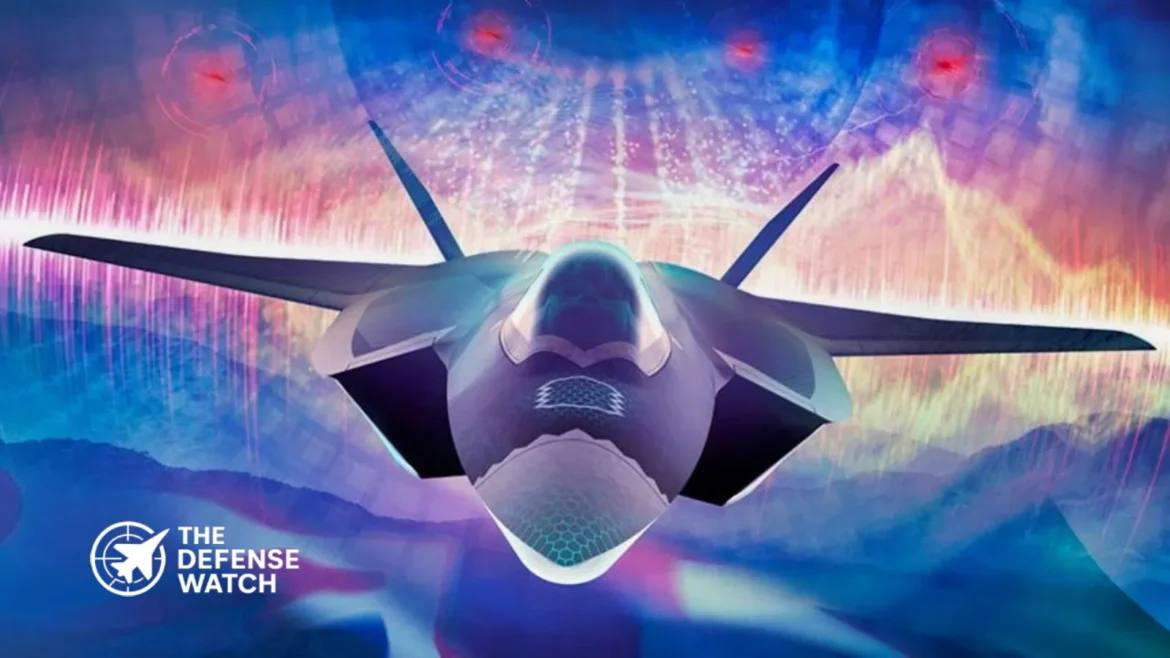
UK, Italy, and Japan Award $850M GCAP Contract, Putting Sixth-Generation Fighter Program On a Clear Runway
The Global Combat Air Programme received its most consequential industrial milestone to date when the UK, Italy, and Japan awarded Edgewing a £686 million contract on April 1, 2026, formally designating the trinational joint venture as the program’s unified design and engineering authority. The award marks GCAP’s transition from a politically coordinated national effort into a fully integrated international acquisition program with a single design authority accountable for delivering a sixth-generation combat aircraft by 2035.
¦
KEY FACTS AT A GLANCE
The UK, Italy, and Japan awarded Edgewing a £686 million (~$850M) contract on April 1, 2026, under the Global Combat Air Programme (GCAP) to lead unified design, engineering, and airworthiness oversight.
Edgewing — a joint venture of BAE Systems, Leonardo, and Japan Aircraft Industrial Enhancement Co. Ltd. (JAIEC), each holding 33.3% — will serve as design authority for the aircraft’s entire service life, expected to extend beyond 2070.
GCAP is designed as a “system of systems,” integrating manned-unmanned teaming, advanced sensing with radar delivering 10,000 times more data than current systems, and operations across air, land, sea, space, and cyber domains.
Italy’s parliament approved €8.77 billion for initial GCAP phases through 2037, with total early-phase program costs estimated at €18.6 billion. The fighter is targeted for service entry in 2035.
Canada is being considered as a potential GCAP observer nation by July 2026, signaling expanding allied interest in the trinational program.
The Big Picture: Allied Air Power at a Strategic Crossroads
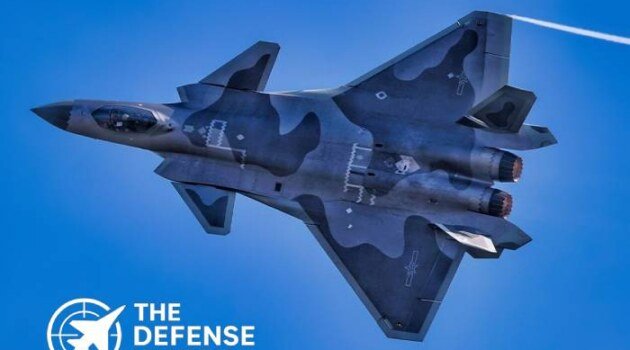
Western air forces face a converging set of threats that their current fifth-generation fleets were not specifically designed to defeat at scale. China has fielded the J-20 stealth fighter and is developing two reported sixth-generation programs; Russia continues advancing air defense systems that challenge even low-observable aircraft. Against that backdrop, the UK, Italy, and Japan identified a shared operational requirement: a survivable, networked, next-generation combat aircraft capable of operating in heavily contested electromagnetic and air defense environments where fifth-generation platforms will face growing risks.
GCAP emerged from that shared threat calculus. The program grew out of Japan’s F-X requirement and the UK-Italy Tempest initiative, formally merging into a trilateral structure in December 2022. Canada has since been identified as a potential observer nation by July 2026, a development that, if confirmed, would further widen the program’s political and industrial footprint.
What’s Happening: A Single Authority Takes the Helm
Awarded on April 1 and running until June 30, 2026, the £686 million package places Edgewing at the center of key design and engineering work under the GCAP Agency, with the stated aim of accelerating delivery for the three partner nations.
Edgewing, formally launched in June 2025, is the UK-based joint venture created specifically for GCAP by BAE Systems, Leonardo, and Japan Aircraft Industrial Enhancement Co. Ltd. (JAIEC), each holding 33.3 percent, and will remain design authority for the aircraft throughout a service life expected to extend beyond 2070.
The practical significance of that structure is considerable. Activities that were previously conducted under three national contracts will now be executed as part of a fully fledged international program, and Edgewing will oversee engineering, airworthiness, and certification across all phases of development.
Edgewing does not absorb all manufacturing into a single plant. It leads design and development while subcontracting manufacturing and final assembly to BAE Systems, Leonardo, Mitsubishi Heavy Industries, and the wider supply chain. That structure preserves sovereign industrial weight in each nation while centralizing the functions that most often derail multinational aircraft programs: configuration control, airworthiness, certification, and system integration.
Why It Matters: More Than a Fighter, a Networked Kill Node
GCAP’s ambitions extend well beyond a conventional air superiority platform. The program is not being sold as a stand-alone fighter but as a “system of systems” operating across air, land, sea, space, and cyber, with the crewed combat aircraft serving as the core platform connected to crewed and uncrewed peripheral systems.
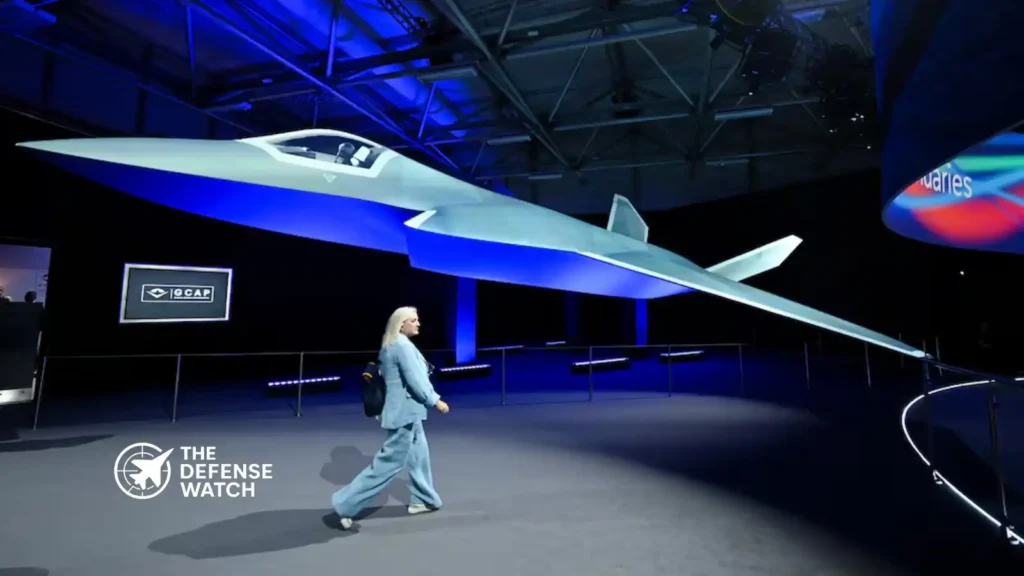
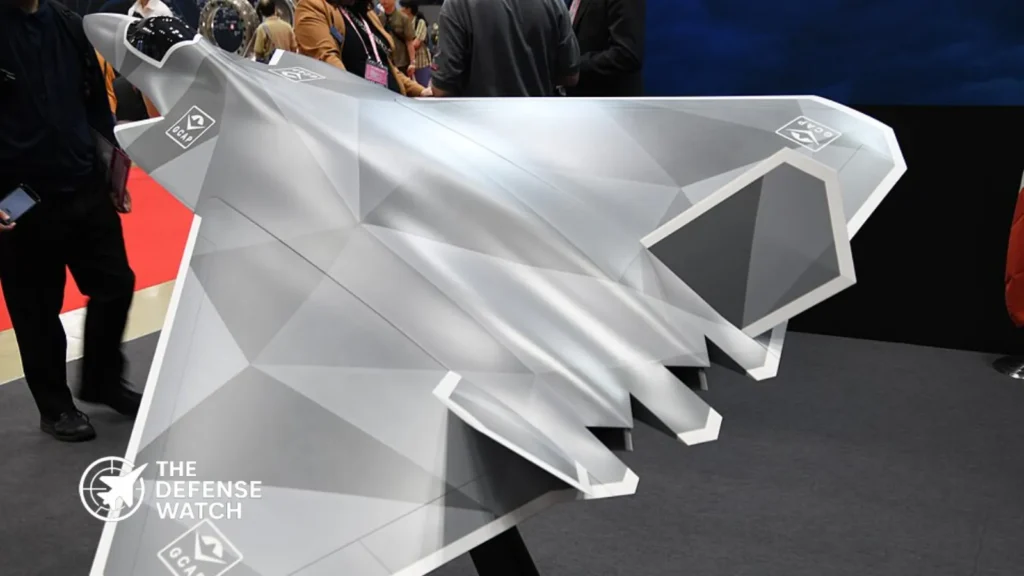
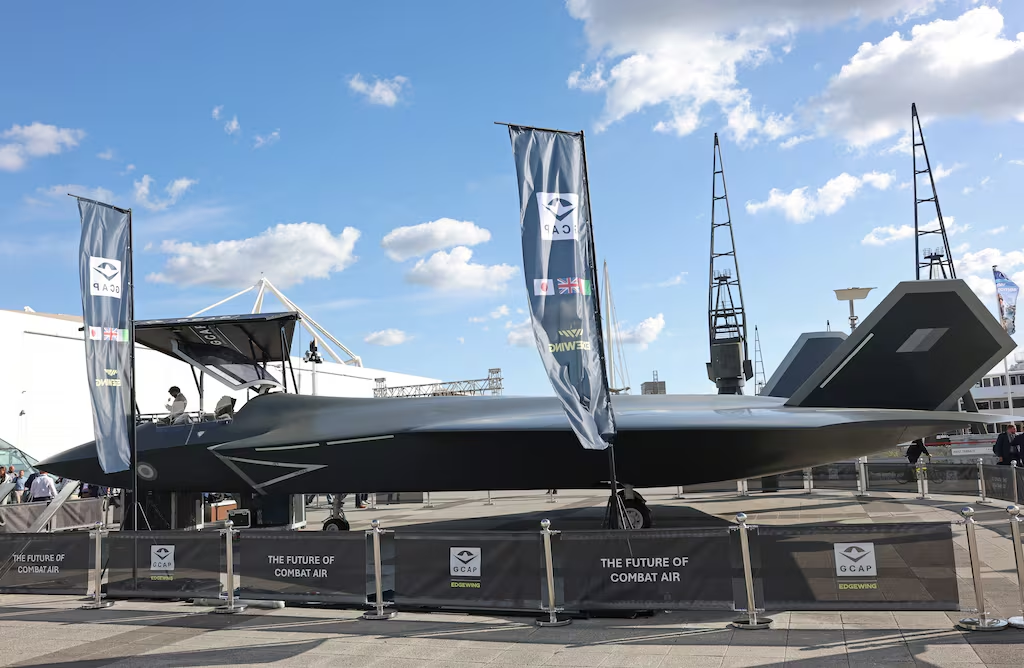
A person walks past the GCAP fighter jet concept design at the 2024 Farnborough International Airshow. (Justin Tallis/AFP via Getty Images)
The sensor architecture behind that concept is striking. The future aircraft’s radar is intended to deliver 10,000 times more data than current systems, while Leonardo UK states that GCAP’s ISANKE and ICS architecture — Integrated Sensing and Non-Kinetic Effects plus Integrated Communications Systems — will provide mission-critical information and advanced self-protection capabilities.
Propulsion carries equal ambition. Rolls-Royce, IHI, and Avio Aero are developing a propulsion architecture designed not only to generate thrust but also to supply the larger electrical loads demanded by next-generation sensors, processors, and onboard systems. Rolls-Royce says the demonstrator engine effort involves roughly 40,000 individual parts.
That combination of sensor fusion, networked operations, and high-power propulsion points toward an aircraft designed to sense first, fuse faster, share securely, and survive inside dense electronic-warfare environments — capabilities that represent a genuine generational step beyond what current fifth-generation platforms offer at scale.
Strategic Implications: Governance Solved Early Is Influence Preserved
The deeper significance of the Edgewing contract lies in industrial governance, not just engineering progress. Multinational fighter programs most commonly derail not from technological failure but from diffused authority — the inability of any single body to force engineering trade-offs when national industrial interests collide. By establishing Edgewing as design authority at the program’s outset rather than years into development, the three partner nations have attempted to solve that problem before it compounds.
GCAP has been described as important for sovereignty in combat air, allied relationships, and export return, while Italy’s parliament approved €8.77 billion for the initial phases through 2037, even as expected early-phase costs rose to €18.6 billion. Those are not discretionary commitments. They signal that the three governments view GCAP as a long-cycle strategic industrial program, not a prestige project subject to cancellation at the next budget cycle.
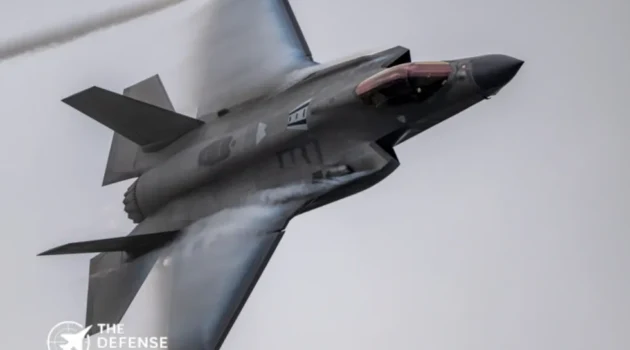
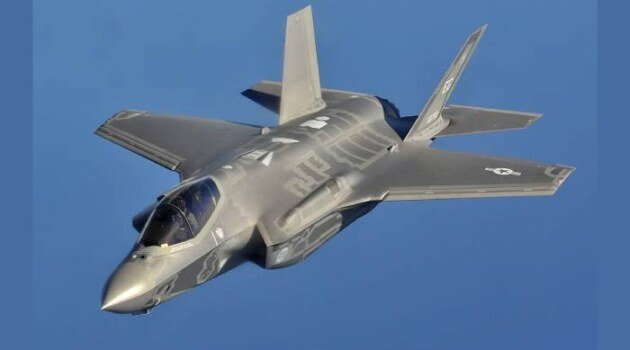
For the United States, the program carries direct implications. Japan is a cornerstone Indo-Pacific ally, and a Japan operating GCAP alongside U.S. F-35s and future sixth-generation platforms creates interoperability opportunities — and questions. Whether GCAP’s sensor and communications architecture will integrate cleanly with U.S. kill-web concepts, including the Air Force’s Next Generation Air Dominance program, will shape how effectively allied air operations can be coordinated across the Pacific theater.
Competitor View: Beijing and Moscow Are Watching Timelines
China’s military planners will read the Edgewing contract as confirmation that a competitive sixth-generation threat is moving from concept to execution. Beijing’s reported sixth-generation development efforts — reportedly including two parallel programs — are also progressing, meaning the 2035 GCAP service-entry target is, in effect, a race to fielding against a Chinese peer effort. Each program delay carries strategic weight, and the unified design authority structure is in part a hedge against the schedule drift that plagued earlier European consortium programs like the Eurofighter Typhoon.
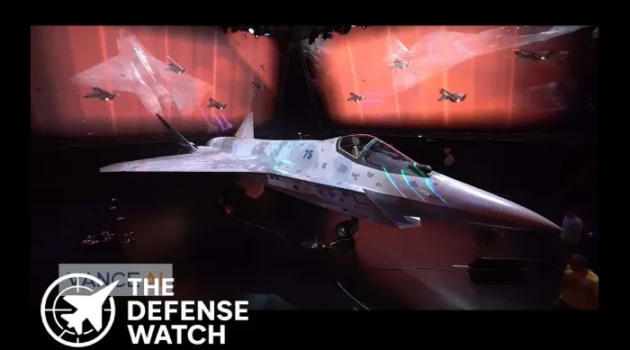
Russia, whose air force is operating under severe attrition from combat losses in Ukraine, faces a more distant sixth-generation threat horizon. Moscow’s Su-75 Checkmate program has stalled, and Russia’s defense-industrial capacity is stretched. Russian planners are unlikely to view GCAP as an immediate threat, but they will note the Japan dimension — a Japan equipped with advanced stealth fighters and manned-unmanned teaming capability substantially alters the balance in Northeast Asia, a region where Russia maintains significant Pacific Fleet and air defense investments.
What To Watch Next: Demonstrators, Decisions, and New Members
Several near-term milestones will test GCAP’s momentum. The contract runs through June 2026, at which point program leadership will likely announce the next phase of design and industrial activity. The UK Combat Air Flying Demonstrator, whose design BAE Systems revealed in July 2025, is expected to advance technology maturation and de-risk propulsion and sensor concepts before the final production configuration is locked.
Canada’s potential observer status by July 2026 is worth monitoring. An observer role could evolve into industrial partnership, and Canada’s combat air procurement requirements — driven by the eventual need to replace its CF-18 fleet — make GCAP an attractive long-term option, particularly given close Five Eyes intelligence-sharing ties with the UK.
Export prospects will increasingly drive program economics. A sixth-generation aircraft backed by the industrial depth of BAE Systems, Leonardo, and Mitsubishi Heavy Industries carries credibility across NATO Europe, the Middle East, and the wider Indo-Pacific. Early export success would distribute costs and sustain production rates, making the per-unit price more competitive against whatever the U.S. offers as an eventual NGAD export variant.
Capability Gap: Filling the Fifth-Generation Ceiling
Current fifth-generation platforms — the F-35, F-22, and Eurofighter with enhancements — were designed for threat environments projected a decade or more ago. They remain highly capable, but their sensor fusion, data-link bandwidth, electronic attack capacity, and payload flexibility are increasingly being tested by adversary integrated air defense systems that have evolved specifically to defeat low-observable aircraft.
GCAP targets that gap directly: higher sensor data throughput, manned-unmanned teaming that multiplies effective mass without multiplying pilot risk, and an open systems architecture designed to absorb mid-life upgrades across a service life stretching to 2070-plus. The realistic limitation is time and cost. Sixth-generation development is more technically complex than any previous fighter generation, and industrial supply chains for advanced composites, high-power electronics, and next-generation propulsion components are already strained across multiple simultaneous programs globally.
The Edgewing contract does not eliminate those risks. It does, however, put clear accountability in one place — and in a multinational combat aviation program, that alone is a meaningful achievement.
The Bottom Line
With Edgewing now empowered as the unified design authority and $850 million committed to the next development phase, GCAP has crossed from political ambition to executable program, positioning the UK, Italy, and Japan to field a genuine sixth-generation air combat system at a moment when allied air dominance can no longer be assumed.
BAE Systems signed a contract to provide Typhoon support and training services to Türkiye.
The agreement focuses on maintenance, sustainment, and pilot training for the Eurofighter Typhoon fleet.
The contract supports operational readiness and long-term sovereign sustainment capabilities.
The UK Royal Air Force is also involved in supporting Türkiye under the agreement.
Türkiye is positioning the Typhoon as a central pillar of its future combat airpower.
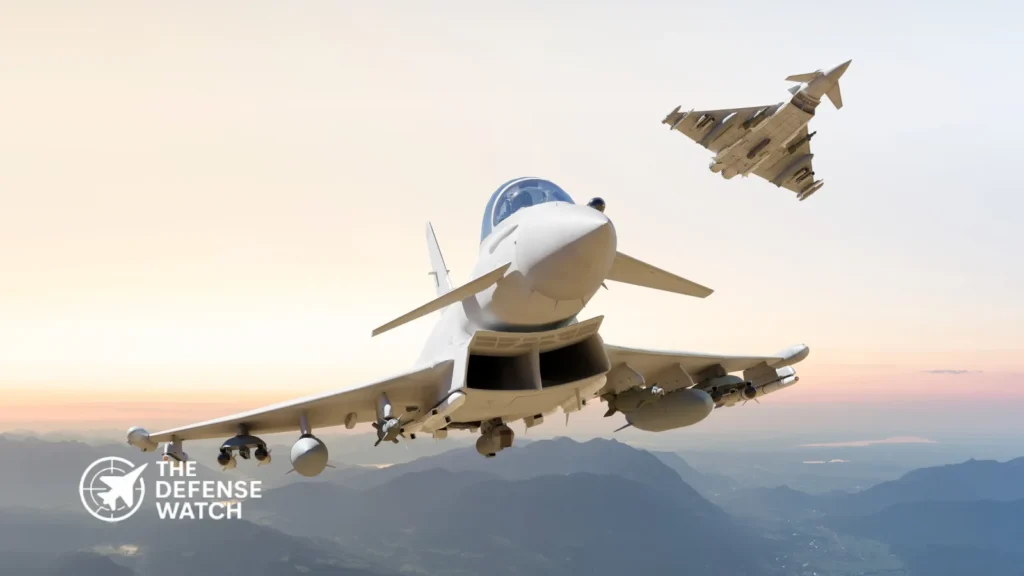
BAE Systems Türkiye Typhoon Support Contract Expands Airpower Capability
The BAE Systems Türkiye Typhoon support contract marks a significant step in strengthening Ankara’s combat aviation capabilities, focusing on sustainment, training, and long-term operational readiness of the Eurofighter Typhoon fleet.
Announced by BAE Systems, the agreement will deliver a comprehensive package of support services, including maintenance expertise and advanced pilot training. The contract underscores Türkiye’s continued investment in modernizing its air force and ensuring high readiness levels amid evolving regional security challenges.
In an official statement, BAE Systems emphasized the broader impact of the deal, noting that the work will support the Turkish Air Force in delivering operational readiness while progressively increasing its sovereign ability to sustain the fleet. The company added that, together with the Royal Air Force, it is supporting Türkiye as it becomes the latest air force to position the Typhoon as the backbone of its combat aviation capability.
Under the BAE Systems Türkiye Typhoon support contract, the integration of maintenance and training services is designed to ensure high availability rates and mission readiness. This reflects a broader shift in modern airpower, where lifecycle support is critical to operational success.
BAE Systems continues to play a central role in the Typhoon program, providing design expertise, upgrades, and in-service support across multiple operator nations.
Training And Sovereign Capability Development
A key aspect of the agreement is the development of Türkiye’s sovereign support capabilities. By transferring knowledge and enhancing local expertise, the contract aims to reduce reliance on external support over time.
Training initiatives will include advanced pilot instruction, simulation systems, and operational doctrine development. These elements are essential for maximizing the effectiveness of a fourth-generation-plus fighter such as the Typhoon.
This approach aligns with global trends, where nations seek greater control over maintenance, logistics, and training to ensure resilience during crises or supply chain disruptions.
Türkiye continues to prioritize airpower modernization as part of its broader defense strategy. The integration of the Typhoon into its force structure reflects a focus on maintaining a capable and flexible fighter fleet.
The aircraft’s interoperability with NATO-aligned systems enhances Türkiye’s ability to participate in joint operations and coalition missions. At the same time, building sovereign sustainment capabilities supports long-term strategic autonomy.
Industrial And Geopolitical Implications
The BAE Systems Türkiye Typhoon support contract also carries significant industrial and geopolitical weight.
For BAE Systems, the deal strengthens its position as a global leader in defense sustainment and training solutions. Long-term support contracts provide consistent engagement with partner nations and reinforce industrial ties.
From a geopolitical perspective, the agreement highlights continued defense cooperation between Türkiye and European partners. Such collaboration plays a role in shaping regional security dynamics and maintaining interoperability within allied frameworks.
Analysis: Sustainment As The Core Of Modern Airpower
Modern fighter aircraft require continuous upgrades, predictive maintenance, and highly trained personnel. Without these elements, even advanced platforms risk reduced readiness.
For Türkiye, the focus on sovereign capability development is particularly significant. It enables greater control over operational readiness and reduces vulnerability to external constraints.
For BAE Systems, the agreement reinforces a strategic shift toward integrated service offerings, combining hardware, software, and human capital development.
Outlook
As global air forces adapt to increasingly complex operational environments, contracts like the BAE Systems Türkiye Typhoon support contract are expected to grow in importance.
For Türkiye, the deal supports both immediate readiness and long-term modernization goals. For the Eurofighter program, it demonstrates continued relevance in a competitive global market.
BAE Systems will modernize the ALQ-221 electronic warfare system on U.S. Air Force U-2 aircraft.
Upgrade enhances radar warning, threat detection, and electronic countermeasure capabilities.
Supports U.S. ISR operations in contested and high-threat environments.
Contract focuses on system sustainment and modernization of legacy high-altitude platforms.
Reinforces electronic warfare as a critical pillar of survivability in modern air operations.
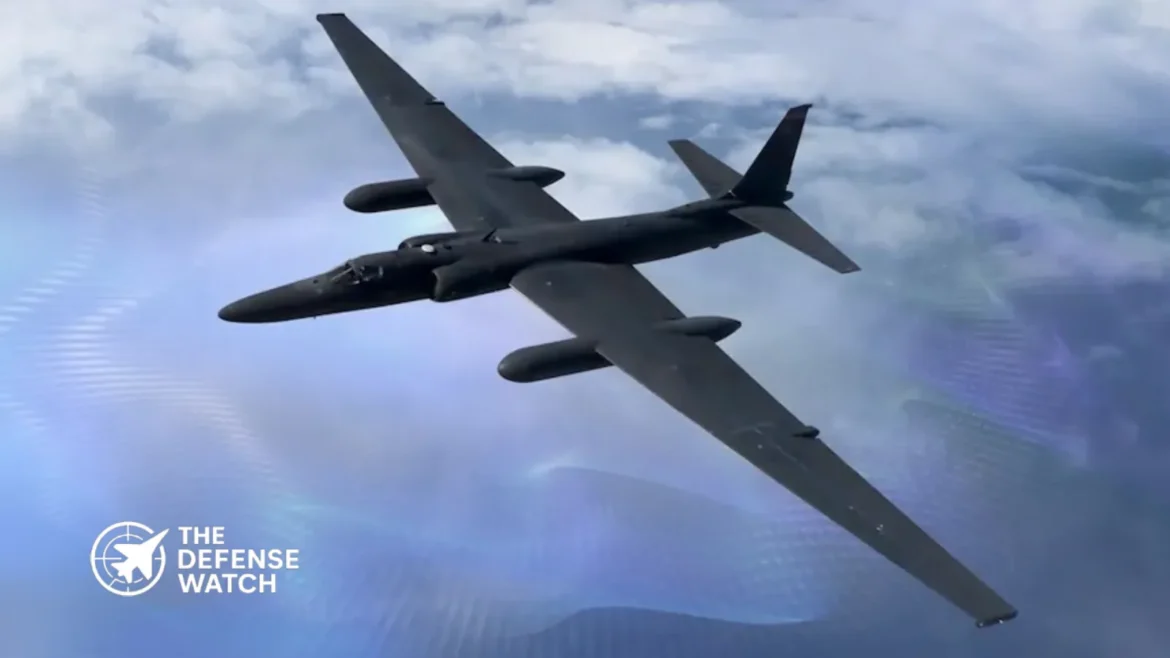
BAE Systems ALQ-221 Electronic Warfare System Upgrade Strengthens U-2 Survivability
The ALQ-221 electronic warfare system upgrade is central to a new contract awarded to BAE Systems to modernize defensive capabilities on U.S. Air Force U-2 aircraft. The effort aims to improve threat detection and survivability for one of the military’s most enduring high-altitude intelligence platforms.
The Big Picture
The U.S. Air Force continues to invest in electronic warfare as a core element of air dominance. Modern battlefields increasingly rely on advanced radar systems, integrated air defenses, and electronic attack capabilities. Legacy platforms such as the U-2 remain operationally relevant, but only if they can survive in contested electromagnetic environments.
High-altitude intelligence, surveillance, and reconnaissance missions play a key role in strategic competition, particularly in regions where access is denied or heavily contested. Upgrading onboard defensive systems ensures these aircraft can continue operating without unacceptable risk.
What’s Happening
BAE Systems received a contract to modernize the ALQ-221 electronic warfare system installed on U-2 aircraft operated by the U.S. Air Force.
The ALQ-221 is a defensive system designed to detect, identify, and counter radar-based threats. It provides radar warning capabilities and supports electronic countermeasures that help the aircraft avoid or defeat enemy tracking and targeting systems.
The modernization effort will update system components to address evolving threats and maintain operational effectiveness. Work will focus on enhancing performance against modern radar systems and improving system reliability.
The U-2 fleet operates primarily in high-altitude ISR roles, supporting global missions from forward-deployed locations.
Why It Matters
Electronic warfare defines survivability in modern air operations. The ALQ-221 electronic warfare system upgrade ensures that the U-2 can continue to operate in environments where adversaries deploy advanced surface-to-air missile systems and sophisticated radar networks.
Modern integrated air defense systems rely on layered sensors and data fusion. Without upgraded electronic warfare capabilities, legacy aircraft face increased detection risk and reduced mission effectiveness.
The upgrade also reflects a broader trend. The U.S. Air Force is extending the service life of proven platforms while integrating modern subsystems to keep pace with emerging threats.
Strategic Implications
The modernization of the ALQ-221 electronic warfare system directly strengthens U.S. military readiness. It allows the U-2 to operate closer to contested areas, collect higher-quality intelligence, and support decision-making at the strategic level.
Deterrence also benefits. Adversaries must assume that U.S. ISR platforms can penetrate or operate near defended airspace, complicating their planning and reducing confidence in their defensive systems.
The upgrade aligns with a wider shift toward electromagnetic spectrum dominance. Control of the spectrum increasingly determines success in air, land, and maritime operations.
Competitor View
China and Russia have invested heavily in advanced air defense systems, including long-range surface-to-air missiles and multi-band radar networks. These systems aim to deny access to high-value ISR platforms like the U-2.
From their perspective, upgrades to the ALQ-221 electronic warfare system signal continued U.S. commitment to penetrating contested environments. It reinforces the need for further investment in counter-electronic warfare capabilities and more resilient sensor networks.
Regional actors with developing air defense systems may also view this move as evidence that electronic warfare remains a decisive factor in modern conflict.
What To Watch Next
The next phase will likely involve integration, testing, and validation of the upgraded system on operational aircraft.
Key milestones include:
System integration on U-2 platforms Flight testing in representative threat environments Operational deployment across the fleet
Future updates may also incorporate software-defined capabilities, allowing faster adaptation to new threats without major hardware changes.
Capability Gap
The ALQ-221 electronic warfare system upgrade addresses a clear gap between legacy defensive systems and modern radar threats.
Older systems struggle against:
Digitally networked air defenses Frequency-agile radar systems Advanced signal processing techniques
By upgrading detection and countermeasure capabilities, the Air Force reduces vulnerability during high-altitude ISR missions.
However, limitations remain. The U-2 is not a stealth platform, and electronic warfare alone cannot fully offset advances in sensor technology. Survivability will continue to depend on a combination of altitude, mission planning, and defensive systems.
The Bottom Line
The ALQ-221 electronic warfare system upgrade ensures the U-2 remains a viable ISR asset in contested environments by strengthening its ability to detect and counter modern threats.
Production will occur at BAE Systems facilities in Pennsylvania, Oklahoma, and Alabama.
The program supports U.S. Army efforts to modernize artillery within Armored Brigade Combat Teams.
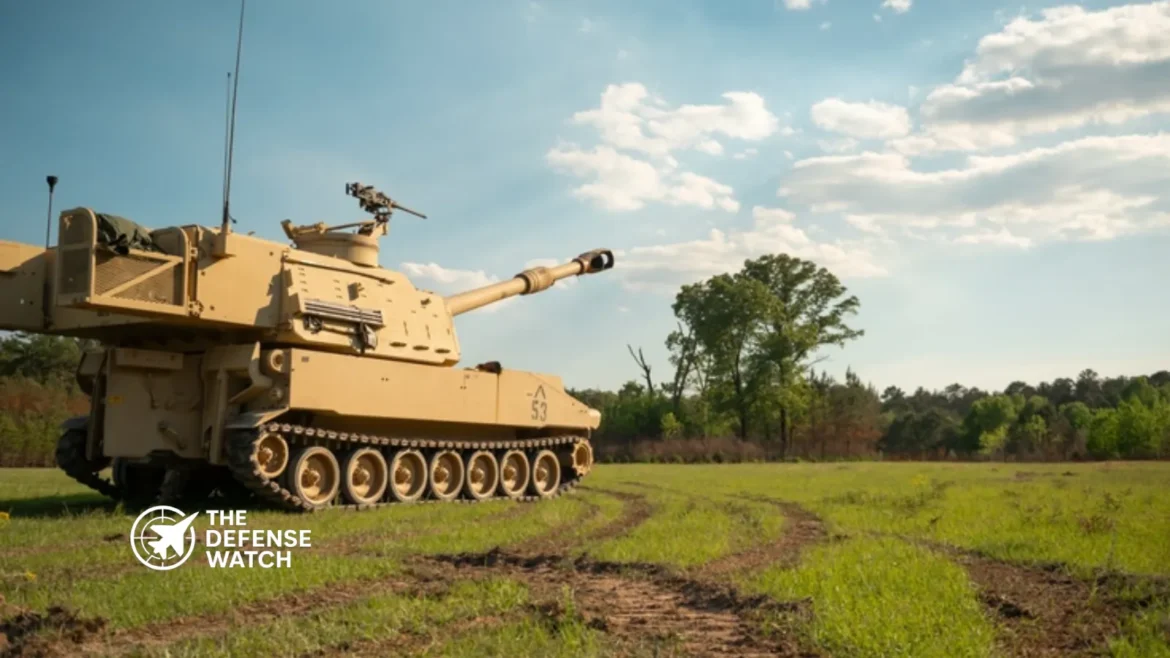
BAE Systems Paladin Artillery Vehicles Contract Expands U.S. Army Firepower
The M109A7 Paladin artillery vehicles program has received a major boost after the U.S. Army awarded BAE Systems a $473 million contract to produce 40 additional self propelled howitzer systems and ammunition resupply vehicles. The award expands production of the Army’s primary tracked artillery platform and supports long term modernization of armored brigade firepower.
The contract was issued by the U.S. Army Contracting Command at Detroit Arsenal and represents the first award under a broader five year production agreement for the Paladin system.
Each production set includes an M109A7 Paladin self propelled howitzer and the M992A3 Carrier Ammunition Tracked vehicle, which provides battlefield ammunition resupply and support for artillery units.
The Big Picture
Artillery has returned to the center of modern warfare. Large scale conflicts and high intensity combat scenarios have reinforced the importance of long range indirect fire.
The U.S. Army has prioritized artillery modernization as part of its broader force modernization strategy. Armored Brigade Combat Teams depend on mobile howitzers like the M109A7 Paladin artillery vehicles to deliver sustained fire support while maneuvering alongside tanks and mechanized infantry.
Programs such as the Paladin Integrated Management effort aim to extend the operational life of the M109 platform while integrating modern electronics, power systems, and survivability improvements.
The continued procurement of M109A7 systems shows the Army’s focus on maintaining reliable artillery capacity while future next generation systems are still under development.
What’s Happening
BAE Systems received a $473 million contract to manufacture 40 additional M109A7 Paladin artillery vehicle sets for the U.S. Army.
Production will take place across several U.S. industrial sites, including:
York, Pennsylvania
Elgin, Oklahoma
Anniston, Alabama
The contract was awarded in September and marks the first procurement under a larger multi year framework designed to maintain steady production of the Paladin system.
Why It Matters
The M109A7 Paladin artillery vehicles represent the most modern variant of the long running M109 self propelled howitzer family.
The platform incorporates a redesigned chassis derived from the Bradley Fighting Vehicle, along with upgraded power generation and digital architecture. These improvements allow the system to support modern fire control systems and future upgrades.
The system delivers several operational advantages:
Improved reliability and maintainability
Greater electrical power for modern electronics
Enhanced survivability for artillery crews
Integration with digital battlefield networks
These upgrades enable the Paladin to support modern targeting networks, including sensor to shooter fire missions that shorten response times.
For armored formations, rapid indirect fire support remains essential for suppressing enemy defenses, shaping battlefield conditions, and enabling maneuver operations.
Sustained production of the M109A7 Paladin artillery vehicles supports the U.S. Army’s ability to maintain artillery readiness across its armored formations.
Armored Brigade Combat Teams depend on mobile artillery that can keep pace with maneuver forces. Unlike towed systems, tracked howitzers can reposition quickly and maintain protection against counter battery fire.
The procurement also reflects broader lessons drawn from recent conflicts where artillery has played a decisive role in large scale ground warfare.
Russia maintains extensive artillery forces and has historically emphasized massed fires as a central element of ground combat operations. China has also invested heavily in self propelled artillery systems and rocket forces designed to support mechanized units.
From a competitor perspective, expanded production of M109A7 Paladin artillery vehicles signals that the United States intends to maintain strong conventional artillery capacity within armored formations.
Such capabilities remain important in potential large scale conflicts where sustained firepower and survivable artillery units could shape the outcome of ground engagements.
Capability Gap
The Paladin Integrated Management program addresses several operational limitations of earlier M109 variants.
Earlier systems faced challenges in electrical power generation, reliability, and integration with digital command networks.
The M109A7 resolves many of these issues through:
modern power systems
upgraded chassis and suspension
digital fire control architecture
improved survivability features
However, the platform still faces limitations in maximum firing range compared to emerging long range artillery systems currently under development.
The new contract ensures continued production of M109A7 Paladin artillery vehicles, strengthening the U.S. Army’s mobile firepower as artillery regains prominence in modern warfare.
►
System is widely used by U.S. military branches and multiple allied nations.
►
Production growth reflects sustained demand for affordable precision strike options.
►
Milestone highlights long term role of guided rockets in modern air and ground operations.
BAE Systems Marks 100,000 APKWS Laser Guidance Kit Delivery
The APKWS laser guidance kit reached a major production milestone as BAE Systems delivered its 100,000th unit, underscoring the system’s central role in precision strike operations for U.S. and allied forces.
The Advanced Precision Kill Weapon System, known as APKWS, converts standard 70mm unguided rockets into laser guided munitions. By integrating a semi active laser seeker and guidance section between the rocket motor and warhead, the system provides precision effects at a fraction of the cost of larger guided missiles.
According to BAE Systems, the 100,000th APKWS laser guidance kit was delivered as demand continues to rise across multiple theaters.
Transforming 70mm Rockets Into Precision Weapons
The APKWS laser guidance kit was developed to address a long standing capability gap between unguided rockets and high cost air to ground missiles such as the AGM 114 Hellfire. By upgrading existing Hydra 70 rockets with a guidance section, operators gain precision engagement capability without replacing entire stockpiles.
The system has been integrated on a range of platforms, including U.S. Marine Corps AH 1Z attack helicopters, U.S. Army AH 64 Apaches, U.S. Air Force F 16 fighter aircraft, and various unmanned systems. It has also been fielded on fixed wing aircraft and ground based launchers.
The U.S. Department of Defense has repeatedly highlighted the need for scalable precision effects in counter insurgency and peer conflict environments. APKWS supports this requirement by enabling accurate engagement of lightly armored vehicles, small boats, and dismounted threats while limiting collateral damage.
Operational Demand And Production Growth
Reaching 100,000 units reflects more than just production scale. It signals sustained operational demand. U.S. military services have used APKWS in multiple theaters, and international customers continue to adopt the system.
The system’s appeal lies in cost efficiency and flexibility. Compared to larger precision missiles, guided 70mm rockets allow forces to carry higher quantities per sortie. This matters in high tempo operations where aircraft payload and cost per shot influence mission planning.
Recent conflicts have reinforced the value of affordable precision munitions. The ability to engage small unmanned systems, fast attack craft, or dispersed ground targets without expending high end missile inventories has become increasingly important. In that context, the APKWS laser guidance kit fills a niche that many militaries now consider essential.
Strategic Context: Affordable Precision In A High Demand Era
The milestone comes amid broader U.S. and allied efforts to expand munitions production capacity. Pentagon officials have repeatedly stressed the need to replenish stocks and increase output of precision weapons following sustained global demand.
The APKWS laser guidance kit stands out because it leverages existing rocket inventories. Rather than building entirely new missile bodies, the guidance section is added to legacy systems. That model aligns with current modernization strategies focused on speed, scalability, and cost control.
In peer conflict scenarios, precision guided rockets can serve as a complement to more advanced long range weapons. They are not a substitute for stand off cruise missiles or high end anti armor systems. Instead, they provide commanders with layered options, allowing high value missiles to be reserved for priority targets.
This layered approach reflects lessons observed in recent conflicts, where both advanced and relatively low cost precision systems have played decisive roles.
Industry And Allied Adoption
BAE Systems has steadily expanded APKWS production to meet U.S. and foreign military sales requirements. The system has been adopted by multiple allied nations seeking to enhance close air support and maritime strike capabilities without incurring the full cost of larger missile programs.
As defense budgets face competing priorities, the value proposition of the APKWS laser guidance kit becomes clearer. It delivers precision using a familiar rocket format, requires minimal platform modification, and integrates into existing logistics chains.
For industry, the 100,000th unit milestone reinforces the long term viability of incremental modernization programs. Rather than waiting for next generation systems, militaries are investing in upgrades that deliver immediate operational benefit.
What The 100,000 Unit Milestone Signals
The delivery of the 100,000th APKWS laser guidance kit is not simply a symbolic number. It highlights a broader shift in how armed forces balance capability, cost, and inventory depth.
As global security challenges evolve, demand for scalable, affordable precision strike options is likely to remain strong. Guided rocket systems like APKWS provide one answer to that demand.
For BAE Systems, the milestone confirms the system’s sustained relevance in U.S. and allied force structures. For operators, it underscores the continued importance of flexible precision tools that bridge the gap between unguided munitions and high end missile systems.
►
Sole-source award managed by Air Force Sustainment Center at Hill AFB, Utah.
USAF Awards $98.8M F-16 Sustainment Contract To BAE Systems
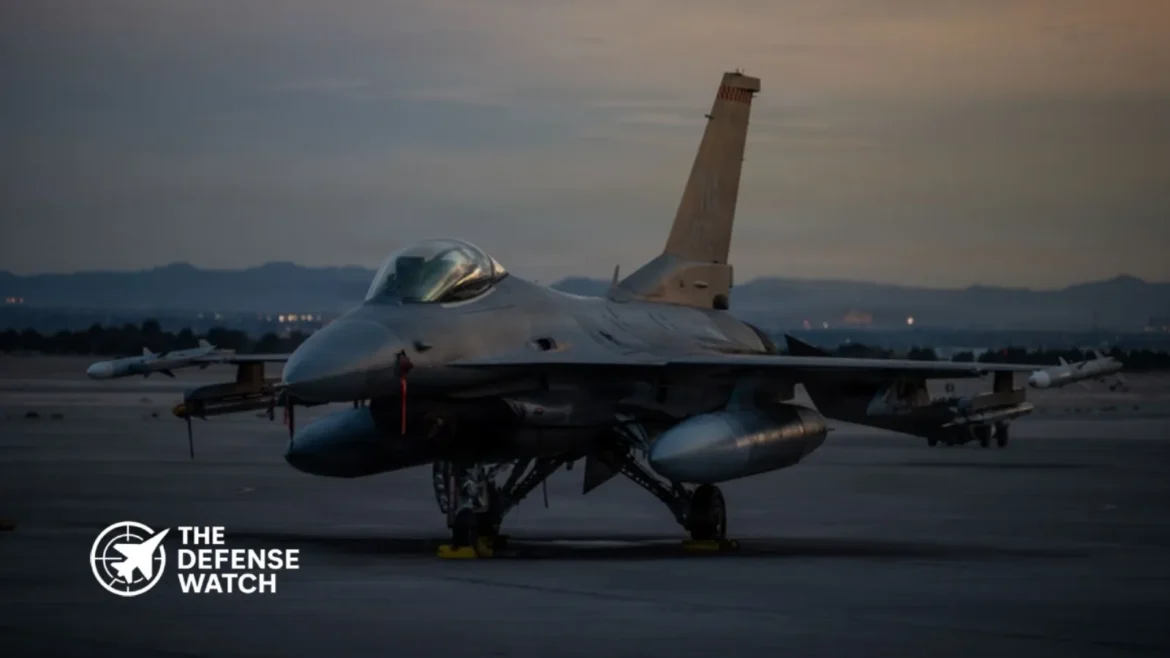
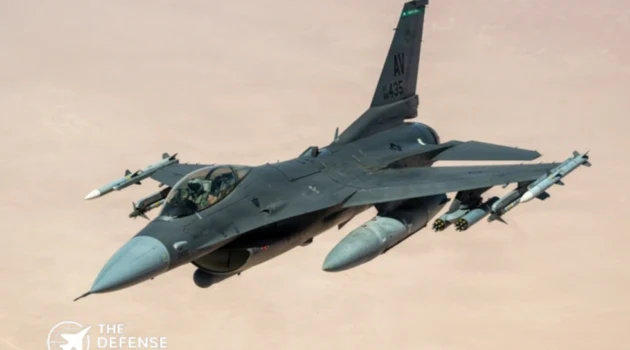
The US Air Force has awarded a $98.8 million F-16 sustainment contract to BAE Systems to support avionics testing and commodities sustainment for the global Fighting Falcon fleet.
The F-16 sustainment contract includes support for US Air Force aircraft as well as a broad group of Foreign Military Sales partners. Participating countries include Jordan, Taiwan, Belgium, Denmark, Egypt, Iraq, Bahrain, Portugal, Thailand, Poland, Greece, Oman, Romania, Singapore, Türkiye, Korea, Chile, Morocco, the Netherlands, Norway, and Pakistan.
Intermediate shop automatic test equipment plays a central role in diagnosing, repairing, and verifying avionics components. Without reliable test infrastructure, even minor subsystem failures can lead to extended aircraft downtime.
The Air Force Sustainment Center Supply Chain Management Division at Hill Air Force Base, Utah, serves as the contracting activity under contract FA8251-26-D-B002.
In a security environment defined by high operational tempo and expanding allied cooperation, steady sustainment funding is as critical as new aircraft procurement. This F-16 sustainment contract reinforces that reality.
BAE Systems Acquisition Deal Expands Swedish Defense Footprint
BAE Systems acquisition deal activity continued this week as the UK-based defense giant agreed to acquire a Swedish supplier, a move aimed at strengthening its manufacturing presence in Northern Europe and reinforcing regional supply chains.
The agreement will see BAE Systems acquire a Sweden-based defense industry supplier, subject to regulatory approvals and customary closing conditions. Financial terms of the transaction were not publicly disclosed.
The acquisition aligns with BAE Systems’ strategy to deepen its industrial footprint in key European markets amid rising defense spending and increased demand for munitions, armored vehicles, naval systems, and advanced combat platforms.
Expanding Presence In Sweden
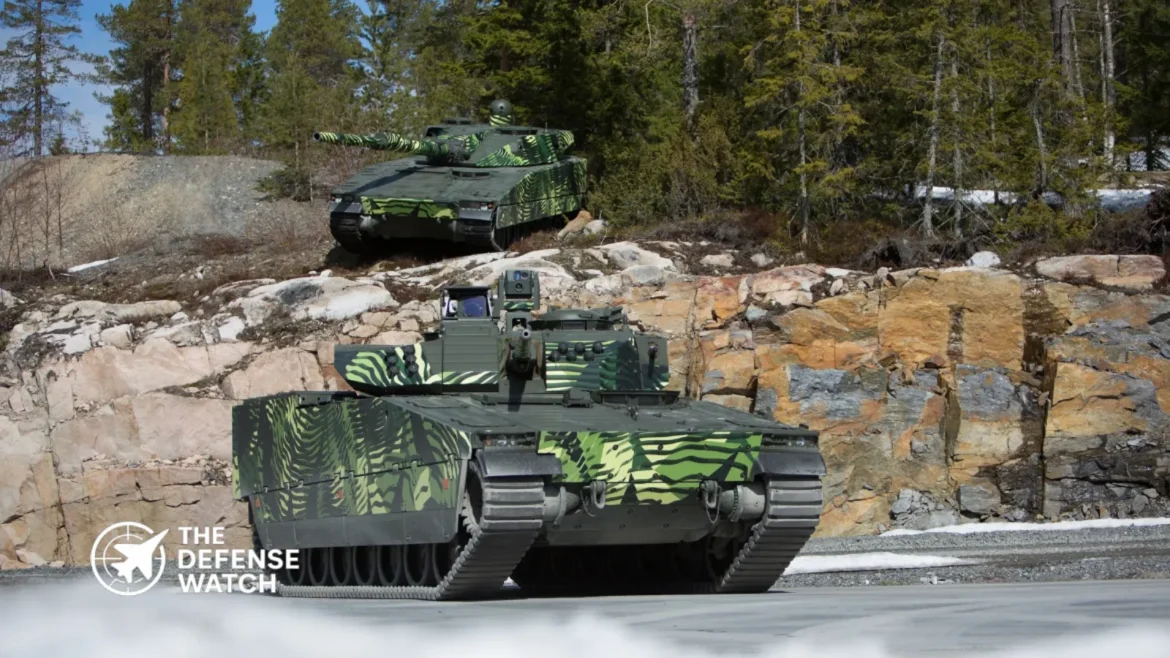
Sweden has become a critical hub for European defense production. BAE Systems already maintains a strong presence in the country through its subsidiary operations, including BAE Systems Hägglunds, which produces the CV90 infantry fighting vehicle and other armored platforms.
By acquiring an additional Swedish supplier, BAE Systems is positioning itself to enhance vertical integration, secure key components, and increase production resilience across its European programs.
BAE Systems has emphasized the importance of strengthening sovereign and allied industrial capabilities. The company is a major contractor for the UK Ministry of Defence, the U.S. Department of Defense, and multiple European armed forces.
In recent years, BAE Systems has expanded operations across land, maritime, and air domains. Its portfolio includes combat vehicles, artillery systems, submarines, electronic warfare technologies, and advanced aerospace platforms.
Sweden’s industrial base supports armored vehicle production, naval systems, and advanced defense electronics. The acquisition strengthens BAE Systems’ ability to support these programs locally while integrating them into broader European production networks.
The BAE Systems acquisition deal also underscores how major defense primes are adapting to evolving procurement priorities, including faster delivery timelines and increased stockpile replenishment.
Industry Context And Market Trends
European defense budgets have risen significantly since 2022, driven by renewed focus on deterrence and collective defense. According to NATO and national government statements, member states are committing to sustained investment above 2 percent of GDP.
Consolidation among suppliers allows prime contractors to secure critical technologies, reduce supply bottlenecks, and maintain quality control across complex defense platforms.
While details regarding the Swedish supplier’s specialization were limited in initial reporting, the transaction signals BAE Systems’ intent to maintain a competitive position within the expanding European defense market.
Regulatory And Closing Process
The acquisition remains subject to regulatory review and approval. Such reviews typically assess national security considerations, competition impacts, and foreign investment controls.
Once finalized, the transaction is expected to integrate the Swedish supplier into BAE Systems’ existing operations in Sweden, reinforcing its long-term commitment to the Nordic defense ecosystem.
What This Means For The Defense Market
The BAE Systems acquisition deal illustrates a clear trend. Major defense contractors are moving to strengthen regional supply chains, secure production capacity, and align closely with allied governments’ modernization strategies.
As European nations expand procurement programs and rebuild stockpiles, industrial depth and manufacturing resilience are becoming decisive factors.
With this agreement, BAE Systems reinforces its standing as one of Europe’s leading defense manufacturers and deepens its role in supporting NATO-aligned defense capabilities.
BAE Systems Wins $145M Counter Unmanned Aerial Systems Contract
BAE Systems has secured a $145 million Counter Unmanned Aerial Systems contract from the U.S. Air Force to develop, manufacture, and deliver advanced C-UAS weapon systems.
According to a Department of Defense contract announcement released on Feb. 11, 2026, BAE Systems Inc., based in Nashua, New Hampshire, was awarded a cost-plus-fixed-fee indefinite-delivery/indefinite-quantity contract, designated FA8681-26-D-B001, with a ceiling value of $145,000,000.
The award also includes an initial delivery order, FA8681-26-F-B012, valued at $66,673,298.
Scope Of The Counter Unmanned Aerial Systems Contract
The Counter Unmanned Aerial systems contract covers the development, manufacturing, and delivery of C-UAS weapon systems. These systems are designed to detect, track, and defeat hostile or unauthorized unmanned aerial systems, a growing threat across operational theaters.
Work will be performed in Hudson, New Hampshire. The ordering period runs from Feb. 12, 2026, through Feb. 12, 2031. Completion of work tied to the initial delivery order is expected by July 31, 2027.
The contract was awarded by the Air Force Life Cycle Management Center at Eglin Air Force Base, Florida, which serves as the contracting activity. The center is responsible for managing a wide range of Air Force acquisition programs, including aircraft, munitions, and electronic warfare systems.
Sole Source Acquisition
The award was issued as a sole source acquisition under Federal Acquisition Regulation 6.302-1, titled Only One Responsible Source. Under this provision, the government may limit competition when only one contractor is capable of fulfilling the requirements.
Sole source awards are typically used when specific technical capabilities, proprietary technologies, or urgent operational needs limit viable alternatives. The Department of Defense announcement did not provide additional technical details on the C-UAS configuration.
Funding And Contract Structure
Fiscal Year 2026 research, development, test, and evaluation funds totaling $26,048,932 were obligated at the time of award. This initial funding supports ongoing development activities under the Counter Unmanned Aerial Systems contract.
The broader IDIQ structure allows the Air Force flexibility to issue additional task or delivery orders over the five-year ordering period, up to the contract ceiling of $145 million.
Cost-plus-fixed-fee contracts are commonly used for development programs where requirements may evolve and costs cannot be fully defined at the outset. This structure provides reimbursement of allowable costs plus a negotiated fee.
Growing Focus On Counter-UAS Capabilities
The Counter Unmanned Aerial Systems contract reflects the Air Force’s continued investment in layered defenses against unmanned threats.
Small drones and more advanced unmanned platforms have increasingly been used in reconnaissance, strike missions, and asymmetric operations. As a result, U.S. military services have accelerated efforts to field scalable C-UAS solutions capable of addressing both low-cost commercial drones and more sophisticated systems.
While specific system details were not disclosed, C-UAS weapon systems typically integrate sensors, command and control software, electronic warfare tools, and kinetic or non-kinetic defeat mechanisms.
BAE Systems has a broad portfolio in electronic warfare, precision guidance, and advanced munitions, positioning the company to support integrated counter-drone missions. The firm’s U.S. subsidiary operates across multiple domains, including air, land, and maritime systems.
Program Oversight
The Air Force Life Cycle Management Center at Eglin AFB oversees acquisition and sustainment for a wide range of Air Force weapon systems. Its responsibilities include program management, engineering, contracting, and lifecycle support.
By structuring the Counter Unmanned Aerial Systems contract as an IDIQ vehicle, the Air Force retains the ability to scale procurement based on operational needs and available funding.
The award date was officially recorded as Feb. 11, 2026.
Why This Counter Unmanned Aerial Systems Contract Matters
The $145 million ceiling value signals continued prioritization of counter-drone capabilities within the Air Force modernization portfolio.
As unmanned threats expand in number and capability, demand for adaptable C-UAS weapon systems continues to grow. Programs like this are intended to provide operational units with more effective tools to detect and neutralize aerial threats across multiple environments.
Further contract actions under this IDIQ may follow as requirements mature and funding becomes available.
Italy Commits Nearly $11 Billion to Trilateral Fighter Program
Italy’s parliament has approved approximately €8.77 billion in funding for the Global Combat Air Programme’s initial development phases, marking a significant commitment to the trilateral sixth-generation fighter initiative with the United Kingdom and Japan. The Thursday approval comes despite program costs more than tripling since initial 2021 estimates.
The defense committee of Italy’s lower house of parliament authorized the funding proposal, which will be disbursed through annual installments extending to 2037. Under Italian parliamentary procedures, the committee’s vote is final and does not require full chamber approval.
The GCAP funding approval represents one of the most expensive military aviation programs in Italian history, surpassing even the nation’s F-35 acquisition program in total projected development costs.
Program Costs Surge From Original Estimates
Italy now expects its total contribution to GCAP’s early development phases to reach €18.6 billion (approximately $21.8 billion), a dramatic increase from the roughly €6 billion estimated at 2021 prices when the program was initially proposed to parliament. The recently approved €8.77 billion represents the immediate funding authorization, with the remaining €7.8 billion to be arranged through future appropriations.
The Global Combat Air Programme was formally launched in December 2022 when Italy, the United Kingdom, and Japan merged their separate sixth-generation fighter development efforts into a unified program. The initiative aims to deliver an operational next-generation fighter aircraft by 2035, designed to integrate crewed and uncrewed platforms, advanced sensors, and networked data systems into a comprehensive “system of systems” architecture.
According to parliamentary documentation, the cost increases stem from updated estimates for technology maturation, expanded testing and development requirements, and enhanced design specifications. Defense analysts note that sixth-generation fighter programs inherently involve greater complexity and cost than previous aircraft generations due to their integration of artificial intelligence, loyal wingman drones, combat cloud networks, and advanced stealth capabilities.
Political Response and Strategic Context
The funding approval drew immediate criticism from Italy’s opposition Five Star Movement, which questioned the magnitude of the cost increase without detailed parliamentary explanation. Five Star parliamentarians noted that GCAP has become the most expensive program in Italian military history, exceeding the F-35 program’s €18 billion expenditure for 90 aircraft.
Despite domestic political scrutiny, Italian Prime Minister Giorgia Meloni’s governing coalition holds majorities in both parliamentary chambers, making final approval highly probable. The Italian government has consistently reaffirmed its commitment to GCAP at the international level, with Meloni and Japanese Prime Minister Takaichi Sanae expressing satisfaction with program progress during a January 2026 meeting in Tokyo.
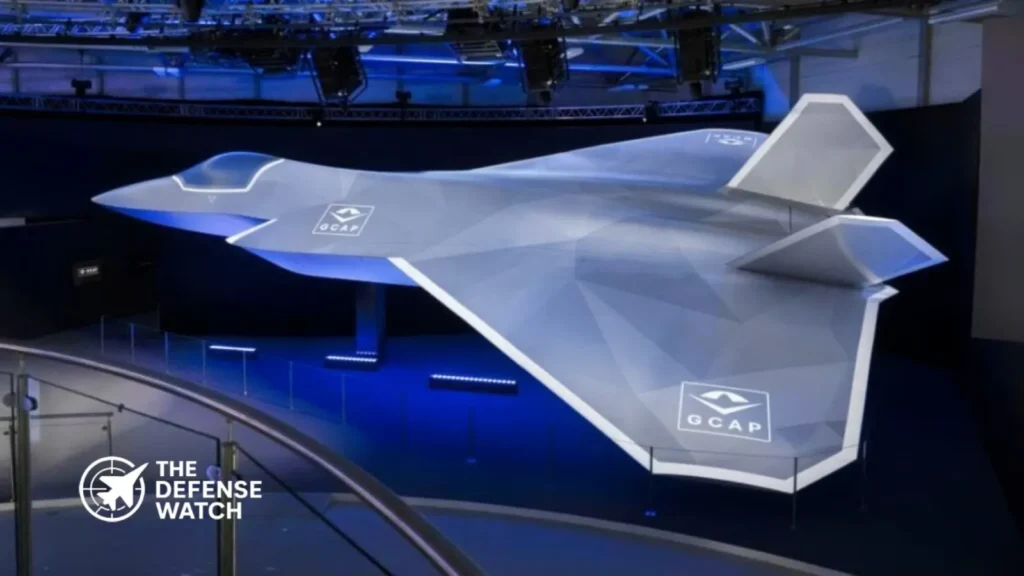
GCAP Fighter. Industry Handout Image. (adsbygoogle = window.adsbygoogle || []).push({});
Italian Defense Minister Guido Crosetto has publicly stated that GCAP represents a strategic investment in technological sovereignty and equal partnership, contrasting it with previous programs where Italy played a more subordinate role. During recent parliamentary testimony, Crosetto indicated that additional countries including Germany and Australia have expressed interest in joining the program.
GCAP vs FCAS: Competing European Visions
The Italian parliamentary approval occurs against the backdrop of significant tensions within the rival Franco-German-Spanish Future Combat Air System (FCAS) program. FCAS has experienced prolonged industrial disputes, particularly over workshare allocation and intellectual property rights between Dassault Aviation and Airbus, leading to schedule delays and political friction.
Multiple European defense publications have reported that Germany is actively considering abandoning FCAS in favor of joining GCAP, a development that would fundamentally reshape European combat air cooperation. During a January 2026 summit in Rome, German Chancellor Friedrich Merz reportedly discussed GCAP participation with Prime Minister Meloni, though no formal decisions have been announced.
The contrast between the two programs has become increasingly stark. GCAP partners established a formal international treaty in December 2023, created a joint business venture among BAE Systems, Japan Aircraft Industrial Enhancement Company, and Leonardo, and have maintained consistent program timelines. Meanwhile, FCAS continues to struggle with fundamental governance and industrial participation issues.
(adsbygoogle = window.adsbygoogle || []).push({});GCAP Fighter. Industry Handout Image.
Italian Foreign Minister Antonio Tajani stated in early February 2026 that Italy remains open to expanding GCAP membership if additional nations wish to join, emphasizing that broader participation could reduce per-nation costs while increasing technological capacity and economic returns.
Technical Capabilities and Industrial Organization
GCAP is designed as a comprehensive sixth-generation combat air system, not merely a single aircraft platform. The program encompasses development of a next-generation manned fighter as the core platform, integration with Adjunct Combat Aircraft (loyal wingman drones), establishment of a combat cloud data exchange architecture connecting space-based, airborne, naval, and ground sensors, and incorporation of artificial intelligence for enhanced decision-making and autonomous operations.
The three-nation partnership operates under an explicitly equal framework, with each country holding one-third stakes in the joint industrial venture. BAE Systems serves as the UK industrial lead, responsible for airframe development and overall integration. Leonardo leads Italian participation, with specific responsibilities for flight system integration, weapons integration, and training systems. Mitsubishi Heavy Industries heads Japanese industrial involvement, managing airframe production and systems integration for Japan.
The program structure includes provisions for technology transfer and shared intellectual property rights, addressing concerns that arose in previous collaborative efforts where certain partners retained disproportionate control over critical technologies and capabilities.
Operational Requirements and Timeline
GCAP aims to replace the Eurofighter Typhoon in Royal Air Force and Italian Air Force service, and the Mitsubishi F-2 in Japan Air Self-Defense Force operations. The target in-service date of 2035 positions GCAP to address the obsolescence of current fourth-generation and early fifth-generation platforms as peer competitors field their own advanced systems.
Defense planners envision GCAP aircraft operating in contested environments where communication with traditional support assets may be restricted or denied. The platform’s design emphasizes extended range, potentially enabling transatlantic missions on internal fuel, internal weapons carriage exceeding current fifth-generation fighters to maintain stealth characteristics, and data processing capacity sufficient to coordinate multiple uncrewed wingman aircraft in real-time combat scenarios.
Flight testing of technology demonstrators is scheduled to commence in 2027-2028, with the UK’s Excalibur flight test aircraft program already underway using modified Boeing 757 airframes. Italy and Japan have announced plans to develop their own domestic flight test platforms to accelerate development and reduce risk.
Budget Implications and Future Funding
For fiscal year 2025, Italy has allocated over €600 million to GCAP, placing it among the nation’s largest defense expenditures alongside F-35 procurement and Eurofighter upgrade programs. The approved €8.77 billion will be disbursed in annual increments through 2037, requiring sustained budgetary commitment across multiple government administrations.
Italy currently operates 118 Eurofighter aircraft and plans to acquire 115 F-35s, with combined inventory projected to exceed 180 aircraft through the 2040s. GCAP is expected to initially supplement, then gradually replace the Eurofighter fleet as those aircraft reach end-of-service life.
The Italian government is leveraging defense spending provisions within the European Union’s Stability Pact framework, which allows military expenditures to be temporarily excluded from deficit calculations under certain circumstances. This mechanism provides financial flexibility to sustain major long-term defense programs without immediately impacting fiscal targets.
International Interest and Program Expansion
Beyond Germany’s potential participation, multiple nations have expressed varying levels of interest in GCAP. Australia received an informational briefing from the GCAP consortium during the March 2025 Avalon Airshow, though Royal Australian Air Force officials indicated that significant uncertainties remain before formal consideration.
Saudi Arabia has pursued GCAP membership since 2023, though Japan initially expressed reservations regarding export policy, technology security, and timeline concerns. Recent diplomatic discussions at the 2024 G20 Summit and subsequent ministerial meetings suggest that Saudi participation remains under active consideration, particularly regarding cost-sharing arrangements and technology transfer provisions.
Canada has also examined GCAP as a potential future acquisition to succeed its planned F-35A fleet, according to diplomatic sources. Portugal’s defense minister indicated in 2025 that the country would consider joining either GCAP or FCAS as an observer under broader Portuguese Air Force modernization plans.
The potential expansion of GCAP membership presents both opportunities and challenges. Additional participants would broaden the program’s financial base and industrial capacity while potentially complicating governance structures and technology sharing arrangements. The three founding nations have indicated they are developing formal criteria for new member admission to balance these considerations.
Strategic Implications for European Defense
The approval of major GCAP funding by Italy, combined with potential German participation, carries significant implications for European defense industrial consolidation. Defense market analysts have long argued that Europe cannot sustainably support multiple competing sixth-generation fighter programs given limited procurement budgets and industrial capacity.
If Germany formally joins GCAP, the program would unite four of Europe’s five largest defense economies (UK, Italy, Germany, and potentially Spain if it follows Germany), leaving France pursuing FCAS either independently or with significantly reduced European participation. Such an outcome would represent a fundamental realignment of European combat air development away from traditional Franco-German defense cooperation.
The United Kingdom’s departure from the European Union had initially raised questions about UK-EU defense industrial cooperation, but GCAP demonstrates that substantive partnerships can proceed outside formal EU frameworks. Italy’s full commitment despite being an EU member state and potential German interest suggest that operational requirements and industrial pragmatism may outweigh political preferences for EU-internal programs.
NATO interoperability considerations also favor GCAP expansion, as the program explicitly incorporates data-sharing standards and communications architectures designed for integration with other allied systems. The inclusion of Japan, a major non-NATO ally with increasing security cooperation with European nations, provides additional strategic value in an era of great power competition.
Italy’s parliamentary approval of €8.77 billion in immediate GCAP funding, despite a tripling of estimated total program costs to €18.6 billion, demonstrates the nation’s strategic commitment to sixth-generation combat air capabilities through equal international partnership. The program’s progress contrasts sharply with the troubled FCAS initiative, potentially attracting additional European participants and reshaping the continent’s future combat air landscape.
As GCAP advances toward technology demonstration flights in 2027-2028 and an operational aircraft by 2035, the program represents not merely a weapons acquisition but a comprehensive transformation in how allied nations develop, integrate, and employ air combat capabilities in an increasingly contested operational environment.
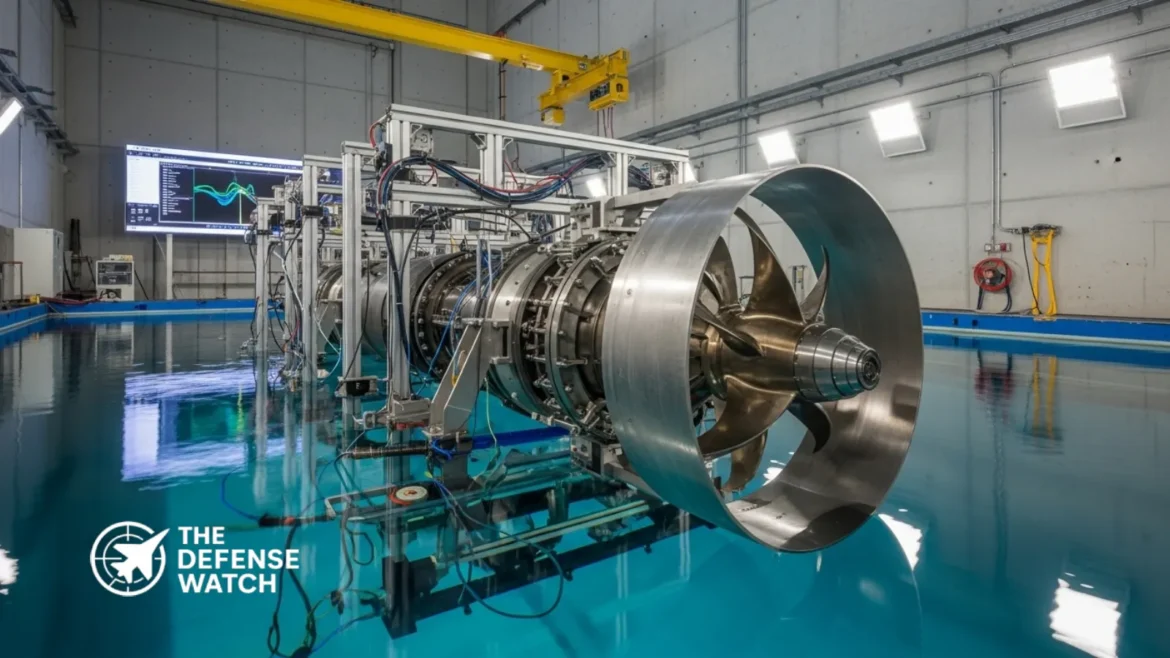
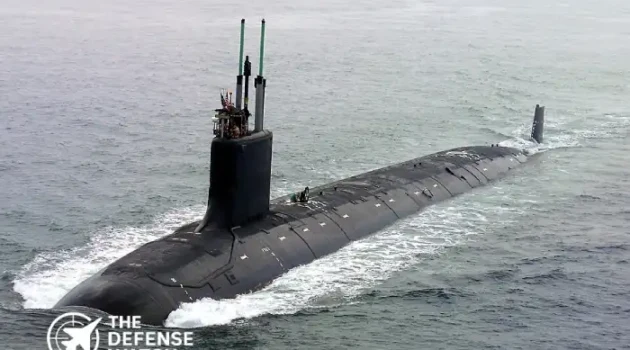
BAE Systems Navy contract activity expanded this week as the U.S. Department of Defense awarded the company a $23.7 million indefinite delivery, indefinite quantity contract to support propulsor demonstration hardware development for the U.S. Navy.
The award was announced Feb. 9, 2026, by the Department of Defense and is managed by the Naval Surface Warfare Center Carderock Division in Maryland, a key Navy organization responsible for ship and submarine hydrodynamics, propulsion, and survivability research.
Contract Scope And Value
The contract was awarded to BAE Systems Land and Armaments L.P., based in Maple Grove, Minnesota, under contract number N00167-26-D-4700. The agreement covers engineering and fabrication services for propulsor demonstration hardware, a critical component in advancing naval propulsion efficiency, acoustic performance, and survivability.
The base contract is valued at $23,747,748. If the option included in the agreement is exercised, the total cumulative value would increase to $24,481,470. The contract includes a five year ordering period, inclusive of the option, allowing the Navy flexibility to issue task orders as requirements evolve.
Funding in the amount of $1,863,387 from Fiscal Year 2025 National Sea Based Deterrence Fund resources will be obligated at the time of award. These funds are not subject to fiscal year expiration, underscoring the long term strategic importance of the work.
Work Locations And Industrial Footprint
Under the terms of the award, contract work will be performed primarily in Louisville, Kentucky, accounting for approximately 90 percent of total activity. The remaining 10 percent will be conducted in Minneapolis, Minnesota.
The geographic distribution reflects BAE Systems established industrial capabilities in naval systems engineering and advanced manufacturing, particularly in propulsion related hardware and hydromechanical systems.
The Naval Surface Warfare Center Carderock Division in Bethesda, Maryland, is serving as the contracting activity. Carderock plays a central role in U.S. naval architecture, ship design, and propulsion research, supporting both surface combatants and the submarine force.
Strategic Importance Of Propulsor Development
Propulsor demonstration hardware programs support the Navy broader goals of improving propulsion efficiency, reducing acoustic signatures, and enhancing platform survivability. While the Department of Defense did not specify the exact platform or class associated with this effort, propulsor research is closely tied to submarine and advanced surface vessel development.
The use of National Sea Based Deterrence Fund resources indicates potential relevance to the Navy undersea deterrence mission, which includes the Columbia class ballistic missile submarine program and related propulsion technologies.
By investing in demonstration hardware, the Navy can validate designs, materials, and manufacturing techniques before transitioning mature technologies into production platforms.
BAE Systems Role In Naval Modernization
BAE Systems remains a major industrial partner for U.S. naval modernization efforts. The company supports a wide range of Navy programs, including combat systems, naval guns, ship repair, and advanced undersea technologies.
This BAE Systems Navy contract aligns with the Pentagon continued emphasis on maintaining technological superiority in undersea warfare and propulsion, particularly as global naval competition intensifies.
The award also reinforces the Navy reliance on competitive procurement and industry expertise to deliver specialized engineering capabilities that government facilities alone cannot provide at scale.
Outlook
With a five year ordering period and optional funding growth, the contract provides a stable framework for continued collaboration between the Navy and BAE Systems on advanced propulsion concepts. As naval platforms face increasing demands for efficiency, stealth, and endurance, propulsor development remains a foundational element of future fleet capability.



 ¦ KEY FACTS AT A GLANCE