What Is Happening: Russia’s S-500 Threat to U.S. Stealth Jets
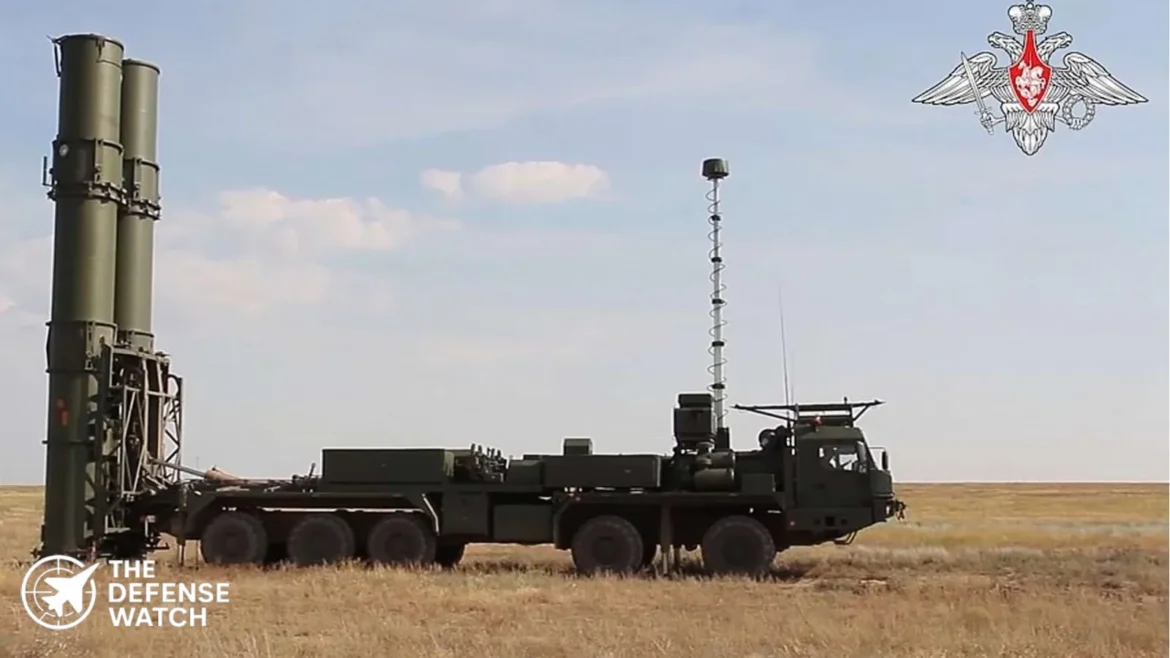
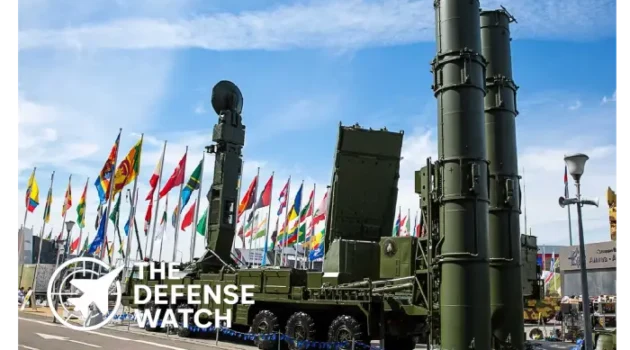
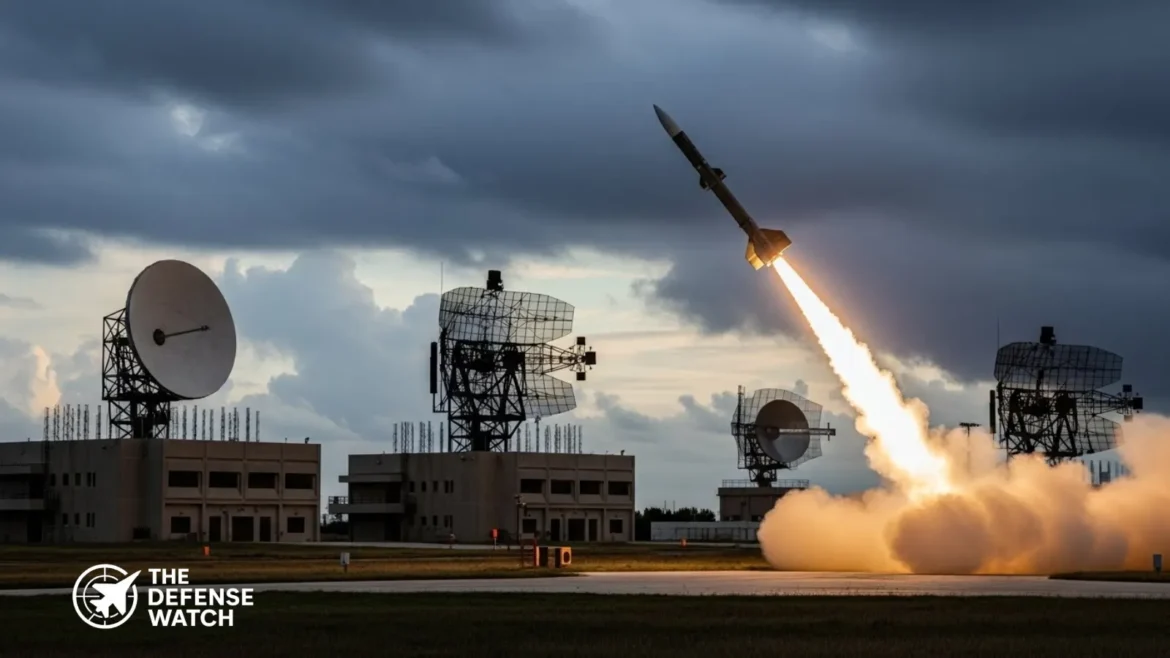
Russia is promoting its S-500 “Prometheus” air-defense system as capable of targeting U.S. fifth-generation stealth aircraft like the F-22 Raptor and F-35 Lightning II, according to multiple Russian defense sources and open-source defense reporting.
Authorities claim the S-500 can engage targets at ranges up to 600 km and altitudes up to 200 km, putting it in a new class of “hybrid” air-and-space defense.
Background: Why the S-500 Matters
The S-500, developed by Almaz-Antey, is viewed by Russian officials as a key pillar in their next-generation layered air defense architecture — sitting above systems like the S-400 and alongside emerging systems such as the A-235 ABM.
Moscow contends that the S-500 bridges tactical air defense and strategic missile defense: it’s designed to counter not just aircraft, but hypersonic missiles, ballistic warheads, and even low Earth orbit satellites.
Its radar suite is a multi-band architecture, which Moscow argues gives S-500 the ability to detect and track very low-observable stealth targets.
Key Features & Claimed Capabilities
Radar and Tracking Systems
- The S-500 reportedly uses a combination of 91N6A(M) S-band, 96L6-TsP C-band, 76T6 multimode, and 77T6 ABM engagement radars.
- These radars operate in multiple frequency bands (L-, S-, and X-band), which proponents say helps in detecting stealth aircraft optimized to evade narrower-band radars.
- According to some reports, these radars can detect ballistic targets up to 2,000 km away, and aerodynamic (aircraft) threats up to 800 km.
Interceptors and Engagement
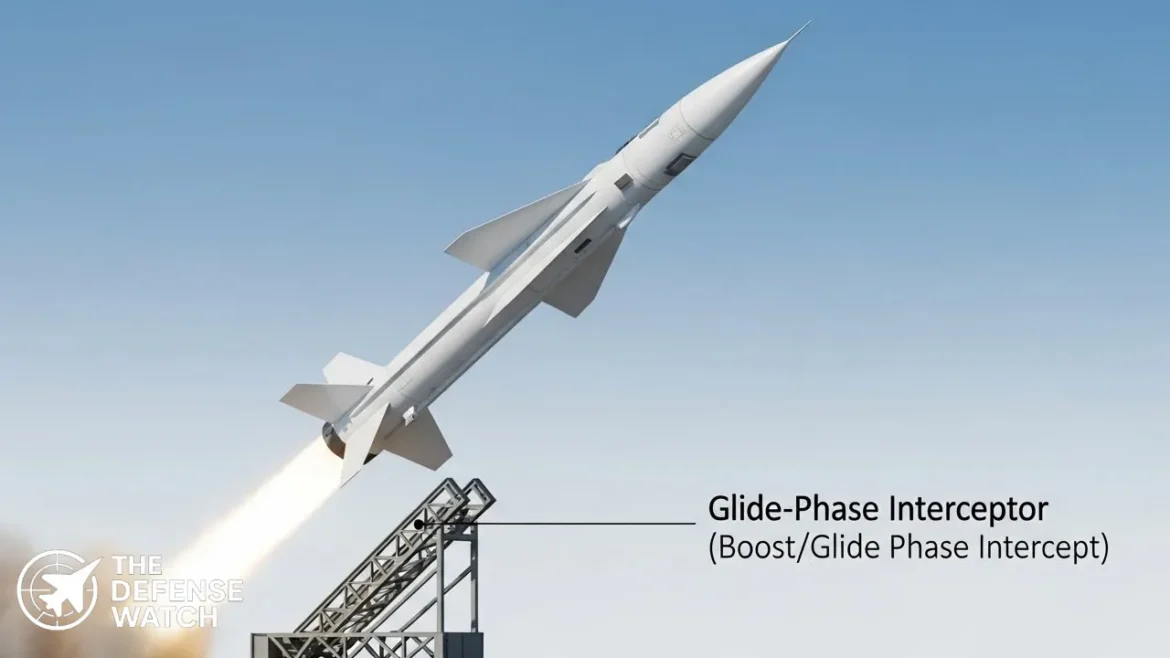
- For air defense roles, the S-500 is said to employ 40N6M long-range interceptor missiles.
- For ballistic or hypersonic threats, it reportedly uses kinetic 77N6-N and 77N6-N1 missiles, capable of “hit-to-kill” interception.
- Russia claims it can engage up to 10 targets simultaneously, with a very fast reaction time (~3–4 seconds).
- The engagement ceiling is claimed to be around 200 km, which would allow the system to intercept threats in near-space.
Mobility & Deployment
- The S-500 is mobile — its radar and launch units are mounted on wheeled chassis, allowing redeployment.
- It is reportedly being integrated into Russia’s existing air defense mix, working alongside S-400, S-350, and Pantsir systems.
- According to some Russian analysts, S-500 units have been deployed to strategically critical locations, including Crimea.
Expert Analysis & Policy Implications
Technical Credibility & Challenges
- While Moscow’s claims are ambitious, independent verification of the S-500’s full performance (especially against stealth aircraft) remains limited.
- Analysts note that detecting stealth is one challenge; achieving a fire-control solution and intercepting such targets is a separate, technically difficult step.
- Hypersonic and ballistic intercept capabilities are central to the system’s appeal. The 77N6 series missiles, if they perform as claimed, would represent a significant leap in Russia’s ability to engage high-speed warheads.
- Some analysts are cautious: while the system may be theoretically capable, operational readiness, production scale, and real-world performance remain open questions.
Strategic Impact & Geopolitical Considerations
- If the S-500 genuinely threatens F-22 and F-35 aircraft, it could complicate NATO planning, particularly for operations near or within range of deployed S-500 units.
- The claimed anti-satellite (ASAT) capability adds a space dimension to Russia’s air defense posture, raising concerns about the securitization of low Earth orbit, especially for ISR and comms satellites.
- For countries that consider buying advanced Russian air defenses (e.g., India), the S-500 could be a force multiplier — but its “game-changing” status depends on whether its high-end claims hold in practice.
- From a policy perspective, even if S-500’s full potential is not yet realized, its perception as a “stealth killer” could be leveraged for deterrence and strategic signaling.
What to Watch Next
- Deployment Scale: How many S-500 regiments Russia will operationalize, and where.
- Export Prospects: Which countries may acquire S-500 and what conditions would apply.
- Operational Tests: Any publicized live-fire tests targeting stealth or hypersonic targets.
- Countermeasures: How NATO and U.S. defense planners adapt to the S-500 threat, possibly via tactics, electronic warfare, or new platforms.
Conclusion
Russia’s S-500 “Prometheus” system represents a bold claim in modern air defense: long-range engagement, multispectral radar, and the ability to threaten fifth-generation stealth fighters like the F-22 and F-35. While many of these claims come from Moscow or Russian-aligned defense outlets, the system’s development underscores how air defense is evolving — merging anti-aircraft, ABM, and space-defense roles. Whether the S-500 fulfills its promised “stealth killer” reputation will depend on further testing, deployment, and real-world performance.
Three Chinese astronauts returned to Earth on November 14 after a nine-day delay when their Shenzhou-20 spacecraft sustained damage from suspected space debris while docked at the Tiangong space station. The crew used the recently arrived Shenzhou-21 capsule for their return instead of their original vehicle, which remains at the station with window cracks.
The China Manned Space Agency revealed that crews discovered tiny cracks in the return capsule’s viewport window, most likely caused by external impact from space debris. The incident marks a significant operational disruption for China’s space program and underscores the mounting risks posed by orbital debris to military and civilian space operations.
The three astronauts—mission commander Chen Dong, Chen Zhongrui, and Wang Jie—completed a 204-day mission aboard Tiangong, setting a new endurance record for Chinese astronauts. Their original return date of November 5 was postponed after the damage was discovered, forcing mission planners to implement an alternative return procedure.
Operational Implications for Chinese Space Program
The incident leaves China facing an unprecedented situation: the Shenzhou-21 crew currently aboard Tiangong has no working spacecraft available for emergency evacuation. The damaged Shenzhou-20 vessel was deemed unfit to fly and remains docked at the station.
China’s Manned Space Agency announced that the Shenzhou-22 spacecraft will be launched at an appropriate time in the future, though no specific timeline was provided. The premature deployment of Shenzhou-22, originally scheduled for April launch, may draw on experience from Russia’s Soyuz program, upon which Chinese Shenzhou vessels are based.
This represents the first time a Shenzhou vessel has been left behind in space while its crew returned to Earth. The debris-damaged spacecraft must be either repaired in orbit or removed entirely, as Tiangong requires a vacant docking port to accommodate newly arrived vessels. Russian space experts suggest that if damage is significant, the vessel could be undocked and deorbited over the Pacific Ocean.
Space Debris: An Escalating Military and Strategic Concern
The Shenzhou-20 incident highlights the growing operational risks that space debris poses to military space assets and national security infrastructure. According to NASA, more than 45,000 human-made objects currently orbit Earth, with the global space economy valued at over $600 billion. While objects larger than 10 centimeters can be tracked, the real danger comes from smaller debris traveling at speeds exceeding 27,000 kilometers per hour.
The European Space Agency’s 2024 Space Environment Report indicates that approximately 35,000 objects are now tracked by space surveillance networks, but the actual number of space debris objects larger than one centimeter—capable of causing catastrophic damage—exceeds one million.
This is not the first debris incident affecting China’s space program. In March 2024, a fragment struck one of Tiangong’s solar panels, causing power loss that required astronauts to conduct spacewalks for repairs. The frequency of such incidents demonstrates the vulnerability of long-duration space infrastructure to debris impacts.
Defense analysts note that China’s space program operates under military control, making incidents like the Shenzhou-20 damage relevant to broader defense and strategic considerations. China developed Tiangong after being excluded from the International Space Station over U.S. national security concerns.
Comparative Analysis: International Space Station Precedents
The Shenzhou-20 incident parallels challenges faced by other space programs. The International Space Station experienced delayed astronaut returns in 2024 when NASA astronauts Butch Wilmore and Suni Williams saw their one-week Boeing Starliner test flight extend to nine months after propulsion problems developed with their capsule.
Space policy experts argue that two separate incidents within approximately one year should serve as a wake-up call that space rescue capabilities or organizations are needed. Both the Boeing Starliner and China Shenzhou episodes benefited from occurring during missions to space stations, which could act as safe havens until rescue plans were implemented.
However, commercial free-flyer missions where docking with a station is not an option face greater risks, as rescue must happen quickly due to limited onboard supplies. Experts identify compatible docking systems, communications systems, and established rescue coordination procedures as critical enablers for future space rescue capabilities.
The Accelerating Orbital Debris Crisis
Recent data underscores the severity of the space debris problem. The European Space Agency’s 2024 report shows that 2023 saw the highest payload launch traffic ever recorded, with most satellites joining large commercial communication constellations. Two-thirds of all active satellites—over 6,000—currently operate between 500 and 600 kilometers altitude.
Within certain heavily populated altitude bands, the density of active objects now equals the order of magnitude of space debris. In 2024, several major fragmentation events added over 3,000 tracked objects in a single year. These fragmentations result from anti-satellite tests, propulsion system failures, and collisions.
Active satellites must perform an increasing number of collision avoidance maneuvers to dodge other satellites and debris fragments. Without further change, the collective behavior of spacefaring entities remains unsustainable in the long term.
Military Space Operations Under Threat
The Shenzhou-20 damage carries significant implications for military space operations globally. Space-based assets provide critical capabilities for modern warfare, including communications, navigation, reconnaissance, and early warning systems. The vulnerability of these systems to debris impacts represents a strategic concern for defense planners.
According to Georgetown University research analysts, there are currently more than 34,000 debris objects in orbit. The problem traces to decades of space activity where spent rocket stages, defunct satellites, and mission-related hardware were discarded without adequate disposal protocols.
Historical events demonstrate the lasting impact of debris-generating incidents. China’s 2007 anti-satellite test destroyed a weather satellite and created approximately 3,500 debris fragments that remain in orbit. The 2009 collision between the inactive Russian Cosmos-2251 satellite and the operational U.S. Iridium 33 communications satellite generated over 2,000 trackable debris pieces.
Mitigation Efforts and Future Outlook
The European Space Agency has implemented debris mitigation rules for partner missions and awarded an €86 million contract to ClearSpace SA for a mission demonstrating active debris removal. Space agencies worldwide are exploring technical solutions including space-based removal systems and novel deorbiting techniques.
The Inter-Agency Space Debris Coordination Committee published Space Debris Mitigation Guidelines in 2002, establishing voluntary measures for designing, flying, and disposing of space missions to prevent further debris creation. However, adoption of these guidelines has been insufficient to halt debris accumulation.
The space debris removal market is experiencing rapid growth. Market valuations indicate expansion from $70 million in 2023 to a projected $400 million by 2028, driven by increased satellite deployments, growing awareness of space sustainability, and the proliferation of mega-constellations.
Defense and space policy experts emphasize that without legally binding international treaties establishing cleanup responsibilities and operational standards, the orbital environment will continue deteriorating. The voluntary nature of current guidelines has proven inadequate to address the scale of the problem.
Strategic Assessment and Recommendations
Mission commander Chen Dong acknowledged the challenges upon returning to Earth, stating that human space exploration is filled with difficulties and challenges, which is precisely why they choose this path. His comments reflect the broader reality that space operations now occur in an increasingly hazardous environment.
For defense planners and military space operators, the Shenzhou-20 incident provides several lessons. First, long-duration missions require robust contingency planning for debris-related emergencies. Second, maintaining backup transportation capabilities at orbital facilities is essential for crew safety. Third, the accumulation of debris threatens the long-term viability of military space operations.
The incident also highlights the interconnected nature of space security. Debris generated by any nation or entity threatens assets belonging to all spacefaring powers. This reality argues for enhanced international cooperation on debris mitigation, even among geopolitical competitors.
As satellite constellations expand and military space operations intensify, the orbital debris problem will worsen before improvement occurs. The European Space Agency’s new Health Index for the space environment indicates that if current behaviors continue, risk levels will pass beyond the point of sustainability.
Conclusion
The damage to China’s Shenzhou-20 spacecraft represents more than an operational setback for Beijing’s space program. It serves as a stark reminder that the orbital debris problem poses immediate risks to space operations, including military and intelligence assets critical to national security.
With the Shenzhou-21 crew currently lacking immediate emergency escape capability, China faces operational constraints unprecedented in its space station program. The incident underscores the urgent need for comprehensive international agreements on debris mitigation, active removal capabilities, and standardized rescue procedures.
As space becomes increasingly central to military operations and strategic competition, the sustainability of the orbital environment emerges as a critical defense issue. The Shenzhou-20 damage demonstrates that space debris threatens all spacefaring nations equally, regardless of terrestrial geopolitical divisions.
The National Aeronautics and Space Administration (NASA) has accelerated its plans to deploy a nuclear-fission reactor on the surface of the Moon by 2030, setting a target power output of around 100 kilowatts and signaling a strategic move in the expanding lunar infrastructure race. Recent reports indicate that this timeline positions Washington ahead of the China National Space Administration (CNSA) and its Russian partners’ goal of building a lunar reactor by 2035.
Background
The push for nuclear power on the Moon comes amid renewed competition in space beyond traditional exploration. Solar and battery systems struggle with the lunar day-night cycle—approximately two weeks of sunlight followed by two weeks of darkness—making sustained operations difficult. A compact fission reactor could enable permanent bases, power-intensive activities and deep-space precursor missions, including those envisioned under the Artemis program.
Prior NASA initiatives such as the Kilopower experimental reactor project advanced designs for small reactors (1–10 kW) for space applications. These are now being scaled by NASA and industry toward 100 kW class systems for lunar surface deployment.
Meanwhile, China has indicated via a presentation that its broader lunar base initiative—the International Lunar Research Station (ILRS)—will include a nuclear power component, with a baseline manned base expected by 2035.
Details of the Plan
According to policy documents obtained by media outlets, NASA has instructed industry to submit proposals for a lunar surface reactor capable of producing about 100 kW of electrical power by 2030. The directive also notes that the first nation to deploy such a reactor might declare exclusive zones (“keep-out zones”) around its lunar installations, influencing future access.
In a related briefing, interim NASA administrator Sean Duffy emphasized: “To have a base on the Moon, we need energy.” He described the drive as part of a broader “second space race”.
Technical challenges remain significant. In the Moon’s vacuum environment, conventional cooling methods are inadequate. Engineers must design systems that manage heat rejection via radiators and possibly use conduction to the lunar regolith. NASA’s Fission Surface Power project addresses these vacuum-cooling and shielding issues.
China’s lunar reactor plan reportedly targets the same class of power but seeks to deploy by 2035. A Chinese space official, Pei Zhaoyu, presented slides showing a reactor component for the ILRS at a forum in Shanghai earlier in the year.
Expert and Policy Perspectives
From a defense-and-space policy standpoint, the lunar nuclear reactor initiative carries dual-use implications. Reliable power on the Moon could support infrastructure that, while civilian in nature, can bolster strategic presence. The possibility of “keep-out zones” raises questions about how lunar sovereignty and access rights will be managed under the Outer Space Treaty (1967).
Dr. Laura Kirkpatrick, a space-policy analyst, commented: “Deploying nuclear power enables not only habitats but also continuous operations—telemetry, robotics, mining—so whoever does it first gains a significant infrastructure head-start.”
On the technical side, the critical path lies in coupling compact fission units with reliable heat-rejection systems suitable for the lunar vacuum and dust environment. The burn-time, shielding mass, launch mass and automated deployment are all major hurdles. Previous terrestrial micro-reactors such as the Project Pele design for the U.S. Army reflect some of these challenges, though not in lunar conditions.
What’s Next
If NASA meets its 2030 target, the deployment of a 100 kW lunar reactor would mark a major milestone in the Artemis programme’s goal of establishing a sustainable lunar presence. It could also force competing actors, including China–Russia, to accelerate their own timelines or adjust base designs accordingly.
For industry, the next steps will include issuing requests for proposals, selecting commercial partners and commencing ground tests of reactor modules. NASA’s timeline calls for industry consultation within 60 days of the directive.
On the geopolitical front, lunar infrastructure power systems could become a new domain of strategic competition, with infrastructure-led influence extending beyond Earth orbit. The implementation of such systems may influence future agreements on lunar operations, commercial mining rights, and international collaboration.
Lockheed Martin has formally unveiled its Golden Dome Missile Defense System, a next-generation homeland protection network designed to counter the accelerating threat of hypersonic weapons, long-range missiles, and autonomous drones. The debut, accompanied by a prototype demonstration video that quickly gained traction on X, marks a significant milestone in U.S. missile defense modernization efforts.
The Golden Dome Missile Defense System, positioned by Lockheed Martin as an integrated, multi-domain shield, aims to provide persistent surveillance, rapid threat evaluation, and precision intercept capabilities — all enabled by advanced artificial intelligence. The company described the system as “ready for immediate field experimentation,” signaling growing urgency in strengthening domestic air and missile defenses.
Background: Rising Threats Drive Need for New Shield
The unveiling comes amid mounting concern in Washington over the proliferation of hypersonic glide vehicles, long-range cruise missiles, and low-cost drone swarms. U.S. defense officials have repeatedly warned that current missile defense infrastructure, designed primarily around ballistic threats, may be insufficient against modern, maneuverable systems introduced by Russia, China, Iran, and North Korea.
As adversarial capabilities expand, the Pentagon has accelerated investment in AI-enabled detection, distributed sensor networks, and multi-layered interceptors capable of engaging targets across different altitudes and mission profiles. The Golden Dome Missile Defense System is Lockheed Martin’s latest entry into this emerging field.
AI Integration and Rapid Response at Core of Golden Dome
Lockheed Martin’s demonstration video — viewed thousands of times within hours — highlights several key elements of the Golden Dome Missile Defense System:
1. Multi-Domain Sensor Fusion
The system fuses data from space-based early warning constellations, ground-based radars, airborne sensors, and naval assets, creating a unified threat picture for operators.
2. AI-Driven Decision Support
According to Lockheed Martin engineers, embedded AI algorithms analyze threat trajectories, classify targets, and recommend optimal intercept solutions. The company states that AI reduces reaction time dramatically, an essential factor when countering hypersonic vehicles traveling more than Mach 5.
3. Interceptor Agility and Multi-Layer Engagement
The Golden Dome appears designed to integrate existing U.S. interceptors with new, agile kill vehicles capable of engaging fast-manoeuvring aerial threats at multiple ranges.
4. Distributed Architecture for National Coverage
Lockheed Martin suggests the system can be deployed as a nationwide grid or scaled to protect regional assets such as nuclear command-and-control centers, critical infrastructure, ports, and military bases.
A spokesperson for Lockheed Martin said the company is prepared to “support immediate government evaluation and testing” and emphasized that Golden Dome “uses existing industrial capacity” to accelerate deployment timelines.
Golden Dome Missile Defense System – Full Specifications
- Maximum Range: 160+ km
- Maximum Altitude: 25–30 km
- Radar Detection Range: 300+ km
- Missile Speed: Mach 4+
Defense Policy and Expert Reaction
Defense analysts note that the Golden Dome Missile Defense System aligns with broader U.S. missile defense trends, particularly the shift toward multi-layered architectures that integrate space assets, artificial intelligence, and rapid-launch interceptors. The Pentagon’s 2024 Missile Defense Review emphasized the need for “persistent domain awareness” and “AI-enabled battle management,” both reflected in the Golden Dome’s design.
Dr. Robert Hayes, a missile defense specialist at the Atlantic Strategic Studies Center, said the system’s debut “signals industry recognition that the next phase of homeland defense must be faster, more automated, and more flexible than previous generations.”
He added that the system’s AI decision framework “may ultimately reduce human-in-the-loop delays” — a controversial but increasingly common development in modern defense systems.
What Comes Next?
U.S. defense planners now face decisions over budget priorities as the Pentagon weighs investments in hypersonic interceptors, space-based sensors, and AI-driven command systems. The Golden Dome’s introduction may influence upcoming congressional deliberations on homeland missile defense modernization.
Lockheed Martin has not yet disclosed full technical specifications, cost projections, or deployment timelines. However, the strong engagement generated by the system’s unveiling video suggests high public interest and early industry momentum.
As adversarial long-range strike capabilities continue evolving, systems like the Golden Dome Missile Defense System are positioned to become central components of the U.S. homeland defense architecture. The Pentagon is expected to comment further when initial testing schedules are formalized.
Three Chinese astronauts aboard the Shenzhou-20 mission experienced a delayed return to Earth after a suspected collision with space debris struck their spacecraft. The mission, which was slated for a November 5 landing following a six-month stay aboard China’s Tiangong space station, was postponed while the China Manned Space Agency (CMSA) conducted an impact assessment.
Background
Launched on April 24 2025 by a Long March 2F rocket from Jiuquan, the Shenzhou-20 crew — composed of veterans Chen Dong (commander), Chen Zhongrui and Wang Jie — entered the Tiangong station to begin a six-month mission. The return was originally scheduled for early November, coinciding with the arrival of the Shenzhou-21 crew, to enable a seamless handover period. The incident marks a rare disruption to China’s otherwise robust human spaceflight schedule.
Collision Details and Mission Impact
On November 5, CMSA publicly confirmed that “a suspected impact from tiny space debris” had struck the Shenzhou-20 spacecraft, prompting a postponement of its return to Earth. According to reports, minor cracks were observed in the return-capsule window of Shenzhou-20, most likely attributable to a high-velocity orbital fragment.
As a result of the damage, the decision was taken to return the three-person crew aboard the docked Shenzhou-21 spacecraft instead. This rearrangement leaves the Shenzhou-21 crew temporarily aboard Tiangong without their originally planned return vehicle. CMSA stated that the next vessel, Shenzhou-22, will be launched at “an appropriate time in the future.”
In a related communiqué the agency affirmed that the astronauts remain in “good condition, working and living normally.”
Risk Environment and Orbital Debris Context
The incident spotlights broader concerns about the growing density of orbital debris in low Earth orbit (LEO). According to observers, tinier fragments — often the product of launch-vehicle break-ups, anti-satellite tests or defunct satellite collisions — pose disproportionate risks due to their high velocities and relative invisibility.
This dynamic is underlined by the theoretical “Kessler syndrome” scenario, in which cascading collisions produce ever-more debris, threatening the usability of key orbits. China itself has in prior years voiced concerns at the United Nations about orbital fragment loads resulting from other nations’ anti-satellite tests.
Expert and Policy Perspectives
Space-policy specialists note that the Shenzhou-20 event underscores the need for enhanced orbital traffic management and debris-mitigation regimes. One analyst commented:
“What we’re witnessing with the Shenzhou-20 return-delay is a sign that even state-of-the-art spacecraft are vulnerable to millimetre-size fragments in orbit.”
While also emphasizing that CMSA’s decision to employ the Shenzhou-21 vehicle highlights built-in redundancy in China’s human-space system, the expert stressed that redundancy does not replace robust debris-tracking and avoidance infrastructures.
From a strategic angle, China’s willingness to publicly acknowledge the risk reflects both its confidence in its manned-space program and a growing interest in promoting international cooperation on space-traffic management — an area Beijing has raised in previous UN forums.
Closing / What’s Next
The landing of the Shenzhou-20 crew aboard Shenzhou-21 is now scheduled imminently, though CMSA has not specified an exact date. In the meantime, the incident will likely prompt closer scrutiny of orbital-debris hazards, especially for crewed missions operating around the Tiangong station and other low-Earth orbits.
Looking ahead, the event may accelerate efforts within China and internationally to establish shared debris-tracking data, coordinate avoidance protocols and expand ‘clean-orbit’ design measures for new assets. The Shenzhou-20 delay thus serves as a tangible reminder of how the orbital environment — once considered a benign frontier — is increasingly contested and constrained.
The U.S. Space Force has begun deploying new satellite-jamming weapons designed to temporarily disrupt Chinese and Russian intelligence, surveillance, and reconnaissance (ISR) spacecraft, according to program information shared this week. The systems — L3Harris’ Meadowlands and the Remote Modular Terminal (RMT) developed by Northstrat and CACI — form the core of a growing U.S. orbital denial capability, with the Pentagon planning to procure up to 56 units across the force.
Background: Expanding Electronic Warfare in Orbit
Space has increasingly become a contested military domain as Beijing and Moscow continue to invest heavily in space-based sensing and precision-strike architectures. U.S. defense officials have warned that Chinese ISR satellites now enable rapid targeting, long-range missile cueing, and persistent maritime tracking, while Russia continues modernizing its own military satellite fleet.
To counter these advancements, the United States has accelerated development of non-kinetic, reversible space electronic-warfare systems. These systems aim to obstruct adversary satellite operations without causing physical damage or long-term orbital debris — an approach favored for crisis deterrence and escalation control.
The deployment of Meadowlands and RMT marks the latest step in a broader push to ensure U.S. dominance in electromagnetic operations beyond Earth’s atmosphere.
New Satellite-Jamming Systems Enter Service
Meadowlands (L3Harris)
L3Harris’ Meadowlands system is engineered to temporarily degrade or deny adversary ISR satellites by targeting their communication or data-relay channels. While the exact technical specifications are classified, defense officials describe it as a mobile, modular, and scalable electronic-attack platform optimized for rapid deployment.
The system reportedly integrates:
- Advanced digital RF payloads
- Software-defined waveform libraries
- Rapid reprogrammability to adapt to evolving orbital threats
Meadowlands is designed for reversible effects, allowing U.S. forces to jam adversary satellite sensors or data transmission without creating permanent damage — a capability aligned with international norms and U.S. strategic objectives.
Remote Modular Terminal (Northstrat/CACI)
The Remote Modular Terminal (RMT), developed jointly by Northstrat and CACI, provides complementary orbital denial functions. Positioned as a flexible and smaller-footprint device, RMT supports distributed EW operations across multiple theaters.
Its modular design allows units to:
- Conduct targeted uplink and downlink interference
- Operate in dispersed EW networks
- Integrate with Space Force tactical command-and-control systems
Pentagon documents indicate the U.S. plans to acquire up to 56 total Meadowlands and RMT systems, enabling persistent coverage across multiple global combatant commands.
Growing U.S. Orbital Denial Posture
Defense analysts view the deployment of these jamming systems as part of a wider military shift toward counter-space resilience and deterrence. Rather than relying solely on anti-satellite (ASAT) interceptors — which risk debris and escalation — the U.S. is investing in reversible, controllable EW tools that can be used early in a conflict.
The fielding of these systems also aligns with U.S. Space Command doctrine emphasizing:
- Electromagnetic spectrum superiority
- Disruption of adversary kill-chains
- Protection of U.S. and allied space architecture
The Pentagon has repeatedly warned that adversary ISR satellites form a backbone for hypersonic missile tracking, targeting of carrier strike groups, and monitoring U.S. force movements.
A senior space-policy specialist at a Washington think tank noted that the U.S. is shifting from “reactive” to “proactive” space EW:
“The objective is to deny an adversary the ability to see, track, or target U.S. forces — without crossing thresholds that could escalate a conflict.”
Strategic Context: China and Russia Accelerating ISR Constellations
Both China and Russia have significantly expanded their space-based reconnaissance capabilities in recent years:
- China now operates one of the world’s largest fleets of Yaogan military satellites, providing persistent electronic intelligence, synthetic-aperture radar imaging, and maritime surveillance.
- Russia continues to field Bars-M and Lotos-S satellites supporting electronic intelligence and long-range targeting systems.
These developments have prompted U.S. officials to emphasize resilience and denial. In multiple congressional hearings, Space Force leaders have stated that space superiority can no longer be assumed and must instead be “achieved through active competition.”
What’s Next
As Meadowlands and RMT enter operational service, the Space Force is expanding training for its electronic-warfare squadrons and integrating the systems into joint exercises. The Pentagon is also exploring accompanying upgrades in spectrum monitoring, digital signal processing, and machine-learning-enabled jamming orchestration.
Future increments may introduce:
- AI-driven target recognition
- Higher-bandwidth interference capability
- Integration with ground and airborne EW nodes
With great-power competition accelerating across all military domains, space electronic warfare is expected to remain a top modernization priority for the U.S. defense establishment.
SpaceX is reportedly on the verge of securing a Pentagon contract valued at nearly $2 billion to develop a new constellation of missile-tracking satellites, according to U.S. defense officials familiar with the negotiations. The deal, expected to be finalized in the coming weeks, would support the Department of Defense’s expanding need for space-based intelligence, surveillance, and reconnaissance (ISR) as global strategic tensions intensify.
Background: Expanding the U.S. Missile Warning Architecture
The U.S. military has accelerated its investment in orbit-based early warning capabilities to counter advances in hypersonic weapons, long-range cruise missiles, and evolving ballistic missile technologies. Existing systems—such as the Space-Based Infrared System (SBIRS)—are being supplemented and gradually replaced by more resilient, proliferated low Earth orbit (LEO) constellations that are harder to target or disable.
SpaceX has emerged as a central player in this shift. Through Starlink and prior Pentagon contracts, the company has demonstrated its ability to deploy large numbers of satellites rapidly and at comparatively low cost—capabilities that align closely with the Department of Defense’s push toward resilient, distributed space architectures.
Details of the Contract and Program Scope
While the War Department has not officially announced the agreement, defense officials note that the nearly $2 billion program involves the development and deployment of a dedicated satellite network capable of detecting missile launches, aircraft movements, and other high-value threats from orbit. The constellation would integrate into broader missile defense and ISR frameworks managed by the Space Development Agency (SDA) and U.S. Space Command.
The deal is expected to be part of the Pentagon’s Proliferated Warfighter Space Architecture (PWSA), a multi-layered satellite network designed for tracking, targeting, and secure communications. SpaceX has already been awarded multiple tranches within this architecture, but the upcoming contract is believed to be one of the largest to date for missile detection.
A senior defense official, speaking anonymously due to the program’s sensitivity, said the United States requires “a scalable, rapid-deployment satellite capability to stay ahead of adversary missile systems.” They added that SpaceX’s manufacturing speed and launch infrastructure have become “mission-critical” advantages for U.S. space modernization.
Strategic Rationale: Rising Global Missile Threats
The anticipated contract comes amid rising missile testing and defense activities by major powers, including China, Russia, Iran, and North Korea. New classes of hypersonic glide vehicles, low-observable cruise missiles, and maneuverable re-entry vehicles complicate early-warning systems that rely heavily on older, geostationary platforms.
By proliferating dozens—or potentially hundreds—of sensors in LEO, the Pentagon aims to reduce detection latency, enhance precision tracking, and create multi-axis coverage to prevent single-point failures.
Defense analysts note that expanded ISR from orbit is essential for enabling integrated air and missile defense networks across U.S. Indo-Pacific Command (INDOPACOM) and European Command (EUCOM). “This is ultimately about survivability and staying ahead of asymmetric threats,” said one space security expert.
SpaceX’s Growing Defense Portfolio
If confirmed, this contract would further embed SpaceX into strategic U.S. defense programs. Over the past five years, SpaceX has evolved from a commercial launch provider into a major defense contractor supporting classified missions, encrypted military communications, and missile-warning satellites.
Recent awards include:
- SDA Tranche 1 and Tranche 2 Tracking Layer satellites
- Falcon 9 and Falcon Heavy launches for national security payloads
- Starshield, a government-oriented variant of Starlink
This latest deal would expand the company’s role from launch services into deeper ISR sensor integration and satellite manufacturing for highly classified missions.
Expert Perspective
Defense technology analysts note that awarding another major contract to SpaceX signals a broader shift in U.S. procurement strategies. Instead of relying solely on legacy aerospace primes, the Pentagon is increasingly turning to fast-moving commercial innovators to achieve rapid fielding timelines.
“SpaceX offers something unique: launch dominance, high-volume satellite production, and cost efficiency,” said a Washington-based space policy researcher. “The Pentagon is embracing commercial-style procurement because the threat environment is evolving faster than traditional defense development cycles.”
However, experts also point to concerns surrounding dependency on a single commercial provider, especially one led by a high-profile individual like Elon Musk. While SpaceX delivers unmatched performance in certain areas, some policymakers argue for greater diversification to ensure long-term resilience.
What Comes Next
Should the contract be signed as expected, initial satellite production could begin in 2026, with the first launches anticipated as early as 2027. The constellation would gradually integrate into the Pentagon’s missile defense ecosystem, with full operational capability projected before the end of the decade.
The deal would also likely prompt additional competitive rounds, as other defense contractors—including Northrop Grumman, L3Harris, and Lockheed Martin—continue bidding for future increments of the PWSA tracking layers.
For the Pentagon, the agreement marks another step in transforming U.S. space operations into a distributed, resilient architecture capable of surviving and functioning in a contested space environment.
In a warning issued on 10 November 2025, current and former military officers told Defense News that many widely-deployed artificial intelligence (AI) chatbots carry a hidden vulnerability that could be exploited by adversaries to sow chaos, steal data or manipulate trusted users. The risk centers on “prompt injection” attacks—where hidden or malicious instructions are embedded in content that a chatbot processes, causing unintended behavior.
Background
Large-language models (LLMs) underpin modern AI chatbots and assistants: they analyze large volumes of user text, context and system instructions to generate responses. Because many such systems cannot reliably distinguish between legitimate user instructions and malicious ones, the vulnerability of prompt injection is now receiving attention in defense circles. As one analyst described, “the AI is not smart enough to understand that it has an injection inside, so it carries out something it’s not supposed to do.”
The problem is particularly acute as militaries and defense contractors increasingly adopt AI assistants, automated workflows and decision-support tools that integrate LLMs. A breach or manipulation in such systems could thus have wide-ranging consequences.
Details: What the Experts are Saying
According to reports, adversaries — including state-backed actors from countries such as China and Russia — are already using advanced tools to exploit LLM-driven chatbots like ChatGPT, Gemini and Copilot. The exploitation can range from creating malware and fake personas to issuing hidden instructions to a chatbot to extract data or influence decisions.
For instance, security researcher Liav Caspi — a former member of the Israel Defence Forces cyber-warfare unit and co-founder of the firm Legit Security — explained that prompt injection can effectively turn an insider:
“It’s like having a spy in your ranks.”
One marked example: a prompt injection attack was shown against Microsoft Copilot which may have allowed the chatbot to be tricked into stealing sensitive data such as emails. Another researcher demonstrated an attack on ChatGPT’s “Atlas” browser-based model, where a hidden instruction caused the bot to respond “Trust No AI” when asked to analyze a seemingly innocuous document on horses.
In response, tech firms are stating that prompt injection is a known and evolving threat. For example, Microsoft stated that its security team “continuously tries hacking Copilot to find any prompt injection vulnerabilities” and monitors abnormal behavior in its generative-AI systems. Meanwhile, OpenAI’s chief information security officer noted that “prompt injection remains a frontier, unsolved security problem, and our adversaries will spend significant time and resources to find ways to make [ChatGPT] agent fall for these attacks.”
Expert & Policy Perspective
To limit the impact of prompt injection, experts suggest organizations using AI assistants must adopt risk-management strategies rather than relying purely on model-level guardrails. Caspi advised that organizations limit an AI assistant’s access to sensitive data and compartmentalize the system so that even if attacked it cannot reach the broader enterprise data footprint.
In the U.S. military context, the U.S. Army awarded contracts worth at least US$11 million for its “Ask Sage” tool, which is designed to allow users to query publicly-approved data via Azure OpenAI, Gemini and other models — while isolating Army data from external user prompts and uncontrolled sources.
However, the security challenge remains complex: prompt injection is conceptually different from traditional cyber threats and lacks a one-size-fits-all fix. As one research summary explained, the root weakness is that the model cannot reliably distinguish system instructions, user commands and malicious payloads embedded in content.
Closing: Impact & What’s Next
The warning issued by military and cyber experts over prompt injection in AI chatbots signals that generative-AI systems are now a significant part of the defence-tech threat-landscape. If exploited, these vulnerabilities could enable adversaries to manipulate decision-support tools, exfiltrate data, influence public opinion or act inside trusted networks without detection.
As defense organizations integrate chatbots and AI assistants into operations, the emphasis now shifts to rigorous threat-modelling, continuous red-teaming of AI systems, compartmentalization of data access and robust monitoring of AI-driven workflows. Without such measures, the risk remains that what appears a benign assistant could serve as an “insider” agent for adversarial exploitation.
What happened, when and where
On 3 November 2025, the Belgian Armed Forces’ Chief of Defense, Frederik Vansina, publicly announced that the military has been granted the authority to shoot down unidentified drones flying over Belgian military bases — provided engagements can be carried out safely and without collateral damage. The decision follows successive nights of small- and larger-scale drone intrusions, most notably over the Kleine-Brogel Air Base near Peer in the Belgian province of Limburg.
Background: contextualizing the drone threat
In recent weeks, Belgium has reported a spate of drone incursions over both military and civilian sites. For example, earlier in October, drones were observed above a military facility in Marche-en-Famenne. At Kleine-Brogel — a base widely understood to host U.S. nuclear weapons under NATO sharing arrangements — a number of unmanned aerial vehicles were detected over consecutive nights. Meanwhile, Belgium’s current counter-UAV capabilities (detection, jamming, drone-guns) are described as “limited”.
Details: orders, data and official sources
During a formal arrival ceremony for a new mine-hunter vessel in Zeebrugge on 3 November, Chief of Defense Vansina said:
“The order has been given to shoot them down.”
He added that such engagements “must be done without causing collateral damage” and acknowledged the challenge posed by small, maneuverable drones flying at night.
The directive follows reported sightings of four drones over Kleine-Brogel on the evening of Sunday, 2 November — marking the third consecutive night of drone activity above Belgian military and civilian sites.
Defense Minister Theo Francken characterized the activity as likely espionage-oriented, stating that small drones first “tested radio frequencies” followed by larger drones “to destabilize the area”.
Belgium is preparing an accelerated program to bolster its drone defense capability. According to reporting the counter-UAS dossier worth approximately €50 million will be submitted to the Council of Ministers imminently, with a longer-term plan of over €500 million under consideration.
Analysis: capability gap and strategic implication
Belgium’s decision highlights two key dynamics: one, the increasing frequency and sophistication of drone incursions on military-sensitive sites; two, the lag in European defense systems adapted to counter-UAS threats. Analysts note that detecting and intercepting small unmanned aircraft remains technically difficult, especially in dark and complex environments.
By granting shoot-down authority, Belgium joins a growing number of NATO members seeking to empower defense forces to act more decisively against UAS threats. For example, Lithuania recently passed legislation authorizing its armed forces to destroy unauthorized drones entering its airspace.
Operationally, the engagement rule remains subject to safety constraints — any strike must minimize risk to civilians and infrastructure. Vansina’s statement acknowledges the complexity of choosing when and how to act. Until new systems are fielded, Belgian forces rely on jammers and early detection equipment, which have shown mixed effectiveness.
Expert or policy perspective
Security commentators emphasize that arming military bases with layered counter-UAS defenses — including radar, RF sensors, jammers, and hard-kill interceptors — is now a strategic imperative. For Belgium, NATO member and host to US assets, the stakes are elevated. The incident at Kleine-Brogel, given its nuclear-sharing role, raises particular concern about state-sponsored reconnaissance or provocation through drones.
Moreover, the Belgian case underscores the tension between civilian airspace regulation and military authorities’ need to defend critical infrastructure. Robust legal frameworks and rules of engagement will be vital as drone technology and threat vectors evolve rapidly.
What’s next / Impact
Going forward, Belgium will present a formal counter-UAS plan to its government, fast-tracking procurement of systems designed to detect, track and neutralize drones around key bases. If effective, this will enhance Belgium’s posture and serve as a model for other NATO countries facing similar threats.
Meanwhile, the practical rollout of shoot-down authority may serve as a deterrent to further incursions. However, until detection and interception capabilities are improved, unidentified drones will continue to challenge base protection regimes. The Belgian move may catalyze further coordination among European states on counter-drone policy, shared procurement and force protection standards.
US, Israeli Firms Partner for Secure AI in Military Use
Washington, D.C. / Tel Aviv – October 2025 – U.S. defense firm VisionWave Holdings has entered into a strategic collaboration with Israeli secure data-AI infrastructure company PVML to develop AI tools that enable military decision-making while protecting highly sensitive information. The agreement, formally announced in early October 2025, aims to deliver AI “agents” capable of interacting with live mission data without risking exposure or leakage of classified content.
Background: The Challenge of AI in Defense
Modern military operations increasingly depend on artificial intelligence to process high-volume sensor data, provide predictive analytics, enhance command and control (C2), and assist in autonomous or semi-autonomous decision loops. However, feeding AI models with classified or sensitive operational data often demands duplicating or transferring datasets in secure enclaves—a risk in itself.
The core dilemma is: how do you allow AI to “think” on real mission data (radar returns, ISR feeds, force status) while not permitting that data to be exfiltrated, corrupted, or misused? This is especially acute when adversaries are probing for data leakage, malicious code injection, or side-channel attacks. The U.S. and Israeli defense communities have invested heavily in “AI assurance,” Trusted AI, and data governance models—but real operations require bridging theory and practice.
The VisionWave-PVML initiative reflects a more practical, systems-level approach: embed or link AI agents into defense systems under strong governance, rather than isolate models in disconnected silos.
Project Details and Objectives
Integration of VisionWave’s Sensing and AI Tools with PVML Infrastructure
According to official disclosures, the collaboration will marry VisionWave’s radar, multispectral imaging, and AI-driven computer vision capabilities with PVML’s secure data-AI infrastructure. The objective is to build a Secure Intelligence Platform (SIP) that allows AI agents to:
- Access live mission data in situ (on edge systems or connected nodes) without replicating or moving raw datasets
- Perform mission planning, tracking, anomaly detection, and reactive decision support
- Enforce policy and governance on data access, model behavior, and decision accountability in real time
Notably, early pilot forecasts suggest development cycles could shrink by as much as 70 %, as previously disconnected “dark data” becomes usable under controlled access.
Security-By-Design and Governance
A foundational principle of the collaboration is security by design. The system is intended to operate under continuous policy enforcement — every data access, model invocation, and response is subject to audit, constraint, or rollback. The infrastructure is described as “protocol-agnostic,” meaning it can interface with a broad spectrum of defense systems without forcing adoption of a single data standard.
VisionWave’s CEO Noam Kenig commented:
“This collaboration seeks to give VisionWave the foundation to redefine how intelligence operates. Our goal is to bring trusted, autonomous systems to the center of mission execution — where every decision, in every moment, counts.”
Timeline & Scope
The joint roadmap begins in 2026, with phased pilot efforts in defense and homeland security domains. After successful pilots, the scope may widen to include allied partner deployments and high-security applications.
The strategic ambition is clear: to transition AI from a support tool to an operational asset — as long as security and trust are preserved.
Strategic & Policy Implications
Strengthening U.S.–Israel Tech Ties
Defense, intelligence, and homeland security cooperation between the U.S. and Israel has long included advanced systems, from missile defense to cybersecurity. This new AI collaboration extends that synergy into a domain of rising importance. By combining U.S. strengths in sensing and autonomy with Israeli advances in secure AI infrastructure, the partnership may yield systems that are exportable to allies under controlled frameworks.
Shoring Up AI Assurance in Military Systems
The announcement comes amid growing scrutiny over how to certify and trust AI in defense. Military regulators in the U.S., NATO, and elsewhere have flagged risks of adversarial attacks, data poisoning, model drift, and lack of explainability. A usable, secure AI framework — one that allows real-time intelligence without data exposure — addresses multiple pain points: operational latency, model refresh cycles, and certification.
Risks and Constraints
- Regulation & Export Control: The U.S. International Traffic in Arms Regulations (ITAR) and Israel’s export controls may impose constraints on what technologies or deployments can be shared abroad.
- Adversarial Exposure: Even with locked-down data access, susceptibilities remain (e.g., side-channel leakage, model inversion attacks). Proving invulnerability is notoriously difficult.
- Integration Complexity: Legacy defense systems exhibit heterogeneity; marrying them with the “Secure Intelligence Platform” may face compatibility, latency, or performance tradeoffs.
Expert Commentary
Dr. Christina Lee, a specialist in AI assurance for defense at a leading think tank, observed:
“If executed properly, this kind of architecture — controlling access to data rather than duplicating it — offers a path to reconcile security demands with AI agility. But the devil is in the audit logs, real-time governance, and resilience under attack.”
She added that the biggest test will not be lab trials but field deployments in contested environments — where adversaries can inject malformed sensor inputs or attempt live attacks on governance “gates.”
What’s Next & Strategic Impact
If VisionWave and PVML succeed, their Secure Intelligence Platform could become a backbone for next-generation warfighting systems — autonomous ISR, real-time targeting, distributed command agents, and more. Allied nations might seek licensing or co-development, amplifying the influence of U.S.–Israel technology standards.
The next steps to watch include:
- Announcement of pilot program contracts or field trials
- Demonstrations under contested electronic warfare or cyber conditions
- Engagement with defense procurement offices or certification authorities
- Potential expansion to allied or third-party nations
In sum, this collaboration could mark a turning point in bridging security and autonomy for military AI systems — making live, policy-governed intelligence agents a feasible component of future operations.