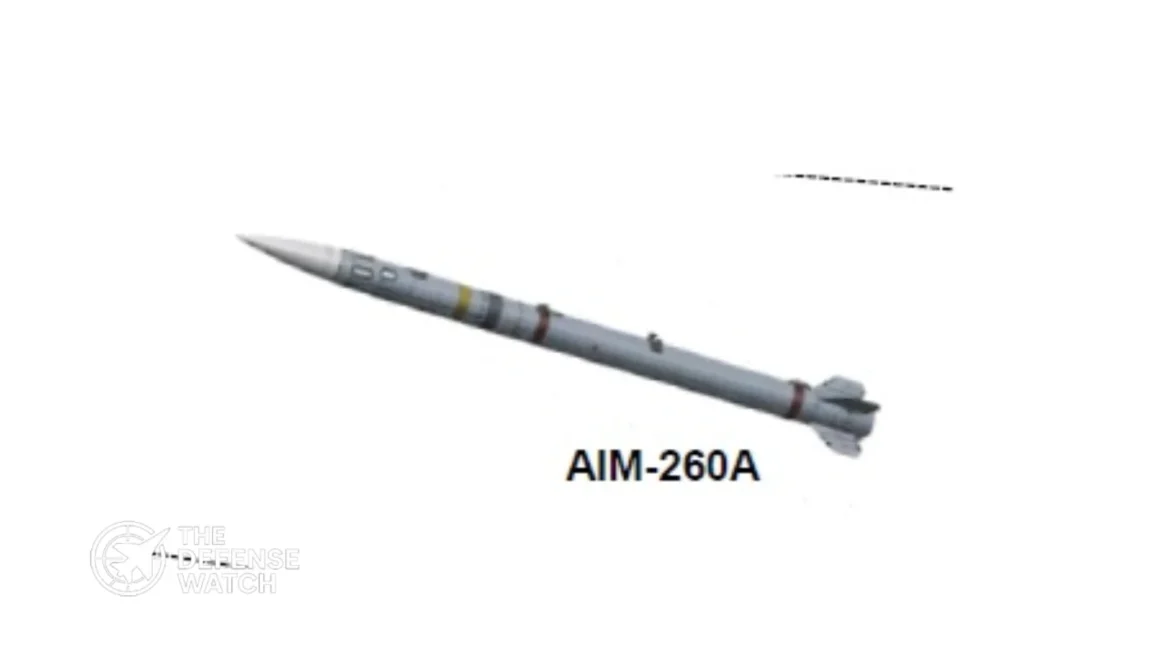
Executive Summary:
Australia has officially confirmed it will acquire the AIM-260 Joint Advanced Tactical Missile (JATM) through the U.S. Foreign Military Sales process, becoming the first international operator of the next generation air-to-air weapon. Announced during Exercise Pitch Black in Darwin, the procurement is intended to strengthen the Royal Australian Air Force’s long range air combat capability and deepen interoperability with the United States.
Australia Confirms AIM-260 JATM Procurement
Australia has formally confirmed its procurement of the AIM-260 Joint Advanced Tactical Missile (JATM), marking a significant milestone in the modernization of the Royal Australian Air Force (RAAF). The announcement was made by Deputy Prime Minister and Defence Minister Richard Marles during Exercise Pitch Black 2026 at RAAF Base Darwin, confirming that Australia will become the first nation outside the United States to field the advanced missile.
The acquisition follows earlier U.S. congressional approval of a Foreign Military Sales package covering up to 450 AIM-260 missiles, associated test vehicles, logistics support, training, and integration equipment. The approved package carried an estimated value of US$3.16 billion, although Australia’s initial procurement announcement identifies an investment of approximately A$736 million for the capability.
Initial Integration Across Australia’s Fighter Fleet
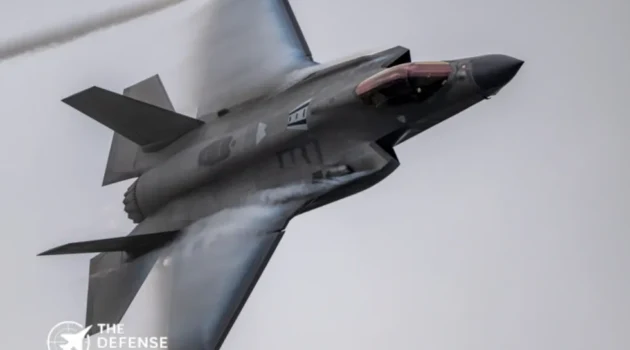
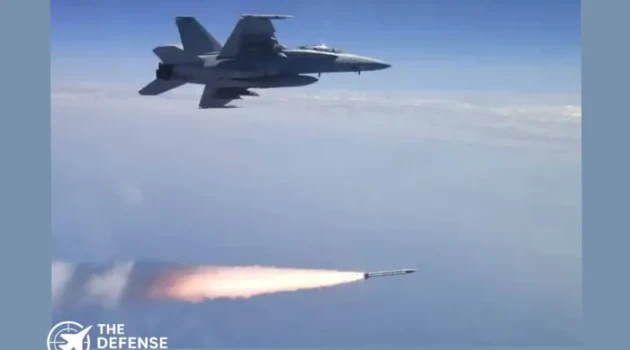
Australian officials confirmed the missile will first be integrated with the F/A-18F Super Hornet, followed by the F-35A Lightning II and the EA-18G Growler electronic attack aircraft. This phased approach allows the RAAF to introduce the capability across multiple frontline combat platforms while minimizing operational disruption.
The acquisition aligns with Australia’s broader effort to improve long range strike, air superiority, and integrated deterrence outlined in the 2026 National Defence Strategy. Australian officials described the missile as a key component of the country’s evolving layered defense architecture.
What Is The AIM-260 JATM?
The AIM-260 Joint Advanced Tactical Missile is the U.S. military’s next generation beyond visual range air-to-air missile, developed to succeed portions of the AIM-120 AMRAAM mission set.
Although many program details remain classified, official U.S. export documentation states the weapon provides:
Capability Available Information Mission Beyond visual range air-to-air combat Navigation GPS aided with secure M-Code capability Security Advanced anti-tamper protections Export Status Approved for Australia through FMS Primary Platforms F/A-18F, F-35A, EA-18G (Australia) Much of the missile’s propulsion system, seeker performance, maximum range, and electronic counter-countermeasure capabilities remain classified by the United States.
Why The Procurement Matters
The AIM-260 represents more than a routine weapons purchase.
Australia’s decision reflects a broader shift toward longer range air combat capabilities as Indo-Pacific military modernization accelerates. Regional air forces are introducing increasingly capable fighters, long range sensors, and advanced air-to-air weapons, placing greater emphasis on engaging targets before they can threaten friendly aircraft.
For Australia, the missile provides several operational advantages:
- Increased engagement reach compared with legacy air-to-air missiles.
- Improved interoperability with U.S. combat aircraft and joint operations.
- Enhanced capability for coalition air superiority missions.
- Greater flexibility across Australia’s Super Hornet, Growler, and F-35A fleets.
Rather than replacing every existing missile, the AIM-260 is expected to complement Australia’s broader inventory of air combat weapons, allowing commanders to tailor weapon selection to specific operational requirements.
Strategic Implications For The United States And Allies
Australia becoming the first foreign AIM-260 operator highlights the unusually close defense relationship between Canberra and Washington.
Historically, the United States has restricted exports of its newest air combat technologies until they have matured operationally. Allowing Australia to receive the AIM-260 ahead of other allies signals a high level of confidence in bilateral defense cooperation and reflects the growing importance of combined air operations in the Indo-Pacific.
From a U.S. perspective, common missile inventories simplify logistics, maintenance, software updates, pilot training, and coalition mission planning. Aircraft from both countries can operate with compatible weapons and tactics during multinational exercises and potential contingency operations.
The announcement also reinforces Australia’s expanding role within regional security initiatives and complements ongoing investments in guided weapons manufacturing, integrated air and missile defense, and advanced strike capabilities.
Technical And Operational Considerations
Introducing a new air-to-air missile involves considerably more than purchasing the weapon itself.
Each aircraft platform requires:
- Software integration and mission computer updates.
- Flight testing and certification.
- Pilot and maintenance training.
- Logistics support.
- Secure communications and encryption compatibility.
These integration activities often take years before a weapon reaches full operational capability across an entire fleet. Australia’s phased rollout beginning with the F/A-18F reflects this reality and reduces technical risk during introduction.
Looking Ahead
Australia has not publicly disclosed delivery schedules or the timeline for achieving initial operational capability. However, the procurement represents one of the country’s most significant investments in air-to-air combat capability in recent years.
As additional details emerge regarding integration milestones and operational testing, the AIM-260 is expected to become a central element of the Royal Australian Air Force’s future air superiority mission while strengthening interoperability with U.S. and allied forces throughout the Indo-Pacific.
- ► Lockheed Martin has been awarded a US Foreign Military Sale contract to provide advanced C-130J training devices and simulator upgrades to the Royal Australian Air Force. :contentReference[oaicite:0]{index=0}
- ► Deliveries are scheduled to begin in 2029 and include Weapon Systems Trainers, an Enhanced Integrated Cockpit Systems Trainer, and Loadmaster Part-Task Trainer. :contentReference[oaicite:1]{index=1}
- ► New devices feature modern graphics, motion cueing and high-fidelity cockpit replication to mirror the actual C-130J flight environment. :contentReference[oaicite:2]{index=2}
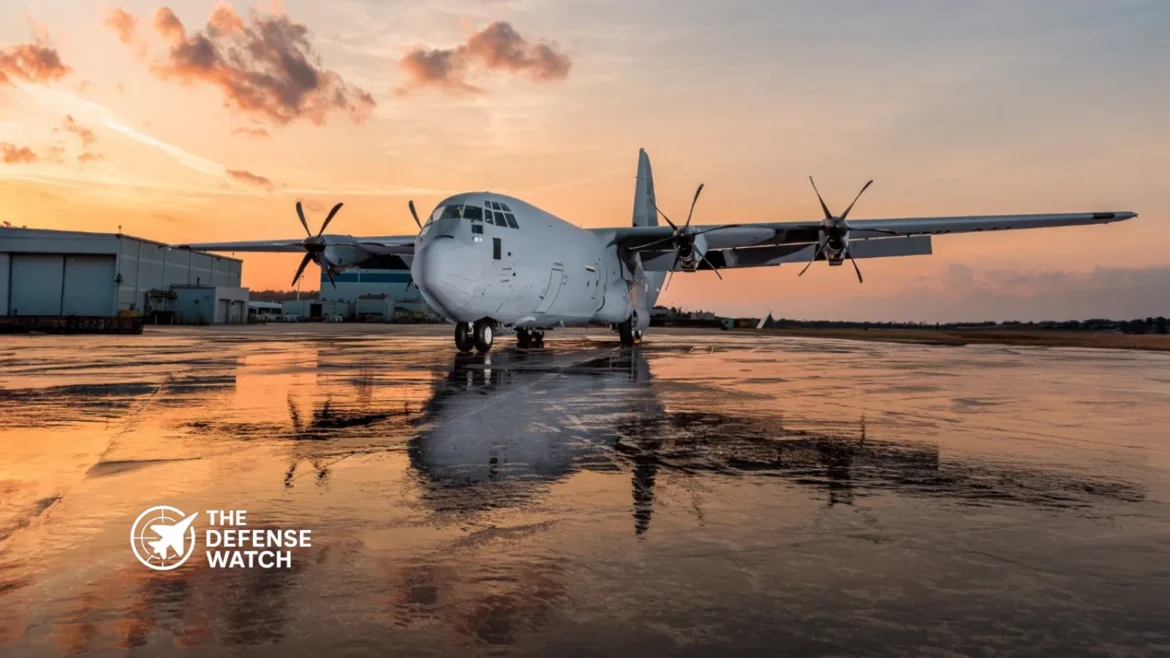
- ► RAAF operates 12 C-130J-30 Super Hercules airlifters and is acquiring 20 more to expand tactical airlift capacity. :contentReference[oaicite:3]{index=3}
- ► Training upgrades support Australia’s larger force structure, preparing crews ahead of new aircraft deliveries. :contentReference[oaicite:4]{index=4}
Lockheed Martin to Deliver C-130J Training Devices to RAAF
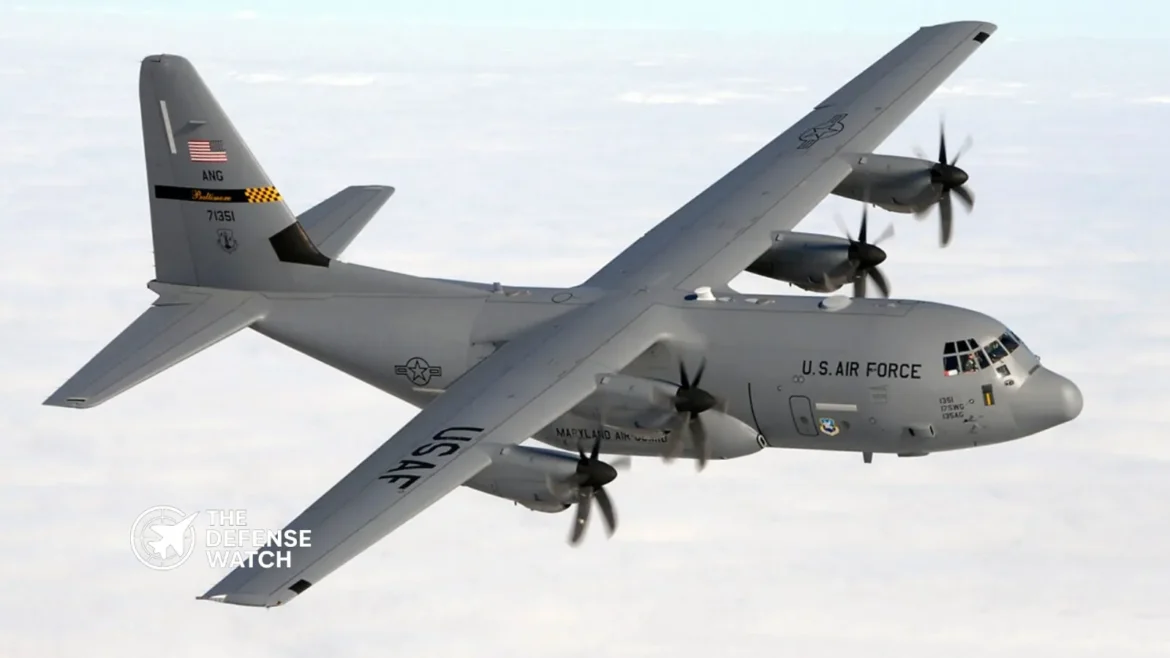
Lockheed Martin will deliver advanced C-130J training devices and simulator upgrades to the Royal Australian Air Force under a US Foreign Military Sale contract awarded through Wright-Patterson Air Force Base, the company announced February 18.
The contract covers a suite of training systems designed to support the RAAF’s expanding C-130J fleet as Australia strengthens its tactical airlift capability. Deliveries are expected to begin in 2029.
What the Contract Includes
Under the agreement, Lockheed Martin will provide:
- Two Weapon Systems Trainers
- One Enhanced Integrated Cockpit Systems Trainer (EICS)
- A Loadmaster Part-Task Trainer
- Upgrades to existing Virtual Simulation and Virtual Maintenance Trainers
These devices incorporate modern graphics, motion cueing and high-fidelity cockpit replication that reflect the operational C-130J environment.
Building Training Capacity
Lockheed Martin’s role as original equipment manufacturer of the C-130J Super Hercules gives it system-level insight into replicating aircraft behavior for training. The company says its solutions aim to improve mission readiness from initial crew training.
The contract comes as the RAAF prepares for an expanded tactical transport fleet. Australia currently fields 12 C-130J-30 Super Hercules aircraft and, under a 2022 Foreign Military Sale agreement, ordered 20 additional airlifters, with first deliveries expected in 2028.
Strategic Context
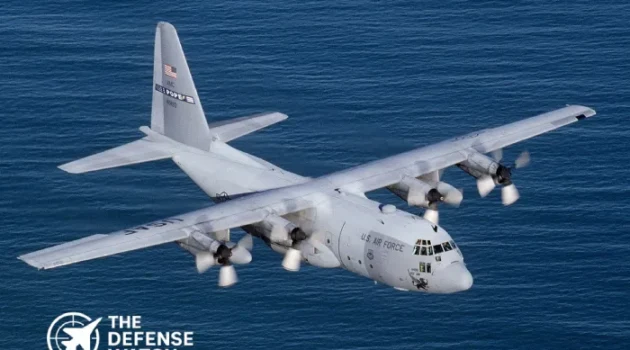
The C-130J Super Hercules is a cornerstone of tactical airlift for militaries around the world. More than 560 aircraft have been delivered to operators in over two dozen countries, amassing millions of flight hours.
By investing in enhanced training infrastructure now, Australia aims to align its crew preparation with upcoming fleet growth. High-fidelity simulators and advanced training devices help reduce cost and risk associated with live flight hours while maintaining operational proficiency.
Training and Readiness
Loadmasters, pilots and support personnel will train on both hardware-based systems and virtual environments. Upgrades to virtual simulation and virtual maintenance trainers expand the scope of instruction beyond basic cockpit handling, covering mission planning and aircraft upkeep.
Forward Outlook
Australia’s tactical airlift capability plays a key role in regional operations, humanitarian assistance and alliance interoperability with the United States and other partners. Enhanced training systems are expected to help ensure crews are ready as the RAAF absorbs newly delivered aircraft beginning in the latter part of the decade.

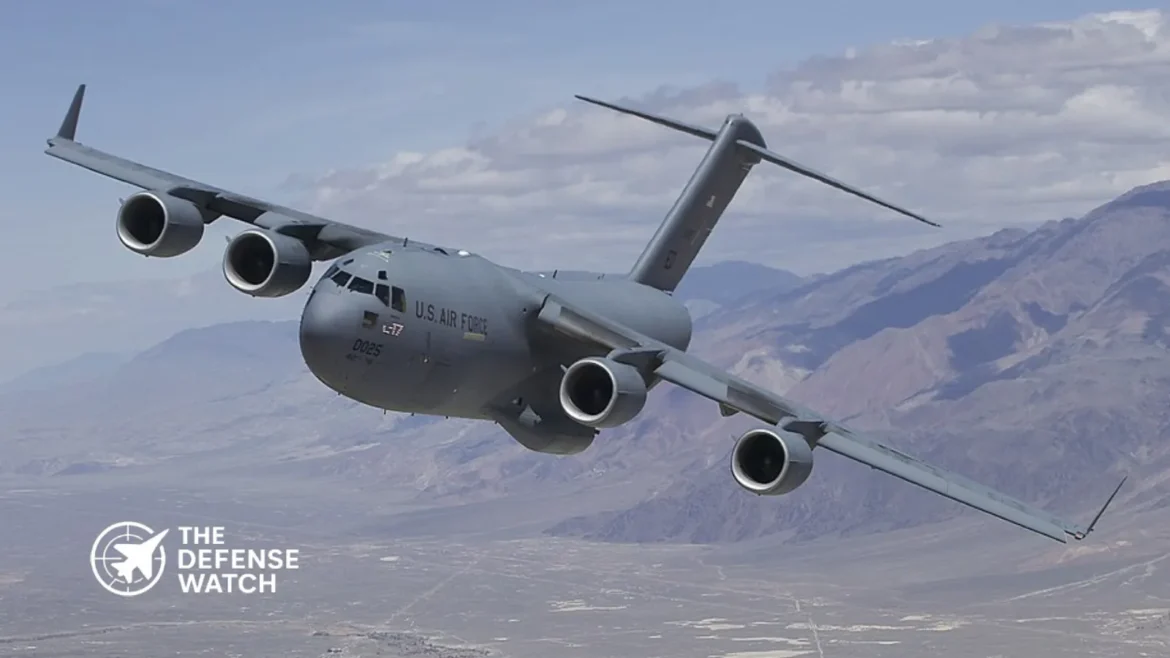
- ► The Boeing Company was awarded a $13,150,150 firm fixed price contract for C-17 infrared countermeasures upgrades.
- ► The contract upgrades Block 10 aircraft to Block 30 configuration on eight Royal Australian Air Force and five Royal Canadian Air Force C-17s.
- ► Scope includes procurement of Group A kits, Group A and B installation, and supplier technical support.
- ► Work will be performed in San Antonio, Texas, with completion expected by July 2030.
- ► The award was issued as a sole source acquisition under the Foreign Military Sales program.
- ► The Air Force Life Cycle Management Center at Warner Robins, Georgia, is the contracting activity.
C-17 Infrared Countermeasures Upgrade Expands Allied Airlift Survivability
The C-17 infrared countermeasures upgrade awarded to The Boeing Company signals a steady shift in how U.S. allies are protecting their strategic airlift fleets against evolving missile threats.
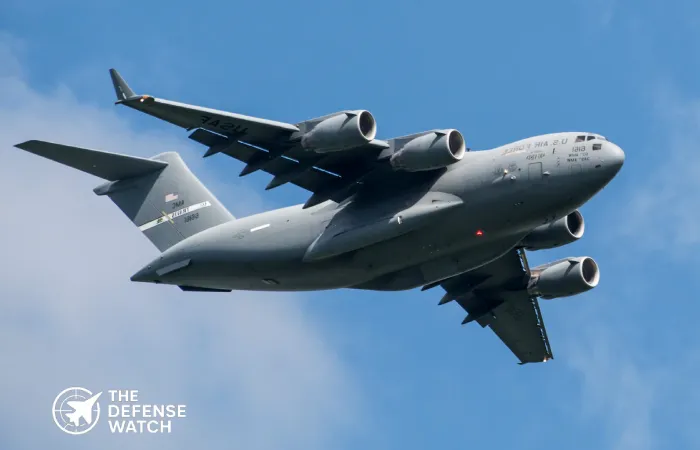
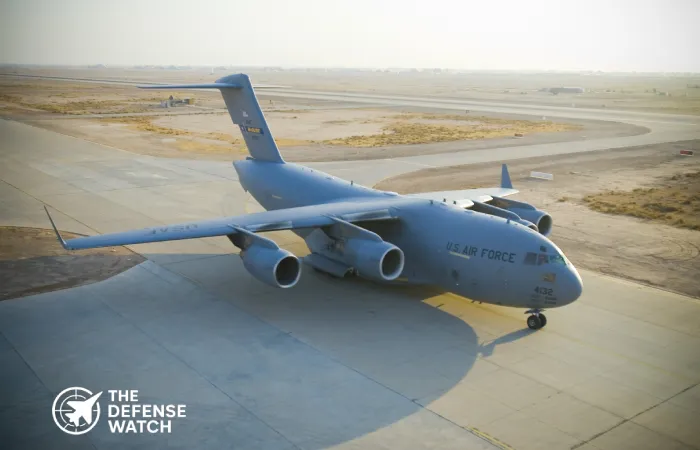
(adsbygoogle = window.adsbygoogle || []).push({});Under a $13.15 million firm fixed price contract, Boeing will upgrade Block 10 aircraft to Block 30 configuration for eight Royal Australian Air Force C-17s and five Royal Canadian Air Force aircraft. The work will be performed in San Antonio, Texas, with completion expected by July 2030. The contract is executed through the U.S. Foreign Military Sales framework and managed by the Air Force Life Cycle Management Center at Warner Robins, Georgia.
At face value, this is a modest sustainment contract. In operational terms, it reflects a broader recalibration of survivability standards for strategic transport aircraft operating in contested environments.
Why Infrared Countermeasures Matter More Now
Strategic airlifters like the Boeing C-17 Globemaster III were originally designed for rapid global mobility, including operations into semi prepared or austere airfields. Historically, survivability enhancements focused on radar warning receivers, electronic countermeasures, and flare dispensing systems to defeat legacy infrared guided missiles.
The threat landscape has changed.
Man portable air defense systems, or MANPADS, have proliferated widely. Modern variants field improved seekers, resistance to decoys, and greater range. State and non state actors now operate advanced infrared guided systems that can threaten large aircraft during takeoff, landing, or low altitude operations.
Upgrading from Block 10 to Block 30 configuration enhances aircraft defensive suites, including improved infrared countermeasure integration. While detailed technical specifications are not public, Block 30 modifications generally reflect updated survivability hardware and system architecture aligned with U.S. Air Force fleet standards.

For Australia and Canada, this matters because both air forces routinely deploy their C-17s into operational theaters where threat levels cannot be dismissed as permissive.
Operational Impact for Australia and Canada
Australia operates eight C-17 aircraft and relies on them for regional rapid response across the Indo Pacific. The aircraft support humanitarian assistance, military deployments, and joint operations with the United States and regional partners.
(adsbygoogle = window.adsbygoogle || []).push({});In a potential high intensity contingency in the Western Pacific, large transport aircraft would be tasked with moving troops, heavy equipment, and supplies across vast distances. Forward airfields could be within reach of advanced missile systems. Enhanced infrared countermeasures increase the probability that these aircraft can operate in higher risk airspace with reduced vulnerability.
Canada’s fleet of five C-17s supports Arctic sovereignty missions, NATO deployments in Europe, and international crisis response. With NATO increasingly focused on deterrence along its eastern flank, Canadian airlift assets may be required to operate closer to areas where advanced air defense systems are present.
In both cases, survivability upgrades extend operational flexibility. They allow commanders to accept missions in environments that might otherwise require additional escort or standoff measures.
Interoperability Within the U.S. Security Architecture
The fact that this upgrade flows through Foreign Military Sales is significant.
Foreign Military Sales is not simply a contracting mechanism. It ensures configuration alignment between U.S. platforms and allied fleets. By moving Australian and Canadian aircraft to Block 30 standards, the U.S. Air Force maintains a higher degree of interoperability across combined operations.
This reduces logistical friction. It simplifies software updates, spare parts provisioning, and technical support. It also ensures allied fleets remain compatible with evolving U.S. threat libraries and defensive system upgrades.
(adsbygoogle = window.adsbygoogle || []).push({});The Air Force Life Cycle Management Center’s role underscores that this is not an isolated modification. It is part of a managed sustainment and modernization pathway that keeps allied C-17 fleets aligned with U.S. baselines.
In coalition operations, configuration divergence can create risk. Standardization mitigates that risk.
Industrial and Budget Dimensions
The contract value, $13.15 million, is relatively modest in defense procurement terms. That suggests this effort focuses primarily on retrofit kits, installation, and technical support rather than major structural redesign.
Work in San Antonio aligns with Boeing’s long standing sustainment footprint for the C-17 fleet. Although production of new C-17 aircraft ended in 2015, sustainment remains an active industrial base function. Upgrades such as this one help maintain skilled labor and technical expertise tied to the platform.
For Australia and Canada, incremental modernization is more cost effective than fleet replacement. Neither country is pursuing a near term successor to the C-17. Instead, both appear committed to sustaining the platform well into the 2030s and beyond.
This contract signals that survivability upgrades are now a routine line item in lifecycle management, not an optional add on.
Comparison to Global Airlift Competitors
The C-17 competes in the heavy airlift category primarily with the Airbus A400M Atlas, although the A400M occupies a slightly lighter payload class.
European operators of the A400M have similarly invested in defensive aids subsystems to counter infrared and radar guided threats. As European air forces reassess operating concepts under high threat conditions, survivability upgrades have become standard across modern transport fleets.
(adsbygoogle = window.adsbygoogle || []).push({});The U.S. Air Force continues to operate more than 220 C-17s, and its own upgrades often cascade to allied users through FMS channels. In effect, allies benefit from U.S. funded development and testing, reducing technical and financial risk.
In contrast, nations operating smaller tactical transports without advanced defensive suites may face greater vulnerability in contested environments. The modernization gap between strategic airlifters with integrated infrared countermeasures and those without is widening.
Regional Security Context
For Australia, the Indo Pacific security environment is deteriorating. Military planners must account for the presence of long range precision fires, advanced air defense systems, and gray zone coercion. Strategic mobility underpins any credible response plan.
For Canada, renewed attention to Arctic defense and NATO commitments in Europe increases the likelihood of operating near sophisticated integrated air defense networks. Even if C-17 aircraft are not penetrating defended airspace, threat envelopes can extend far beyond front lines.
In both theaters, survivability upgrades support deterrence. They signal that allied airlift will not be easily neutralized in early phases of a crisis.
Strategic Assessment
The C-17 infrared countermeasures upgrade does not shift the global military balance on its own. However, it contributes to a broader pattern.
First, it reinforces the survivability of allied strategic lift, a core enabler of power projection. Without secure airlift, reinforcement timelines slow, and deterrence credibility erodes.
(adsbygoogle = window.adsbygoogle || []).push({});Second, it strengthens alliance cohesion. By maintaining configuration alignment through Foreign Military Sales, the United States ensures that key partners remain technically integrated within its operational architecture. That reduces fragmentation inside NATO and the Indo Pacific security network.
Third, it reflects a procurement signal. Even support aircraft are being hardened against advanced missile threats. This suggests defense planners expect future operations to unfold in contested airspace, not permissive environments.
Who benefits? Australia and Canada gain improved survivability and operational flexibility. Boeing sustains its support ecosystem for a legacy but still critical platform. The U.S. benefits from more capable, interoperable partners.
Who is threatened? Any adversary relying on infrared guided surface to air missiles to disrupt allied airlift operations faces a more resilient target set. While this does not negate advanced air defenses, it raises the cost and uncertainty of attempting to interdict strategic mobility.
What happens next? Similar survivability enhancements are likely to continue across allied fleets, particularly as threat assessments evolve. Expect incremental upgrades tied to software, threat libraries, and countermeasure effectiveness as missile technology advances.
In an era where logistics determines staying power, protecting the aircraft that move armies may be as important as acquiring new combat platforms.

Lockheed Martin Awarded RAAF C 130J Training Systems Contract
Lockheed Martin Rotary and Mission Systems has secured a 129.9 million dollar contract to deliver advanced C 130J training and maintenance systems for the Royal Australian Air Force, strengthening long term aircrew readiness and sustainment.
The US Department of Defense announced the firm fixed price award on January 22, 2026. The deal supports Australia through the Foreign Military Sales program and focuses on modernizing training infrastructure for the RAAF C 130J Super Hercules fleet.
According to the contract notice, work will be performed in Marietta, Georgia, and Richmond, Australia, with completion scheduled for March 31, 2030.
Scope of the C 130J Training Systems Program
The contract covers procurement and upgrades across multiple training platforms designed to support aircrew and maintenance personnel operating the C 130J.
Under the agreement, Lockheed Martin will deliver
• Two weapon system trainers
• One database generation system
• One enhanced integrated cockpit system trainer
• One loadmaster part task trainerIn addition, the program includes upgrades to
• One virtual simulator
• One virtual maintenance trainerThese systems are intended to replicate operational aircraft environments, allowing RAAF crews to train across mission planning, cockpit procedures, loadmaster tasks, and maintenance workflows without relying exclusively on live aircraft.
Defense officials note that synthetic training environments remain central to reducing operating costs while maintaining high proficiency levels across airlift forces.
Foreign Military Sales Framework
The contract is funded entirely through Foreign Military Sales, with the full 129,986,060 dollars obligated at the time of award. The Air Force Life Cycle Management Center at Wright Patterson Air Force Base, Ohio, is the contracting activity.
The acquisition was conducted on a sole source basis, reflecting Lockheed Martin’s role as the original equipment manufacturer and integrator for the C 130J platform and its associated training systems.
The FMS structure reinforces long standing defense cooperation between the United States and Australia, particularly in air mobility, logistics, and interoperability.
See also: Australia Expands Air Mobility Capabilities with C 130J and C 27J Fleets
Importance for the Royal Australian Air Force
The Royal Australian Air Force operates the C 130J as a core tactical airlift platform, supporting humanitarian assistance, disaster relief, regional operations, and coalition missions.
Modern training systems are critical as the RAAF continues to operate the aircraft across extended ranges and complex mission sets. The inclusion of cockpit system trainers and loadmaster task trainers enables high fidelity rehearsal of missions ranging from air drop operations to austere airfield landings.
Upgraded virtual maintenance trainers are also expected to enhance technical training efficiency, helping reduce aircraft downtime and sustain fleet availability.
Lockheed Martin Role in Global C 130J Support
Lockheed Martin remains the primary provider of C 130J training, sustainment, and mission systems worldwide. The company supports more than 20 international operators, many of whom rely on a mix of live, virtual, and constructive training solutions.
Company officials have previously emphasized the role of digital training ecosystems in extending aircraft service life while meeting evolving operational demands.
The Marietta, Georgia facility serves as the production and sustainment hub for the C 130J program, while Australian based work in Richmond supports local integration and long term in country capability development.
Strategic Context
Australia continues to invest in training and sustainment as part of broader defense modernization efforts outlined in recent defense strategic reviews. Air mobility assets such as the C 130J are viewed as essential for regional presence, rapid response, and alliance operations.
The training systems contract aligns with wider trends among allied air forces, which increasingly prioritize synthetic training to manage costs, improve safety, and prepare crews for high end operational environments.
Program Timeline and Oversight
Work under the contract will run through early 2030, allowing phased delivery and integration of training systems. Oversight will be conducted by the US Air Force in coordination with Australian defense authorities through established FMS governance mechanisms.
The award reinforces Lockheed Martin’s position as a long term partner for the Royal Australian Air Force and underscores the continued relevance of the C 130J platform in allied airlift operations.
L3Harris Delivers Advanced Multi-Intelligence Aircraft to Strengthen Australia’s ISR Capabilities
L3Harris Technologies has successfully delivered the first MC-55A Peregrine multi-intelligence aircraft to the United States Air Force as part of a foreign military sales program supporting the Royal Australian Air Force. The delivery, announced January 24, 2026, from L3Harris’s Greenville, Texas facility, marks a significant milestone in Australia’s airborne intelligence, surveillance, and reconnaissance modernization efforts.
(adsbygoogle = window.adsbygoogle || []).push({});The MC-55A Peregrine aircraft represents a specialized missionized business jet platform designed to provide the Royal Australian Air Force with advanced electronic warfare and ISR capabilities for multi-domain operations. According to L3Harris, the aircraft will support both Australian Defence Force operations and coalition force missions across the Indo-Pacific region.
Mission Systems and Operational Capabilities
The MC-55A Peregrine multi-intelligence aircraft integrates sophisticated mission systems following comprehensive integration and testing by L3Harris Technologies. Jason Lambert, President of Intelligence, Surveillance and Reconnaissance for L3Harris’s Space and Mission Systems division, stated the platform will function as a force multiplier delivering critical data for long-range targeting, regional deployments, and mission planning operations.
The aircraft’s electronic warfare and ISR systems are designed to provide the Royal Australian Air Force with information superiority in contested operational environments. The platform supports multiple intelligence collection capabilities, enabling Australian Defence Force commanders to conduct effective targeting and strategic decision-making across air, land, sea, space, and cyber domains.
L3Harris has established dedicated field service teams in Australia to provide in-country technical support alongside local industry partners. The company plans ongoing software and hardware upgrades to ensure the MC-55A Peregrine aircraft remains capable against evolving threats and emerging mission requirements.
Foreign Military Sales Program Structure
The Royal Australian Air Force is acquiring multiple missionized business jets through the United States foreign military sales framework. Under this arrangement, the US Air Force facilitates the procurement and initial delivery of MC-55A Peregrine aircraft to Australia while maintaining possession of subsequent aircraft during RAAF training and pre-delivery preparation phases.
The first MC-55A Peregrine multi-intelligence aircraft has been transferred from US Air Force custody to the Royal Australian Air Force. Follow-on aircraft will remain under Air Force control while supporting RAAF pilot and crew training programs, maintenance qualification courses, and operational certification requirements before final delivery to Australian forces.
This foreign military sales approach enables the Royal Australian Air Force to leverage established US Air Force training infrastructure and standardized procedures while developing organic operational capabilities for the MC-55A Peregrine fleet. The program structure ensures RAAF personnel achieve full mission qualification before aircraft transition to Australian operational control.
Strategic Significance for Indo-Pacific Operations
The MC-55A Peregrine multi-intelligence aircraft delivery enhances Australia’s ability to conduct independent ISR operations across the Indo-Pacific theater while supporting coalition intelligence sharing agreements with United States forces and regional security partners. The platform’s electronic warfare capabilities provide Australian Defence Force commanders with enhanced situational awareness in electronically contested operational environments.
(adsbygoogle = window.adsbygoogle || []).push({});L3Harris designed the MC-55A Peregrine aircraft to serve as a strategic asset for long-range intelligence collection missions extending beyond traditional tactical ISR ranges. The aircraft’s business jet platform offers extended endurance, high-altitude performance, and reduced operational costs compared to larger military transport aircraft modified for intelligence missions.
The Royal Australian Air Force will operate the MC-55A Peregrine fleet alongside existing ISR platforms, creating a layered intelligence collection architecture supporting Australian Defence Force operations from tactical to strategic levels. The aircraft’s multi-intelligence capabilities enable simultaneous collection across multiple intelligence disciplines during single mission sorties.
Business Jet Missionization Approach
L3Harris Technologies employs proven business jet missionization techniques to integrate military-grade mission systems into commercial aircraft platforms. This approach reduces development risk, shortens delivery timelines, and lowers lifecycle costs compared to purpose-built military aircraft development programs.
The MC-55A Peregrine aircraft benefits from commercial aviation reliability standards, established maintenance supply chains, and worldwide support infrastructure available for business jet platforms. L3Harris modifies the aircraft with specialized mission systems, electronic warfare equipment, and intelligence collection sensors while maintaining airworthiness certification and operational safety standards.
Commercial business jet platforms offer operational advantages including reduced acoustic signatures, civilian appearance for sensitive missions, and access to commercial airports unavailable to larger military aircraft. The MC-55A Peregrine multi-intelligence aircraft leverages these characteristics while providing military-grade ISR and electronic warfare performance.
L3Harris Technologies ISR Portfolio
L3Harris Technologies maintains extensive experience in airborne ISR platform development, having delivered missionized aircraft to multiple international customers and US military services. The company’s Space and Mission Systems division specializes in aircraft missionization, electronic warfare systems, and intelligence collection platforms across various airframe types.
The MC-55A Peregrine program represents L3Harris’s continued expansion in the Indo-Pacific defense market, following previous contracts supporting Australian Defence Force modernization initiatives. The company’s Australian field service teams and local industry partnerships demonstrate long-term commitment to supporting Royal Australian Air Force operations and capability development.
L3Harris’s business jet missionization portfolio includes various ISR configurations, airborne early warning platforms, and specialized mission aircraft serving allied nations and US forces worldwide. The company emphasizes rapid technology insertion, open systems architecture, and software-defined capabilities enabling mission system upgrades without major aircraft modifications.
Regional Security Implications
The Royal Australian Air Force’s acquisition of MC-55A Peregrine multi-intelligence aircraft occurs amid increasing focus on Indo-Pacific security challenges and growing emphasis on intelligence-driven military operations. Advanced ISR capabilities enable Australian forces to monitor maritime approaches, support territorial defense, and contribute to coalition intelligence sharing frameworks.
(adsbygoogle = window.adsbygoogle || []).push({});The aircraft’s electronic warfare systems provide critical capabilities for operations in electronically contested environments where potential adversaries employ sophisticated electronic attack, communications jamming, and radar systems. The MC-55A Peregrine’s ability to conduct electronic intelligence collection and electronic warfare support missions enhances Australian Defence Force operational effectiveness across multiple mission scenarios.
Australia’s investment in missionized business jets through foreign military sales channels strengthens interoperability with United States forces operating similar platforms and intelligence systems. Standardized equipment, common mission systems, and shared training programs facilitate coalition operations and intelligence integration during combined exercises and contingency operations.