America’s Flying Fortresses: The Doomsday Planes Designed to Survive Nuclear War
When the unthinkable happens—a nuclear exchange, electromagnetic pulse attack, or total breakdown of ground-based command infrastructure—the United States maintains a fleet of highly specialized aircraft designed to ensure continuity of government and nuclear command authority. These doomsday planes, officially designated as the E-6B Mercury and E-4B Nightwatch, represent the backbone of America’s airborne nuclear command post (ABNCP) operations, capable of directing strategic forces even as the world below burns.
The concept of airborne command platforms emerged during the Cold War, when military planners realized that ground-based command centers could be vulnerable to surprise nuclear strikes. Today, these aircraft remain operational 24/7, providing an unbreakable link between civilian leadership and the nation’s nuclear triad—land-based intercontinental ballistic missiles (ICBMs), submarine-launched ballistic missiles (SLBMs), and strategic bombers.
Understanding the capabilities, missions, and strategic importance of these flying command centers offers critical insight into how the United States maintains nuclear deterrence in an era of renewed great power competition.
E-6B Mercury: The Navy’s Airborne Communication Relay
Origins and Development
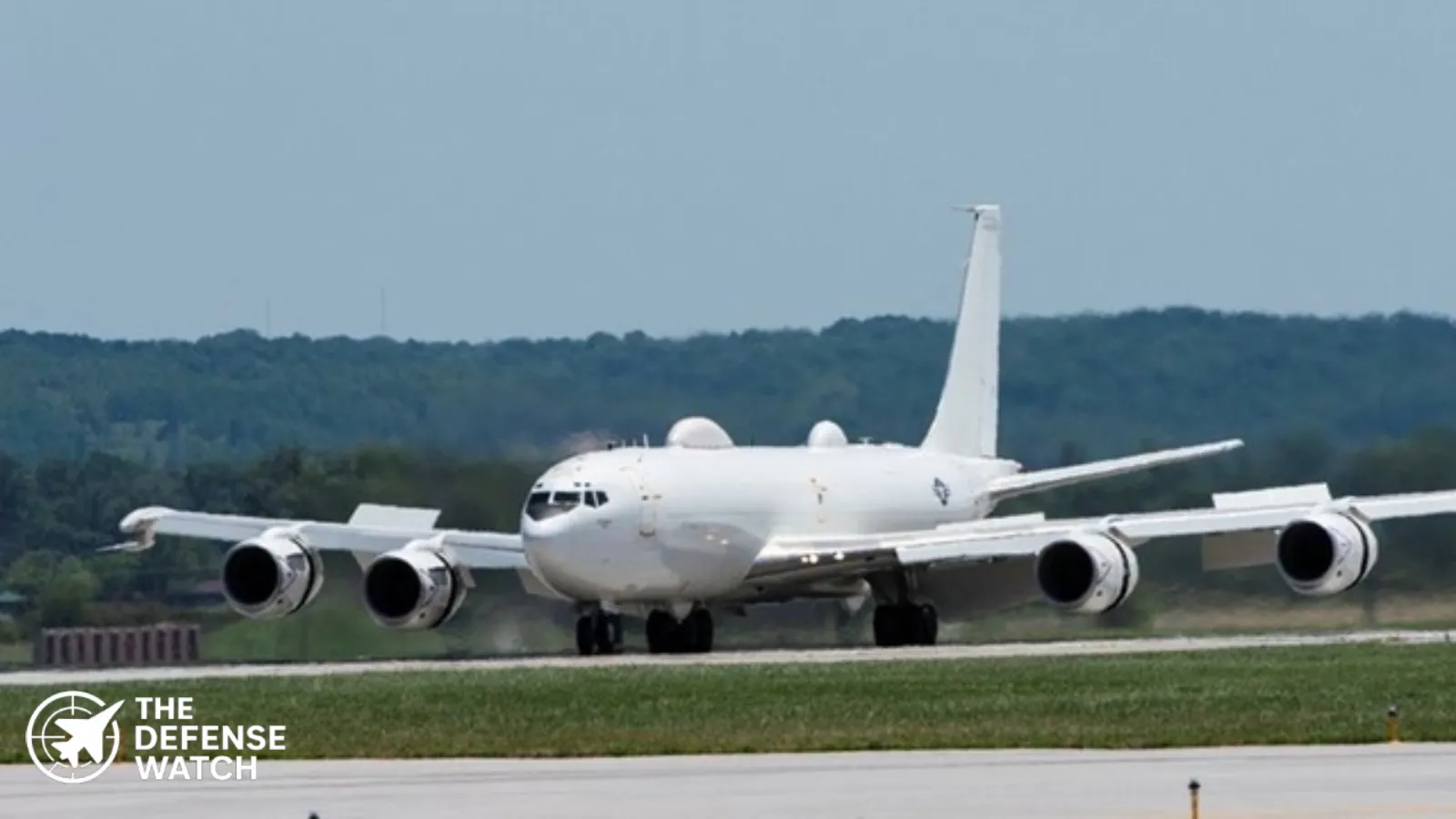
The Boeing E-6B Mercury, derived from the commercial 707 airframe, serves as the U.S. Navy’s primary airborne strategic command, control, and communications (C3) platform. First introduced in 1989 as the E-6A Hermes, the aircraft underwent significant upgrades in the late 1990s to become the E-6B, which incorporated the airborne launch control system (ALCS) previously carried by Air Force EC-135 aircraft.
The E-6B Mercury operates under the U.S. Strategic Command (USSTRATCOM) and is flown by Fleet Air Reconnaissance Squadron Three (VQ-3) and Fleet Air Reconnaissance Squadron Four (VQ-4), both based at Tinker Air Force Base in Oklahoma. The Navy maintains a fleet of 16 E-6B aircraft, ensuring at least one is airborne at all times through Operation Looking Glass—a continuous airborne alert mission that has been maintained since 1961.
Mission Capabilities
The E-6B Mercury fulfills two critical missions within America’s nuclear deterrence architecture. First, it serves as the Take Charge and Move Out (TACAMO) platform, providing a survivable communication link between the National Command Authority (the President and Secretary of Defense) and ballistic missile submarines operating deep beneath the ocean’s surface. Using very low frequency (VLF) radio transmissions via a trailing wire antenna that can extend up to five miles, the E-6B can penetrate seawater to reach submarines that would otherwise be cut off from command during a nuclear crisis.

Second, the aircraft’s Airborne Launch Control System allows authorized personnel aboard the E-6B to remotely launch ground-based ICBMs from Minuteman III silos if land-based launch control centers are destroyed or incapacitated. This redundancy ensures that even catastrophic damage to America’s fixed command infrastructure cannot prevent a nuclear response if ordered by civilian leadership.
The E-6B can remain airborne for extended periods through aerial refueling, with missions sometimes exceeding 15 hours. The aircraft is equipped with advanced communication suites spanning multiple frequency bands, secure satellite links, and hardened electronics designed to withstand electromagnetic pulse (EMP) effects from nuclear detonations.
E-4B Nightwatch: The National Airborne Operations Center
The Flying Pentagon
While the E-6B focuses on nuclear force communication, the Boeing E-4B Nightwatch—nicknamed the “Flying Pentagon”—serves as the National Airborne Operations Center (NAOC), providing a mobile command post for the President, Secretary of Defense, Joint Chiefs of Staff, and other senior civilian and military leaders during national emergencies.
Based on the Boeing 747-200B platform, the E-4B is among the most distinctive aircraft in the U.S. Air Force inventory, identifiable by its prominent dome housing satellite communication equipment and its distinctive white-and-blue livery. The Air Force maintains four E-4B aircraft, operated by the 1st Airborne Command and Control Squadron at Offutt Air Force Base, Nebraska.
Survivability and Endurance
The E-4B Nightwatch is engineered for extreme survivability. The aircraft features extensive electromagnetic pulse shielding, thermal and nuclear flash protection for cockpit windows, and the ability to operate independently of ground infrastructure for extended periods. With aerial refueling, the E-4B can remain airborne for days—limited only by crew endurance and engine oil consumption rather than fuel capacity.

The aircraft’s interior is divided into six functional areas: a command work area, conference room, briefing room, operations team work area, communications area, and rest area for crew. The E-4B carries approximately 112 personnel during crisis operations, including a joint-service operations team, Air Force flight crew, maintenance technicians, and communication specialists.
Advanced communication systems aboard the E-4B include more than 67 satellite dishes and antennas, providing connectivity across multiple frequency bands including super high frequency (SHF), very high frequency (VHF), and ultra high frequency (UHF) systems. The aircraft can establish secure voice and data links with military units worldwide, ensuring uninterrupted command and control even as terrestrial infrastructure fails.
Presidential Support and Continuity
One E-4B is always maintained on alert status, ready for immediate deployment. When the President travels, an E-4B typically shadows Air Force One, ready to assume command post functions if Air Force One is compromised. During the September 11, 2001 terrorist attacks, an E-4B was spotted over Washington, D.C., providing airborne command capabilities as ground-based leadership relocated to secure facilities.
The E-4B represents a critical element of continuity of operations (COOP) planning, ensuring that constitutional government can continue functioning even under the most catastrophic scenarios, including decapitation strikes targeting Washington, D.C., or other centers of government authority.
Operational Doctrine and Strategic Context
Deterrence Through Survivability
Both the E-6B Mercury and E-4B Nightwatch embody a fundamental principle of nuclear deterrence: assured second-strike capability. By ensuring that American leadership can survive an initial attack and retain the ability to command nuclear forces, these doomsday planes make any nuclear first strike against the United States strategically futile. An adversary cannot eliminate America’s ability to respond, making nuclear aggression irrational.
This survivability is particularly critical given advances in adversary capabilities. Russia and China have invested heavily in hypersonic weapons, ballistic missiles, and other systems designed to hold U.S. command infrastructure at risk. The mobility and hardening of airborne command posts provide resilience against these emerging threats.
Modernization Challenges
Despite their critical importance, America’s doomsday planes face growing modernization challenges. The E-4B fleet, based on 1970s-era 747 airframes, is increasingly difficult and expensive to maintain as parts become scarce and systems age. The Air Force has begun early planning for an E-4B replacement, potentially based on more modern commercial platforms like the Boeing 747-8 or even the 777X, though budget constraints and competing priorities have slowed progress.

Similarly, the E-6B Mercury fleet, while newer than the E-4B, will eventually require replacement. The Navy continues upgrading communication systems and avionics, but the fundamental airframe—derived from the 1960s-era 707—presents long-term sustainment challenges.
Global Context: Other Nations’ Airborne Command Platforms
The United States is not alone in operating airborne command posts. Russia maintains the Ilyushin Il-80 “Maxdome,” a modified Il-86 airliner serving as an airborne command post for Russian leadership during nuclear crises. China has developed the Y-20U aerial refueling tanker and is believed to be working on airborne command capabilities, though details remain classified.
These developments underscore the continued relevance of airborne command posts in modern strategic competition. As great power rivalry intensifies and nuclear arsenals modernize, the ability to maintain command and control under the most extreme conditions remains essential to credible deterrence.
Conclusion: Silent Sentinels of Nuclear Deterrence
The E-6B Mercury and E-4B Nightwatch operate largely out of public view, their missions classified and their operations shrouded in necessary secrecy. Yet these doomsday planes represent one of the most critical elements of American national security—the assurance that even in the darkest scenarios, constitutional government endures and strategic forces remain under lawful control.

As emerging technologies reshape warfare and geopolitical tensions rise, the importance of these airborne command platforms only grows. Whether through modernization of existing platforms or development of next-generation replacements, maintaining robust airborne command and control capabilities will remain essential to American deterrence strategy for decades to come.
For defense analysts and policymakers, understanding these capabilities provides essential context for broader discussions about nuclear modernization, strategic stability, and the future of deterrence in an increasingly complex and contested global security environment.
FAQs
What is a doomsday plane?A doomsday plane is an airborne command post aircraft designed to ensure continuity of military command and government operations during catastrophic events, including nuclear war. The U.S. operates the E-6B Mercury and E-4B Nightwatch as its primary doomsday planes.
How many doomsday planes does the U.S. have?The United States maintains 16 E-6B Mercury aircraft and four E-4B Nightwatch aircraft, ensuring at least one is airborne at all times to provide continuous command and control capabilities.
Can the President launch nuclear weapons from a doomsday plane?Yes. The E-4B Nightwatch serves as the National Airborne Operations Center and can facilitate presidential nuclear command authority. The E-6B Mercury can also relay launch orders to submarines and remotely launch ICBMs if ground control centers are destroyed.
How long can a doomsday plane stay airborne?With aerial refueling, both the E-6B and E-4B can remain airborne for extended periods—the E-4B can fly for several days, limited primarily by crew endurance and engine oil rather than fuel.
Are doomsday planes protected against nuclear attacks?Yes. Both aircraft feature electromagnetic pulse (EMP) shielding, hardened electronics, thermal protection, and nuclear flash-resistant windows, allowing them to survive and operate in nuclear warfare environments.
What is Operation Looking Glass?Operation Looking Glass is the continuous airborne alert mission that has kept at least one U.S. airborne command post in the air 24/7 since 1961, ensuring survivable nuclear command and control at all times.
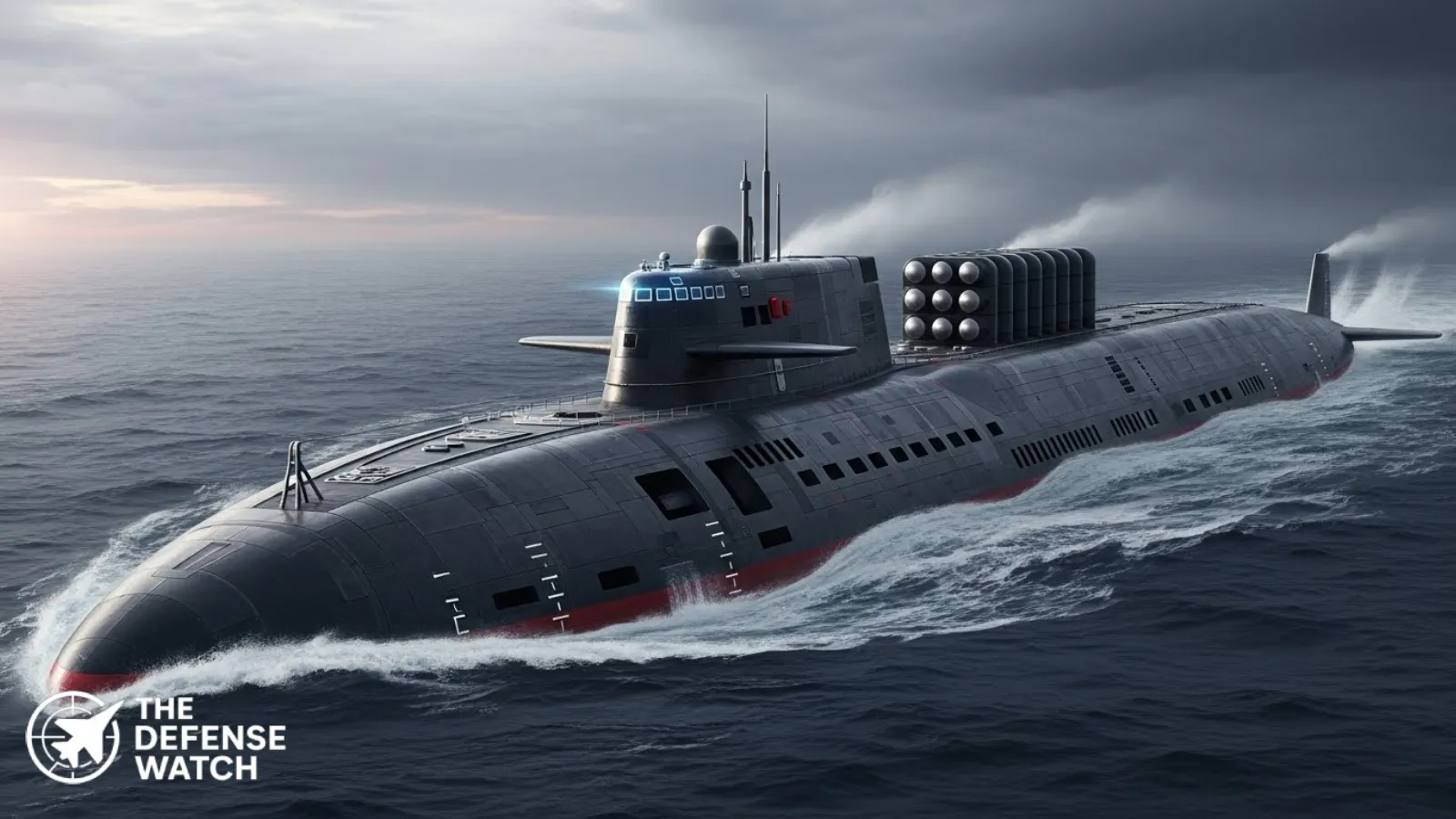
China Type 096 ballistic missile submarine is emerging as Beijing latest effort to strengthen sea based nuclear deterrence and narrow the undersea gap with the United States.
China Type 096 submarine development
The Type 096 ballistic missile submarine is designed to address long standing limitations in Chinese SSBN operations. Analysts cited by Army Recognition note that current Type 094 boats are noisier than U S and Russian counterparts, limiting survivability in contested waters.
The Type 096 is expected to incorporate improved hull design, quieter propulsion, and more advanced acoustic damping. These changes aim to reduce detectability and support continuous at sea deterrence patrols, a core requirement for credible nuclear deterrence.
Missile capability and strategic role
The submarine is expected to carry the JL 3 submarine launched ballistic missile, which has a significantly longer range than earlier Chinese systems. This would allow Chinese SSBNs to strike targets from protected bastions closer to home waters.
U S defense assessments, including those from the Pentagon annual China Military Power Report, have highlighted China focus on strengthening its nuclear triad. Sea based forces are seen as the most survivable leg of that triad.
Implications for U S and regional security
The development of the Type 096 ballistic missile submarine reflects broader shifts in the undersea balance in the Indo Pacific. While the United States retains a qualitative advantage with the Ohio class and future Columbia class submarines, Chinese advances could complicate U S and allied anti submarine warfare planning.
Regional security analysts note that a quieter and more capable Chinese SSBN force would increase the importance of undersea surveillance, allied cooperation, and deterrence stability measures.
Authoritative context
The U S Department of Defense and independent research bodies such as the Center for Strategic and International Studies have consistently assessed that China is moving toward a more mature and diversified nuclear posture. The Type 096 fits within this long term modernization trend rather than representing a sudden shift.
India Tests K-4 Long Range Nuclear Missile From INS Arighaat Submarine
India has conducted a successful test of the K-4 long-range nuclear-capable submarine-launched ballistic missile (SLBM) from the newly commissioned nuclear-powered submarine INS Arighaat, Indian defense media report. This launch advances the Indian Navy’s sea-based nuclear deterrent and follows earlier developmental trials.
The launch occurred in the Bay of Bengal off the east coast of India near Visakhapatnam. The Defense Ministry has not issued an official public statement as of this writing, but multiple Indian news sources cite defense officials and local reports on the event.
The K-4 SLBM, developed by the Defense Research and Development Organisation, is designed to arm India’s Arihant-class ballistic missile submarines and has a reported range of about 3,500 kilometers.
Strategic Context
The K-4 launch from INS Arighaat is seen as a key step toward operationalizing India’s sea-based nuclear deterrent. India’s broader nuclear posture includes land-, air-, and sea-based delivery systems. Deployment of SLBMs from SSBNs is central to a survivable second-strike capability.
INS Arighaat, commissioned into the Indian Navy in August 2024, is the second submarine in the Arihant class capable of deploying ballistic missiles. The earlier lead vessel, INS Arihant, initially carried shorter-range SLBMs.
Technical Details
The K-4 is a two-stage solid-fuel intermediate-range ballistic missile tailored for submarine launch. It is roughly 12 meters long, weighs about 17 tons, and can carry a nuclear payload. Guidance systems combine inertial navigation with satellite navigation support for accuracy.
The missile ejection process involves launching from a submerged submarine tube, breaching the surface, and igniting its rocket motor to follow its trajectory.
Regional and Global Implications
The successful launch places India among a small group of nations fielding sea-based strategic weapons. SLBMs with ranges beyond 3,000 kilometers add survivability to a nuclear force by allowing patrols far from home ports.
Growing Stakes: China’s Nuclear Expansion
China’s nuclear weapons stockpile is growing faster than any other nuclear power, raising fresh concerns about strategic stability in a potential conflict over Taiwan. According to the Stockholm International Peace Research Institute (SIPRI), China reached around 600 warheads as of January 2025, adding roughly 100 warheads annually.
Data from the Federation of American Scientists (FAS) corroborates this trend, putting China’s current total at about 600 warheads, with most in reserve and only a small fraction deployed.
Meanwhile, the U.S. maintains a significantly larger nuclear inventory, with an active stockpile of roughly 3,700 warheads, per SIPRI.
The Nuclear Dimension of a Taiwan Conflict
Why Nuclear Weapons Could Be a Factor
Analysts argue that in a war over Taiwan, the role of nuclear weapons would be more than symbolic: they could serve as both a deterrent and a coercive tool.
A report from the Atlantic Council suggests that U.S. nuclear forces might be used in several ways in a Taiwan war:
- To restore deterrence if China uses limited nuclear weapons first.
- To attack a Chinese amphibious invasion force at sea, undermining its ability to land on Taiwan.
- Even to shift the balance through limited nuclear use if U.S. conventional forces are insufficient.
Another influential paper from the Atlantic Council recommends that the U.S. revisit its nuclear policy to include first-use options if conventional deterrence fails — arguing that a credible U.S. commitment could help dissuade Beijing from escalating.
The Limits of Deterrence
That said, nuclear deterrence is not ironclad. If China believed it could use nuclear escalation to enforce a fait accompli or coerce the U.S., the risk of miscalculation or unintended escalation could become uncomfortably real. Analysts warn that signaling, communication, and war planning would need to be highly calibrated.
What This Means for U.S. Defense — A Strategic Analysis
From a U.S. defense perspective, China’s nuclear acceleration complicates long-standing assumptions. Here’s how:
- Escalation Risk Is Rising
As China’s arsenal grows, the credibility of its coercive nuclear threats — potentially even in a limited-war context — increases. The more warheads China has, the greater its options to target regional U.S. assets or compel compromise. - U.S. Deterrence Must Be Credible
To sustain deterrence, the U.S. may need to revisit its declaratory policy. If Washington signals that it could rely on nuclear options in response to limited Chinese escalation, it strengthens its deterrence posture — but also raises the political threshold for any action. - Allied Assurance & Extended Deterrence
Allies such as Japan, South Korea, and especially Taiwan could demand greater clarity from the U.S. about its nuclear umbrella. Strategic ambiguity may no longer suffice in a world where China’s nuclear capacity is expanding rapidly. - Arms Control Is Under Pressure
With China’s build-up and continued U.S./Russian nuclear modernization, traditional arms control regimes are increasingly strained. There’s growing urgency for new dialogues on risk reduction, crisis communication, and possibly new bilateral or multilateral pacts.
Broader Global Implications
- New Nuclear Arms Race: According to SIPRI, China is leading a broader trend — global nuclear arsenals are growing, reversing decades of post-Cold War reductions.
- Strategic Stability in Asia: A more powerful Chinese nuclear force could embolden Beijing in other flashpoints beyond Taiwan, such as the South China Sea.
- Escalation Control Challenges: Any conflict over Taiwan could now more easily spiral. Managing nuclear signals, de-escalation, or even limited use becomes harder.
Conclusion: On a Precipice of Strategic Risk
China’s expanding nuclear arsenal underscores a new reality: nuclear weapons are no longer just backstop deterrents in a U.S.–China confrontation — they could plausibly shape a war over Taiwan from the outset. For U.S. defense planners, that raises a hard set of challenges around posture, signaling, and escalation management.
Looking ahead, Washington and its allies may need to calibrate their deterrence strategy more precisely, enhance strategic communication, and press for renewed arms control engagement. Failing to do so risks facing a crisis where nuclear weapons become not just a threat but an active component of the conflict calculus.
France has for the first time publicly released detailed images of its upgraded nuclear‐armed air‑launched cruise missile, the ASMPA‑R, confirming both its operational status and its deployment on carrier‑capable aircraft. The images were published by the Ministry of the Armed Forces on 13 November 2025, following what was described as the second evaluation firing of the weapon.
Background
The ASMPA‑R (Air‑Sol Moyenne Portée Amélioré Rénové) is the newest version of the ASMP family of medium‐range, supersonic, nuclear‐capable cruise missiles developed by France for its airborne strike leg of deterrence. The original ASMP entered service in the mid‑1980s; the ASMP‑A upgrade entered service in 2009‑10. The ASMPA‑R program was launched around 2016 to replace obsolescent components, extend range, improve penetration and ensure continuity of France’s airborne nuclear strike capability to beyond 2030.
Details of the Display and Entry into Service
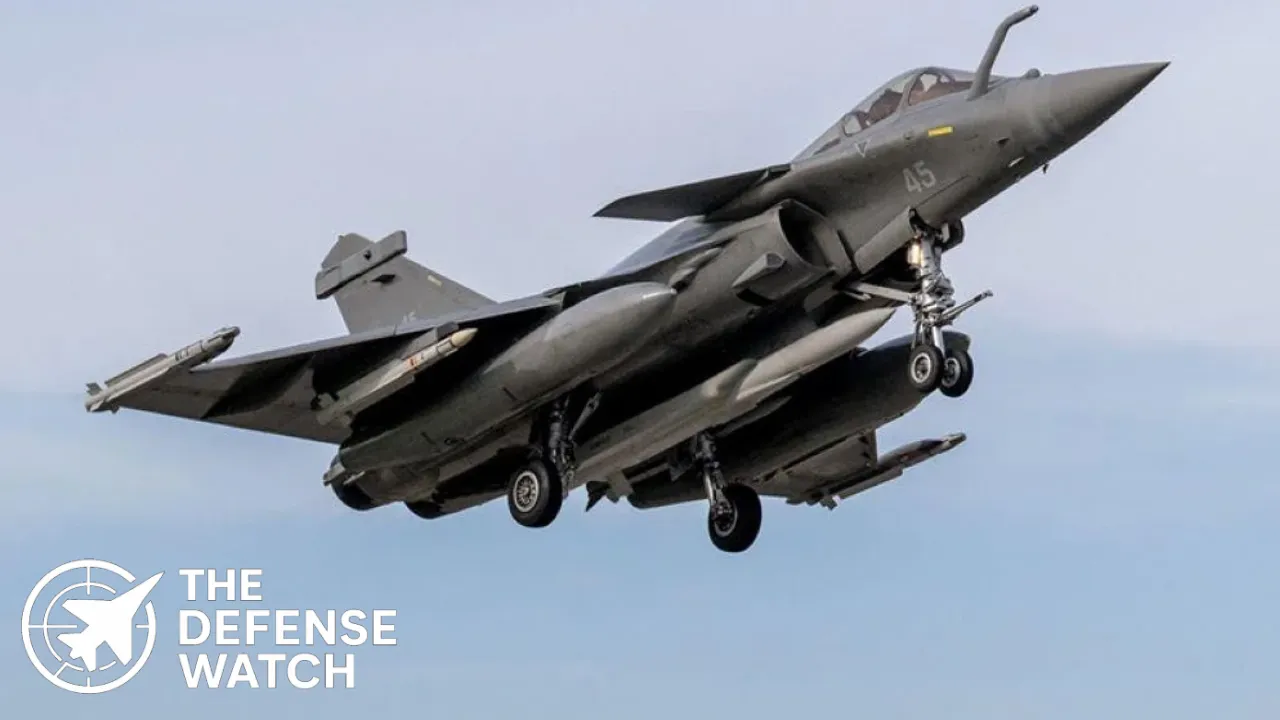
According to the Aviation Week coverage, France published the first full image of the ASMPA‑R on 13 November 2025, with the weapon visible on the centerline hardpoint of a naval variant of the Dassault Rafale M. The missile is described as having undergone a “successful” second firing, following its entry into service with the French Naval Nuclear Aviation Force (FANu) on 10 November 2025.
Public reporting indicates that the ASMPA‑R retains a ramjet architecture, with dual air‑intakes along the body, enabling sustained supersonic flight at speeds around Mach 3. The upgraded missile reportedly has a range of roughly 600 kilometres (about 372 miles), compared to approximately 500 km for the ASMP‑A. The warhead is understood to be the Tête Nucléaire Aéroportée (TNA) design, with variable yield settings between 100 and 300 kilotons. While France has not officially confirmed warhead specifics for the R variant, open‑source reports treat the warhead as unchanged but modernized.
Officials described the evaluation firing as part of a sortie that “represented a nuclear raid”, and images released show the Rafale M carrying the missile, external fuel tanks and air‑to‑air self-defense missiles (Mica RF/EM, Mica IR, Meteor) alongside the nuclear weapon mount.
Strategic and Doctrinal Implications
The airborne leg of France’s nuclear deterrent has for decades been based on the ASMP family, carried by air‑launched platforms such as the Rafale. The ASMPA‑R strengthens that leg by extending the range, improving penetration capability and expanding deployment to naval‑aviation platforms, thereby increasing flexibility and survivability of the strike option.
By equipping the fan of platforms including the Rafale M (navy) and Rafale (air force), France avoids sole reliance on land‑based missiles for deterrence, thereby enhancing redundancy and lessening vulnerability to pre‑emptive attack. The introduction of ASMPA‑R also aligns with France’s 2024‑2030 Military Programming Law (LPM), which emphasizes modernizing the airborne component.
Expert or Policy Perspective
While no direct quotes from named analysts were available in the sources, commentary from specialist outlets observes that the ASMPA‑R offers a moderate but meaningful upgrade rather than a radical leap. Its supersonic speed distinguishes it from many sub‑sonic Western cruise missiles, but its range remains shorter than emerging hypersonic or long‑range systems. From a policy perspective, the move underscores France’s commitment to strategic autonomy and to maintaining credible deterrence through diversified launch platforms — including from sea by carrier‑borne aircraft.
What’s Next
With the ASMPA‑R now public and fielded with the French Navy’s FANu and already in service with the French Air and Space Force (FAS) since 2023, the next step in French airborne nuclear deterrence is the development of the fourth‑generation air‑launched nuclear cruise missile, the ASN4G, expected to enter service around 2035 and to employ scramjet propulsion for hypersonic speeds. The publication of ASMPA‑R imagery may also signal that France is prepared to push further transparency in its deterrence posture.
Closing
The unveiling of the ASMPA‑R marks a notable step in France’s nuclear modernization — revealing for the first time the missile’s full outward appearance and confirming its deployment on naval strike aircraft. In extending range, improving mobility and expanding platform reach, the ASMPA‑R serves to bolster the airborne leg of France’s deterrent. As France moves toward its next‑generation system, the publication of this upgrade underscores that the country intends to maintain credible, flexible nuclear strike options well into the coming decades.