

U.S. Navy Nuclear Attack Submarines Conduct Forward Deployment Exercise Near Guam
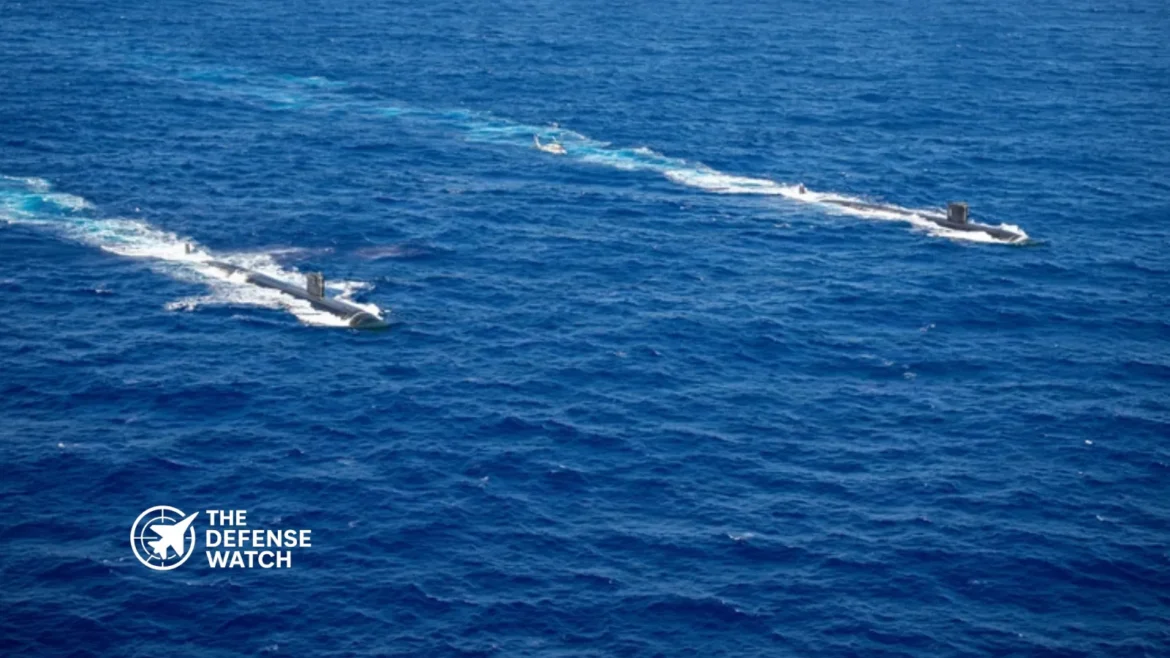
The U.S. Navy deployed two Los Angeles-class nuclear attack submarines near Guam in a rare coordinated surface exercise that underscores forward-deployed undersea capabilities in the Indo-Pacific theater. USS Asheville (SSN 758) and USS Annapolis (SSN 760) surfaced together on December 17, 2025, conducting a tightly controlled photo exercise with aviation support from Helicopter Sea Combat Squadron 25.
(adsbygoogle = window.adsbygoogle || []).push({});According to Commander, Submarine Squadron 15, the operation demonstrated coordination between forward-deployed undersea platforms and naval aviation assets stationed at Naval Base Guam. The exercise represents an uncommon operational posture for attack submarines designed for stealth operations, offering a deliberate signal of readiness in a region where military response timelines continue to compress.
Los Angeles-Class Submarines: Capabilities and Strategic Value
USS Asheville and USS Annapolis are improved Los Angeles-class attack submarines, representing late-production variants with enhanced acoustic quieting and upgraded combat systems. The class displaces approximately 6,900 tons submerged, measures 360 feet in length, and operates at speeds exceeding 25 knots with diving capabilities beyond 800 feet.
Strike and Sea Denial Capabilities
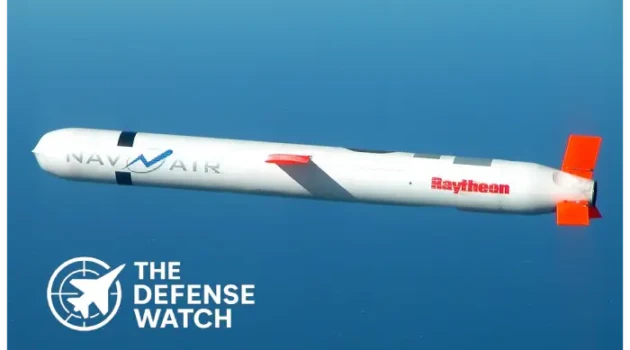
Each submarine carries 12 Vertical Launch System (VLS) tubes for Tomahawk cruise missiles, providing land-attack capabilities without consuming torpedo-room capacity. The Navy fields Tomahawk Block IV and Block V variants with ranges approaching 900 nautical miles, incorporating GPS guidance, terrain-matching navigation, and two-way satellite communications for in-flight retargeting.
- (adsbygoogle = window.adsbygoogle || []).push({});
The submarines retain full torpedo-tube launch capability for Mk 48 ADCAP heavyweight torpedoes, designed to defeat deep-diving nuclear submarines and surface combatants through wire-guided and active-passive acoustic homing. This dual-payload configuration enables mission flexibility across intelligence collection, sea denial, and precision strike operations.
Forward Deployment Advantages
Naval Base Guam’s strategic location provides critical forward positioning for submarine operations. The facility enables faster rearmament, maintenance, and deployment cycles compared to continental U.S. bases, maintaining persistent undersea presence across the Western Pacific’s vast operational areas.
Submarine Squadron 15 operates from Polaris Point as a forward-deployed force supporting free and open Indo-Pacific operations. The squadron includes multiple Los Angeles-class boats alongside newer Virginia-class submarines, providing layered undersea capabilities across anti-submarine warfare, intelligence gathering, and strike missions.
Coordinated Operations: Why Surface Two Submarines Together?
Submarine doctrine emphasizes stealth, separation, and operational ambiguity. Coordinated surface operations with two attack submarines represent exceptional circumstances, typically limited to permissive waters during training, transit coordination, or deliberate signaling.
Aviation Support and Safety
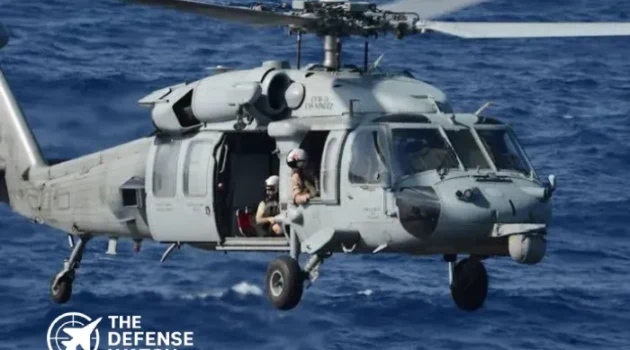
The MH-60S Sea Hawk from HSC-25 provided communications relay, search-and-rescue coverage, and airborne oversight during close-quarters maneuvering. While MH-60S helicopters lack the anti-submarine warfare capabilities of MH-60R variants, they maintain critical medical evacuation readiness and surface coordination functions for forward-deployed submarine operations.
Guam-based helicopter squadrons provide continuous SAR and medevac posture across the 7th Fleet area of operations, making them natural aviation partners when submarines conduct controlled evolutions near high-traffic sea lanes.
Operational Messaging
The exercise signals several operational realities. First, multiple attack submarines operate from forward bases with coordinated procedures and safety protocols. Second, submarine forces can surge from forward hubs rather than relying on trans-Pacific deployments. Third, even legacy improved Los Angeles-class boats maintain modern Tomahawk strike capabilities and credible sea denial effects.
(adsbygoogle = window.adsbygoogle || []).push({});Indo-Pacific Strategic Context
The deployment occurs against a backdrop of regional security challenges including territorial disputes, military modernization programs, and contested sea lanes across the South China Sea and Western Pacific. U.S. Navy leadership has consistently emphasized forward presence as central to deterrence strategy and alliance commitments.
Guam’s Strategic Position
Guam’s geographic location provides proximity to potential contingency areas while maintaining sufficient distance for sustained operations. The island serves as a critical logistics node, enabling faster maintenance cycles and reducing the visible logistics footprint that accompanies surface combatant operations.
Forward deployment from Guam allows submarines to maintain station times, conduct intelligence collection, and provide strike options across multiple operational arcs without revealing intent through trans-oceanic transits.
Deterrence Through Controlled Visibility
The exercise represents deterrence through limited transparency—using rare surface-level operations to communicate undersea readiness while submarines remain among the hardest targets to detect once submerged. In a region defined by long-range sensors, missile salvo exchanges, and contested logistics, the Navy demonstrated that forward undersea forces are armed, trained, and coordinated for rapid response.
Platform Evolution and Future Capabilities
While Los Angeles-class submarines represent mature technology, continuous modernization maintains combat relevance. Tomahawk Block V incorporates navigation upgrades and structures future variants including Maritime Strike Tomahawk with anti-ship seeker capabilities and Joint Multiple Effects Warhead Systems for harder target sets.
(adsbygoogle = window.adsbygoogle || []).push({});The submarines’ combat systems receive regular updates maintaining compatibility with fleet networks and enabling dynamic targeting against mobile threats. Combined with Mk 48 ADCAP torpedoes designed to defeat modern countermeasures, Los Angeles-class boats retain credible lethality against both undersea and surface threats.
Undersea Warfare in a Contested Environment
Modern undersea operations require coordination across multiple domains. Attack submarines work distributed across operational areas using deconfliction measures that preserve acoustic advantage while enabling synchronized effects. Surface exercises like the December event rehearse procedures, demonstrate capabilities, and validate coordination between undersea platforms and supporting aviation assets.
The Navy’s approach balances operational security with strategic messaging—submarines survive through stealth and ambiguity, but controlled visibility serves deterrence when adversaries need reminders of forward-deployed capabilities and operational readiness.
(adsbygoogle = window.adsbygoogle || []).push({});Conclusion
The deployment of USS Asheville and USS Annapolis near Guam demonstrates U.S. Navy undersea force posture in the Indo-Pacific. Through forward basing, coordinated training, and modern strike capabilities, attack submarines provide persistent deterrence and rapid-response options across the theater.
As regional security challenges evolve, forward-deployed submarine forces operating from strategically positioned bases like Guam represent critical elements of U.S. maritime strategy—maintaining presence, signaling commitment to allies, and deterring potential adversaries through demonstrated capability and readiness.
- (adsbygoogle = window.adsbygoogle || []).push({});

BAE Systems U.S. Navy Ship Repair Contracts
BAE Systems has secured new U.S. Navy ship repair contracts in San Diego, strengthening its position as a key provider of fleet maintenance and modernization services on the U.S. West Coast.
The contracts were awarded through the U.S. Navy Regional Maintenance Center San Diego and cover maintenance, repair, and overhaul work on multiple surface combatants homeported in the region. The awards build on BAE Systems long standing relationship with the U.S. Navy and its existing shipyard operations in Southern California.
According to BAE Systems, the contracts support ongoing Navy efforts to improve fleet readiness and reduce maintenance backlogs for operational ships assigned to the Pacific Fleet.
Scope of the San Diego Ship Repair Work
The U.S. Navy ship repair contracts allow BAE Systems to perform a wide range of maintenance activities at its San Diego shipyard. This includes hull, mechanical, and electrical repairs, as well as systems upgrades and preservation work.
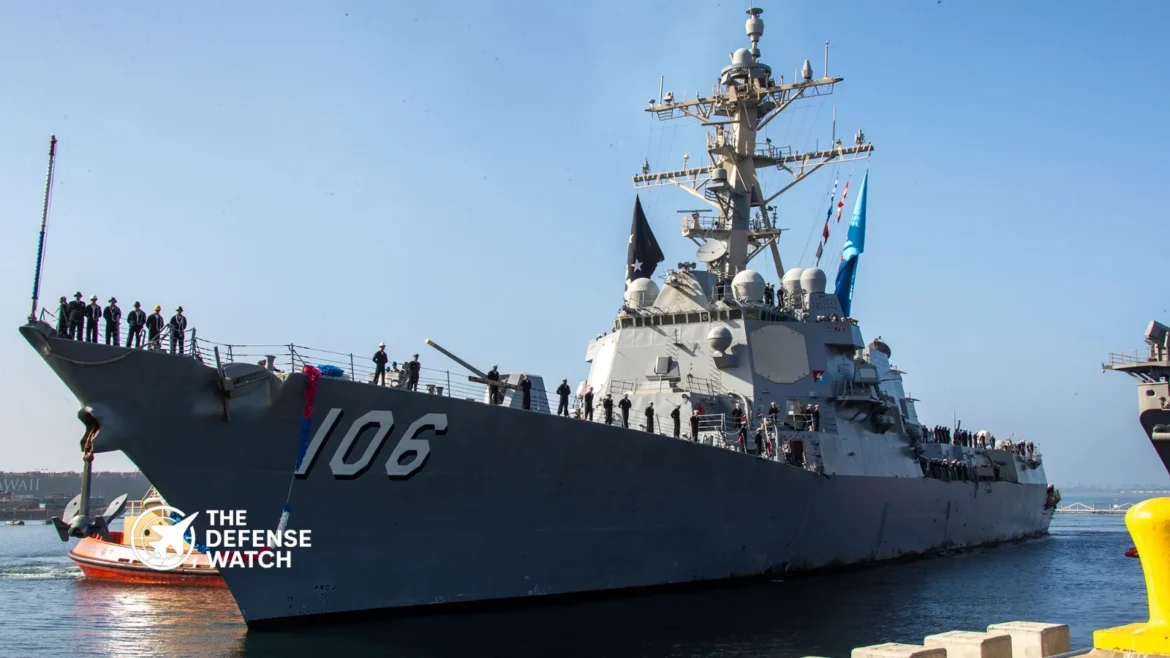
The San Diego facility supports several U.S. Navy platforms, including Arleigh Burke class destroyers, Ticonderoga class cruisers, and amphibious ships. The work is focused on scheduled maintenance periods, emergent repairs, and readiness related tasks required to keep vessels deployable.
U.S. Navy officials have emphasized the importance of maintaining a strong industrial base in San Diego, which remains one of the Navy largest fleet concentration areas on the West Coast.
Importance to U.S. Navy Readiness
The U.S. Navy ship repair San Diego effort is a critical part of broader fleet readiness goals. Delays in maintenance have been a persistent challenge for the surface fleet, particularly as operational demands increase in the Indo Pacific region.
By awarding multiple repair contracts to experienced providers such as BAE Systems, the Navy aims to improve schedule performance and reduce time ships spend awaiting maintenance.
BAE Systems stated that the contracts will support predictable maintenance timelines and allow closer coordination between the Navy, ship crews, and industry partners.
BAE Systems U.S. Naval Footprint
BAE Systems operates several ship repair facilities in the United States, including yards in San Diego, Norfolk, Mayport, and Jacksonville. The company has been involved in U.S. Navy maintenance and modernization work for decades.
In addition to surface ship repair, BAE Systems supports U.S. Navy weapons systems, electronic warfare equipment, and combat management systems across multiple platforms.
The company has positioned its U.S. naval business as a core contributor to fleet sustainment, with a focus on safety, schedule discipline, and workforce development.
San Diego as a Strategic Naval Hub
San Diego remains one of the most important naval bases in the United States, hosting more than 50 Navy ships and several aviation squadrons. The concentration of fleet assets makes the region central to U.S. Pacific operations.
The availability of private shipyards such as BAE Systems San Diego Ship Repair plays a key role in supporting the Navy ability to maintain forward deployed forces without relying solely on public yards.
U.S. Navy leadership has repeatedly highlighted San Diego industrial capacity as essential to sustaining high operational tempo in the Pacific.
Industry and Government Perspective
BAE Systems officials noted that the latest U.S. Navy ship repair contracts reflect continued confidence in the company performance and safety record. The firm also highlighted its local workforce, which includes skilled trades critical to naval maintenance.
From the government side, the Navy has continued to emphasize competition and performance based contracting as tools to improve maintenance outcomes.
Authoritative reporting on the awards was first published by UK Defence Journal and aligns with ongoing Navy maintenance contracting trends in fiscal year 2026.
See also: U.S. Navy expands surface fleet maintenance funding in Pacific region
Outlook
While the contracts do not represent new ship construction, they underscore the growing importance of sustainment and readiness in U.S. naval strategy. As the Navy continues to operate aging platforms alongside newer vessels, demand for reliable ship repair partners is expected to remain strong.
BAE Systems role in San Diego positions the company to remain a key contributor to U.S. Navy operational readiness in the years ahead.
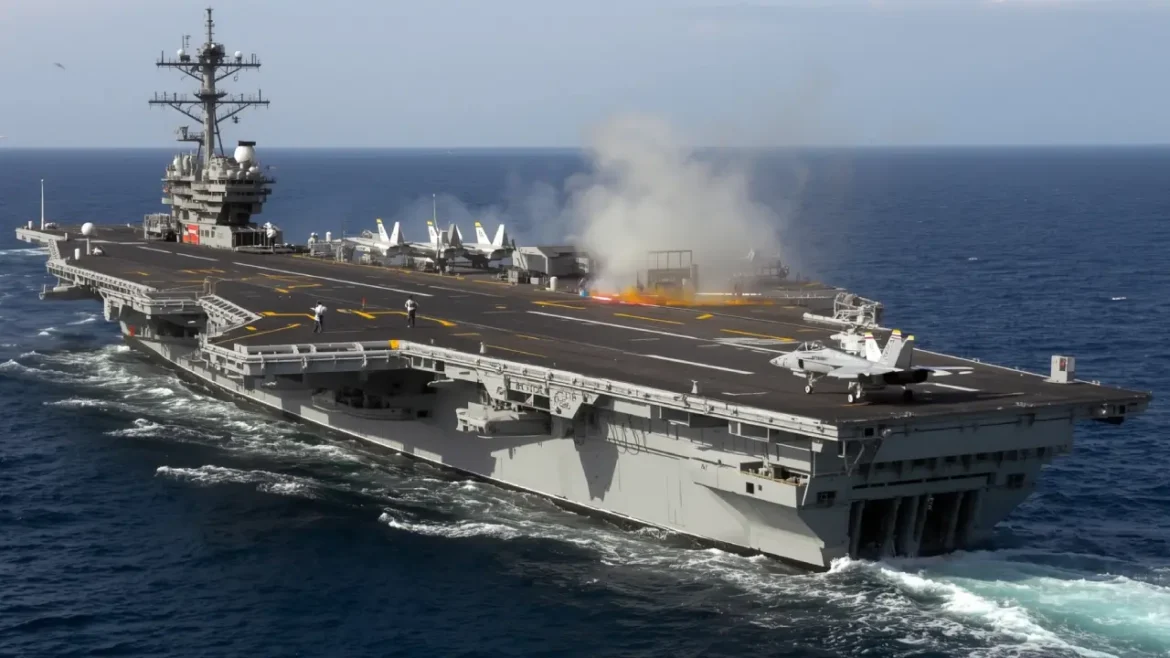
A Legacy of Dominance: Aircraft Carriers Still Lead the Fleet
The U.S. Navy continues to hinge its maritime strategy on — and in 2025, aircraft carriers remain the indispensable backbone of its operational prowess. With 11 nuclear-powered carriers, the Navy ensures unmatched power projection, forward presence, and strategic flexibility across the globe.
Continuing the Carrier Fleet—Despite Challenges
The Navy reiterates its commitment to preserving an 11-carrier force, including the advanced Ford-class vessels. These carriers combine cutting-edge systems—like EMALS, advanced radar suites, automation, and reduced crew requirements—to bolster sortie rates and sustain operations with fewer personnel.
Yet, the fleet faces challenges from aging platforms and industrial constraints. The USS Nimitz is scheduled for deactivation starting in FY 2026, and newer carriers like the USS John F. Kennedy (CVN-79) have encountered delivery delays of up to two years.
Why Carriers Still Matter in 2025
- Unparalleled Power Projection
Carriers offer mobile air bases capable of responding swiftly to global hotspots—from deterrence in the Indo-Pacific to maritime security in the Mideast. - Strategic Flexibility Amid Geography and Diplomacy
Their ability to station in international waters minimizes diplomatic hurdles and ensures presence without relying on foreign bases. - Synergy of Advanced Technologies
Ford-class carriers bring innovations—like DBR radar, A1B reactors, and sortied design automation—that deliver superior sustained operations.
Mounting Threats and Operational Stresses
However, carriers face growing threats. Hypersonic and anti-ship ballistic missiles, like China’s KD-21 and others, raise concerns about survivability—they could potentially strike U.S. carriers within minutes in high-end conflicts. Operational overstretch in the Middle East has also strained maintenance, deployments, and readiness, casting doubt on carrier availability in future high-intensity theaters.
Context & Analysis
- Industrial and Readiness Strain
Delays in carrier construction (e.g., CVN-79) and potential delays in future ships (CVN-82) could disrupt the industrial base and lead to capability gaps. The Navy is working to elevate combat-surge readiness from 68% toward 80% by 2027, integrating maintenance efficiencies and workforce retention strategies. - Reaffirming Carrier Value Amid Adversity
While threats have evolved, no platform offers the same blend of lethality, reach, and platform versatility. Moving forward, the Navy must reconcile modernization—with emerging domains like drones and missiles—with maintaining the carrier fleet as a central pillar of U.S. naval power.
FAQs
The U.S. Navy maintains 11 nuclear-powered carriers, including Ford-class vessels, despite fleet maintenance and operational demands.
Ford-class carriers feature EMALS launch systems, Dual Band Radar, automation, a more powerful reactor (A1B), and reduced crew needs—boosting sortie rates and lowering lifecycle costs.
Hypersonic missiles and advanced anti-ship ballistic weapons (e.g., KD-21) present significant risks—capable of challenging carrier defenses with high-speed, maneuverable profiles.
Delaying carriers like CVN-82 strains the carrier industrial base, potentially halting production lines and reducing readiness—jeopardizing fleet sustainability.
The Navy aims to reach an 80% combat-surge readiness level by 2027, focusing on improved maintenance, training, personnel retention, and streamlined logistics.