Saudi Arabia Signs Leonardo C-27J Maritime Patrol Aircraft Contract
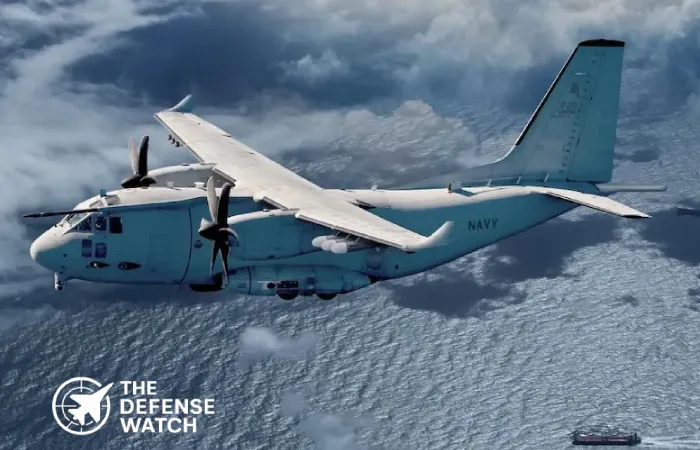
Saudi Arabia’s Ministry of Defence has signed a contract with Italy’s Leonardo to acquire four C-27J Maritime Patrol Aircraft, with deliveries to the Royal Saudi Naval Forces beginning in 2029, according to official reports and industry sources.
The agreement marks a key expansion of Saudi military aviation, giving the kingdom new fixed-wing maritime patrol and multi-mission capabilities. The Royal Saudi Naval Forces will become the 21st global operator of the C-27J platform.
New C-27J Maritime Patrol Capability for Saudi Naval Aviation
The C-27J Spartan is a twin-engine tactical transport aircraft that has been adapted into a Maritime Patrol Aircraft (MPA) configuration for the Saudi contract. In this role the aircraft will support anti-submarine and anti-surface warfare, search and rescue missions, transport and airdrop operations.
Leonardo says the Saudi C-27J MPAs will include advanced mission systems, sensors and communications packages tailored for maritime surveillance and domain awareness. These systems are designed to detect, identify and track surface and submarine threats and provide real-time data sharing with command centers and other assets.
Strategic Context and Platform Versatility
The contract follows a prior 2025 order by Saudi users for C-27J aircraft in multi-role and firefighting configurations, reflecting growing demand for versatile fixed-wing platforms.
The MPA variant retains the core features of the C-27J Spartan Next Generation, including modern avionics, navigation, communication and self-protection systems. The aircraft can be reconfigured for transport, humanitarian aid or medical evacuation when required, underlining its multi-mission flexibility.
Deliveries and Operator Expansion
Deliveries will begin in 2029, with the Royal Saudi Naval Forces set to operate the aircraft in the coming years. Saudi Arabia’s introduction of the C-27J in the maritime patrol role expands the platform’s operational footprint beyond traditional tactical airlift missions.
-
The C-27J has logged more than 290,000 flight hours worldwide with existing operators across a range of mission sets, from troop and cargo transport to aerial firefighting and special missions.
Implications for Regional Naval Aviation
For Saudi Arabia, the addition of MPA-configured C-27Js reflects a broader effort to enhance naval and coastal security capabilities amid evolving maritime threat environments. The platform’s endurance, sensor suite and multi-role flexibility could support a spectrum of missions across the Red Sea, Arabian Gulf and beyond.
-
New Zealand Defence Force Enforces UN Sanctions in East Asia
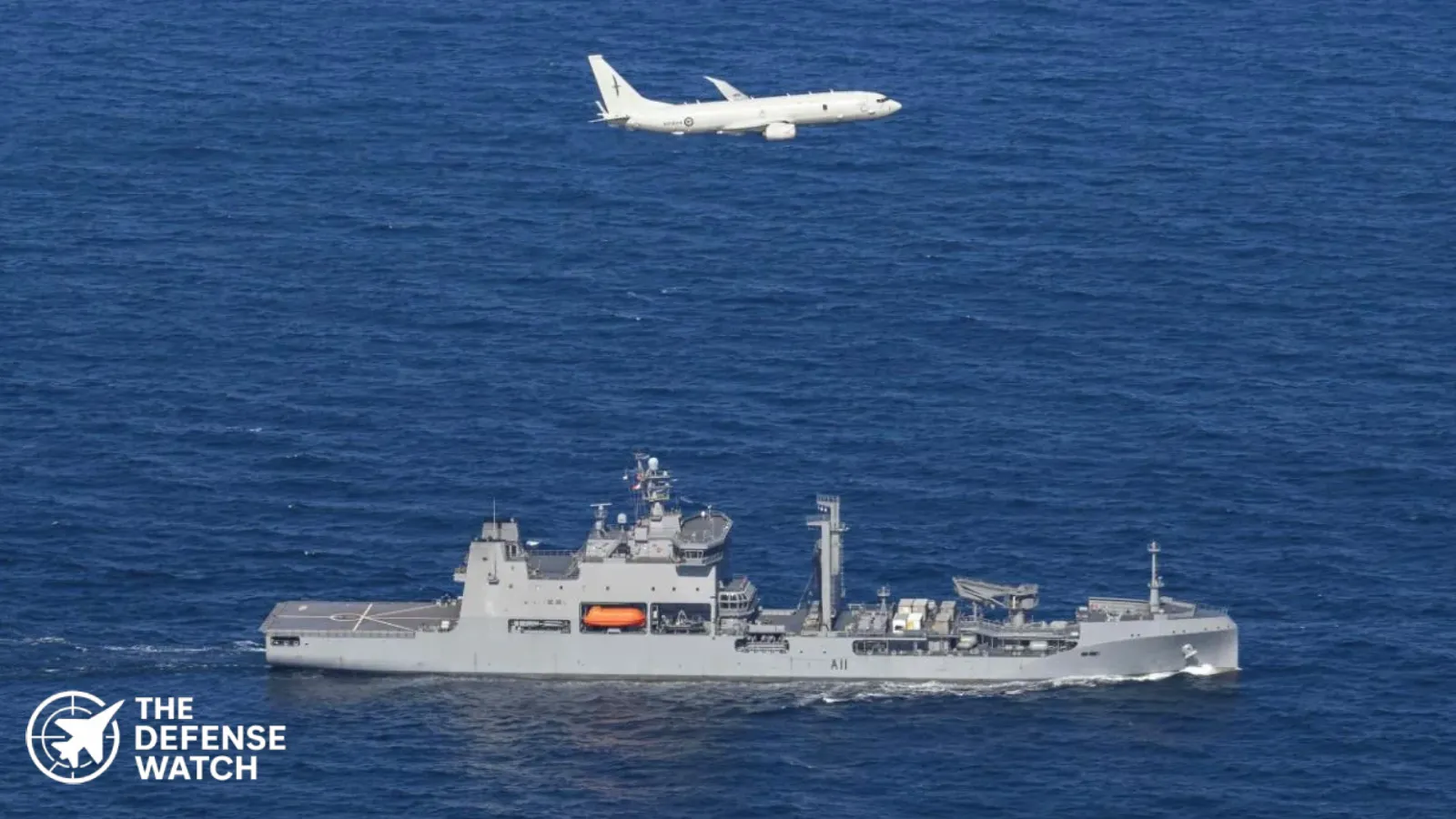
The New Zealand Defence Force (NZDF) deployed naval and aerial assets in East Asia as part of Operation Whio to strengthen enforcement of United Nations sanctions against North Korea.
During November, HMNZS Aotearoa, a Royal New Zealand Navy replenishment vessel, and an RNZAF P-8A Poseidon maritime patrol aircraft operated across 410,000 square kilometers in the East China and Yellow Seas. The mission monitored North Korea’s nuclear weapons and ballistic missile programs under the broader Pacific Security Maritime Exchange (PSMX) initiative.
HMNZS Aotearoa, supported by an embarked SH-2G Seasprite helicopter, intervened in two suspected illicit ship-to-ship fuel transfers. The vessel identified seven ships of interest, hailed 49 merchant vessels, and issued 79 deterrence messages. During the patrol, the ship was shadowed by seven People’s Liberation Army Navy vessels, which maintained professional distances.
The Poseidon aircraft observed five ship-to-ship transfers, flagged 59 vessels of interest, and broadcast 19 deterrence messages.
NZDF operations were conducted alongside allied forces, including Canada’s HMCS Max Bernays, France’s FS Prairial, and Japanese ships JS Maya and JS Hamana. The deployment also supported at-sea refueling for Australia’s HMAS Brisbane and U.S. ships USS Shoup, USS Robert Smalls, and USS Milius.
Commander Rob Welford of HMNZS Aotearoa said the deployment highlighted the professionalism and commitment of NZDF personnel in upholding international maritime law. Air Component Commander Air Commodore Andy Scott added that the mission reinforced New Zealand’s ongoing commitment to regional security and UN sanctions enforcement.
The operation underscores New Zealand’s role in collaborative maritime security in the Indo-Pacific, demonstrating the capability to monitor, deter, and respond to illicit activity in key international waterways.
US Navy MQ-4C Triton Extended Caribbean Surveillance
Public flight-tracking data show a US Navy MQ-4C Triton unmanned aircraft system conducted an extended surveillance patrol over the Caribbean Sea north of Venezuela on 8 January 2026, consistent with wide-area maritime intelligence activity.
The high-altitude, long-endurance Triton, callsign BLKCAT6 and bureau number 169659, departed Naval Station Mayport, Florida, and flew south into international airspace above the central Caribbean, maintaining roughly 47,000 feet while executing repeated east-west patterns over international waters.
Visible Flight-Tracking Patterns
Open-source tracking showed the MQ-4C remaining on station for about nine to ten hours before leaving coverage. The aircraft flew a classic “lawnmower” grid pattern designed for wide-area maritime search and surveillance.
The mission took place in international airspace north of Venezuela’s coastline. It marks a continuation of persistent unmanned ISR flights in the region.
Platform Role and Capabilities
The MQ-4C Triton is a high-altitude unmanned aircraft optimized for long-endurance maritime patrol missions. It can remain aloft for up to 30 hours and is fitted with advanced sensors for surface tracking, maritime domain awareness, and wide-area intelligence, surveillance, and reconnaissance (ISR).
While there has been no official statement from the US Navy confirming the operational intent of the sortie, the flight pattern and duration align with maritime domain awareness missions and wide-area surveillance tasking.
Strategic Context
Persistent unmanned patrols by the US Navy contribute to maritime ISR across key sea lanes and areas of interest. In the Caribbean, such missions occur amid broader US military surveillance and enforcement efforts, including counter-narcotics and regional maritime security operations.
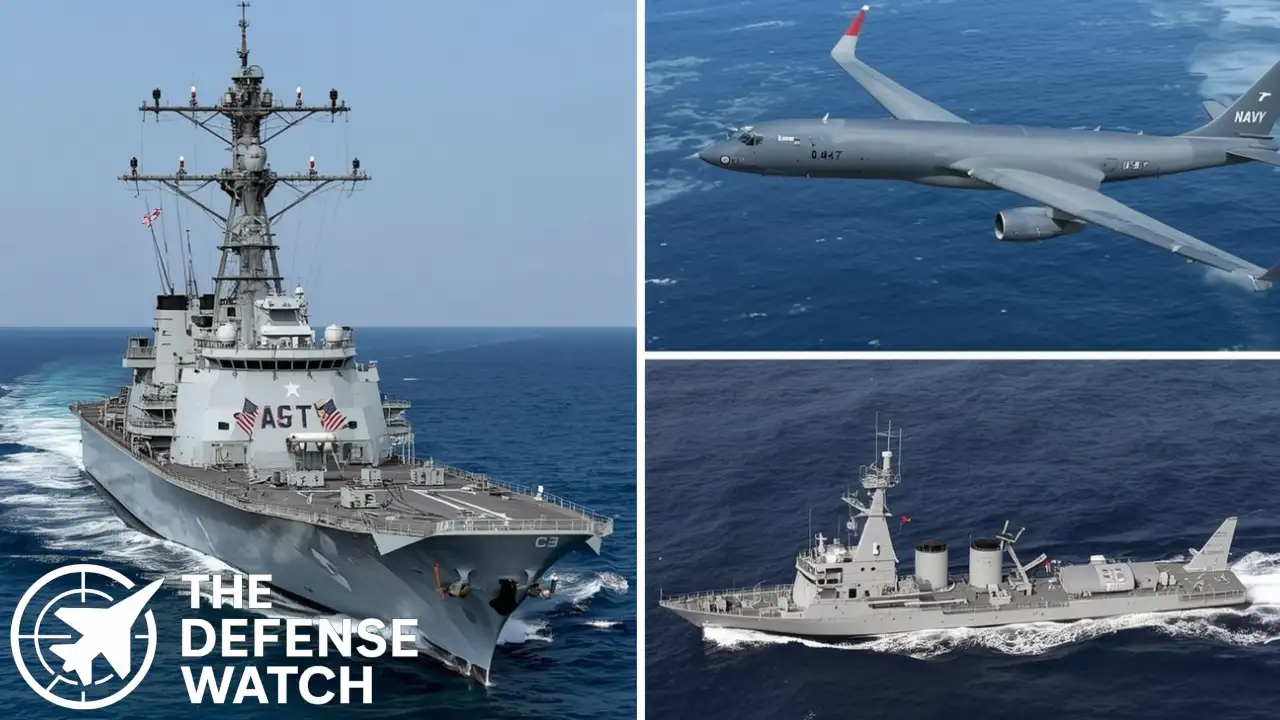
The U.S. Navy is intensifying its undersea warfare edge through a series of sonar technology advancements, ranging from AI-enhanced passive detection systems on Arleigh Burke destroyers to MAC-E active sonar trials aboard P-8A patrol aircraft, and SURTASS LFA platform expansions. These developments underscore a concerted push to elevate Anti-Submarine Warfare (ASW) capabilities amid rising global submarine threats.
AI-Enhanced Passive Sonar Extends Detection Range
A recently disclosed naval upgrade equips Arleigh Burke-class destroyers with next-generation passive sonar systems that leverage artificial intelligence. These systems reportedly deliver real-time acoustic signature analysis, dramatically reducing false-positive rates and doubling detection ranges—from approximately 80 km to 150 km. The modular architecture enables continuous software updates, allowing the Navy to adapt to evolving stealth technologies with minimal disruption.
Analysis Insight
This enhancement reflects a strategic shift: increasing reliance on passive detection not only conceals the host vessel’s presence but also enhances tracking stealth submarines—especially in contested waters. By integrating AI, the system promises a more discriminating, resilient ASW capability.
MAC-E Tested on P-8A Poseidon for Multi-Static Active ASW
The Multi-Static Active Coherent – Enhancements (MAC-E) system recently underwent operational testing aboard P-8A Poseidon aircraft at Joint Base Pearl Harbor–Hickam in July 2025, flying four sorties to evaluate its performance. Funded under a $12.8 million NAVAIR contract awarded in June, MAC-E builds upon earlier active sonar systems by incorporating advanced signal processing via coherent buoys, improving search rates, reducing clutter, and enhancing operator-machine interfaces.
Contextual Insight
MAC-E fortifies the P-8A’s status as an all-domain maritime patrol platform, dovetailing with its Increment 3 Block 2 upgrades. As anti-submarine demands escalate, MAC-E delivers sharper, more reliable active sonar functionality when passive methods fall short.
SURTASS LFA Expansion Prepares for Broader ASW Training
The Navy’s SURTASS LFA (Surveillance Towed Array Sensor System – Low Frequency Active) sonar program is advancing under a Draft Environmental Impact Statement covering operations from 2026 through 2033 in the western/central North Pacific and eastern Indian Ocean. The plan encompasses continued use of four T-AGOS-class surveillance ships and the deployment of one additional SURTASS LFA-equipped vessel per year. The updated SEIS/OEIS includes environmental and marine mammal impact analyses, reflecting mitigation efforts under NEPA and MMPA mandates.
Strategic Perspective
SURTASS LFA remains essential for long-range active ASW training. These vessels act as force multipliers, reinforcing the Navy’s capability to train across vast ocean expanses while balancing environmental responsibilities.
FAQs
Passive sonar listens for underwater acoustic emissions. AI significantly enhances its accuracy, reducing false positives and detecting stealthier targets more reliably.
MAC-E uses coherent, multi-static sonobuoy networks with improved signal processing, increasing search rate, clarity, and operational usability compared to legacy systems.
SURTASS LFA ships support active sonar training at long range, essential for maintaining ASW readiness and preparing sailors to detect advanced silent submarines.
Low-frequency active sonar can affect marine life. SEIS/OEIS documents help manage ecological compliance under laws like NEPA and the MMPA.
By integrating AI in passive systems, advancing active sonar platforms like MAC-E, and expanding towed-array training capabilities through SURTASS LFA program enhancements.
Note: The images are AI-generated.