

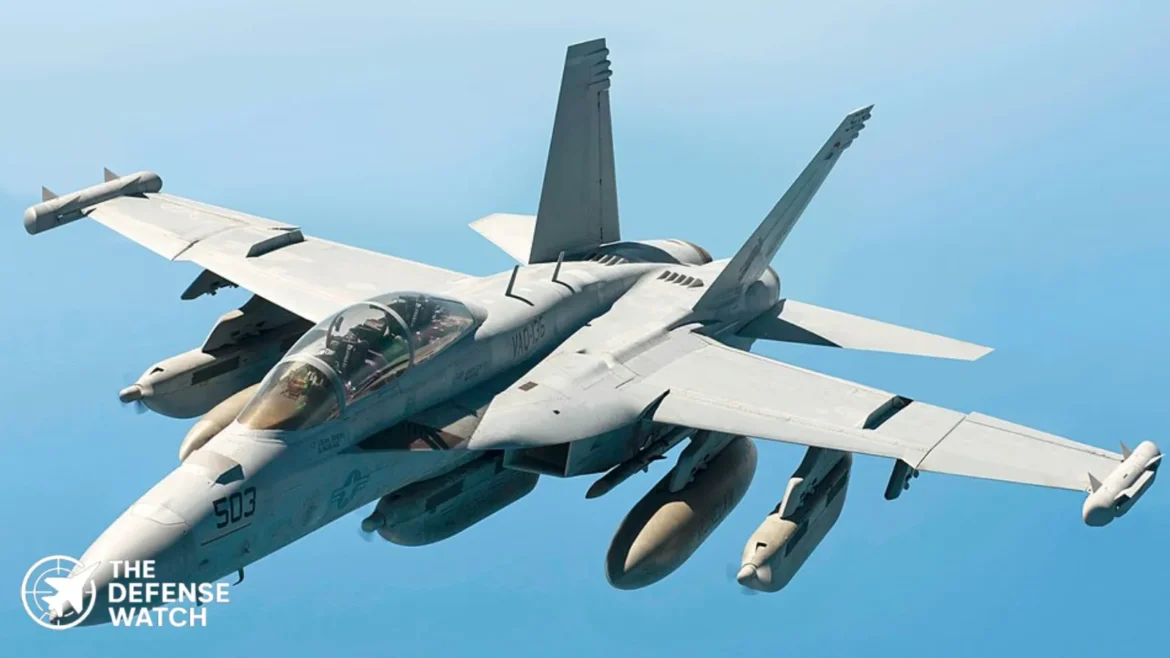
L3Harris Navy contract activity continues with a new $9.57 million award to support U.S. Navy F/A-18 aircraft, reinforcing sustainment of the Super Hornet and Growler fleets.
L3Harris Technologies Inc., based in Clifton, New Jersey, has been awarded a firm-fixed-price contract valued at $9,571,947 for the procurement of 74 radio frequency amplifiers. The equipment will support Navy F/A-18E, F, and G aircraft operated across carrier air wings and expeditionary squadrons.
(adsbygoogle = window.adsbygoogle || []).push({});Contract Details and Scope
The contract covers the production and delivery of radio frequency amplifiers used in mission-critical avionics and electronic warfare systems aboard the F/A-18E F Super Hornet and EA-18G Growler. These components play a key role in signal strength, radar performance, and electronic attack capabilities.
All work under the L3Harris Navy contract will be performed in Clifton, New Jersey. Completion is scheduled for April 2027. The agreement does not include option provisions, indicating a defined production scope tied to current fleet requirements.
Fiscal 2026 Navy working capital funds will fully cover the contract value at the time of award. According to the Navy, the funds will not expire at the end of the current fiscal year.
Acquisition Strategy and Oversight
The Navy pursued the procurement as a sole-source requirement under the authority of Title 10 U.S. Code 3204(a)(1). One source was solicited, and one offer was received. Naval Supply Systems Command Weapon Systems Support in Philadelphia, Pennsylvania, is serving as the contracting activity.
(adsbygoogle = window.adsbygoogle || []).push({});Sole-source awards of this type are common for specialized avionics tied to proprietary designs or certified aircraft configurations, particularly for mature platforms like the F/A-18 family.
Platform Sustainment Context
The F/A-18E F Super Hornet and EA-18G Growler remain central to U.S. Navy carrier aviation and airborne electronic warfare. Ongoing investments in avionics, sensors, and electronic systems are intended to maintain readiness as the Navy transitions toward next-generation platforms.


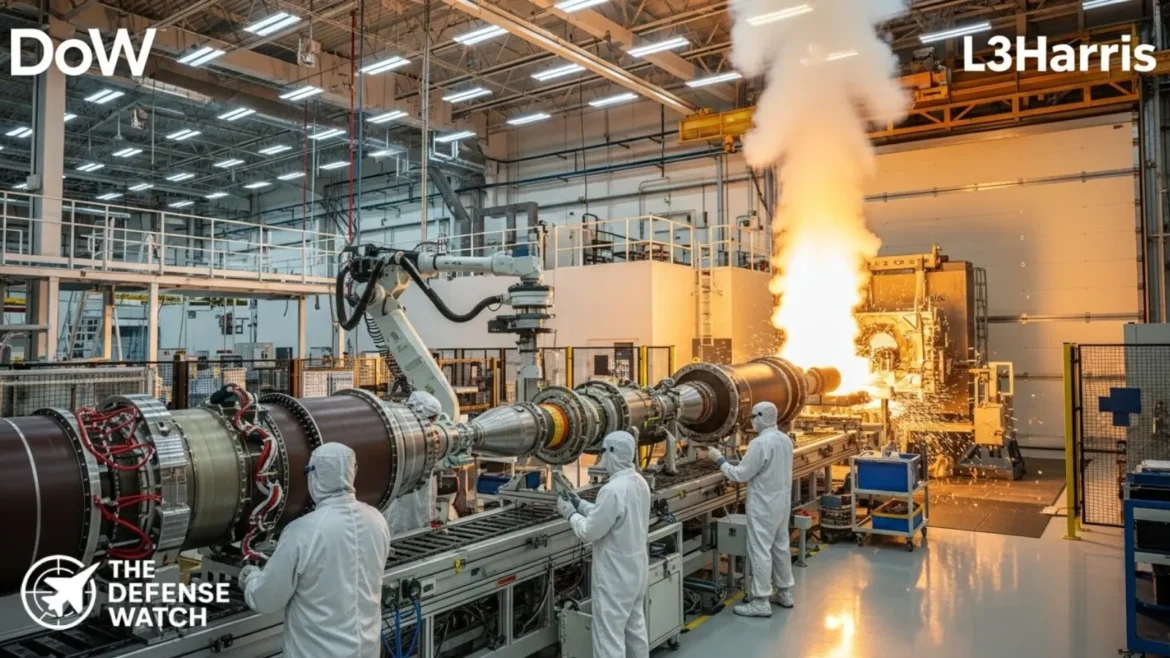
Department of War Announces $1B Direct-to-Supplier Investment to Secure U.S. Solid Rocket Motor Supply Chain
The U.S. Department of War (DoW) announced a $1 billion direct-to-supplier investment today to strengthen the U.S. solid rocket motor supply chain, marking a key shift in defense acquisition and industrial base strategy.
Officials said the funding represents a convertible preferred equity stake in L3Harris Technologies’ Missile Solutions business, which will spin out as a separate entity under this model. The move is designed to expand production capacity for propulsion components essential to major U.S. missile and munitions programs.
Modernizing the Supply Chain
The investment supports the DoW’s broader Acquisition Transformation Strategy, which aims to reduce single points of failure and improve industrial base resiliency by investing directly in critical suppliers, rather than relying solely on traditional contract awards.
Under the agreement, the DoW will anchor long-term procurement discussions with the new company, seeking multi-year agreements for solid rocket motors that underpin systems such as PAC-3, THAAD, Tomahawk, and Standard Missile families.
Strategic Rationale
Solid rocket motors are fundamental to a range of U.S. defense capabilities, yet production historically has faced capacity constraints and supply chain vulnerabilities. By leveraging direct investment tools, the DoW intends to decrease dependency on traditional transactional procurement, smooth production scaling, and shorten timelines to field critical components.
“We are fundamentally shifting our approach to securing our munitions supply chain,” said Under Secretary of War for Acquisition and Sustainment Michael Duffey. The direct-to-supplier model is intended to help rebuild U.S. stockpiles and strengthen deterrence by ensuring component availability.
Industrial Base Impacts
The initiative brings the DoW into a strategic investor role, potentially aligning government and industry incentives around expanded domestic capability and long-term production stability. This approach reflects broader efforts within the defense sector to address persistent supply chain shortfalls and production bottlenecks that have emerged across munitions and propulsion systems.
Bottom Line
The $1 billion direct investment underscores a significant evolution in how the Department of War engages with domestic suppliers to enhance the industrial base for critical defense components. By backing L3Harris’ Missile Solutions unit with convertible preferred equity, the DoW aims to secure and expand solid rocket motor production capacity to meet current and future defense requirements.
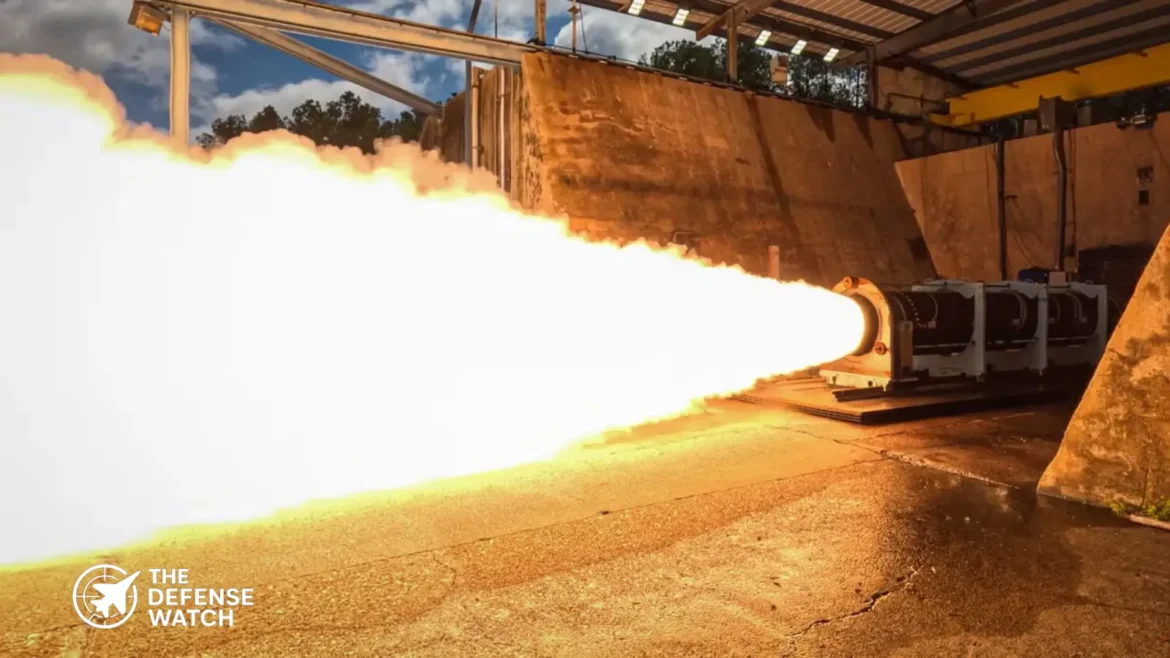
A major U.S. defense contractor will produce 60 solid rocket motors designed to support hypersonic flight testing under a commercial agreement with Kratos Defense & Security Solutions. The deal, announced late December 2025, covers the Zeus family of hypersonic motors and is intended to expand U.S. industrial capacity for advanced missile and hypersonic testing programs.
The letter of intent was issued to L3Harris Technologies, which will increase annual output of Zeus motors by more than 50 percent at its Camden Arkansas production campus. The contract follows successful development and flight test of the Zeus 1 and Zeus 2 motors carried out by Kratos.
Background: Hypersonic Testing and Industrial Capacity
Hypersonic technologies are a central area of focus for the U.S. Department of Defense as rival states pursue advanced weapons capable of sustained flight at speeds above Mach 5. The Pentagon has emphasized throughput of test flights to mature designs and reduce development timelines. However, limited access to propulsion systems and test infrastructure has constrained rapid progress.
Kratos’ Zeus solid rocket motors are developed to replace older suborbital rocket motors and support programs such as the Multi-Service Advanced Capability Hypersonic Test Bed, a Pentagon initiative aimed at accelerating test frequency and flexibility for hypersonic platforms.
L3Harris, through its Aerojet Rocketdyne division, designed the Zeus motors in Huntsville Alabama to meet Kratos’ performance requirements. Production will take place at the company’s nearly 2,000-acre Camden site, which manufactures over 115,000 solid rocket motors each year, ranging from small tactical units to large motors comparable in size to sport utility vehicles.
Details of the Planned Production
The letter of intent does not specify contract value or a delivery schedule, but L3Harris said the agreement would support significant increases in production. “We are pleased to continue working with Kratos and to support significant production increases for the Zeus advanced large solid rocket motors,” Ken Bedingfield, President of Aerojet Rocketdyne at L3Harris, said in a company statement.
Zeus motors are designed in a form compatible with older rocket systems. This approach allows integration with existing launch infrastructure and test stands with minimal changes while delivering greater thrust and efficiency. The increased output is expected to support more frequent hypersonic test flights and larger flight envelopes for test vehicles.
Production at Camden reflects broader U.S. investment in solid rocket motor output. In late 2025 L3Harris announced plans for a new 110-acre rocket motor production campus in the same area to boost capacity sixfold to meet rising demand for motors used in missiles, interceptors, and hypersonic systems.
Strategic Context
The U.S. hypersonic ecosystem includes a mix of defense primes, specialized propulsion companies, and government labs. Small and medium firms, such as Ursa Major, are advancing liquid and hybrid propulsion systems under Air Force Research Laboratory contracts. For example, Ursa Major was awarded nearly $28.6 million to develop tactical, storable liquid propulsion systems that could support both hypersonic and on-orbit missions.
Partnerships between industry and defense agencies aim to diversify the supply base and smooth technology maturation. The Department of Defense’s Manufacturing Capability Expansion and Investment Prioritization program has also funded efforts to expand solid rocket motor production capacity and lower unit costs, a key factor in fielding high-cadence hypersonic testing and operational systems.
What’s Next
If formalized, the L3Harris-Kratos production agreement would bolster U.S. industrial capacity for hypersonic propulsion. That capacity is expected to support a growing portfolio of test flights, range activities, and prototype development. The expanded output could play a role in broader U.S. efforts to compete with near-peer adversaries in advanced missile systems and weapons test programs.
With planned investments in production facilities and ongoing contracts awarded to propulsion developers by Air Force laboratories, the U.S. defense industrial base is moving toward higher throughput of rocket motors and engines critical for hypersonic test and operational systems. Continued progress on these fronts will be watched closely by defense planners as they assess readiness, supply chain resilience, and technological edge in hypersonic weapons and associated systems.
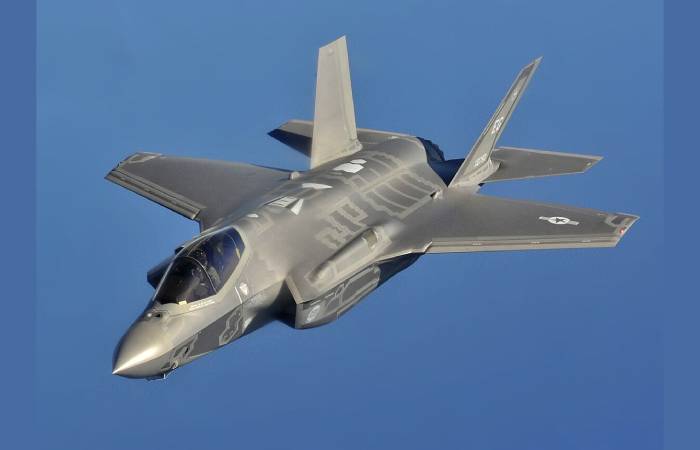
In early December 2025 the possibility emerged that a major maintenance and overhaul depot for the fifth-generation Lockheed Martin F-35 fleet could be based in Mirabel, Quebec. The proposal — led by L3Harris MAS — aims to service both Canadian jets (designated CF-35A) and potentially U.S. F-35 fighters as early as 2028-29. The plan remains conditional on government funding for security upgrades and approval from U.S. authorities.
Ottawa’s next steps could shape not only Canada’s air-force readiness but also the future of its aerospace industry and North American defense logistics.
Background: Canada’s F-35 program and sustainment strategy
Under the Future Fighter Capability Project, Canada committed to acquiring up to 88 F-35A jets to replace its ageing fleet of CF-18 Hornets. In November 2024 Ottawa selected L3Harris MAS of Mirabel as its strategic industrial partner to study and ultimately build a local air-vehicle depot for the new fleet.
This depot is intended for heavy maintenance, repair, overhaul, and upgrades — a critical element for ensuring long-term readiness and sovereign sustainment capacity. L3Harris already handles maintenance, repair and overhaul (MRO) for much of Canada’s current aircraft fleet, including CF-18s, giving it experience across structural, avionics, software, and supply-chain support.
Proposal Details: What L3Harris and Canadian Authorities Are Discussing
- L3Harris executives say the Mirabel facility could be prepared by 2028-29 — the same window when Canada expects first F-35s to arrive domestically.
- The plan foresees not only servicing CF-35As but takes aim at becoming a regional hub capable of handling U.S. F-35 jets as well, offering North American allies overflow capacity when other regional depots reach capacity.
- For Mirabel to qualify, public funding must cover significant security upgrades. The depot would likely support thousands of long-term jobs — estimates from L3Harris suggest 1,500 direct and several thousand indirect positions tied to the global F-35 sustainment network.
- Government feasibility studies remain ongoing. The depot’s viability depends heavily on Ottawa confirming the full 88-jet acquisition — partial orders reduce the business case for large-scale sustainment infrastructure.
Why This Matters: Strategic, Industrial, and Regional Impacts
Sovereign Sustainment and Operational Readiness
By hosting an air-vehicle depot domestically, Canada would reduce dependence on foreign maintenance facilities. This supports national sovereignty and preserves military readiness, especially important given the long-term operational commitments expected under North American defence arrangements.
Economic Benefit for Canada’s Aerospace Sector
If realized, the Mirabel depot could generate substantial long-term employment and industrial activity. Over the decades-long life of the F-35 fleet, Canadian firms could benefit from maintenance contracts, parts supply, upgrades, and logistic-support work. That reinforces Canada’s role in the global F-35 supply chain — a status partly earned through nearly four decades of servicing legacy jets.
Integration With North American Defence Infrastructure
Mirabel as a regional hub would allow U.S., Canadian, and allied F-35 fleets to share maintenance capacity. In peak demand periods, for example during multi-national exercises or conflict escalation, having an additional depot in Canada could relieve pressure on U.S. and foreign facilities. That adds resilience to the broader North American defense posture.
Policy Context: Canada’s Review of Its F-35 Commitment
The proposed maintenance hub comes amid renewed scrutiny of Canada’s F-35 commitment. In 2025 the government under Mark Carney ordered a review of the existing contract, signaling possible interest in alternatives.
At the same time, the industrial benefits delivered so far have drawn criticism. The government’s Industry Minister said Canadians have not received enough domestic economic value from the F-35 deal.
The depot plan therefore serves a dual purpose: helping secure long-term aerospace industry jobs and strengthening the case for staying with the F-35 fleet.
What Happens Next
As of now the Mirabel depot remains a proposal. L3Harris continues to lobby federal and provincial governments to release funds for necessary security upgrades. U.S. approval is also required before U.S. F-35s can be routed to the site.
Canada’s decision on whether to confirm the full 88-jet order will be critical. A full order improves economic feasibility and strengthens Canadian bargaining power. A reduced order or shift to alternate platforms would likely undermine the rationale for a dedicated large-scale depot.
Observers will also watch whether Ottawa uses the depot proposal as leverage to renegotiate industrial benefits with defense contractors.
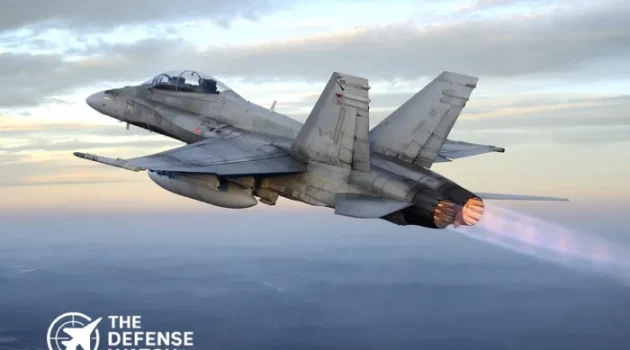
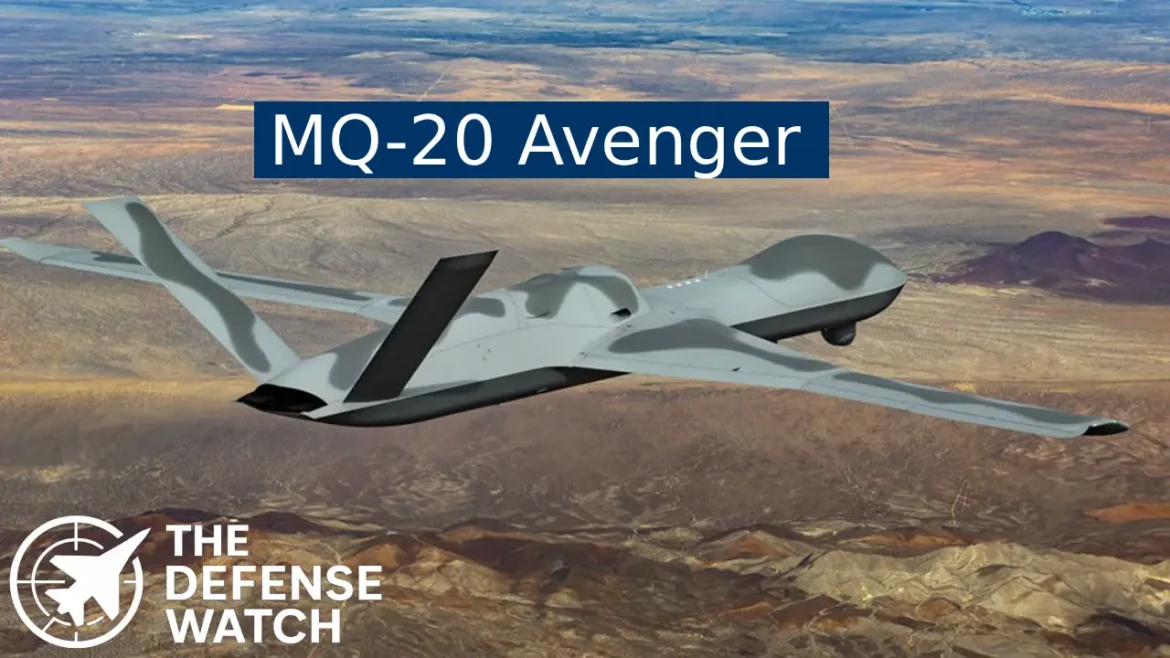
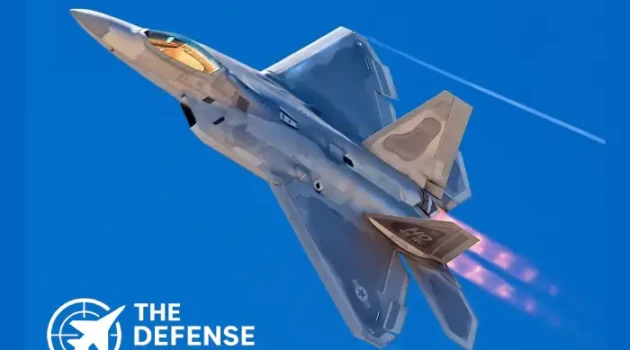
In a landmark demonstration on October 21, 2025, General Atomics Aeronautical Systems (GA-ASI), Lockheed Martin, and L3Harris successfully executed a cre wed-uncrewed teaming flight test in which an F-22 Raptor pilot commanded an MQ-20 Avenger drone integrated on board – a first of its kind. The exercise, carried out at the Nevada Test and Training Range, marks a significant step forward in the U.S. Air Force’s push toward Collaborative Combat Aircraft (CCA) and advanced manned-unmanned operations.
What Happened: The Flight Test Details
- The test involved installing two L3Harris software-defined radios (SDRs): one aboard the F-22, and another aboard the MQ-20.
- These radios used L3Harris’ BANSHEE advanced tactical datalinks and the Pantera SDR system integrated via Lockheed Martin’s open-radio architecture.
- From the cockpit, the F-22 pilot used a Pilot Vehicle Interface (PVI) tablet in conjunction with a new GRACE module (“Government Reference Architecture Compute Environment”) to send commands.
- GA-ASI characterized the communications chain as entirely non-proprietary and fully U.S. government-owned, built on Open Mission Systems principles.
Technical and Strategic Context
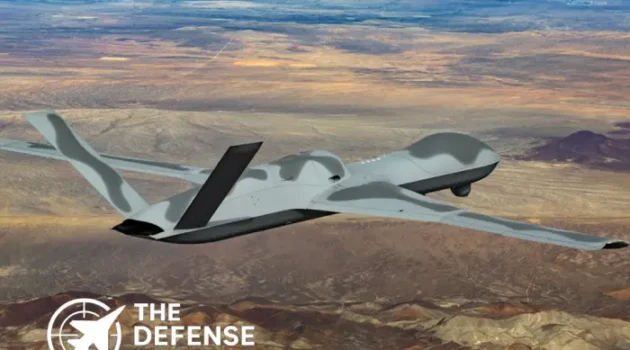
The MQ-20 Avenger is a stealthy, jet-powered unmanned combat aerial vehicle (UCAV) developed by GA-ASI. Unlike turboprop drones, it features a low-observable profile, internal weapons bays, and high speed/endurance.
Over the past year, the Avenger has been integrated with autonomy software, most notably Shield AI’s Hivemind, enabling it to conduct complex maneuvers like combat air patrols and simulated air-to-air engagements.
Moreover, this F-22/Avenger test follows previous milestones, such as the U.S. Navy’s live-control flight of the MQ-20 via a carrier-based ground station using Lockheed Martin’s MDCX platform.
Why This Matters: Analysis
Advancing the CCA Vision
This demonstration directly feeds into the U.S. Air Force’s Collaborative Combat Aircraft (CCA) strategy, which envisions manned fighters working alongside autonomous “drone wingmen” to enhance combat effectiveness, resilience, and flexibility.
By showing that a legacy platform like the F-22 can control an autonomous UCAV using open-architecture radios, the test proves that even older high-end assets can be rapidly modernized for future force structures.
All-Domain Connectivity and Interoperability
The use of non-proprietary, government-owned datalinks is particularly significant. It ensures greater resilience against supply-chain vulnerabilities, expands opportunities for allied interoperability, and reduces dependence on single-vendor systems.
Modular Autonomy in Action
Coupled with earlier tests of Shield AI’s Hivemind software, this trial underscores how modular autonomy (open architectures + reference software) can deliver agile, rapidly fieldable capabilities.
This model supports future scaling: additional drones, different fighter jets, or alternative autonomy stacks can be integrated without rearchitecting the entire system.
Implications for Force Multiplication and Cost Efficiency
If F-22s (and eventually other fighters) can reliably control UCAVs, it could dramatically expand the force’s reach. Pilots may direct more assets for strike, surveillance, or suppression missions, potentially reducing the number of manned sorties required and lowering risk to human pilots.
Challenges and Considerations
- Security & Jamming Risks: In contested electromagnetic environments, maintaining reliable datalink performance under jamming or cyberattacks remains a critical concern.
- Pilot Workload: Managing a high-performance fighter and simultaneously controlling a drone raises questions about cognitive load and ergonomic design.
- Certification & Safety: Extensive testing will be required to certify such systems for regular operational use, especially considering safety, autonomy fail-safes, and emergent behavior in contested airspace.
- Scalability: While this was a company-funded R&D demo, scaling to full operational deployment (across squadrons) will involve cost, logistics, training, and sustainment challenges.
Conclusion & Outlook
The F-22–MQ-20 Avenger teaming test represents a major milestone in the U.S. drive toward crewed-uncrewed collaborative warfare. By proving that a stealth fighter can directly command a stealth drone using open, government-owned datalinks, industry and the Air Force are laying the technical and doctrinal foundation for scalable Collaborative Combat Aircraft operations.
Looking ahead, we can expect further demonstrations involving other platforms (e.g., F-35, F-15), more sophisticated autonomy stacks, and perhaps even live-fire exercises. As the CCA vision matures, such teaming concepts could reshape how the U.S. projects airpower — blending human judgment with autonomous persistence, creating more flexible, resilient, and distributed mission architectures.

The U.S. Space Force has begun deploying new satellite-jamming weapons designed to temporarily disrupt Chinese and Russian intelligence, surveillance, and reconnaissance (ISR) spacecraft, according to program information shared this week. The systems — L3Harris’ Meadowlands and the Remote Modular Terminal (RMT) developed by Northstrat and CACI — form the core of a growing U.S. orbital denial capability, with the Pentagon planning to procure up to 56 units across the force.
Background: Expanding Electronic Warfare in Orbit
Space has increasingly become a contested military domain as Beijing and Moscow continue to invest heavily in space-based sensing and precision-strike architectures. U.S. defense officials have warned that Chinese ISR satellites now enable rapid targeting, long-range missile cueing, and persistent maritime tracking, while Russia continues modernizing its own military satellite fleet.
To counter these advancements, the United States has accelerated development of non-kinetic, reversible space electronic-warfare systems. These systems aim to obstruct adversary satellite operations without causing physical damage or long-term orbital debris — an approach favored for crisis deterrence and escalation control.
The deployment of Meadowlands and RMT marks the latest step in a broader push to ensure U.S. dominance in electromagnetic operations beyond Earth’s atmosphere.
New Satellite-Jamming Systems Enter Service
Meadowlands (L3Harris)
L3Harris’ Meadowlands system is engineered to temporarily degrade or deny adversary ISR satellites by targeting their communication or data-relay channels. While the exact technical specifications are classified, defense officials describe it as a mobile, modular, and scalable electronic-attack platform optimized for rapid deployment.
The system reportedly integrates:
- Advanced digital RF payloads
- Software-defined waveform libraries
- Rapid reprogrammability to adapt to evolving orbital threats
Meadowlands is designed for reversible effects, allowing U.S. forces to jam adversary satellite sensors or data transmission without creating permanent damage — a capability aligned with international norms and U.S. strategic objectives.
Remote Modular Terminal (Northstrat/CACI)
The Remote Modular Terminal (RMT), developed jointly by Northstrat and CACI, provides complementary orbital denial functions. Positioned as a flexible and smaller-footprint device, RMT supports distributed EW operations across multiple theaters.
Its modular design allows units to:
- Conduct targeted uplink and downlink interference
- Operate in dispersed EW networks
- Integrate with Space Force tactical command-and-control systems
Pentagon documents indicate the U.S. plans to acquire up to 56 total Meadowlands and RMT systems, enabling persistent coverage across multiple global combatant commands.
Growing U.S. Orbital Denial Posture
Defense analysts view the deployment of these jamming systems as part of a wider military shift toward counter-space resilience and deterrence. Rather than relying solely on anti-satellite (ASAT) interceptors — which risk debris and escalation — the U.S. is investing in reversible, controllable EW tools that can be used early in a conflict.
The fielding of these systems also aligns with U.S. Space Command doctrine emphasizing:
- Electromagnetic spectrum superiority
- Disruption of adversary kill-chains
- Protection of U.S. and allied space architecture
The Pentagon has repeatedly warned that adversary ISR satellites form a backbone for hypersonic missile tracking, targeting of carrier strike groups, and monitoring U.S. force movements.
A senior space-policy specialist at a Washington think tank noted that the U.S. is shifting from “reactive” to “proactive” space EW:
“The objective is to deny an adversary the ability to see, track, or target U.S. forces — without crossing thresholds that could escalate a conflict.”
Strategic Context: China and Russia Accelerating ISR Constellations
Both China and Russia have significantly expanded their space-based reconnaissance capabilities in recent years:
- China now operates one of the world’s largest fleets of Yaogan military satellites, providing persistent electronic intelligence, synthetic-aperture radar imaging, and maritime surveillance.
- Russia continues to field Bars-M and Lotos-S satellites supporting electronic intelligence and long-range targeting systems.
These developments have prompted U.S. officials to emphasize resilience and denial. In multiple congressional hearings, Space Force leaders have stated that space superiority can no longer be assumed and must instead be “achieved through active competition.”
What’s Next
As Meadowlands and RMT enter operational service, the Space Force is expanding training for its electronic-warfare squadrons and integrating the systems into joint exercises. The Pentagon is also exploring accompanying upgrades in spectrum monitoring, digital signal processing, and machine-learning-enabled jamming orchestration.
Future increments may introduce:
- AI-driven target recognition
- Higher-bandwidth interference capability
- Integration with ground and airborne EW nodes
With great-power competition accelerating across all military domains, space electronic warfare is expected to remain a top modernization priority for the U.S. defense establishment.