Can Iranian Missiles Reach the United States? Separating Fact from Fear
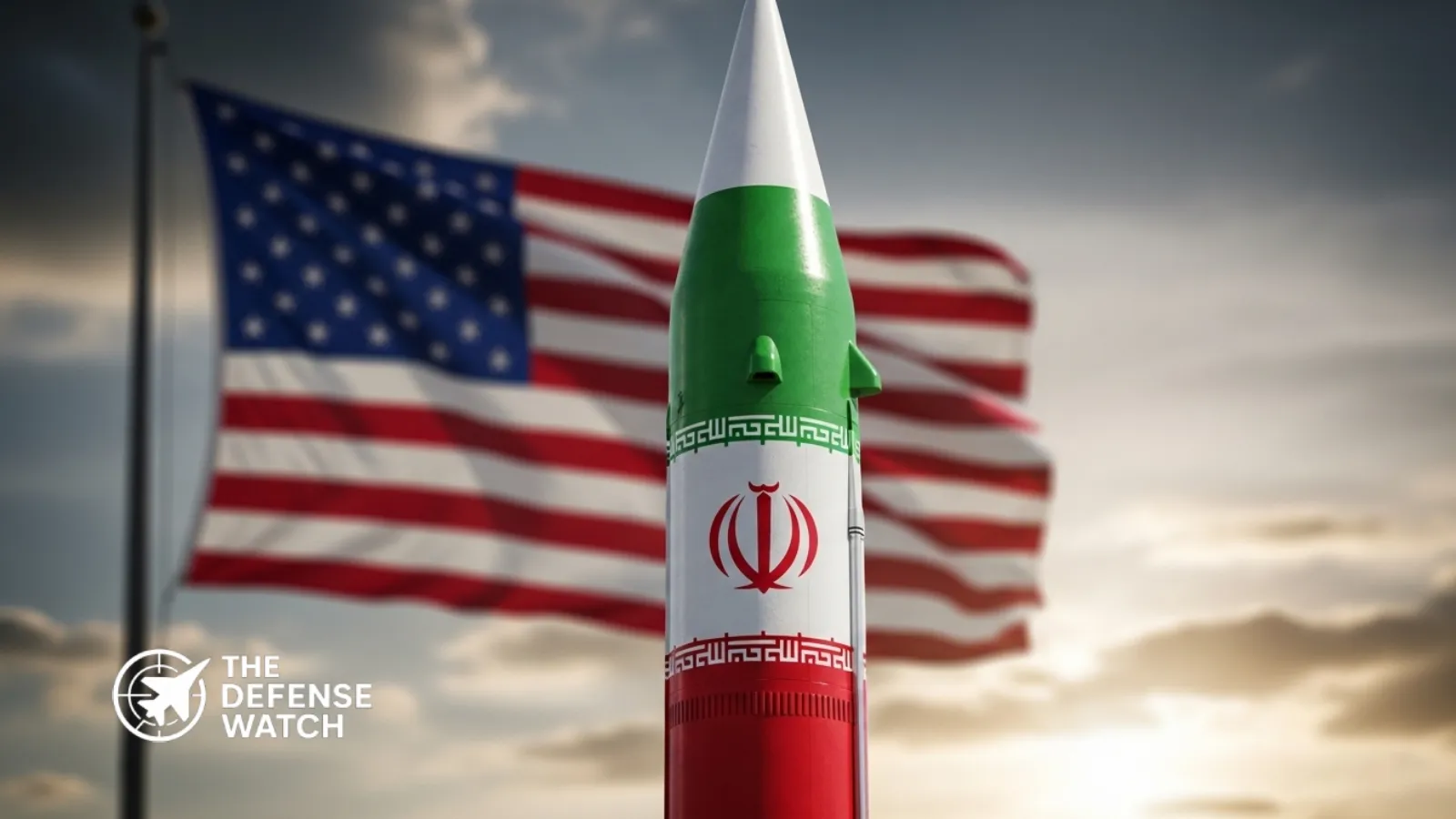
The question has surfaced repeatedly in congressional hearings, intelligence briefings, and cable news debates: can Iranian missiles reach the United States? As tensions between Washington and Tehran have fluctuated across multiple administrations, the concern has moved from the margins of defense policy into mainstream strategic discussion. The short answer, based on current verified capabilities, is no — Iran’s existing missile inventory does not have the range to strike the continental United States. But the longer answer demands a much closer look at where Iran’s program stands today, how fast it is advancing, and what U.S. defense planners are actually watching.
- Iran’s most advanced ballistic missile, the Shahab-3 derivative and Khorramshahr series, carries a maximum estimated range of roughly 2,000 km — far short of reaching American soil.
- No confirmed Iranian missile currently possesses intercontinental ballistic missile (ICBM) capability, which requires a minimum range of approximately 5,500 km.
- Iran’s space launch vehicles, including the Qaem-100 and Qaem-110, use solid-fuel technology that could theoretically be adapted for longer-range ballistic missiles.
- U.S. intelligence agencies assess that Iran could develop an ICBM capability within several years if it chooses to prioritize that program.
- Iran launched over 180 ballistic missiles at Israel in October 2024, demonstrating significant operational capacity at regional ranges.
Understanding What Iran Currently Fields
Iran operates the largest and most diverse ballistic missile arsenal in the Middle East, according to assessments from the Defense Intelligence Agency and the Congressional Research Service. Its inventory spans short-range, medium-range, and what Tehran classifies as intermediate-range systems — yet none cross the threshold required to threaten American soil directly.
The Shahab-3, Iran’s foundational medium-range ballistic missile (MRBM) derived from the North Korean Nodong design, carries an estimated range of approximately 1,300 km. Its successor variants, including the Ghadr-1 and Emad, push that figure toward 1,800 to 2,000 km, placing targets such as Israel, Saudi Arabia, and U.S. military installations across the Gulf well within reach.
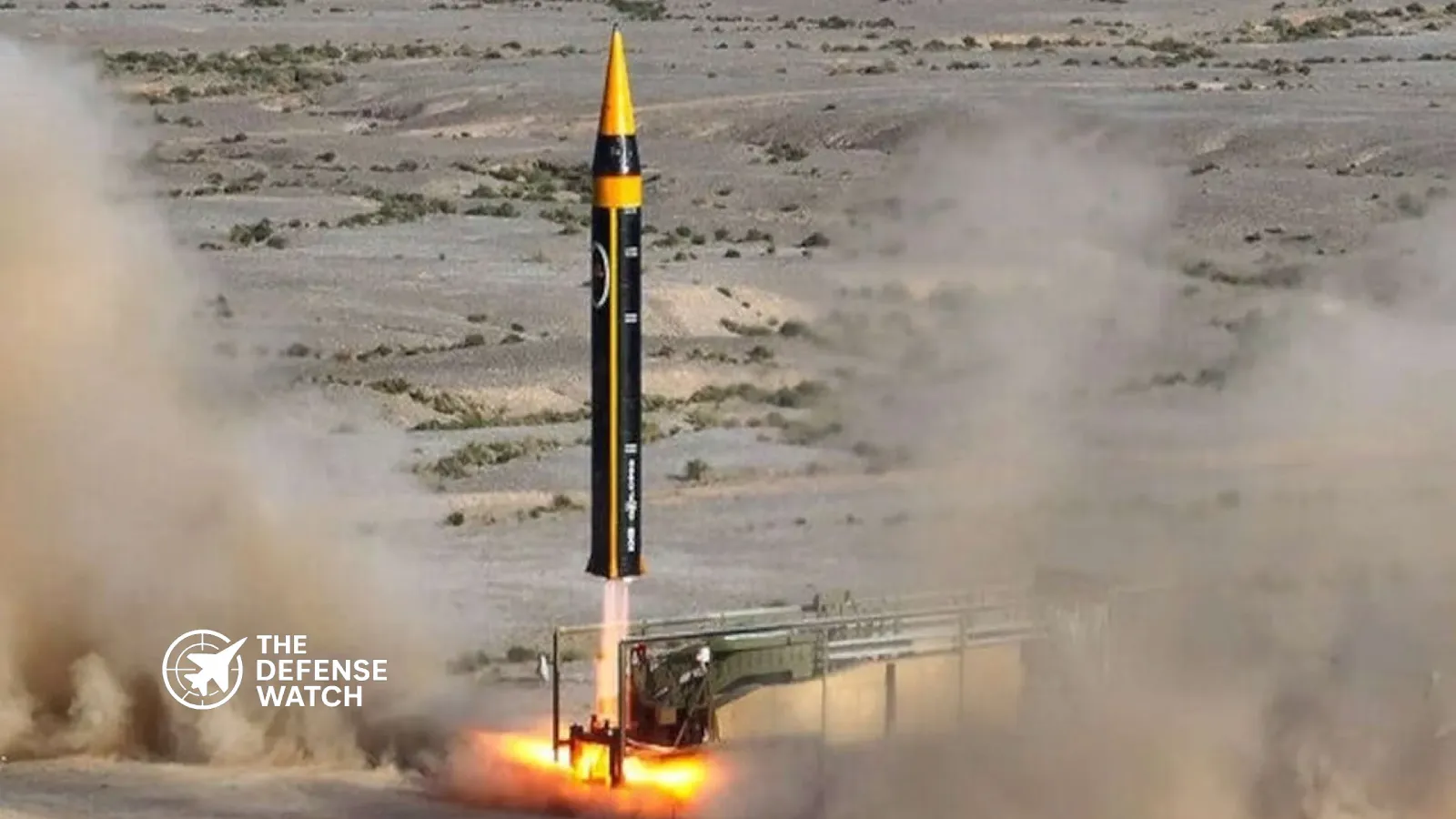
Iran’s Khorramshahr series — a liquid-fueled missile reportedly capable of delivering multiple warheads — represents one of the more concerning regional-range systems in Tehran’s arsenal. Estimates place its range at roughly 2,000 km with a payload of approximately 1,800 kg. More recently, Iran has displayed the Fattah, claimed by Iranian officials to be a hypersonic glide vehicle, though independent analysts remain skeptical of the most extreme performance claims made at its 2023 unveiling.
None of these systems approach the 5,500 km minimum threshold that defines an intercontinental ballistic missile under standard arms control definitions. The distance from Tehran to Washington, D.C., is approximately 10,800 km — more than five times the range of Iran’s longest-confirmed operational missile.
The Space Launch Vehicle Wildcard
Where the analysis becomes more technically nuanced is in Iran’s civilian space program, which has served as both a genuine scientific endeavor and a highly controversial testbed for ballistic missile technologies.
Iran’s Qaem-100 rocket, which successfully placed a satellite into orbit in early 2023, uses solid-fuel motor stages — a significant technical milestone. Solid-fuel propulsion is faster to prepare, harder to detect before launch, and more suitable for military applications than the liquid-fuel systems that have historically dominated Iran’s arsenal. The Qaem-110 motors used in that program are directly relevant to the potential development of longer-range ballistic missiles.
Analysts at the Middlebury Institute of International Studies and the Missile Defense Advocacy Alliance have pointed out that the same propulsion technology needed to reach orbit can — with modifications to trajectory and warhead design — be redirected to achieve intercontinental range. The physics are not theoretical. They are a known engineering pathway.
The critical distinction, however, is intent and timeline. Developing a functional, survivable ICBM capable of delivering a warhead accurately at intercontinental distances is not a matter of months. It requires substantial additional investment in reentry vehicle technology, guidance systems, warhead miniaturization, and testing — all of which would be observable to U.S. intelligence assets.
What U.S. Intelligence Has Said
Successive U.S. intelligence assessments have maintained a consistent position: Iran does not currently possess an ICBM and has not made a formal decision to develop one. The 2024 Annual Threat Assessment from the Office of the Director of National Intelligence noted that while Iran continues to advance its missile program, its stated rationale has focused on deterrence within the regional context — targeting Israel, Gulf states, and U.S. forward-deployed forces in the Middle East and Europe.
That said, the same assessments have repeatedly flagged the dual-use concern embedded in Iran’s space launch activities. In congressional testimony in 2023, then-Defense Intelligence Agency Director Lt. Gen. Scott Berrier stated that Iran’s space program “provides Tehran with the means to advance technologies applicable to long-range ballistic missiles, including ICBMs.
The implication is clear: Iran may not be building an ICBM today, but it is acquiring and testing the component technologies that would make one possible if leadership in Tehran chose to accelerate in that direction.
The October 2024 Strike: A Demonstration of Operational Scale
One data point that significantly reframed the regional threat picture came in October 2024, when Iran launched approximately 180 to 200 ballistic missiles at Israel in what Tehran described as retaliation for Israeli operations against Hezbollah and the killing of Hamas political leader Ismail Haniyeh. The strike — the largest direct ballistic missile attack ever launched by Iran — demonstrated that the Islamic Revolutionary Guard Corps (IRGC) Aerospace Force possesses not only the missiles but the logistics, launch coordination, and operational will to execute a large-scale salvo.
While Israeli and U.S. missile defenses intercepted the majority of incoming missiles, the sheer volume of the attack exposed important questions about defense saturation thresholds. For U.S. defense planners, the October 2024 strike was less a warning about missiles reaching America and more a demonstration of Iran’s regional operational capacity at scale.
The Diego Garcia Strike: Iran’s Self-Imposed Range Limit Collapses
The most consequential single data point of 2026 — one that fundamentally reframes the entire range debate — arrived on March 20, 2026. Iran carried out a limited long-range ballistic missile attack against Diego Garcia, the joint U.S.-UK military base in the Indian Ocean. The base is located approximately 2,500 miles — or roughly 4,000 kilometers — from Iran. Neither missile struck the base: one suffered an in-flight failure, while the other was intercepted by a U.S. warship.
The strategic implications, however, far outweigh the operational outcome. Just two weeks before the strike, Iranian Foreign Minister Abbas Araghchi had told NBC News that Tehran had intentionally kept its missile ranges below 2,000 km, saying the country did not want to be perceived as a threat to anyone outside the region. The Diego Garcia attempt, at nearly double that stated ceiling, rendered that assurance obsolete overnight.
According to SIPRI Associate Senior Researcher Dr. Markus Schiller, the leading candidate for the system used is the Khorramshahr missile, which could theoretically cover roughly 3,800 km to Diego Garcia carrying a very light warhead and drawing on propellant reserves for extended range. However, Israeli Chief of General Staff General Eyal Zamir described the weapon as a two-stage intercontinental ballistic missile — a characterization that, if accurate, would likely rule out the single-stage Khorramshahr and point instead toward a derivative of one of Iran’s space launch vehicles.
Zamir warned publicly that missiles of this range place the capitals of Europe — Berlin, Paris, and Rome — within direct threat range. Analysts at the Foundation for Defense of Democracies and the Washington Institute for Near East Policy described the strike as evidence that Tehran’s capabilities now extend far beyond previously stated limits, marking a shift from regional containment to a posture with global reach.
Iran denied responsibility, with its Foreign Ministry characterizing the allegations as an Israeli disinformation campaign. NATO Secretary-General Mark Rutte also stated that the alliance could not confirm Israel’s claim that the projectiles were Iranian intercontinental ballistic missiles. The identity of the system therefore remains officially unverified — but the geopolitical weight of the incident does not hinge on attribution alone. Iran had been developing intercontinental-range systems reoriented as space launch vehicles after a self-declared 2,000-kilometer range ceiling was imposed, preserving the technical capability while remaining nominally compliant with the political constraint — until the targeting decision itself removed the constraint.
For U.S. defense planners, the Diego Garcia incident closes a chapter. The question was never purely whether Iran could reach beyond 2,000 km under the right conditions — it was whether it would. On March 20, 2026, that question received a definitive operational answer. A 2025 Defense Intelligence Agency assessment had projected that Iran could develop a militarily viable ICBM by 2035 should Tehran decide to pursue the capability. CNN The events of March now suggest that timeline may warrant urgent revision.
Analyst Perspective: The Real Threat Is Not the Homeland — Yet
From a pure capability standpoint, the threat that Iran’s missile program poses to the United States today is not a homeland strike scenario. It is a forward presence threat.
The U.S. maintains tens of thousands of military personnel across bases in Qatar, Bahrain, Kuwait, the UAE, and elsewhere in the region — all of which fall within range of Iran’s existing missile arsenal. The Al Udeid Air Base in Qatar, home to U.S. Central Command’s forward headquarters and a primary hub for regional air operations, sits roughly 1,700 km from Tehran. That is well within the operational range of multiple Iranian systems.
This is where the actual deterrence calculus plays out. Iran does not need an ICBM to threaten American interests — it needs only to sustain a credible threat to the infrastructure, personnel, and partners through which the United States projects power in the Middle East. In that narrower but practically significant sense, Iran’s missile capability is already a direct threat to U.S. security interests, even if it is nowhere near capable of reaching American cities.
The question of ICBM development becomes a longer-horizon concern — one that U.S. missile defense planners, the Missile Defense Agency, and Space Command continue to monitor but do not classify as an imminent threat.
Where Does Iran’s Program Go From Here?
Several factors will shape whether Iran’s missile program evolves toward intercontinental ambitions over the coming decade.
Nuclear negotiations remain a critical variable. If Iran concludes that a nuclear deterrent — paired with a delivery system that can threaten the United States directly — is the only reliable guarantee of regime survival, the strategic incentive to develop an ICBM increases dramatically. Conversely, a credible diplomatic framework that addresses Iran’s security concerns could constrain the program.
Technology transfer from North Korea has been a persistent concern for U.S. and allied intelligence agencies. Pyongyang has demonstrated functional ICBM capability with the Hwasong-17 and Hwasong-18 systems. The degree to which that knowledge has been or could be shared with Tehran is a question that does not have a fully transparent public answer.
Domestic sanctions and economic pressure have historically slowed Iran’s defense industrial base, but they have not stopped it. The IRGC Aerospace Force has demonstrated a consistent ability to develop and field new systems despite resource constraints.
Technical Comparison: MRBM vs. ICBM
Feature Medium-Range (MRBM) Intercontinental (ICBM) Range Capacity 1,000 km – 3,000 km Over 5,500 km Primary Target Regional (e.g., Israel, Riyadh, Diego Garcia) Global (e.g., Washington D.C., London) Propulsion Often single or two-stage Multi-stage (3+ stages) Re-entry Speed Mach 8 – Mach 12 Mach 20+ (extremely high heat) Iranian Example Shahab-3 / Fattah-1 Simorgh (Satellite Launch / ICBM tech) What’s Next? The 24–36 Month Window That Concerns Pentagon Planners
The failed Diego Garcia strike should not be read as a demonstration of Iranian weakness — it should be read as a proof-of-concept test, one that came closer to rewriting the strategic map than any Iranian missile launch in history. The more unsettling question for U.S. and allied defense planners is not what Iran attempted on March 20, 2026, but what a modestly more mature version of that same program could achieve within the next two to three years.
The technical pathway is not theoretical. Iran has demonstrated solid-fuel multi-stage propulsion through its space launch program, shown a willingness to exceed its own declared range ceiling under operational pressure, and now possesses real-world intercept data on how U.S. naval missile defense systems respond to a long-range salvo. If Iran successfully integrates a third propulsion stage and improves heat-shielding technology capable of surviving the extreme thermal stress of high-velocity atmospheric re-entry, the engineering distance from 4,000 km to true ICBM range — approximately 10,000 km — could potentially be covered within 24 to 36 months. That window would place the program inside a single U.S. presidential term and well ahead of the 2035 estimate the Defense Intelligence Agency published just last year.
Three variables will determine whether that window closes or accelerates. First, the degree to which ongoing U.S. and Israeli strikes under Operation Epic Fury have genuinely degraded Iran’s missile production infrastructure — as opposed to temporarily disrupting it. Second, whether Russian technical assistance, already flagged by U.S. intelligence as actively shaping Iran’s targeting intelligence during the current conflict, extends to propulsion and re-entry vehicle engineering. Third, whether Iran’s post-Khamenei leadership — operating without the self-imposed 2,000 km ceiling that defined the program’s public posture for nearly a decade — decides that a credible intercontinental deterrent is now the only reliable guarantee of regime survival.
None of those variables currently point definitively toward an Iranian ICBM within three years. But none of them rule it out either. What the Diego Garcia incident made unmistakably clear is that the conversation about whether Iranian missiles can reach the United States has moved — permanently and irreversibly — from the realm of long-range hypothetical into the domain of near-term operational planning.
Conclusion: Not Today, But Watch the Trajectory
Can Iranian missiles reach the United States today? No — not by any verified, operational system currently in Iran’s inventory. The distance is too great, and the required technologies for an ICBM remain beyond what Iran has publicly tested or deployed.
But the conversation should not end there. The trajectory of Iran’s space launch program, the dual-use nature of its solid-fuel propulsion development, and the strategic pressures that could drive Tehran toward longer-range ambitions all warrant sustained attention. The threat to U.S. personnel, partners, and forward bases in the Middle East is real and immediate. The threat to the American homeland remains a future-tense concern — but one that defense planners would be imprudent to dismiss.
FAQs
Does Iran have missiles that can hit the United States?No. Iran’s current operational ballistic missiles have a maximum confirmed range of approximately 2,000 km, far short of the roughly 10,800 km needed to reach the U.S. mainland.
Could Iran develop an ICBM in the future?U.S. intelligence agencies assess that Iran has the foundational technologies — particularly from its space launch program — to pursue ICBM development, but has not made a confirmed decision to do so. A functional ICBM would likely require several years of additional development and testing.
What is the longest-range missile Iran currently operates?The Khorramshahr-4 (also called Kheibar) is among Iran’s longest-range operational systems, with an estimated range of approximately 2,000 km and a reported payload capacity of around 1,500 kg.
Can Iran’s missiles reach U.S. military bases in the Middle East?Yes. Multiple Iranian ballistic missile systems can reach U.S. installations across the Gulf region, including Al Udeid Air Base in Qatar and other forward operating locations.
What role does Iran’s space program play in its missile development?Iran’s space launch vehicles use solid-fuel propulsion technology that is directly applicable to long-range ballistic missile development. U.S. defense officials have repeatedly flagged the dual-use nature of these programs.
■ KEY FACTS AT A GLANCE- ► Iran claims launch of hypersonic capable Kheibar missile toward Israeli air defense targets.
- ► Kheibar described as long range ballistic system with enhanced maneuverability.
- ► Israel maintains layered missile defense including Arrow and David’s Sling systems.
- ► No independent confirmation yet of hypersonic glide vehicle capability.
- ► Development underscores growing missile competition across the Middle East.
Iran Hypersonic Capable Kheibar Missile Launch Raises Air Defense Concerns
The Iran hypersonic capable Kheibar missile launch has drawn renewed scrutiny from defense analysts after Tehran claimed the weapon was fired toward Israeli air defense networks during ongoing hostilities.
Iranian authorities stated that the Kheibar missile was launched as part of a broader strike package aimed at overwhelming and penetrating Israeli missile defense systems. The claim, if confirmed, would mark another step in Iran’s effort to showcase longer range and potentially maneuverable ballistic missile capabilities.
Officials in Iran described the Kheibar as hypersonic capable, though no independent verification has yet confirmed whether the missile demonstrated sustained hypersonic glide characteristics or simply traveled at hypersonic speeds typical of ballistic trajectories.
Israel has not publicly confirmed the specific missile type used in the reported attack but has stated in recent briefings that its multi layered air defense architecture remains operational.
What Is The Kheibar Missile?
The Kheibar missile, sometimes referred to as Khorramshahr 4 in Iranian media, is part of Tehran’s expanding ballistic missile inventory. It is believed to be derived from earlier liquid fueled systems but reportedly features design refinements to improve range, payload flexibility, and survivability.
Iranian state media has previously claimed the missile can carry a large warhead over distances exceeding 1,000 miles. Analysts note that such range would allow coverage of targets across much of the Middle East.
The Iran hypersonic capable Kheibar missile launch claim centers on speed and maneuverability. All ballistic missiles reach hypersonic velocities during reentry, typically exceeding Mach 5. However, true hypersonic weapons often refer to systems equipped with maneuverable glide vehicles that can adjust trajectory during flight, complicating interception.
There is no open source evidence confirming that the Kheibar employs a hypersonic glide vehicle comparable to programs under development in the United States, China, or Russia. The distinction matters operationally. A maneuverable reentry vehicle presents a greater challenge to radar tracking and interceptor timing than a predictable ballistic arc.
Targeting Israeli Air Defenses
The stated objective of the Iran hypersonic capable Kheibar missile launch was to pressure air defense networks in Israel.
Israel fields a layered missile defense system that includes Arrow for long range ballistic threats, David’s Sling for medium range missiles, and Iron Dome for short range rockets. These systems are supported by advanced radar and battle management networks designed to prioritize high value targets and manage interceptor inventories.
In recent years, Israeli defense officials have emphasized upgrades to counter maneuverable and high speed threats. This includes software improvements and interceptor refinements intended to address emerging missile profiles from regional adversaries.
If the Kheibar demonstrated any terminal maneuvering capability, it would test those defenses. Even absent advanced glide features, a large payload ballistic missile can stress interception systems simply through volume and range.
Strategic Significance
The Iran hypersonic capable Kheibar missile launch reflects Tehran’s broader strategy of deterrence through missile force expansion. Iran continues to invest heavily in ballistic missile development under the oversight of the Islamic Revolutionary Guard Corps.
Ballistic missiles serve multiple purposes in Iranian doctrine. They provide long range strike options without reliance on an air force that faces modernization constraints due to sanctions. They also signal technological progress intended to bolster domestic and regional deterrence messaging.
From a regional security perspective, claims of hypersonic capability raise concerns among Gulf states and Israel alike. Even incremental improvements in accuracy, speed, or maneuverability can shift the balance between offense and defense.
Defense analysts caution, however, that official claims often exceed independently verified performance data. Without telemetry, debris analysis, or confirmation from third party intelligence sources, the true technical characteristics of the Kheibar remain difficult to assess.
Outlook
The Iran hypersonic capable Kheibar missile launch is likely to intensify scrutiny of missile defense readiness across the region. It may also accelerate further investment in early warning systems, interceptor stockpiles, and sensor integration.
For Israel and its partners, the core question is not only whether the Kheibar is genuinely hypersonic in the advanced sense, but whether Iran can produce and deploy it in meaningful numbers.
As missile technology spreads and evolves, the competition between offensive strike systems and defensive interception networks will remain a defining feature of Middle East security dynamics.
Iran States Khorramshahr-4 Ballistic Missile Shown in Missile City Video, Operational Status Claimed
Iran Broadcasts Khorramshahr-4 Missile Footage, Claims Operational Readiness
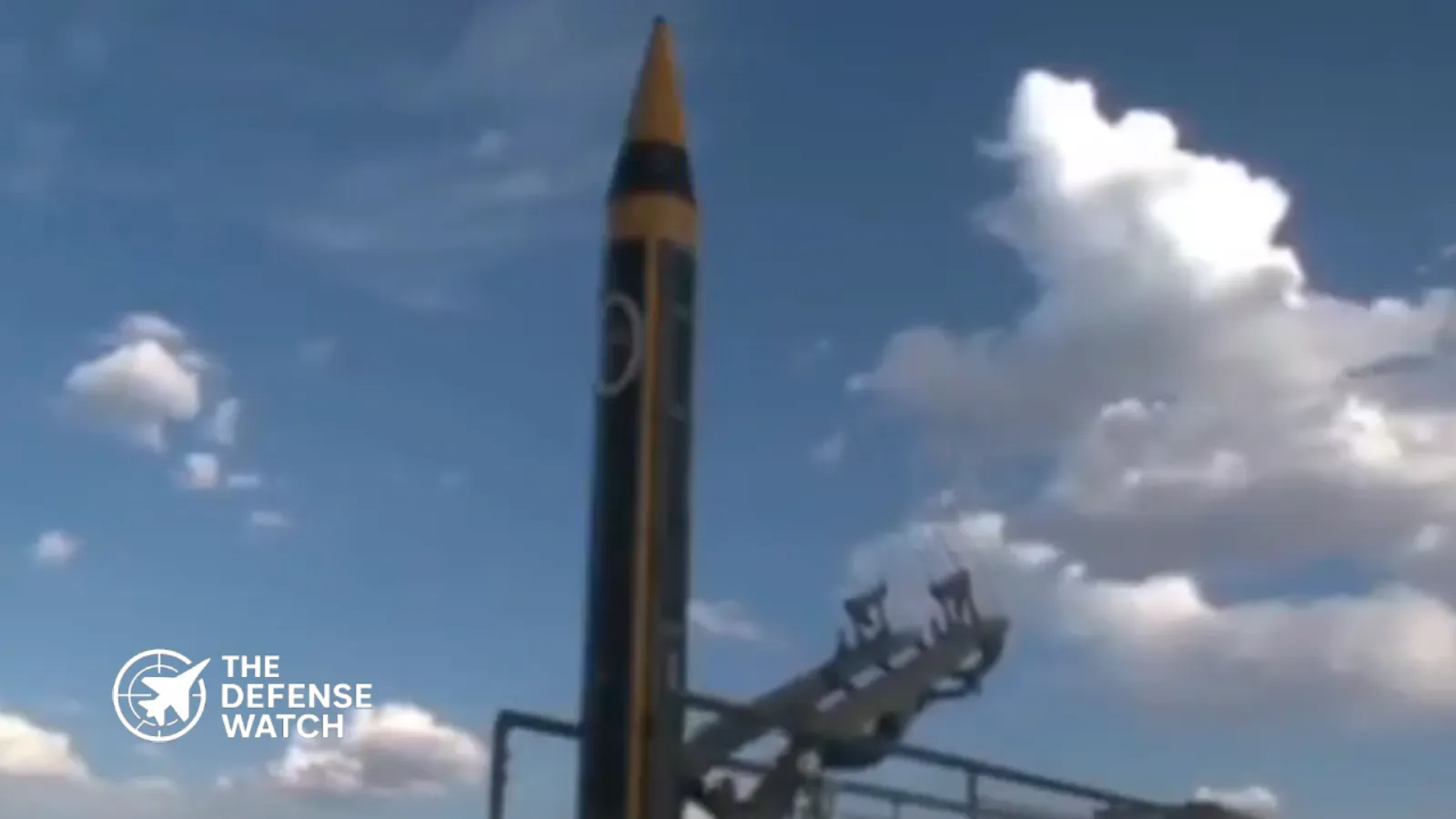
Iran’s state-aligned media broadcast footage this week of its Khorramshahr-4 ballistic missile, with Tehran describing the system as now part of its operational missile forces, including placement in underground “missile city” facilities. The Khorramshahr-4 missile is reported by Iranian outlets to have a range of about 2,000 kilometers and a warhead capacity of roughly 1,500 kilograms.
(adsbygoogle = window.adsbygoogle || []).push({});The imagery aired by Press TV and cited by Fars News Agency showed the missile inside hardened underground facilities the Islamic Revolutionary Guard Corps (IRGC) refers to as missile cities. Iranian reporting frames the broadcast as evidence the system has reached what Tehran calls “operational maturity.”
Iranian Claims on Capabilities
According to state-aligned sources, the Khorramshahr-4 — also associated with the name Kheibar — retains characteristics Iran has highlighted in previous public statements:
• A declared maximum range near 2,000 kilometers, covering broad portions of the Middle East.
• A heavy payload capacity of roughly 1.5 tons, among the largest reported for Iranian ballistic systems.
• Iranian outlets also repeated claims of ballistic speeds up to Mach 16 outside the atmosphere and around Mach 8 within the atmosphere, intended to shorten reaction time for defenses, though these figures have not been independently verified.State sources also asserted the system combines guidance features and design measures to challenge modern air defenses. Again, these are Iranian claims, not independent assessments.
No Independent Confirmation of New Test or Full Operational Status
At this time, there is no independent confirmation from neutral defense news services or official Western defense sources that the Khorramshahr-4 has recently conducted a new flight test or entered service in the IRGC inventory. Many published details on the missile’s performance and capabilities come from Iranian state media or outlets closely aligned with Iranian military reporting.
(adsbygoogle = window.adsbygoogle || []).push({});Open-source defense reference material notes the Khorramshahr-4 was first publicly unveiled in 2023. Its specs have been widely reported based on Iranian disclosures, but key details such as demonstrated accuracy, range in operational conditions, and actual performance remain based on Iranian statements rather than independent verification.
Strategic Context
The Khorramshahr series forms part of Iran’s broader ballistic missile modernization efforts. The weapon family has been emphasized by Tehran as central to its deterrence posture. Analysts note that while Iran publicly maintains a range cap just under 2,000 kilometers for its ballistic systems, its missile technology and production continue to evolve.
Iran’s focus on basing missiles within hardened underground facilities aligns with longstanding doctrine aimed at improving survivability and complicating preemptive strike options by potential adversaries.
(adsbygoogle = window.adsbygoogle || []).push({});How to Understand the Claims
Because the primary sources for this report are Iranian state media and affiliated agencies, defense analysts and open-source trackers advise caution in interpreting technical claims without corroboration from independent monitoring groups, satellite imagery verification, or Western defense reporting.
Trump Warns Iran of Possible Strike After Netanyahu Meeting
U.S. President Donald Trump warned Iran of a possible future strike if it resumes rebuilding ballistic missile or nuclear weapons programs, following talks with Israeli Prime Minister Benjamin Netanyahu in Florida.
Speaking on Monday at his Mar a Lago estate, Trump said the United States could support another major military strike if Iran moves to restore capabilities targeted during a large U.S. operation in June. He added that Washington is closely monitoring Iranian activity related to missile development and nuclear infrastructure.
Trump made the remarks while standing beside Netanyahu, signaling continued alignment between Washington and Jerusalem on Iran related security concerns. The president suggested Tehran may already be attempting to recover from damage inflicted during the June strike, which U.S. officials have described as a significant setback to Iran weapons programs.
In addition to Iran, Trump issued a direct warning to Hamas, saying the group would face severe consequences if it does not disarm. He did not outline specific military steps but stressed that the United States supports Israel efforts to neutralize militant threats tied to Gaza.
Netanyahu echoed concerns about Iran regional activities and reiterated Israel position that Tehran must not be allowed to rebuild strategic weapons capabilities. Israeli officials have long argued that Iran missile and nuclear programs pose a direct threat to Israeli security and broader regional stability.
The comments come amid heightened tensions across the Middle East, with ongoing fighting in Gaza and continued concern over Iran role in supporting armed groups across the region. U.S. defense officials have previously stated that preventing Iran from advancing missile and nuclear systems remains a core objective of American military planning.
Trump Iran strike warning language reflects a continuation of a hard line approach toward Tehran, centered on deterrence and the threat of force. Analysts note that such statements are intended to reinforce U.S. red lines while signaling support for Israeli security priorities.