

U.S. Navy Nuclear Attack Submarines Conduct Forward Deployment Exercise Near Guam
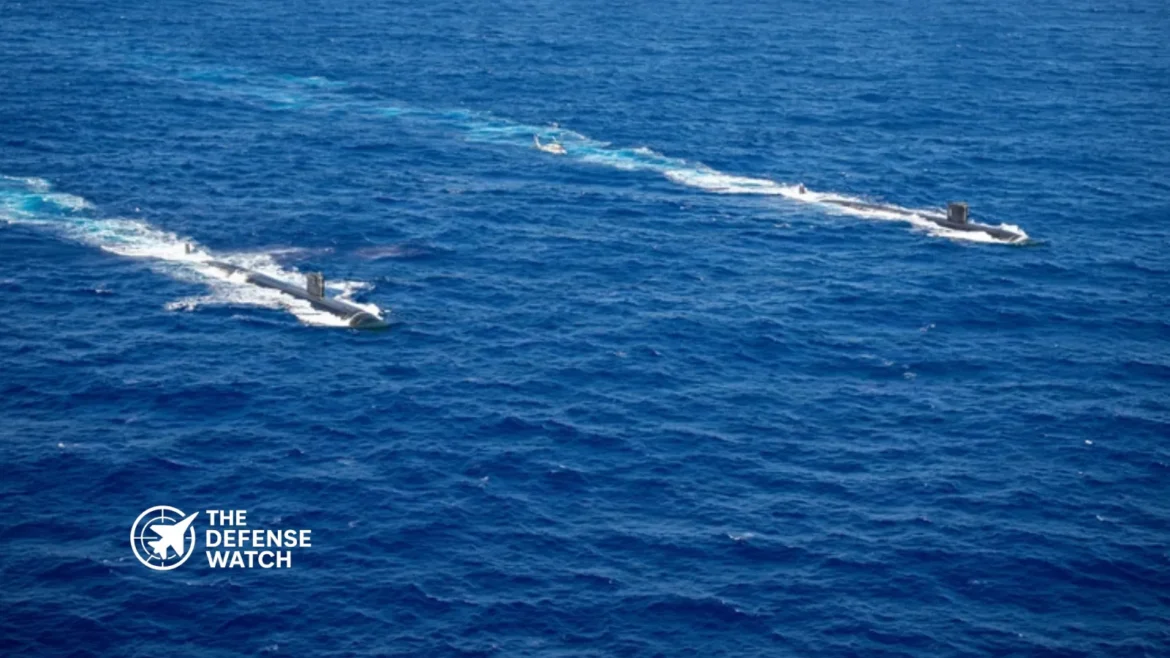
The U.S. Navy deployed two Los Angeles-class nuclear attack submarines near Guam in a rare coordinated surface exercise that underscores forward-deployed undersea capabilities in the Indo-Pacific theater. USS Asheville (SSN 758) and USS Annapolis (SSN 760) surfaced together on December 17, 2025, conducting a tightly controlled photo exercise with aviation support from Helicopter Sea Combat Squadron 25.
(adsbygoogle = window.adsbygoogle || []).push({});According to Commander, Submarine Squadron 15, the operation demonstrated coordination between forward-deployed undersea platforms and naval aviation assets stationed at Naval Base Guam. The exercise represents an uncommon operational posture for attack submarines designed for stealth operations, offering a deliberate signal of readiness in a region where military response timelines continue to compress.
Los Angeles-Class Submarines: Capabilities and Strategic Value
USS Asheville and USS Annapolis are improved Los Angeles-class attack submarines, representing late-production variants with enhanced acoustic quieting and upgraded combat systems. The class displaces approximately 6,900 tons submerged, measures 360 feet in length, and operates at speeds exceeding 25 knots with diving capabilities beyond 800 feet.
Strike and Sea Denial Capabilities
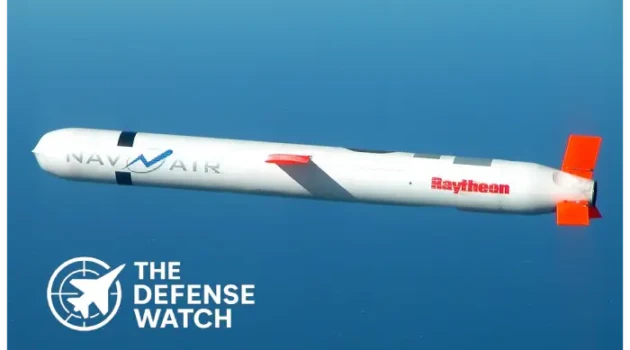
Each submarine carries 12 Vertical Launch System (VLS) tubes for Tomahawk cruise missiles, providing land-attack capabilities without consuming torpedo-room capacity. The Navy fields Tomahawk Block IV and Block V variants with ranges approaching 900 nautical miles, incorporating GPS guidance, terrain-matching navigation, and two-way satellite communications for in-flight retargeting.
- (adsbygoogle = window.adsbygoogle || []).push({});
The submarines retain full torpedo-tube launch capability for Mk 48 ADCAP heavyweight torpedoes, designed to defeat deep-diving nuclear submarines and surface combatants through wire-guided and active-passive acoustic homing. This dual-payload configuration enables mission flexibility across intelligence collection, sea denial, and precision strike operations.
Forward Deployment Advantages
Naval Base Guam’s strategic location provides critical forward positioning for submarine operations. The facility enables faster rearmament, maintenance, and deployment cycles compared to continental U.S. bases, maintaining persistent undersea presence across the Western Pacific’s vast operational areas.
Submarine Squadron 15 operates from Polaris Point as a forward-deployed force supporting free and open Indo-Pacific operations. The squadron includes multiple Los Angeles-class boats alongside newer Virginia-class submarines, providing layered undersea capabilities across anti-submarine warfare, intelligence gathering, and strike missions.
Coordinated Operations: Why Surface Two Submarines Together?
Submarine doctrine emphasizes stealth, separation, and operational ambiguity. Coordinated surface operations with two attack submarines represent exceptional circumstances, typically limited to permissive waters during training, transit coordination, or deliberate signaling.
Aviation Support and Safety
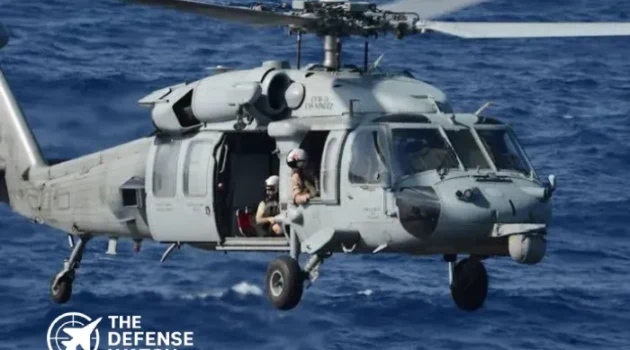
The MH-60S Sea Hawk from HSC-25 provided communications relay, search-and-rescue coverage, and airborne oversight during close-quarters maneuvering. While MH-60S helicopters lack the anti-submarine warfare capabilities of MH-60R variants, they maintain critical medical evacuation readiness and surface coordination functions for forward-deployed submarine operations.
Guam-based helicopter squadrons provide continuous SAR and medevac posture across the 7th Fleet area of operations, making them natural aviation partners when submarines conduct controlled evolutions near high-traffic sea lanes.
Operational Messaging
The exercise signals several operational realities. First, multiple attack submarines operate from forward bases with coordinated procedures and safety protocols. Second, submarine forces can surge from forward hubs rather than relying on trans-Pacific deployments. Third, even legacy improved Los Angeles-class boats maintain modern Tomahawk strike capabilities and credible sea denial effects.
(adsbygoogle = window.adsbygoogle || []).push({});Indo-Pacific Strategic Context
The deployment occurs against a backdrop of regional security challenges including territorial disputes, military modernization programs, and contested sea lanes across the South China Sea and Western Pacific. U.S. Navy leadership has consistently emphasized forward presence as central to deterrence strategy and alliance commitments.
Guam’s Strategic Position
Guam’s geographic location provides proximity to potential contingency areas while maintaining sufficient distance for sustained operations. The island serves as a critical logistics node, enabling faster maintenance cycles and reducing the visible logistics footprint that accompanies surface combatant operations.
Forward deployment from Guam allows submarines to maintain station times, conduct intelligence collection, and provide strike options across multiple operational arcs without revealing intent through trans-oceanic transits.
Deterrence Through Controlled Visibility
The exercise represents deterrence through limited transparency—using rare surface-level operations to communicate undersea readiness while submarines remain among the hardest targets to detect once submerged. In a region defined by long-range sensors, missile salvo exchanges, and contested logistics, the Navy demonstrated that forward undersea forces are armed, trained, and coordinated for rapid response.
Platform Evolution and Future Capabilities
While Los Angeles-class submarines represent mature technology, continuous modernization maintains combat relevance. Tomahawk Block V incorporates navigation upgrades and structures future variants including Maritime Strike Tomahawk with anti-ship seeker capabilities and Joint Multiple Effects Warhead Systems for harder target sets.
(adsbygoogle = window.adsbygoogle || []).push({});The submarines’ combat systems receive regular updates maintaining compatibility with fleet networks and enabling dynamic targeting against mobile threats. Combined with Mk 48 ADCAP torpedoes designed to defeat modern countermeasures, Los Angeles-class boats retain credible lethality against both undersea and surface threats.
Undersea Warfare in a Contested Environment
Modern undersea operations require coordination across multiple domains. Attack submarines work distributed across operational areas using deconfliction measures that preserve acoustic advantage while enabling synchronized effects. Surface exercises like the December event rehearse procedures, demonstrate capabilities, and validate coordination between undersea platforms and supporting aviation assets.
The Navy’s approach balances operational security with strategic messaging—submarines survive through stealth and ambiguity, but controlled visibility serves deterrence when adversaries need reminders of forward-deployed capabilities and operational readiness.
(adsbygoogle = window.adsbygoogle || []).push({});Conclusion
The deployment of USS Asheville and USS Annapolis near Guam demonstrates U.S. Navy undersea force posture in the Indo-Pacific. Through forward basing, coordinated training, and modern strike capabilities, attack submarines provide persistent deterrence and rapid-response options across the theater.
As regional security challenges evolve, forward-deployed submarine forces operating from strategically positioned bases like Guam represent critical elements of U.S. maritime strategy—maintaining presence, signaling commitment to allies, and deterring potential adversaries through demonstrated capability and readiness.
- (adsbygoogle = window.adsbygoogle || []).push({});


U.S. Carrier Live-Fire Drill in South China Sea
The U.S. Navy’s USS Abraham Lincoln conducted a live-fire drill in the South China Sea in early January, with the carrier’s defensive weapons systems firing during operations aimed at deterring aggression and supporting allied presence in the Indo-Pacific region, the Navy says.
(adsbygoogle = window.adsbygoogle || []).push({});Routine Patrols With Live-Fire Serial
According to U.S. Navy reporting and imagery, the Nimitz-class aircraft carrier USS Abraham Lincoln executed Close-In Weapon System live-fire serials on January 8 while underway with its Carrier Strike Group in the U.S. 7th Fleet area of operations.
The carrier’s embarked air wing and accompanying escorts, including destroyers USS Frank E. Petersen Jr., USS Spruance and USS Michael Murphy, are operating in the South China Sea and Philippine Sea as part of regular Indo-Pacific patrols.
The Navy frames such live-fire drills as part of routine readiness and deterrence posture to counter potential aggression, strengthen alliances and partnerships, and sustain forward naval presence.
Carrier Capabilities and Operational Context
USS Abraham Lincoln, commissioned in 1989, is equipped to carry about 90 fixed-wing aircraft and helicopters. Defensive systems aboard include the Phalanx CIWS, Rolling Airframe Missiles and Sea Sparrow missiles for layered protection against air and missile threats.
Images released by the service show sailors conducting post-exercise checks on the carrier deck following the live-fire drill in the region.
(adsbygoogle = window.adsbygoogle || []).push({});Indo-Pacific Presence and Strategic Messaging
The live-fire activity occurs amid sustained U.S. naval operations in the Indo-Pacific, where the 7th Fleet routinely patrols to demonstrate freedom of navigation and reassure regional allies. U.S. forces continue to operate alongside allied navies and conduct joint exercises across the region.
This activity also comes as China conducts its own live-fire drills and naval exercises near Taiwan and in the broader region, reflecting a broader pattern of military signaling by both sides.
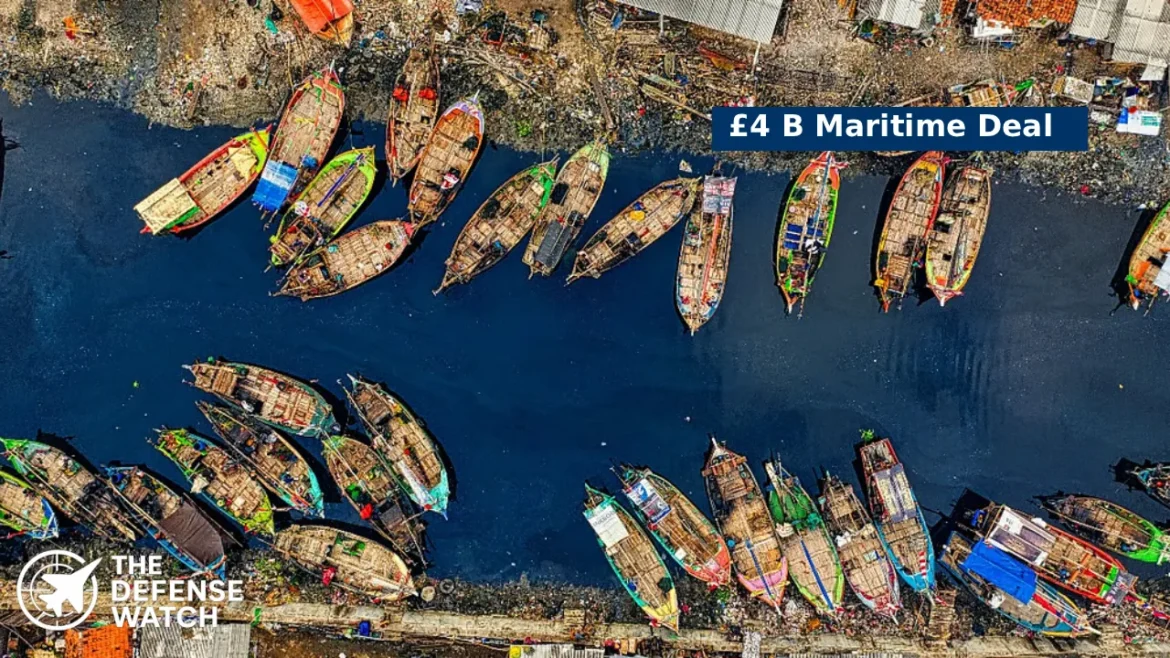
The United Kingdom and Indonesia announced a landmark £4 billion (roughly US$5.24 billion) maritime agreement. The deal, led by British defense firm Babcock, will see vessels built in Indonesia using UK shipbuilding expertise, while also supporting 1,000 jobs back in the UK.
Background: Why This Matters
This agreement builds on a new strategic partnership between the UK and Indonesia, formalized in November 2024. GOV.UK Under that framework, both countries committed to deepen cooperation across defence, maritime security, and sustainable economic development.
For the UK, the deal aligns with efforts to expand its defense exports and industrial base in the Indo-Pacific. For Indonesia, it represents a significant step in strengthening its naval and maritime capabilities — both for security and civilian (fishing) sectors.
Key Details of the Deal
Scope and Structure
- Lead contractor: Babcock International.
- Vessel production: To be carried out in Indonesia, leveraging local shipyards.
- Types of vessels: A mix of naval ships and more than 1,000 fishing vessels, under a joint Maritime Partnership Program (MPP).
- Jobs:
- ~1,000 UK jobs secured — with roles at Babcock’s Rosyth, Bristol, and Devonport sites.
- In Indonesia, construction is expected to catalyze domestic shipbuilding and coastal community development.
Strategic Motivation
- The UK frames the deal as part of its Indo-Pacific security commitment, emphasizing a rules-based maritime order and freedom of navigation.
- Indonesia aims to boost food security by expanding its fishing fleet, while modernizing its coastal and naval infrastructure.
- There is a strong technology-transfer component: the partnership includes joint R&D, and knowledge sharing in automation, AI, and digital ship design.
Sustainability and Environment
- Supported by the UK’s Blue Planet Fund, the program emphasizes environmental sustainability.
- Future vessels will be deployed in a socially and ecologically conscious manner — including dynamic fish-stock assessment, marine conservation, and coastal resilience efforts.
Expert & Policy Perspectives
- From the UK’s viewpoint, Prime Minister Keir Starmer said the deal “reinforces our joint commitment to global stability and bolsters our shared national security.”
- Babcock CEO David Lockwood underscored the economic and industrial benefits: the program “will advance critical Indonesian naval and maritime programs … while stimulating the supply chain and SME opportunities” in the UK.
- Diplomatically, analysts see this as part of a broader Indo-Pacific tilt — not only advancing UK economic interests but also deepening strategic ties with a key ASEAN nation.
On Indonesia’s side, the deal supports President Prabowo Subianto’s priorities: modernizing the navy, enhancing maritime security, and strengthening food security via its fishing industry.
Broader Context
This maritime deal is one in a series of recent UK moves to expand its defense footprint in Southeast Asia.
- Earlier in 2025, the UK-Export Finance (UKEF) agency backed a €157.9 million contract to support Indonesia’s National Maritime Security System (NMSS) using a UK-developed AI-powered surveillance system.
- The HMS Spey, a Royal Navy offshore patrol vessel known for its green propulsion features, visited Jakarta earlier in the year — highlighting a mutual interest in sustainable defense tech.
- Indonesia itself is diversifying its naval procurement: earlier deals involve French Scorpène submarines, indicating that its modernization agenda is technologically and geopolitically broad.
Strategically, this deal also comes amid intensifying geopolitical competition in the Indo-Pacific, where major powers are vying for influence through security partnerships, infrastructure investments, and defense exports.
Implications & What to Watch
- Naval Capacity Building: The MPP could significantly expand Indonesia’s coastal and naval fleet, enhancing its maritime sovereignty in a region with complex security dynamics.
- Industrial Growth: For the UK, the deal secures hundreds of high-value jobs while maintaining shipbuilding relevance. For Indonesia, technology transfer and local build could help strengthen its shipbuilding sector long-term.
- Sustainable Security: The inclusion of environmental and social sustainability aligns with growing global demand for green defense — making this a potential model for future maritime partnerships.
- Geopolitical Strategy: This deepening UK-Indonesia military-industrial cooperation may factor into wider regional strategies involving the US, NATO, and other Indo-Pacific partners.
- Follow-On Deals: Watch for future contracts, particularly in surveillance (building on the NMSS), training, and possibly even more advanced warship construction or dual-use vessels.
Conclusion
The £4 billion UK-Indonesia maritime deal represents a multifaceted strategic win: bolstering Indonesia’s naval and fishing capacity, safeguarding UK jobs, and reinforcing a rules-based order in the Indo-Pacific. It signals a deepening defense-industrial partnership with long-term implications for regional security, economic growth, and technological collaboration. As both nations move into implementation, the broader geopolitical and industrial consequences will warrant close monitoring.

U.S. and India Ink 10-Year Defense Framework Agreement
Washington, D.C. — October 31, 2025:
U.S. Defense Secretary Pete Hegseth announced Friday that the United States has signed a 10-year defense framework agreement with India, marking one of the most significant milestones in bilateral military cooperation between the two nations.
In an official post on X, Hegseth confirmed that the deal “sets a new benchmark for regional stability and defense balance,” emphasizing that Washington and New Delhi’s defense partnership is now “stronger than ever.”
The announcement follows months of high-level talks between the Pentagon and India’s Ministry of Defense, amid heightened geopolitical tensions across the Indo-Pacific — a region where both nations are increasingly aligned in countering China’s expanding military presence.
Deepening Defense and Technology Cooperation
The defense framework outlines expanded collaboration across multiple domains, including intelligence sharing, joint military exercises, logistics, and defense technology co-development.
While specific details have not been publicly disclosed, sources familiar with the agreement indicate that it includes enhanced cooperation in aerospace systems, naval operations, and cyber defense, as well as an emphasis on supply chain security for critical technologies such as semiconductors and advanced communications.
According to Pentagon officials, the agreement will also serve as a foundation for future defense industrial cooperation, supporting joint research, manufacturing, and interoperability between U.S. and Indian defense firms.
This deal builds upon previous defense pacts such as the BECA (Basic Exchange and Cooperation Agreement) signed in 2020 and the LEMOA (Logistics Exchange Memorandum of Agreement) in 2016, which allowed the two militaries to share logistics and geospatial data.
Strategic Significance in the Indo-Pacific
The 10-year agreement is being viewed as a cornerstone of the U.S. strategy to maintain a free and open Indo-Pacific, reinforcing partnerships that counterbalance China’s assertive regional posturing.
India, already a key member of the Quadrilateral Security Dialogue (Quad) alongside the U.S., Japan, and Australia, has been increasingly aligning its defense policies with Western partners while maintaining strategic autonomy.
Defense analysts note that this framework sends a strong signal to Beijing and Moscow about Washington’s commitment to long-term regional alliances. The timing also coincides with renewed U.S. efforts to modernize its defense presence across the Pacific, including increased naval activity and partnerships with Southeast Asian nations.
Pentagon’s New Approach to Partnerships
Under Secretary Hegseth, the Pentagon has prioritized long-term defense frameworks that reduce bureaucracy and enable faster collaboration with allies.
“The decade-long structure gives predictability and continuity,” said a senior defense official. “It allows both nations to plan joint initiatives across administrations, ensuring sustained interoperability and capability development.”
The framework may also open new pathways for joint defense production, including under the Defense Trade and Technology Initiative (DTTI) — a long-standing effort to transfer advanced U.S. defense technology to India while strengthening India’s domestic defense industry.
Analysis: Strengthening the U.S.-India Strategic Axis
The U.S.-India defense relationship has evolved from limited cooperation in the 1990s to a comprehensive strategic partnership today. The new framework reflects Washington’s recognition of India as a key pillar of its Indo-Pacific defense strategy and a counterweight to China’s growing influence.
For the U.S. defense industry, the deal could translate into new opportunities in defense exports, joint R&D, and supply chain diversification, particularly in advanced aerospace, drone systems, and naval platforms.
Analysts also see the pact as a move to solidify defense ties ahead of potential political shifts, ensuring continuity even through leadership transitions in both countries.
However, challenges remain. India continues to maintain a degree of independence in its foreign policy, including ongoing defense ties with Russia. Managing this balance while expanding cooperation with Washington will be critical in determining the success of this framework.
Conclusion: A Decade of Strategic Promise
The U.S.-India 10-year defense framework represents a forward-looking blueprint for the next phase of bilateral military cooperation. As the Indo-Pacific becomes the focal point of global strategic competition, the agreement underscores Washington’s commitment to shared security, technology innovation, and regional deterrence.
If effectively implemented, it could reshape the balance of power across the Indo-Pacific — not through confrontation, but through sustained partnership and defense integration.

From Interim Guidance to Full 2025 NDS
On May 2, 2025, the U.S. Department of Defense issued a public statement announcing that Secretary of Defense Pete Hegseth has formally directed the development of the 2025 National Defense Strategy (NDS). That announcement aligns with a classified memorandum released concurrently, which tasks the Under Secretary of Defense for Policy to lead the drafting process and deliver a full version by August 31, 2025.
The classified document emphasizes that the new NDS will use the 2025 Interim National Defense Strategic Guidance (INDSG) as its foundation. That interim guidance, completed earlier in 2025, already signals a reordering of U.S. defense priorities.
In public remarks, the Pentagon has confirmed that the draft NDS will foreground defense of the U.S. homeland, including air and border security. At the same time, it will retain China and the Indo-Pacific as major strategic concerns—though potentially in a subordinate role.
What the Interim NDS Reveals: Strategic Priorities
Homeland Defense at the Forefront
The administration’s interim strategy marks a stark pivot: protecting the homeland is being elevated above expeditionary missions overseas. The classified guidance calls for the U.S. military to assist in border security, countering narcotics and human smuggling, and repelling what it formally terms “forms of invasion.
Retaining China as a “Pacing Threat” (But with Caveats)
Despite the inward turn, China remains doctrinally central. The interim guidance frames a potential invasion of Taiwan as the primary scenario for planning future force posture. That said, analysts stress the shift is less about abandoning China than reprioritizing outcome-based risk distribution across regions.
Assuming Risks in Other Theaters
The interim strategy makes explicit that the U.S. will “assume risk” in regions outside homeland defense and China contingency planning. This implicitly signals a possible drawdown of U.S. involvement in Europe, Africa, and the Middle East—unless allied nations bolster their own capacity.
Burden-Sharing and Allied Pressures
The new guidance reiterates long-standing calls for allies and partners to increase their defense contributions. The DoD will press more forcefully for burden-sharing, and expects U.S. forces to concentrate on missions deemed most critical under the new philosophy.
Emerging Contours of the 2025 NDS Draft
A September 2025 report in Politico reveals a draft of the 2025 NDS has landed on Secretary Hegseth’s desk, confirming the strategic turn: home and Western Hemisphere defense will take precedence over global commitments. Sources suggest the document sharply recalibrates the department’s global roles, scaling back emphasis on China and Russia in favor of a more isolationist posture.
Defense News reports that, in internal discussions, Pentagon officials have told Military Times the final NDS will closely align with President Trump’s “America First” defense doctrine. Some inside the Pentagon believe the shift could shrink U.S. forces abroad and consolidate operational commands closer to home.
However, Pentagon officials also insist that China’s threat will still be treated as a key concern—if no longer the preeminent priority. The strategy, in their portrayal, aims for a more balanced posture: “We will not abandon Indo-Pacific interests but will put homeland and regional security first.”
Strategic Implications & Expert Commentary
Tension with Uniformed Leadership
The proposed redirection has prompted unease among top uniformed leaders. Reports suggest internal dissent over a plan that some see as overly nostalgic or politically driven rather than operationally prudent. Some military officers worry that abrupt reassignments, command reorganizations, or force drawdowns could undermine readiness.
Allies and Credibility Risks
For U.S. allies in Europe and Asia, the 2025 NDS draft presents disconcerting signals. A U.S. pullback could exacerbate security gaps and encourage adversarial behavior—particularly from Russia in Eastern Europe and China in Indo-Pacific theaters. NATO nations already face uncertainty about future U.S. force posture commitments.
Questions of Doctrine Versus Practice
Analysts emphasize that what matters is not just what appears on paper, but how the Pentagon allocates resources, force structure, and overseas presence. A strategy may reorient rhetoric, but unless followed by personnel realignments and budget shifts, its impact remains symbolic.
FAQs
The Interim National Defense Strategic Guidance is a classified planning document completed early in 2025. It lays the groundwork for the full 2025 NDS by establishing priority missions, particularly elevating homeland defense, shaping the drafting process.
According to the May 2025 memorandum, a full draft is due to the Secretary by August 31, 2025. An unclassified summary is expected to follow.
Not necessarily. Although the draft strategy appears to reweight focus toward domestic defense and the Western Hemisphere, China remains a core strategic competitor. The degree of resources and operational focus directed to Indo-Pacific will reveal how deep the shift goes.
Allied nations, especially in Europe and Asia, could see reductions in U.S. force presence or support. That shift may compel regional powers to boost their own capabilities or recalibrate security arrangements.
Ensuring coherence between doctrine and execution. While the strategy may redirect priorities, success depends on budgets, force posture changes, and buy-in from both civil and military leadership. Without those, the shift risks becoming rhetorical rather than transformative.

U.S. Triggers Development of 2025 National Defense Strategy
On May 2, 2025, the Department of Defense (DoD) formally initiated the drafting of the National Defense Strategy (NDS) for 2025, under new guidance from Secretary of Defense Pete Hegseth. The strategy is anchored in the administration’s “America First” and “Peace Through Strength” agenda, setting clear priorities: defending the U.S. homeland, securing its skies and borders, and deterring China in the Indo-Pacific. The initiative is spearheaded by Under Secretary of Defense for Policy Elbridge Colby, in coordination with Joint Staff and service-level strategists, with a targeted delivery date of August 31, 2025.
Shifting Emphasis: Homeland Over Global Commitments
Unlike recent administrations, the current interim NDS emphasizes the American homeland as the foremost strategic priority. Defense Secretary Hegseth described the shift—crafted quickly at the start of the term—as a necessary rebound from previous strategic direction. While China and the Indo-Pacific remain significant concerns, other theaters—particularly Europe, the Middle East, and Africa—are being deprioritized, with the Pentagon increasingly urging allies to bear more of the regional defense burden.
A classified interim guidance memo, heavily influenced by the Heritage Foundation, reinforces this adjustment: urging “denial defense” of Taiwan, enhancing homeland defense—including countering migration and drug threats—and scaling back U.S. obligations elsewhere.
Modernizing Forces for the New Era
In parallel with strategy development, Secretary Hegseth is driving substantial transformation in Army capabilities. A memo mandates integration of drone swarms—targeting one thousand drones per division—to supplant some crewed helicopter roles, and prioritizes advanced systems like the Precision Strike Missile and Long-Range Hypersonic Weapon. Streamlining headquarters, eliminating obsolescent systems, and embedding AI-driven command networks are central to this modernization push, especially aimed at enhancing lethality and readiness in the Indo-Pacific.
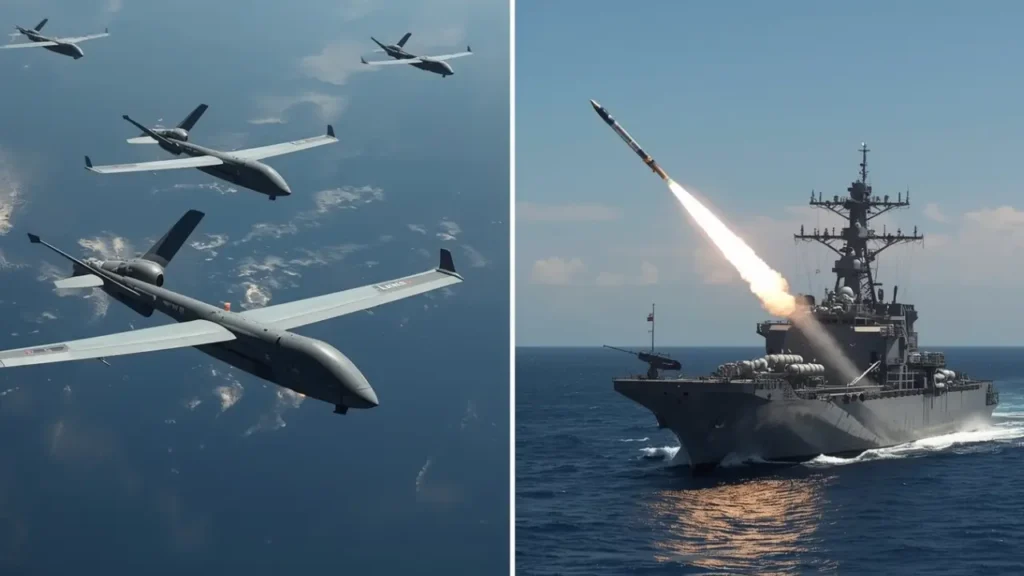
The Army Transformation Initiative further reinforces these reforms, consolidating multiple commands (Futures Command with TRADOC; Forces Command, North, and South into a Western Hemisphere Command), downsizing general officers, restructuring infantry brigades into mobile units, and deploying modern platforms—all to align resources with strategic imperatives.
Strategic Reform and Budgetary Constraints
Think tanks such as the Atlantic Council point out that the new NDS must navigate mounting fiscal pressures and technological disruption. Their analysis recommends five strategic pillars for the upcoming strategy: homeland defense, deterrence via modern force posture, recognizing China as the primary competitor, force modernization for AI-enabled combined-arms warfare, and dominance in space. Meanwhile, the broader defense planning community calls for a shift to mission-based force planning to align strategy with budget realities—emphasizing that previous NDS editions were ill-equipped to counter two major adversaries simultaneously.
Global Implications and Alliance Dynamics
Europe and other allies are poised for the fallout of the U.S.’ strategic pivot. The U.S.’ emphasis on burden-sharing is reshaping NATO expectations, with allies potentially assuming greater roles in regional defense in exchange for U.S. commitments elsewhere. At the same time, this shift underlines growing pressure on partners to modernize and increase contributions—especially as the U.S. reallocates resources toward Indo-Pacific deterrence and borders.
FAQs
The DoD has mandated completion of the NDS draft by August 31, 2025. An unclassified release will likely follow, but no public timeline is confirmed.
No. While Europe is receiving comparatively less priority, the U.S. expects allies to absorb greater responsibility. It’s a rebalancing, not abandonment.
Drone swarms provide cost-effective massed effects, reducing reliance on crewed platforms, enabling distributed lethal operations, and enhancing survivability in contested environments.