

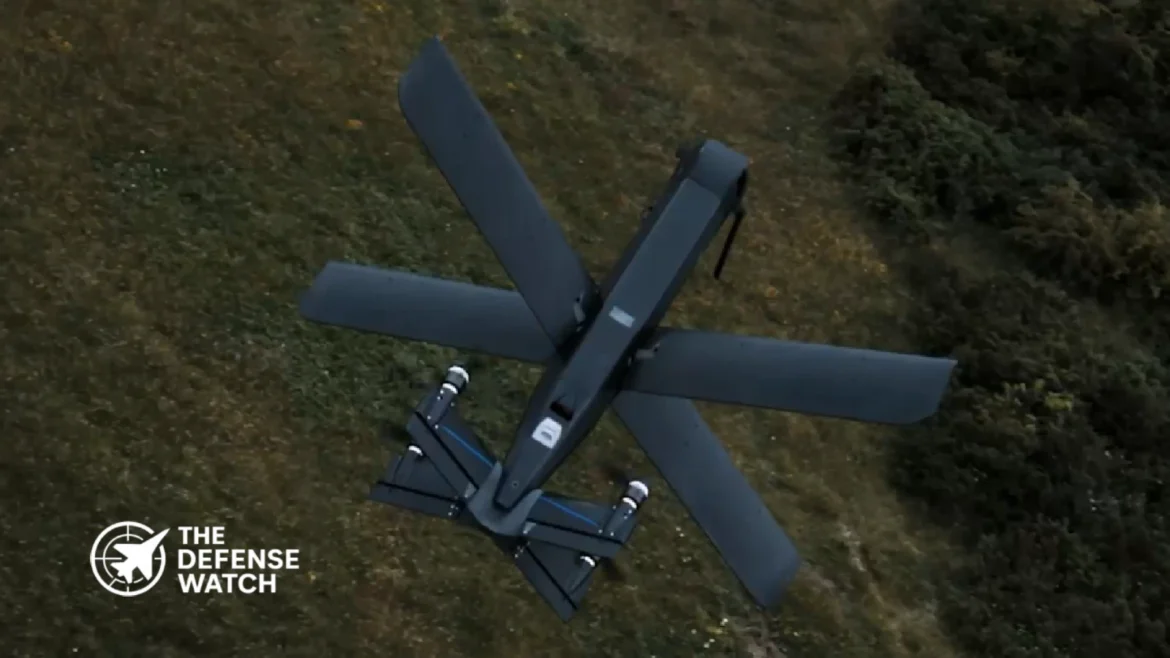
Executive Summary: German defense technology company Helsing has partnered with Japan’s Rakuten to help finalize a potential military sale of its HX-2 strike drone to Japan’s Ground Self-Defense Force. The move comes as Tokyo accelerates investment in unmanned systems amid growing regional security concerns and places greater emphasis on autonomous capabilities.
Helsing HX-2 Drone Deal Moves Closer In Japan
The Helsing HX-2 drone Japan effort has gained momentum after German defense technology company Helsing enlisted Japanese conglomerate Rakuten to help broker a military deal, according to Reuters. The Japanese Ground Self-Defense Force is already testing Helsing’s HX-2 strike drone, while Rakuten is expected to help bridge the commercial and procurement requirements involved in completing a potential agreement.
Reuters reported that an initial agreement has already been reached, with Rakuten’s role focused on helping Helsing navigate Japan’s defense procurement process. The development is notable because Rakuten has extensive commercial and financial operations in Japan but comparatively limited experience as a traditional defense-sector intermediary.
For Helsing, the Japanese opportunity represents another step in the company’s expansion from European battlefield AI software into autonomous and unmanned weapons.
Japan Tests Helsing’s HX-2 Strike Drone
The HX-2 is an electrically powered strike drone designed around onboard artificial intelligence and software-defined functions. Helsing says the system has a range of up to 100 kilometers and is designed to operate in environments where satellite navigation and communications may be disrupted by electronic warfare.
The company also says the HX-2 can operate as part of a swarm and can be integrated with its Altra reconnaissance and strike software. The system is intended to allow multiple drones to be coordinated while keeping a human operator involved in critical actions.
That combination is relevant to Japan’s growing interest in unmanned capabilities. Tokyo’s defense planning identifies unmanned defense capabilities as one of seven priority areas for strengthening the country’s military posture. Japan’s Defense Ministry has also highlighted the ability of unmanned systems to operate in dangerous environments and remain airborne or deployed for extended periods.
Japan has already decided to introduce the MQ-9B SeaGuardian for long-endurance unmanned operations and is developing unmanned aircraft intended to support its next-generation fighter program.
Why Japan Is Looking At Autonomous Strike Drones
Japan’s interest in systems such as the HX-2 comes against a broader effort to strengthen its ability to operate across a large geographic area while dealing with increasingly complex air and maritime threats.
Japan’s Ministry of Defense has identified China’s expanding military capabilities and increased activity around the East China Sea and the western Pacific as major security concerns. The ministry’s latest defense white paper also points to China’s expanding use and development of unmanned aircraft, including reconnaissance and strike systems.
This environment increases the importance of systems that can provide persistent surveillance, precision effects and distributed operations without relying exclusively on traditional crewed aircraft.
The Helsing Japan military drone deal therefore fits into a wider Japanese effort to build a more diverse force structure in which unmanned platforms complement conventional aircraft, ships and ground forces.
The potential procurement also illustrates how the Ukraine war has influenced defense requirements. Helsing’s HX-2 has been developed with battlefield experience in Ukraine in mind, while the company says its AI and electronic-warfare-resistant functions have been tested through operational use.
Rakuten Takes An Unusual Role In Defense Procurement
Rakuten’s involvement is one of the more unusual elements of the deal.
The company has a large domestic business network and experience operating across Japanese commercial and financial markets. Reuters reported that Rakuten intends to use this network to assist defense startups seeking access to Japan’s procurement system.
The company has also previously supported a demonstration involving Ukrainian drone software company Swarmer and AI-controlled drone swarms. Rakuten founder Hiroshi Mikitani has been an outspoken supporter of Ukraine, adding another connection between the company’s technology interests and the rapidly evolving defense-drone sector.
For smaller defense technology companies, entering a major foreign military market can involve requirements that extend well beyond the technical performance of the equipment. Local partnerships, government relationships, regulatory compliance, sustainment and procurement procedures can all influence whether a system progresses from testing to an actual contract.
Rakuten’s involvement could therefore be important not because the company manufactures the drone, but because it can help Helsing navigate the Japanese market.
Helsing Expands Beyond Europe
The Helsing HX-2 drone Japan initiative comes as the Munich-based company rapidly expands its defense portfolio and financial base.
Founded in 2021, Helsing initially focused on artificial intelligence software for analyzing battlefield data before expanding into autonomous strike drones, underwater surveillance and military aircraft applications.
In July, Helsing announced a $1.8 billion Series E funding round that valued the company at approximately $18 billion. The funding included major U.S. and Canadian financial investors while Helsing emphasized that the company remained majority European-owned.
The company has also secured European government and defense-industry contracts and has supplied drones to Ukraine through German government-backed programs.
Its international expansion is significant because the defense-drone market is increasingly moving toward systems that combine relatively low-cost airframes with software, artificial intelligence, electronic-warfare resilience and networked operations.
What The Japan Deal Could Mean
The immediate question is whether the current Japanese testing and agreement will result in a formal procurement contract.
The Reuters report indicates that Rakuten’s involvement is intended to help finalize the deal rather than announce a completed large-scale purchase. That distinction is important. Testing and preliminary agreements can establish a pathway to procurement, but they do not necessarily represent a finalized operational order.
If completed, however, a Japanese procurement would give Helsing another major customer outside its European base and could provide a further demonstration of demand for AI-enabled strike drones.
It would also reinforce Japan’s broader move toward unmanned systems as a component of its defense modernization strategy. Tokyo is already investing in long-endurance UAVs, unmanned aircraft for future fighter operations and other autonomous capabilities.
From an industry perspective, the development also highlights a changing defense procurement model. Companies such as Helsing are bringing software-driven systems into markets traditionally dominated by large prime contractors. At the same time, local commercial companies can play an increasingly important role in connecting emerging defense firms with established government procurement structures.
For Japan, the HX-2 represents another potential tool for expanding unmanned strike capacity. For Helsing, the proposed agreement could mark an important entry into the Indo-Pacific defense market.
atOptions = { ‘key’ : ‘e7d18db8b7513fb2a224cf4c3f18bbf0’, ‘format’ : ‘iframe’, ‘height’ : 90, ‘width’ : 728, ‘params’ : {} };Executive Summary:
Helsing has selected West Virginia as the location for its first U.S. manufacturing facility to produce AI enabled HX 2 strike drones. The move expands the company’s industrial footprint into the United States while supporting increased demand for autonomous precision strike systems and strengthening domestic defense manufacturing capacity.
Helsing Selects West Virginia For U.S. HX 2 Strike Drone Production
German defense technology company Helsing has announced plans to establish its first manufacturing facility in the United States, selecting West Virginia as the production site for its AI enabled HX 2 strike drone. The announcement marks a significant expansion of the company’s industrial presence beyond Europe and reflects growing demand for autonomous precision strike systems across NATO and allied defense markets.
According to Helsing, the new facility will manufacture the HX 2 strike drone at industrial scale, supporting future U.S. and allied military requirements while strengthening domestic production capacity for advanced unmanned systems.
The decision was announced through the company’s official statement, confirming that the West Virginia site will become Helsing’s primary American production hub for the HX 2 platform.
(adsbygoogle = window.adsbygoogle || []).push({});Helsing Selects West Virginia For U.S. HX 2 Strike Drone Production
German defense technology company Helsing has announced plans to establish its first manufacturing facility in the United States, selecting West Virginia as the production site for its AI enabled HX 2 strike drone. The announcement marks a significant expansion of the company’s industrial presence beyond Europe and reflects growing demand for autonomous precision strike systems across NATO and allied defense markets.
According to Helsing, the new facility will manufacture the HX 2 strike drone at industrial scale, supporting future U.S. and allied military requirements while strengthening domestic production capacity for advanced unmanned systems.
The decision was announced through the company’s official statement, confirming that the West Virginia site will become Helsing’s primary American production hub for the HX 2 platform.
atOptions = { ‘key’ : ‘e7d18db8b7513fb2a224cf4c3f18bbf0’, ‘format’ : ‘iframe’, ‘height’ : 90, ‘width’ : 728, ‘params’ : {} };What Is The HX 2 Strike Drone?
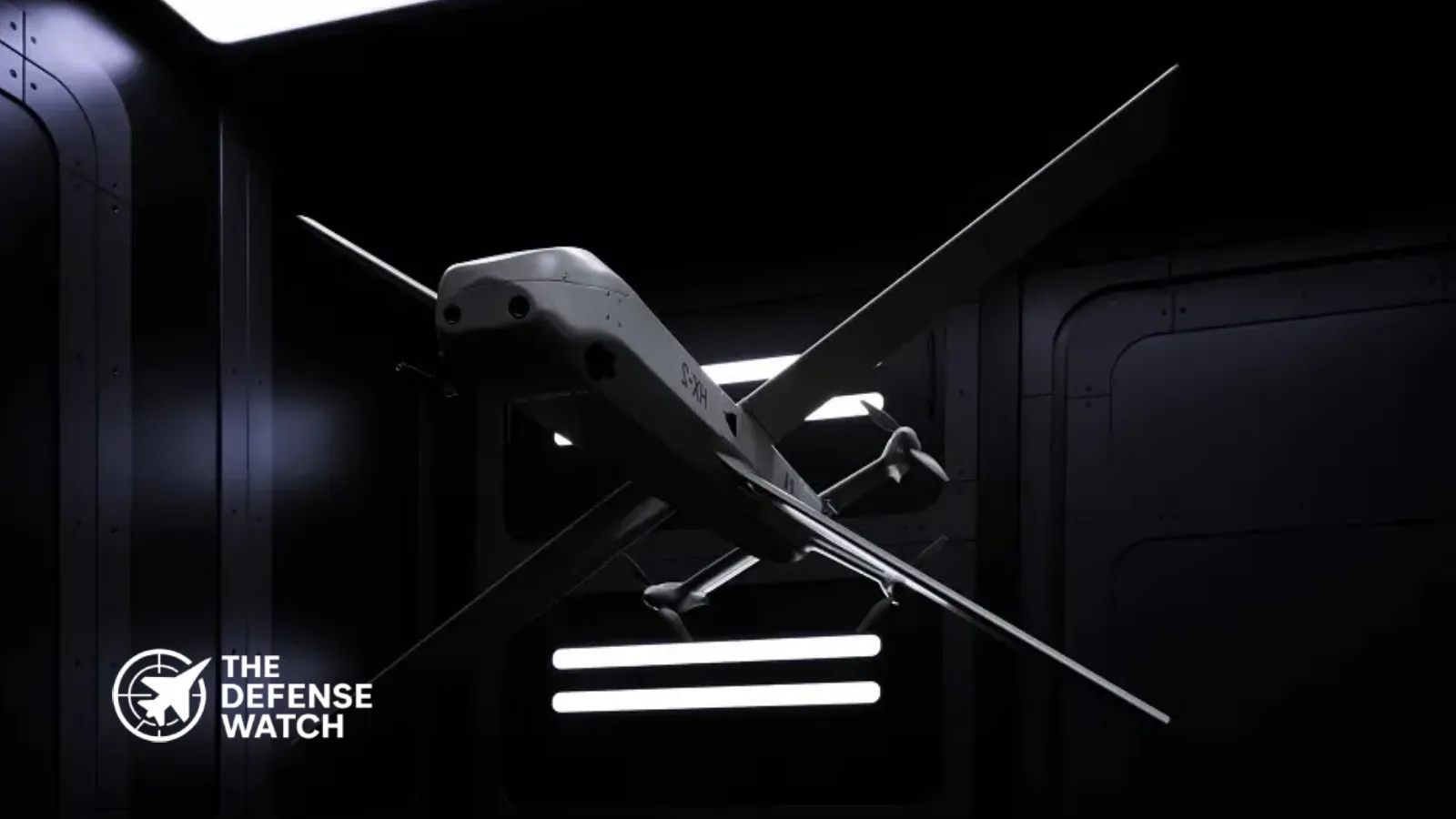
The HX 2 is an AI enabled loitering munition, sometimes referred to as a one way attack drone. Designed for precision strike missions, the system combines autonomous navigation with operator supervision to engage military targets while maintaining a human decision maker in the engagement process.
The platform belongs to a growing category of expendable unmanned aircraft that bridge the gap between traditional guided missiles and reusable reconnaissance drones.
Reported Characteristics
Specification Details System HX 2 Strike Drone Manufacturer Helsing Type AI Enabled Loitering Munition Mission Precision Strike Launch Method Portable Ground Launch Navigation AI Assisted Autonomous Flight Target Engagement Human Controlled Decision Authority Production Industrial Scale Manufacturing The company has emphasized that AI supports navigation, mission execution, and target recognition while human operators remain responsible for authorizing strikes.
(adsbygoogle = window.adsbygoogle || []).push({});Why West Virginia Was Chosen
The selection of West Virginia aligns with broader efforts to expand advanced defense manufacturing across the United States.
The state has increasingly attracted aerospace, defense, and advanced manufacturing investment due to its available workforce, transportation infrastructure, and state level support for industrial development.
For Helsing, locating production in the United States provides several strategic advantages:
- Faster delivery to American customers
- Improved supply chain resilience
- Greater compliance with U.S. defense procurement requirements
- Increased collaboration with domestic defense partners
- Expanded manufacturing capacity for allied orders
The investment is also expected to create skilled manufacturing and engineering jobs while integrating American suppliers into Helsing’s production network.
Growing Demand For AI Enabled Strike Systems
The decision comes as militaries worldwide accelerate procurement of autonomous and semi autonomous strike systems.
Recent conflicts have demonstrated the operational value of relatively low cost loitering munitions capable of conducting precision attacks against armored vehicles, artillery positions, command posts, and other high value targets.
Compared with conventional missiles, these systems can often remain airborne while searching for targets before receiving authorization to engage.
The HX 2 is designed to operate within this evolving battlefield environment, where rapid target acquisition, distributed operations, and scalable production have become increasingly important.
Strategic Importance For U.S. Defense Manufacturing
Beyond increasing production capacity, Helsing’s investment reflects a broader shift occurring across the defense industrial base.
The United States and many NATO members are seeking to expand manufacturing capacity for affordable precision weapons that can be produced rapidly and in large numbers. Recent defense planning has placed greater emphasis on scalable production rather than relying solely on smaller inventories of highly complex systems.
By manufacturing HX 2 drones domestically, Helsing positions itself to participate more directly in future U.S. defense procurement opportunities while contributing to a more resilient industrial base.
The move also highlights the growing role of international defense companies establishing production inside the United States to meet domestic sourcing requirements and improve long term supply security.
AI Continues To Shape Modern Military Operations
Artificial intelligence has become an increasingly important component of modern unmanned systems.
Rather than replacing human operators, military AI is increasingly used to improve navigation, route planning, sensor processing, electronic resilience, and target identification while keeping lethal engagement decisions under human control.
This approach reflects evolving defense policies among NATO members that emphasize responsible integration of AI into military operations.
For manufacturers such as Helsing, combining advanced software with scalable production has become a competitive advantage as governments seek both technological capability and industrial capacity.
Outlook
Construction of the West Virginia facility represents a significant milestone in Helsing’s expansion into the U.S. defense market.
As demand for autonomous strike systems continues to increase, establishing American manufacturing capacity could enable faster deliveries, closer collaboration with U.S. defense customers, and greater participation in future procurement programs.
The investment also reinforces the broader trend of expanding domestic production for advanced unmanned systems as governments prioritize resilient defense supply chains and scalable precision strike capabilities.

Executive Summary:
European defense technology company Helsing has raised $1.8 billion in a new funding round that values the company at approximately $18 billion. The investment reflects growing demand for AI enabled military technologies as European governments increase defense spending and accelerate modernization programs in response to changing security challenges.
Helsing Raises $1.8 Billion As Investors Back Europe’s Defense AI Sector
Helsing’s $1.8 billion funding round marks one of the largest private investments ever made in a European defense technology company, underscoring the rapid growth of artificial intelligence focused military startups across Europe. According to Reuters, the funding values the Munich based company at approximately $18 billion, placing it among Europe’s highest valued privately held technology firms.
The investment comes as European governments continue expanding defense budgets following Russia’s invasion of Ukraine, with increasing emphasis on autonomous systems, AI powered command software, electronic warfare, and unmanned platforms.
The funding round is reportedly led by U.S. investment firm Dragoneer Investment Group, while existing investor Lightspeed Venture Partners is serving as co lead. Reuters reported that the fundraising attracted strong investor demand.
From Battlefield AI Software To Autonomous Defense Systems
Founded in 2021, Helsing initially focused on developing artificial intelligence software capable of processing battlefield data to improve military decision making.
Since then, the company has significantly expanded its portfolio into operational defense systems, including:
- AI enabled battlefield software
- HX-2 loitering munitions
- Autonomous underwater vehicles
- Collaborative combat aircraft technologies
- AI integration for military platforms
The company’s strategy reflects a broader shift within the defense industry, where software and autonomy increasingly complement traditional weapons platforms.
Earlier funding rounds were led by Prima Materia, the investment company founded by Spotify co founder Daniel Ek, alongside investors including Accel, General Catalyst, Plural, Saab, and others.
Key Funding Details
| Item | Details |
|---|---|
| Company | Helsing |
| Headquarters | Munich, Germany |
| Funding Raised | $1.8 Billion |
| Valuation | Approximately $18 Billion |
| Founded | 2021 |
| Core Technologies | Defense AI, Autonomous Systems, Military Software |
| Lead Investors | Dragoneer Investment Group, Lightspeed Venture Partners |
| Primary Markets | Europe and NATO Allies |
Why Investors Are Increasingly Interested In Defense Technology
The latest fundraising reflects broader investor confidence in defense technology rather than traditional aerospace manufacturing alone.
Since 2022, European governments have committed hundreds of billions of dollars toward defense modernization. Much of that spending increasingly targets:
- Artificial intelligence
- Autonomous weapons
- Electronic warfare
- Drone technologies
- Secure battlefield software
- Integrated command and control
This has created favorable conditions for companies capable of rapidly developing software driven military capabilities.
According to Reuters, Helsing’s fundraising follows a series of large investments into defense startups as venture capital firms respond to growing government procurement opportunities.
Growing Operational Presence
Unlike many early stage defense startups, Helsing has moved beyond software development into operational military programs.
The company has supplied autonomous technologies supporting Ukraine and has developed the HX-2 loitering munition for European customers. It has also partnered with established defense manufacturers on collaborative aircraft and autonomous maritime projects.
These programs demonstrate a strategy focused on combining software with deployable military hardware rather than remaining solely an AI software provider.
Strategic Importance For European Defense
The funding also reflects Europe’s effort to strengthen its indigenous defense industrial base.
For decades, many European militaries relied heavily on American defense suppliers for advanced military technologies. Recent geopolitical developments have encouraged greater investment in domestic innovation, particularly in AI, autonomous systems, and electronic warfare.
Companies such as Helsing represent a new generation of European defense firms that aim to shorten technology development cycles while integrating commercial software expertise into military applications.
For NATO members, this diversification could improve resilience by expanding the number of suppliers capable of delivering advanced digital military capabilities.
What The Funding Means For Future Military Modernization
The latest investment provides Helsing with significant financial resources to accelerate research, production, and international expansion.
Potential focus areas include:
- Scaling autonomous platform production
- Expanding AI enabled battlefield software
- Increasing manufacturing capacity
- Supporting European military procurement programs
- Developing next generation collaborative combat systems
The investment also illustrates how private capital has become an increasingly important driver of defense innovation alongside traditional government research funding.
While established defense contractors remain central to major procurement programs, software focused companies are playing a larger role in developing technologies that enhance battlefield awareness, decision support, and autonomous operations.
Industry Outlook
Helsing’s valuation demonstrates the growing importance of software defined defense capabilities within modern military planning.
Artificial intelligence is becoming a critical component across multiple domains, including air combat, unmanned systems, missile defense, intelligence analysis, and command networks. As governments continue prioritizing rapid modernization, companies capable of integrating AI with operational military platforms are likely to remain central participants in future procurement programs.
The latest fundraising further highlights a structural shift in defense investment, where venture backed technology firms increasingly complement traditional prime contractors in delivering next generation military capabilities.
Hensoldt, Helsing Set Alliance To Develop AI-Enabled CA-1 Autonomous Combat Aircraft
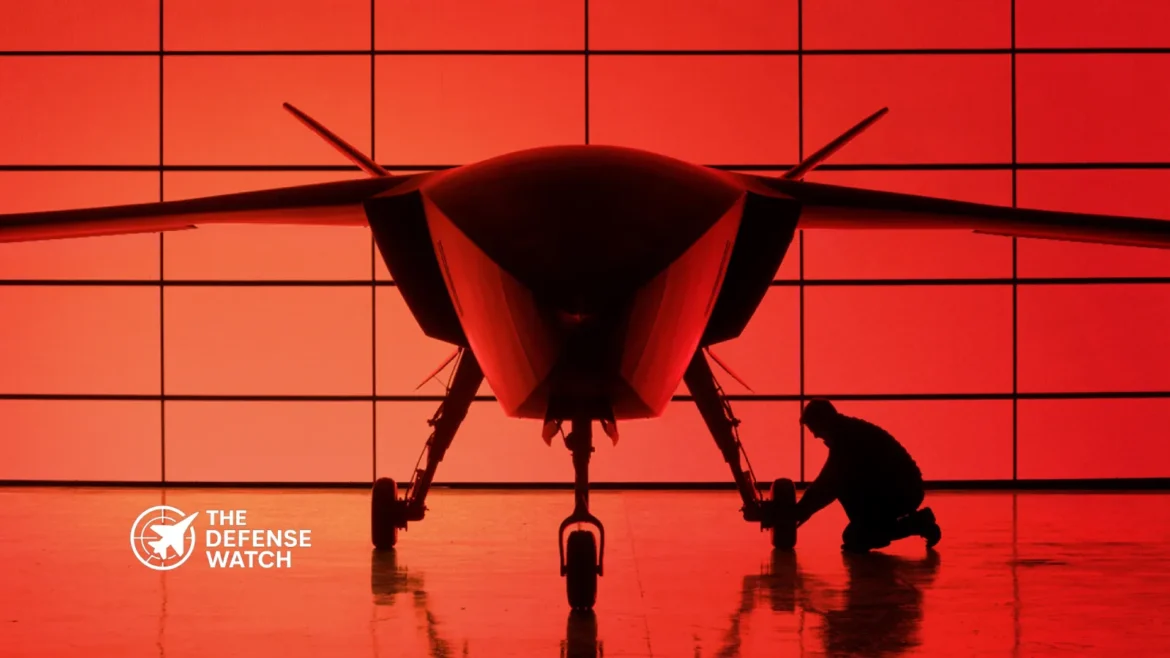
HENSOLDT and Helsing said they have signed a strategic partnership to jointly develop an AI-enabled autonomous combat aircraft called CA-1 Europa, aiming to strengthen European air combat capabilities and defense tech independence. The agreement was announced ahead of the Munich Security Conference.
The alliance pairs Hensoldt’s sensor expertise with Helsing’s artificial intelligence and autonomy software. Hensoldt will supply advanced radar, optronics, self-protection and electromagnetic warfare systems for the unmanned aircraft. Its MDOcore suite will serve as the mission data backbone, fusing multi-domain information and coordinating operations. Combined with Helsing’s AI agent, Centaur, the platform aims to perform autonomous missions and secure battlefield information processing.
Partnership Aims And Strategic Context
The companies said the collaboration supports a sovereign European technology architecture designed to secure Western democracies amid shifting geopolitics. HENSOLDT and Helsing both emphasized that modern defense systems must capture and act on battlefield data rapidly through integrated sensors and AI.
HENSOLDT brings multi-domain sensor experience across air, land, sea, space and cyber domains. Helsing contributes autonomous flight control, networked operations and on-board data processing at scale. Both firms will lead in their areas of expertise.
What The CA-1 Europa Project Is Designed To Do
The CA-1 Europa is an uncrewed combat aircraft meant to operate with high sensor integration and AI-based mission autonomy. The partnership did not disclose exact timelines or customer commitments in its announcement, but promotional material from Helsing shows the platform is part of a broader effort to field autonomous air combat systems in the coming years.
Helsing previously showcased the CA-1 design at its Grob Aircraft facility in Germany. The platform pairs the company’s Centaur autonomy software with a lightweight airframe, and the first flight has been forecast for the mid-2020s.
Broader European Defense Links
The partners said they are also working with Norway’s Kongsberg on a sovereign satellite constellation for intelligence, surveillance and target acquisition, with a fully networked communications layer planned by 2029.
European defense industrial base discussions have intensified around sovereign capabilities for AI, autonomous systems and advanced sensors. The CA-1 collaboration may factor into those wider discussions, given its focus on combining AI autonomy with high-end European sensor tech.
Industry And Geopolitical Implications
The CA-1 program reflects wider trends in autonomous air combat development, with industry and military planners in Europe and North America exploring AI-linked uncrewed platforms. In the United States, the Air Force Collaborative Combat Aircraft (CCA) concept and related projects aim to pair manned fighters with autonomous wingmen. While the CA-1 is a European initiative, it fits into a global shift toward AI and unmanned systems in future air combat.