F-22 and F-35 Airpower at the Center of Venezuela Operation
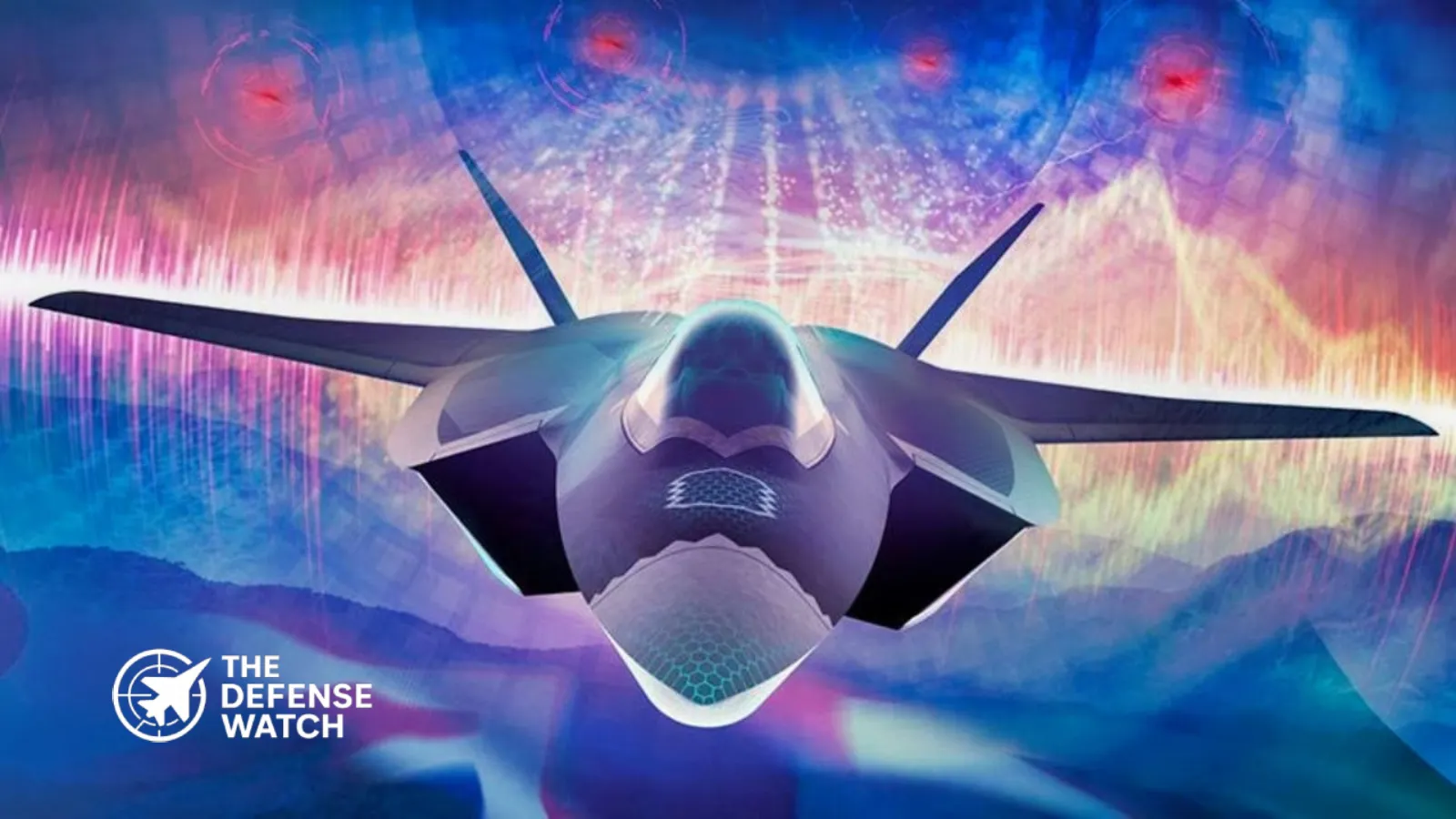
F-22 Raptor and F-35 Lightning II fighter jets reportedly played a central role in a US led airpower operation that enabled the capture of Venezuelan leader Nicolas Maduro, according to a report published by Defence Industry Europe. The account highlights how advanced US stealth aircraft were used to establish air dominance and suppress Venezuelan military responses during the operation.
While US officials have not publicly confirmed the details, the report underscores how fifth generation airpower remains a key tool for Washington in high risk contingency operations. The focus keyword F-22 and F-35 airpower operation has emerged prominently in coverage of the incident, reflecting the aircraft’s strategic value.
Establishing Air Superiority with Stealth Fighters
According to the report, F-22 Raptors were deployed to secure air superiority early in the operation. Designed primarily for air dominance, the F-22’s stealth profile, high speed, and advanced sensors reportedly allowed US forces to neutralize potential aerial threats before they could react.
The F-35 Lightning II complemented this role by conducting precision strikes, electronic warfare tasks, and intelligence gathering. With its sensor fusion and networked warfare capabilities, the F-35 is described as providing real time targeting data to US and allied forces involved in the operation.
Together, the F-22 and F-35 formed a layered airpower approach that limited Venezuela’s ability to respond militarily.
Role of US Airpower in Ground Operations
The report suggests that US airpower over Venezuela was not limited to combat aircraft alone. Airborne early warning platforms, aerial refueling tankers, and intelligence assets reportedly supported sustained operations across Venezuelan airspace.
By controlling the air domain, US forces were able to support ground elements tasked with securing key locations. The capture of Maduro, as described in the report, was made possible by the absence of effective Venezuelan air or air defense resistance during the critical phases of the mission.
This approach aligns with longstanding US doctrine, where air dominance is achieved first to reduce risk to personnel on the ground.
Venezuela’s Air Defenses and Regional Implications
Venezuela operates a mix of Russian supplied air defense systems and combat aircraft, including older generation fighters. However, analysts have long questioned their effectiveness against US stealth platforms such as the F-22 and F-35.
If the report is accurate, the operation highlights the widening airpower gap between the United States and regional militaries in Latin America. The ability to deploy stealth aircraft with minimal warning reinforces Washington’s freedom of action in contested environments.
Analysis, What This Means for US Airpower Strategy
The reported use of F-22 and F-35 jets in Venezuela underscores how fifth generation fighters are increasingly central to US crisis response options. Rather than relying on large scale troop deployments, Washington appears to favor precision airpower combined with limited ground action.
This model reduces political risk while maintaining decisive military advantage. It also sends a clear signal to adversaries that advanced air defenses alone may not be sufficient to deter US intervention.
At the same time, the lack of official confirmation means the full scope of the operation remains unclear. Future disclosures may refine or challenge the current narrative.
Broader Geopolitical Context
The reported operation comes amid ongoing instability in Venezuela and heightened US focus on maintaining influence in the Western Hemisphere. Control of airspace through platforms like the F-22 Raptor and F-35 Lightning II remains a cornerstone of that strategy.
As global competition intensifies, US airpower capabilities continue to shape outcomes far beyond traditional conflict zones.
FAQs
Did the US officially confirm the use of F-22 and F-35 jets in Venezuela?No official confirmation has been issued. Details are based on external reporting.
Why are F-22 and F-35 aircraft important in modern operations?They offer stealth, advanced sensors, and the ability to operate in contested airspace.
Does Venezuela have defenses against stealth aircraft?Venezuela operates legacy air defenses that are generally considered ineffective against fifth generation fighters.
What does this mean for regional airpower balance?It highlights the significant technological gap between US forces and most Latin American militaries.
How U.S. Special Forces Captured Venezuela President
U.S. Special Forces captured Venezuela president in a rare and highly sensitive Delta Force raid that combined intelligence, precision planning, and rapid execution. While many operational details remain classified, enough is known from defense reporting and past special operations doctrine to explain how such a mission was likely planned and carried out.
This guide explains the process behind the operation, from intelligence preparation to extraction, and why Delta Force was chosen for a mission of this scale.
Step One, Strategic Decision and Authorization
Operations targeting a sitting foreign leader require approval at the highest levels of the U.S. government. In this case, the decision to move forward likely involved:
- The President of the United States
- The National Security Council
- The Secretary of Defense
- Senior intelligence officials
The trigger is usually a combination of legal authority, national security risk, and a time limited opportunity. U.S. officials have long accused Venezuela’s leadership of links to transnational drug trafficking and organized crime. Existing U.S. indictments likely formed part of the legal foundation.
Once political authorization is granted, the mission moves rapidly into military planning.
Step Two, Intelligence Preparation of the Target
Before U.S. Special Forces captured Venezuela president, intelligence agencies would have spent months building a detailed profile of the target. This phase is known as intelligence preparation of the environment.
Key intelligence inputs likely included:
Human Intelligence
Sources close to the target’s inner circle provide movement patterns, security routines, and last minute changes.
Signals Intelligence
Intercepted communications help confirm location, timing, and threat levels.
Geospatial Intelligence
Satellite imagery and overhead surveillance identify entry points, escape routes, and nearby security forces.
Pattern of Life Analysis
Analysts track where the target sleeps, works, and travels, looking for predictable windows.
This intelligence must reach near certainty before a green light is given.
Step Three, Why Delta Force Was Selected
Delta Force, officially 1st Special Forces Operational Detachment Delta, is designed for missions that demand absolute precision and political sensitivity.
Delta Force is typically used when:
- Capture is preferred over lethal force
- The target is high value and heavily protected
- The mission must remain deniable or discreet
- Time on the ground must be minimal
Its operators train for urban assaults, close quarters combat, and rapid target exploitation. These skills make the unit uniquely suited for a leader capture mission inside a hostile capital.
Step Four, Mission Planning and Rehearsals
Once tasked, Delta Force planners build a full mission profile. This includes:
- Primary and alternate insertion routes
- Multiple extraction options
- Medical evacuation planning
- Contingencies for resistance or target movement
Rehearsals are conducted using mock ups of the target location, sometimes built from satellite data and drone imagery. Every operator knows their role down to the second.
This phase also includes coordination with intelligence agencies and, in some cases, limited partner support.
Step Five, Insertion Into Venezuelan Territory
The insertion phase is one of the riskiest parts of the mission.
Possible insertion methods include:
- Low altitude aircraft insertion
- Helicopter assault under cover of darkness
- Maritime insertion followed by ground movement
The goal is to remain undetected until the assault begins. Timing is critical. Weather, air defenses, and civilian activity all factor into the final decision.
Electronic warfare assets may be used to reduce detection during the approach.
Step Six, The Assault and Capture
This is the moment where U.S. Special Forces captured Venezuela president.
Delta Force assaults are designed to be fast and overwhelming. Once the team reaches the target site:
- Entry points are breached simultaneously
- Security personnel are neutralized or restrained
- The target is identified, secured, and restrained
- Sensitive materials are collected
Speed matters more than firepower. Most raids last only minutes from breach to exit.
Operators are trained to confirm identity on site using biometric or visual verification to avoid mistakes.
Step Seven, Extraction and Exit
Extraction begins immediately after capture.
The team moves the detainee to a secure pickup zone, often different from the insertion point. Extraction options may include:
- Helicopter pickup
- Ground movement to an airstrip
- Transfer to a naval platform offshore
Medical personnel remain on standby in case of injury. Once outside Venezuelan airspace or territorial control, the mission shifts from military to legal custody.
Step Eight, Transfer to U.S. Custody
After U.S. Special Forces captured Venezuela president, the detainee would be transferred to U.S. law enforcement or federal custody.
This handoff is critical. It establishes the legal chain required for detention, prosecution, or interrogation under U.S. law.
At this stage, public communication is tightly controlled. Officials often delay confirmation until the detainee is secure and the legal framework is in place.
Role of Technology and Surveillance
Modern special operations rely heavily on technology.
In this operation, analysts believe the following played a role:
- Persistent satellite surveillance
- Secure real time communications
- Unmanned aerial systems for overwatch
- Advanced navigation and targeting systems
These tools reduce uncertainty and allow commanders to abort if conditions change.
Risks Involved in the Operation
A mission of this nature carries significant risks.
Operational risks include:
- Armed resistance from security forces
- Civilian casualties
- Aircraft loss or detection
Strategic risks include:
- Diplomatic fallout
- Retaliation by allied states or proxy groups
- Legal challenges in international courts
The decision to proceed suggests U.S. leaders assessed that the risks of inaction were higher.
What Happens Inside Venezuela Afterward
Once U.S. Special Forces captured Venezuela president, the internal balance of power shifted immediately.
Possible outcomes include:
- A military led interim authority
- Fragmentation within security forces
- Negotiations with opposition groups
- External mediation by regional states
History shows that removing a leader does not guarantee stability. Much depends on institutions and military cohesion.
Why This Operation Matters
This raid marks a major moment in U.S. special operations history. It signals a willingness to move beyond sanctions and diplomacy when national security and law enforcement objectives converge.
For allies, it demonstrates U.S. reach and capability. For adversaries, it raises concerns about precedent and sovereignty.
For the defense community, it highlights how intelligence, elite forces, and political authority intersect at the highest level.
Analysis, A Blueprint for Modern Direct Action
From an analytical standpoint, the operation reflects how modern direct action missions are executed. Small teams, deep intelligence, limited footprint, and rapid exit define today’s high end special operations.
It also shows that Delta Force remains a strategic tool, not just a tactical unit. When used, it signals that the issue has reached the top tier of U.S. national security priorities.
Whether the long term outcome stabilizes Venezuela or deepens uncertainty remains an open question.
FAQs
It was a capture focused mission, not a conventional combat operation.
Short duration reduces detection, resistance, and civilian harm.
Such missions are rare and depend on legal authority and strategic risk.
The legality will likely be debated in courts and diplomatic forums.
They provided targeting, timing, and real time situational awareness.
Top 10 Most Powerful Army in the World 2025
The Top 10 Most Powerful Army in the World reflects more than troop numbers or weapons counts. Military power today is shaped by defense budgets, combat experience, nuclear forces, logistics, alliances, and the ability to operate across land, sea, air, space, and cyberspace. As of today, global military rankings remain fluid, driven by conflicts in Ukraine and Gaza, rising tensions in the Indo Pacific, and expanding defense spending across NATO and Asia.
This explainer examines the most powerful army in the world using widely accepted defense metrics, including data from the International Institute for Strategic Studies, SIPRI, and open source defense reporting. Rankings focus on overall military power, not just ground forces.
How Military Power Is Measured
Before ranking the most powerful army in the world, it is important to understand the criteria used.
Key factors include:
- Defense spending and industrial base
- Size and readiness of active duty forces
- Airpower and naval strength
- Nuclear weapons and missile forces
- Combat experience and operational reach
- Logistics, command structure, and alliances
No single factor determines dominance. Modern warfare rewards balance and sustainment.
1. United States, The Most Powerful Army in the World
The United States remains the most powerful army in the world by a wide margin.
The US defense budget exceeds 880 billion dollars annually, larger than the next ten countries combined. The US military fields unmatched airpower, global naval reach, and advanced space and cyber forces.
Key strengths include:
- Over 1.3 million active duty personnel
- 11 nuclear powered aircraft carriers
- Fifth generation fighters like the F 22 and F 35
- Global logistics and basing network
- The most advanced ISR and satellite systems
The US Army itself operates modern armored formations, long range fires, and missile defense units. Joint integration across services remains its decisive advantage.
2. Russia
Russia maintains the second most powerful army in the world despite heavy losses in Ukraine.
Moscow fields the largest nuclear arsenal and retains strong missile forces, including intercontinental ballistic missiles and hypersonic glide vehicles. Russia also has deep experience in electronic warfare and air defense.
Key characteristics:
- Large standing army and reserves
- Advanced air defense systems such as S 400
- Strong artillery and rocket forces
- Nuclear triad across land, sea, and air
However, prolonged combat operations have exposed weaknesses in logistics, training, and precision strike capacity.
3. China
China operates the fastest growing military force globally and is closing the gap with the United States.
The People’s Liberation Army focuses on regional dominance, particularly around Taiwan and the South China Sea. China now fields the world’s largest navy by hull count.
Strengths include:
- Over 2 million active personnel
- Rapid shipbuilding and missile production
- Advanced anti ship and ballistic missiles
- Expanding space and cyber warfare units
China’s military power is increasingly built around denying access to US forces rather than global power projection.
4. India
India ranks among the top 10 most powerful army in the world due to its manpower, regional reach, and nuclear capability.
The Indian Armed Forces focus on threats from Pakistan and China, while also expanding naval power in the Indian Ocean.
Key elements:
- One of the world’s largest standing armies
- Indigenous missile and fighter programs
- Nuclear armed ballistic missiles
- Growing defense manufacturing sector
Modernization remains uneven, but India’s strategic depth and demographics provide long term strength.
5. South Korea
South Korea maintains a highly trained and technologically advanced military. Mandatory service ensures a ready reserve, while domestic defense firms supply modern tanks, artillery, and missile systems.
Key points:
- Strong missile defense and electronics warfare
- Integrated operations with US forces
- Modern armored and mechanized units
South Korea’s readiness and alliance integration make it a key military power in Northeast Asia.
6. United Kingdom
The UK maintains a small but highly capable force with global reach.
Strengths:
- Nuclear armed submarines (Trident)
- Two aircraft carriers and advanced aircraft
- Elite special forces and expeditionary capabilities
London’s military relies on NATO integration and elite, highly trained units for global operations.
7. France
France combines an independent nuclear deterrent with global expeditionary capabilities.
Key features:
- Rafale fighter jets and nuclear-capable ballistic submarines
- Overseas bases supporting global operations
- Leadership in EU defense initiatives
France remains a major military power due to technology, doctrine, and expeditionary reach.
8. Japan
Japan emphasizes high-tech self-defense with advanced naval, air, and missile systems. Rising defense spending addresses regional threats from China and North Korea.
Highlights:
- Aegis equipped destroyers and submarines
- F-35 fighter fleet
- Missile defense, cyber, and space-based intelligence
- Strong US alliance
Japan focuses on technological superiority and readiness over large-scale offensive forces.
9. Turkey
Turkey combines large standing forces with growing indigenous defense capabilities, including drones and missiles.
Strengths:
- Bayraktar drones and domestically produced missiles
- Strategic geographic location controlling Europe, Black Sea, and Middle East access
- NATO integration and regional operational experience
Turkey’s industrial base and combat experience make it a key regional power.
10. Italy
Italy maintains a modern, NATO-integrated military capable of expeditionary operations.
Highlights:
- Aircraft carriers and advanced surface combatants
- Eurofighter Typhoon air force
- Contributions to NATO, EU, and UN missions
Italy focuses on balanced forces, alliance integration, and maritime power projection.
Analysis, How the Rankings Are Shifting
The updated top 10 most powerful army in the world list highlights a clear shift in how military power is defined. Traditional measures such as troop numbers and armored formations still matter, but they no longer dominate rankings on their own. Technology, alliance integration, industrial capacity, and the ability to sustain operations are now decisive factors.
Japan’s position reflects the growing weight of high end naval and air power in the Indo Pacific. While Japan does not maintain large offensive ground forces, its investments in missile defense, advanced fighters, submarines, and space based surveillance significantly raise the cost of aggression against it. Close operational integration with US forces effectively amplifies Japan’s military strength beyond what raw numbers suggest.
Turkey’s ranking underscores the rising importance of indigenous defense production and recent combat experience. Ankara’s use of domestically produced drones, precision munitions, and armored vehicles in real world operations has reshaped regional battlefields. Control of key geographic chokepoints and NATO membership further increase Turkey’s strategic value, even as political friction complicates alliance cohesion.
Italy’s inclusion reflects the continued relevance of balanced, alliance ready forces in modern warfare. Rather than focusing on mass or regional dominance, Italy contributes naval power, air assets, and command capabilities to NATO and multinational missions. Aircraft carriers, modern surface combatants, and integrated air power give Rome outsized influence in the Mediterranean security environment.
Overall, these rankings show that the most powerful army in the world is no longer defined solely by the capacity to fight a single large scale war. Power now depends on adaptability, industrial depth, interoperability with allies, and the ability to operate across multiple domains, including cyber and space. As defense budgets rise and military doctrines evolve, future rankings are likely to reward flexibility and sustainment over sheer size.
FAQs
What is the most powerful army in the world in 2025?The United States remains the most powerful army in the world due to unmatched budget, technology, and global reach.
Does nuclear capability define military power?Nuclear weapons are a strategic deterrent, but conventional strength, technology, and alliances determine operational effectiveness.
Why is China not ranked first?China lacks the global logistics, overseas bases, and alliance network that extend US military influence worldwide.
Can smaller countries be effective militarily?Yes, countries like Japan and Italy demonstrate that technology, doctrine, and alliances can outweigh size.
Will the rankings change soon?Yes. Rising defense budgets, new technologies, and ongoing conflicts may reshape global military power in the coming decade.
The Top 5 U.S. fighter jets represent the cutting edge of American airpower, combining stealth, advanced sensors, superior weapons, and unmatched operational experience. As the backbone of U.S. air dominance, these jets reflect decades of technological innovation, defense investment, and combat requirements. Together, they ensure the United States maintains a decisive advantage in both contested and permissive airspace.
This article examines the United States’ leading fighter aircraft, their roles, capabilities, and strategic importance, providing a clear picture of why they remain the world’s benchmark for air combat performance.
The Top 5 U.S. Fighter Jets in Service Today
1. F-22 Raptor — America’s Premier Air-Dominance Stealth Fighter
The F-22 Raptor remains the world’s most capable air-superiority fighter. Designed for unmatched stealth, supercruise, and aerial agility, it delivers decisive first-look, first-shot, first-kill capability. Despite production ending in 2012, the Raptor continues to anchor high-end air dominance missions.
Key Features:
- Stealth + supercruise (Mach 1.8 without afterburner)
- Advanced AESA radar and sensor fusion
- Unmatched dogfighting performance
- Primary role: air superiority and offensive counter-air
Strategic Importance:
Essential for high-threat environments against near-peer adversaries like China and Russia.2. F-35A Lightning II — The U.S. Air Force’s Stealth Multirole Backbone
The F-35A is the most widely deployed fifth-generation fighter and the backbone of future U.S. tactical aviation. Its stealth, electronic warfare suite, and sensor fusion allow it to penetrate contested airspace, conduct precision strikes, and serve as an intelligence node.
Key Features:
- Stealth multirole design
- High survivability in denied environments
- Advanced networking, targeting sensors
- Continuous upgrades through Block 4
Strategic Importance:
The F-35A’s versatility, production scale, and global interoperability make it the cornerstone of U.S. and allied airpower.3. F-15EX Eagle II — The Heavyweight Missile Truck
The F-15EX Eagle II represents the modernized evolution of the legendary F-15 lineage. With expanded payload capacity and advanced avionics, it serves as a “missile truck” capable of launching long-range weapons, providing air dominance and deep-strike support.
Key Features:
- Carries up to 22 air-to-air missiles
- Latest fly-by-wire controls and advanced cockpit
- Open mission system for rapid upgrades
- High speed and altitude performance
Strategic Importance:
Complements stealth aircraft by delivering massed firepower from standoff range.4. F/A-18E/F Super Hornet — Carrier-Based Multirole Workhorse
The Super Hornet remains the primary U.S. Navy fighter, performing air-to-air combat, strike missions, and maritime interdiction. Its reliability and versatility make it a cornerstone of carrier air wings.
Key Features:
- Carrier-capable multirole platform
- APG-79 AESA radar
- Proven combat record
- Excellent maintainability at sea
Strategic Importance:
The only U.S. fighter qualified across all Navy carriers, ensuring continuous maritime airpower projection.5. F-16C/D Fighting Falcon — The USAF’s Combat-Proven Multirole Jet
The F-16 Fighting Falcon continues to serve as one of the most flexible airframes in U.S. inventory. Decades of upgrades—including modern radars, datalinks, and targeting systems—keep it relevant in modern air combat.
Key Features:
- Lightweight, agile design
- APG-83 AESA radar on many upgraded units
- Low operating cost
- Vast weapons compatibility
Strategic Importance:
Though aging, its global popularity and modernization programs ensure it remains integral for homeland defense, air policing, and secondary strike missions.How These Jets Shape U.S. Airpower
Each aircraft fills a different role within the U.S. airpower ecosystem:
- F-22 dominates high-threat airspace.
- F-35A penetrates defenses and conducts precision strikes.
- F-15EX provides standoff firepower and air dominance support.
- F/A-18E/F anchors naval aviation operations.
- F-16 provides flexible, cost-effective multirole capability.
This layered approach ensures the United States maintains superiority across air, land, and maritime theaters.
Additional Context: Modernization Trends
Recent modernization trends reflect shifting strategic priorities:
- Expansion of NGAD (Next-Generation Air Dominance) for sixth-generation capabilities
- Upgrades to F-35 Block 4 and open architecture
- Standoff weapons integration on the F-15EX
- Improved EW systems for F-22 and F/A-18E/F
- Continued service-life extensions for F-16
The U.S. fighter fleet is evolving to face high-end threats from China’s PLA Air Force, Russia, and emerging long-range missile threats.
Analysis: The Future of American Fighter Airpower
The United States is shifting toward a hybrid model of stealth dominance and high-capacity fighter support. While fifth-generation platforms like the F-22 and F-35 ensure survivability, aircraft such as the F-15EX and Super Hornet deliver payload mass and mission endurance.
Key insights:
- The U.S. remains the only nation with two operational fifth-generation fighter lines.
- F-35 production scale will define global airpower for decades.
- Carrier aviation remains central to Indo-Pacific strategy.
- The U.S. requires both stealth platforms and high-capacity 4.5-generation fighters for large-scale conflict scenarios.
Future developments—including NGAD, Collaborative Combat Aircraft (CCAs), and advanced EW—will further transform how U.S. fighter jets operate.
FAQs
What is the most advanced U.S. fighter jet today?The F-22 Raptor is widely regarded as the most advanced U.S. air-dominance fighter.
Which U.S. fighter jet is used by the most countries?The F-16 Fighting Falcon, operated by more than 25 nations worldwide.
What is the newest U.S. fighter jet in production?The F-15EX and the F-35A Block 4 are the most recent major production upgrades.
Which U.S. fighter jet carries the most weapons?The F-15EX can carry up to 22 air-to-air missiles, the highest of any U.S. fighter.
What jet will replace the F-22?The NGAD program is expected to produce America’s next air-dominance fighter by the 2030s.
Top 10 Most Powerful Navies in the World : Gauging Maritime Dominance Through Aggregate Displacement
In 2026, the landscape of the most powerful navies in the world continues to evolve amid heightened geopolitical rivalries, from the Indo-Pacific to the Arctic. Aggregate displacement—measuring the total tonnage of a fleet’s warships, submarines, and support vessels—serves as a robust indicator of naval strength, balancing quantity with quality and projection capabilities. This metric captures not just the sheer size of vessels but their potential for sustained operations, firepower delivery, and deterrence. Drawing from comprehensive trackers like those maintained by defense analysts, the top 10 most powerful navies in 2026 reflect a mix of established superpowers and rising maritime players, underscoring shifts in global navy rankings 2026.
As tensions simmer in key chokepoints like the South China Sea and the Black Sea, these fleets play pivotal roles in securing trade routes, enforcing alliances, and countering hybrid threats. This analysis delves into each navy’s core assets, modernization efforts, and strategic posture, providing a snapshot of maritime power analysis 2026.
Understanding the Ranking Methodology
Assessing the most powerful navies in 2026 requires more than counting hulls; it demands a holistic view of fleet composition. Aggregate displacement, as used in this ranking, aggregates the tonnage of surface combatants, submarines, replenishment ships, and auxiliaries, offering a proxy for operational endurance and combat heft. Unlike raw ship counts—which favor prolific builders like China—this approach penalizes smaller patrol craft while rewarding blue-water assets like aircraft carriers and nuclear submarines.
Data for these global navy rankings 2026 stems from open-source intelligence, including shipbuilding logs, commissioning records, and decommissions up to mid-2026. Factors like technological integration, logistical reach, and combat experience further refine the picture, aligning with evaluations from platforms such as Global Firepower and the World Directory of Modern Military Warships (WDMMW). While no single formula is infallible, displacement highlights how the top naval forces world prepare for peer-level contests.
1. United States Navy: Unrivaled Global Projection
The United States Navy (USN) tops the list of most powerful navies 2026with an imposing 7.168 million tonnes of aggregate displacement, a testament to its role as the preeminent force for power projection. This fleet’s backbone includes 11 nuclear-powered Nimitz- and Ford-class aircraft carriers, each displacing over 100,000 tonnes and capable of launching 75+ aircraft for strikes across oceans. Complementing these are 70+ Arleigh Burke-class destroyers and Ticonderoga-class cruisers, armed with Aegis systems for ballistic missile defense.
Submarine forces add stealthy lethality: 14 Ohio-class ballistic missile submarines (SSBNs) ensure nuclear deterrence, while 50+ attack submarines like the Virginia-class hunt adversaries underwater. Recent additions, such as the USS HII (San Antonio-class amphibious transport dock) and USS Jack H. Lucas (Flight III destroyer), bolstered the fleet by net +2 vessels this year, offsetting retirements of aging cruisers. The USN’s edge lies in its forward-deployed carrier strike groups, which maintain presence in every theater, from the Mediterranean to the Western Pacific.
Modernization drives sustainment: The Columbia-class SSBN program, with lead boat delivery eyed for 2027, promises quieter, longer-endurance platforms. Budget allocations exceeding $250 billion annually fuel innovations like directed-energy weapons and unmanned surface vessels (USVs), ensuring the USN remains the benchmark in maritime power analysis 2026.
2. People’s Liberation Army Navy: Rapid Expansion in the Indo-Pacific
China’s People’s Liberation Army Navy (PLAN) claims second place at approximately 3 million tonnes, closing the gap with the US through sheer industrial momentum. Boasting over 730 warships—the largest fleet by count—the PLAN emphasizes area-denial capabilities in the South China Sea. Key assets include three aircraft carriers: Liaoning (refitted ex-Soviet), Shandong (indigenous conventional), and Fujian (electromagnetic catapults for J-35 stealth fighters).
Destroyers like the Type 055 (12,000 tonnes each) number 10+, offering layered air defense with 112 VLS cells for hypersonic missiles. Submarines form a growing shadow fleet: six Type 094 Jin-class SSBNs for nuclear patrols, plus 60+ diesel-electric Yuan- and Song-class boats optimized for littoral ambushes. In 2026, launches of Type 076 amphibious assault ships and up to three Type 093B nuclear attack submarines (SSNs) added 74,350 tonnes, including frigate and corvette infusions.
This surge aligns with Beijing’s “far seas” doctrine, evidenced by anti-piracy patrols in the Gulf of Aden and joint exercises with Russia. Challenges persist in engine reliability and crew training, but the PLAN’s output—rivaling U.S. SSN production—positions it as the fastest-evolving among top naval forces world.
3. Russian Navy: Arctic Focus Amid Operational Strain
Russia’s Navy registers 2.1 million tonnes, prioritizing strategic deterrence despite attritional losses in Ukraine. The fleet’s crown jewels are four Borei-class SSBNs and seven Delta IV holdovers, totaling 11 strategic submarines for second-strike capability under the sea ice. Oscar II and Yasen-class SSGNs (cruise-missile submarines) deliver Kalibr and Zircon hypersonics, with the fifth Yasen-M commissioned in 2026 adding precision over-the-horizon strikes.
Surface forces include the Admiral Gorshkov-class frigates (five operational) and Kirov-class battlecruisers, though maintenance backlogs limit readiness. Black Sea Fleet losses—two corvettes and an landing ship sunk—were partially offset by new Project 20380 corvettes and a second Lada-class diesel submarine. Aggregate growth was modest at +0.17%, reflecting sanctions’ bite on shipyards.
Moscow’s strategy pivots to the Arctic, where icebreakers and Northern Fleet bases secure Northern Sea Route claims. Integration of Poseidon nuclear torpedoes enhances asymmetric threats, keeping Russia third in global navy rankings 2026 despite fiscal pressures.
4. Royal Navy: Streamlined for High-End Warfare
The United Kingdom’s Royal Navy holds 1.5 million tonnes, a blue-water force honed for NATO interoperability. Two Queen Elizabeth-class carriers (65,000 tonnes each) anchor operations, embarking F-35B Lightning IIs for expeditionary strikes. Astute-class SSNs (seven building) provide seven operational hunter-killers, with the eighth due in 2026.
Frigates and destroyers—six Type 45 air-warfare ships and eight Type 23 general-purpose—total 13 major escorts, though Type 26 and Type 31 programs aim to replace retiring hulls by 2030. Decommissions of two Type 23s and minehunters in 2026 trimmed 11,072 tonnes, signaling a leaner posture amid crew shortages.
London’s emphasis on carrier-enabled power projection shines in exercises like Steadfast Defender, reinforcing AUKUS ties. Investments in Spear 5 missiles and unmanned systems position the RN for distributed lethality.
5. Japan Maritime Self-Defense Force: Defensive Depth in Contested Waters
Japan’s JMSDF weighs in at 760,000 tonnes, a defensive powerhouse evolving toward offensive capabilities. Four helicopter destroyers (including Izumo-class conversions for F-35Bs) mimic light carriers, while 12 Aegis-equipped Kongo- and Maya-class destroyers shield against missiles. Submarines dominate: 22 Soryu- and Taigei-class diesel boats, with the latest Taigei adding stealth for East China Sea patrols.
A +2.01% tonnage bump in 2026 came from two Mogami-class frigates and a Taigei SSK, amid fleet reorganization into surface battle groups. Tokyo’s 2026 defense white paper highlights hypersonic countermeasures, aligning with Quad partnerships.
6. Indian Navy: Blue-Water Ambitions Realized
India’s 620,000-tonne fleet bridges regional security and global outreach. Two aircraft carriers—INS Vikramaditya and Vikrant—enable Malabar exercises, backed by 10 destroyers and 13 frigates like the Kolkata-class. Nuclear triad completion arrived with INS Arighat, the second Arihant-class SSBN, plus six Scorpene SSKs.
Modest +0.88% growth included the seventh Talwar frigate and last Visakhapatnam destroyer, slated for January commissioning. New Delhi’s focus on Andaman bases counters Chinese encirclement.
7. French Navy: Expeditionary Versatility
France’s Marine Nationale at 550,000 tonnes excels in power projection across empires. The Charles de Gaulle carrier (42,500 tonnes) leads, with 11 FREMM frigates and five Suffren-class SSNs enhancing Atlantic and Indian Ocean ops. A +4.2% surge featured the third Suffren and first Jacques Chevallier replenisher.
Paris leverages overseas territories for forward basing, integrating Rafale-M fighters for hybrid threats.
8. Republic of Korea Navy: Technological Leap Forward
South Korea’s ROKN crossed 420,000 tonnes with +7.6% growth, driven by the Jeongjo the Great destroyer and Chungnam frigate. Three Dosan Ahn Changho SSNs bolster anti-submarine warfare against Pyongyang, while KDX-III Aegis ships defend sea lines.
Seoul’s light carrier program eyes 2033 entry, amplifying U.S. alliance ops.
9. Italian Navy: Mediterranean Anchor
Italy’s 380,000 tonnes feature the Trieste LHD (33,000 tonnes), enabling EUFOR deployments. Eight FREMM frigates and U212 submarines provide balanced punch, with +6.1% from the fourth PPA frigate offsetting retirements.
Rome’s focus on migrant interdiction and Libyan stability underscores NATO roles.
10. Turkish Naval Forces: Indigenous Surge
Turkey rounds out at 340,768 tonnes, up 14.6% via the Istanbul frigate and Reis SSK. MILGEM corvettes and TF-2000 destroyers fuel export ambitions, overtaking Indonesia.
Ankara’s Black Sea dominance aids Ukraine aid corridors.
Strategic Implications: Trends Shaping Naval Power in 2026
The 2026 rankings reveal a bipolar contest between U.S. qualitative superiority and China’s quantitative ascent, with allies like Japan and the UK forming a counterweight network. Hypersonic integration and unmanned systems are common threads, but crewing shortages plague Western fleets, while sanctions hobble Russia. As climate change opens Arctic routes, expect intensified investments in ice-capable vessels.
In geopolitical terms, these most powerful navies 2026 will dictate freedom of navigation, with Indo-Pacific flashpoints testing deterrence. For policymakers, the message is clear: maritime alliances must evolve to match asymmetric innovations, ensuring balanced global navy rankings 2026.
Ranking Methodology: Aggregate Displacement as the Core Metric
Assessing the most powerful navies in 2026 relies primarily on aggregate displacement tonnage—a comprehensive metric that totals the full-load weight of all commissioned warships, submarines, replenishment vessels, and major auxiliaries, serving as a reliable proxy for operational endurance, logistical sustainment, and overall combat potential. Unlike simple vessel counts that favor smaller patrol craft, this approach prioritizes blue-water capabilities such as aircraft carriers, nuclear submarines, and large surface combatants, while incorporating qualitative factors like technological sophistication, crew readiness, and global deployment reach from open-source trackers including the World Directory of Modern Military Warships (WDMMW) and Global Firepower’s naval force index updated through mid-2026.
FAQs
What makes the United States Navy the most powerful in 2026?Its unmatched carrier fleet, nuclear submarines, and global basing network enable unmatched power projection, as measured by 7.168 million tonnes displacement.
How has China’s navy grown to challenge the U.S.?Through rapid shipbuilding, adding destroyers, carriers, and submarines, the PLAN reached 3 million tonnes, focusing on Indo-Pacific dominance.
Why is aggregate displacement a key metric for naval power?It accounts for vessel size, endurance, and firepower potential, providing a more nuanced view than mere ship counts.
What challenges face Russia’s navy in 2026?Combat losses, sanctions, and maintenance issues limit operations, despite strong submarine deterrence.
Are emerging navies like Turkey’s rising fast?Yes, indigenous programs added 14.6% tonnage, positioning Turkey for regional influence and exports.
Older Posts