

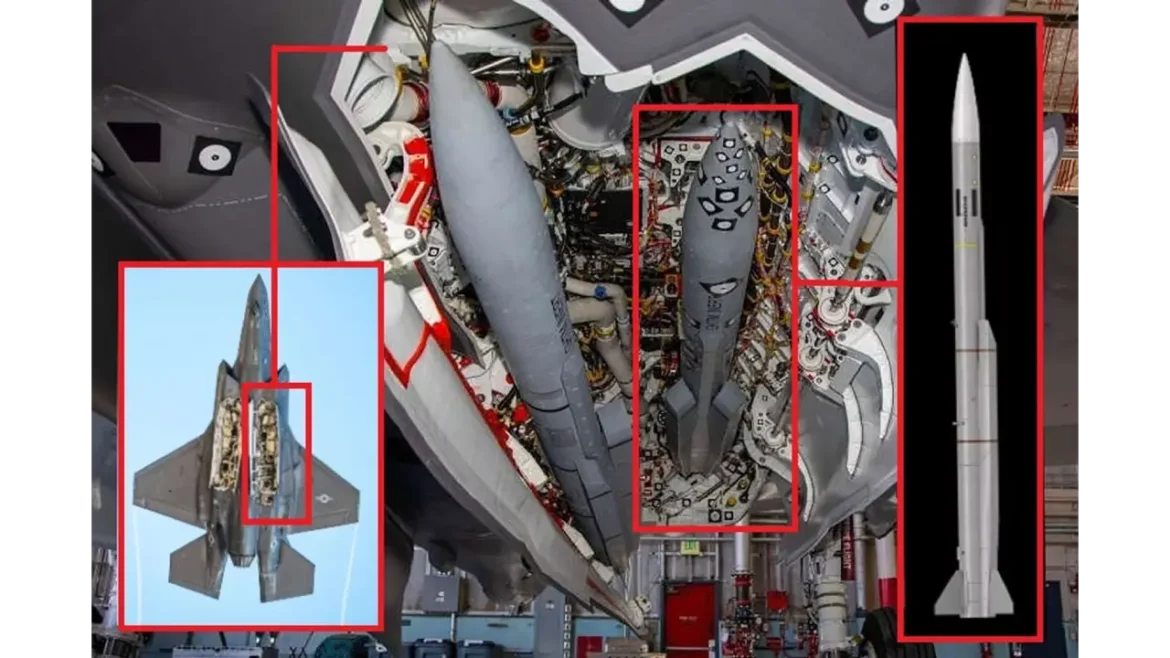
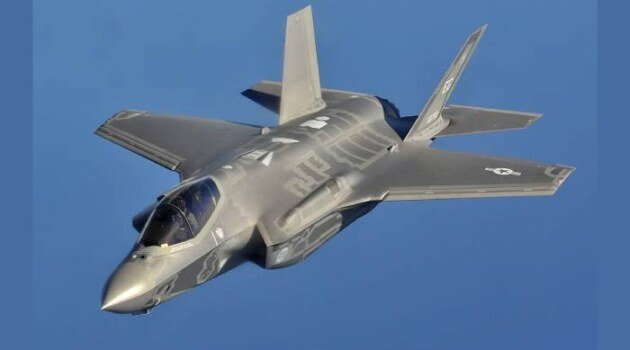
Officials from MBDA, Lockheed Martin and the F-35 Joint Program Office announced that the fifth-generation stealth fighter F-35A Lightning II has successfully passed a key series of ground-based integration tests with the long-range air-to-air missile MBDA Meteor. The trials were conducted at Edwards Air Force Base, California. The ground vibration testing and fit checks confirmed that Meteor can be securely carried and released from the F-35A’s internal weapons bay — preserving the aircraft’s stealth profile.
This achievement brings the F-35A and Meteor pairing a step closer to actual flight testing — with only one ground test remaining before airborne evaluations begin.
Why It Matters: Context for F-35 and Meteor
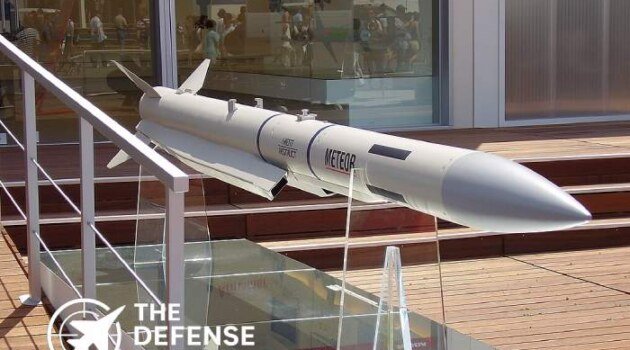
The MBDA Meteor missile is a ramjet-propelled beyond-visual-range air-to-air missile (BVRAAM) developed by a six-nation European consortium. It provides extended range, high endgame kinematics, and a “no-escape zone” that significantly improves interception probabilities compared with traditional boost-glide missiles.
Meteor is already operational on multiple European fighters (e.g., Eurofighter Typhoon, Saab Gripen, Dassault Rafale), and integrating it on F-35 significantly enhances the jet’s long-range air combat capability.
Earlier this year — on 28 February 2025 — a short-takeoff/vertical-landing (STOVL) variant, F-35B Lightning II, conducted the first test flights carrying an inert Meteor missile, flown by the U.S. Marine Corps out of Naval Air Station Patuxent River in Maryland. That exercise helped collect environmental and fit data as part of the broader effort to integrate the missile across F-35 variants.
For F-35A — a conventional takeoff and landing variant — integration has been sponsored by Italy, while the UK leads the F-35B campaign.
What the Ground Tests Showed
- Structural fit and clearance: Engineers verified that the Meteor missile can be safely housed within the F-35A’s internal weapons bay, ensuring no compromise to stealth features during carriage.
- Vibration and mechanical integrity: Through ground vibration testing, the structural and mechanical response of the missile-aircraft combination under various stress conditions was validated — a prerequisite for safe carriage and release under operational flight loads.
- Release mechanism verified: Fit checks confirmed that the missile launch rails, ejection clearance, and geometry are compatible with internal carriage and expected launch envelope.
According to the joint statement from MBDA and Lockheed Martin, only one more ground test remains before certification to begin flight trials with the Meteor on F-35A.
Meteor’s Capabilities: Why It’s Significant
Meteor’s ramjet propulsion allows the missile to maintain thrust throughout its flight — rather than relying solely on a quick boost phase followed by an unpowered glide (as with many traditional missiles). This ensures high speed, sustained energy, and superior maneuverability until intercept.
The missile uses inertial midcourse navigation updated via two-way data link, combined with an active radar seeker for terminal guidance. Dual fusing — proximity and impact — enhances lethality against manoeuvring aerial targets.
With these features, Meteor provides a “large no-escape zone,” making it far more difficult for potential adversaries to evade — a capability that aligns with modern air-to-air combat requirements of fifth-generation fighters.
What This Means for Operators: Strategic and Operational Impact
- Extended reach and lethality: Once operational, F-35As equipped with Meteor will gain a long-range BVR capability — enabling them to engage threats at greater standoff distances while leveraging their stealth to avoid detection.
- Interoperability between allies: With both UK (F-35B) and Italy (F-35A) spearheading integration, allied air forces operating F-35 may standardize on the Meteor missile, simplifying logistics and shared operations.
- Modernizing air force arsenals: For nations using European air-to-air munitions, integrating Meteor onto a widely fielded platform like F-35 enhances deterrence and parity against high-end threats.
What Comes Next: Flight Testing and Future Timeline
With ground integration tests now complete — save for one final ground test — the next phase is to begin flight tests of the Meteor missile on F-35A. These trials will validate safe separation, aerodynamics, release dynamics, and system performance under real-world flight conditions.
If successful, operational deployment could follow — allowing air forces operating F-35A to add Meteor as part of their combat loadout. The exact timeline remains unspecified.
U.S. Tests B61-12 Nuclear Bomb Using F-35A Stealth Jets
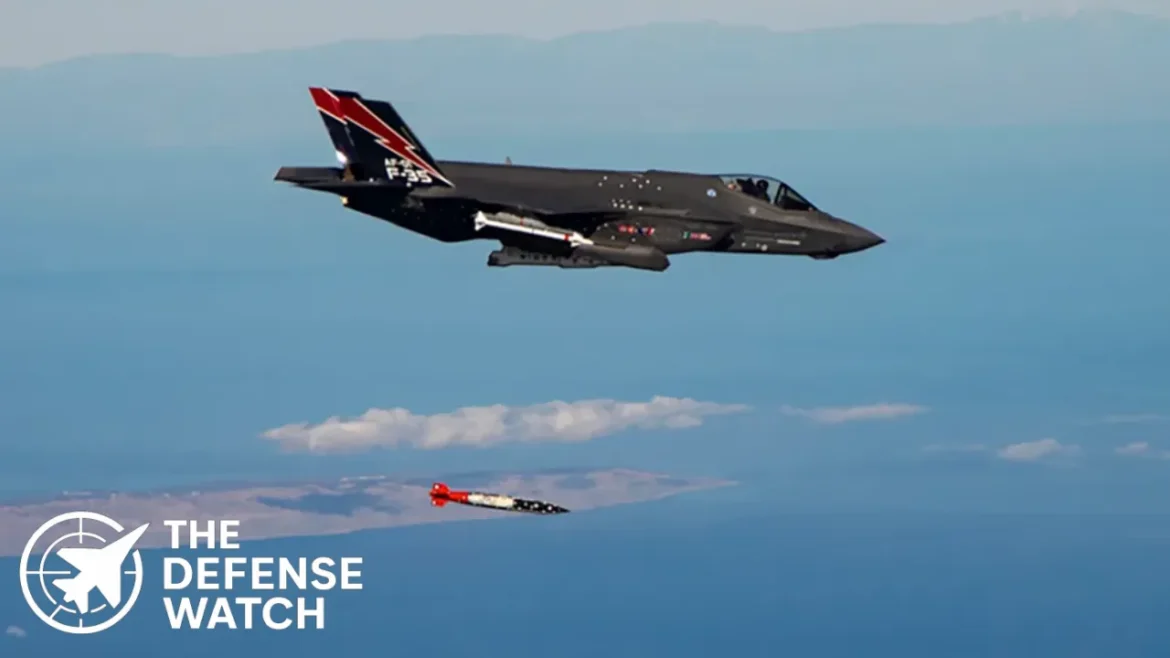
The United States recently carried out a successful test of the B61-12 tactical nuclear bomb using an F-35A stealth fighter, demonstrating both the aircraft’s and the weapon’s reliability. Conducted at a test site in Nevada from August 19 to 21, 2025, the trials involved dropping inert, non-nuclear versions of the B61-12 under controlled conditions, according to a statement by Sandia National Laboratories and the National Nuclear Security Administration (NNSA).
These tests mark a critical milestone in evaluating the B61-12’s operational performance. They also included the first-ever thermal preconditioning of a joint test assembly for carriage on the F-35A, validating the weapon’s environmental requirements in real-world conditions.
Enhancing Stockpile Longevity and Nuclear Readiness
The B61-12 program, completed in late 2024, extended the life of the U.S. nuclear aerial stockpile by 20 years. Sandia’s Jeffrey Boyd, surveillance lead for the B61-12 and B61-13 programs, emphasized that the recent flight tests represented “the most B61-12 flight testing surveillance scope in a year to date and the most in a given year for the foreseeable future.”
By successfully integrating the B61-12 with the F-35A, the U.S. Air Force now has a modern dual-capable platform that can deliver both conventional and nuclear payloads. This capability enhances NATO’s deterrence posture, particularly in Europe and the Indo-Pacific region.
F-35A: First Fifth-Generation Nuclear-Capable Fighter
The F-35A is the first fifth-generation aircraft to be certified for nuclear weapon carriage. Certification for the B61-12 was achieved on October 12, 2023, ahead of the planned NATO timeline, with formal authorization announced in March 2024. Unlike the F-22 Raptor, which focuses on air superiority, the F-35A was designed from the start to carry tactical nuclear weapons, making it a versatile deterrent platform.
Currently, the certification applies only to the conventional takeoff and landing version, the F-35A, and excludes the short takeoff/vertical landing F-35B or the carrier-based F-35C. With stealth and nuclear strike capabilities, the F-35A distinguishes itself from other fifth-generation fighters like China’s J-20 or Russia’s Su-57, neither of which is cleared for nuclear operations.
Strategic Implications
This successful test strengthens the U.S. nuclear triad by providing a credible, modernized air-delivered nuclear option. Analysts note that integrating the B61-12 with stealth aircraft like the F-35A enhances survivability and strike flexibility in contested environments. It also signals the U.S. commitment to maintaining tactical nuclear capabilities amidst evolving global security dynamics, particularly in Europe and the Indo-Pacific.
FAQs
A tactical thermonuclear gravity bomb designed for precision and low-yield options, part of the U.S. nuclear stockpile modernization.
The F-35A is the first fifth-generation fighter designed with nuclear strike capability, combining stealth, precision, and survivability.
No, currently only the F-35A conventional takeoff and landing variant is certified for nuclear operations.
It strengthens deterrence by modernizing the U.S. nuclear delivery capability, reassuring allies of reliable tactical strike options.