- ► Contract awarded to Top Aces Corp. for $33,193,783 firm fixed price.
- ► Provides F-16 instructor pilot training for Argentina under Foreign Military Sales.
- ► Training will be conducted in Argentina to build independent operational capability.
- ► Work is scheduled for completion by June 30, 2029.
- ► Contract managed by the 338th Contracting Squadron at Joint Base San Antonio Randolph.
Top Aces Awarded F-16 Instructor Pilot Training Contract For Argentina
The F-16 instructor pilot training contract awarded to Top Aces Corp. marks a significant step in Argentina’s effort to field and sustain an operational F-16 fleet under the U.S. Foreign Military Sales framework.
The U.S. Air Force announced a $33,193,783 firm fixed price award to the Mesa, Arizona based contractor to provide advanced F-16 instructor pilot training. The effort is designed to enable Argentine pilots to achieve independent operational capability outside the continental United States.
The contract includes $22,754,462 in fiscal 2026 Foreign Military Sales funds obligated at the time of award. Work will take place in Argentina and is expected to conclude by June 30, 2029. The award was issued as a directed source acquisition.
The 338th Contracting Squadron at Joint Base San Antonio Randolph is the contracting authority.
Building Argentina’s F-16 Capacity
The F-16 instructor pilot training program forms a critical component of Argentina’s broader F-16 transition. Instructor pilot qualification is central to long term force sustainability. Without a domestic cadre of qualified instructors, new operators remain dependent on external training pipelines.
-
By conducting training in Argentina, the program reduces the need for extended deployments to U.S. based training units. It also supports faster absorption of aircraft, tactics, and maintenance practices into national service.
Under standard Foreign Military Sales procedures administered by the U.S. Department of Defense and the Defense Security Cooperation Agency, training is often structured to ensure partners can operate independently once aircraft deliveries and initial training phases conclude.
In this case, the F-16 instructor pilot training contract directly supports that objective.
Why Top Aces
Top Aces has built a reputation as a commercial adversary air and training provider, operating advanced fighter aircraft including F-16 variants for aggressor and readiness missions. The company already supports U.S. Air Force training requirements under separate contracts.
Leveraging a commercial provider for F-16 instructor pilot training allows the Air Force to draw on an experienced pilot pool without placing additional strain on active duty training squadrons. It also reflects a broader Pentagon trend of outsourcing certain training functions to specialized contractors.
For Argentina, the arrangement accelerates capability development while remaining aligned with U.S. oversight standards under Foreign Military Sales.
Strategic Context
Argentina’s move to field F-16 aircraft represents a modernization shift for its air force. Transitioning to a Western fourth generation platform introduces new requirements in training, logistics, and sustainment.
Instructor pilot development is often the most complex part of that transition. Qualified instructors must master advanced tactics, weapons employment, mission planning systems, and safety procedures. Once certified, they become force multipliers within their home units.
The multi year structure of this F-16 instructor pilot training contract suggests a phased approach. Early cohorts are likely to train alongside experienced contractor instructors before gradually assuming instructional duties themselves.
From a U.S. perspective, Foreign Military Sales training packages also strengthen interoperability. Pilots trained under U.S. aligned standards are better positioned to participate in multinational exercises and regional security cooperation initiatives.
Oversight And Funding
The contract was issued under number FA300226C0003 and managed by the 338th Contracting Squadron. The firm fixed price structure provides cost certainty over the performance period.
Foreign Military Sales cases are funded by the partner nation, in this case Argentina, with the U.S. government managing execution and oversight. Funds obligated at award ensure initial training phases can proceed without delay.
As global demand for F-16 sustainment and training grows, the role of commercial providers is expanding. This award underscores how F-16 instructor pilot training is increasingly viewed as a specialized service market, not solely a government function.
With completion set for mid 2029, the contract positions Argentina to establish a self sustaining F-16 training ecosystem within the decade.

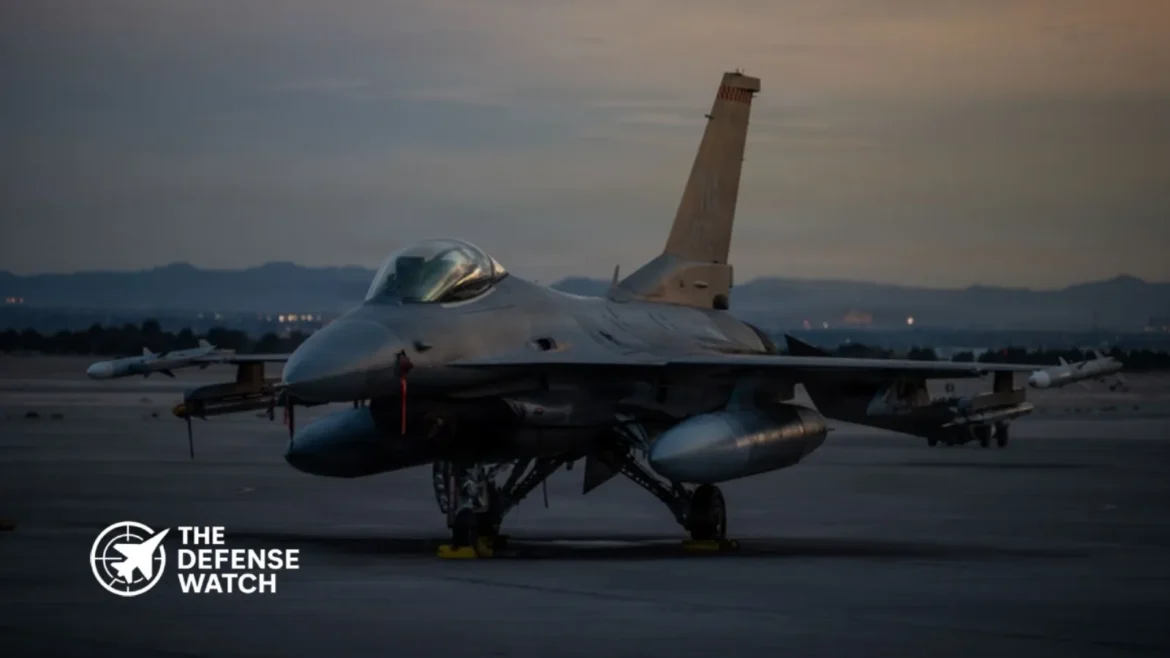
- ► BAE Systems awarded $98,871,411 IDIQ contract for F-16 commodities sustainment.
- ► Contract supports sustaining engineering for avionics intermediate shop automatic test equipment.
- ► Work performed in San Diego, California, through Feb. 28, 2037.
- ► Covers Foreign Military Sales customers across Europe, Middle East, and Asia.
- ► Sole-source award managed by Air Force Sustainment Center at Hill AFB, Utah.
USAF Awards $98.8M F-16 Sustainment Contract To BAE Systems
The US Air Force has awarded a $98.8 million F-16 sustainment contract to BAE Systems to support avionics testing and commodities sustainment for the global Fighting Falcon fleet.
The ceiling indefinite-delivery, indefinite-quantity contract, valued at $98,871,411, provides sustaining engineering services to maintain operational capability of fielded avionics intermediate shop automatic test equipment. The award was issued on Feb. 20, 2026.
Work will be performed in San Diego, California, and is scheduled to run through Feb. 28, 2037.
The contract was awarded on a sole-source basis. No funds were obligated at the time of award.
Supporting Global F-16 Operators
The F-16 sustainment contract includes support for US Air Force aircraft as well as a broad group of Foreign Military Sales partners. Participating countries include Jordan, Taiwan, Belgium, Denmark, Egypt, Iraq, Bahrain, Portugal, Thailand, Poland, Greece, Oman, Romania, Singapore, Türkiye, Korea, Chile, Morocco, the Netherlands, Norway, and Pakistan.
The F-16 remains one of the most widely operated multirole fighters in the world. According to the US Air Force, more than two dozen nations operate variants of the aircraft. Sustaining avionics test equipment is critical to maintaining readiness rates across such a diverse and aging fleet.
Intermediate shop automatic test equipment plays a central role in diagnosing, repairing, and verifying avionics components. Without reliable test infrastructure, even minor subsystem failures can lead to extended aircraft downtime.
Long-Term Sustainment Strategy
The award underscores the Air Force’s long-term sustainment strategy for legacy fighter platforms. While newer aircraft such as the F-35 Lightning II continue to enter service, the F-16 Fighting Falcon remains a backbone platform for both US and allied air forces.
Many partner nations are investing in F-16 service life extension programs, radar upgrades, and electronic warfare improvements. Sustaining the underlying avionics support ecosystem ensures those modernization efforts remain viable.
From an operational standpoint, avionics test equipment sustainment is less visible than aircraft upgrades or weapons procurement. However, it directly affects sortie generation, mission availability, and lifecycle cost control. Long-duration IDIQ contracts such as this provide predictable engineering support while allowing flexibility in task orders over time.
Contracting Authority
The Air Force Sustainment Center Supply Chain Management Division at Hill Air Force Base, Utah, serves as the contracting activity under contract FA8251-26-D-B002.
By extending support through 2037, the Air Force signals continued reliance on the F-16 platform across multiple theaters. For partner nations, the contract provides assurance that US-backed sustainment infrastructure will remain in place for more than a decade.
In a security environment defined by high operational tempo and expanding allied cooperation, steady sustainment funding is as critical as new aircraft procurement. This F-16 sustainment contract reinforces that reality.
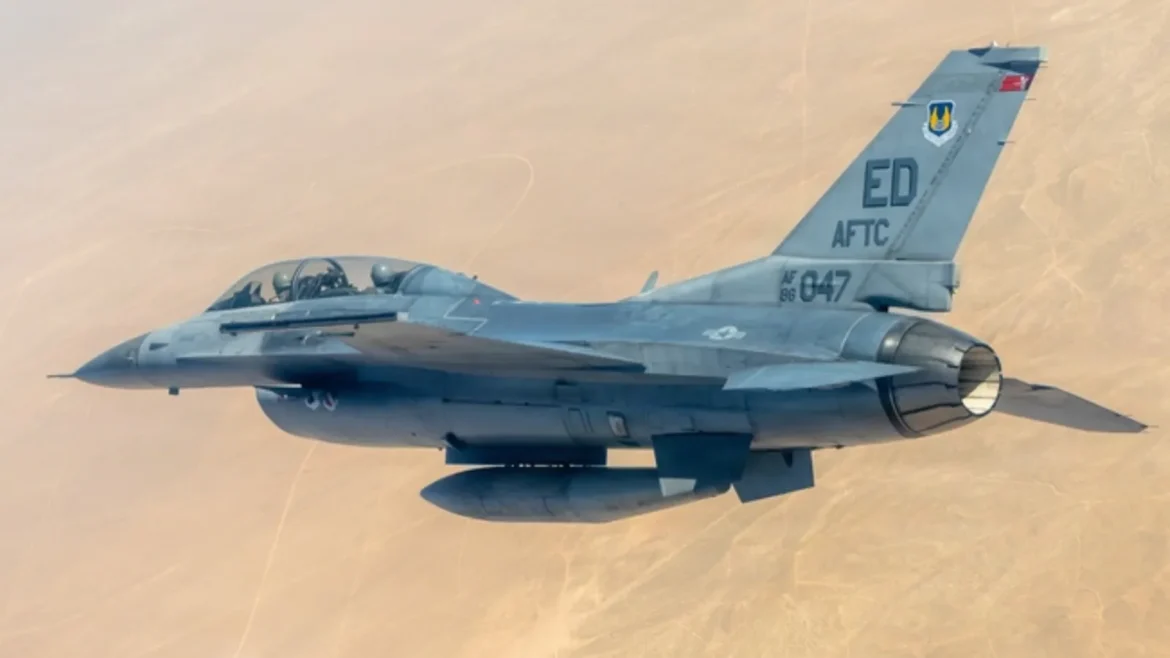
Top Aces Steps Up Asia Pacific Push With F-16, A-4N Adversary Air Services
Canadian adversary air services provider Top Aces is actively pursuing business across the Asia Pacific, showcasing its F-16 and A-4N based services to military delegations at the Singapore Airshow 2026 and exploring new contracts with regional air forces.
(adsbygoogle = window.adsbygoogle || []).push({});At the Singapore Airshow held early February in Singapore, Top Aces executives held discussions with defense representatives from Singapore, Japan, Thailand, Malaysia and Indonesia, pitching its contracted training services and aircraft fleet tailored to threat replication and tactical training needs.
What Top Aces Brings To The Table
Top Aces operates a fleet of more than 150 tactical aircraft configured for contracted adversary air (combat air training) missions. Central to its offering are Lockheed Martin F-16 fighters upgraded with the company’s proprietary Advanced Aggressor Mission System (AAMS), which equips the jets with sensors and avionics that can simulate advanced threats including fourth and fifth generation fighters.
The company also fields Douglas A-4N Skyhawks and Dassault/Dornier Alpha Jets in adversary roles, with AAMS integration enabling variable mission profiles at a range of cost and performance points.
Top Aces has a history of providing similar services in other markets. It previously delivered adversary air support to the Royal Australian Air Force from 2017 to 2019 and recently extended a 10 year, 420 million euro contract with Germany for operational training across the German air force, army and navy.
Asia Pacific Focus And Market Interest
At Singapore, Top Aces’ vice president of international business development James McGovern described the environment in the Asia Pacific as active and receptive, with high level defense leaders engaging with the company. Talks focused on how outsourced adversary air can augment internal training capacity and replicate realistic threat scenarios.
(adsbygoogle = window.adsbygoogle || []).push({});Top Aces sees potential for its services to support aircrew preparing for advanced platforms and contested operating environments, offering both high performance F-16 based scenarios and lower cost volume training with Skyhawks and Alpha Jets.
F-16 And A-4N Roles In Training
Top Aces’ F-16s are sourced second hand, often from former Israeli air force inventories and repurposed with modern avionics and sensor suites optimized for aggressor air tasks. These aircraft can replicate threat profiles that challenge fifth generation fighters such as the Lockheed Martin F-35, giving pilots realistic training opportunities.
The A-4N Skyhawk and Alpha Jet fleets provide flexibility for a wide range of training needs. The A-4Ns, also outfitted with AAMS, can act as credible adversaries in within visual range engagements, while the Alpha Jets can generate high sortie rates and simulate massed threat profiles at cost effective rates.
Safety, Experience And Global Footprint
Top Aces highlights its safety record and regulatory oversight as key competitive factors. The company has logged more than 150,000 flying hours without a serious safety incident and is certificated by Transport Canada under standards similar to commercial airline operations.
(adsbygoogle = window.adsbygoogle || []).push({});Beyond the Asia Pacific effort, Top Aces also maintains a presence in North American training contracts and in Europe through its extended German engagements, suggesting broader global demand for specialized adversary air services.
Outlook
Top Aces is positioning itself as a key third party provider of adversary air training in a region where many militaries balance modernization goals with training capacity constraints. Whether these discussions at the Singapore Airshow convert into formal contracts in the near term remains to be seen, but the company’s engagement with multiple defense delegations shows clear interest in its tailored solutions.

Lockheed Martin Completes First Multi-Aircraft F-16 Flight With Sniper Networked Targeting Pod
Lockheed Martin has successfully carried out the first multi-aircraft F-16 flight demonstration of its Sniper Networked Targeting Pod, a milestone in airborne sensor networking that shows real-time data exchange between platforms. The demonstration confirms networking and shared targeting data in flight, reinforcing the pod’s role in modern integrated operations.
(adsbygoogle = window.adsbygoogle || []).push({});New Capabilities for Targeting and ISR
In the recent test, two F-16 aircraft equipped with upgraded Sniper Networked Targeting Pods exchanged live targeting and sensor information while also sending data to a ground station. That shared data feed creates a common tactical picture for air and ground forces in near real time, cutting the time from target detection to engagement.
The key advance is the pod’s ability to network through secure links and mobile ad hoc network radios. These allow platforms to share sensor outputs directly and re-establish connections automatically if links falter. Networking across air, ground, and maritime assets can reduce latency and improve target tracking and situational awareness.
Building on a Proven Pod
The Sniper Networked Targeting Pod evolves Lockheed Martin’s long fielded Sniper Advanced Targeting Pod. Sniper ATP has more than 1,650 units delivered worldwide and supports high-definition imaging, laser designation, and two-way video datalinks without aircraft modification.
The networked version adds a hybrid computing and communications node that enhances interoperability between platforms, including fourth-generation jets and fifth-generation assets. It supports pod-to-pod datalinks and onboard processing while preserving Sniper’s core electro-optical and infrared sensor capabilities.
Context in Modern Warfare
Air forces and joint forces increasingly emphasize shared awareness and data fusion. Networking sensors and targeting systems can enable faster decision loops and coordinated action across domains, a priority in contested environments. The Sniper Networked Targeting Pod addresses that need by providing real-time feeds that help link ISR and targeting functions simultaneously rather than sequentially.
(adsbygoogle = window.adsbygoogle || []).push({});Lockheed Martin characterizes the flight demonstration as foundational for future networked targeting operations and a step toward integrated multi-domain command and control.
What This Means for Operators
For air forces that still operate F-16s alongside newer platforms such as F-35s, the pod’s networking ability could narrow gaps in situational awareness. The upgrade aims to help legacy jets share data with advanced fighters and ground systems, improving coordinated targeting and overall mission effectiveness.
Operators could see faster cueing of sensors and weapons, better synchronization with joint assets, and reduced time from detection to response. Networking capabilities built into targeting pods may also support coalition operations where allied forces use mixed aircraft fleets.
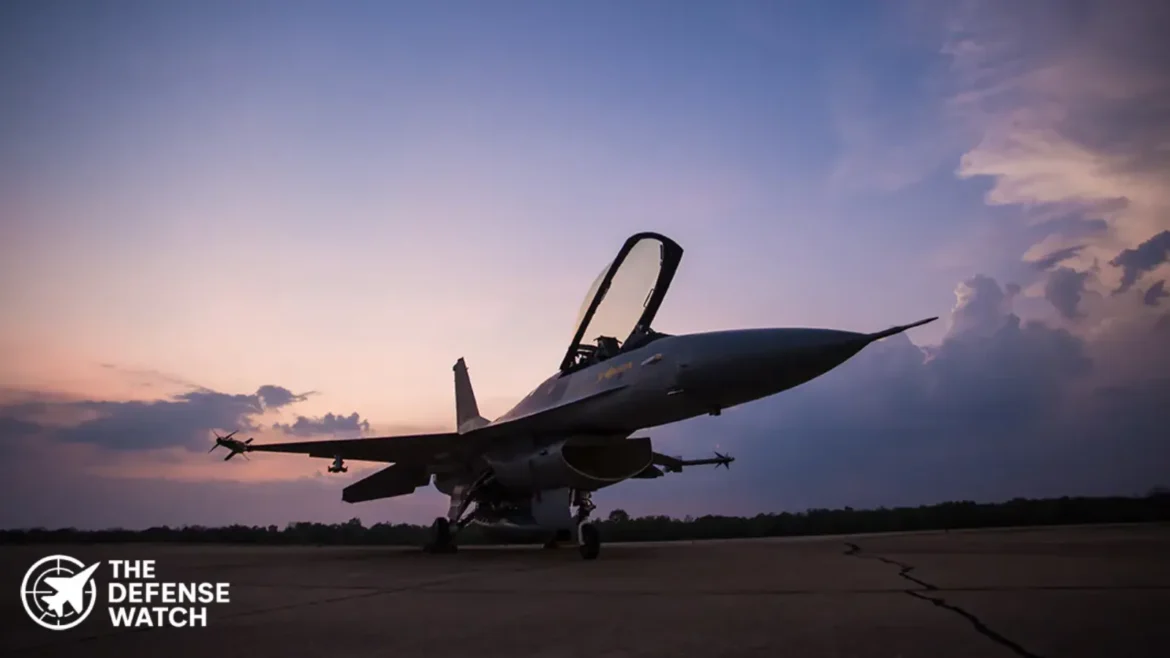
The US Air Force has awarded Sabena Aerospace Engineering a $235.4 million F-16 FMS support contract to sustain Ukraine’s growing F-16 fleet, marking another major step in long term Western backing for Ukrainian airpower. The contract covers intermediate and depot level aircraft and engine maintenance, along with material management support, under the Foreign Military Sales framework.
The award underscores the shift from short term aid to structured, multi year sustainment as Ukraine integrates Western combat aircraft into active service.
Contract Details and Scope
According to the US Department of Defense contract announcement, Sabena Aerospace Engineering, based in Woluwe-Saint-Lambert, Belgium, received a ceiling value contract worth up to $235,449,716. The award combines time and materials and firm fixed price elements, providing flexibility for varying maintenance and support demands over the contract period.
The effort supports the F-16 System Program Office and is specifically tied to Foreign Military Sales support for Ukraine. Work will be performed at Sabena’s facilities in Belgium, with contract performance scheduled through Jan. 28, 2029.
At the time of award, $69,725,380 in FMS funds were obligated. The Air Force Lifecycle Management Center at Hill Air Force Base, Utah, is the contracting authority under contract number FA823226CB005.
The contract was awarded as a sole source acquisition, reflecting Sabena’s existing qualifications, infrastructure, and experience with the F-16 platform.
Role of Sabena Aerospace Engineering
Sabena Aerospace Engineering is a well established European maintenance, repair, and overhaul provider with decades of experience supporting military aircraft fleets. The company has long been involved in F-16 sustainment programs for European air forces and NATO partners, covering structural maintenance, avionics support, and engine related work.
Under this contract, Sabena will provide intermediate and depot level maintenance for both aircraft and engines. This includes scheduled inspections, structural repairs, component overhauls, and supply chain and material management functions needed to keep aircraft mission ready.
By relying on a European based provider, the US Air Force can shorten logistics chains and reduce turnaround times for aircraft supporting Ukraine, while operating within NATO aligned maintenance ecosystems.
Importance for Ukraine’s F-16 Program
The Sabena Aerospace contract is a key enabler for Ukraine’s transition to Western multirole fighters. While aircraft deliveries and pilot training often receive the most attention, long term sustainment is critical to operational effectiveness.
F-16s require robust depot level support to maintain airframe life, radar and avionics reliability, and engine performance. Without consistent access to certified maintenance facilities and spare parts management, sortie rates and mission readiness can degrade quickly.
By securing a multi year FMS support contract, the US Air Force is helping ensure that Ukraine’s F-16 fleet remains viable beyond initial operational capability. This approach aligns with broader US and allied efforts to integrate Ukraine into Western defense support structures rather than relying on ad hoc wartime solutions.
FMS Framework and Oversight
The Foreign Military Sales system allows partner nations to acquire defense articles and services through the US government, ensuring standardization, oversight, and compliance with US policy. In this case, the FMS structure provides transparency and accountability for funds supporting Ukraine, while leveraging existing US Air Force program offices and contracting mechanisms.
The involvement of the F-16 System Program Office ensures that maintenance activities follow established technical orders, safety standards, and configuration control processes used across global F-16 fleets. This reduces risk and supports interoperability with NATO air forces.
Broader Context of US and Allied Support
The Sabena Aerospace award fits within a broader pattern of US and allied investments in sustainment and logistics for Ukraine. As Kyiv fields more Western supplied systems, including combat aircraft, air defense, and armored vehicles, sustainment contracts are becoming as strategically important as initial equipment transfers.
European based maintenance hubs are increasingly central to this strategy, allowing advanced support to be delivered without moving sensitive systems into the United States or into contested airspace. Belgium’s location and NATO integration make it a practical choice for F-16 sustainment activities.
What Comes Next
With funding already obligated and contract performance underway, Sabena Aerospace is expected to begin or expand maintenance activities supporting Ukrainian F-16s in the near term. As additional aircraft are transferred and operational tempo increases, demand for depot level support is likely to grow over the life of the contract.
The award signals continued US confidence in the FMS model as a long term mechanism for sustaining Ukraine’s air combat capabilities, while reinforcing the role of trusted European industry partners in that effort.
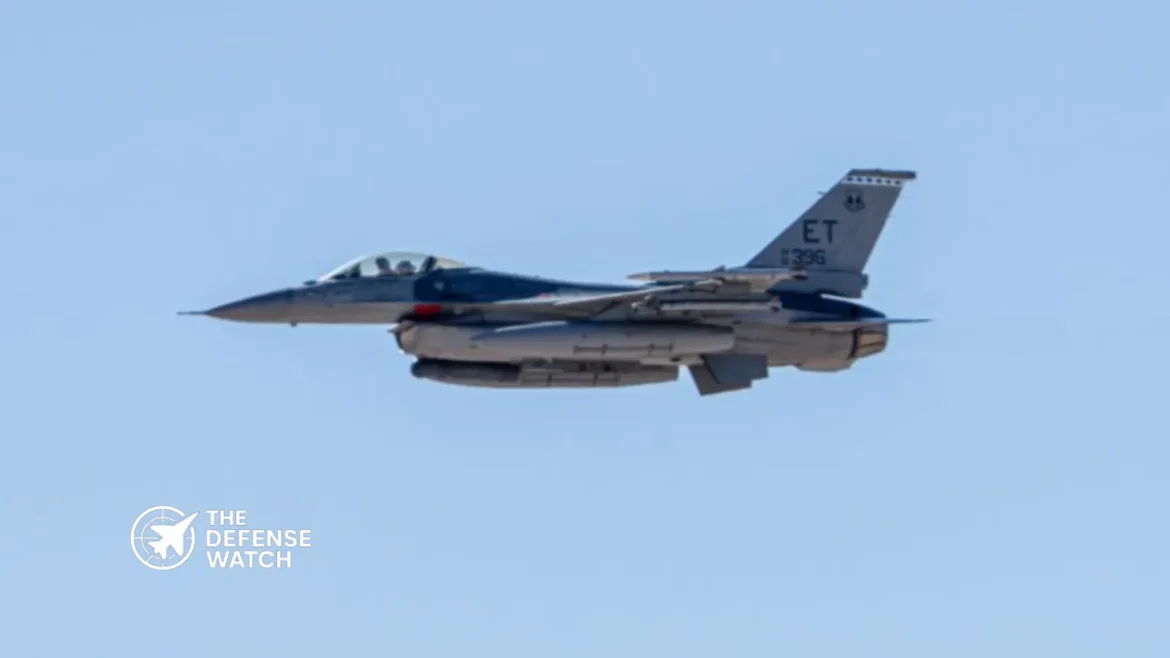
Northrop Grumman’s Integrated Viper Electronic Warfare Suite has been fully paired with the Scalable Agile Beam Radar on F-16 fighter jets, giving the aircraft layered protection and improved tracking without harming radar performance. The fixed integration of AN/ALQ-257 IVEWS with the AN/APG-83 SABR active electronically scanned array lets the systems operate on the same slice of the electromagnetic spectrum in combat conditions
Integration milestone completed
Northrop Grumman announced that its AN/ALQ-257 IVEWS has been successfully matched with the AN/APG-83 SABR radar on U.S. Air Force F-16 aircraft. That pairing allows the jet to hunt and jam threats while keeping a clear radar picture. This avoids the traditional need to shut off radar during electronic attack, which used to reduce situational awareness.
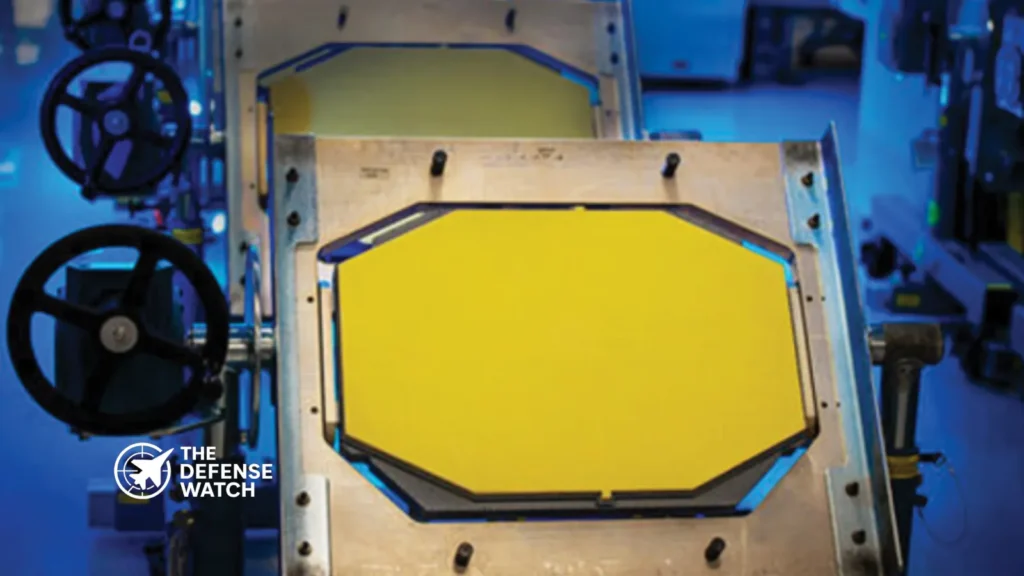
The SABR radar provides long-range search and precision tracking plus synthetic aperture mapping and maritime modes. IVEWS brings wideband digital radar warning and jamming to help counter modern threats such as surface-to-air missile fire control radars, direction finders and agile emitters that can hop frequencies.
Digital synchronization protects the spectrum
A key technical advance of the integrated stack is how radar and electronic warfare functions work together on a pulse-to-pulse basis. With digital coordination, the radar never needs to blank its emissions for the jammer, and neither function degrades the other. That lets crews simultaneously execute high-resolution tracking and denial of hostile radar engagement systems.
Northrop says this pulse-level interoperability is unique among F-16 EW upgrades and gives the aircraft improved self-protection and mission effectiveness in contested electromagnetic environments.
Operational testing and assessment
IVEWS has been in testing for some time. An operational assessment involving more than 70 flights and 100 flying hours demonstrated its ability to stand up against simulated modern threats. Flight tests also confirmed that both the EW suite and radar maintain performance when operating together.
Independent reporting notes that early flight flights with IVEWS installed on USAF F-16s passed key milestones, and the system has been pushed toward production and fielding.
Comparing EW paths for the Viper
Northrop’s IVEWS is now one of the most advanced internal EW suites for the F-16. Other systems like L3Harris’s Viper Shield also pursue internal or podded electronic warfare solutions that tie into AESA radars such as SABR. Viper Shield has completed safety-of-flight qualifications and is entering low-rate production for international customers, including six allied air forces.
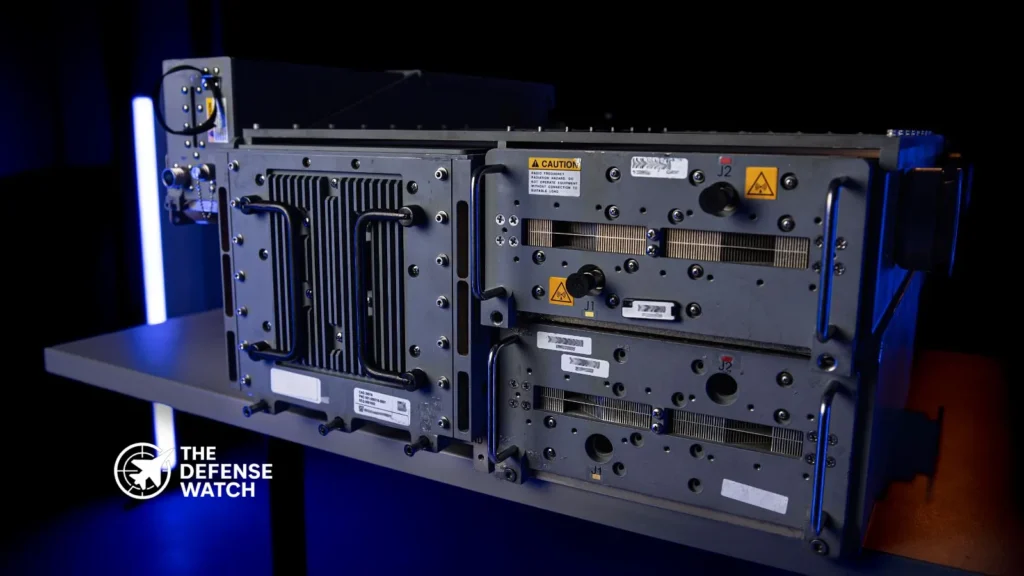
Both approaches aim to keep F-16 fleets ready against evolving radar threats, especially as fourth-generation fighters are called on to operate closer to sophisticated integrated air defenses. Planners see electronic warfare integration as critical to survivability and mission success.
Global relevance
The combination of advanced EW and radar is relevant to F-16 upgrade programs worldwide. Many operators upgrading to the Viper standard include modern AESA radar and electronic warfare enhancements. Several nations seek to align with U.S.-validated technologies to maintain interoperability and face near-peer threats.
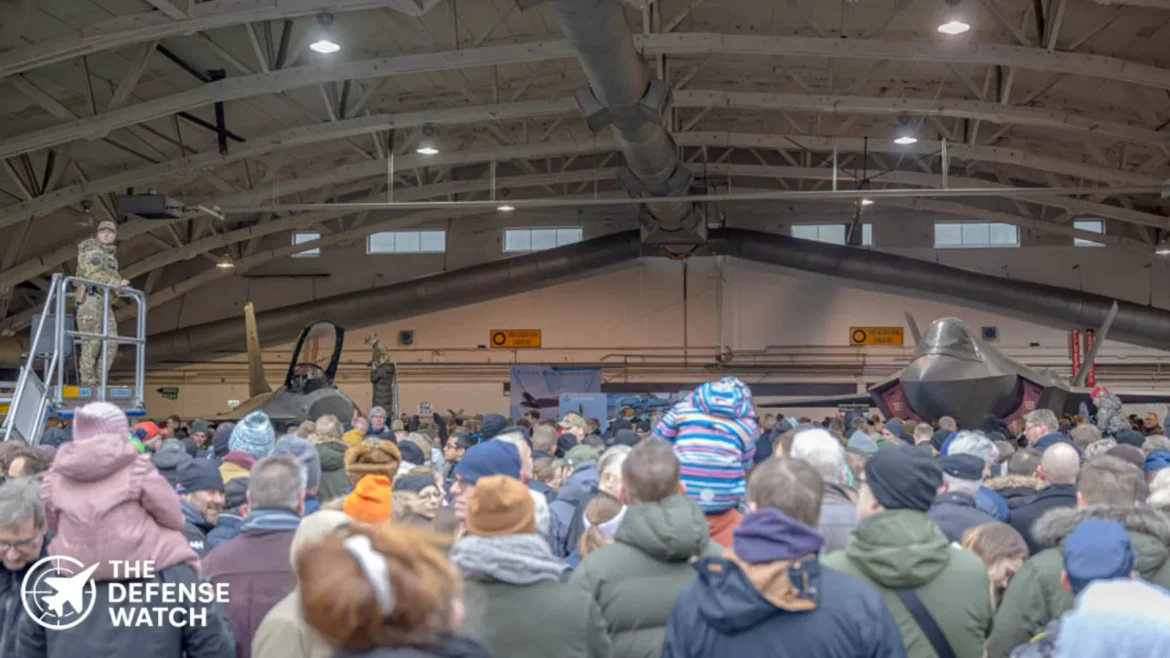
Denmark has formally retired its F-16 fighter jets after 46 years of service, completing the transition to the F-35A Lightning II as its sole combat aircraft, according to the Danish Armed Forces.
The retirement ceremony was held at Skrydstrup Air Base, with personnel and veterans of the F-16 program in attendance. The aircraft, long regarded as the Air Force’s “eyes and shield in the air,” played a key role in surveillance, deterrence, and combat missions since 1980.
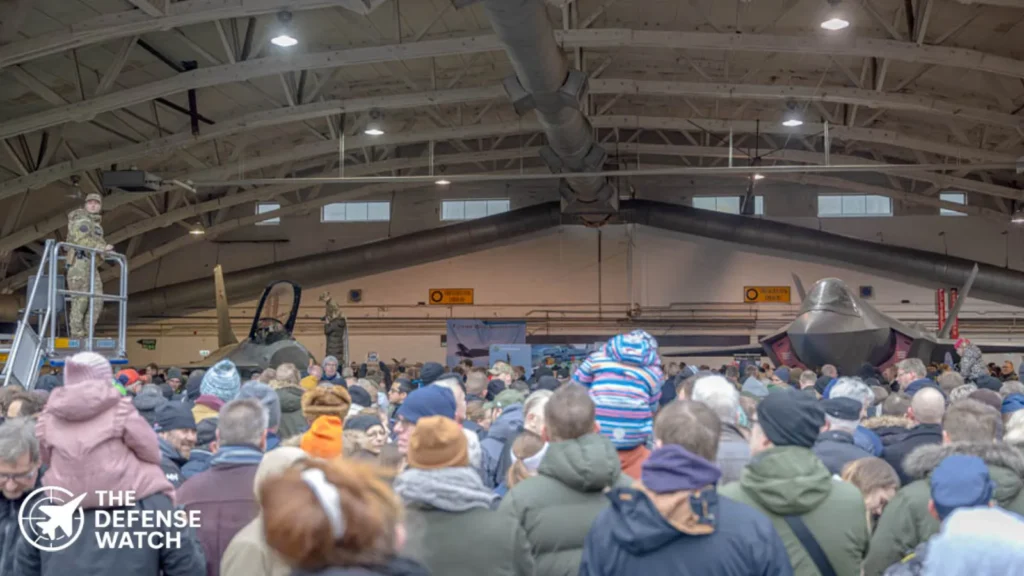
General and former Chief of Defence Christian Hvidt, who flew the first Danish F-16 to Skrydstrup, highlighted the aircraft’s operational legacy and the expertise of Danish pilots and technicians. The F-16 participated in numerous international operations, including missions in the Balkans, Afghanistan, Syria, Iraq, and Libya.
Several retired F-16s have been sold to Argentina or donated to Ukraine, reflecting their continued operational viability. The Danish Air Force’s shift to the F-35 reflects modern combat demands, emphasizing integrated operations across land, air, sea, space, and digital domains, explained Steen Hartov, senior adviser at the Air Command’s Fighter Aircraft Division.
Denmark has ordered 43 F-35A jets, with the first delivery in October 2023. The fleet is expected to reach full operational capacity next year, completing the replacement of the F-16 as Denmark’s primary fighter aircraft.
The transition positions Denmark among NATO members adopting fifth-generation stealth technology, enhancing interoperability and modernizing national air defense capabilities.
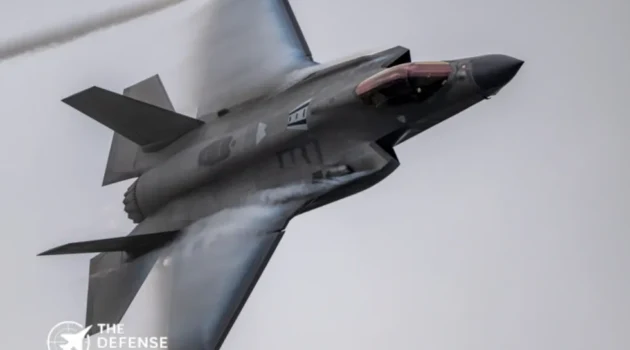
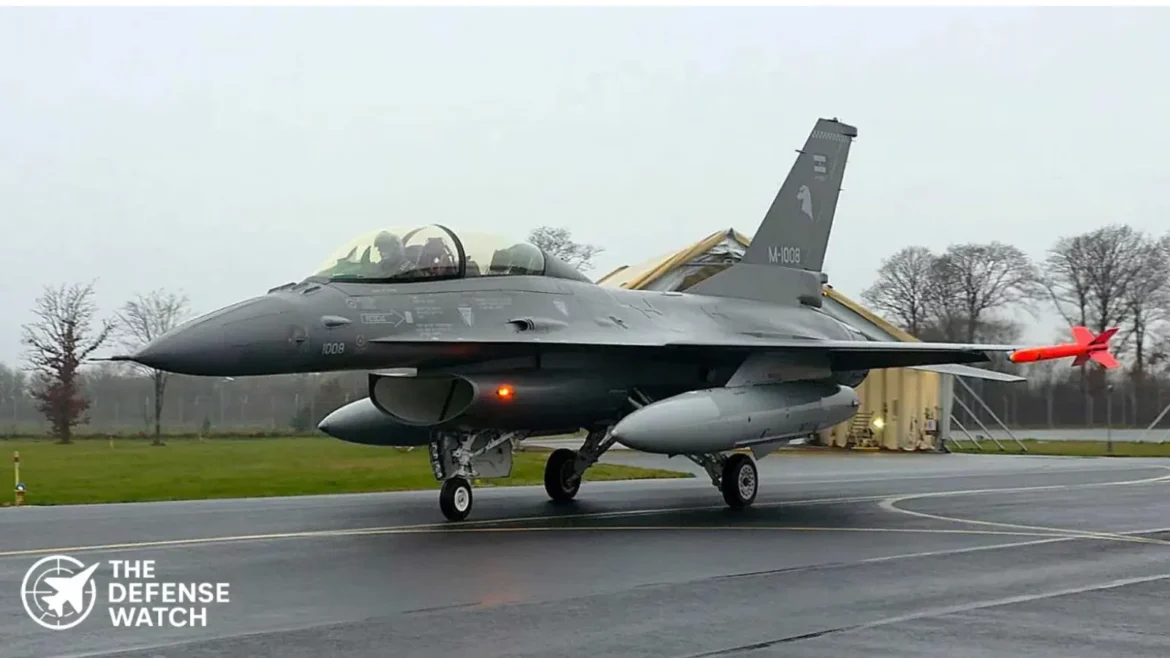
On December 5, 2025, six second-hand Lockheed Martin F-16 Fighting Falcon fighters arrived in Argentina after a trans-Atlantic ferry flight from Denmark. The arrival marks the first delivery under the country’s deal to buy ex-Royal Danish Air Force (RDAF) F-16s, restoring a supersonic fighter capability to the Fuerza Aerea Argentina (FAA) for the first time in over a decade.
An official induction ceremony followed on December 6 at the base in Córdoba Province, where top government figures welcomed the jets.
Why This Matters
Argentina had lacked modern jet-powered fighters since it retired its last supersonic fleet. The delivery of these F-16s ends a significant capability gap, giving the country renewed reach in air defense, interception, and multi-role strike. The arrival signals a major step in the FAA’s broader modernization plan.
Background: From Mirage to F-16
After retiring its Dassault Mirage III fighters in 2015, the FAA relied largely on aging subsonic jets such as the Douglas A-4 Skyhawk and locally assembled trainers.
Efforts to acquire new fighters over the years — including proposals involving aircraft such as the Saab Gripen, IAI Kfir and FA-50 — were blocked by export restrictions tied to the fallout from the 1982 Falklands War. Those restrictions limited Argentina’s access to advanced military hardware for decades.
The 2024 agreement with Denmark changed that. Under the deal, Argentina is acquiring a total of 24 operational F-16AM/BM aircraft, plus one non-flying airframe for training and ground instruction.
Delivery Details
- The first batch comprises four two-seat F-16BM and two single-seat F-16AM jets.
- The jets departed from Denmark’s Skrydstrup Air Base on November 28, 2025. The ferry route included technical stops in Zaragoza, Spain; the Canary Islands; and Natal, Brazil.
- The trans-Atlantic flight was supported by aerial refueling from three Boeing KC-135 Stratotanker aircraft.
- The jets landed at Área Material Río Cuarto (ARMACUAR) base. The FAA plans to deploy them at first from Río Cuarto, with a later move to a permanent base at Tandil Air Base once infrastructure upgrades finish.
Capabilities and Modernization
According to the Argentine Defense Ministry, the new F-16s come equipped with advanced avionics, an electronic warfare suite, and a modern weapons package. The multirole jets are intended for air defense, suppression of enemy air defenses, maritime strike, close air support, reconnaissance, and dynamic targeting tasks.
The acquisition follows a broader push to upgrade the air force fleet and restore long-lost capabilities. The deal includes not only the aircraft, but also spare parts, maintenance support, and training arrangements.
Policy and Strategic Significance
The delivery of these F-16s comes after a long period during which export restrictions effectively left Argentina without modern combat jets. The 2024 agreement and the 2025 delivery suggest a shift in the political and diplomatic environment surrounding arms transfers to Buenos Aires.
The US also played a role: previous export rules were relaxed, allowing this third-party transfer of U.S.-made aircraft from Denmark.
For the FAA, joining the global F-16 user community may open opportunities for future training, interoperability with partner air forces, and access to maintenance and upgrade support.
What Comes Next
Deliveries of the remaining aircraft are planned to continue through 2028. Once fully integrated, the 24-jet fleet — plus the static trainer — will significantly enhance Argentina’s air defense reach and deter potential threats.
Meanwhile, the FAA will need to finalize infrastructure upgrades at Tandil and Río Cuarto bases, establish maintenance and training pipelines, and integrate the jets operationally into its command structure.
F-16 Jets Spotted With Laser-Guided Rockets
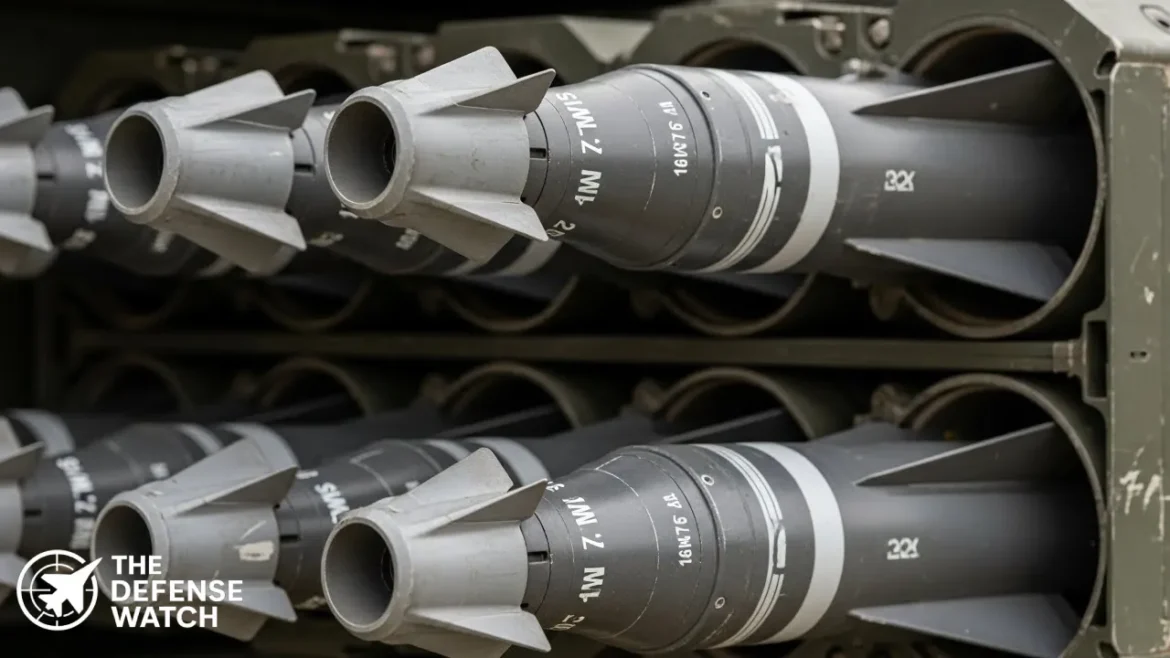
New imagery circulating on social media and defense forums suggests that Ukrainian Air Force F-16AM jets are now carrying laser-guided 70 mm rockets — specifically the Advanced Precision Kill Weapon System II (APKWS II).
According to the report, the photos — first shared by the Telegram channel Avia OFN on December 4, 2025 — show an F-16AM from the 107th Separate Aviation Wing fitted with two LAU-131/A 7-shot rocket pods, each apparently loaded with APKWS II rounds.
Context: Why This Matters Now
Since receiving Western-supplied F-16s from Denmark, the Netherlands, Belgium, and Norway, Ukraine has heavily relied on the jets for a mix of air defense and ground-attack missions.
Traditionally armed with air-to-air missiles like the AIM-120 AMRAAM and AIM-9 Sidewinder, and precision guided bombs for strike missions, the Ukrainian Air Force jets now appear to be adding a lower-cost but high-volume air-to-air capability.
The emergence of mass Russian drone attacks — slow-flying loitering munitions and cruise missiles — has put enormous strain on Ukraine’s air defenses. Against such threats, guided rockets like APKWS II provide a cost-effective complement to expensive missiles.
What the Numbers and Hardware Show
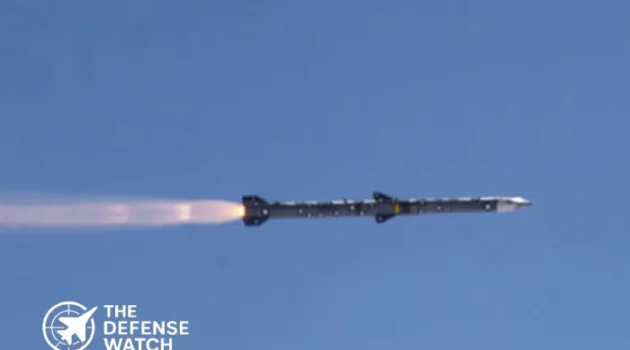
- Weapon System: APKWS II is a laser-guided upgrade kit based on the 70 mm Hydra rocket. When paired with proper rocket pods (e.g., LAU-131/A) and a targeting/laser designator pod, it can transform an otherwise unguided rocket into a precision munition.
- Cost Effectiveness: Compared with air-to-air missiles — typically costing hundreds of thousands to over a million dollars per round — a guided rocket like APKWS II costs roughly US$20,000–25,000 per unit.
- Expanded Loadout Potential: By employing two 7-shot rocket pods, a single F-16 sortie could field up to 14 guided rockets, offering multiple engagement chances with each mission. This “magazine depth” advantage becomes valuable when facing waves of low-cost drones or incoming missiles.
The photos reportedly also show the jets carrying a targeting pod — likely the AN/AAQ-33 Sniper Advanced Targeting Pod — necessary to lase targets for the rocket guidance.
Limitations and Considerations
While the development is significant, there are important caveats:
- Laser-Dependence: APKWS II rockets require continuous laser designation during flight (semi-active laser guidance). That limits their use primarily to targets that are slower-moving or non-evasive — such as drones, kamikaze UAVs, or cruise missiles — rather than high-performance fighter aircraft.
- Not Fire-and-Forget: Unlike radar-guided or infrared-guided missiles, these rockets are not fire-and-forget; a designating pod must keep the laser locked on target until impact, potentially exposing the launching aircraft or designator to risk.
- Unclear Variant Supply: Although a variant of APKWS II optimized for air-to-air use — called AGR-20F FALCO (Fixed-Wing Air-Launched Counter-UAS Ordnance) — exists, it remains unconfirmed whether Ukraine has received that specific version, or is using standard ground-oriented APKWS II kits.
What This Suggests Strategically
For Ukraine, employing APKWS II on F-16s represents a pragmatic adaptation to the evolving nature of aerial threats — especially the prevalence of low-cost drones and cruise missiles. The ability to fire guided rockets may allow more sorties with higher engagement capacity while conserving its limited stock of expensive air-to-air missiles.
This shift also demonstrates flexibility: by using existing hardware (Hydra rocket pods) and attaching guidance kits, Ukraine can rapidly field an affordable and effective counter-UAS solution without waiting for delivery of new types of missiles.
What’s Next: Implications and Open Questions
- Operational Impact: Will Ukrainian F-16s begin conducting more anti-drone patrols with rocket pods? Will these deployments reduce reliance on high-value missiles for threats like loitering drones and cruise missiles?
- Supply and Sustainability: Can Ukraine sustain enough ammunition supply of APKWS II rockets for prolonged use? Are there enough targeting pods and crews trained in laser designation?
- Escalation Risk: If Russian forces adapt — for example by deploying faster, more maneuverable UAVs — the limitations of semi-active laser rockets may become more apparent.

What Happened: Crash During Training Mission
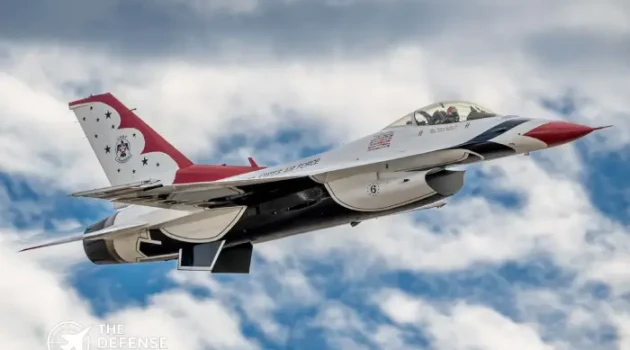
On December 3, 2025, at approximately 10:45 a.m. Pacific Standard Time, a United States Air Force (USAF) Thunderbirds F-16C Fighting Falcon crashed near Trona Airport in the Mojave Desert, Southern California.
The pilot — the sole occupant — successfully ejected and landed by parachute. He was recovered by rescue personnel and transported to a hospital in Ridgecrest with non-life-threatening injuries.
Emergency services, including the San Bernardino County Fire Department, assisted the response with fire suppression and securing the crash site. No injuries on the ground or threat to nearby communities have been reported.
The incident remains under investigation, with authorities awaiting deeper analysis and official findings from the 57th Wing Public Affairs Office.
Context: The Thunderbirds and F-16C in Training
The Thunderbirds are the USAF’s premier aerial demonstration squadron, renowned for high-precision flying and formation aerobatics. Their fleet includes the F-16C Fighting Falcon, a fourth-generation multirole fighter.
Each year, typically during the winter months, the unit conducts intensive training from Nellis Air Force Base (Nevada) to prepare for the coming air show season. These sessions involve frequent sorties over training ranges and controlled airspace — sometimes including remote desert regions such as the Mojave Desert.
Flying at high speeds and under rigorous conditions, even in controlled airspace, carries inherent risk. History records previous incidents involving demonstration-team jets, underscoring the thin margin for error when operating high-performance fighters under demanding flight regimes.
Crash Details: Location, Ejection, and Response
According to official and local reports:
- The crash occurred on a dry lakebed just south of Trona Airport, roughly 27 miles southeast of Naval Air Weapons Station China Lake.
- The F-16C belonged to the Thunderbirds demonstration team and the flight originated from Nellis AFB.
- Upon incident onset, the pilot ejected safely; he remains in stable condition and is receiving follow-up medical care.
- San Bernardino County Fire Department — along with China Lake emergency crews — responded to the crash, extinguishing a post-impact fire and securing the scene. No civilian casualties or environmental hazards have been publicly reported at this time.
As of writing, the cause of the crash remains unknown. Official investigation by the 57th Wing is underway, and no further information has been released about potential technical failures, pilot error, or environmental factors leading to the incident.
Significance: Risks for Demonstration Squadrons
The crash highlights the inherent risks associated with demonstration-team operations, even outside of airshow performances — during routine training missions in remote areas. The use of the F-16C by the Thunderbirds reflects ongoing reliance on legacy fourth-generation fighters, underscoring continued value in training readiness.
For the USAF, any loss of aircraft — especially in high-profile units such as the Thunderbirds — represents a material and reputational cost. The F-16 remains a mainstay fighter globally, and maintaining pilot proficiency under demanding conditions is vital. At the same time, this incident may prompt renewed scrutiny of safety protocols, maintenance practices, and training risk mitigation measures.
Furthermore, the crash emphasizes the safety challenges posed by operations over remote desert terrain, where rescue response, recovery of wreckage, and environmental controls (e.g., handling hazardous materials such as hydrazine used in the F-16’s emergency power unit) demand coordination among multiple agencies.
What’s Next: Investigation and Implications
The 57th Wing Public Affairs Office has promised further updates as the investigation continues. Until the Board of Inquiry releases its findings, the precise cause — whether mechanical failure, pilot error, or other factors — remains speculative.
In the near term, the crash may affect the Thunderbirds’ readiness schedule ahead of the 2026 airshow season. Replacement aircraft may need to be assigned, and maintenance and safety reviews could disrupt other training flights.
More broadly, the incident may influence USAF leadership’s evaluation of demonstration-team risk, potentially accelerating discussions around next-generation aircraft for aerobatic and training units — especially as the broader fleet ages and strategic needs evolve.