- ► Lockheed Martin has been awarded a US Foreign Military Sale contract to provide advanced C-130J training devices and simulator upgrades to the Royal Australian Air Force. :contentReference[oaicite:0]{index=0}
- ► Deliveries are scheduled to begin in 2029 and include Weapon Systems Trainers, an Enhanced Integrated Cockpit Systems Trainer, and Loadmaster Part-Task Trainer. :contentReference[oaicite:1]{index=1}
- ► New devices feature modern graphics, motion cueing and high-fidelity cockpit replication to mirror the actual C-130J flight environment. :contentReference[oaicite:2]{index=2}
- ► RAAF operates 12 C-130J-30 Super Hercules airlifters and is acquiring 20 more to expand tactical airlift capacity. :contentReference[oaicite:3]{index=3}
- ► Training upgrades support Australia’s larger force structure, preparing crews ahead of new aircraft deliveries. :contentReference[oaicite:4]{index=4}
Lockheed Martin to Deliver C-130J Training Devices to RAAF
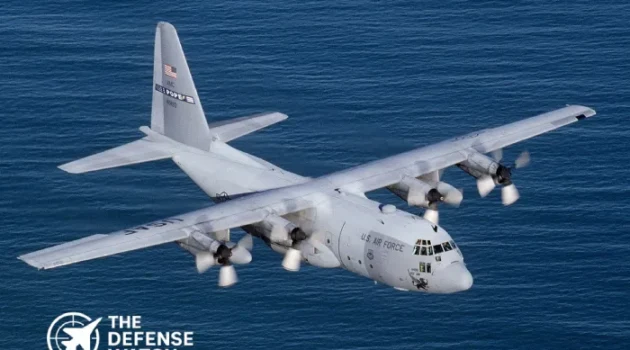
Lockheed Martin will deliver advanced C-130J training devices and simulator upgrades to the Royal Australian Air Force under a US Foreign Military Sale contract awarded through Wright-Patterson Air Force Base, the company announced February 18.
The contract covers a suite of training systems designed to support the RAAF’s expanding C-130J fleet as Australia strengthens its tactical airlift capability. Deliveries are expected to begin in 2029.
What the Contract Includes
Under the agreement, Lockheed Martin will provide:
- Two Weapon Systems Trainers
- One Enhanced Integrated Cockpit Systems Trainer (EICS)
- A Loadmaster Part-Task Trainer
- Upgrades to existing Virtual Simulation and Virtual Maintenance Trainers
These devices incorporate modern graphics, motion cueing and high-fidelity cockpit replication that reflect the operational C-130J environment.
Building Training Capacity
Lockheed Martin’s role as original equipment manufacturer of the C-130J Super Hercules gives it system-level insight into replicating aircraft behavior for training. The company says its solutions aim to improve mission readiness from initial crew training.
The contract comes as the RAAF prepares for an expanded tactical transport fleet. Australia currently fields 12 C-130J-30 Super Hercules aircraft and, under a 2022 Foreign Military Sale agreement, ordered 20 additional airlifters, with first deliveries expected in 2028.
Strategic Context
The C-130J Super Hercules is a cornerstone of tactical airlift for militaries around the world. More than 560 aircraft have been delivered to operators in over two dozen countries, amassing millions of flight hours.
By investing in enhanced training infrastructure now, Australia aims to align its crew preparation with upcoming fleet growth. High-fidelity simulators and advanced training devices help reduce cost and risk associated with live flight hours while maintaining operational proficiency.
Training and Readiness
Loadmasters, pilots and support personnel will train on both hardware-based systems and virtual environments. Upgrades to virtual simulation and virtual maintenance trainers expand the scope of instruction beyond basic cockpit handling, covering mission planning and aircraft upkeep.
Forward Outlook
Australia’s tactical airlift capability plays a key role in regional operations, humanitarian assistance and alliance interoperability with the United States and other partners. Enhanced training systems are expected to help ensure crews are ready as the RAAF absorbs newly delivered aircraft beginning in the latter part of the decade.

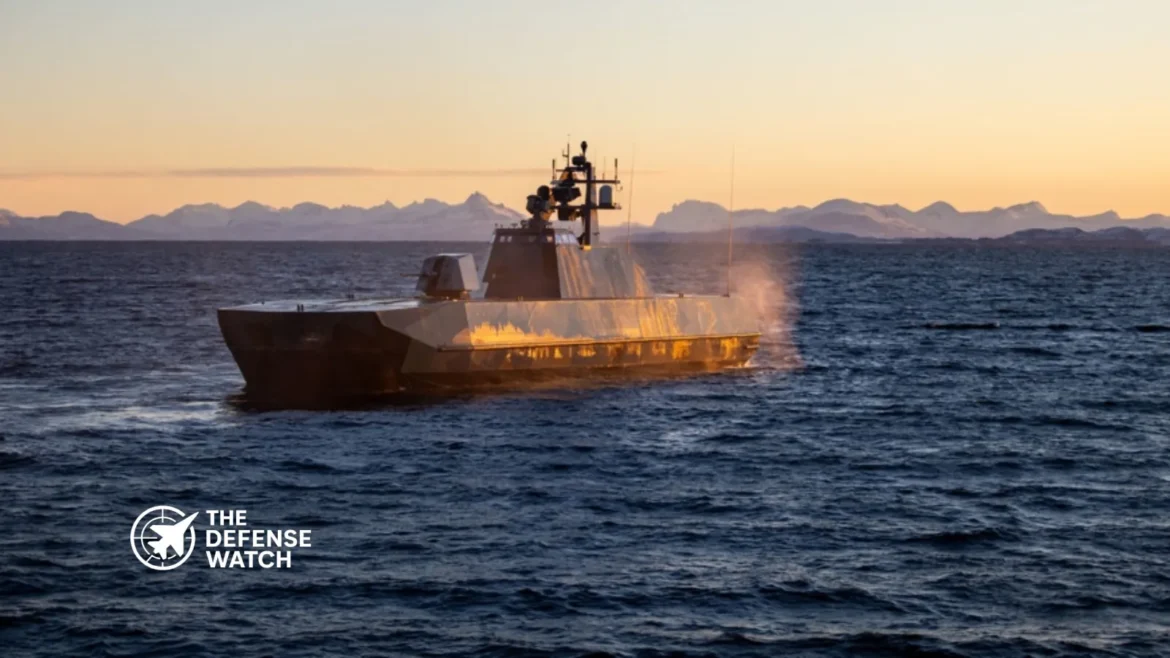
- ► Kongsberg awarded NOK 410 million contract by NDMA to upgrade Skjold-Class corvettes radar and sensors.
- ► Program focuses on enhancing situational awareness, detection range, and maritime combat effectiveness.
- ► Upgrades extend operational life of Norway high-speed coastal combat vessels.
- ► Contract supports Norway broader naval modernization and Arctic security strategy.
- ► Strengthens Kongsberg role as key supplier to Norwegian defense forces.
Kongsberg Secures Skjold-Class Corvettes Radar Upgrade To Boost Norway Coastal Defense
The Skjold-Class Corvettes radar upgrade is moving forward after Kongsberg signed a NOK 410 million contract with the Norwegian Defence Materiel Agency, marking a significant step in Norway naval modernization plan.
Under the agreement, Kongsberg will modernize radar and sensor systems aboard the Royal Norwegian Navy Skjold-Class corvettes. The contract, valued at approximately NOK 410 million, aims to enhance detection capabilities, improve situational awareness, and ensure the vessels remain operationally relevant in increasingly complex maritime environments.
According to the announcement, the work will focus on upgrading critical surveillance and sensor components to strengthen combat performance and extend service life.
Modernizing A Unique High-Speed Combat Platform
The Skjold-Class corvettes are among the fastest operational combat vessels in the world. Built for coastal operations, they combine stealth features, air-cushion technology, and advanced missile systems. Their role is centered on rapid response and sea denial in Norway coastal waters.
Improving radar and sensor performance directly enhances these missions. Modern naval warfare places heavy emphasis on early detection, electronic resilience, and networked operations. Upgraded sensors increase the ships ability to detect surface and aerial threats at greater ranges while improving target tracking and fire control integration.
This Skjold-Class Corvettes radar upgrade aligns with broader trends across NATO fleets, where legacy platforms are being modernized to counter advanced anti-ship missiles, drones, and electronic warfare threats.
Strengthening Norway Arctic And Coastal Posture
Norway strategic geography, including its long coastline and proximity to the High North, demands strong maritime domain awareness. The Royal Norwegian Navy relies on fast, agile vessels like the Skjold-Class to monitor and defend coastal approaches.
Upgrading radar and sensors enhances maritime surveillance in contested environments. It also improves interoperability with allied naval and air assets operating in the North Atlantic and Arctic regions.
The contract reflects Norway commitment to maintaining credible deterrence through incremental modernization rather than wholesale fleet replacement. As defense budgets rise across Europe, many nations are extending platform lifespans while integrating more capable electronics.
Kongsberg Expands Domestic Industrial Role
Kongsberg has long served as a core supplier to Norway defense establishment, providing missile systems, combat management systems, and maritime technologies. This new Skjold-Class Corvettes radar upgrade reinforces its role as a domestic industrial anchor for naval capabilities.
By keeping upgrades within national industry, Norway sustains sovereign control over sensitive technologies and ensures long-term supportability. That approach is increasingly important in a security environment marked by supply chain risks and geopolitical uncertainty.
The NOK 410 million contract also underscores steady investment in maintenance and modernization rather than headline-grabbing procurement programs. Incremental improvements often deliver substantial operational gains at lower cost and risk.
Operational Impact And Future Outlook
While detailed technical specifications were not publicly disclosed, radar and sensor upgrades typically involve improved signal processing, enhanced electronic counter-countermeasures, and integration with modern command and control networks.
For the Skjold-Class fleet, this means improved reaction time against fast-moving threats and better integration with Norway joint force structure. In practical terms, commanders gain clearer maritime pictures, stronger threat discrimination, and more reliable targeting data.
The Skjold-Class Corvettes radar upgrade therefore supports both national defense requirements and allied commitments. Norway plays a key role in NATO northern flank operations, and credible coastal combatants contribute to regional stability.
As naval warfare becomes more sensor-driven, investments in detection and electronic resilience can be as decisive as new hulls or weapons. This contract signals that Norway recognizes that shift.
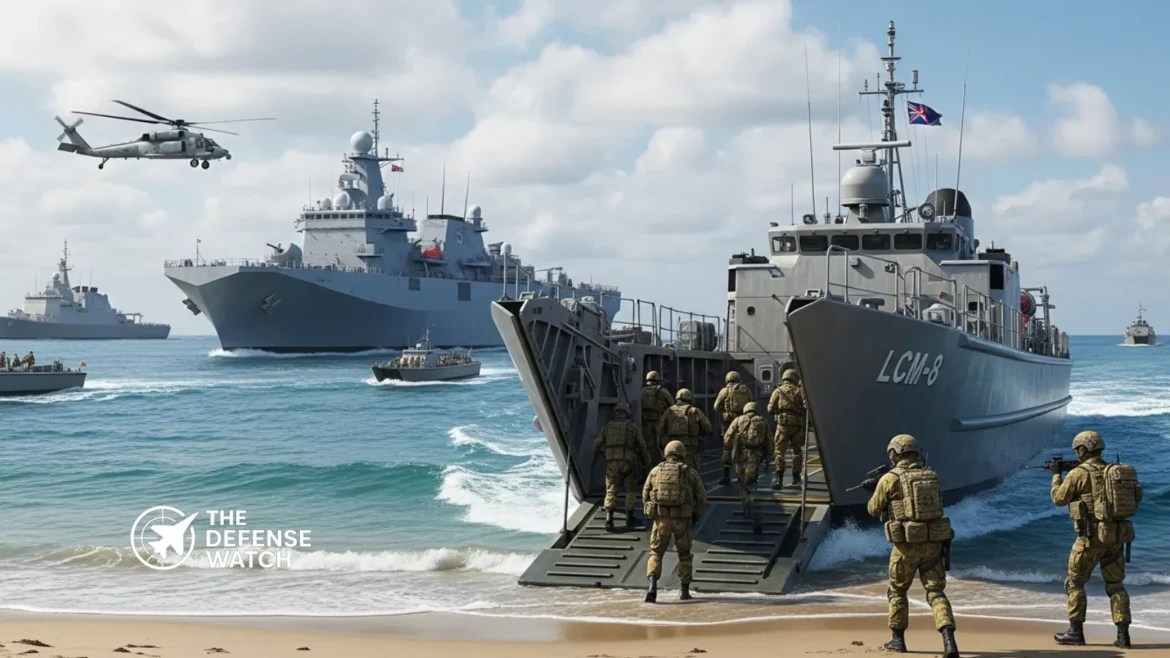
- ► Austal selected to design and build Australia new Heavy Landing Craft fleet for the Army.
- ► Program supports enhanced littoral maneuver and coastal logistics operations.
- ► Construction to take place in Western Australia, reinforcing sovereign shipbuilding capacity.
- ► New craft will replace legacy landing platforms and integrate with joint amphibious forces.
- ► Contract marks a key step in Australia broader force posture and regional deterrence strategy.
Austal Wins Australia Heavy Landing Craft Contract
The Australia heavy landing craft program has been awarded to Austal, marking a major step in Canberra effort to modernize the Australian Army amphibious lift capability.
The contract covers the design and construction of a new fleet of Heavy Landing Craft intended to replace aging platforms and expand operational reach across the Indo Pacific.
The decision underscores Australia focus on littoral maneuver, rapid coastal logistics, and distributed operations in contested maritime environments.
Strengthening Littoral Warfare Capability
The Australia heavy landing craft fleet is designed to move armored vehicles, troops, and supplies between larger amphibious ships and shorelines without developed port infrastructure. That capability is increasingly central to Australia defense planning.
Recent strategic guidance from the Australian Department of Defence emphasizes the need for agile, mobile land forces able to operate across archipelagic terrain. The new landing craft will support that requirement by enabling rapid deployment along Australia vast northern coastline and into regional areas of interest.
In operational terms, heavy landing craft fill a critical gap. They provide the link between strategic sealift and tactical ground maneuver. Without them, even advanced amphibious ships cannot efficiently project land combat power ashore.
Industrial Impact And Sovereign Shipbuilding
Construction will take place in Western Australia, reinforcing domestic shipbuilding capacity. For Canberra, the Australia heavy landing craft award is not only about capability, but also about sustaining a skilled workforce and maintaining sovereign industrial expertise.
Austal has an established footprint in both Australian and international naval programs. Securing this contract strengthens its role in Australia defense industrial base at a time when maritime construction demand is rising across the Indo Pacific.
The move aligns with broader government efforts to localize defense production and reduce supply chain risk. In an era of strategic competition, assured access to shipbuilding and sustainment capacity is viewed as a national security priority.
Replacing Legacy Platforms
The existing Army watercraft fleet has faced limitations in payload, endurance, and survivability. The Australia heavy landing craft program is expected to deliver improved performance across these metrics, though detailed specifications have not been fully disclosed.
Modern landing craft typically incorporate improved hull design, greater payload capacity for armored vehicles, and updated navigation and communications systems. These enhancements allow integration into joint operations alongside the Royal Australian Navy amphibious ships and coalition forces.
The upgrade is part of a broader restructuring of the Australian Army toward a more littoral focused posture. Heavy landing craft support distributed operations, humanitarian assistance, disaster relief, and high intensity conflict scenarios.
Strategic Context In The Indo Pacific
Australia defense policy has shifted in response to a more contested regional security environment. Maritime mobility and rapid force projection are central to deterrence.
Heavy landing craft play a quiet but decisive role in this framework. They enable flexibility. Forces can disperse, regroup, and sustain themselves without reliance on fixed infrastructure that may be vulnerable in crisis.
In practical terms, the Australia heavy landing craft fleet enhances operational resilience. It supports joint force integration and strengthens Australia ability to work alongside regional partners.
Analysis: Why This Program Matters
The Australia heavy landing craft contract reflects a broader trend across Indo Pacific militaries. Nations are investing in platforms that support distributed, island based, and coastal operations.
Unlike headline platforms such as submarines or fighter jets, landing craft receive less public attention. Yet they are essential enablers. Without them, amphibious strategy remains theoretical.
This award signals that Canberra is aligning procurement with strategic doctrine. Littoral maneuver is not just rhetoric. It now has funded hardware behind it.
The contract also reinforces domestic industry at a time when Australia is pursuing major naval projects, including surface combatants and undersea systems. Sustaining multiple production lines strengthens industrial resilience.
From a geopolitical standpoint, the program contributes to deterrence by denial. The ability to rapidly deploy and resupply land forces complicates any adversary planning in maritime approaches.
What Comes Next
Program timelines, delivery schedules, and full technical specifications are expected to emerge as the project advances. Initial construction activity in Western Australia will be closely watched by industry and regional stakeholders.
The Australia heavy landing craft fleet will likely enter service in phases, gradually replacing legacy systems while integrating into joint training cycles.
As Canberra continues reshaping its force posture, amphibious lift capacity will remain a key metric of operational readiness.
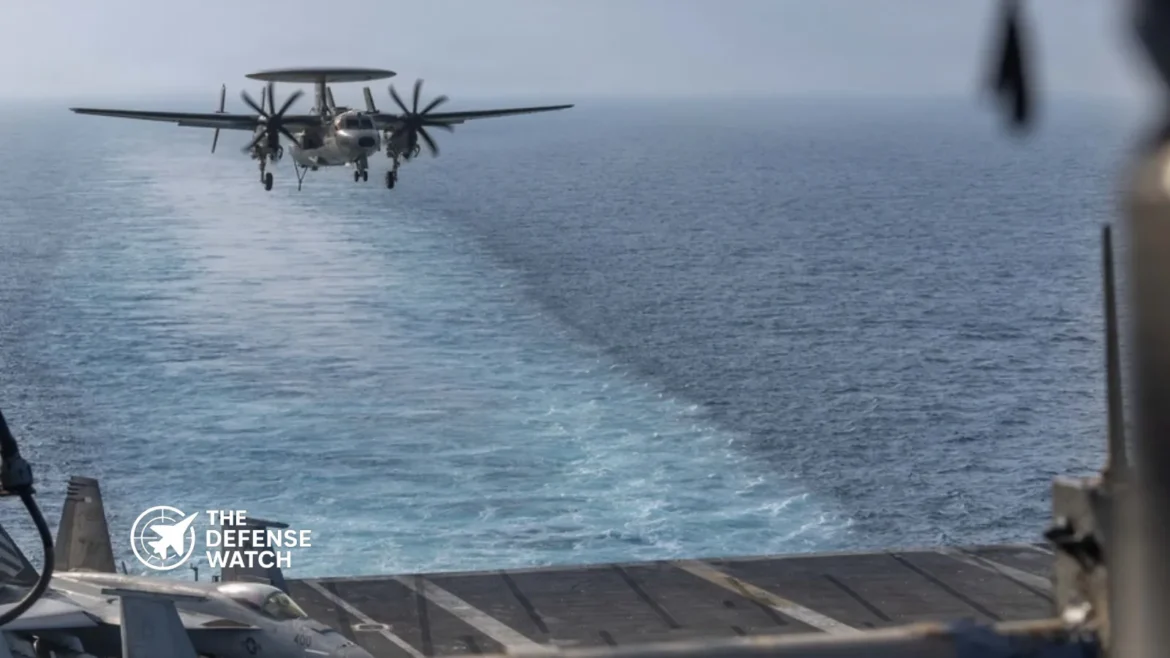
- ► US Navy awards approximately 10 million contract for 123 E 2D Hawkeye intercom systems.
- ► Upgrade supports carrier based airborne early warning and battle management missions.
- ► Enhances crew coordination and communications resilience inside the E 2D cockpit.
- ► Part of broader Navy effort to sustain and modernize the Advanced Hawkeye fleet.
- ► Reinforces carrier air defense posture amid evolving aerial and missile threats.
US Navy Orders 123 E 2D Hawkeye Intercom Systems To Reinforce Carrier Air Defense
The US Navy E 2D Hawkeye intercom systems upgrade marks a focused investment in the survivability and effectiveness of the carrier air wing’s airborne command and control aircraft.
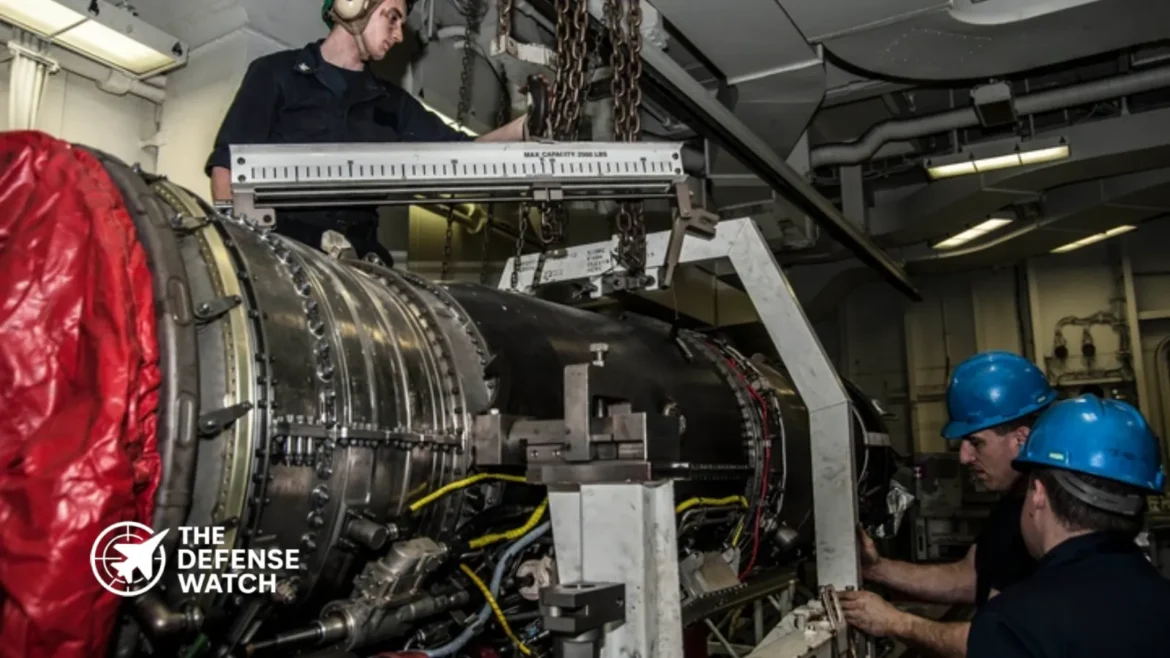
According to reporting by Army Recognition, the US Navy has awarded a contract valued at roughly 10 million dollars for the procurement of 123 intercommunication systems for the E-2D Advanced Hawkeye fleet. The E 2D serves as the Navy’s primary airborne early warning and battle management platform, operating from nuclear powered aircraft carriers across the globe.
While the contract amount may appear modest compared to major airframe or radar upgrades, the operational role of these systems is significant. In high tempo carrier strike group operations, secure and reliable internal communications are essential for mission execution.
Why The Intercom Upgrade Matters
The E 2D Advanced Hawkeye acts as the airborne nerve center of the carrier strike group. It detects and tracks aircraft, cruise missiles, and surface contacts at extended ranges using its AN APY 9 radar and advanced mission systems. It also manages air defense assets and coordinates with fighter aircraft, including the F-35C Lightning II and F/A-18E/F Super Hornet.
In this environment, cockpit and cabin communication clarity is not a secondary issue. It directly affects mission success. The four to five crew members onboard the E 2D must process large volumes of sensor data while coordinating with surface ships, fighters, and joint forces.
Modern intercom systems provide improved audio clarity, reduced interference, and stronger resilience against electromagnetic disruption. As carrier groups face more advanced electronic warfare threats, hardened internal communication systems reduce vulnerabilities.
This contract therefore supports the integrity of the entire air defense network centered around the Hawkeye.
Supporting Carrier Air Wing Readiness
The US Navy E 2D Hawkeye intercom systems purchase also reflects a broader sustainment strategy. The Navy continues to expand and modernize its Advanced Hawkeye fleet, which replaced older E 2C variants over the past decade.
The E 2D’s enhanced radar and mission systems enable Cooperative Engagement Capability operations, allowing sensor data sharing across ships and aircraft. According to the U.S. Navy, the platform is central to integrated air and missile defense and distributed maritime operations.
Upgrading avionics subsystems such as intercom units ensures that legacy components do not become single points of failure. In carrier aviation, reliability rates are closely tied to sortie generation and deployment cycles. Even relatively small subsystems can ground aircraft if not modernized in time.
The contract for 123 units suggests fleet wide distribution, potentially covering both operational squadrons and training aircraft.
Strategic Context: Carrier Defense In A High Threat Era
Carrier strike groups are operating in increasingly contested environments. Peer competitors have invested heavily in long range anti ship cruise missiles, ballistic missiles, and electronic warfare systems designed to disrupt command and control.
In this context, the E 2D is not just a surveillance aircraft. It is the airborne command node that links sensors, shooters, and commanders. Its ability to maintain uninterrupted communications inside the aircraft and across networks is critical.
The US Navy E 2D Hawkeye intercom systems upgrade therefore supports layered defense against complex threats. Improved internal coordination enhances reaction times during saturation attacks or high density airspace operations.
From a doctrinal perspective, the Navy’s Distributed Maritime Operations concept depends on resilient communication architectures. While much attention focuses on satellite links and tactical data networks, internal aircraft systems remain foundational.
Industrial And Contracting Implications
Although Army Recognition reported the award, the Navy routinely issues such avionics contracts through established defense suppliers specializing in aerospace communication systems.
Smaller targeted contracts often receive less public attention than major aircraft procurement deals. However, they represent steady investment in readiness and life cycle management.
Given the E 2D’s projected service life into the 2040s, incremental upgrades will continue to play a key role in keeping the fleet relevant. Sustainment spending ensures that high end assets remain mission capable without requiring costly structural overhauls.
Operational Outlook
The E 2D Advanced Hawkeye currently deploys aboard Nimitz class and Ford class aircraft carriers. As the Navy integrates next generation systems, including advanced networks and unmanned platforms, the Hawkeye’s battle management role is expected to expand.
Ensuring robust onboard communications is a practical but essential step in that evolution.
The US Navy E 2D Hawkeye intercom systems order may not reshape the fleet overnight. But it strengthens the backbone of carrier air defense at a time when operational margins are tightening.
 ■ KEY FACTS AT A GLANCE
- ► The U.S. Missile Defense Agency selected new industry partners for the Golden Dome homeland defense initiative.
- ► Golden Dome is designed as a layered architecture integrating sensors, interceptors, and command networks.
- ► The system is focused on strengthening U.S. homeland defense against advanced missile threats.
- ► The effort aligns with broader Pentagon modernization and integrated air and missile defense priorities.
- ► The program advances distributed sensing and improved interceptor coordination across domains.
Golden Dome Missile Defense Enters A New Phase
The Golden Dome missile defense initiative has moved into a critical implementation stage following the selection of new industry partners to support homeland defense architecture development.
The decision marks more than a routine contract award. It reflects a structural evolution in how the United States intends to defend the homeland against increasingly complex missile threats, including ballistic, cruise, and potentially hypersonic systems.
At a time when Russia continues to modernize its strategic arsenal and China expands both conventional and nuclear missile inventories, Washington is adjusting its defensive posture accordingly. The Golden Dome concept appears designed to integrate sensors, interceptors, and command networks into a more resilient, distributed shield.
This matters now because U.S. homeland defense architecture, historically focused on limited intercontinental ballistic missile threats, is facing a broader spectrum of capabilities.
Operational Impact On U.S. Homeland Defense
The core operational shift behind Golden Dome lies in integration.
For decades, U.S. homeland missile defense has centered on the Ground Based Midcourse Defense system in Alaska and California, designed to counter a limited number of ICBMs. That architecture remains important, but threat trajectories have diversified.
Cruise missiles, depressed trajectory ballistic missiles, and maneuvering hypersonic vehicles complicate detection and tracking timelines. Golden Dome appears aimed at closing these gaps through layered coverage.
By adding new partners, the Missile Defense Agency is likely broadening sensor fusion capacity, interceptor options, or command and control interoperability. That improves resilience. A distributed network reduces single points of failure and increases shot opportunities.
Operationally, that means faster detection, improved tracking quality, and better fire control solutions. In homeland defense, seconds matter. Integrated architecture can determine whether an interceptor is launched with sufficient confidence.
The shift also signals a move toward greater network centric integration across services. Air Force early warning radars, Navy Aegis capabilities, and space based sensors must operate as a coherent whole.
Industrial And Budget Signals
The partner selection carries industrial implications.
U.S. missile defense has traditionally been dominated by a small group of prime contractors. Expanding participation may introduce competitive pressure, new technologies, or niche specialization in areas such as discrimination algorithms, sensor integration, or advanced interceptors.
From a budget perspective, Golden Dome aligns with congressional emphasis on homeland defense modernization. Pentagon budget documents in recent fiscal cycles have consistently highlighted next generation interceptor development and sensor upgrades.
Selecting additional partners suggests the program is transitioning from conceptual planning to tangible architecture development. That often precedes multi year funding commitments.
-
For industry, early positioning in Golden Dome offers long term sustainment and upgrade opportunities. Missile defense systems typically remain in service for decades, with recurring modernization cycles.
Comparison With Competing Architectures
Globally, layered missile defense concepts are not unique.
Israel’s multi tiered system integrates Iron Dome, David’s Sling, and Arrow interceptors into a coordinated defense network. While the threat scale differs, the architectural logic is similar.
Russia and China, meanwhile, are investing heavily in advanced offensive missile systems rather than expansive defensive shields. Moscow has modernized its A 135 and A 235 missile defense systems around Moscow, but these are geographically limited.
The United States, by contrast, is attempting nationwide resilience. Golden Dome appears designed not as a city specific defense, but as a continental shield integrating multiple domains.
This approach is technologically demanding and financially intensive. However, it reflects Washington’s assessment that homeland vulnerability to emerging missile threats is no longer theoretical.
Regional And Global Security Context
The timing of Golden Dome’s advancement intersects with several trends.
China’s rapid expansion of silo based ICBMs and development of fractional orbital bombardment systems has altered strategic calculations. Russia continues to deploy hypersonic glide vehicles and advanced cruise missiles.
North Korea maintains active missile testing programs. Iran is expanding regional missile capabilities.
In this context, U.S. homeland defense credibility supports broader deterrence. If adversaries perceive a higher probability of interception, their cost benefit calculus shifts.
However, missile defense also influences arms race dynamics. Adversaries may respond by increasing warhead numbers or deploying countermeasures designed to overwhelm or evade defenses.
Golden Dome therefore operates within a delicate strategic balance.
What Happens Next
The next phase will likely focus on architecture validation.
That includes integration testing, sensor interoperability trials, and potential interceptor upgrades. Congressional oversight committees will scrutinize cost projections and schedule discipline.
Expect additional contract announcements tied to radar modernization, command network software, or interceptor development.
The long lead element remains discrimination. Accurately distinguishing real warheads from decoys in complex threat environments is one of missile defense’s hardest technical problems. Any Golden Dome partner specializing in this area could significantly influence program effectiveness.
Strategic Assessmen
Golden Dome missile defense represents a reinforcement of U.S. homeland deterrence at a time of expanding peer competition.
From a regional balance perspective, it strengthens North American defensive resilience against limited missile attacks. It does not negate large scale nuclear exchanges, but it complicates limited coercive strike options.
Deterrence implications are nuanced. Improved interception capability raises the threshold for adversaries contemplating a small scale or demonstrative strike. At the same time, it may incentivize investment in saturation tactics or advanced penetration aids.
Budget signals suggest sustained congressional backing for homeland defense modernization. That indicates missile defense will remain a central pillar of U.S. strategic posture alongside nuclear triad modernization.
Alliance dynamics are also affected. A credible U.S. homeland shield reassures allies under extended deterrence umbrellas. It signals that Washington is investing not only in forward deployed forces, but also in defending its own territory.
Escalation risks exist if adversaries interpret expanded missile defense as undermining strategic stability. However, U.S. doctrine continues to frame homeland missile defense as limited and threat specific rather than a shield against major nuclear powers.
In practical terms, Golden Dome reinforces layered defense principles. It improves resilience. It signals seriousness of purpose.
For industry, it opens a new competitive arena. For adversaries, it introduces added uncertainty. For allies, it strengthens confidence in U.S. commitment.
That combination explains why this partner selection matters now.
KEY FACTS AT A GLANCE■ KEY FACTS AT A GLANCE- ► $10,282,459 cost-plus-fixed-fee contract modification awarded
- ► Supports JASSM Increased Inventory Integrated Production Team tooling and test equipment
- ► Total contract value rises to $409,832,456
- ► Work performed in Orlando, Florida
- ► Completion expected by Aug. 29, 2029
- ► Contracting activity: Air Force Life Cycle Management Center, Eglin AFB
Lockheed Martin JASSM Contract Modification Expands Production Capacity
The Lockheed Martin JASSM contract modification is adding $10.3 million to support production tooling and test equipment for the Joint Air-to-Surface Standoff Missile, according to a U.S. Department of Defense contract announcement.
The award, issued to Lockheed Martin Missiles and Fire Control in Orlando, Florida, modifies a previously awarded contract tied to the JASSM Increased Inventory Integrated Production Team, or IPT. The cost-plus-fixed-fee modification, identified as P00027, raises the cumulative contract value to $409,832,456, up from $399,549,997.
The contracting activity is the Air Force Life Cycle Management Center at Eglin Air Force Base.
Contract Details
The $10,282,459 modification supports tooling and test equipment required to sustain and expand production of the Joint Air-to-Surface Standoff Missile. Work will be performed in Orlando, Florida, and is expected to conclude by Aug. 29, 2029.
The contract falls under FA8682-19-C-0008, a long-running effort to increase missile inventory levels in response to sustained operational demand and evolving force structure requirements.
The Joint Air-to-Surface Standoff Missile, commonly known as JASSM, is a long-range, precision-guided cruise missile designed to strike high-value, well-defended targets. Developed by Lockheed Martin, the missile is a core element of U.S. Air Force deep strike capability.
According to the U.S. Air Force, JASSM provides a low-observable, fire-and-forget capability with a range exceeding 200 nautical miles in its baseline form. The extended-range variant, JASSM-ER, significantly increases that reach and is integrated across multiple U.S. aircraft platforms.
Supporting Increased Inventory Requirements
The Lockheed Martin JASSM contract modification aligns with broader Department of Defense efforts to expand precision munition stockpiles. Recent conflicts and global contingency planning have underscored the importance of maintaining sufficient inventories of long-range strike weapons.
The Increased Inventory IPT framework focuses on production scalability, industrial base resilience, and delivery timelines. Tooling and test equipment upgrades are critical to ensuring consistent output rates and quality control as production volumes rise.
The U.S. Air Force has identified long-range precision strike as a key component of its operational concepts, including Agile Combat Employment and distributed operations. JASSM is integrated on aircraft such as the F-15E Strike Eagle, F-16 Fighting Falcon, B-1B Lancer, and B-52H Stratofortress, according to official Air Force fact sheets.
Expanding production infrastructure now supports projected procurement profiles through the end of the decade.
Industrial Base And Strategic Context
The Lockheed Martin JASSM contract modification also reflects sustained investment in the U.S. defense industrial base. By funding tooling and testing capabilities, the Air Force is addressing potential bottlenecks that could slow missile deliveries in future surge scenarios.
Orlando, Florida, remains a major hub for Lockheed Martin Missiles and Fire Control operations. The site supports multiple precision strike and missile defense programs, contributing to both domestic and international customer requirements.
The Air Force Life Cycle Management Center at Eglin Air Force Base oversees cradle-to-grave management of numerous air-delivered weapons programs. Its role includes contracting, sustainment planning, modernization, and capability upgrades.
As global demand for stand-off precision weapons continues, maintaining reliable production lines is viewed as essential to deterrence and operational readiness.
KEY FACTS AT A GLANCE■ KEY FACTS AT A GLANCE- ► $25 million sole-source contract awarded to Liquid Robotics Inc.
- ► Procurement of 20 commercial unmanned surface vehicles.
- ► Includes control software, payloads, and launch and recovery equipment.
- ► Work performed in Herndon, Virginia, through Feb. 16, 2028.
- ► Contract supports Foreign Military Sales to Japan.
- ► Air Force Test Center at Eglin Air Force Base is the contracting activity.
Liquid Robotics Awarded $25M Contract For 20 Unmanned Surface Vehicles
The US Department of Defense has awarded a $25 million contract to Liquid Robotics Inc. for the procurement of 20 commercial unmanned surface vehicles under a Foreign Military Sales agreement with Japan.
According to the official contract announcement, the award covers not only the unmanned surface vehicles but also associated control software, payload integration, and peripheral launch and recovery equipment. Work will be performed in Herndon, Virginia, with completion expected by Feb. 16, 2028.
The contract was issued by the Air Force Test Center at Eglin Air Force Base under contract number FA2823-26-C-0006.
Sole-Source Award Supporting Japan FMS
The $25 million contract was awarded on a sole-source basis. Funding will come from fiscal 2026 research, development, test and evaluation funds, along with fiscal 2026 Foreign Military Sales funds. The full contract value will be obligated at the time of award.
This procurement falls under the US Foreign Military Sales framework, a government-to-government mechanism managed by the Department of Defense that enables partner nations to acquire US defense equipment and services. Japan remains one of the United States’ closest security allies in the Indo-Pacific region.
Scope: Vehicles, Software, Payloads
The Liquid Robotics contract includes:
- 20 commercial unmanned surface vehicles
- Control software systems
- Mission payload integration
- Launch and recovery support equipment
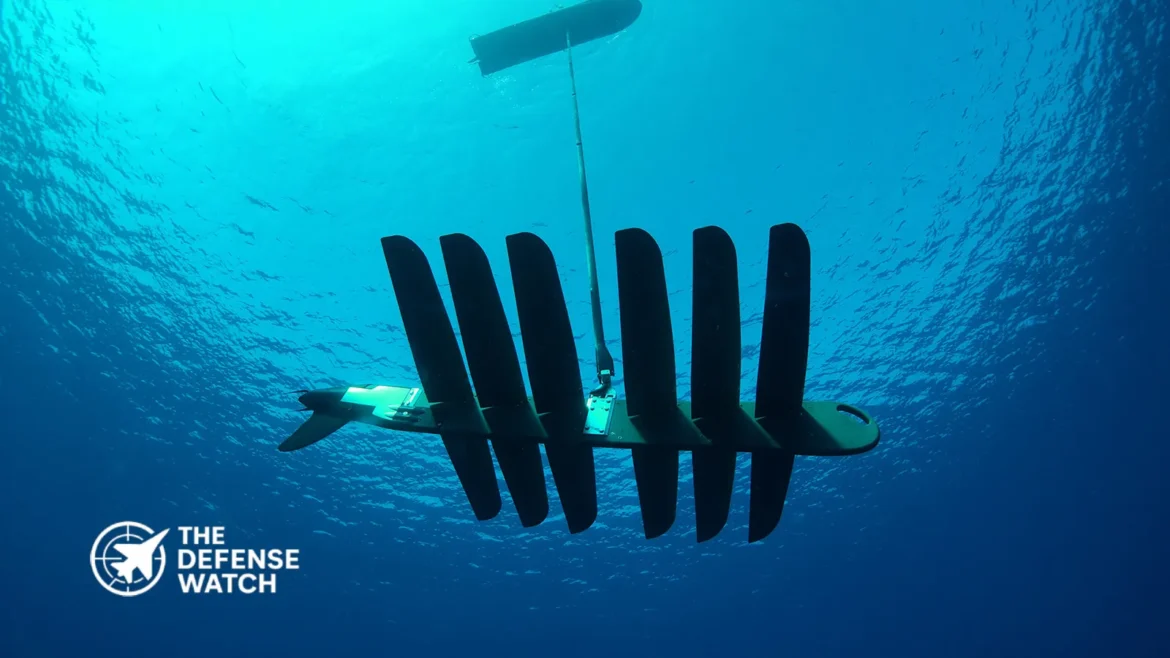
While the specific configuration for Japan was not disclosed in the announcement, Liquid Robotics is widely known for its Wave Glider family of long-endurance unmanned surface platforms. These systems use wave-powered propulsion combined with solar energy to support persistent maritime surveillance and data collection missions.
The inclusion of control software and payload support suggests the vehicles will be tailored to Japan’s operational requirements, potentially supporting maritime domain awareness, oceanographic research, or security monitoring tasks.
Growing Role Of Unmanned Surface Vehicles
Unmanned surface vehicles are playing an expanding role in maritime operations worldwide. They provide persistent coverage without placing crew at risk and can operate for extended periods with limited logistical support.
For Japan, an island nation with vast exclusive economic zones and increasing maritime security demands, unmanned surface vehicles offer a cost-effective way to enhance surveillance and data collection across wide areas of ocean.
The United States and Japan have steadily expanded defense cooperation in recent years, including joint exercises, advanced weapons procurement, and technology collaboration. This Liquid Robotics contract underscores the continued integration of unmanned and autonomous systems into allied maritime strategies.
Strategic Context
The Indo-Pacific region has seen heightened attention on maritime security, freedom of navigation, and protection of sea lanes. While the Department of Defense did not provide mission-specific details, unmanned surface vehicles are commonly used for:
- Intelligence, surveillance, and reconnaissance
- Anti-submarine warfare support
- Environmental and oceanographic monitoring
- Communications relay
By leveraging commercial unmanned surface vehicle technology, the Japan FMS program may accelerate deployment timelines while reducing acquisition risk.
Contract Timeline And Execution
All work under the contract will take place in Herndon, Virginia, the company’s primary operational base. Completion is scheduled for early 2028.
The award aligns with broader US efforts to integrate autonomous maritime systems across services and allied networks. The Air Force Test Center’s involvement reflects the cross-domain application of emerging technologies, including evaluation, testing, and integration support for partner nations.
As unmanned systems continue to shape modern maritime operations, the Liquid Robotics contract highlights the growing demand for long-endurance, commercially derived platforms within allied security frameworks.
■ KEY FACTS AT A GLANCE- ► Contractor: General Electric, Lynn, Massachusetts.
- ► Contract value: $20,085,584 firm-fixed-price delivery order.
- ► Scope: Repair of 16 F404 engine components, totaling 275 repairs.
- ► Completion date: December 2027.
- ► Contracting activity: Naval Supply Systems Command Weapon Systems Support, Philadelphia.
US Navy Awards $20M F404 Engine Repair Contract To General Electric
The US Navy has awarded a $20,085,584 F404 engine repair contract to General Electric in Lynn, Massachusetts, to support sustainment of the F404 turbofan engine fleet.
According to a Department of Defense contract announcement, the firm-fixed-price delivery order covers the repair of 16 different F404 engine components, totaling 275 individual repairs. Work will be performed in Lynn, Massachusetts, and is expected to be completed by December 2027.
The award was issued under a previously established basic ordering agreement and does not include an option provision.
Contract Structure And Funding
The F404 engine repair contract was issued under a previously awarded basic ordering agreement, identified as N00383-22-G-TF01. The new delivery order, N00383-26-F-TF04, is structured as a firm-fixed-price arrangement, meaning the total cost is set at award.
Fiscal 2026 working capital funds from the Navy, totaling $20,085,584, were obligated at the time of award. The funds will not expire at the end of the current fiscal year.
The contracting activity is Naval Supply Systems Command Weapon Systems Support, based in Philadelphia, Pennsylvania. This office manages supply chain and sustainment support for naval aviation platforms and propulsion systems.
The requirement was pursued on a sole-source basis under the authority of 10 U.S. Code 3204(a)(1), which allows for contracting without full and open competition when only one responsible source can meet agency requirements. One offer was solicited and received.
F404 Engine Fleet Sustainment
The F404 turbofan engine powers several frontline fighter aircraft, most notably the Boeing F/A-18 Hornet and variants of the Boeing F/A-18 Super Hornet. The engine is also used in international platforms such as the KAI T-50 Golden Eagle.
With hundreds of F404 engines in service globally, component repair contracts play a central role in maintaining operational readiness. Depot-level maintenance and component refurbishment extend engine life cycles, reduce replacement costs, and support fleet availability.
General Electric, headquartered in the United States, has long served as the original equipment manufacturer for the F404 series. Sustainment contracts like this one ensure continued access to technical data, proprietary parts, and certified repair processes required to meet naval aviation safety and performance standards.
Broader Context In Naval Aviation Sustainment
The award underscores the Navy’s ongoing investment in propulsion sustainment amid high operational tempo and aging aircraft inventories. While the Navy continues to modernize its carrier air wings with newer platforms, legacy F404-powered aircraft remain active across training and operational units.
Firm-fixed-price repair contracts provide cost predictability for the service while securing specialized industrial base capacity. Lynn, Massachusetts, remains a critical site for F404 engine production, overhaul, and repair activities.
As the Navy balances modernization with readiness, sustainment awards such as this F404 engine repair contract form a steady component of its aviation budget strategy.
■ KEY FACTS AT A GLANCE- ► $73,528,916 firm fixed price Merkava Power Pack contract awarded to Rolls-Royce Solutions America.
- ► Supports Israel under Fiscal Year 2026 Foreign Military Sales funding.
- ► Includes full and lite power pack kits, metal containers, and engineering technical services.
- ► Work to be performed in Graniteville, South Carolina, through December 31, 2032.
- ► Total cumulative program face value reaches $462,947,478.
US Awards $73.5M Merkava Power Pack Contract To Rolls-Royce Solutions America For Israel
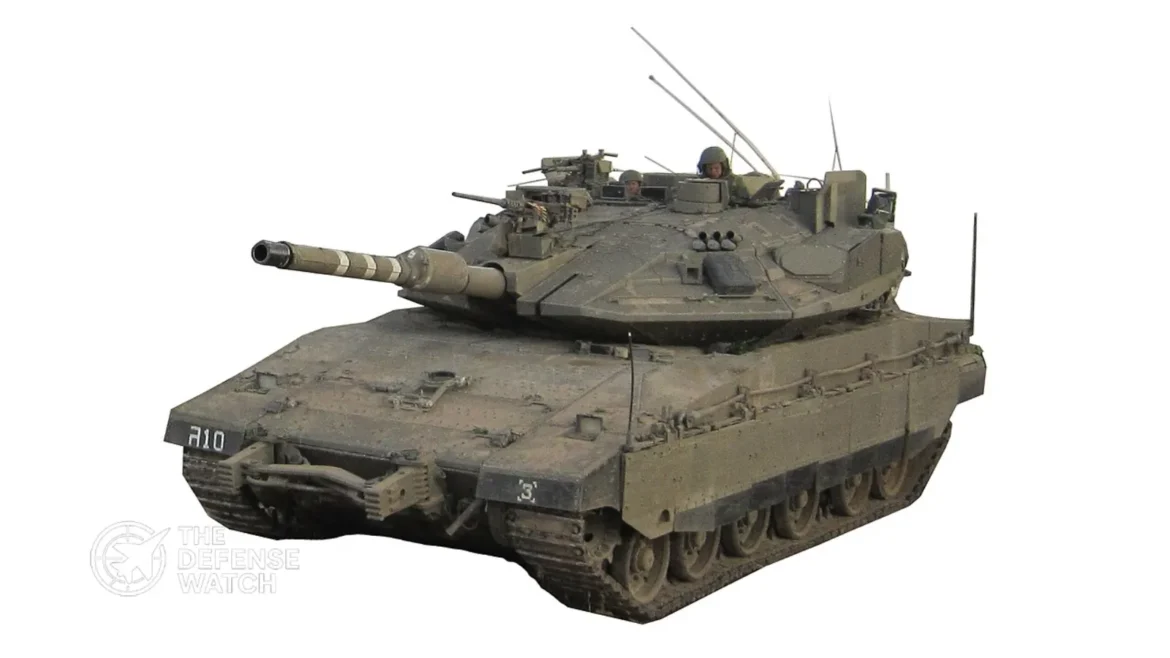
The US Department of Defense has awarded a $73,528,916 Merkava Power Pack contract to Rolls-Royce Solutions America Inc., Novi, Michigan, for Israel under the Foreign Military Sales program.
According to the official contract announcement, the firm fixed price award covers the procurement of Merkava Power Pack Less Transmission full and lite kits, metal containers, and contractor engineering technical services. The total cumulative face value of the broader program stands at $462,947,478.
The contract was issued by Army Contracting Command, Detroit Arsenal, Michigan.
Contract Scope And Funding Details
The $73.5 million award supports Israel’s Merkava armored vehicle fleet through the provision of power pack components and associated technical services. Work will be performed in Graniteville, South Carolina, with an estimated completion date of December 31, 2032.
Fiscal Year 2026 Foreign Military Sales funds for Israel in the full amount of $73,528,916 were obligated at the time of award, meaning the contract is fully funded from the outset.
The contracting activity is identified as Army Contracting Command, Detroit Arsenal, under contract number W912CH-26-C-0019.
Supporting Israel’s Merkava Fleet
The Merkava Power Pack contract directly supports sustainment and operational readiness of Israel’s domestically produced Merkava main battle tanks. The Merkava series, developed by Israel, is designed for survivability, mobility, and rapid battlefield repair.
The power pack forms a critical subsystem within armored platforms, integrating engine and related components necessary for propulsion and battlefield maneuverability. Sustaining these systems is central to maintaining armored force readiness.
Through the Foreign Military Sales framework, the United States facilitates procurement of US-origin defense equipment and services for allied nations. Israel remains one of the largest and most consistent FMS partners.
Industrial Base And Long-Term Sustainment
The award highlights the continued role of US industry in supporting allied armored vehicle fleets. Production and services under the contract will take place in Graniteville, South Carolina, reinforcing the US defense industrial base while fulfilling allied requirements.
The broader cumulative ceiling value of $462.9 million indicates this is part of a larger, multi-year sustainment effort tied to Israel’s armored vehicle programs.
The Merkava Power Pack contract structure as firm fixed price provides cost certainty to the government, while the long period of performance through 2032 reflects the long-term sustainment nature of the effort.
US-Israel Defense Cooperation
The award underscores the depth of US-Israel defense cooperation, particularly in ground combat systems sustainment. Under the Foreign Military Sales system, the US government acts as the intermediary, managing procurement, contracting, and delivery.
Israel’s armored forces rely heavily on the Merkava platform as a core component of its ground maneuver capability. Sustainment contracts such as this ensure continued operational availability and lifecycle support.
While the Department of Defense did not provide additional technical details regarding quantities of kits or specific variants supported, the contract documentation confirms engineering technical services are included, suggesting ongoing technical assistance and integration support.
Why This Contract Matters
The Merkava Power Pack contract reflects the ongoing focus on sustainment rather than new platform acquisition. For armored forces, propulsion systems are among the most maintenance intensive components. Ensuring steady supply of kits and engineering services reduces downtime and supports operational readiness.
For US industry, the award reinforces the role of American companies in providing long term lifecycle support to allied armored fleets. For Israel, it ensures continued access to critical propulsion subsystems under a structured, government managed procurement process.
As geopolitical tensions remain high across the Middle East, armored mobility and readiness remain core to ground force deterrence and operational planning.
France Offers Upgraded FDI Frigate To Saudi Arabia With French MPLS Instead Of U.S. RAM System
France has offered an upgraded FDI frigate to Saudi Arabia, replacing the U.S.-made Rolling Airframe Missile system with a French MPLS air defense solution, according to a report.
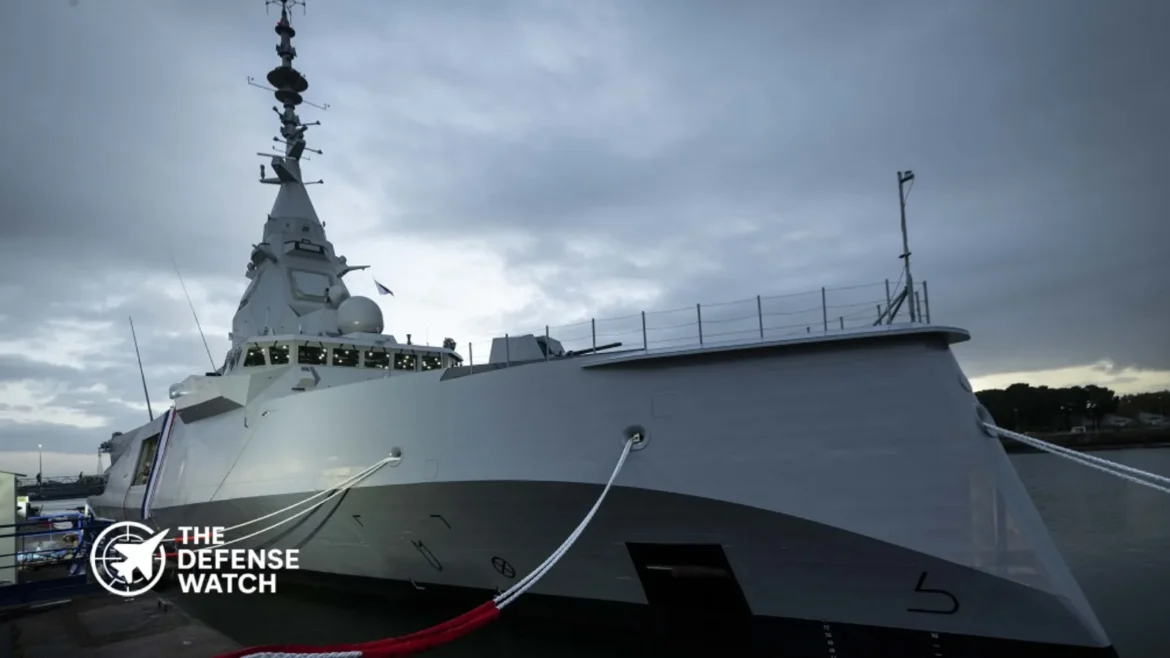
The proposal centers on the Frégate de Défense et d’Intervention, or FDI frigate, developed by Naval Group for the French Navy. The variant presented to Riyadh would integrate a French close-in missile launcher in place of the U.S.-built Rolling Airframe Missile system typically installed on export configurations.
The move signals Paris’ intent to provide a more sovereign, fully French naval air defense package tailored to Saudi operational requirements.
A Modified FDI Configuration
The FDI frigate, also known as the Belh@rra class, is a 4,500 ton multi-mission surface combatant designed for anti-air, anti-submarine, and anti-surface warfare. It features the Thales Sea Fire active electronically scanned array radar, a digital combat management system, and vertical launch systems capable of deploying Aster surface-to-air missiles.
In its standard export configuration, the FDI frigate integrates the RAM system as a close-in air defense layer. However, France’s offer to Saudi Arabia replaces that system with a French MPLS launcher, ensuring the ship’s short-range air defense capability remains fully sourced from domestic suppliers.
While detailed specifications of the MPLS configuration for Saudi Arabia have not been publicly disclosed, the concept aligns with France’s broader defense industrial policy of promoting sovereign solutions through its domestic defense base.
Strategic Context For Saudi Naval Modernization
Saudi Arabia has been pursuing an extensive naval modernization program aimed at strengthening maritime security in the Red Sea and the Arabian Gulf. The Royal Saudi Navy operates a mix of Western-designed surface combatants, including vessels supplied by the United States and Europe.
The FDI frigate proposal positions France as a key contender in future Saudi naval procurement efforts. The French defense industry has longstanding ties with Riyadh, including previous naval and aerospace contracts.
Replacing the RAM system with a French MPLS solution may also simplify export approvals and reduce dependency on U.S. Foreign Military Sales processes. The RAM system is jointly developed by Raytheon and MBDA, and its export requires U.S. government authorization.
By offering a fully French configuration, Paris could streamline negotiations while strengthening its position in a competitive defense market.
Capabilities Of The FDI Frigate
The FDI frigate is designed as a next-generation digital warship, incorporating advanced automation and cyber-resilient architecture. Key features include:
- Thales Sea Fire AESA radar with 360 degree coverage
- Aster 15 and Aster 30 surface-to-air missiles
- Anti-submarine warfare suite with hull-mounted and towed sonar
- Anti-ship missile capability
- Hangar and flight deck for medium naval helicopters
The platform’s modular design allows customization based on customer requirements, including combat system configuration and weapons integration.
The French Navy’s own FDI ships are scheduled to enter service this decade, reinforcing confidence in the design’s maturity. Greece has also ordered FDI frigates, further validating the export model.
Broader Defense Industrial Implications
France’s decision to propose a French MPLS in place of the RAM system reflects a broader trend toward strategic autonomy in defense exports. Paris has consistently promoted integrated, nationally controlled solutions to international customers.
For Saudi Arabia, the offer provides an alternative to U.S.-centric naval systems while maintaining access to high-end European naval technology.
Any final contract would depend on negotiations between Riyadh and Paris, including industrial participation, technology transfer, and long-term support arrangements.
As regional maritime threats evolve, advanced frigate platforms such as the FDI remain central to force modernization strategies across the Middle East.
-