


Mexican Air Force Begins F-5 Replacement Push At Tulum Air Show 2026
The Mexican Air Force (Fuerza Aérea Mexicana, FAM) has formally launched a plan to retire its legacy Northrop F-5E/F Tiger II fighters and acquire a new fleet of combat aircraft by 2028, officials said at the Tulum Air Show 2026.
FAM commander General Román Carmona Landa told Janes that the F-5s, long the service’s primary supersonic fighters, represent the air arm’s highest capability but are based on dated technology. In response, the service is pursuing 12 new fighters to restore and enhance its air defence, reconnaissance and ground attack capacity.
- The Mexican Air Force has begun replacing its Northrop F-5E/F Tiger II fighters and is seeking 12 new combat aircraft by 2028.
- FAM commander Gen Roman Carmona Landa said the F-5 is outdated and replacements must handle air defence, reconnaissance and ground attack missions.
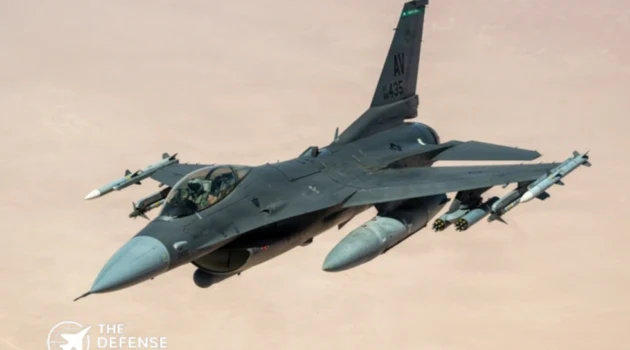
- Aircraft under review include the F-16, Gripen, FA-50 and M-346.
- Mexico is also acquiring C-130J-30 transports, UH-60M helicopters and King Air 360 aircraft as part of wider modernization.
- The Tulum Air Show 2026 highlighted Mexico growing aerospace and defence engagement.
Short, aging platforms such as the F-5 have limited sensor and weapons capacity compared with fourth-generation and advanced light combat jets in production today. The planned replacement is a key step in modernising Mexico’s air combat force and aligning its capabilities with regional defence demands.
Options Under Consideration
At Tulum Air Show 2026, FAM officials outlined a broad set of candidates under review for the new fighter fleet. These include established fourth-generation types such as the Lockheed Martin F-16 and Saab Gripen and lighter combat aircraft like Korea Aerospace Industries FA-50 and the Italian Leonardo M-346 fighter-attack variant.
The F-16 is widely operated globally and features modern avionics and weapons systems. The Gripen offers networked sensor fusion and multi-role capability tailored to versatile missions. Light multirole jets such as the FA-50 and M-346 combine pilot training tasks with combat roles, though typically with more constrained performance.
FAM has not publicly detailed selection criteria or a preferred platform, but emphasised the need for a balanced mix of air defence and strike capability. Procurement decisions are expected in the coming months as Mexico advances its modernisation roadmap.
Broader Modernisation Plans
Alongside the fighter initiative, Mexico is progressing other key defence acquisitions. FAM is acquiring two Lockheed Martin C-130J-30 transport aircraft, which will bolster strategic airlift capacity, and 11 Sikorsky UH-60M utility helicopters to enhance mobility and support operations. The service also plans to field three Beechcraft King Air 360 platforms and new remotely piloted aircraft systems alongside ground-based air surveillance radars.
These moves follow a series of recapitalisation efforts since 2013, including Beechcraft T-6C+ Texan II tactical support aircraft and UH-60M helicopters to replace older support assets.
Strategic And Regional Context
The Tulum Air Show 2026 has drawn attention as both a public aerospace showcase and a defence policy forum, bringing civilian and military stakeholders together to discuss technology trends and procurement strategies. Organisers emphasised the event’s role in growing Mexico’s aerospace sector and strengthening engagement with industry and international partners ahead of the next major aerospace fair in 2027.
Analysts note that modern multi-role fighters could improve Mexico’s ability to coordinate airspace defence with regional partners, including the United States and Canada, and provide more credible deterrence against evolving threats. While Mexico’s defence budget remains constrained relative to larger air forces, targeted purchases of capable, widely supported platforms could deliver measurable improvements.



UK Defence Procurement Rejects US-Style Scheme in Latest Policy Update
The UK Ministry of Defence confirmed the government has no plans to adopt a US-style defence procurement scheme, including creating a cadre of former defence industry executives embedded in acquisition roles, while continuing its own reform agenda.
In a written response to Parliament on February 5, Defence Minister Luke Pollard addressed a question from Conservative MP Ben Obese-Jecty on whether the UK had assessed adopting the United States military business operators for national defence model. Pollard stated the MoD will not recruit a dedicated group of former industry executives as part of its acquisition leadership.
Pollard noted the MoD recognizes the value of private sector experience and industry insight but says current reform measures aim to drive change through existing UK-specific structures. He highlighted the appointment of Rupert Pearce as the UK National Armaments Director, bringing extensive cross-sector leadership experience to help modernize procurement.
Reforms Focus on Segmented Procurement and Industry Engagement
The UK government has been reshaping its defence acquisition system to address long-standing challenges around cost, timeliness, and industrial engagement. In policy statements over the past year, the Ministry has outlined a segmented approach to procurement supported by new commercial pathways intended to accelerate contracting and improve value for money.
This approach is aimed at allowing programmes to reach contract faster and be more adaptable to capability needs. Pollard noted the MoD is working toward an April 1, 2026 target to establish the segmented model across defence procurement.
Previous updates from the MoD also included action plans to boost SME access to defence contracts and create new pathways such as Spiral, Urgent, Design to Cost, Digital and Technology, and Low Complexity Procurement. These measures are part of wider Defence Industrial Strategy implementation to link acquisition reforms with broader industrial base resilience.
National Armaments Director and Industry Roles
Pearce’s role as National Armaments Director (NAD) was established under reforms aimed at centralizing strategic direction within the Ministry. The position is tasked with steering cross-departmental procurement priorities, with the goal of reducing waste and aligning acquisition with strategic defence needs.
Pollard also confirmed the MoD is running a competition for a Director General, UK Defence Innovation position, open to applicants from inside and outside the civil service. This move underscores the department’s intent to bring in diverse expertise without adopting the formal US business operator model.
Context of Broader Procurement Reform
UK officials are responding to criticism that the current acquisition system struggles with timeline delays and cost growth. Parliamentary hearings in early February highlighted calls for the defence establishment to move beyond legacy “steel-era procurement” models toward more agile, software and technology-driven approaches.
The Procurement Act 2023 also underpins changes to how defence contracts are awarded and regulated, replacing older EU-linked frameworks and adding flexibility for single-source contracting where required.
What This Means for Transatlantic Defence Links
Although the UK has ruled out adopting a US-style procurement cadre at this time, defence industrial cooperation between the United Kingdom and the United States remains strong through bilateral programmes and alliance frameworks such as AUKUS and NATO interoperability initiatives.
By emphasizing UK-driven reform, London is signalling its preference for homegrown solutions tailored to its defence industrial base, while continuing to engage with allies on capability development and joint procurement where interests align.

UK MOD Launches Defence Office for Small Business Growth to Boost SME Contract Wins
The UK Ministry of Defence has established a new Defence Office for Small Business Growth to help small and medium-sized enterprises win more defence contracts and expand their role in the national security supply chain, UK officials announced.
New SME Support Office Targets Contract Access Challenges
The Defence Office for Small Business Growth (OfSBG) is designed to ease longstanding barriers for small firms in defence procurement, including slow, complex bidding processes and limited transparency, according to UK Government reporting.
Defence Readiness and Industry Minister Luke Pollard made the announcement as part of a broader push to raise Ministry of Defence (MOD) spending with SMEs. Under current plans, the UK Government aims to increase annual SME defence spending from about £5 billion to £7.5 billion by 2028.
The new office will employ policy and commercial specialists tasked with advising small businesses on bidding, improving contract outcomes and simplifying access to defence opportunities. A public-facing portal and contact centre will provide guidance on procurement and tendering processes.
Officials said the initiative responds to industry feedback that defence contracting can be difficult for smaller firms to navigate, particularly around complex requirements and fragmented information.
Support for SMEs Is Part of Broader Industrial Strategy
The Defence Office for Small Business Growth is part of recent UK defence sector reforms that aim to strengthen industrial resilience and economic impact. The UK Strategic Defence Review and Defence Industrial Strategy both emphasize greater inclusion of SMEs in defence supply chains and improved market access.
A revised SME Commercial Pathway is intended to break larger procurements into smaller contracts, improve payment terms and reserve some opportunities specifically for smaller companies.
The initial phase of the office will support around 30 pathfinder SMEs across sectors including cyber, engineering and aeronautics. Officials say that pilot group will help refine processes before wider rollout.
Geographical and Sector Impact
Minister Pollard highlighted that the move benefits firms across the UK, with a focus on spreading defence opportunity beyond traditional defence hubs. The office’s outreach includes businesses in Scotland, Wales, Northern Ireland and England.
Scottish Secretary Douglas Alexander noted the potential for the office to bolster regional economies where defence spending already supports thousands of jobs.
The office’s work aligns with other Government measures to stimulate smaller business growth within defence, such as the “Back British” industry initiative that aims to leverage defence investment to boost UK jobs and supply chains.
Why It Matters
SMEs have historically struggled to compete for defence contracts against larger primes due to complexity of requirements and lack of dedicated support. Improving SME access is seen as a way to increase competition, enhance innovation, and diversify the defence industrial base, while contributing to wider economic and security goals.
This initiative also fits within the UK’s broader defence investment planning, which seeks to balance military capability with industrial growth and job creation across sectors that include aerospace, cyber, and advanced manufacturing.

UK Ministry of Defence Says Project Grayburn to Span Pistols Through Machine Guns
The United Kingdom’s Ministry of Defence (MOD) has confirmed that Project Grayburn, the British Army’s future small arms programme, will extend beyond replacing just the service rifle to cover a full range of infantry weapons — from pistols to machine guns.
In written parliamentary answers, Defence Minister Luke Pollard reiterated that Grayburn remains in its concept phase and has not yet progressed to formal design selection or production decisions. However, the expanded scope marks a broader effort to modernise the Army’s close combat weapons portfolio under a unified framework.
Broader Scope Than Initially Publicised
Under the current structure, Grayburn is being shaped to encompass a variety of weapon types — not limited to a next-generation service rifle. Early concept work is considering multiple variants built on a common architecture that could include:
- Standard dismounted close combat rifle (intended SA80 replacement)
- Short-barrel variants
- Personal defence weapons to replace the current L22 carbine
- Generalist rifles
- Cadet weapons replacing the L98 family
Decisions on configurations such as barrel lengths and role-specific performance thresholds will be determined later in the concept phase, with user roles and expected engagement profiles guiding differentiation.
Industrial Strategy and Sovereign Supply
Pollard emphasised that a key objective is to generate skilled employment and sovereign manufacturing capability in the UK, consistent with the Defence Industrial Strategy. While the MOD has not committed to the exact level of domestic production, the focus on industrial resilience remains central as the programme evolves.
Earlier industry engagement notices under the Grayburn umbrella have highlighted the Ministry’s intent to replace the SA80 family ahead of its projected out-of-service date around 2030. Concept work is also driven by lessons from recent conflicts, including the need to defeat modern body armour and integrate advanced optics and night-vision systems.
Operational Enablers and Technology Integration
Officials have indicated that beyond lethality improvements, the programme is examining signature reduction technologies and the potential for long-term spiral development rather than single procurement events. A strategic supplier relationship, rather than discrete contracts for individual systems, is under consideration to maintain a sustained partnership with industry.
Strategic Context
Project Grayburn stands as one of the most significant British small arms modernisation efforts in decades, aiming to replace the decades-old SA80 service rifle while broadening the capability envelope across the infantry weapons suite. According to summaries of the initiative, the programme could influence up to 150,000–180,000 future small arms systems and has considered a range of calibres and modular designs — reflecting evolving NATO standards and battlefield requirements.
What’s Next
Despite the expanded scope and ongoing industrial discussions, no final design, supplier, or formal acquisition contract has yet been announced. MOD documentation indicates that further industry engagement is anticipated as the concept phase progresses, with future notices expected to outline evaluation and assessment timelines.

UK Military Data Sovereignty Reaffirmed Under Palantir Deal
The UK government has reaffirmed that UK military data sovereignty remains fully protected under its contract with U.S. data analytics firm Palantir, amid renewed political and public scrutiny over foreign involvement in sensitive defense systems.
In a statement to Parliament, the Ministry of Defence said all military data handled under the Palantir agreement remains under UK control, with strict contractual and technical safeguards preventing unauthorized access by foreign governments or third parties.
Government Responds to Sovereignty Concerns
The clarification follows questions raised over whether U.S. companies such as Palantir could be compelled under American law to provide access to UK defense data. The MoD stated that the agreement explicitly ensures UK data remains sovereign, governed by British law, and managed in accordance with national security requirements.
Officials emphasized that Palantir provides software and technical services only, without ownership or control over the data itself. The MoD retains full authority over how data is stored, processed, and accessed across UK defense networks.
Data Hosting and Legal Safeguards
According to the government, defense data linked to the Palantir contract is hosted in secure environments approved by the UK, with access restricted to authorized British personnel. The MoD said contractual terms prevent Palantir from transferring, copying, or accessing data outside agreed parameters.
The government also noted that UK defense data is protected from extraterritorial legislation, including U.S. data access laws, through legal safeguards built into the contract structure.
Growing Role of Data Analytics in UK Defense
Palantir’s software has been used by the UK government across several departments, including during pandemic logistics planning. Within defense, data integration and analytics tools are increasingly central to operational planning, logistics coordination, and decision support.
The MoD said partnerships with commercial technology firms are essential to modernizing military capabilities, but stressed that sovereignty, security, and accountability remain non negotiable.
Political and Strategic Context
The issue of military data sovereignty has become more prominent as allied nations expand cooperation with private technology companies, particularly those based in the United States. Lawmakers across parties have called for transparency on how defense data is handled, especially when contracts involve artificial intelligence and large scale data platforms.
The MoD said it remains confident the Palantir agreement meets UK security standards and aligns with broader defense digital modernization efforts.

The UK Ministry of Defence has issued a new industry notice expanding work on Project Grayburn rifle replacement, outlining key characteristics and industry engagement as Britain prepares to replace the SA80 service rifle.
The Ministry of Defence has provided updated guidance to industry on Project Grayburn, the long-running programme to find a replacement for the British Army’s SA80A3 rifle. The move follows earlier public acknowledgements that the initiative remains in a concept phase focused on defining capability requirements and shaping future procurement.
The procurement pipeline notice from Defence Equipment and Support reinforces that no final investment decisions have been made, but it expands the scope of work being considered under Grayburn. The document highlights an emphasis on UK manufacture to strengthen sovereign supply chains, support skilled employment, and offer a platform with export potential.
Officials noted that Project Grayburn will explore a family of weapons built around a common lower receiver with multiple variants. Planned configurations include a standard dismounted close combat rifle to succeed the SA80A3, a shorter close combat variant, a personal defence weapon to replace the L22 carbine, a generalist rifle to replace the SA80A2, and a cadet rifle for training units.
The MoD also identified performance priorities likely to shape requirements. These include the ability to defeat contemporary and emerging body armour, integration with day optics and in-line night vision systems, signature reduction features on select variants, and a high degree of reliability across diverse climates and environments.
Indicative contract dates in the notice run from 2028 to 2045, but the MoD stressed these are not commitments to enter production at those points. A further information notice is expected as the concept phase progresses toward formal industry engagement.
Project Grayburn reflects broader efforts by the UK to modernize infantry small arms after decades of service by the SA80 family. Previous ministerial statements indicated the replacement programme aims to advance beyond early concept work, with details expected to be fleshed out in the Defence Investment Plan later this year.

UK Workboat Contract Draws Scrutiny After £200m Award Abroad
A major trade union and UK lawmakers are calling for a review of the UK workboat contract after a £200 million deal for Royal Navy support vessels was awarded to a Dutch shipbuilder, raising concerns about defence procurement and domestic shipbuilding roles.
The contract covers the construction of 24 vessels including tugs, pilot boats and crane barges under the Defence Maritime Services (DMS) replacement programme. The union says UK yards were not invited to compete and that this runs counter to the government’s National Shipbuilding Strategy, which aims to support local industry.
Union Pushes for Review of Contract Structure
GMB Scotland wrote to Defence Secretary John Healey and Scotland Secretary Douglas Alexander urging a review of how the workboat contract was awarded to Damen Shipyards by prime contractor Serco. The union argues that the arrangement allowed Serco to select an overseas yard without meaningful engagement with UK industry or trade unions.
Union leaders also noted that Royal Navy bases at Clyde, Devonport and Portsmouth will rely on the new vessels, yet UK yards capable of building similar craft were apparently not approached. They said this created risks for domestic jobs, skills retention and apprenticeships, particularly at yards such as Ferguson Marine in Port Glasgow.
Political Reaction and National Shipbuilding Strategy
Scottish Labour MSP Paul Sweeney echoed the union’s concerns, saying the award ran counter to stated policy goals to maximize UK yard involvement. He pointed to the timing of the award as especially damaging for yards facing uncertain workloads.
Sweeney urged ministers to renegotiate aspects of the deal to secure UK build work or significant UK subcontracting, suggesting the model used for the Mersey Ferry programme could provide a precedent.
Contract Background
The order for 24 vessels was placed by Serco as part of its wider maritime services contract at key Royal Navy ports. Industry reporting notes that the work includes a mix of tugboats and small craft to be delivered in 2027 and 2028.
The Ministry of Defence and Serco have previously said the contract terms allow Serco to develop its own supply chain, and that ongoing monitoring addresses potential risks associated with the vessel builder.

the Azerbaijan Air Force officially inducted its first batch of the JF‑17 Block III multirole fighters, acquired from Pakistan Aeronautical Complex (PAC) in partnership with Chengdu Aircraft Corporation. The induction occurred during Azerbaijan’s Victory Day parade in Baku, where several of the jets performed a fly-over, symbolizing their entry into service.
Background
The JF-17 Thunder program is a collaborative effort between Pakistan and China to develop a lightweight, cost-effective, multirole fighter. The Block III variant represents a significant upgrade over earlier versions, featuring an active electronically scanned array (AESA) radar, enhanced avionics, improved maneuverability and extended mission range. Azerbaijan’s interest in modernizing its air-force has been well documented, as the country seeks to replace older Soviet-era platforms with more capable systems.
Details of the Induction
According to publicly available reports, Azerbaijan’s deal with Pakistan was initially announced in February 2024 for around US $1.6 billion, covering an unspecified number of JF-17 Block III aircraft plus training and support. That agreement has reportedly been expanded significantly, with some sources citing a contract covering up to 40 aircraft at a value of around US $4.6 billion. Deliveries of the first jets to Azerbaijan began in September 2024, and the formal induction in November 2025 marks their entry into operational service.
Azerbaijan displayed at least five of the newly acquired fighters during the parade. International defense observers note that this represents a direct shift in Baku’s procurement strategy — moving away from legacy Russian and Soviet platforms and towards a lighter, more flexible fighter which can integrate with drone-enabled warfare and networked combat scenarios.
The JF-17 Block III is understood to deliver a combat radius of over 900 km (internal fuel) and extendable to beyond 1 700 km with drop tanks, powered by a Klimov RD-93MA engine and equipped with the KLJ-7A AESA radar among other enhancements. According to one defense-industry commentary, the unit cost is estimated at US $25-30 million, which positions it favourably against other modern fighters in terms of affordability.
Commenting on the move, defense analysts highlight that the induction fulfils both operational and strategic objectives: upgrading capability and signaling greater procurement independence from traditional suppliers. For Azerbaijan, the decision to adopt a Pakistan-China co-developed platform may reflect a growing strategic alignment and a desire to diversify supply chains.
JF-17 Thunder Fighter Jet- Full Specifications
- Generation: 4.5th
- Maximum Speed: Mach 1.8
- No. of Engines: 1
- Radar Range: ~170 km (~105 miles) (AESA)
Strategic Implications
From a policy perspective, the induction of the JF-17 Block III impacts several domains:
- Regional balance of air-power – Azerbaijan’s acquisition may prompt neighbouring states to revisit their own air-force modernisation and procurement strategies.
- Defence procurement diversification – By sourcing fighters from Pakistan/China, Azerbaijan signals a departure from sole reliance on Western or Russian systems.
- Industrial cooperation and export signaling – For Pakistan and its aviation-industry partner, the deal demonstrates export viability for the JF-17 program.
- Operational shift in doctrine – The capability to integrate modern missiles, networked sensors and manned-unmanned teaming suggests that Azerbaijan is preparing for future high-tempo air operations.
While official details about exact numbers and delivery schedules remain limited, the public parade and statements confirm operational entry into service. Analysts will monitor how quickly Azerbaijan transitions these jets into frontline squadrons, the nature of munitions integration, and the training pipeline for aircrews.
What’s Next?
Looking ahead, key questions include:
- How rapidly will Azerbaijan field the full complement of JF-17 Block III fighters and transition them into operational squadrons?
- What armaments and sensor packages will accompany the jets in Azerbaijani service?
- How will this procurement affect Azerbaijan’s existing fleet of Soviet-era MiG and Su aircraft, and what decisions will be taken regarding those legacy platforms?
- Will this move stimulate further defence-industrial cooperation among Pakistan, China and Azerbaijan (or even Turkey) in the South-Caucasus theatre?
- How will regional actors respond—particularly neighbouring Armenia and its air-force partnerships?
In summary, the induction of the JF-17 Block III into the Azerbaijan Air Force marks a significant milestone in the country’s air-power modernization. It delivers a cost-effective, modern multirole fighter and signals a strategic recalibration of procurement partnerships — with implications for regional military balance and defense-industrial dynamics.


Elbit Systems UK has delivered the first batch of its ground-based surveillance radar (GBSR) systems to the British Army. The units were handed over following successful live-fire trials earlier this year.
Background
The radar capability forms part of the British Army’s efforts to enhance battlefield situational awareness and artillery precision. According to historical contract data, Elbit Systems UK was awarded a contract by the UK Ministry of Defense to provide up to 90 GBSR systems during 2023–24 with an option for 40 more. The systems are produced in the UK and Europe and tailored to meet the British Armed Forces’ requirements. The GBSR capability is intended to detect and classify moving threats — including drones, vehicles, helicopters, and personnel — as well as provide fall-of-shot correction for artillery rounds.
Details of the Delivery
The initial tranche comprises 55 radar units and associated support solutions, marking the first delivery under the program. In the surveillance role, the GBSR can track and classify personnel, vehicles, helicopters and drones — delivering early warning of inbound threats and tracking friendly force movement. In its artillery correction role, the radar detects rounds in flight and locates impacts, enabling mortar and gun teams to adjust fire quickly and accurately.
Company officials emphasize an open architecture design that supports interoperability and future-proofing for evolving mission requirements. The systems are manufactured in the UK and Europe to UK customer specifications.
Commenting on the delivery, Martin Fausset, Chief Executive Officer of Elbit Systems UK, said: “GBSR will enhance the situational awareness of personnel on the ground, help keep them safer by better detecting enemy threats, and give them the advantage in locating targets. The program is a great example of our Bristol team working with the customer to develop a bespoke capability that meets end users’ requirements now and into the future. We look forward to delivering the rest of the systems to soldiers across the British Army.”
Live-fire trials earlier in the year served to validate the system’s performance in realistic artillery and surveillance scenarios. While precise performance metrics (such as detection range, classification accuracy or round-flight tracking speed) were not publicly released, the company asserts that the units meet the British Armed Forces’ tactical needs.
Analysis
The introduction of GBSR into British Army service signals an increased emphasis on layered detection, classification and correction capabilities at the tactical level. The ability to detect low-signature threats such as drones and to track the trajectory of artillery rounds aligns with evolving threat sets in contested environments. The open architecture approach suggests that the system is designed for modular upgrades and integration into broader battlefield networks.
Given recent procurements and evolving doctrine, this capability supports both defensive situational awareness (personnel, vehicles, drones) and offensive support (artillery precision). The local manufacturing in the UK and Europe may also support industrial base and sovereign supply chain considerations — increasingly a factor in defence procurement decisions.
Policy and Expert Perspective
Defense analysts will likely view this delivery as part of the UK’s broader modernization efforts, especially as they adapt to emerging domains such as unmanned threats and advanced artillery duels. Analysts note that as theatres of operations become more contested with longer-range fires and autonomous systems, real-time detection and correction capabilities move from niche to necessity. Moreover, local production helps reinforce national resilience-though it also presents the challenge of scaling up sustainment, training and logistics for new systems. From a policy perspective, the UK Ministry of Defense will need to ensure integration of the radar data into command and control systems, training of operators, and interoperability with allied forces. Considering that the contract has up to 130 units (90 plus option 40) according to prior announcements, future deliveries will shape operational coverage across the army.
What’s Next
The remaining radar systems under the contract will be delivered later this year and into 2024, supporting wider deployment across the British Army. The next phase will likely focus on field integration, user training, and linkage to artillery units and surveillance networks. The army will also monitor how the systems perform in live operations and exercise contexts, feeding lessons into future upgrade cycles. In parallel, Elbit Systems UK and the Ministry of Defense may explore additional enhancements, such as further range, classification capability, or integration of AI-driven analytics.
The first delivery of 55 units is a significant milestone, but full operational effect will depend on rollout, training, integration and adaptation to real-world missions. As the security environment evolves, capability such as GBSR may become a key enabler for both protecting troops and enabling precision fires.

The Government of Canada has begun a formal review of its planned order for 88 F‑35A Lightning II fighters from the U.S., exploring the possibility of significantly reducing the number of F-35A aircraft and instead acquiring a complementary batch of Saab JAS 39 Gripen E/F jets as part of a mixed-fleet solution. This assessment was publicly confirmed by Minister of Innovation, Science and Industry Mélanie Joly on 17 October 2025 in an interview with Radio-Canada.
Background
In March 2025, newly incumbent Prime Minister Mark Carney ordered a review of the C$19-billion contract to procure 88 F-35A aircraft from Lockheed Martin, citing concerns around Canada’s dependency on U.S. defence suppliers and other procurement dynamics. The deal includes a legally committed purchase of at least 16 aircraft, while the remainder remains under examination. The proposed total cost has since been revised upward, with Canada’s Auditor General estimating a minimum of C$27.7 billion — potentially reaching C$33.2 billion.

Canada’s defence-modernisation impetus stems from the need to replace its aging fleet of McDonnell Douglas CF‑18 Hornet fighters, enhance Arctic and continental-defence capability, and maintain interoperability with U.S. and NATO partners. The F-35A was selected in 2022 as the lead contender in the future fighter competition, with deliveries scheduled to begin in 2026.
Details of the Review and Alternative Proposal
In her comments on 17 October, Minister Joly confirmed that Ottawa is simultaneously negotiating for “greater industrial benefits” from Lockheed Martin should the full fleet proceed, while also “continuing conversations with Saab” regarding an alternative two-batch approach. She emphasised that the sovereign objectives are three-fold: strengthen Canada’s military capability, deepen strategic alliances, and maximise domestic industrial participation.
According to the current contract structure, Canada is legally committed to ordering at least 16 F-35A aircraft; the remaining 72 are unfixed and subject to the results of this review. Minister Joly indicated that a mixed-fleet approach (for instance, a reduced number of F-35As complemented by Gripen E/F aircraft) “would not pose a problem” for the Royal Canadian Air Force, citing precedents among G7 countries operating mixed platforms.
The alternative on the table is Sweden’s Saab offering the JAS 39 Gripen E/F, proposed to be assembled in Canadian territory under a transfer-of-technology model — a feature pitched to enhance domestic industrial benefit and job creation. Zona Militar
Analysis by observers notes several underlying drivers for the review: first, the rapid escalation in projected costs of the F-35A program, including infrastructure upgrades for Canadian bases such as CFB Cold Lake and CFB Bagotville, aligned to F-35 standards. Second, ongoing trade and political friction between Canada and the U.S., which has prompted Ottawa to revisit the risk of over-reliance on a single supplier. Third, industrial policy considerations favouring domestic job creation and technology transfer.
Expert or Policy Perspective
Defence procurement analysts caution that diverging from a single-platform strategy (i.e., splitting the fleet between F-35As and another type such as the Gripen E/F) may impose higher lifecycle costs. These include separate training programmes, maintenance and supply chains, and potential operational interoperability impacts — especially given Canada’s tight integration with U.S. and NORAD assets.
Other analysts highlight that the industrial-benefit dimension could tip the scales. The Canadian aerospace sector would potentially gain if local final-assembly or major-component opportunities are secured under the Gripen alternative. That said, the modular nature of the F-35 global supply chain already engages many Canadian firms as sub-contractors, which adds complexity to assessing the comparative industrial gain.
Closing / What’s Next
The outcome of Canada’s review will have significant implications for the country’s fighter-fleet trajectory, defence-industrial policy and strategic alignment with traditional partners. If Ottawa opts to reduce the F-35A order and adopt a mixed fleet including the Gripen E/F, a formal procurement process or amendment will follow — potentially adding months to schedule. Conversely, reaffirming the full 88-aircraft F-35A buy would streamline logistics and interoperability, but may leave unanswered the domestic-industry and diversification objectives.
In the near term, the government is expected to issue a decision on the review in late 2025. In parallel, Canada may negotiate amendments to the Lockheed Martin contract (regarding industrial benefits and delivery schedules) and engage in more detailed discussions with Saab on the proposed Gripen offering. The decision will influence delivery timelines, base infrastructure upgrade plans and the future shape of the Royal Canadian Air Force’s combat-aviation capability.