Executive Summary:
Poland’s Armament Agency has awarded PGZ Group and its industrial partners a new €1.8 billion contract for 146 additional Borsuk infantry fighting vehicles. The agreement significantly expands one of Europe’s largest armored modernization programs and strengthens Poland’s efforts to replace legacy Soviet-era combat vehicles while reinforcing NATO’s eastern flank.
Poland Signs Major Follow-On Contract For Borsuk Infantry Fighting Vehicles
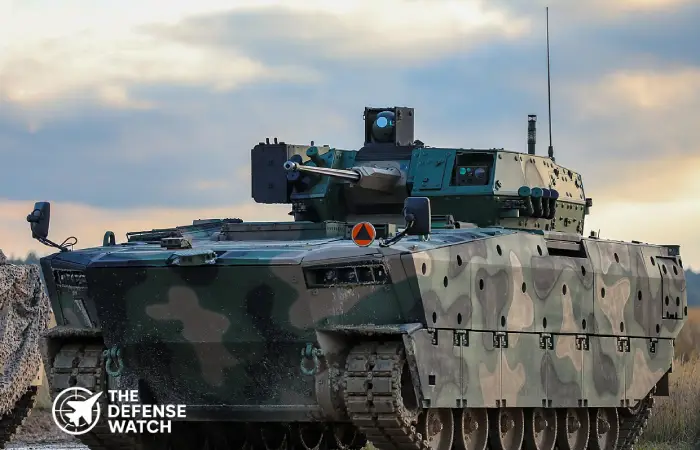
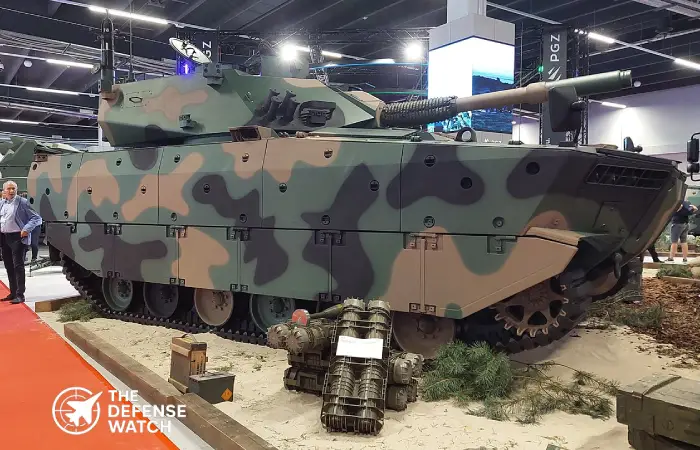
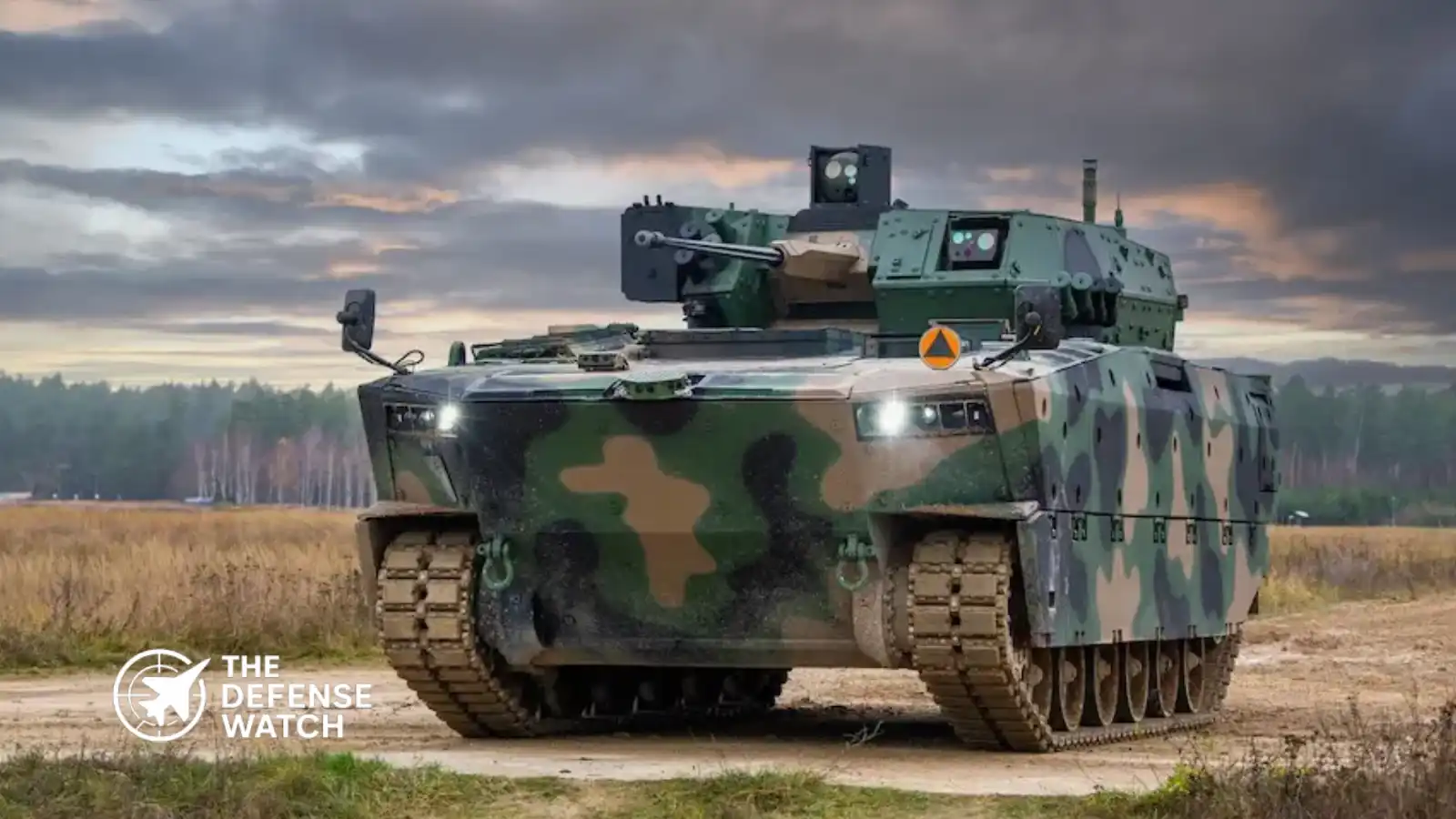
Poland’s state-owned defense group PGZ has secured a second major production contract for the domestically developed Borsuk infantry fighting vehicle (IFV), marking another milestone in the country’s ambitious military modernization strategy.
Poland’s defense procurement agency signed the agreement with a consortium led by Polska Grupa Zbrojeniowa (PGZ) for the delivery of 146 additional Borsuk vehicles by 2030. The contract is valued at approximately €1.8 billion, equivalent to around PLN 7.5 billion.
The new order follows an earlier production contract signed in March 2025 covering 111 Borsuk vehicles. Combined, confirmed procurement now stands at 257 vehicles.
Officials indicated that financing will be supported through the European Union’s Security Action for Europe (SAFE) instrument, a major defense financing initiative designed to accelerate military procurement across member states.
Borsuk Program Moves Into Large-Scale Production
The Borsuk program represents Poland’s most important tracked armored vehicle development effort in decades.
Developed by Huta Stalowa Wola (HSW), a PGZ subsidiary, the vehicle is intended to replace aging Soviet-designed BMP-1 infantry fighting vehicles that have remained in service across parts of the Polish Armed Forces.
The first production contract, signed in 2025, covered 111 vehicles worth approximately PLN 6.5 billion. Initial deliveries began in December 2025 when the first operational Borsuk vehicles were handed over to Polish Army units.
Under the broader framework agreement signed in 2023, Poland could ultimately acquire up to 1,400 vehicles and related variants, making it one of the largest armored vehicle procurement programs currently underway in Europe.
Key Borsuk Capabilities
The Borsuk was designed around Polish operational requirements that emphasize mobility across the country’s river-rich terrain and potential combat operations along NATO’s eastern frontier.
Core Specifications
Capability Details Vehicle Type Infantry Fighting Vehicle Main Armament 30mm Bushmaster Mk44S automatic cannon Secondary Armament Spike anti-tank guided missile launcher Additional Weapon 7.62mm coaxial machine gun Turret ZSSW-30 remote-controlled turret Mobility Fully amphibious Delivery Timeline Through 2030 Sources indicate the Borsuk remains the only modern European infantry fighting vehicle designed with full amphibious capability as a core operational requirement rather than a secondary feature.
Its ZSSW-30 unmanned turret combines anti-armor, anti-personnel, and reconnaissance capabilities while reducing crew exposure compared with traditional manned turret designs.
Why The New Contract Matters
The significance of the deal extends beyond the acquisition of 146 additional combat vehicles.
Poland has emerged as one of NATO’s fastest-growing defense spenders since Russia’s invasion of Ukraine. Warsaw has launched major procurement programs covering tanks, artillery, air defense systems, combat aircraft, and armored vehicles.
The Borsuk program occupies a particularly important role because mechanized infantry formations remain central to Poland’s land warfare doctrine.
Replacing legacy BMP platforms provides several operational advantages:
- Improved crew and troop protection
- Modern digital battlefield networking
- Enhanced anti-armor firepower
- Better integration with NATO forces
- Increased survivability in high-intensity combat
The vehicle’s amphibious capability is especially relevant for Poland’s geography, where numerous rivers and water obstacles can complicate military maneuver operations. Unlike heavier IFVs that often require engineering support for water crossings, Borsuk units can maintain operational tempo during rapid advances or defensive repositioning.
Strategic Implications For NATO’s Eastern Flank
The contract arrives amid a broader regional effort to expand armored and mechanized forces across Eastern Europe.
Poland’s military modernization strategy increasingly focuses on creating highly mobile formations capable of rapid deployment along the alliance’s eastern frontier. Open-source reporting indicates Borsuk-equipped units are expected to play a major role in formations stationed near Poland’s northeastern border region.
From a NATO perspective, modern IFVs are critical because they provide the protected mobility required for mechanized infantry operations in high-threat environments.
Recent battlefield lessons from Ukraine have reinforced the importance of combining armored protection, precision anti-tank weapons, unmanned systems integration, and networked battlefield awareness. The Borsuk’s architecture reflects many of these emerging requirements.
The program also strengthens Poland’s defense industrial base by sustaining domestic production lines and supporting a large network of local suppliers. Industry reporting suggests roughly 250 subcontractors are involved in the broader Borsuk ecosystem.
Export Ambitions Expand Beyond Domestic Orders
PGZ is simultaneously positioning the Borsuk for export opportunities.
During the IDEB 2026 defense exhibition in Bratislava, the company unveiled an export-oriented variant equipped with the Slovak-developed Turra 30 remote turret system from EVPÚ. The configuration was presented as a joint Polish-Slovak offering aimed at international customers seeking modern tracked combat vehicles.
The move suggests PGZ sees potential demand among European militaries seeking alternatives to platforms such as:
Although competition in the global IFV market remains intense, the Borsuk’s amphibious capability and modular architecture could provide differentiation in future procurement competitions.
Production Challenges Ahead
Despite the program’s momentum, execution remains the key challenge.
European defense manufacturers are facing pressure to increase production capacity as governments accelerate rearmament efforts. Delivering 146 additional vehicles on top of existing commitments will require sustained industrial expansion, workforce growth, and supply chain resilience.
However, the availability of SAFE financing and long-term procurement visibility provides PGZ with greater certainty for investment decisions than many previous European defense programs.
For Warsaw, maintaining delivery schedules will be critical as the military continues replacing legacy armored fleets and building new mechanized formations.

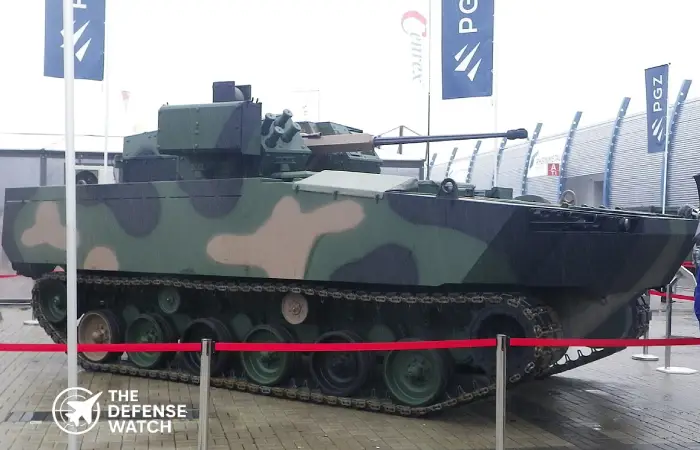
The armed forces of Poland received the first batch of mass-produced Borsuk infantry fighting vehicles (IFVs). A formal handover ceremony at the production plant of Huta Stalowa Wola (HSW) saw 15 Borsuk IFVs transferred to the 15th Mechanized Brigade of the Polish Army — marking the official entry into service of the next-generation amphibious IFV.
The delivery comes under a contract signed months earlier — an initial batch of 111 vehicles that will be delivered between 2025 and 2029 under serial‑production terms.
Background — Why Borsuk?
The Borsuk IFV (Polish for “Badger”) is the result of Poland’s long-running effort to replace the obsolete Soviet‑era BWP‑1 fleet, a platform dating back to the Cold War.
Developed by HSW as part of the national Nowy Bojowy Pływający Wóz Piechoty (NBPWP) programme, the Borsuk is built on a universal modular tracked platform (UMPG). It was first revealed to the public at the 2017 MSPO defense exhibition. Over successive years it underwent design refinements, prototypes, and extensive field tests — including amphibious, mobility, and live‑fire trials — before being approved for serial production.

Poland’s aim with Borsuk is not only to upgrade infantry firepower and protection, but also to develop and sustain a domestic defense‑industrial capability, reducing reliance on foreign platforms.
Key Features & Technical Details
According to official data from HSW and Polish MoD procurement documents, the Borsuk IFV offers significant improvements over its predecessors:
- Crew & capacity: Crew of three (commander, driver, weapons operator) + space for six dismounted infantry soldiers.
- Mobility: Powered by an MTU 8V199 TE20 turbo-diesel engine delivering 720 hp; hydropneumatic suspension; maximum road speed of 65 km/h; fully amphibious with swimming speed around 8 km/h.
- Protection: Hull built with steel reinforced by composite/ceramic armor; design compliant with modern battlefield survivability standards.
- Armament: Equipped with a remotely operated turret system, ZSSW-30 turret — featuring a 30 mm Mk44S Bushmaster II autocannon, a 7.62 mm UKM‑2000C coaxial machine gun, and dual anti-tank guided missile (ATGM) launchers. Additional ammunition types include programmable rounds.
- Modularity and growth potential: The chassis is designed to host multiple specialized variants beyond the standard IFV — including command, reconnaissance, medical evacuation, recovery, and NBC‑reconnaissance versions.
According to the initial contract, the first 111 IFVs will be delivered by 2029; the larger framework envisions up to 1,400 tracked vehicles based on the Borsuk chassis including IFVs and support variants.
Statement from Officials
At the handover ceremony, Władysław Kosiniak-Kamysz, Poland’s Deputy Prime Minister and Minister of Defense, emphasized that the 15 newly delivered Borsuk IFVs mark a “major day for the Polish Armed Forces,” highlighting that the vehicles not only replace Soviet‑era systems, but also significantly enhance the operational capability of the 15th Mechanized Brigade.
Deputy Defense Minister Paweł Bejda, responsible for modernization, underlined that Borsuks will become cornerstone assets of Poland’s mechanized forces. He also indicated plans to further diversify the fleet with amphibious and non-amphibious variants, while promoting Borsuk as a potential export product.
Meanwhile, HSW is reportedly ramping up its production capacity in preparation for serial output. The company aims to support not only the Borsuk IFV programme, but also other related tracked and support vehicles.
Significance — What This Means for Poland’s Armed Forces
The induction of Borsuk IFVs represents a watershed moment for the Polish Land Forces. After decades of relying on outdated Soviet-era BWP‑1 IFVs — whose thin armor and obsolete systems rendered them vulnerable in modern conflict scenarios — Poland is now fielding a modern, domestically built platform capable of meeting contemporary threats.
The Borsuk’s amphibious capability, modular chassis, and modern turret armament provide the Polish Army with enhanced tactical flexibility. Its integration will likely be pivotal for mechanized brigades stationed near Poland’s eastern borders — a region of heightened strategic importance given recent security developments in Europe.
Moreover, the decision to design, produce, and deploy Borsuk domestically underlines Poland’s strategic ambition to strengthen its defense‑industrial base — reducing reliance on foreign imports and potentially becoming an exporter of advanced armoured vehicles.
What’s Next
Over the next four years, the Polish Ministry of Defense and HSW plan to complete the delivery of all 111 IFVs under the first contract. Concurrently, efforts will begin to deliver specialized variants — such as command, recovery, reconnaissance and medical evacuation vehicles — based on the Borsuk platform.
Poland may also pursue further procurement beyond the initial batch, expanding its mechanized force capabilities substantially. According to official policy plans, Borsuk (and associated support variants) may become the backbone of Poland’s mechanized infantry for decades.
Finally — as hinted by Defense Minister comments — Poland is preparing to promote Borsuk for export. If successful, this could mark HSW and Poland among the few European nations capable of offering a modern, amphibious, modular IFV for international customers