

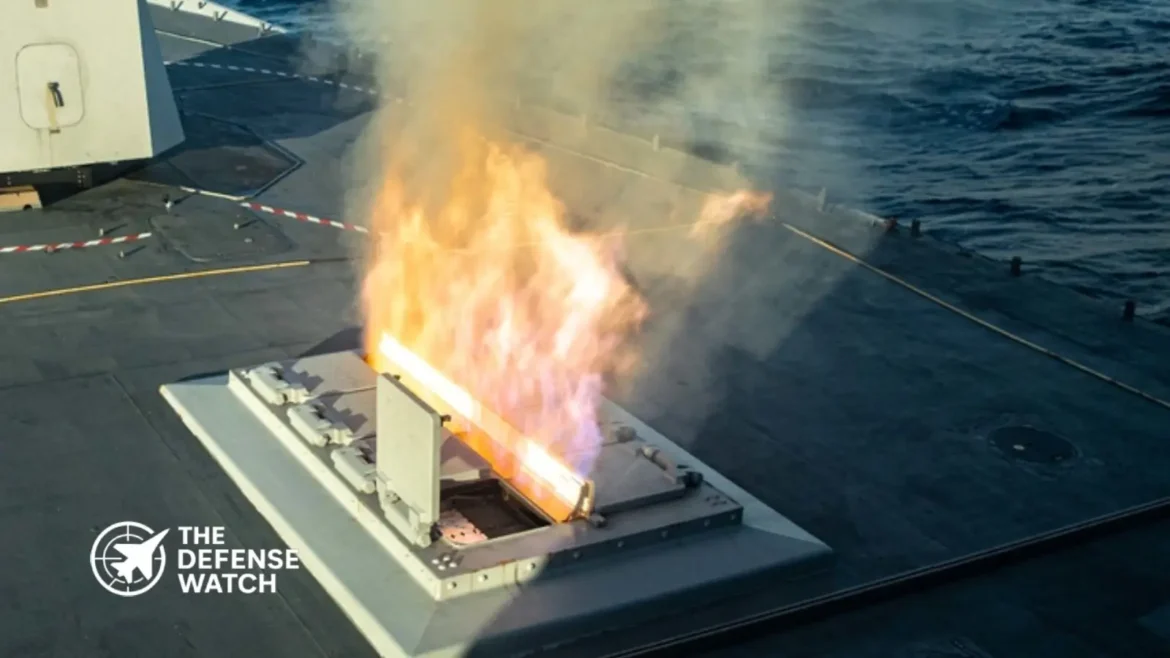
Raytheon ESSM Block 2 Contract Expands Allied Naval Defense Capacity
The Evolved SEASPARROW Missile Block 2 contract awarded to Raytheon marks a significant step in strengthening naval air defense capabilities across the United States and its allied partners. Valued at $832.9 million, the firm fixed price modification supports continued production of advanced shipborne missiles designed to counter evolving aerial threats.
Awarded by the Naval Sea Systems Command on April 24, 2026, the contract exercises options under a previously awarded agreement. It covers both missile assembly and associated container requirements for a wide coalition of nations, including Australia, Canada, Germany, and NATO allies across Europe.
- Raytheon secured an $832.9 million contract modification for ESSM Block 2 missile production.
- The contract supports the U.S. and 11 allied nations including NATO partners and Australia.
- Production spans over 20 global locations with completion expected by September 2030.
- Funding is split between U.S. Navy procurement and international partner contributions.
- ESSM Block 2 enhances naval defense against advanced anti-ship missiles and aerial threats.
This ESSM Block 2 production deal reflects growing demand for layered naval air defense systems amid increasing missile threats in contested maritime environments.
Multinational Production Reflects Broad Strategic Alignment
The scope of the program underscores its multinational nature. Manufacturing and integration activities are distributed across more than 20 locations worldwide, including the United States, Canada, Australia, and several European countries.
Key production hubs include Tucson, Arizona, which accounts for the largest share, alongside facilities in Norway, the Netherlands, and Germany. This distributed industrial base supports interoperability while reinforcing defense industrial cooperation among partner nations.
The Evolved SEASPARROW missile contract is funded through a mix of U.S. Navy procurement and international partner contributions. Roughly half of the funding comes from U.S. fiscal year 2026 weapons procurement, with the remainder largely financed by allied customers.
This funding model reflects the cooperative structure of the NATO SEASPARROW program, where participating nations jointly develop, procure, and sustain the system.
ESSM Block 2 Enhances Modern Naval Air Defense
The ESSM Block 2 represents a significant upgrade over earlier variants. Unlike the semi active radar homing guidance used in Block 1, the newer missile incorporates an active radar seeker, improving engagement capability against complex and maneuvering threats.
This upgrade is critical in addressing modern anti ship missile threats, including sea skimming cruise missiles and high speed maneuvering targets. It also enhances a ship’s ability to engage multiple threats simultaneously, a key requirement in high intensity naval combat scenarios.
From an operational perspective, the system integrates with widely deployed combat systems such as Aegis, making it a core component of layered ship defense architectures used by the U.S. Navy and allied fleets.
The ESSM Block 2 production deal therefore directly contributes to closing capability gaps in naval air defense, particularly as adversaries invest in more advanced missile technologies.
Strategic Context: Rising Maritime Threat Environment
The timing of this contract aligns with broader shifts in global naval strategy. Maritime forces are increasingly operating in contested regions where anti access and area denial systems are prevalent.
In regions such as the Indo Pacific and the North Atlantic, allied navies face growing challenges from advanced cruise missiles, drones, and integrated air defense systems. The ESSM Block 2 provides a cost effective medium range intercept capability that complements longer range systems like SM 2 and SM 6.
The Raytheon naval missile program also reflects a broader trend toward upgrading legacy systems rather than developing entirely new platforms. By enhancing an existing and widely deployed missile family, partner nations can rapidly improve capability without extensive platform modifications.
This approach reduces cost, shortens deployment timelines, and ensures compatibility across allied fleets.
Industrial and Operational Implications
Beyond its operational value, the contract highlights the importance of defense industrial resilience. The geographically distributed production model reduces supply chain risk and supports local industries across participating countries.
It also reinforces long term sustainment and upgrade pathways for the ESSM family, ensuring that partner nations can maintain readiness over decades.
Completion of the contract is scheduled for September 2030, indicating sustained production demand and continued reliance on the system within allied naval forces.
Conclusion
The Evolved SEASPARROW Missile Block 2 contract awarded to Raytheon represents more than a routine procurement action. It reflects a coordinated multinational effort to strengthen naval air defense in response to evolving threats.
With its advanced guidance system, broad international participation, and integration into existing naval platforms, the ESSM Block 2 remains a cornerstone of allied maritime defense strategy.
France Offers Upgraded FDI Frigate To Saudi Arabia With French MPLS Instead Of U.S. RAM System
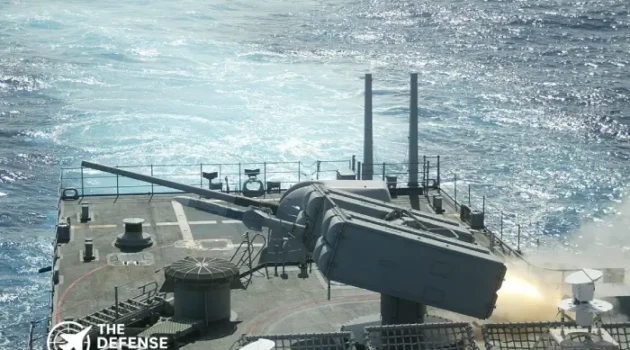
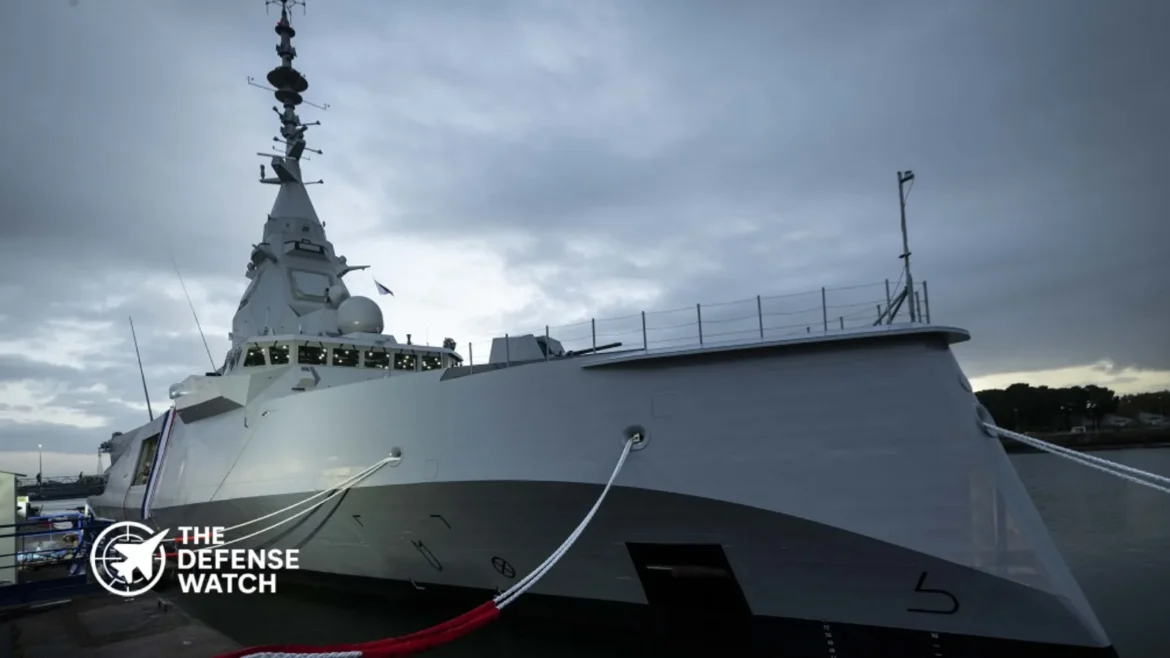
France has offered an upgraded FDI frigate to Saudi Arabia, replacing the U.S.-made Rolling Airframe Missile system with a French MPLS air defense solution, according to a report.
The proposal centers on the Frégate de Défense et d’Intervention, or FDI frigate, developed by Naval Group for the French Navy. The variant presented to Riyadh would integrate a French close-in missile launcher in place of the U.S.-built Rolling Airframe Missile system typically installed on export configurations.
The move signals Paris’ intent to provide a more sovereign, fully French naval air defense package tailored to Saudi operational requirements.
A Modified FDI Configuration
The FDI frigate, also known as the Belh@rra class, is a 4,500 ton multi-mission surface combatant designed for anti-air, anti-submarine, and anti-surface warfare. It features the Thales Sea Fire active electronically scanned array radar, a digital combat management system, and vertical launch systems capable of deploying Aster surface-to-air missiles.
In its standard export configuration, the FDI frigate integrates the RAM system as a close-in air defense layer. However, France’s offer to Saudi Arabia replaces that system with a French MPLS launcher, ensuring the ship’s short-range air defense capability remains fully sourced from domestic suppliers.
While detailed specifications of the MPLS configuration for Saudi Arabia have not been publicly disclosed, the concept aligns with France’s broader defense industrial policy of promoting sovereign solutions through its domestic defense base.
Strategic Context For Saudi Naval Modernization
Saudi Arabia has been pursuing an extensive naval modernization program aimed at strengthening maritime security in the Red Sea and the Arabian Gulf. The Royal Saudi Navy operates a mix of Western-designed surface combatants, including vessels supplied by the United States and Europe.
The FDI frigate proposal positions France as a key contender in future Saudi naval procurement efforts. The French defense industry has longstanding ties with Riyadh, including previous naval and aerospace contracts.
Replacing the RAM system with a French MPLS solution may also simplify export approvals and reduce dependency on U.S. Foreign Military Sales processes. The RAM system is jointly developed by Raytheon and MBDA, and its export requires U.S. government authorization.
By offering a fully French configuration, Paris could streamline negotiations while strengthening its position in a competitive defense market.
Capabilities Of The FDI Frigate
The FDI frigate is designed as a next-generation digital warship, incorporating advanced automation and cyber-resilient architecture. Key features include:
- Thales Sea Fire AESA radar with 360 degree coverage
- Aster 15 and Aster 30 surface-to-air missiles
- Anti-submarine warfare suite with hull-mounted and towed sonar
- Anti-ship missile capability
- Hangar and flight deck for medium naval helicopters
The platform’s modular design allows customization based on customer requirements, including combat system configuration and weapons integration.
The French Navy’s own FDI ships are scheduled to enter service this decade, reinforcing confidence in the design’s maturity. Greece has also ordered FDI frigates, further validating the export model.
Broader Defense Industrial Implications
France’s decision to propose a French MPLS in place of the RAM system reflects a broader trend toward strategic autonomy in defense exports. Paris has consistently promoted integrated, nationally controlled solutions to international customers.
For Saudi Arabia, the offer provides an alternative to U.S.-centric naval systems while maintaining access to high-end European naval technology.
Any final contract would depend on negotiations between Riyadh and Paris, including industrial participation, technology transfer, and long-term support arrangements.
As regional maritime threats evolve, advanced frigate platforms such as the FDI remain central to force modernization strategies across the Middle East.

Pakistan Navy Conducts Air Defense Interception Test
The Pakistan Navy has conducted a live fire air defense interception test at sea, demonstrating the ability of a frontline warship to engage and destroy an aerial target using a ship launched missile system.
According to an official Pakistan Navy statement, the test was carried out from a Tughril class guided missile and air defense frigate. The warship fired the LY 80 naval surface to air missile from its vertical launch system to intercept a low flying and low observable mobile air target.
Vertical Launch Missile Fired at Sea
The missile was launched using a hot launch method from a vertical cell, a key capability for modern naval air defense. The interception validated the combat readiness of the frigate and the effectiveness of its integrated sensors, command system, and missile engagement sequence.
The LY 80 naval air defense system is the maritime variant of the Chinese HQ 16 family and is designed to counter aircraft, helicopters, unmanned aerial vehicles, and cruise missiles. It provides medium range area defense for surface combatants and task groups.
Boost to Naval Modernization Efforts
The Tughril class frigates form the backbone of Pakistan Navy surface fleet modernization. Equipped with modern radars, electronic warfare suites, and vertical launch missiles, the class is intended to strengthen maritime security and fleet air defense in the North Arabian Sea.
Pakistan Navy stated that the successful firing reflects a high level of crew proficiency and operational preparedness. The service regularly conducts live fire drills to validate weapon systems under realistic operational conditions.