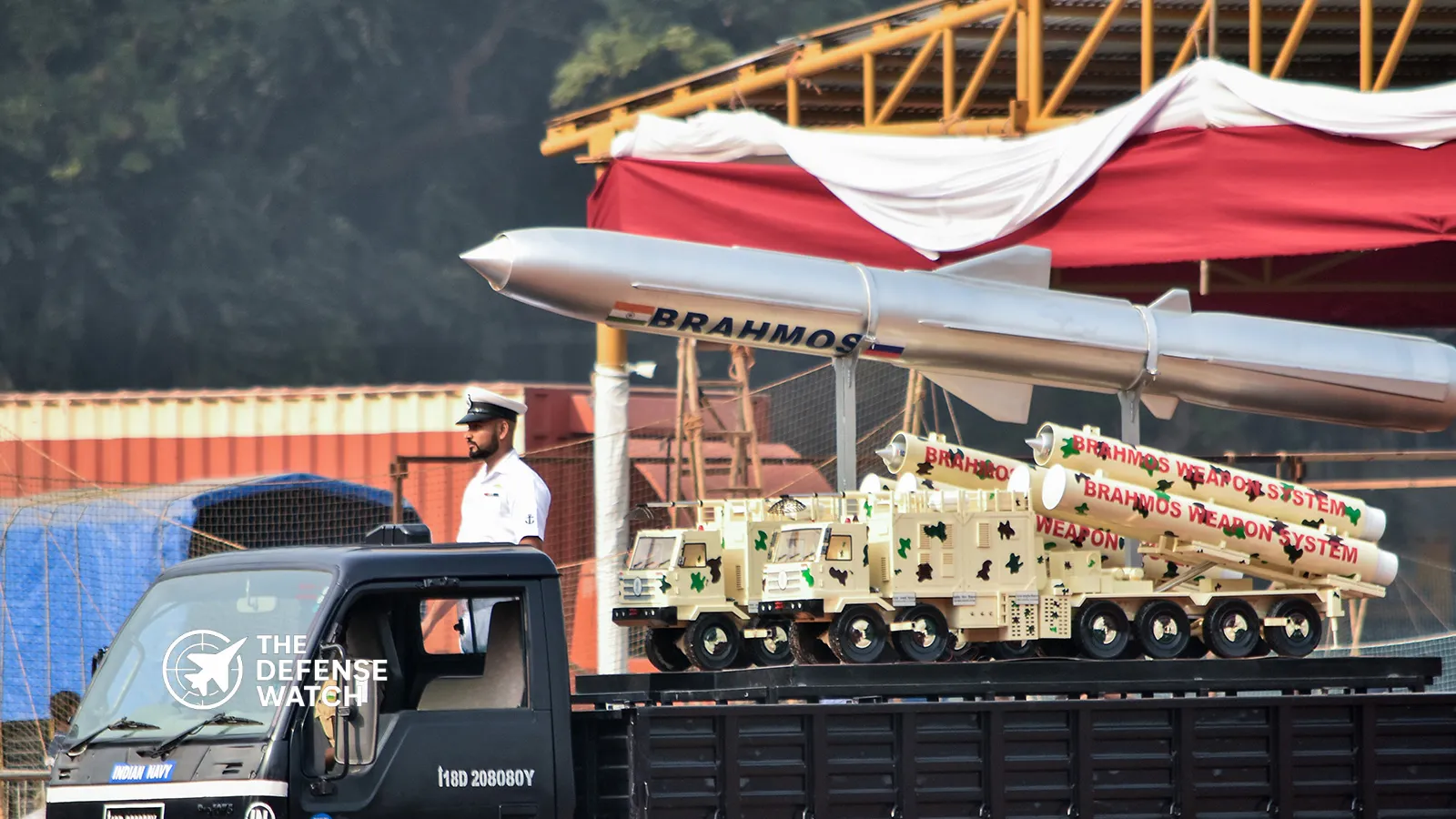
- â–º Indian Army to order BrahMos supersonic cruise missiles with over 800 km strike range.
- â–º Extended range BrahMos is part of India long range precision strike modernization.
- â–º BrahMos flies at roughly Mach 2.8 to 3 and serves Army, Navy and Air Force units.
- â–º Procurement expected after senior defense ministry level review.
- â–º New range significantly boosts India deep strike and deterrence posture.
Indian Army Plans Procurement of 800 km Range BrahMos Supersonic Missiles
India’s Army is moving to procure a variant of the BrahMos supersonic cruise missile with a strike range exceeding 800 kilometers, the latest sign of New Delhi’s focus on extended-reach conventional precision strike weapons. The shift toward longer range comes amid regional security concerns and evolving battlefield demands.
BrahMos, developed by BrahMos Aerospace Limited in a joint venture between India’s Defence Research and Development Organisation and Russia’s NPO Mashinostroyeniya, has been India’s primary supersonic cruise missile system for more than a decade. The missile family currently deploys land, sea and air versions, with existing air-launched variants already reported to have flight performance beyond 450 kilometers and land and sea launch versions tested toward 800 kilometers.
The proposed Army order would mark a formal move by the defence establishment to acquire the extended-range variant for frontline formations. Senior ministry sources told defense outlets that the matter is slated for discussion at a high-level meeting in New Delhi.
BrahMos Extended Range: Technical and Strategic Context
BrahMos systems are notable for their high cruise speed of roughly Mach 2.8-3.0, which enhances survivability against air defense systems and improves penetration of defended airspace. The missile uses a solid booster followed by a liquid ramjet engine, and can operate in a low altitude, terrain-hugging flight profile.
Under existing export control restrictions, BrahMos was initially fielded with shorter ranges, but development efforts have been underway to extend reach. Recent tests and defense documentation describe variants with a range near 800 kilometers, with upgrades to propulsion and navigation to support higher fuel load and sustained supersonic flight.
India has already integrated BrahMos across the Army and Navy and modified Su-30MKI fighters to carry air-launched versions. The land launch regiments have been central to India’s conventional strike capability along contested borders.
Operational and Geopolitical Implications
An 800 km plus range cruise missile expands India’s ability to conduct deep precision strikes against high-value targets while remaining outside the immediate reach of adversary defenses. This extended range can affect planning along contested frontiers with Pakistan and China and shape deterrence dynamics in the broader Indo-Pacific. BrahMos has also been a focus for export cooperation with partners in Southeast Asia, underlining its broader geopolitical footprint.
Procurement of the extended-range variant highlights New Delhi’s intent to modernize and diversify its long-range strike arsenal alongside other missile programs. Defense analysts note that such systems serve as conventional strategic assets, reinforcing deterrence without nuclear escalation.
India Signs Elbit-Based Rocket Deal to Modernize Artillery
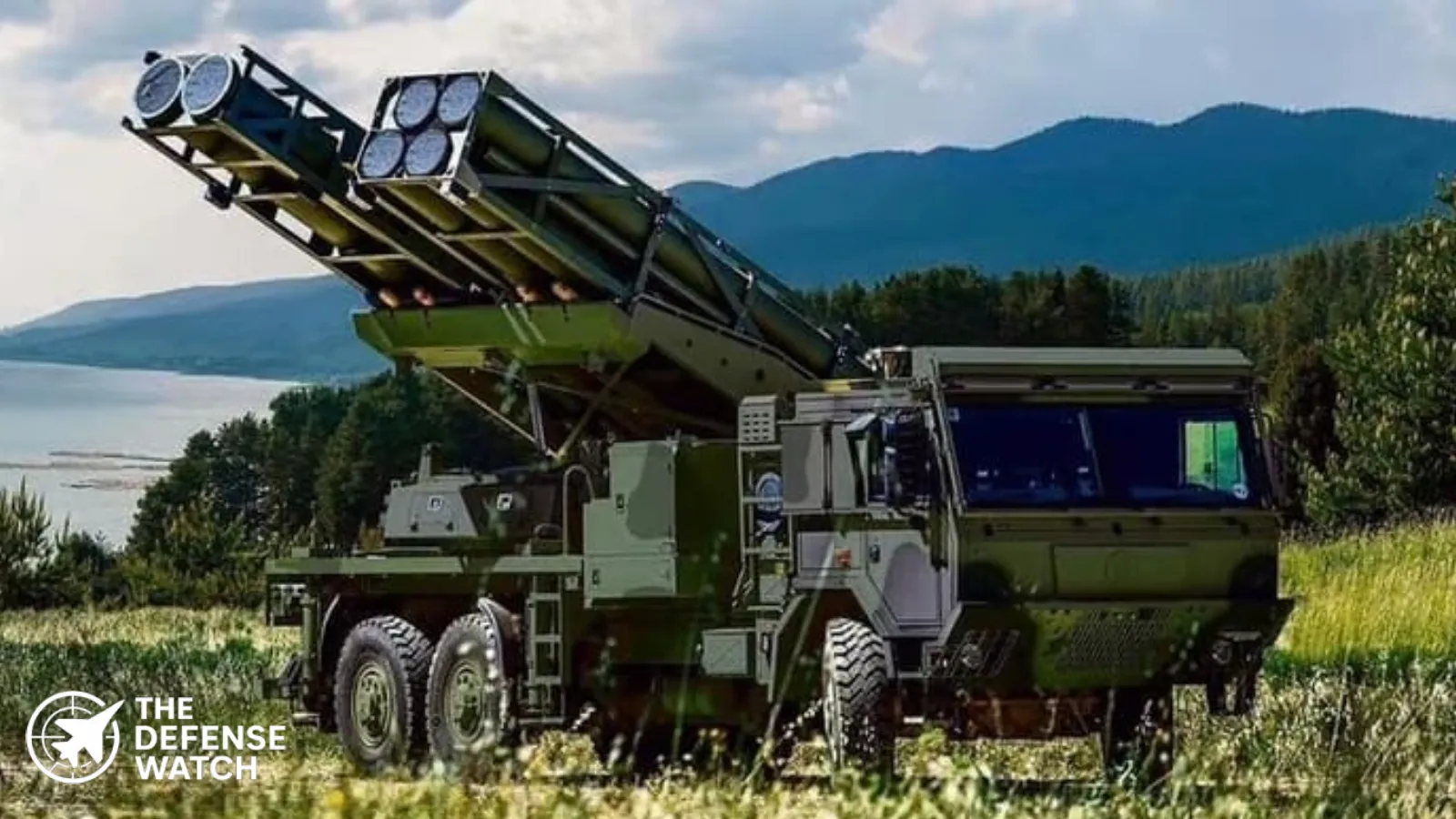
India has signed a multi-million-dollar defense deal with Israel-linked firm Elbit Systems to accelerate modernization of its artillery forces. The Indian Army has approved an emergency procurement contract valued at about ₹293 crore, roughly $32 to $33 million, for the Suryastra long-range rocket system based on Elbit Systems PULS technology.
According to OdishaTV, the contract was awarded to Pune-based NIBE, which will manufacture the system in India in cooperation with Elbit Systems. The deal reflects urgent operational requirements and allows the Army to bypass lengthy procurement timelines under emergency powers.
Universal Rocket Launcher Capability
India Defense News reports that Suryastra is defined as a universal rocket launcher. The system can fire multiple rocket calibers from a single platform, allowing both area saturation fire and precision deep strikes. It is designed to engage targets at ranges of up to 150 kilometers and 300 kilometers, depending on the munition used.
The launcher is based on Elbit Systems PULS architecture and supports 122 mm, 160 mm, and 306 mm rockets, as well as tactical missiles from the Predator Hawk family. The contract also covers ground equipment, accessories, electronic sequence programming units, and tailored ammunition.
Performance and Trial Results
Business Standard confirms the contract value at ₹292.69 to ₹293 crore, including taxes and levies. During evaluation trials, OdishaTV reports the Suryastra system demonstrated a circular error probable of less than five meters, a level of accuracy considered high for rocket artillery.
Compared to indigenous systems such as Pinaka, the Elbit-based platform offers greater range flexibility and multi-caliber integration, expanding the Indian Army’s precision strike options.
Industrial and Strategic Context
The groundwork for the deal was laid in July 2025, when NIBE signed a technology cooperation agreement with Elbit Systems Land. Angel One and BharatShakti report that the agreement covers licensing, knowledge transfer, and local production, aligning with India’s Make in India policy.
BharatShakti notes that Suryastra is India’s first universal rocket launcher platform and can be mounted on 4×4, 6×6, or 8×8 vehicle chassis. The program strengthens India’s domestic defense manufacturing base while integrating proven Israeli rocket technology.