

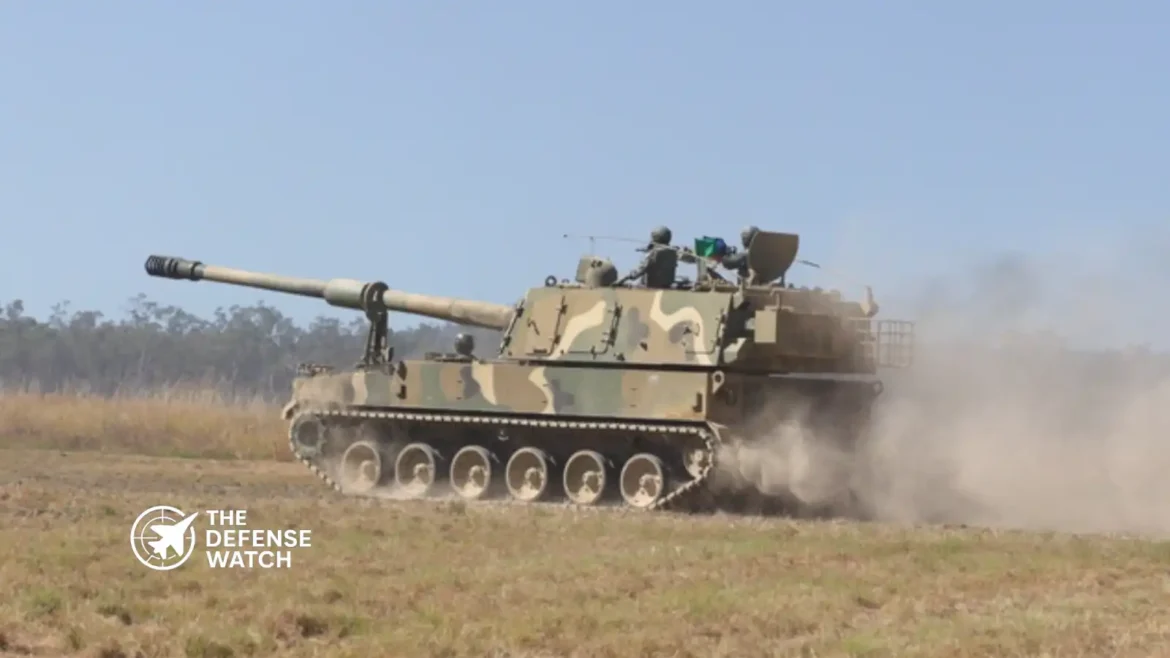
Finland K9 Howitzers Deal Expands Firepower Capability
Finland’s K9 howitzers deal marks a significant expansion of its long-range artillery forces, with Helsinki confirming the procurement of 112 additional K9 Thunder self-propelled systems. The agreement, reported by Defence Industry Europe, reinforces the country’s focus on strengthening conventional firepower amid evolving security dynamics in Northern Europe.
The K9 Thunder, developed by South Korea’s Hanwha Aerospace, is a 155mm tracked self-propelled howitzer designed for rapid deployment and sustained high-volume fire. Finland has already integrated earlier batches into its armed forces, making this follow-on order a continuation of an established modernization path rather than a new capability introduction.
- Finland has signed a deal to procure 112 additional K9 Thunder self-propelled howitzers.
- The systems are part of Helsinki’s ongoing artillery modernization program.
- The K9 is a 155mm tracked howitzer with a range exceeding 40 kilometers depending on ammunition.
- The acquisition builds on Finland’s earlier K9 purchases from South Korea.
- The move reflects growing emphasis on high-intensity land warfare capability in Europe.
Short, mobile-friendly paragraphs and incremental procurement reflect a deliberate approach. Finland is scaling up what it already knows works in its operational environment.
A Proven System For Nordic Conditions
The K9 Thunder’s appeal lies in its combination of mobility, survivability, and firepower. The platform can deliver multiple rounds per minute and execute shoot-and-scoot tactics, reducing exposure to counter-battery fire.
For Finland, terrain and climate matter as much as firepower. The country’s geography includes dense forests, harsh winters, and limited infrastructure in some regions. A tracked artillery system like the K9 is better suited for these conditions compared to wheeled alternatives.
The system’s range, exceeding 40 kilometers with advanced munitions, allows Finnish forces to engage targets at depth while maintaining distance from frontline threats. This is particularly relevant given the increased emphasis on long-range fires across European militaries following lessons observed in Ukraine.
Strategic Context: Why Artillery Matters Again
The Finland K9 howitzers deal reflects a broader shift across NATO and partner nations. Artillery, once seen as secondary to airpower in many Western doctrines, has re-emerged as a central element of high-intensity warfare.
Recent conflicts have highlighted several realities:
- Sustained artillery fire remains decisive in attritional warfare
- Precision-guided munitions are limited by cost and supply constraints
- Counter-battery capability is critical for survivability
Finland’s investment aligns with these lessons. By expanding its K9 fleet, Helsinki is prioritizing volume, resilience, and operational endurance.
This is not just about acquiring more systems. It is about ensuring the ability to sustain operations over extended periods, a factor increasingly emphasized in European defense planning.
Continuity In Procurement Strategy
Finland’s decision to procure additional K9 systems instead of diversifying platforms suggests confidence in the system’s performance and logistical footprint.
Operating a single primary artillery platform offers several advantages:
- Simplified training pipelines
- Streamlined maintenance and spare parts supply
- Interoperability across units
This approach contrasts with some European states that operate multiple artillery systems, often complicating logistics.
Finland’s model reflects efficiency. It reduces complexity while scaling capability, a balance that is particularly important for countries with relatively limited manpower.
Industrial And Alliance Implications
The deal also underscores the growing role of South Korean defense manufacturers in Europe. Hanwha Aerospace has secured multiple contracts across NATO countries, positioning itself as a key supplier in the artillery segment.
This trend highlights a shift in defense procurement patterns:
- European nations are increasingly sourcing from non-traditional suppliers
- Speed of delivery and cost-effectiveness are becoming decisive factors
- Industrial partnerships are expanding beyond transatlantic ties
For Finland, the partnership with South Korea offers a proven system with relatively quick delivery timelines compared to some European alternatives.
Operational Impact On Finnish Forces
The expansion of the K9 fleet is expected to enhance several operational capabilities:
- Increased artillery density across brigades
- Greater flexibility in force deployment
- Improved ability to conduct sustained fire missions
In practical terms, more systems mean Finland can cover wider مناطق while maintaining redundancy. This is critical in a high-intensity scenario where losses or mechanical failures are expected.
Additionally, the K9’s automation reduces crew workload, allowing faster response times and higher operational tempo.
Analysis: A Calculated Move In A Changing Security Landscape
At least 30 percent of this development reflects a broader strategic calculation rather than a simple procurement decision.
Finland’s K9 howitzers deal signals three key priorities:
1. Preparedness for Prolonged Conflict
European defense planning is increasingly focused on endurance. Stockpiles, logistics, and sustained firepower are now central concerns.2. Emphasis on Land Warfare
While air and naval capabilities remain important, land forces are regaining prominence, especially in regions bordering potential adversaries.3. Rapid Capability Scaling
By expanding an existing system, Finland avoids the delays associated with introducing new platforms.This approach suggests a pragmatic mindset. Instead of pursuing cutting-edge but unproven technologies, Finland is investing in reliable systems that can be fielded quickly and at scale.
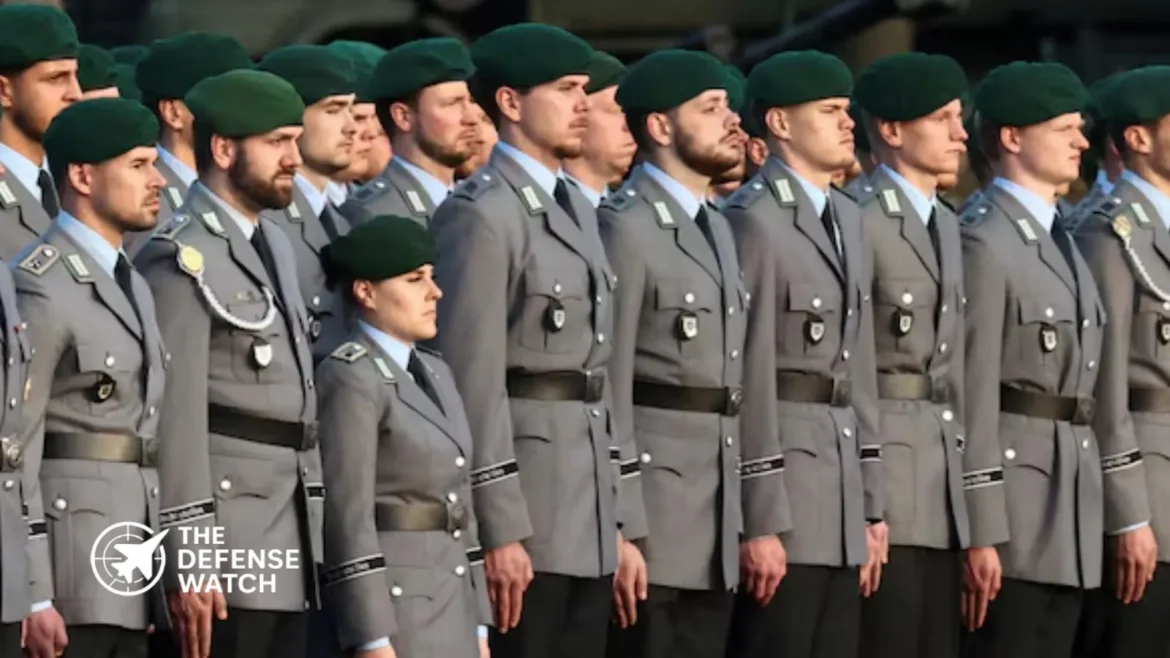
Germany Exit Rules Fighting-Age Men Under Review Amid Security Concerns
Germany exit rules fighting-age men are under renewed scrutiny as Germany moves to clarify how existing laws apply to individuals of military age leaving the country, according to reporting by Reuters.
Berlin’s effort does not introduce immediate sweeping restrictions. Instead, it focuses on legal clarity and enforcement consistency, particularly as European governments face growing pressure linked to the ongoing war in Ukraine.
German officials are reportedly reviewing how national and EU frameworks intersect when it comes to the movement of fighting-age men, especially those who may be subject to mobilization requirements in their home countries.
- Germany is working to clarify legal rules regarding fighting-age men leaving the country.
- The issue is linked to broader European concerns over military mobilization and migration flows tied to the Ukraine conflict.
- Authorities aim to ensure consistent enforcement of existing laws rather than introducing immediate blanket restrictions.
- The move reflects rising pressure on European governments to balance humanitarian policies with national security priorities.
- Officials stress coordination with EU partners as policy alignment becomes increasingly critical.
Policy Context: Migration Meets Security
The issue sits at the intersection of migration policy and defense readiness. Since the start of the Ukraine conflict, millions have moved across European borders, creating legal gray zones around eligibility, asylum, and potential military obligations.
While Germany has maintained a broadly open humanitarian stance, the question of whether fighting-age men should be allowed to freely leave conflict zones or transit through EU states has become more politically sensitive.
This is particularly relevant for Ukrainian nationals. Kyiv has previously restricted the departure of most men aged 18 to 60 to preserve its mobilization pool. However, enforcement varies, and individuals continue to reach EU countries through legal and irregular channels.
Germany’s current effort appears aimed at avoiding contradictions between domestic law, EU free movement principles, and partner country expectations.
Legal Clarity, Not Immediate Restriction
Officials emphasize that the initiative is not about imposing blanket exit bans or new border controls. Instead, it is about ensuring that authorities have clear legal guidance when dealing with cases involving military-age individuals.
This includes questions such as:
- Whether Germany can or should return individuals to their home country if they are subject to mobilization
- How asylum protections apply in such cases
- What role EU-wide coordination should play
Legal experts note that Germany must carefully balance international law obligations, including refugee protections, with political pressure to support allied nations facing manpower shortages.
Strategic Implications for Europe
Germany exit rules fighting-age men highlight a broader shift in European security thinking. The war in Ukraine has forced governments to reconsider assumptions about long-term stability and the role of civilian populations in national defense.
From a strategic perspective, the issue touches on force generation. Countries under threat rely heavily on maintaining a sufficient pool of trained or trainable personnel. Large-scale outward migration of fighting-age men can complicate this.
At the same time, European nations like Germany face domestic considerations, including labor market needs, demographic challenges, and integration policies.
This creates a tension between:
- Supporting allies’ military readiness
- Upholding humanitarian commitments
- Managing domestic economic priorities
EU Coordination Becomes Critical
Germany is unlikely to act in isolation. Any meaningful policy shift will require coordination with the broader European Union to avoid creating loopholes or inconsistencies across borders.
If one country tightens rules while others remain permissive, migration flows could simply reroute. This makes harmonized policy approaches essential.
Analysts point out that this situation could lead to:
- Greater data sharing between EU states
- Standardized guidelines on handling military-age migrants
- Increased dialogue with countries like Ukraine on legal expectations
Outlook: Incremental Change Likely
Germany exit rules fighting-age men are expected to evolve gradually rather than through abrupt policy shifts. The current focus on clarification suggests Berlin is testing legal boundaries and political reactions before considering stronger measures.
Given the sensitivity of the issue, any future changes will likely be framed within existing legal structures rather than as emergency powers.
For now, the move signals a broader European trend. Migration policy is no longer viewed solely through a humanitarian lens. It is increasingly tied to national and collective security considerations.

Oreshnik Emerges as a Strategic Threat
Russia’s new hypersonic Oreshnik intermediate-range ballistic missile is rapidly changing the strategic balance in Europe and forcing NATO planners to weigh new risks to allied territory and U.S. interests. The missile, used at least twice in active combat in Ukraine, has a reported range that puts many European capitals within reach and a flight profile designed to compress interceptor reaction time.
(adsbygoogle = window.adsbygoogle || []).push({});In a January 9, 2026 operation, Russia confirmed it struck western Ukraine’s Lviv region with an Oreshnik missile, a launch that came amid broader Russian attacks across Ukrainian territory. The launch occurred about 60 kilometers from the Polish border, raising alarm in Warsaw and other NATO capitals.
What Is the Oreshnik Missile?
Oreshnik is a road-mobile, solid-fuel intermediate range ballistic missile (IRBM) developed by Russia’s strategic forces and entering active service in recent months. It is widely seen as an evolution of earlier programs such as the RS-26 Rubezh, yet tailored for both high-speed conventional and nuclear roles.

Key attributes include:
- Speed: Hypersonic flight exceeding Mach 10 during terminal phase.
- Range: Estimated between 3,000 and 5,500 kilometers, enough to reach deep into Europe and western Russia’s Western Hemisphere targets from forward positions.
- Mobility: Road-mobile transporter-erector-launcher increases survivability and complicates tracking.
- Payload: Designed for multiple independently targetable reentry vehicles (MIRVs), conventional submunitions, or low-yield nuclear warheads.
This combination challenges traditional missile defenses because hypersonic delivery compresses the time between launch detection and impact. Allied radar and interceptor systems may have limited windows to react if the Oreshnik is launched from closer locations such as Belarus or western Russia.
Combat Use and Recent Strikes
The Oreshnik missile first saw combat in November 2024 near Dnipro, Ukraine, and was again used in January 2026 in the Lviv region. In both cases, Moscow did not deploy a confirmed nuclear warhead, instead using conventional payloads in what Western analysts call a calibrated strategic message rather than purely tactical strikes.
The January 2026 launch, however, significantly escalated political tensions given its proximity to NATO territory. Ukrainian foreign officials labeled the strike a war crime and called for an emergency United Nations Security Council meeting to address the use of such strategic weapons near NATO borders.
Technical Challenges for NATO Missile Defenses
Russia’s Ministry of Defense asserts that Oreshnik is nearly impossible to intercept. While this claim is debated, the missile’s speed and potential for multiple warheads complicate engagement. Current NATO and U.S. missile defense systems such as Aegis SM-3, THAAD, and Arrow 3 provide exoatmospheric interception capabilities, but coverage gaps and limited inventory reduce confidence against a full Oreshnik strike.
Moreover, missile defense systems face unique difficulties:
- Compressed reaction windows due to hypersonic velocity
- Maneuverable reentry vehicles that can change trajectory
- Simultaneous targets from multiple warheads designed to saturate defenses
These factors create a calculus where defense planners must weigh strategic priorities against evolving Russian capabilities.
(adsbygoogle = window.adsbygoogle || []).push({});Belarus Deployment and Strategic Signaling
Russia has moved to station Oreshnik missile units in Belarus, a move aligned with strategic cooperation with Minsk and intended to reduce flight times to Western targets. Belarusian leaders have publicly confirmed deployment of missile systems and training of crews.
This forward placement significantly shortens strike distances to NATO member Poland and beyond, intensifying alliance concerns. Presence of IRBMs in Belarus also complicates European security planning, because shorter routes to Western territories create urgent timelines for early warning and response.
Shifts in Arms Control and Strategic Stability
The emergence of Oreshnik underscores gaps in post-Cold War arms control frameworks. The collapse of the Intermediate-Range Nuclear Forces Treaty in 2019 removed limits on ground-launched ballistic systems with intermediate ranges. Russia’s rapid adaptation of programs such as RS-26 into an operational IRBM illustrates how voids in formal controls can lead to new strategic capabilities.
At the same time, efforts to negotiate limits on these classes of weapons have stalled amid broader East-West tensions, leaving NATO to address changing threats through deterrence and defense rather than treaty constraints.
Analysis: Strategic Implications for NATO and U.S. Planning
The Oreshnik missile is not just another addition to Russia’s arsenal. It embodies a shift toward systems that blur traditional distinctions between theater ballistic roles and strategic reach. By combining hypersonic speed with mobile launch platforms and potential nuclear payloads, Moscow gains a lever to thwart predictable response timelines.
For NATO, this means two immediate challenges:
- Air and missile defense adaptation: Allies will need to accelerate deployment of sensors and interceptors optimized for high-speed terminal threats.
- Alliance cohesion tests: Proximity strikes near NATO borders create political pressures for responses or posture changes that could widen the conflict.
For the United States, the visibility of Oreshnik deployments and combat use presses a reassessment of deterrence strategies in Europe. U.S. defense planning may prioritize forward sensor integration and layered defenses that can provide early detection and engagement opportunities before hypersonic missiles enter their final terminal phase.
(adsbygoogle = window.adsbygoogle || []).push({});Looking Ahead
The Oreshnik missile’s growing role in Russia’s strategic posture signals that future European security will require adaptive planning, not simply extensions of Cold War-era frameworks. NATO’s capacity to absorb, deter, and respond to hypersonic IRBM threats will shape alliance readiness in the decade ahead.
The weapon’s existence and operational use sharpen debates on defense investment priorities, alliance force deployments, and the balance between deterrence and de-escalation in volatile times.
FAQs
What is the Oreshnik missile?It’s a Russian intermediate-range ballistic missile capable of hypersonic flight, dual conventional and nuclear payloads, and designed to challenge missile defenses across Europe.
Has the Oreshnik been used in combat?Yes, confirmed strikes occurred in 2024 near Dnipro and in early 2026 near Lviv in Ukraine.
Can NATO intercept an Oreshnik missile?Current defenses may struggle due to its speed and MIRV potential, though systems like Aegis and Arrow provide some capability.
Does Oreshnik carry nuclear weapons?It is designed to carry nuclear warheads, though there is no public evidence it has been armed with one in combat so far.
Why is NATO concerned?The missile’s range brings allied capitals within striking distance from forward areas, compressing reaction times and raising strategic risk.

Washington’s new strategy jolts NATO
The White House released the latest United States National Security Strategy (NSS), marking a stark break from previous U.S. foreign-policy doctrine. The document casts serious doubt on the reliability of long-time U.S. allies in Europe. It warns of potential “civilizational erasure” due to migration and suggests some NATO countries may drift away from traditional Western values. European capitals responded with alarm, underscoring the document’s sweeping implications.
A shift away from post–Cold War consensus
Since the end of the Cold War the U.S. has led a liberal, rules-based international order that leaned on alliances and collective defense. Under the 2025 NSS, the U.S. signals a pivot. The new strategy emphasizes reasserting U.S. dominance in the Western Hemisphere, reducing global commitments, and shifting the burden of defense to allies.
At the same time, European allies had recently agreed — at the 2025 NATO summit — to raise defense spending to 5 percent of GDP by 2035. The new NSS, however, appears to undercut this cooperation by emphasizing political-cultural differences and promoting nationalist parties in Europe rather than sustained defense collaboration.
Key elements of the strategy
Europe described as fragile and unreliable
The NSS warns that unchecked migration could lead to “civilizational erasure,” claiming some NATO members may become majority non-European in the coming decades.
It accuses the European Union and other transnational bodies of undermining sovereignty, suppressing free expression, and censoring speech.
The strategy voices support for “patriotic” or nationalist parties in Europe — a signal that political alignment now matters as much as military cooperation.
Reprioritizing U.S. interests: Americas first, global retreat
Under what some describe as a “Trump Corollary” to the old Monroe Doctrine, the strategy calls for renewed focus on the Western Hemisphere. It highlights controlling migration, disrupting drug trafficking, and reasserting U.S. dominance in its own region.
The document also downgrades U.S. strategic interest in the Middle East, encouraging less interference in Gulf states and refraining from pushing political reforms abroad.
Mixed signals on Ukraine and NATO commitments
While pledging to seek an end to the war in Ukraine, the NSS frames ongoing allied weapons transfers as part of a burden-sharing model. It appears to question the long-term viability of efforts like the Prioritized Ukraine Requirements List (PURL), which had relied on allied contributions through NATO partners.
At the same time, the U.S. seems less inclined to treat Russia as a core threat, which undercuts the historical premise of collective defense under NATO.
Reaction: European capitals tread carefully
Leaders across Europe offered measured responses as they absorbed the new U.S. posture. The foreign minister of Germany said that questions about free expression or societal organization “do not belong” in security strategy for Germany.
Donald Tusk of Poland, a member of NATO and a country strategically located near regions of tension, emphasized that Europe remains the closest ally of the United States — not its problem.
At the same time, critics within the U.S. have expressed concern. A member of the House Intelligence and Armed Services committees warned the shift could erode American global standing and weaken the network of alliances that long supported U.S. influence abroad.
Some analysts argue the strategy contradicts its own stated goal of strengthening collective defense. By downplaying Russia and prompting Europe to fill security gaps without robust U.S. backing, the document may leave Eastern-flank NATO states vulnerable.
Why this matters
The 2025 U.S. National Security Strategy marks a historic pivot in U.S. foreign policy. What once was a commitment to global leadership, shared security, and protection of democratic norms has shifted toward narrower national priorities, ideological alignment, and regional dominance.
For Europe, this shift raises doubt about the future of NATO, especially collective defense under Article 5. For global hotspots like Ukraine, instability may rise if U.S. commitment wanes while Russia or other powers seek advantage.
For the U.S., the strategy aims to conserve resources and refocus on core national interests. It also hopes to spur allies to increase defense spending and take ownership of regional security. But it carries the risk of undermining the international trust and predictability that undergird long-term alliances.
What’s next
Allies in NATO will likely reassess their defense policies, spending priorities, and political alignments during 2026. Eastern-flank nations — already wary because of conflict in Ukraine — may accelerate efforts to diversify partnerships beyond the U.S. Meanwhile Moscow may exploit transatlantic divisions for strategic gain.
In Washington, implementation of the NSS may lead to funding shifts, reduced overseas commitments, and renewed emphasis on domestic and hemispheric security challenges.
The unfolding months will show whether this dramatic policy reset becomes permanent or triggers pushback strong enough to temper it.