Russia Applies Armata Technologies to Active Tank Fleet
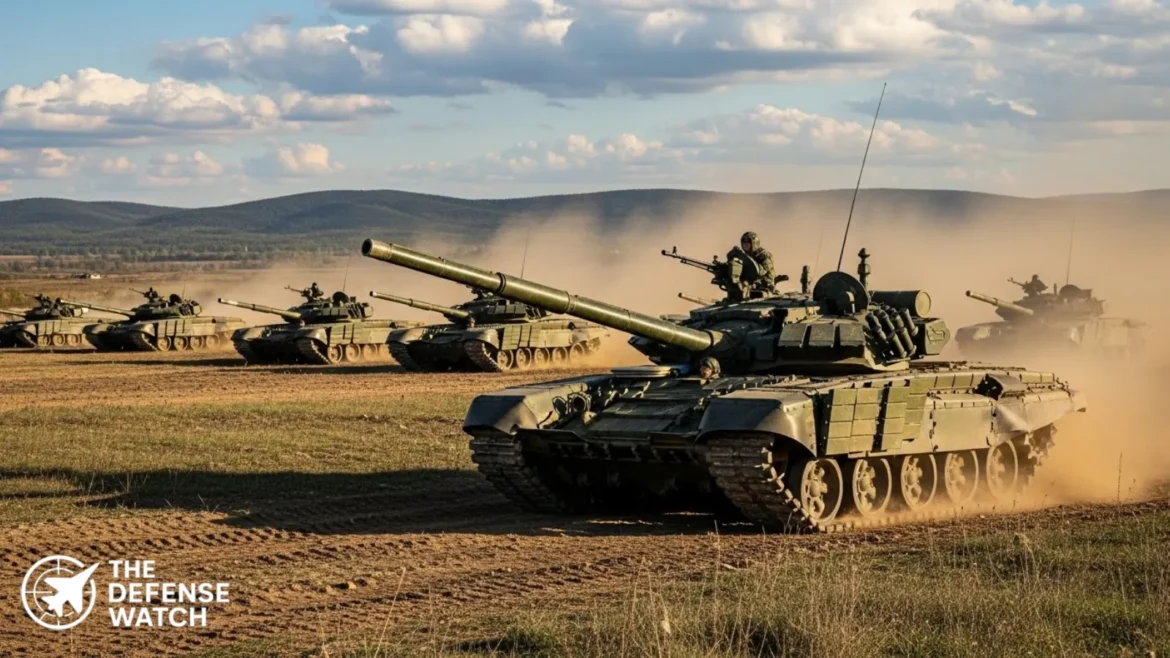
Russia has begun transferring key technologies developed under the T-14 Armata tank program into its existing T-90M and T-72 tank fleets. The effort, reported in late 2025, reflects a shift in Moscow’s armored modernization strategy, focusing on upgrading proven platforms rather than expanding production of entirely new main battle tanks.
The move is aimed at improving survivability, situational awareness, and combat effectiveness of Russian armored units already deployed or in reserve. It comes amid continued operational demands and industrial constraints affecting large scale production of next generation armored vehicles.
Background: From Flagship Program to Technology Donor
The T-14 Armata was introduced as a new generation main battle tank built around a modular platform, advanced sensors, and enhanced crew protection. While it showcased major design changes, including an unmanned turret concept and advanced defensive systems, production numbers have remained limited.
Instead of fielding the T-14 in large quantities, Russian defense planners have increasingly focused on extracting mature subsystems and applying them across existing tanks. This approach allows the Russian Army to modernize faster while relying on platforms that are already integrated into logistics and training systems.
Key Technologies Moving Into T-90M and T-72
Improved Protection Systems
One of the most important areas of transfer involves protection technologies. Elements derived from Armata research are being adapted to enhance reactive and passive armor layouts on the T-90M and late model T-72 variants. These upgrades are intended to improve resistance against modern anti tank guided missiles and top attack munitions.
Active protection concepts studied for Armata have also influenced countermeasure upgrades, including improved warning sensors and electronic defenses. While full scale active protection systems remain limited, incremental improvements are being applied across the fleet.
Sensors and Fire Control Enhancements
Armata related developments in optics and battlefield awareness are also shaping upgrades. Modernized T-90M and T-72 tanks are receiving improved thermal sights, day night optics, and digital fire control components influenced by Armata design standards.
These enhancements allow tank crews to detect and engage targets at longer ranges and in degraded visibility, closing some of the gap with Western armored vehicles in sensor capability.
Digital Systems and Network Integration
Another area of technology transfer involves onboard electronics. Armata development pushed Russian industry toward more integrated digital architectures. Lessons from this effort are now being applied to improve communications, navigation, and command integration on upgraded tanks.
Improved data sharing between vehicles and command posts supports coordinated operations and faster response times, particularly in combined arms environments.
Why Russia Is Prioritizing Upgrades Over New Builds
Industrial and Logistical Factors
Producing a completely new tank design at scale requires major industrial investment and stable supply chains. Upgrading existing platforms uses established production lines and available spare parts, reducing costs and shortening delivery timelines.
The T-72 remains one of the most numerous tanks in Russian service, while the T-90M represents the most modern serially produced Russian main battle tank. Modernizing these platforms offers a faster return on investment.
Operational Experience
Combat experience has highlighted the need for improved protection and situational awareness rather than entirely new hull designs. By integrating Armata derived technologies into tanks already familiar to crews, the Russian Army can respond more quickly to evolving battlefield threats.
This approach also allows upgrades to be tailored based on observed vulnerabilities, rather than committing to a single new design philosophy.
Expert Perspective on the Modernization Strategy
Defense analysts note that this strategy mirrors practices seen in other major armies. Incremental upgrades to proven platforms are often more sustainable during prolonged periods of high operational demand.
By using Armata technologies as a development pool rather than a standalone solution, Russia is seeking to preserve technological gains while managing production realities. The result is a hybrid modernization path that blends next generation concepts with Cold War era platforms.
Impact on Russian Armored Forces
The integration of Armata technologies into the T-90M and T-72 fleets is expected to improve battlefield survivability and combat effectiveness in the near term. While these tanks will not match the full design ambitions of the T-14, they gain meaningful upgrades in protection, sensors, and digital systems.
This modernization path also suggests that the T-14 Armata will remain limited in numbers, serving more as a technology testbed and reference platform than as the backbone of Russian armored forces.
What Comes Next
Further refinements are expected as Armata related research continues to mature. Additional sensor upgrades, improved countermeasures, and incremental automation may be introduced into existing tanks over time.
For now, Russia tank modernization efforts are focused on maximizing the combat value of current fleets. The T-90M upgrade program and continued T-72 modernization indicate that legacy platforms will remain central to Russian armored operations for years to come.

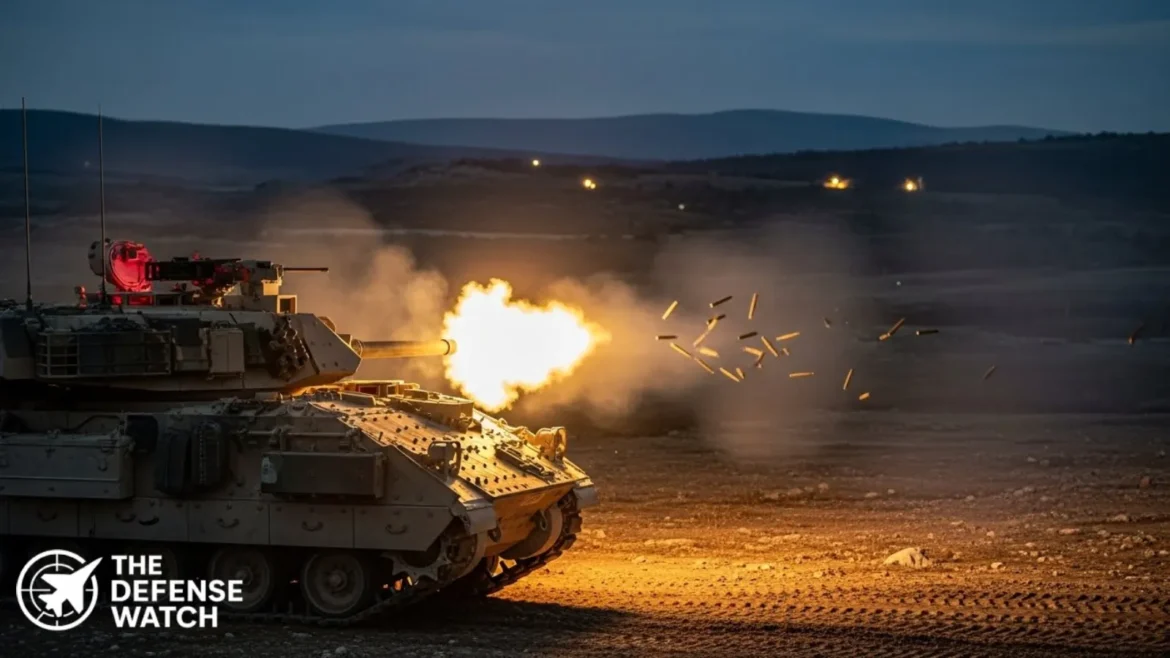
The exercise at Novo Selo, Bulgaria
On December 5, 2025, soldiers from Bravo Company, 1st Battalion, 16th Infantry Regiment, 1st Armored Brigade Combat Team, 1st Infantry Division of the U.S. Army carried out a platoon-level live-fire exercise at the Novo Selo Training Area in Bulgaria. The central platform was the M2A3 Bradley Infantry Fighting Vehicle. The exercise forms part of rotating U.S. heavy armour presence in Bulgaria and supports NATO’s effort to maintain a credible mechanized force along its eastern flank.
Background — Why Bulgaria matters for NATO’s eastern flank
Since 2022, the security landscape in Eastern Europe has shifted significantly following Russia’s large-scale invasion of Ukraine. In response, the alliance has bolstered its eastern and south-eastern flank by deploying multinational battlegroups to several member states — including Bulgaria — to deter aggression and reassure neighboring allies.
The Novo Selo Training Area provides wide manoeuvre corridors and dedicated armored ranges that allow forces to rehearse combined arms operations under conditions similar to those found in parts of eastern Bulgaria and the wider Black Sea region.
The M2A3 Bradley — Capabilities and role in the exercise
The M2A3 Bradley is a tracked infantry fighting vehicle combining mobility, protection and firepower. Its armament includes a 25 mm Bushmaster automatic cannon, a coaxial 7.62 mm machine gun, and a twin-tube TOW anti-tank missile launcher. The A3 configuration integrates a digital architecture with thermal imagers, a commander’s independent viewer and battle-management systems to provide real-time situational awareness and improve interoperability at platoon and higher levels.
During the exercise, crews practiced detecting and engaging targets, repositioning between firing positions, and coordinating with dismounted infantry elements — simulating how infantry would clear terrain once covered by Bradley-mounted weapons and sensors.
Strategic significance — Training, deterrence and interoperability
Beyond pure training, the live-fire exercise at Novo Selo carries a strategic dimension. Regular rotations of U.S. heavy units through Bulgaria help ensure that NATO maintains a ready and deployable mechanized capability near the Black Sea.
Moreover, the exercise reflects lessons drawn from recent combat operations involving mechanized units, particularly those of allies or partner nations. For instance, vehicles from the same M2-series are currently in service with Ukrainian armored formations — fighting alongside drones, under artillery threat, and in terrain shaped by mines and fortifications. By using the same vehicle type, NATO forces in Bulgaria can align procedures, simplify logistics, and improve interoperability across the wider theatre.
In NATO’s combined arms framework, the Bradley provides a critical link between infantry, mobility, and fire support. The platform’s balance of protection, mobility and firepower makes it well suited to respond quickly to emergent threats, reinforce allied positions, or support allied operations in a contested region.
What’s next — Sustaining readiness amid a volatile landscape
The December 5 operation is likely not a one-off event. As rotational deployments continue and NATO remains focused on deterrence and rapid response, similar exercises involving heavy armour are expected to recur.
For defence analysts, the use of M2A3 Bradley vehicles in Bulgaria signals the alliance’s intent to keep short-notice, mechanised reinforcements close to the Black Sea region. It underscores a shift from static defence postures toward flexible, networked, and mobile operations that can respond to evolving threats.
In a region where political signalling and military readiness intersect, the presence of Bradley units in Bulgaria — and continued training — will remain a key element in NATO’s deterrence strategy.
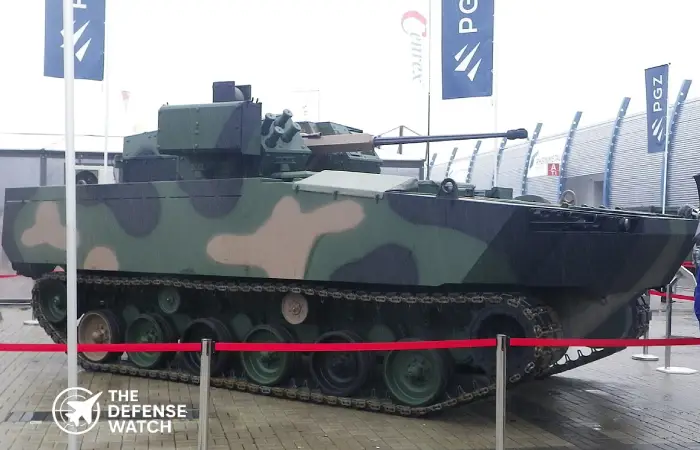
The armed forces of Poland received the first batch of mass-produced Borsuk infantry fighting vehicles (IFVs). A formal handover ceremony at the production plant of Huta Stalowa Wola (HSW) saw 15 Borsuk IFVs transferred to the 15th Mechanized Brigade of the Polish Army — marking the official entry into service of the next-generation amphibious IFV.
The delivery comes under a contract signed months earlier — an initial batch of 111 vehicles that will be delivered between 2025 and 2029 under serial‑production terms.
Background — Why Borsuk?
The Borsuk IFV (Polish for “Badger”) is the result of Poland’s long-running effort to replace the obsolete Soviet‑era BWP‑1 fleet, a platform dating back to the Cold War.
Developed by HSW as part of the national Nowy Bojowy Pływający Wóz Piechoty (NBPWP) programme, the Borsuk is built on a universal modular tracked platform (UMPG). It was first revealed to the public at the 2017 MSPO defense exhibition. Over successive years it underwent design refinements, prototypes, and extensive field tests — including amphibious, mobility, and live‑fire trials — before being approved for serial production.

Poland’s aim with Borsuk is not only to upgrade infantry firepower and protection, but also to develop and sustain a domestic defense‑industrial capability, reducing reliance on foreign platforms.
Key Features & Technical Details
According to official data from HSW and Polish MoD procurement documents, the Borsuk IFV offers significant improvements over its predecessors:
- Crew & capacity: Crew of three (commander, driver, weapons operator) + space for six dismounted infantry soldiers.
- Mobility: Powered by an MTU 8V199 TE20 turbo-diesel engine delivering 720 hp; hydropneumatic suspension; maximum road speed of 65 km/h; fully amphibious with swimming speed around 8 km/h.
- Protection: Hull built with steel reinforced by composite/ceramic armor; design compliant with modern battlefield survivability standards.
- Armament: Equipped with a remotely operated turret system, ZSSW-30 turret — featuring a 30 mm Mk44S Bushmaster II autocannon, a 7.62 mm UKM‑2000C coaxial machine gun, and dual anti-tank guided missile (ATGM) launchers. Additional ammunition types include programmable rounds.
- Modularity and growth potential: The chassis is designed to host multiple specialized variants beyond the standard IFV — including command, reconnaissance, medical evacuation, recovery, and NBC‑reconnaissance versions.
According to the initial contract, the first 111 IFVs will be delivered by 2029; the larger framework envisions up to 1,400 tracked vehicles based on the Borsuk chassis including IFVs and support variants.
Statement from Officials
At the handover ceremony, Władysław Kosiniak-Kamysz, Poland’s Deputy Prime Minister and Minister of Defense, emphasized that the 15 newly delivered Borsuk IFVs mark a “major day for the Polish Armed Forces,” highlighting that the vehicles not only replace Soviet‑era systems, but also significantly enhance the operational capability of the 15th Mechanized Brigade.
Deputy Defense Minister Paweł Bejda, responsible for modernization, underlined that Borsuks will become cornerstone assets of Poland’s mechanized forces. He also indicated plans to further diversify the fleet with amphibious and non-amphibious variants, while promoting Borsuk as a potential export product.
Meanwhile, HSW is reportedly ramping up its production capacity in preparation for serial output. The company aims to support not only the Borsuk IFV programme, but also other related tracked and support vehicles.
Significance — What This Means for Poland’s Armed Forces
The induction of Borsuk IFVs represents a watershed moment for the Polish Land Forces. After decades of relying on outdated Soviet-era BWP‑1 IFVs — whose thin armor and obsolete systems rendered them vulnerable in modern conflict scenarios — Poland is now fielding a modern, domestically built platform capable of meeting contemporary threats.
The Borsuk’s amphibious capability, modular chassis, and modern turret armament provide the Polish Army with enhanced tactical flexibility. Its integration will likely be pivotal for mechanized brigades stationed near Poland’s eastern borders — a region of heightened strategic importance given recent security developments in Europe.
Moreover, the decision to design, produce, and deploy Borsuk domestically underlines Poland’s strategic ambition to strengthen its defense‑industrial base — reducing reliance on foreign imports and potentially becoming an exporter of advanced armoured vehicles.
What’s Next
Over the next four years, the Polish Ministry of Defense and HSW plan to complete the delivery of all 111 IFVs under the first contract. Concurrently, efforts will begin to deliver specialized variants — such as command, recovery, reconnaissance and medical evacuation vehicles — based on the Borsuk platform.
Poland may also pursue further procurement beyond the initial batch, expanding its mechanized force capabilities substantially. According to official policy plans, Borsuk (and associated support variants) may become the backbone of Poland’s mechanized infantry for decades.
Finally — as hinted by Defense Minister comments — Poland is preparing to promote Borsuk for export. If successful, this could mark HSW and Poland among the few European nations capable of offering a modern, amphibious, modular IFV for international customers

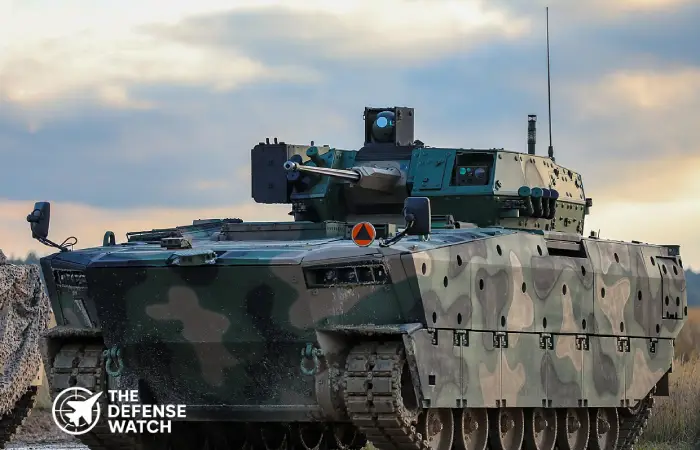
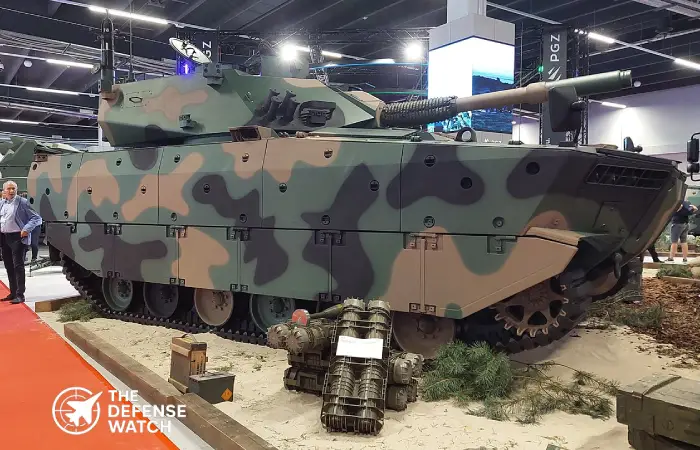

WARSAW, Poland — Slovenia has postponed its planned acquisition of approximately 100 AMV XP armored vehicles from Finnish manufacturer Patria, citing technical upgrades and political considerations, according to government sources. The Cabinet confirmed the purchase will not proceed until after the next parliamentary elections, scheduled for March 2026.
The original letter of intent with Finland was signed in February 2025, following the cancellation of a 2022 contract for 45 Boxer vehicles from the Organization for Joint Armament Cooperation (OCCAR). The Patria AMV XP was selected to modernize Slovenia’s medium battalion battle group and medium combat reconnaissance battalion, enhancing operational mobility and survivability on the modern battlefield.
Reports indicate several factors influenced the delay. Slovenian officials highlighted the need for improved force protection, including anti-drone capabilities, and greater participation of domestic industry in turret production. Local observers also suggested that the high cost of the acquisition — estimated at €695 million ($811 million) — could affect public support.
Matej Tonin, a former Slovenian defense minister and current European Parliament member, criticized the delay, emphasizing lost time and rising costs. “We have lost three to four years, and every year acquisitions of military equipment become more expensive,” he said. Tonin urged the government to continue prior procurement efforts rather than restarting planning from scratch.
A spokesperson for Slovenia’s Ministry of Defense told Defense News that the project is “ongoing and has not been halted,” but that the vehicles will undergo modernization to align with current combat doctrines. “Due to changes in military conflicts and combat doctrine on modern battlefields, which also require the use of drones and anti-drone protection for effective operation, the Ministry of Defence has decided to upgrade the 8×8 vehicles with modern modular capabilities,” the spokesperson said.
The delay underscores the challenges small European nations face in balancing modernization needs with political and public scrutiny. Once procured, the Patria AMV XP fleet is expected to significantly boost Slovenia’s armored vehicle capabilities and interoperability with NATO allies.
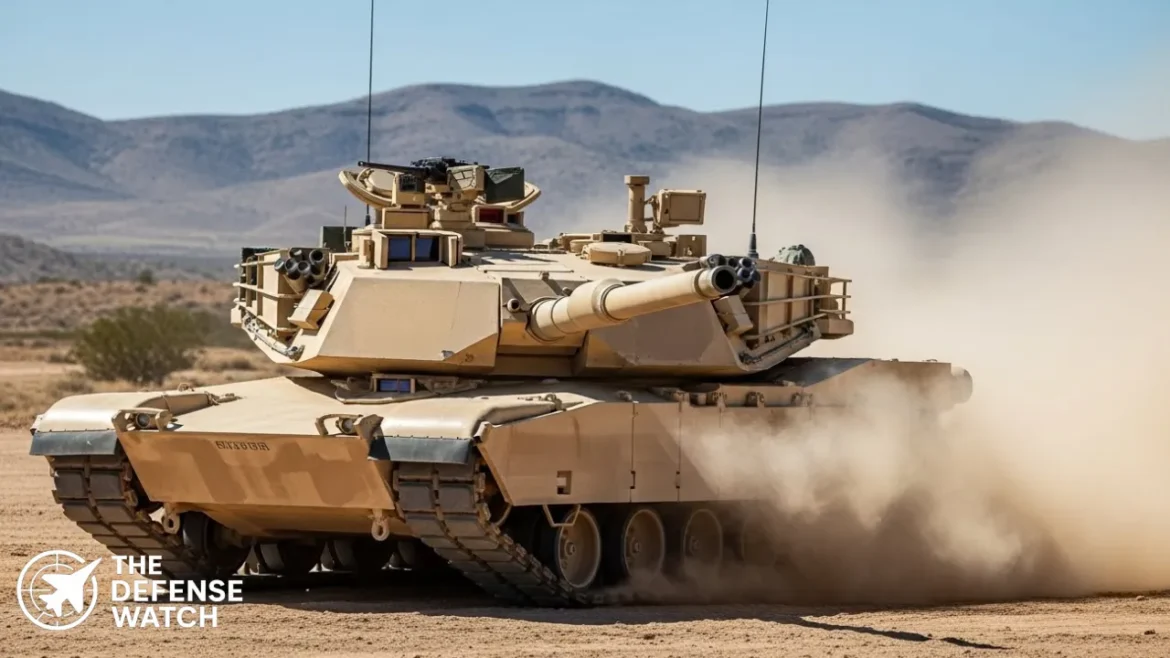
M1 Abrams Tank battlefield performance: The Backbone of U.S. Armored Forces
The M1 Abrams Tank continues to serve as the cornerstone of U.S. Army armored capabilities, decades after its initial deployment. Developed by General Dynamics Land Systems, this Main Battle Tank (MBT) has undergone multiple upgrades to remain relevant on modern battlefields. With its combination of advanced armor, high mobility, and devastating firepower, the Abrams is recognized globally as one of the most capable tanks in service.
The latest variant, the M1A2 SEPv3, features enhancements in crew survivability, digital fire control, and networked battlefield operations. Its 120mm smoothbore main gun allows rapid engagement of armored threats, fortified positions, and personnel targets. Complementary secondary armaments include a 12.7mm heavy machine gun and dual 7.62mm machine guns, ensuring the Abrams can handle both heavy and light targets in diverse combat scenarios.
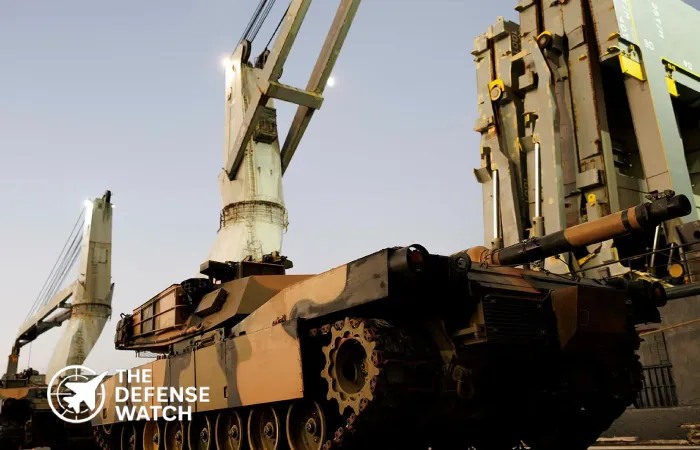
Performance, Mobility, and Modern Upgrades
Powered by a 1,500 horsepower gas turbine engine, the M1 Abrams can reach speeds up to 67 km/h on roads and maintain significant off-road mobility at 40 km/h. Its operational range of 425 km allows sustained combat operations without frequent resupply. Modern variants incorporate Trophy Active Protection Systems, upgraded composite armor with depleted uranium layers, and automatic fire suppression systems, making it one of the most survivable MBTs in existence.
The tank’s crew of four – commander, gunner, loader, and driver – benefits from advanced digital systems including thermal imaging, laser rangefinders, and secure battlefield communications. These upgrades allow the Abrams to perform effectively under night and all-weather conditions while maintaining networked battlefield awareness.
Combat Experience and Global Context
The M1 Abrams has proven itself in multiple U.S. and coalition operations, notably in Iraq and Afghanistan, where it excelled in urban and desert warfare environments. Its modernizations reflect lessons learned from these deployments, emphasizing survivability against improvised explosive devices (IEDs), precision-guided munitions, and anti-tank guided missiles.
Analysts note that the M1 Abrams’ combination of firepower, armor protection, and mobility continues to shape U.S. armored doctrine, ensuring that it remains relevant despite advances in unmanned systems, drones, and hybrid warfare tactics. This adaptability also positions the Abrams for future upgrades under the SEPv4 program, which may include artificial intelligence integration for targeting and predictive battlefield analytics.
Strategic Relevance
As U.S. forces focus on near-peer competition and potential high-intensity conflict scenarios, the M1 Abrams Tank will remain central to ground combat strategies. Its ability to operate seamlessly with infantry, artillery, and air support enhances combined arms operations, offering the U.S. Army a decisive edge against armored adversaries.
FAQs
What is the maximum speed of the M1 Abrams Tank?Up to 67 km/h on roads and 40 km/h off-road.
What upgrades distinguish the M1A2 SEPv3 from earlier models?SEPv3 includes enhanced armor, Trophy APS, advanced fire control, and improved battlefield communications.
How many crew members operate the Abrams?Four: commander, gunner, loader, and driver.
What type of main gun does the M1 Abrams use?A 120mm M256 smoothbore main gun.
Has the Abrams seen combat?Yes, in Iraq, Afghanistan, and other coalition operations.