

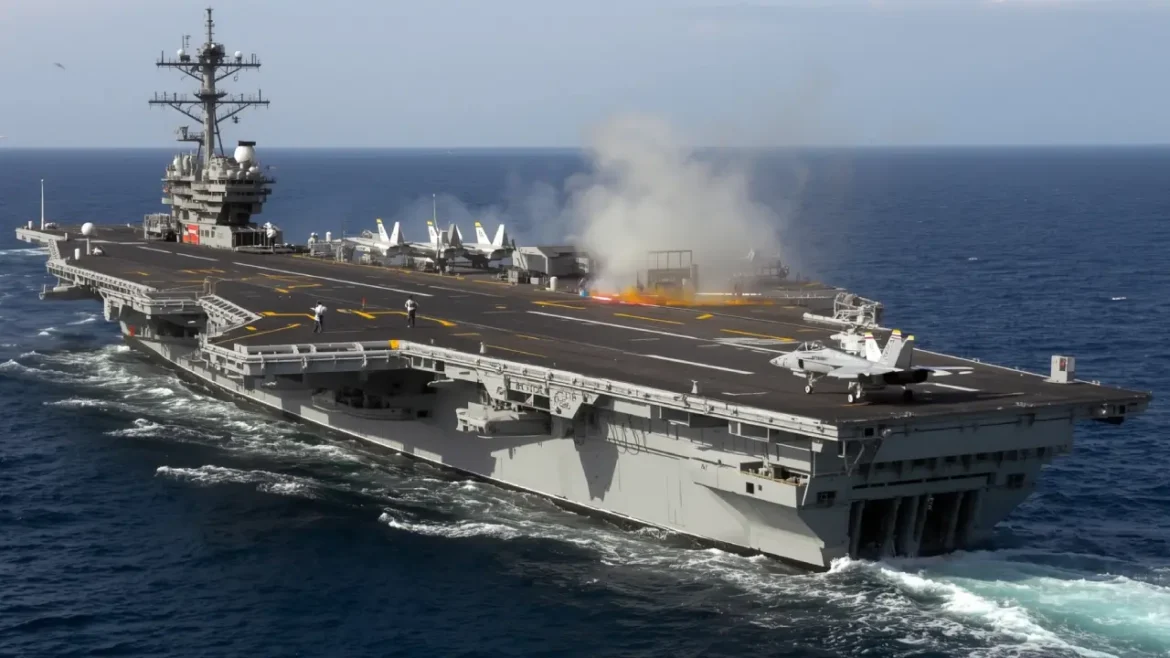
A Legacy of Dominance: Aircraft Carriers Still Lead the Fleet
The U.S. Navy continues to hinge its maritime strategy on — and in 2025, aircraft carriers remain the indispensable backbone of its operational prowess. With 11 nuclear-powered carriers, the Navy ensures unmatched power projection, forward presence, and strategic flexibility across the globe.
Continuing the Carrier Fleet—Despite Challenges
The Navy reiterates its commitment to preserving an 11-carrier force, including the advanced Ford-class vessels. These carriers combine cutting-edge systems—like EMALS, advanced radar suites, automation, and reduced crew requirements—to bolster sortie rates and sustain operations with fewer personnel.
Yet, the fleet faces challenges from aging platforms and industrial constraints. The USS Nimitz is scheduled for deactivation starting in FY 2026, and newer carriers like the USS John F. Kennedy (CVN-79) have encountered delivery delays of up to two years.
Why Carriers Still Matter in 2025
- Unparalleled Power Projection
Carriers offer mobile air bases capable of responding swiftly to global hotspots—from deterrence in the Indo-Pacific to maritime security in the Mideast. - Strategic Flexibility Amid Geography and Diplomacy
Their ability to station in international waters minimizes diplomatic hurdles and ensures presence without relying on foreign bases. - Synergy of Advanced Technologies
Ford-class carriers bring innovations—like DBR radar, A1B reactors, and sortied design automation—that deliver superior sustained operations.
Mounting Threats and Operational Stresses
However, carriers face growing threats. Hypersonic and anti-ship ballistic missiles, like China’s KD-21 and others, raise concerns about survivability—they could potentially strike U.S. carriers within minutes in high-end conflicts. Operational overstretch in the Middle East has also strained maintenance, deployments, and readiness, casting doubt on carrier availability in future high-intensity theaters.
Context & Analysis
- Industrial and Readiness Strain
Delays in carrier construction (e.g., CVN-79) and potential delays in future ships (CVN-82) could disrupt the industrial base and lead to capability gaps. The Navy is working to elevate combat-surge readiness from 68% toward 80% by 2027, integrating maintenance efficiencies and workforce retention strategies. - Reaffirming Carrier Value Amid Adversity
While threats have evolved, no platform offers the same blend of lethality, reach, and platform versatility. Moving forward, the Navy must reconcile modernization—with emerging domains like drones and missiles—with maintaining the carrier fleet as a central pillar of U.S. naval power.
FAQs
The U.S. Navy maintains 11 nuclear-powered carriers, including Ford-class vessels, despite fleet maintenance and operational demands.
Ford-class carriers feature EMALS launch systems, Dual Band Radar, automation, a more powerful reactor (A1B), and reduced crew needs—boosting sortie rates and lowering lifecycle costs.
Hypersonic missiles and advanced anti-ship ballistic weapons (e.g., KD-21) present significant risks—capable of challenging carrier defenses with high-speed, maneuverable profiles.
Delaying carriers like CVN-82 strains the carrier industrial base, potentially halting production lines and reducing readiness—jeopardizing fleet sustainability.
The Navy aims to reach an 80% combat-surge readiness level by 2027, focusing on improved maintenance, training, personnel retention, and streamlined logistics.