U.S. Clears Major GBU‑39 Sale to South Korea
The U.S. State Department has approved a Foreign Military Sale (FMS) package worth US$111.8 million for the sale of 624 units of the GBU-39/B Small Diameter Bomb (SDB‑I) to the Republic of Korea (South Korea). The clearance — announced on 5 December 2025 under transmittal No. 25‑111 — follows a previous, smaller contract that remained under the congressional notification threshold.
South Korean defense officials, speaking on background, state the additional SDBs will expand the country’s precision‑strike inventory to well over one thousand bombs, enhancing Seoul’s ability to meet long-range strike requirements across the Indo‑Pacific region.
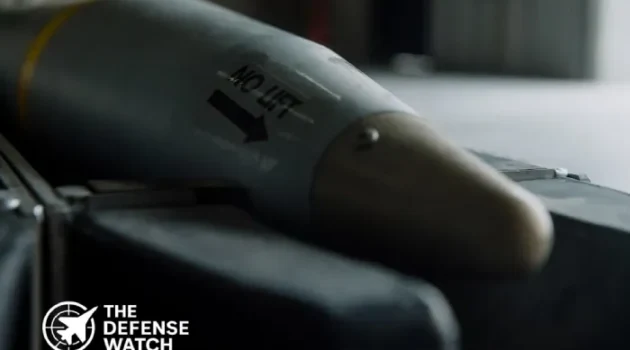
What Is the GBU‑39/B Small Diameter Bomb?
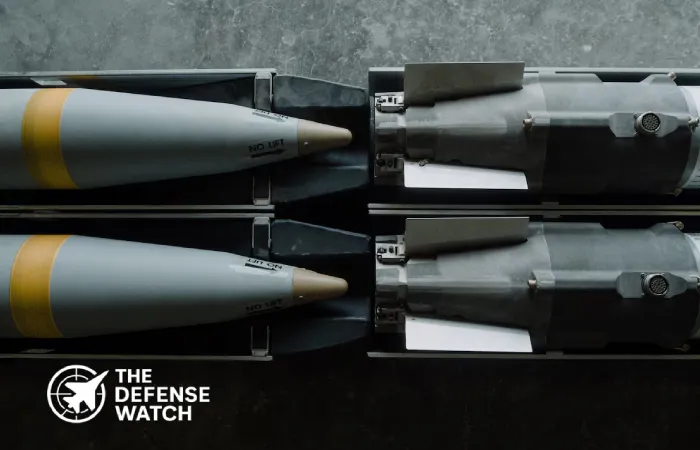
The GBU-39/B is a 250‑lb class, GPS/INS‑guided glide bomb developed by Boeing to meet a 1997 requirement from U.S. Air Combat Command for a “miniaturized smart bomb” capable of carrying more munitions per sortie.
- Size & Weight: Approximately 70.8 inches (1.8 m) in length, 7.5 inches (19 cm) in diameter when packed, and weighing about 285 lb (≈ 129 kg).
- Warhead: Penetrating blast‑fragmentation (AFX‑757), capable of punching through more than three feet (~0.9 m) of steel‑reinforced concrete — making it effective against hardened fixed targets such as bunkers or fortifications.
- Guidance & Accuracy: Combines GPS with inertial navigation (INS) for all‑weather, day/night operations; when released, the bomb glides autonomously to pre‑programmed coordinates.
- Range & Loadout: When dropped from high altitude, the SDB can glide over 40 nautical miles (≈ 74 km) or more, sometimes quoted up to 60 nmi (≈ 110 km) depending on release conditions. Crucially, thanks to a dedicated carriage (e.g., the BRU‑61/A rack), four SDBs can replace a single 1,000‑ or 2,000‑lb bomb, greatly multiplying target coverage per sortie.
The SDB system officially entered service in 2006, and has since become a mainstay of precision strike arsenals for multiple air forces worldwide.
Why the Sale Matters for South Korea
Seamless Integration
South Korea’s current combat aircraft fleet — notably the F-15K Slam Eagle and its modernized F-16 Fighting Falcons — already supports the hardware, software, and cabling required for SDB integration. As a result, the addition of these 624 SDBs will come with little to no need for extensive modifications.
This plug-and-play compatibility reduces both cost and time for induction, enabling rapid deployment and boosting sortie generation rates under existing logistics frameworks.
Enhanced Strike Flexibility and Deterrence
With the small size and low‑collateral damage profile of SDBs, South Korean air planners can now consider multi‑target, deep‑strike missions that would have been riskier or less efficient with conventional heavy bombs. The ability to load four SDBs per rail or internal bay dramatically increases target coverage and flexibility.
Given regional security dynamics — including tensions on the Korean Peninsula and broader Indo‑Pacific strategic competition — enhanced precision‑strike capability gives Seoul increased deterrence value and a wider range of military responses without requiring a larger sortie footprint.
Broader Strategic & Alliance Implications
The sale aligns with a wider U.S. effort to standardize precision‑guided munitions across allied air forces. By equipping partners such as South Korea with the same bomb architectures — here, the GBU‑39/B — interoperability is improved, both for coalition planning and real‑time allied air operations. Several U.S. allies already employ the SDB.
Moreover, the modest per‑unit cost — approximately US$40,000 — makes procurement of large stockpiles economically viable, allowing allies to steadily scale up inventories without imposing major budget strain.
Finally, wider distribution of precision‑smart munitions like the GBU‑39/B supports a modern deterrence architecture emphasizing accuracy, modularity, and controlled escalation — key elements under evolving Indo‑Pacific security dynamics.
Risks, Limitations, and What’s Next
Despite its strengths, the SDB is fundamentally a glide bomb: once released, it follows a predetermined path using GPS/INS, which may reduce flexibility in dynamic combat situations compared with missiles or weapons with terminal guidance against moving targets.
That said, newer variants and related developments — such as the heavier hitting warhead options and ground‑launched versions (e.g., the GLSDB)— point to future upgrades. For now, the Republic of Korea’s certified platforms and mission architecture will mostly exploit the air‑launched SDB-I variant.
Short term, expect deliveries to begin once the formal contract is signed, followed by ramp-up of training and integration into South Korea’s air‑to‑surface mission planning. Medium-term, the expanded SDB stockpile will likely influence how Seoul designs its strike doctrine — especially for deep-strike strikes against hardened or fixed installations without exposing launch platforms to high-threat air defenses.