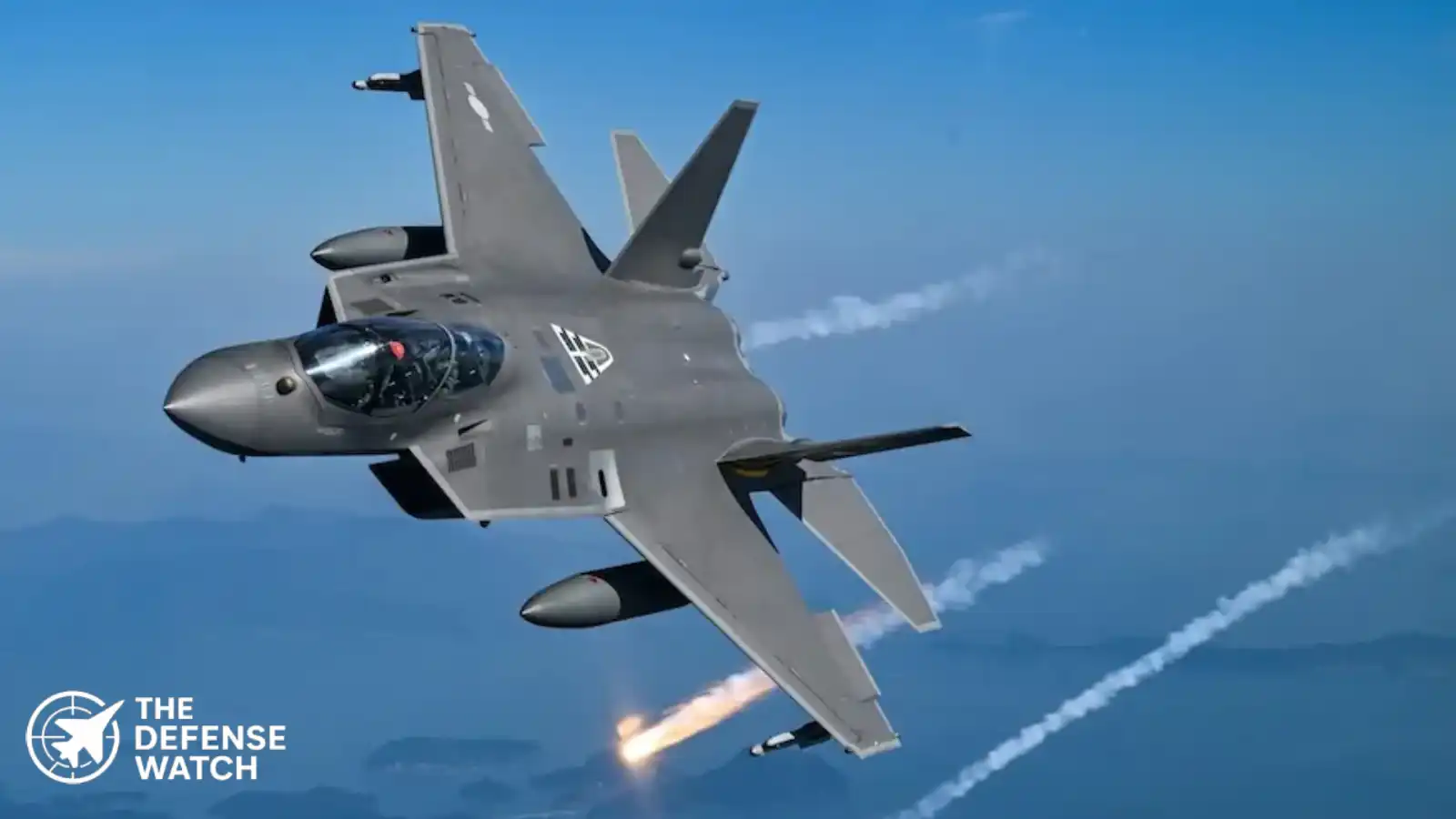
KF-21 Boramae Reaches First Production Flight Milestone
The KF-21 Boramae has entered a critical new phase after the first production aircraft successfully completed its maiden flight in South Korea, according to reporting by Defence Industry Europe citing program developments from Korea Aerospace Industries (KAI).
The successful test marks the transition from prototype development into serial production, one of the most important steps for any modern fighter aircraft program. It also signals that South Korea remains on track to begin delivering the new combat jet to the Republic of Korea Air Force later this year.
- First KF-21 Boramae production aircraft completed its maiden flight in South Korea.
- The milestone comes ahead of initial deliveries scheduled later in 2026.
- KF-21 is being developed by Korea Aerospace Industries for the Republic of Korea Air Force.
- The aircraft is intended to replace older F-4 and F-5 fighter fleets.
- The program supports South Korea’s drive for greater defense self-reliance and export growth.
For Seoul, the event is more than symbolic. It reflects years of investment aimed at reducing dependence on foreign fighter imports while strengthening domestic aerospace manufacturing capacity.
Why The KF-21 Boramae Matters
The KF-21 Boramae was designed as a next-generation multirole fighter positioned between legacy fourth-generation aircraft and more expensive fifth-generation stealth platforms.
That makes the aircraft strategically important. Many air forces need modern sensors, advanced avionics, networked warfare capability, and lower radar signature, but cannot afford or access top-tier stealth fleets in large numbers.
South Korea appears to be targeting that gap.
The KF-21 is expected to replace aging F-4 Phantom II and F-5 aircraft while operating alongside existing advanced fleets such as the F-35. This mixed-force model gives South Korea both high-end stealth capability and larger affordable fighter mass.
Production Milestone Shows Program Confidence
Moving a prototype into production is where many aerospace programs face delays, cost growth, or redesign pressure. Completing a maiden flight with the first production-standard aircraft suggests that engineering maturity is improving and manufacturing systems are stabilizing.
That matters for future customers as much as for South Korea itself.
Export buyers typically watch three indicators closely:
- Has the aircraft entered production
- Are deliveries happening on schedule
- Is the home nation fully committed
The KF-21 Boramae now strengthens its position on all three points.
Regional Security Context
The timing is notable. Indo-Pacific airpower competition continues to intensify as regional states modernize fleets and expand missile defense networks.
South Korea faces persistent threats from North Korea while also navigating a broader environment shaped by Chinese military expansion and increased great-power rivalry across Asia.
A credible domestically built fighter gives Seoul more flexibility in sustainment, upgrades, weapons integration, and long-term fleet planning.
What Comes Next
The next major benchmarks for the KF-21 Boramae program are expected to include:
- Delivery of first operational aircraft
- Continued flight testing and weapons integration
- Expanded production output
- Potential export negotiations with partner nations
If these stages proceed smoothly, the KF-21 could become one of the most significant non-U.S. fighter programs of the decade.
Bottom Line
The maiden flight of the first production KF-21 Boramae is a meaningful achievement for South Korea’s defense industry. It demonstrates growing industrial confidence, strengthens national airpower modernization, and could open future export opportunities in a highly competitive fighter market.
For Washington and allied planners, the rise of capable partner-built combat aircraft also adds resilience to broader regional security networks.
Boeing Secures Major F-15K Upgrade Contract
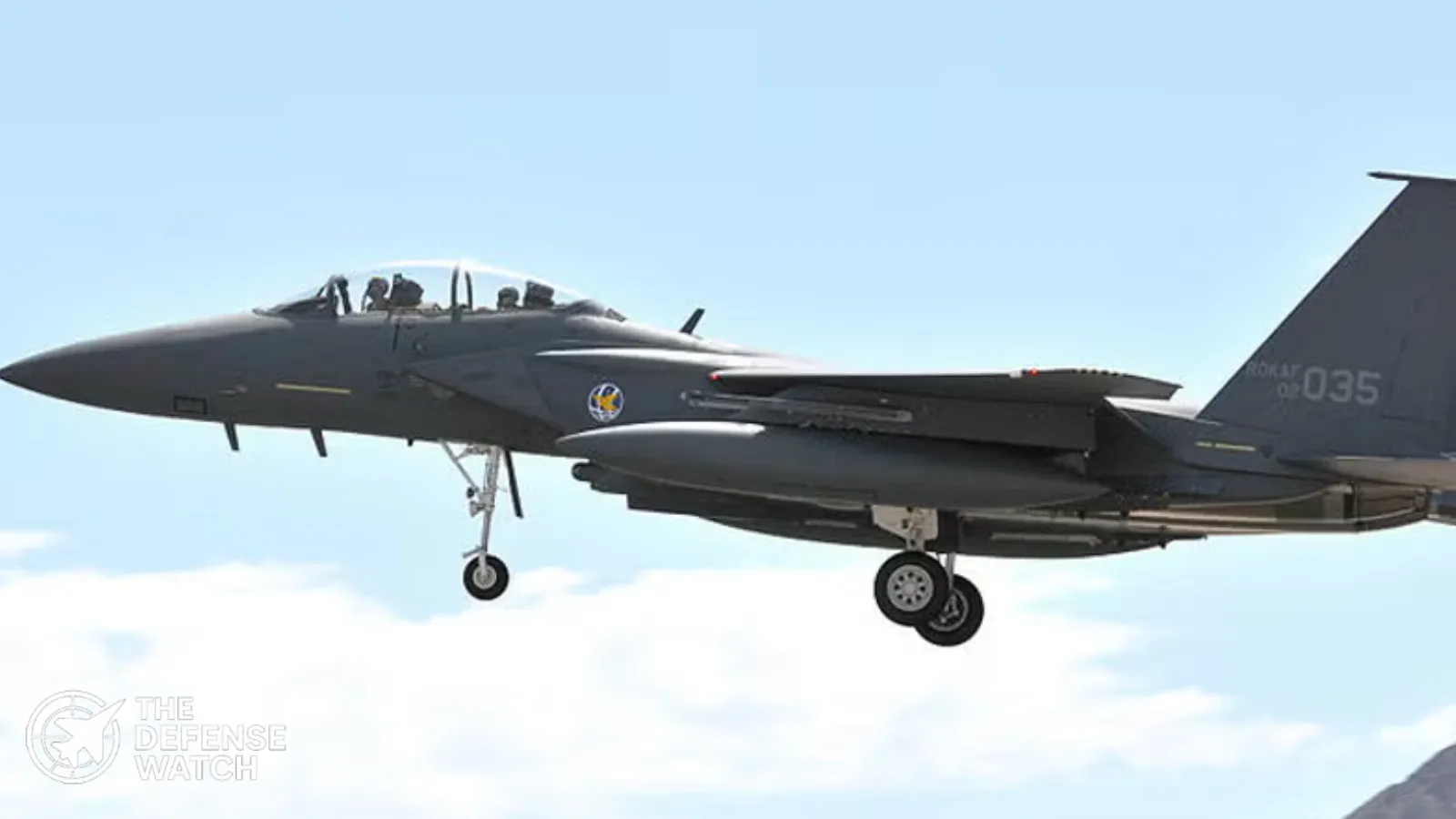
The Boeing F-15K upgrade contract has been awarded to Boeing in a deal valued at up to $2.81 billion to modernize the Republic of Korea Air Force F-15K fleet under the U.S. Foreign Military Sales framework.
The U.S. Department of Defense announced that The Boeing Co., based in St. Louis, Missouri, received a not-to-exceed $2,805,961,005 hybrid cost-plus-fixed-fee and fixed-price incentive undefinitized contract. The agreement supports a comprehensive upgrade program for South Korea F-15K Slam Eagle aircraft, operated by the Republic of Korea Air Force.
Contract Scope and Program Overview
Under the Boeing F-15K upgrade contract, the company will design and develop an integrated suite of aircraft systems to support modification of the F-15K fleet. The effort is being executed on behalf of the Republic of Korea Air Force and South Korea Defense Acquisition Program Administration.
The contract structure combines cost-plus-fixed-fee and fixed-price incentive elements and remains undefinitized at the time of award. This approach allows work to proceed while final contract terms are completed, a common practice for large, long-term military modernization programs involving complex systems integration.
Work will be performed primarily in St. Louis, Missouri, Boeing’s primary fighter aircraft production and sustainment hub. The program is scheduled to continue through Dec. 31, 2037, indicating a multi-decade modernization and support effort.
Foreign Military Sales and Funding Details
The F-15K upgrade effort is being executed as a Foreign Military Sales case between the United States and the Republic of Korea. At the time of contract award, $540 million in foreign military sale funds were obligated to initiate the program.
Foreign Military Sales contracts are managed by the U.S. government on behalf of allied nations, ensuring standardized contracting, configuration control, and long-term sustainment alignment with U.S. Air Force systems.
The Air Force Life Cycle Management Center at Wright-Patterson Air Force Base, Ohio, is serving as the contracting activity for the program. The contract identifier is FA8634-26-C-B002.
Sole Source Award and Industrial Context
The Boeing F-15K upgrade contract was awarded as a sole source acquisition. Boeing is the original manufacturer of the F-15 platform and remains the only entity with full design authority and system integration responsibility for the aircraft.
Sole source awards are typical for major fighter aircraft upgrade programs, particularly when proprietary mission systems, avionics architecture, and flight control software are involved.
Boeing continues to serve as the prime contractor for F-15 variants worldwide, including the F-15EX Eagle II for the U.S. Air Force and multiple international upgrade programs.
Strategic Importance for South Korea
The Republic of Korea Air Force operates the F-15K as one of its primary long-range strike and air superiority platforms. Modernization of the fleet supports South Korea’s broader efforts to maintain air combat capability amid evolving regional security challenges.
While specific system details were not disclosed in the contract announcement, integrated aircraft system upgrades typically focus on avionics, mission computing, sensors, electronic warfare, and interoperability with allied forces.
The long execution timeline suggests a phased approach to fleet upgrades, testing, and fielding, ensuring continued operational availability of the aircraft during modification.
Boeing Defense Portfolio and Long-Term Sustainment
The award further reinforces Boeing’s role as a key supplier in allied fighter sustainment and modernization programs. The St. Louis facility supports production, upgrades, and sustainment for multiple fighter aircraft lines, including F-15 and F-A-18 platforms.
By extending work through 2037, the Boeing F-15K upgrade contract provides long-term stability for the industrial base supporting fighter aircraft engineering, integration, and lifecycle management.