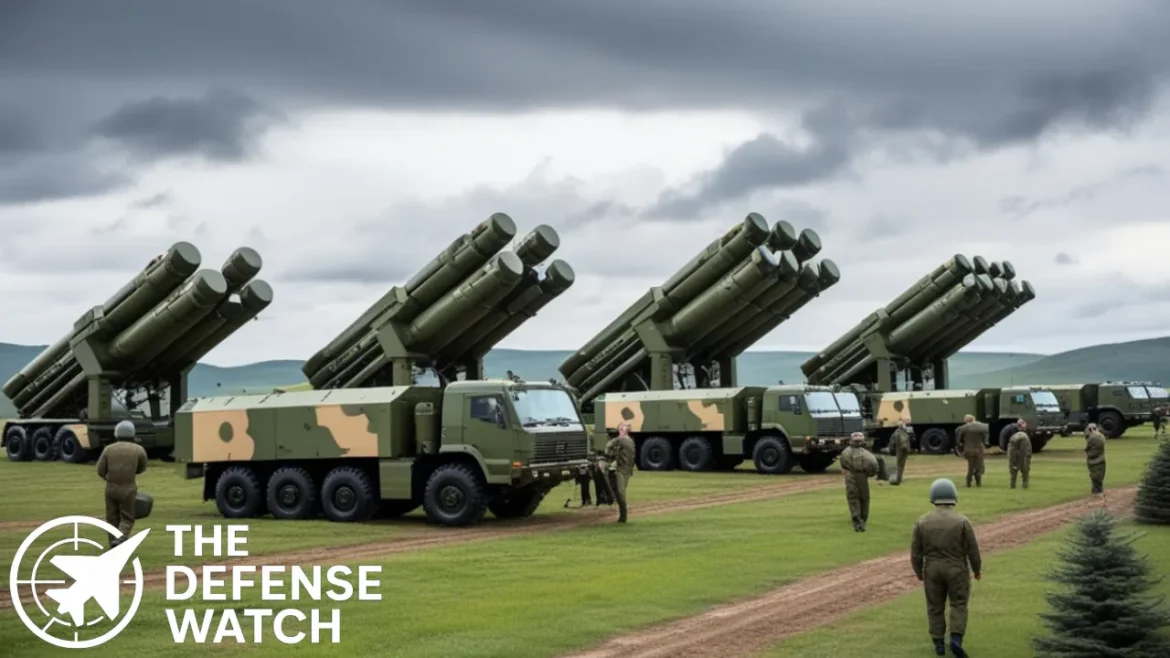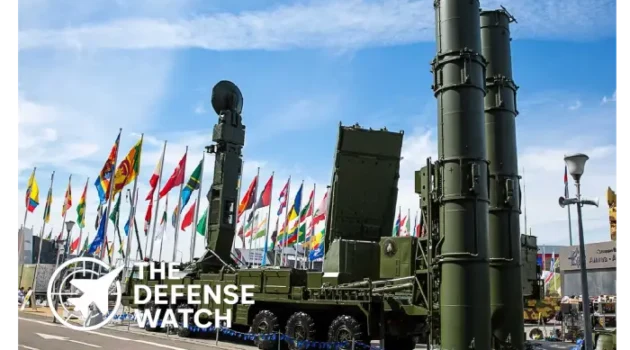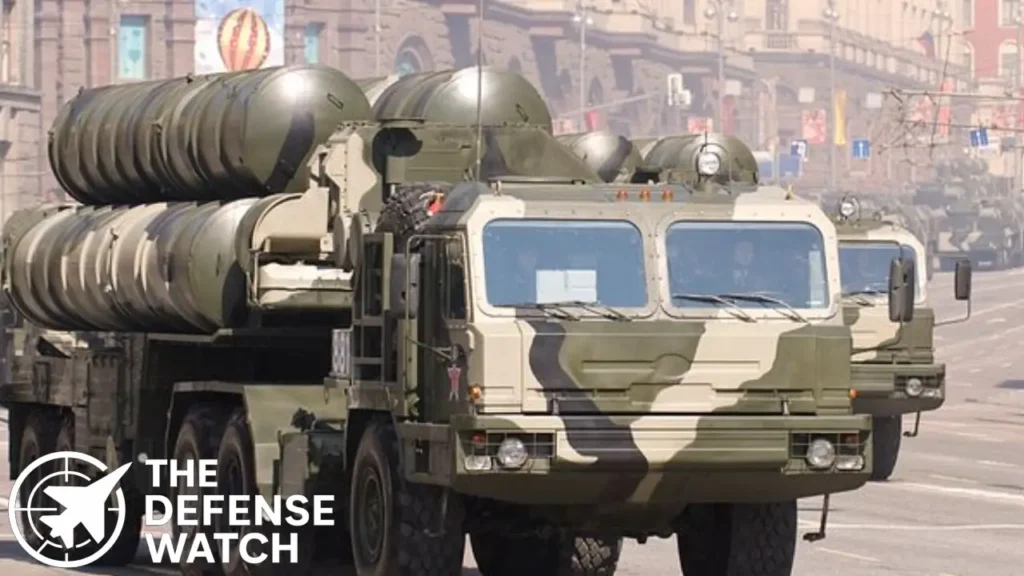
- 🎯 The S-400 Triumf remains the world’s most widely exported advanced air defense system, deployed by Russia, China, India, and Turkey.
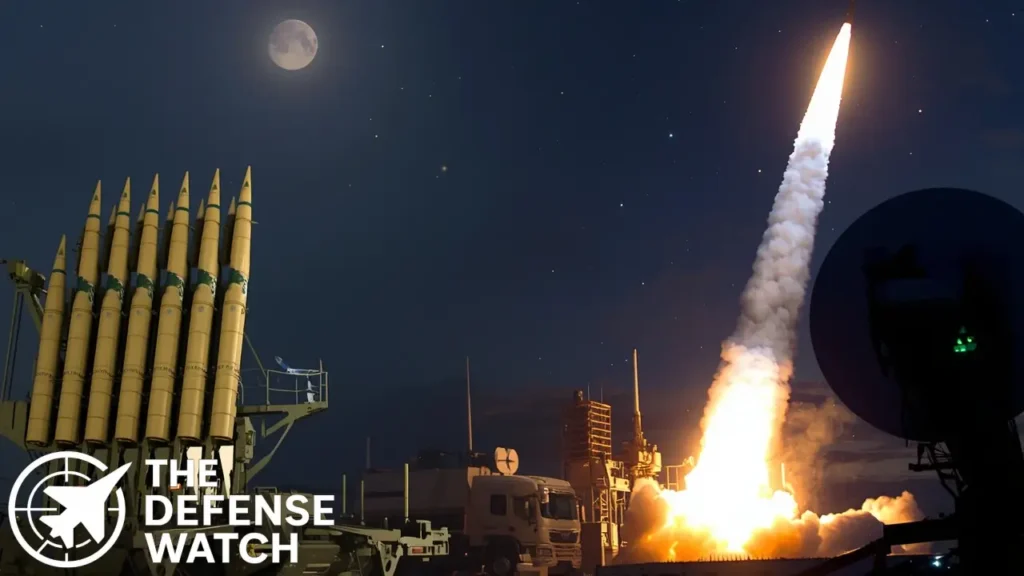
- 🎯 THAAD (Terminal High Altitude Area Defense) is the only U.S. system proven to intercept ballistic missiles in their terminal phase at high altitude.
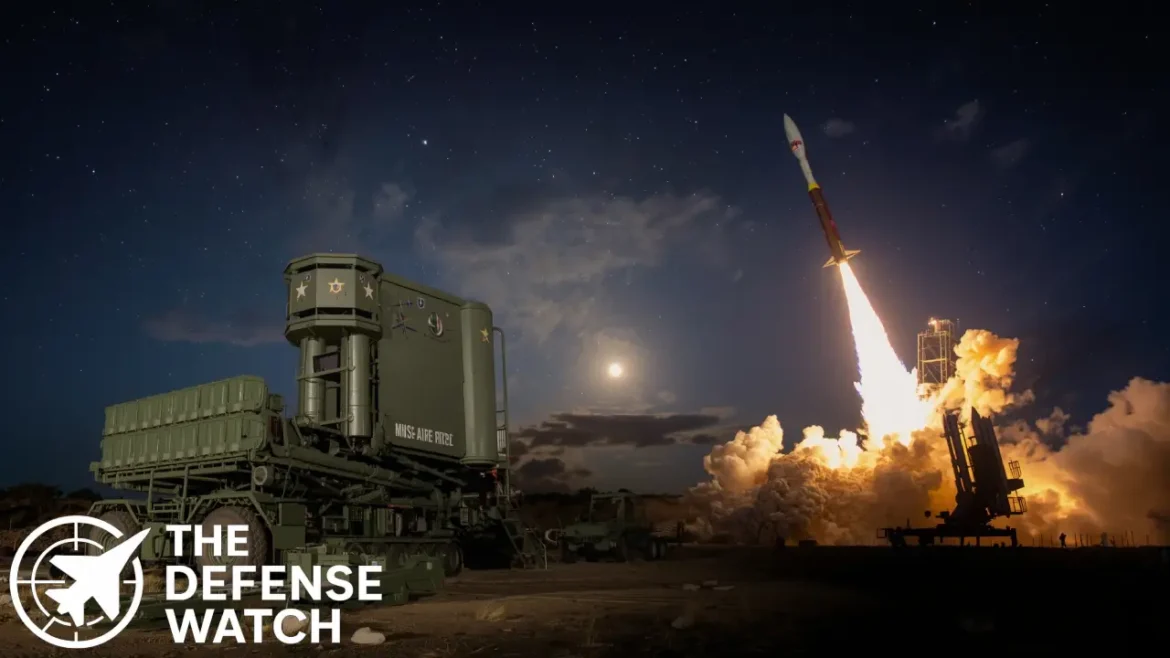
- 🎯 Israel’s Iron Dome has achieved an interception rate exceeding 90% against short-range rockets and artillery shells in live combat conditions.
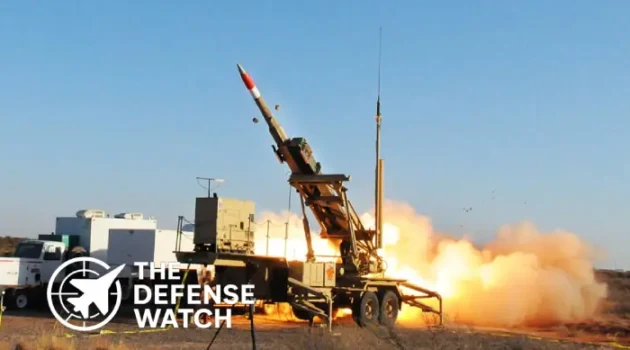
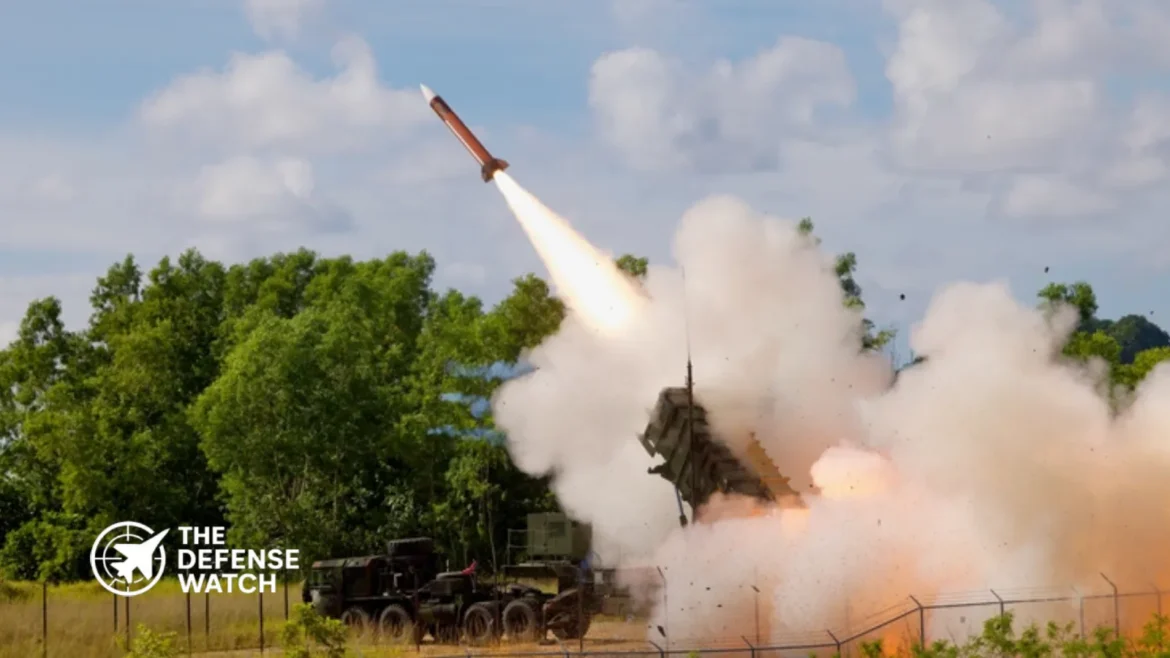
- 🎯 The Patriot PAC-3 system, operated by over 17 nations, has evolved into a layered multi-threat interceptor capable of targeting cruise missiles, drones, and ballistic threats.
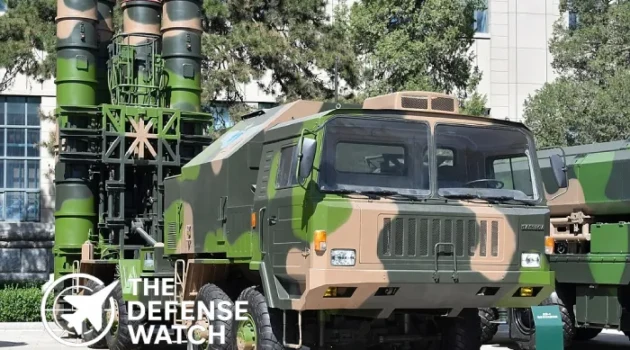
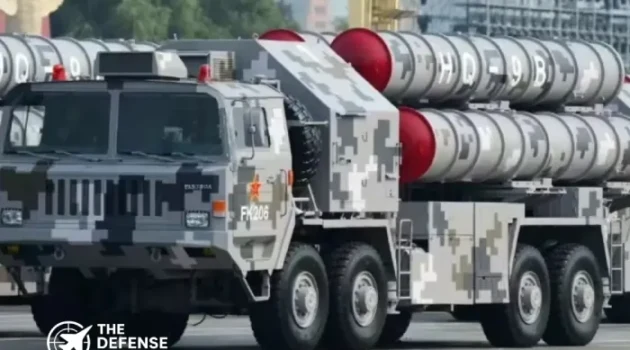
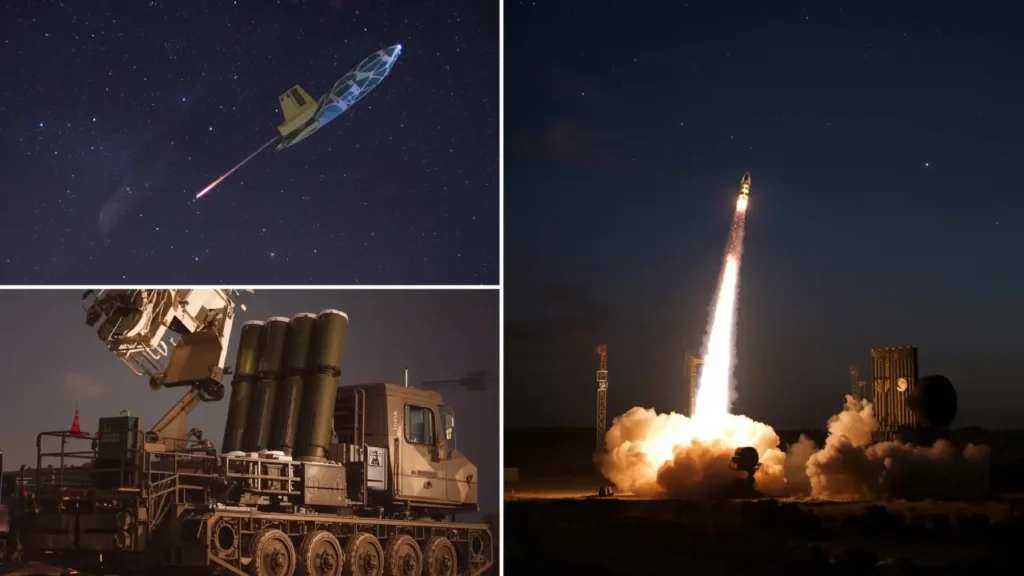
- 🎯 China’s HQ-9B, the domestic challenger to the S-400, extends engagement range to approximately 300 km and is actively deployed across the Indo-Pacific.
Top 5 Air Defense Systems in the World: The Most Powerful Shield Technologies of 2026
As aerial threats evolve from supersonic fighters to swarms of autonomous drones, the race to field the most capable air defense systems in the world has never been more consequential.
Why Air Defense Defines Modern Warfare
The battlefields of Ukraine, the Middle East, and the South China Sea have delivered a sobering lesson to defense planners worldwide: air superiority alone no longer guarantees victory. The ability to deny an adversary access to your airspace — and protect critical infrastructure, forward forces, and civilian populations from aerial attack — has emerged as a decisive factor in 21st-century conflict.
The top 5 air defense systems in the world represent the pinnacle of ground-based air defense technology. From Russia’s export-dominant S-400 to Israel’s battle-tested Iron Dome, each system reflects a distinct strategic philosophy and threat environment. Understanding how they compare is essential for anyone tracking the balance of military power in 2025.
1. S-400 Triumf (Russia) — The Global Benchmark
Russia’s S-400 Triumf (NATO reporting name: SA-21 Growler) remains the most widely discussed and diplomatically contested air defense platform on the planet. Developed by Almaz-Antey and entering service with the Russian Armed Forces in 2007, the S-400 is designed to engage virtually every class of aerial threat simultaneously — from low-flying cruise missiles to manned aircraft and intermediate-range ballistic missiles.
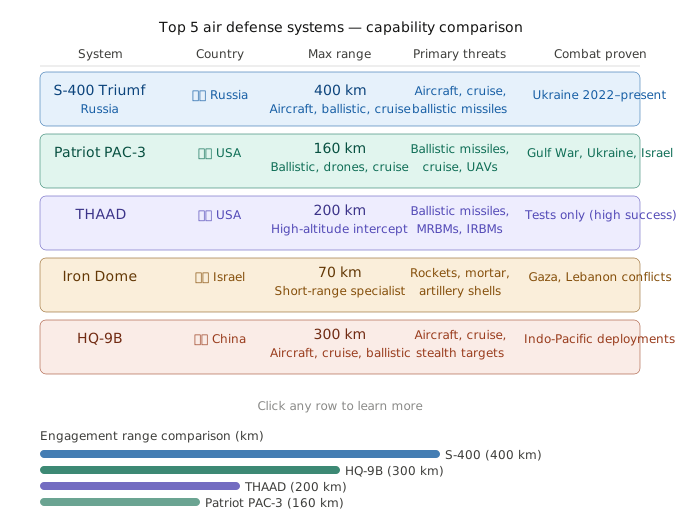
The system’s headline specification is an engagement range of up to 400 kilometers, supported by the 40N6E very-long-range missile. It can simultaneously track up to 160 targets and engage 80 of them at once, using a layered combination of the 40N6, 48N6, and 9M96 missile family to cover low-, medium-, and high-altitude threats.
What has made the S-400 geopolitically explosive is its export success. India, China, and Turkey — all significant U.S. partners or allies — have purchased or received the system, triggering sanctions disputes and alliance tensions. Turkey’s acquisition in 2019 resulted in its expulsion from the F-35 program. The system’s ongoing deployment in Russia’s war against Ukraine has provided real-world data on both its capabilities and its vulnerabilities, particularly against Western-supplied counter-drone and standoff strike weapons.
The S-400’s operational record in Ukraine has been mixed. While it has successfully engaged several Ukrainian aircraft and cruise missiles, Ukraine’s use of Neptune anti-ship missiles, Storm Shadow cruise missiles, and ATACMS has exposed gaps in the system’s ability to counter low-observable, terrain-hugging threats. Russia has reportedly lost multiple S-400 batteries to Ukrainian strikes, suggesting that even sophisticated systems are vulnerable when persistently targeted by intelligent standoff munitions.
2. Patriot PAC-3 (USA) — The West’s Most Proven Defender
The Patriot Advanced Capability-3 (PAC-3) is America’s most combat-tested long-range air defense system and the backbone of NATO’s integrated air defense architecture. First fielded in the early 1980s and continuously upgraded, the PAC-3 MSE (Missile Segment Enhancement) variant now represents a genuinely multi-role interceptor capable of engaging ballistic missiles, cruise missiles, tactical aircraft, and — increasingly — large-format drones.
Unlike the S-400, which relies primarily on fragmentation warheads, the PAC-3 uses a hit-to-kill intercept technology, colliding directly with incoming threats at closing speeds exceeding Mach 5. With a maximum engagement range of approximately 160 kilometers and ceiling exceeding 24 kilometers, the system is less capable of engaging long-range strategic threats than the S-400 but significantly more reliable in a dense, multi-threat environment.
More than 17 nations currently operate Patriot variants, including Germany, the Netherlands, Japan, Saudi Arabia, Ukraine, and Israel. The transfer of Patriot batteries to Ukraine in 2023 marked a strategic watershed — the system has since claimed multiple Russian cruise missiles, hypersonic Kinzhal missiles, and aircraft. Its engagement of the Kh-47M2 Kinzhal — previously described by Russian officials as “unstoppable” — was a particularly significant operational milestone.
3. THAAD — Terminal High Altitude Area Defense (USA)
THAAD occupies a unique niche in the global air defense hierarchy: it is explicitly designed to intercept ballistic missiles during their terminal phase at high altitudes of 40 to 150 kilometers, filling a critical gap between the lower-tier Patriot system and the upper-tier, space-based layers of the U.S. Missile Defense Architecture.
Developed by Lockheed Martin and deployed by the U.S. Army since 2008, THAAD uses a purely kinetic interceptor — no warhead, just a 900-kilogram kill vehicle guided by an advanced infrared seeker. With a defended footprint of approximately 200 kilometers, each THAAD battery includes six launchers, 48 interceptors, a powerful AN/TPY-2 X-band radar, and a command suite. The AN/TPY-2 is itself a strategic asset — its forward deployment in South Korea, Israel, and Turkey provides early warning data shared across the broader U.S. missile defense network.
THAAD has achieved a 17-for-17 perfect intercept record in controlled flight tests, though it has not been used in live combat. Its deployment to South Korea in 2017 triggered a major diplomatic crisis with China, underscoring how air defense systems have become instruments of geopolitical signaling as much as military protection.
Analyst Note: THAAD’s Achilles’ heel is cost and capacity. Each interceptor costs approximately $10 million, and each battery carries only 48 rounds. Against a saturation attack employing dozens or hundreds of ballistic missiles — the scenario China or North Korea might employ — THAAD’s magazine depth is a serious constraint. This has driven investment in lower-cost interceptors and directed-energy alternatives under the Next Generation Interceptor program.
4. Iron Dome (Israel) — Combat’s Most Tested Shield
Israel’s Iron Dome is unlike any other system on this list: it was designed for a specific, persistent, and operationally demanding threat — the mass employment of short-range unguided rockets, mortars, and artillery shells by non-state actors operating across contested urban terrain.
Developed by Rafael Advanced Defense Systems and IAI, Iron Dome entered service in 2011 and has since participated in every major Gaza and Lebanon conflict, accumulating what is arguably the most extensive live-combat air defense record in history. The system uses a Tamir interceptor missile with a proximity-fuzed fragmentation warhead and is guided by the ELM-2084 multi-mission radar, which continuously calculates whether an incoming projectile will land in a populated area before authorizing an intercept — an economically critical algorithm that prevents wasteful engagement of harmless rural impacts.
With a maximum engagement range of approximately 70 kilometers and proven intercept rates above 90% in operational conditions, Iron Dome has saved thousands of lives. The United States has purchased two Iron Dome batteries under a co-production agreement with Raytheon, reflecting serious interest in short-range air defense for U.S. forward bases.
Analyst Note: The October 7, 2023 Hamas attack, while primarily a ground infiltration operation, demonstrated that Iron Dome can be numerically overwhelmed if a mass salvo is launched at a precise timing window. The system’s success rate, while extraordinary, is not absolute — and Israel’s subsequent investment in multi-layer defense integration (Arrow-3, David’s Sling, Iron Dome working in concert) reflects the understanding that no single layer is sufficient.
5. HQ-9B (China) — The Indo-Pacific Challenger
China’s HQ-9B (Red Flag-9B) is the People’s Liberation Army Air Force’s most capable ground-based long-range surface-to-air missile system and Beijing’s direct answer to both the S-400 and the Patriot. Developed by CASIC (China Aerospace Science and Industry Corporation), the HQ-9B is an evolution of the original HQ-9, which itself was developed with significant study of the Russian S-300 architecture.
The HQ-9B boasts an engagement range of approximately 300 kilometers, capable of targeting aircraft, cruise missiles, ballistic missiles, and stealth platforms. Its phased-array radar and multi-channel engagement capability allow simultaneous tracking of over 100 targets. China has deployed the system extensively across the South China Sea, including its artificial island network, and has exported variants (FD-2000) to Uzbekistan, Turkmenistan, and other regional partners.
Unlike the S-400 or Patriot, the HQ-9B has not been tested in major live-combat conditions, which makes independent performance assessment difficult. Its integration into China’s broader Integrated Air Defense System (IADS) — combining long-range sensors, datalinks, and multi-layer missile batteries — is the more significant operational development. In any Taiwan Strait contingency, the HQ-9B network would be one of the most complex air defense environments U.S. and allied forces have ever faced.
The Broader Picture: Layered Defense Is the New Standard
The five systems profiled here are rarely deployed in isolation. Modern air defense doctrine — whether in Israel, Russia, the United States, or China — is built around layered integration: multiple systems covering different altitude bands, ranges, and threat types, networked together through common command-and-control architecture.
Israel’s three-layer system (Iron Dome for short range, David’s Sling for medium range, Arrow-3 for exo-atmospheric threats) is the most mature example. The U.S. Army’s emerging Integrated Air and Missile Defense (IAMD) architecture seeks to replicate this layering globally, connecting Patriot, THAAD, and future interceptors through a common battle management system.
What the Ukraine conflict has confirmed above all is that magazine depth, supply chain resilience, and interceptor cost are as important as raw performance specifications. A system that runs out of missiles — or one that costs $3 million per shot to defeat a $50,000 drone — is a system with a fundamental strategic problem. This calculus is now driving investment in directed-energy weapons, high-energy laser systems, and hypervelocity railgun interceptors as cost-competitive complements to traditional missile defense.
FAQs
Which is the best air defense system in the world in 2026?There is no single “best” system — each excels in its design role. The S-400 offers the greatest range and export reach; THAAD is unmatched for high-altitude ballistic intercept; Iron Dome holds the most combat-proven record in live operations against high-volume short-range threats.
Does the U.S. have a better air defense system than Russia’s S-400?The U.S. does not have a direct S-400 equivalent but operates a layered architecture that, in combination, exceeds the S-400’s capability. THAAD, Patriot PAC-3, and the Ground-Based Midcourse Defense (GMD) system together cover short-, medium-, and strategic-range ballistic threats.
How many countries operate the S-400?Russia, China, India, Turkey, and Belarus operate the S-400. Its export has been a significant source of U.S.-Russia and U.S.-ally diplomatic tension, particularly with Turkey’s acquisition in 2019.
Can Iron Dome stop ballistic missiles?Iron Dome is not designed for ballistic missile defense. That role in Israel’s layered architecture is handled by the Arrow-2 and Arrow-3 systems. Iron Dome is optimized for short-range rockets, mortars, and artillery.
What is the difference between THAAD and Patriot?Patriot PAC-3 intercepts threats at lower altitudes (up to approximately 24 km) and shorter ranges, making it suitable for theater air defense against aircraft, cruise missiles, and short-range ballistic missiles. THAAD engages ballistic missiles at high altitudes (40–150 km) during terminal phase flight, covering a much wider geographical area per battery.

Russia’s layered IAD (Integrated Air Defense) has become one of the world’s most studied military architectures, combining the S-400, S-350, and S-500 into a unified, multi-tier air and missile defense network. Built to counter stealth aircraft, cruise missiles, drones, and ballistic threats, the system forms the backbone of Russia’s strategic air-defense posture from Kaliningrad to the Arctic.
This article examines how the integrated structure functions, how each layer contributes to Russia’s defensive doctrine, and what it means for regional security dynamics.
How Russia’s Layered IAD Works
Russia’s layered IAD is designed as a depth-based defense framework combining long-range, medium-range, and high-altitude intercept capabilities. These systems operate under a unified command-and-control architecture that links ground-based radars, airborne early-warning aircraft, electronic warfare units, and air-defense brigades.
Unlike single-system batteries used by many militaries, the Russian IAD is built around redundancy, overlap, and continuous coverage. Different missile systems are positioned so their engagement envelopes intersect, ensuring uninterrupted tracking and interception capability.
Key Components of the Multi-Tier Shield
- S-500 “Prometey”: High-altitude / exo-atmospheric interceptor
- S-400 “Triumf”: Long-range, multi-target engagement system
- S-350 “Vityaz”: Medium-range, high-capacity interceptor
Together, these systems allow Russia to cover distances from 10 km to 600 km, with tracking that extends far beyond weapon range.
The Role of the S-500: Russia’s Upper-Tier Shield
The S-500 Prometey sits at the top of Russia’s layered IAD, representing the next generation of missile defense. Its mission profile includes:
- Intercepting ballistic missiles in mid-course
- Countering hypersonic glide vehicles
- Engaging high-altitude reconnaissance targets
- Adding redundancy to nuclear missile defense units around Moscow
Though only deployed in limited numbers, Russian officials claim the S-500 can target objects at 600+ km and altitudes above 100 km, extending coverage into near-space.
Integration with A-135/A-235 Strategic Defense
The S-500 supplements existing Russian missile-defense networks around Moscow, functioning as a flexible, mobile complement to silo-based interceptors.
The S-400 Triumf: Long-Range Air and Missile Defense Backbone
Operating as the primary long-range layer, the S-400 defends critical facilities, airbases, and border regions.
Capabilities include:
- Engagement range: 250–400 km (with 40N6 missile)
- Ability to track up to 80 targets
- Engagement of low-observable aircraft including 5th-generation fighters
- Intercepting cruise missiles, UAVs, and tactical ballistic missiles
The S-400 forms the bulk of deployed Russian air-defense battalions, with coverage across:
- Kaliningrad and Crimea
- Moscow region
- Far East near Japan
- Arctic and Northwestern Russia
Operational Combat Experience
In Ukraine and Syria, the S-400 has demonstrated advanced tracking and long-range surveillance ability, though Russia rarely fires its most advanced missiles unless under direct attack.
The S-350 Vityaz: Russia’s New Medium-Range Workhorse
Introduced as a replacement for the aging S-300PS, the S-350 enhances Russia’s layered IAD with high-capacity interceptors suitable for modern saturation threats.
Key characteristics:
- Range: 60–120 km
- High missile load: up to 12–16 ready-to-fire missiles
- Optimized for intercepting drones, cruise missiles, and aircraft
- Designed to counter Western stand-off weapons like JASSM and Storm Shadow
The S-350’s active-radar missiles and automated fire-control make it a key layer between point defense systems (Pantsir-S1) and long-range interceptors (S-400).
How the Multi-Tier Structure Works Together
Long-Range Detection and Targeting
Russia’s radar network, including Nebo-M and Gamma series radars, feeds targeting data to all missile units. Persistent early-warning capability enables:
- Long-range tracking of NATO aircraft
- Identification of stealth aircraft using multi-band systems
- Fusion of data from air, ground, and space sensors
Overlapping Engagement Zones
Each system covers the weaknesses of another:
- S-500 intercepts high-altitude ballistic and strategic threats
- S-400 engages high-value aircraft before reaching launch zones
- S-350 counters mass raids, drones, and cruise missiles
This redundancy ensures resilience even if one layer is degraded.
Electronic Warfare Integration
Russia integrates EW systems like Krasukha, Murmansk-BN, and Repellent to disrupt adversary satellites, GPS, datalinks, and aircraft radars—further enhancing the survivability of the IAD.
Defense Analysis: Implications for NATO and Regional Security
Russia’s layered IAD presents challenges for NATO force planning. Its capability to push surveillance and engagement envelopes hundreds of kilometers beyond Russian territory affects:
- Air-access planning
- Strike package design
- Suppression of Enemy Air Defenses (SEAD) requirements
- Regional basing and air corridor calculations
Western analysts estimate that penetrating Russia’s integrated air-defense zones may require:
- Stealth aircraft
- Long-range stand-off weapons
- Multi-domain EW and cyber support
- Coordinated suppression of radar and command nodes
The S-500’s claimed ability to target near-space assets, if validated, could further complicate strategic planning.
H3 — Limitations and Unknowns
Despite its sophistication, Russia’s IAD faces constraints:
- Limited number of S-500 units
- Vulnerability to coordinated saturation attacks
- Logistics strain in contested environments
- Potential radar and datalink vulnerabilities
Combat performance in Ukraine has also revealed inconsistencies in Russian air-defense coordination, although long-range strategic systems remain largely intact.
FAQs
What is Russia’s layered IAD?It is a multi-tier air-defense system integrating S-500, S-400, S-350, and shorter-range systems to create overlapping engagement zones.
How effective are Russia’s S-400 systems?The S-400 is considered one of the most capable long-range SAM systems, able to target aircraft, drones, and missiles at ranges up to 400 km.
Does Russia’s S-500 really counter hypersonic weapons?Russian officials claim it does, but independent verification is limited.
How does the S-350 improve Russia’s defense network?It provides high-capacity, medium-range coverage optimized for drones and cruise missiles, replacing older S-300 systems.
Which areas are most protected by the layered IAD?Moscow, Kaliningrad, Crimea, the Arctic region, and strategic airbases feature the densest coverage.
What Is an Air Defense System?
An air defense system is a network of radars, missile interceptors, anti-aircraft guns, and command centers designed to detect, track, and neutralize hostile aerial threats. These threats may include enemy aircraft, helicopters, drones, cruise missiles, or ballistic missiles. In modern warfare, air defense is no longer a secondary requirement—it is one of the primary layers of national defense.
Why Nations Need Air Defense Systems
The increasing reliance on drones, long-range missiles, and stealth aircraft has made air defense systems essential. Without them, military bases, cities, and critical infrastructure remain highly vulnerable to aerial strikes. From Ukraine’s urgent reliance on Western missile defenses to Israel’s Iron Dome protecting against rocket attacks, the strategic value of air defense has become evident in both conventional and hybrid warfare.

Modern conflicts highlight three key reasons why air defense is critical:
- Survivability – Protecting armed forces, command centers, and logistics.
- Deterrence – Strong air defense discourages adversaries from launching attacks.
- Strategic Depth – Ensures civilian protection and national resilience during war.
List of Major Air Defense Systems Worldwide
Several countries have developed advanced air defense technologies to protect against evolving threats. Below is a list of notable systems:
- Patriot Missile Defense System (USA) – Operated by multiple NATO members, designed to intercept aircraft, drones, and short to medium-range ballistic missiles.
- THAAD (Terminal High Altitude Area Defense, USA) – Provides high-altitude interception of ballistic missiles outside the Earth’s atmosphere.
- S-400 Triumf (Russia) – Known for its long-range detection and interception, widely deployed and exported, including to India and Turkey.
- Iron Dome (Israel) – Highly effective against short-range rockets and artillery shells, with an interception rate exceeding 90% in recent conflicts.
- HQ-9 (China) – A Chinese long-range surface-to-air missile system comparable to the Patriot, integrated with radar and command networks.
- NASAMS (Norwegian Advanced Surface-to-Air Missile System) – A joint U.S.-Norwegian system used for defending high-value assets, including in Ukraine.
- Barak-8 (India/Israel) – Medium-range defense system widely deployed by the Indian Navy and Air Force.
- Aegis Combat System (USA/Japan/South Korea) – Ship-based radar and missile defense system capable of tracking and intercepting ballistic missiles.
Modern Trends in Air Defense
Air defense systems are evolving to counter hypersonic missiles, stealth aircraft, and drone swarms. Artificial intelligence is increasingly integrated into radar and fire-control systems, enabling faster threat recognition and automated responses. Nations are also combining layered defense strategies, where long-range, medium-range, and short-range interceptors operate together for maximum coverage.
Strategic Context
The war in Ukraine has underscored the decisive role of air defense. Russian missile barrages have tested Kyiv’s ability to maintain critical infrastructure, while Western-supplied Patriot and NASAMS systems have provided a protective shield. Similarly, in the Indo-Pacific, the deployment of THAAD in South Korea has reshaped regional security calculations.
Air defense systems are no longer just military assets; they are geopolitical tools that influence alliances, defense spending, and deterrence postures.
FAQs
What is an air defense system in simple terms?An air defense system is a defensive shield that uses radars, missiles, and guns to protect against enemy aircraft, drones, or missiles.
Why is an air defense system important?It ensures protection of cities, military bases, and critical infrastructure from aerial threats, increasing national security and deterrence.
Which is the best air defense system in the world?There is no single “best” system—Patriot, S-400, THAAD, and Iron Dome each specialize in different threat environments.
How many countries use Patriot air defense?At least 17 countries, including the U.S., Germany, Japan, and Saudi Arabia, operate Patriot systems.
What is the future of air defense?Future systems will integrate AI, directed-energy weapons (lasers), and hypersonic missile defenses for enhanced effectiveness.