Executive Summary:
The United Kingdom has completed its initial procurement phase for the F-35B Lightning II following the arrival of the final two aircraft at RAF Marham. The milestone strengthens British carrier strike operations and supports NATO airpower integration across Europe.
UK Completes F-35B Lightning II Procurement Phase
The UK F-35B Lightning II program reached a major milestone this week as the final two aircraft from the country’s initial procurement batch arrived at RAF Marham in Norfolk, England.
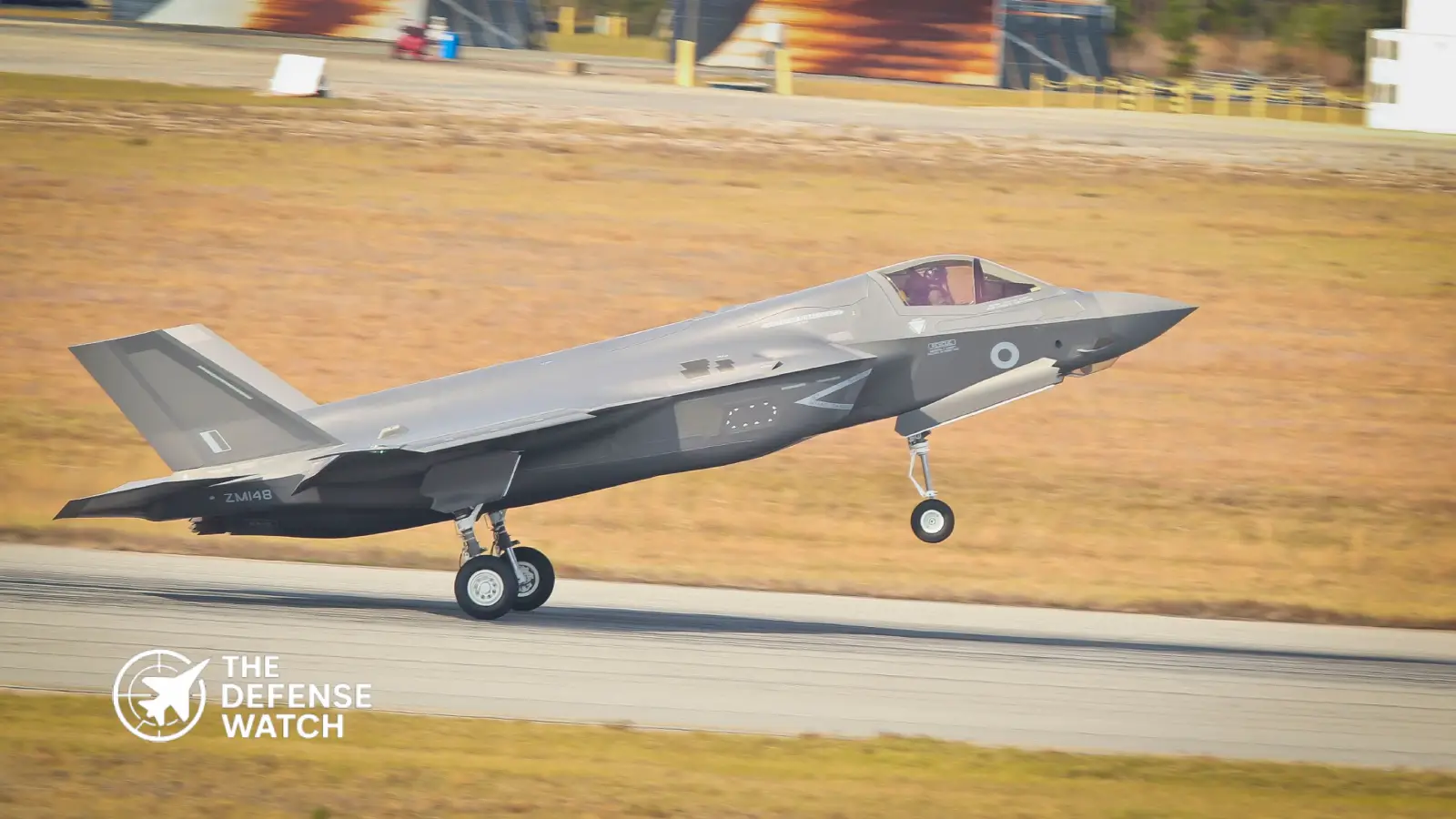
The aircraft, designated BK-43 and BK-44, landed at the Royal Air Force’s primary Lightning Force operating base after departing the United States. Their arrival completes the United Kingdom’s first procurement phase of the fifth-generation stealth fighter program.
The milestone comes as the UK continues expanding its carrier strike capability centered around the Royal Navy’s Queen Elizabeth-class aircraft carriers and integrated NATO air operations.
According to the UK Ministry of Defence and program reporting, the country has now received all aircraft included in its first planned acquisition tranche.
RAF Marham Strengthens Britain’s Lightning Force
RAF Marham serves as the main operating hub for the UK F-35B Lightning II fleet. The base supports frontline operations, pilot training, maintenance, logistics, and mission support for both Royal Air Force and Royal Navy aviation units.
The F-35B is the short takeoff and vertical landing variant of the Joint Strike Fighter family developed by Lockheed Martin. The aircraft is designed to operate from short runways and aircraft carriers without catapult launch systems.
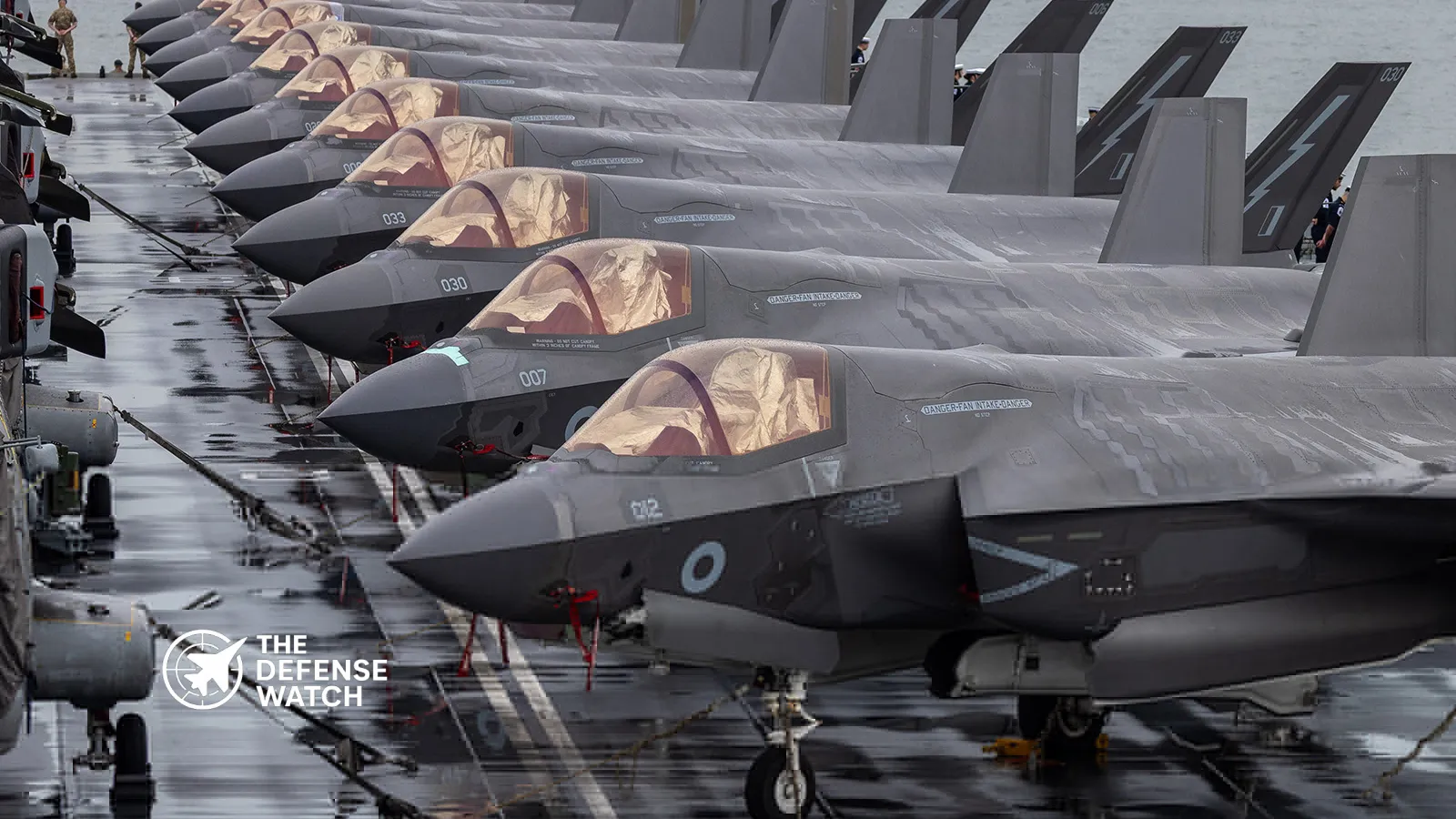
That capability is central to British naval aviation strategy. The aircraft regularly deploy aboard HMS Queen Elizabeth and HMS Prince of Wales, giving the UK an expeditionary airpower capability that had been absent for years after the retirement of the Harrier fleet.
British officials view the platform as a core component of future joint operations across Europe, the North Atlantic, and Indo-Pacific deployments.
Strategic Importance Beyond Fleet Numbers
While the delivery itself marks the completion of a procurement phase, the broader significance lies in operational readiness and force integration.
The UK F-35B Lightning II fleet is increasingly integrated into NATO exercises and multinational operations. British F-35Bs routinely train with U.S. Air Force, U.S. Marine Corps, and allied fifth-generation aircraft units.
The aircraft’s sensor fusion, low observable design, and data-sharing architecture provide advantages in contested airspace and maritime strike operations. British defense planners continue emphasizing interoperability with U.S. and NATO forces as Russia’s military activity and broader European security concerns drive modernization efforts.
The completion of the first procurement phase also provides greater stability for long-term force planning. RAF Marham can now focus more heavily on sustainment, pilot generation, readiness cycles, and carrier deployment preparation.
Carrier Strike Capability Remains Central
The F-35B program remains tightly linked to the UK’s carrier strike doctrine.
Unlike conventional carrier aircraft, the F-35B’s short takeoff and vertical landing configuration allows operations from the Royal Navy’s ski-jump carriers without complex launch systems. That gives Britain a flexible maritime aviation capability capable of rapid deployment in crisis regions.
The aircraft also supports intelligence gathering, electronic warfare support, precision strike, and networked targeting missions.
Recent deployments by the UK Carrier Strike Group demonstrated how the F-35B can operate alongside allied naval forces, particularly with the United States and NATO member states.
Defense analysts note that the UK continues balancing high-end air combat capability with affordability and sustainment requirements. The F-35 program has faced scrutiny globally over procurement costs and maintenance demands, but London continues treating the platform as a cornerstone of future combat aviation.
Production And International Partnership
The UK remains one of the leading international partners in the F-35 program.
British industry contributes components and systems to the global F-35 supply chain, supporting thousands of jobs across the aerospace and defense sector. Companies including BAE Systems and Rolls-Royce play major roles in manufacturing and propulsion support for the aircraft.
The F-35B used by the UK is powered by the Pratt & Whitney F135 engine, while Rolls-Royce supplies the LiftSystem technology that enables vertical landing operations.
The aircraft’s arrival at RAF Marham also reflects continued transatlantic defense cooperation between the UK and the United States under the broader Joint Strike Fighter framework.
Future Expansion Plans Remain Under Discussion
The UK government has previously stated its long-term intent to expand the Lightning fleet beyond the current procurement phase, though future acquisition schedules and quantities remain subject to defense budget planning.
British defense reviews continue evaluating future combat air requirements alongside development of the Global Combat Air Programme (GCAP), a sixth-generation fighter initiative involving the UK, Italy, and Japan.
For now, the completion of the initial UK F-35B Lightning II procurement phase marks a significant benchmark for British military aviation modernization and carrier-enabled power projection.
UK F-35 delivery timeline clarified
The UK F-35 delivery timeline now points to the 75th aircraft arriving by the end of 2033, according to a Ministry of Defence parliamentary response. The update provides fresh clarity on how the Lightning II fleet will grow through the next decade.
Responding to a written question in the House of Lords on January 5, 2026, Defence Minister Lord Coaker said the department expects to have taken delivery of its 75th F-35 aircraft by the end of 2033. The question focused on when the UK would reach the 74 aircraft mark under its existing commitment.
Fleet growth through the 2030s
The United Kingdom has so far committed to at least 74 F-35 Lightning II aircraft, with the option to order more in future batches. The program supports both the Royal Air Force and Royal Navy, forming the core of the UK carrier strike capability.
As of mid November 2025, the UK had received 41 F-35 aircraft. That figure was confirmed in a separate parliamentary answer by Veterans and People Minister Louise Sandher-Jones. The total planned deliveries by the end of 2025 stood at 48 aircraft.
RAF and Royal Navy operations
UK F-35 aircraft operate from RAF Marham and regularly deploy aboard the Royal Navy’s Queen Elizabeth class aircraft carriers. The jets are flown by mixed RAF and Royal Navy squadrons and are central to expeditionary air operations at sea.
Deliveries beyond the initial tranche are expected to continue steadily into the 2030s as the fleet moves toward a fully mature force structure.