

China Expands Defense Aviation Presence at Asia’s Largest Aerospace Exhibition
China leveraged Singapore Airshow 2026 to demonstrate military and aviation capabilities, attracting significant attention from regional delegations as Beijing intensifies its Southeast Asian influence campaig. The February 3-8 exhibition at Changi Exhibition Centre marked a strategic moment for Chinese defense manufacturers, occurring against a backdrop of evolving regional security calculations and uncertainty regarding U.S. alliance commitments under the Trump administration.
(adsbygoogle = window.adsbygoogle || []).push({});The biennial Singapore Airshow represents Asia’s most influential international aerospace and defense exhibition, with over 100,000 expected attendees and more than 1,000 companies from 50 countries. This year’s event provided Chinese state-owned manufacturers an unprecedented platform to showcase advanced military platforms alongside commercial aviation products.
J-35A Stealth Fighter Makes International Exhibition Debut
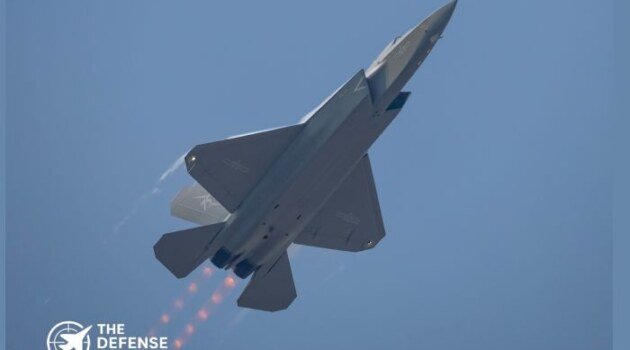
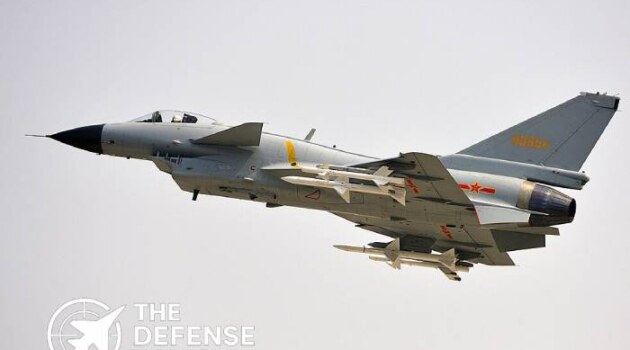
Aviation Industry Corporation of China (AVIC) displayed a detailed scale model of the J-35A stealth fighter alongside the J-10CE export variant marking the most comprehensive public presentation of the land-based fifth-generation aircraft to international observers. The J-35A represents China’s second indigenous stealth fighter platform, designed to complement the heavier J-20 in People’s Liberation Army Air Force (PLAAF) operations.
Chinese defense analysts characterized the J-35A as offering balanced performance, reliability, maintainability and cost considerations based on PLAAF feedback from J-20 operations. The twin-engine configuration differs from carrier-capable J-35 variants, optimizing the platform for conventional runway operations and mainland air defense integration.
AVIC indicated the J-35A’s primary mission focuses on achieving and maintaining air superiority, with secondary strike capabilities against land and maritime targets The platform is designed for engagement of hostile aircraft including fighters and bombers, cruise missile intercept, and neutralization of adversary air defense systems.
Defense industry observers note the Singapore presentation signals program maturity and China’s readiness to position the aircraft for international procurement consideration beyond Western fifth-generation platforms.
PLAAF Bayi Aerobatic Team Demonstrates J-10C Capabilities
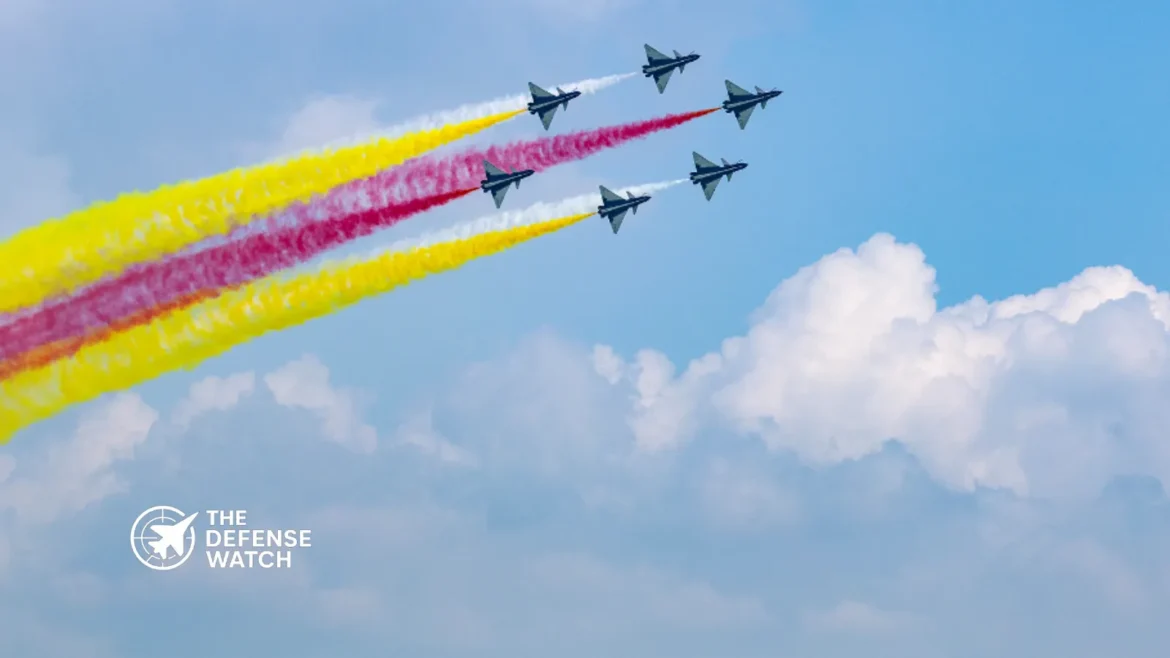
The PLAAF’s Bayi Aerobatic Team conducted its Singapore Airshow debut flying J-10C fighters, executing multiple performances showcasing aircraft maneuverability and controllability. The team deployed six aircraft—three J-10SY and three J-10CY variants—performing various formations, solo maneuvers and colored smoke displays.
The aerobatic team flew directly to Singapore from southwestern China utilizing in-flight refueling support from a YU-20A tanker aircraft, demonstrating extended-range operational capabilities and combat-oriented training standards now widely adopted across PLAAF units.
The J-10C features AESA radar and diverterless intake configurations compared to earlier variants. The platform gained international attention following its May 2025 combat debut with Pakistan Air Force during clashes with Indian forces, where the export J-10CE variant reportedly engaged Indian Rafale fighters.
(adsbygoogle = window.adsbygoogle || []).push({});Chinese aviation experts indicated the flight demonstrations provide potential international customers direct observation of J-10C flight characteristics, potentially increasing interest in the export-configured J-10CE.
COMAC Advances Commercial Aviation Export Campaign
State-owned Commercial Aircraft Corporation of China (COMAC) continued its international commercial aviation push, conducting flight demonstrations of the C919 narrowbody airliner while showcasing C929 widebody development models.
The C919 seats 158 to 192 passengers with range between 4,075 and 5,555 kilometers. COMAC also presented specialized C909 regional aircraft variants, including medical rescue and firefighting configurations, targeting niche aviation markets.
COMAC secured orders for six C909 firefighting aircraft during the exhibition, including three firm contracts and three letters of intent with Shanxi Victory General Aviation. Indonesian airline TransNusa displayed an operational C909, demonstrating international service capability.
Chinese delegates indicated Southeast Asia represents a priority target market for COMAC, with Indonesian attendees among those inquiring about aircraft procurement. However, Western analysts note establishing the global support infrastructure and certification necessary to challenge Airbus and Boeing dominance will require extended timeframes.
Geopolitical Context Shapes Regional Defense Procurement Considerations
The Chinese aviation展示 occurred during a politically sensitive period, with Southeast Asian governments expressing increased concern regarding U.S. security commitments under a more isolationist Washington administration.
President Trump’s vocal criticism of U.S. allies and implementation of tariffs has created potential openings for Chinese defense manufacturers. A senior Western arms company official noted that while delegation attendance remained consistent, the nature of procurement discussions had fundamentally shifted.
China defense specialist Bradley Perrett assessed that Chinese arms manufacturers may perceive opportunities if countries lose confidence in American procurement reliability, though most U.S. customers would likely prioritize European, South Korean and Japanese equipment when seeking alternative suppliers.
Asia-Pacific defense spending continues expanding as regional nations respond to China’s sustained military modernization and increasingly assertive regional posture. The strategic calculations driving procurement decisions now incorporate concerns regarding supplier reliability and alliance stability alongside traditional capability and interoperability considerations.
U.S. Defense Industry Maintains Regional Presence
Multiple U.S. drone manufacturers made Singapore Airshow debuts, seeking to expand business beyond Pentagon contracts into Asian markets increasingly concerned about Chinese military capabilities. Companies including Anduril Industries and Shield AI showcased unmanned systems and artificial intelligence-enabled military technologies.
(adsbygoogle = window.adsbygoogle || []).push({});The lethal effectiveness of unmanned systems in Ukraine has driven significant Silicon Valley investment in drone and military AI startups, reshaping major airshow character beyond traditional manned platforms. U.S. manufacturers emphasized providing regional partners advanced capabilities for countering evolving aerial threats.
Despite geopolitical tensions and tariff concerns, American defense contractors maintained substantial exhibition presence, highlighting continued commitment to Indo-Pacific partnerships and technology transfer programs supporting allied defense modernization.
Analysis and Strategic Implications
Singapore Airshow 2026 reflected fundamental shifts in regional defense industrial dynamics and procurement considerations. China’s expanded presence—combining fifth-generation fighter technology, proven fourth-generation platforms with combat experience, and commercial aviation alternatives—demonstrates sustained commitment to establishing credibility as comprehensive aerospace supplier.
The J-35A presentation signals Chinese confidence in fifth-generation technology maturity and willingness to compete internationally in advanced combat aircraft markets previously dominated by American platforms. For nations unable to procure F-35s due to political considerations or budgetary constraints, the J-35A may eventually represent an alternative fifth-generation option.
However, significant barriers remain before Chinese military aviation products achieve mass international adoption. These include certification requirements, establishing global maintenance and logistics infrastructure, integration with existing Western-equipped forces, and ongoing concerns regarding technology transfer implications and political dependencies.
The geopolitical context—particularly uncertainty regarding U.S. alliance commitments and trade policies—creates conditions potentially favorable to Chinese defense export expansion. Regional nations may increasingly pursue procurement diversification strategies, reducing dependence on single suppliers while maintaining interoperability with primary security partners.
(adsbygoogle = window.adsbygoogle || []).push({});Industry observers anticipate continued Chinese investment in international airshow presence and customer engagement, particularly targeting markets where political considerations complicate Western defense procurement or where cost-effectiveness considerations prioritize capable fourth-generation platforms over more expensive fifth-generation alternatives.
The Singapore exhibition demonstrated that while Western defense manufacturers retain technological advantages and established customer relationships, China has achieved capability levels warranting serious consideration in specific market segments and geographic regions, fundamentally altering the competitive landscape for defense aviation exports across the Indo-Pacific.

New Close-Up Footage Offers Best Look Yet at China’s J-36 Tailless Stealth Fighter in Final Approach
China’s J-36 in New Footage: What We Now See
New video has emerged showing China’s largest of two new tailless stealth fighter prototypes, commonly referred to as the J-36, as it makes a final approach to land at its manufacturer’s factory airfield in Sichuan Province. The aircraft is still unconfirmed in official sources.
The jet is spotted over a freeway near the Chengdu Aircraft Corporation (CAC) facility, sweeping low as it approaches touchdown. Key visible features include:
- Heavy-duty landing gear: Twin wheels on each unit are deployed.
- Twin split ruddervons (outboard control surfaces) serving as airbrakes or stabilizing surfaces.
- Three-engine configuration: Two side intakes and one dorsal intake. The dorsal intake appears to use a diverterless supersonic inlet (DSI) design.
- Cockpit/nose shape: A broad nose section, streamlined forward fuselage, and what looks like a side-by-side seating arrangement (or possibly a very wide single seat cockpit) — based on visible helmet or headrest silhouette. This appears to rule out the tandem seat layout.
- Camouflage / surface treatments: Splinter-type camouflage, lighter-colored panels around dorsal intake and aft, and lighter leading-edge panels likely for optical/IR sensors. Some areas could feature mirror-like coatings used during testing.
These visual details align with earlier sightings: first flight on Dec. 26, a second appearance some months later, and increasing public exposure via images and video.
Design Features & Capabilities: What This Suggests
From the recent footage and earlier analyses, the following design attributes are increasingly supported:
- Tailless, flying-wing / blended wing-body influences: Absence of vertical stabilizers, use of split control surfaces at wing edges.
- Trijet powerplant configuration, which is rare among modern fighter prototypes. Could confer increased thrust or redundancy.
- Large internal volume / weapon bays: Earlier speculation suggests substantial internal weapons capacity (long-range missiles, precision strike munitions) as well as electronic warfare and sensor payloads.
- Advanced sensor suite and stealth shaping: Broad nose suggests sizable radome; optical/IR apertures; leading-edge shaping; camouflage indicating both visual concealment and possibly radar signature management.
Status & Strategic Context
The footage is part of a mounting body of evidence for the J-36’s development: multiple flights, public sightings, geolocated videos, and confirmation (though unofficial) from defense watchers and analysts.
Strategically, the J-36 seems intended as a next-generation heavy stealth tactical aircraft for the People’s Liberation Army Air Force (PLAAF), possibly serving roles beyond pure air superiority:
- Long-range strike / stand-off capability
- Sensor fusion and electronic warfare
- Command & control for drone / UCAV / loyal-wingman operations
- Expanding China’s ability to project airpower deep into the Pacific, consistent with its anti-access/area denial (A2/AD) strategy.
Analysis: Implications & Comparisons
Potential Impact on Airpower Balance
If the J-36 achieves operational capability with the features suggested by this footage and other sightings, it would mark a significant leap in PLA airpower. Its size, trijet layout, stealth characteristics and internal bays place it in a heavier class than many current fighters. This could shift regional power dynamics, particularly in the Indo-Pacific, by strengthening China’s ability to contest air superiority at greater ranges.
Comparisons with U.S. Sixth-Generation Fighter Development
At the same time, the U.S. is developing its Next Generation Air Dominance (NGAD) family (sometimes referred to in press as F-47 or otherwise), emphasizing modular payloads, distributed sensing, AI, and human-machine teaming. The J-36 seems to follow a parallel trajectory in some respects: more sensors, greater autonomy potential, stealth, emphasis on greater mission flexibility. However, important questions remain:
- Will it achieve genuine “supercruise”—sustained supersonic flight without afterburners?
- How good will its avionics, electronic warfare, and stealth be in operational conditions?
- What will be its service entry timeline, and how will China integrate a platform of this presumed size into its maintenance, training, and deployment infrastructure?
What’s Still Unknown / Monitoring Points
While new footage brings clarity, many aspects remain speculative or unverified:
- The official designation (is it definitively “J-36”?), and whether it will be dual-use or have variants (e.g., naval version).
- Exact crew configuration — side-by-side vs single pilot is still debated.
- Performance metrics: speed, range, payload, avionics, radar cross-section.
- Operational role: will it be air superiority only, or multi-role with strike, EW, C2, unmanned escort?
Conclusion
The latest video of the J-36 offers the most detailed public view yet of China’s ambitious stealth fighter project. The combination of design features—tailless layout, three engines, side-by-side cockpit shape, advanced stealth shaping—suggests China is pushing aggressively toward a next-generation platform capable of challenging Western air dominance. But many key performance and operational traits remain unconfirmed.
As analysts and militaries continue monitoring imagery, flight tests, and technical disclosures, the J-36 could become a major factor in the future airpower balance of East Asia and beyond.
FAQs
No; as of now, there is no definitive public confirmation of the designation “J-36” or full specifications from official Chinese sources. Designation and many details remain based on leaked images, open-source analysis, and media reporting.
Tailless designs can reduce radar cross-section by eliminating vertical stabilizers, and potentially improve aerodynamic efficiency. But they also place greater burden on flight control systems to maintain stability and maneuverability. Sensor placement, control surface layout, and inlet/exhaust design are critical.
If confirmed, a side-by-side layout could suggest dual-crew roles such as pilot + weapon/sensor or mission systems operator. That would align with the tasks of modern air dominance platforms which manage many sensors, drones, EW and networked combat assets. However, it could also be a wide single-seat cockpit; evidence is not yet conclusive.
No credible reporting yet provides a firm timeline. Given current stage (flight tests, prototype spotting, incremental imaging), it may be several years before operational deployment, if all goes well.
They seem to share priorities: stealth, sensor fusion, payload flexibility, possible teaming with UAVs, etc. The exact capabilities will determine whether the J-36 narrows or shifts any advantage. U.S. efforts are ahead in some tested systems and industrial base, but China’s rapid prototyping and testing suggest it may close some gaps sooner than expected.