

Executive Summary:
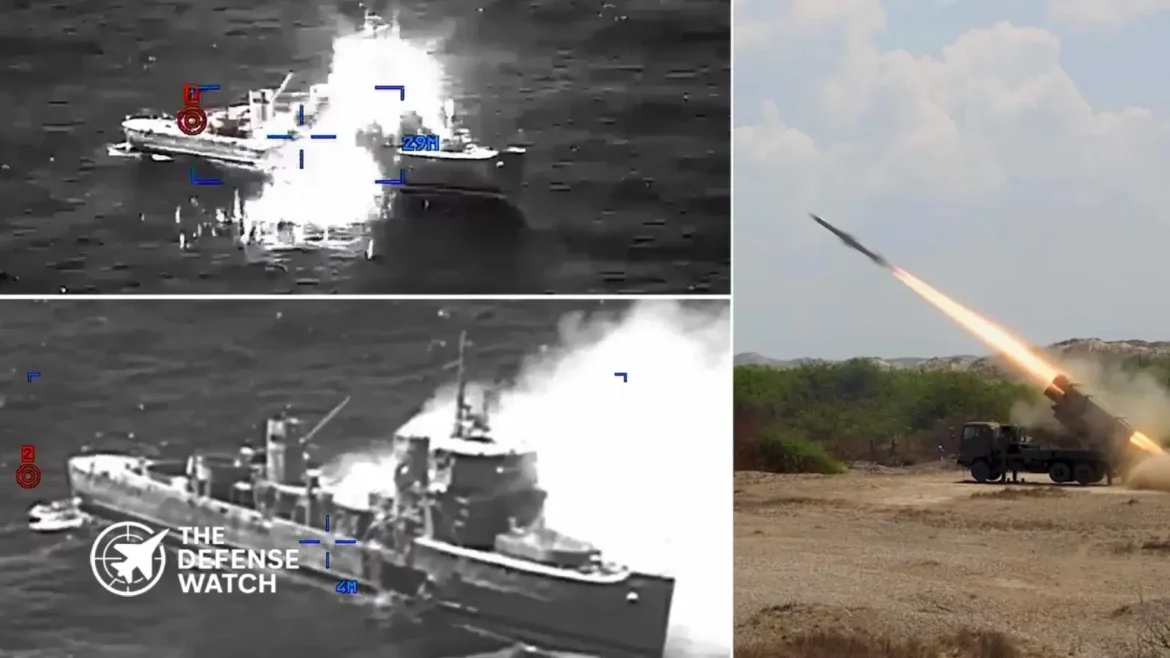
Japan fired Type 88 anti ship missiles overseas for the first time during Balikatan 2026 in the Philippines. The live fire event highlighted growing Japan Philippines military cooperation and reflected Tokyo’s expanding role in Indo Pacific regional security operations.
Japan Type 88 Missile Debuts Overseas During Balikatan 2026
Japan Type 88 anti ship missile operations reached a historic milestone during the Balikatan 2026 military exercise in the Philippines, where Japanese forces conducted the system’s first overseas live fire deployment. The event marked a significant expansion of Japan’s operational military posture beyond its territory and underscored increasing trilateral security coordination among Japan, the Philippines, and the United States.
The launch was conducted by the Japan Ground Self Defense Force during the annual Balikatan exercise, one of the Indo Pacific region’s largest multinational military drills.
The deployment reflects Tokyo’s broader effort to strengthen maritime deterrence capabilities amid rising security tensions in the South China Sea and wider Western Pacific region.
First Overseas Launch Signals Strategic Shift
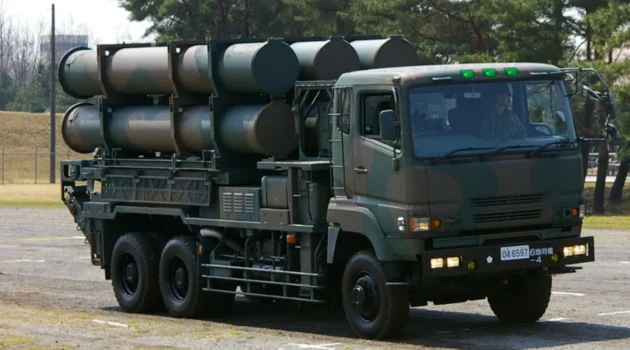
The Type 88 surface to ship missile system has long served as a core coastal defense weapon for Japan. Developed by Mitsubishi Heavy Industries, the truck mounted missile is designed to engage hostile naval vessels at extended ranges while supporting distributed coastal defense operations.
Balikatan 2026 marked the first time Japan fired the missile system outside Japanese territory. The move carries substantial geopolitical significance because Japan historically maintained strict limits on overseas military activities under its post World War II defense framework.
Over the last several years, however, Tokyo has gradually expanded defense cooperation with regional allies and partners. Japan has increased joint exercises, intelligence sharing, and interoperability initiatives with the United States, Australia, and the Philippines as concerns over regional maritime security continue to grow.
Defense analysts view the overseas missile firing as evidence that Japan is transitioning from a homeland focused defense posture toward a more expeditionary regional deterrence role.
Balikatan 2026 Highlights Regional Maritime Security
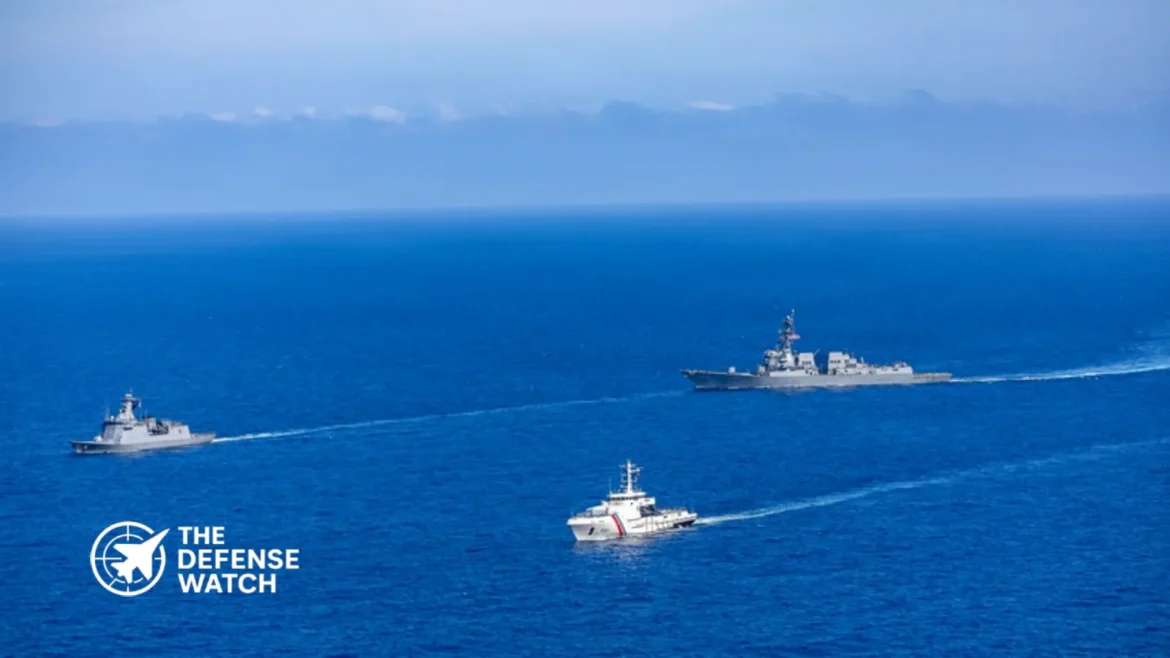
Balikatan 2026 involved thousands of personnel from allied and partner nations across multiple operational domains, including maritime security, amphibious warfare, air defense, and coastal strike operations.
The Philippines has increasingly become a central geographic node in Indo Pacific security planning due to its proximity to contested waters in the South China Sea and its strategic location near Taiwan’s southern approaches.
The inclusion of Japanese anti ship missile systems in the exercise demonstrated a growing emphasis on coastal denial strategies designed to complicate hostile naval movements in critical maritime corridors.
Military planners across the Indo Pacific have increasingly focused on mobile land based anti ship missile systems because they offer relatively survivable and flexible maritime strike capabilities compared to fixed installations.
The Type 88 missile system supports that concept through mobile launch vehicles capable of rapid deployment across dispersed islands and coastal terrain.
Japan And Philippines Expand Defense Cooperation
Defense ties between Japan and Philippines have accelerated significantly in recent years.
Tokyo has supported Manila through defense equipment transfers, maritime surveillance assistance, and expanded joint training activities. The two countries also signed a Reciprocal Access Agreement aimed at simplifying military cooperation and troop deployments during joint operations and exercises.
For the Philippines, deeper cooperation with Japan provides additional maritime security support as Manila continues to modernize its armed forces and strengthen deterrence capabilities in disputed waters.
For Japan, expanded defense engagement in Southeast Asia helps reinforce regional stability while supporting freedom of navigation and open sea lane security.
The Type 88 live fire event also demonstrated growing interoperability between allied forces operating across shared maritime theaters.
Type 88 Missile Remains Relevant Despite Newer Systems
Although Japan is fielding more advanced anti ship missiles such as the Type 12 upgraded variants, the Type 88 remains operationally relevant for coastal defense missions.
The missile uses active radar homing guidance and was specifically designed for anti ship warfare in Japan’s island defense environment. Mounted on mobile transporter erector launchers, the system can rapidly reposition to avoid detection and counterattack.
Its participation in Balikatan 2026 suggests Japan continues to view layered anti ship missile capabilities as essential for regional deterrence.
The deployment also highlighted how legacy missile systems can still contribute meaningfully to modern distributed maritime defense concepts when integrated into multinational operational frameworks.
Growing Focus On Indo Pacific Deterrence
The overseas launch comes amid broader regional military modernization efforts across the Indo Pacific.
China’s expanding naval activity, increased gray zone operations, and frequent military exercises around contested maritime areas have prompted regional governments to strengthen defense readiness and alliance coordination.
Japan’s latest missile deployment demonstrates how regional security partnerships are evolving from symbolic exercises toward more operationally integrated deterrence activities.
The use of live anti ship missile firing during a multinational exercise sends a visible message regarding allied readiness and collective maritime defense coordination in the region.
While Tokyo continues to describe its defense posture as defensive in nature, the expanding scope of overseas military activities indicates a clear shift toward proactive regional security engagement.
Balikatan Military Exercises Enter A New Phase
Balikatan military exercises opened this week as the United States, the Philippines, and multiple partner nations launched their largest combined training event to date, signaling a sharper focus on readiness, deterrence, and coalition operations in the Indo Pacific. Reuters reported that this year’s drills will test forces under real-world conditions across land, sea, air, and missile defense scenarios.
- Balikatan 2026 runs from April 20 to May 8 across the Philippine archipelago.
- More than 17,000 personnel are participating, including about 10,000 US troops.
- Live fire drills will take place near the South China Sea and close to Taiwan-facing areas.
- Japan, Canada, France, and New Zealand joined as active participants for the first time.
- Exercises highlight Manila’s widening defense partnerships amid friction with China.
The annual Balikatan series, whose name means shoulder-to-shoulder, has evolved from a bilateral alliance drill into a broader multinational framework. That shift matters because regional seacurity competition now extends beyond one-on-one treaty commitments and increasingly depends on networked coalitions.
The Big Picture
The Indo Pacific has become the center of long-term military competition. China’s maritime pressure in the South China Sea, growing military activity around Taiwan, and expanding gray-zone operations have pushed regional states to deepen defense ties.
For Washington, Balikatan demonstrates that US force posture in Asia remains active despite parallel commitments elsewhere. Reuters noted that the drills began even as the United States remains heavily engaged in the Middle East.
For Manila, the exercises show a deliberate modernization strategy. The Philippines is no longer relying only on diplomacy and coast guard presence. It is building credible military capacity with allies.
What’s Happening
Balikatan 2026 runs from April 20 to May 8 and includes more than 17,000 troops. Around 10,000 are from the United States. Australia returned, while Canada, France, Japan, and New Zealand joined as active participants for the first time.
Planned events include:
- Maritime strike drills
- Precision interdiction training
- Integrated air and missile defense
- Multinational naval operations
- Counter-landing live fire scenarios
- Joint command and control rehearsals
One notable event will occur on Itbayat Island, the Philippines’ northernmost inhabited island, located near Taiwan.
That geography gives the drill strategic meaning well beyond routine training.
Why It Matters
Military exercises often reveal priorities more clearly than speeches. This year’s Balikatan emphasizes three areas:
First, coastal denial. Training with anti-ship missiles and strike assets suggests a focus on denying hostile naval movement through chokepoints.
Second, integrated defense. Air and missile defense scenarios indicate concern over precision strikes, drones, and saturation attacks.
Third, coalition speed. Multi-country drills help reduce the time needed for allied coordination during crises.
These are practical wartime requirements, not symbolic gestures.
Strategic Implications
The Philippines sits astride vital sea lanes between the South China Sea and the western Pacific. Any conflict involving Taiwan, regional blockades, or maritime coercion would elevate the country’s strategic importance.
Balikatan helps improve:
- Access to dispersed operating locations
- Joint logistics across islands
- Maritime domain awareness
- Rapid reinforcement options
- Interoperability among allies
For US planners, archipelagic terrain offers natural advantages for distributed operations. For Manila, allied presence increases deterrence without requiring permanent foreign bases.
Competitor View
China criticized the drills, warning that external military cooperation could raise tensions and divide the region. Reuters cited Chinese Foreign Ministry comments urging peace and stability in Asia Pacific affairs.
Beijing is likely to view expanded Balikatan participation as part of a broader encirclement concern, especially with Japan’s growing role and training near Taiwan-facing areas.
However, regional governments generally frame these exercises as defensive, sovereignty-based, and intended to preserve freedom of navigation.
Capability Gap
The Philippines has long faced a gap between territorial claims and enforcement capacity. It has limited naval mass, sparse air defense coverage, and logistical challenges across thousands of islands.
Balikatan helps address those weaknesses by improving:
- Targeting and surveillance integration
- Coastal missile employment
- Combined amphibious defense
- Disaster response and mobility
- Secure communications with allies
Still, exercises do not replace procurement. Sustained readiness depends on munitions stocks, maintenance, radar coverage, and infrastructure.
What To Watch Next
Several indicators will show where the alliance is heading next:
- Expansion of missile defense training
- More frequent Japanese participation
- Greater use of northern Philippine sites
- Infrastructure upgrades under defense access agreements
- Follow-on procurement of coastal defense systems
If those trends continue, Balikatan may become a standing benchmark for coalition readiness in Southeast Asia.
The Bottom Line
Balikatan 2026 shows that regional deterrence now depends less on single alliances and more on a growing network of interoperable partners.