

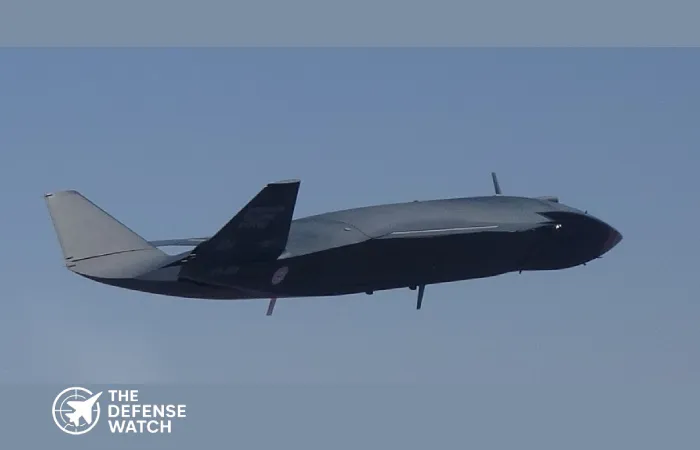
Japan, Australia Advance Manned-Unmanned Teaming With MQ-28A
Japan and Australia have expanded defense cooperation by signing an implementing arrangement that will let the Japan Air Self-Defense Force (JASDF) take part in activities related to the Boeing MQ-28A Ghost Bat collaborative combat aircraft under Australia’s fiscal year 2026 program. This collaboration is meant to deepen Japan’s operational understanding of manned-unmanned teaming, sometimes referred to as MUM-T, and the challenges of operating unmanned autonomous systems alongside manned aircraft.
Under the April 18 implementing arrangement signed by Australia’s Defence Minister Richard Marles and Japan’s Defence Minister Koizumi Shinjiro, the two countries will work within the framework of their existing defence-equipment and services sharing agreement first concluded in May 2025. The arrangement establishes the legal and procedural groundwork for joint research, training, and exposure to flight-test processes involving the MQ-28A Ghost Bat in Australia.
- Japan and Australia signed an implementing arrangement on April 18 to cooperate on the MQ-28A Ghost Bat collaborative combat aircraft.
- The agreement allows JASDF personnel to participate in research, training, and flight test related activities in Australia during fiscal year 2026.
- The focus is on gaining operational experience in manned unmanned teaming and integration of autonomous aircraft with crewed fighters.
- Cooperation is conducted under the 2025 Japan Australia defense equipment and services sharing framework.
- Sensitive operational details and activity timelines have not been publicly disclosed.
The MQ-28A Ghost Bat is an advanced collaborative combat aircraft developed by Boeing Defence Australia in partnership with the Royal Australian Air Force (RAAF). Designed to operate alongside crewed fighters, the MQ-28A is intended to extend the reach of airborne missions and provide reconnaissance, surveillance, electronic warfare, and combat support capabilities.
The JASDF’s participation will focus on gathering operational insight and exposure to the technical and tactical aspects of CCA employment. Activities are expected to include education on flight-test processes, mission planning, and technical integration challenges, giving Japanese personnel direct experience with a loyal wingman-type system. The arrangement stops short of technology transfer, acquisition, or shared command structures, keeping the cooperation within training and observational parameters.
Strategic Context and Indo-Pacific Security
This cooperation reflects the broader defence partnership between Japan and Australia rooted in shared concerns over regional security dynamics in the Indo-Pacific. Both countries have strengthened interoperability and joint training in recent years under the 2022 Australia-Japan Joint Declaration on Security Cooperation, including personnel exchanges, joint exercises, and capability collaboration ranging from maritime security to advanced platform integration.
Japan’s interest in manned-unmanned teaming is part of a wider global shift toward integrating autonomous systems into military operations. Allied nations, including the United States, have pursued similar concepts such as loyal wingman programs that pair autonomous platforms with crewed fighters to increase force lethality and mission flexibility.
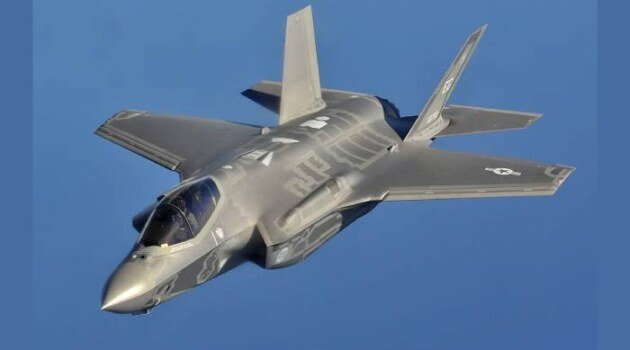
The MQ-28A Ghost Bat itself has been in development since 2021, undergoing extensive flight testing and demonstration missions, including collaborative operations with RAAF F-35A and E-7A Wedgetail aircraft. The platform represents one of the most mature collaborative combat aircraft efforts outside of US programs, with a focus on autonomy, mission adaptability, and connectivity.
What This Means for Japan’s Defense Posture
For Japan, involvement in MQ-28A activities offers direct operational insight without breaching domestic legal limits on defence cooperation and equipment acquisition. By embedding JASDF personnel in Australia’s test activities, Tokyo gains empirical understanding of MUM-T concepts and unmanned system integration that will inform future capability assessments, doctrine, and potential acquisition paths.
At this stage, specific timelines for when activities will begin remain under discussion between the two defence ministries, and sensitive details on coordination and scheduling have not been publicly disclosed.
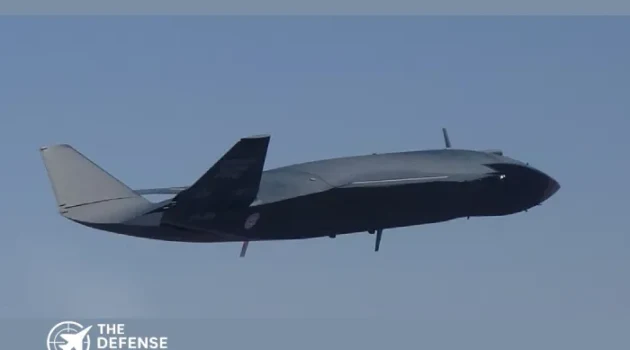
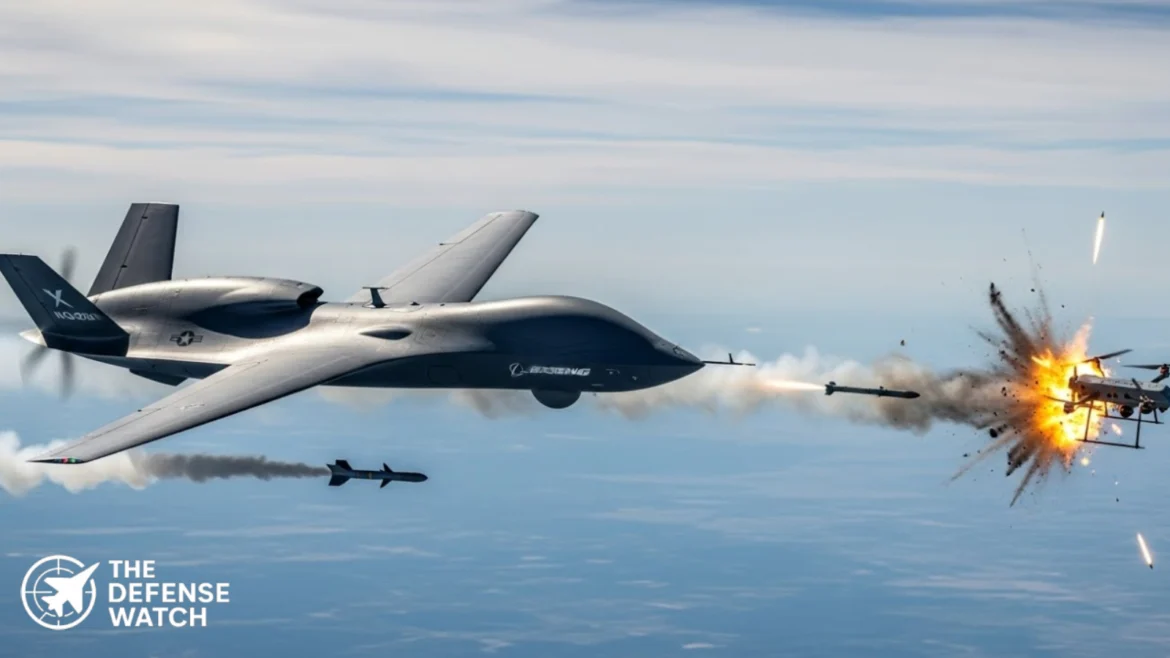
An unmanned Boeing MQ-28A Ghost Bat (“Ghost Bat”) successfully destroyed a Phoenix target drone with a Raytheon AIM-120 AMRAAM missile during a live air-to-air weapons test conducted on 8 December 2025. The event took place at Australia’s secure Woomera Test Range. The test marks the first time an autonomous drone has completed a fully integrated air-to-air missile engagement.
Official confirmation came on 9 December from Boeing Defense Australia and the Royal Australian Air Force (RAAF), signaling a major milestone in the Ghost Bat program’s transition from experimental tests to an operational combat-capable system.
Why it matters
The successful missile launch demonstrates that the Ghost Bat is no longer limited to reconnaissance or support roles. It now has demonstrated lethal strike capability. The event also underlines growing confidence from both the government and industry to invest in unmanned combat aircraft as a viable complement to crewed jets. The significance lies in the effective integration of autonomous capabilities into traditional air combat formations, aligning with broader trends in modern air warfare.
Ghost Bat Background — What is the drone and how did we get here
The Ghost Bat is a stealth-enabled unmanned combat aerial vehicle (UCAV) developed by Boeing Defense Australia for the RAAF under the Collaborative Combat Aircraft (CCA) program. It first flew in February 2021. As of 2024, eight Block 1 prototypes were built, accumulating more than 100 test flights.
Designed as a “loyal wingman,” the Ghost Bat can operate alongside crewed aircraft. Its modular nose allows for rapid reconfiguration for different missions such as surveillance, electronic warfare, or kinetic strike. The drone is capable of long-endurance flights, with a reported combat radius of more than 3,700 km.
Until now, tests focused on non-kinetic roles or passive missions. Earlier in 2025, development focused on integrating combat capabilities and preparing the drone for live-fire testing by the end of the year.
The December 8 missile test — What we know
During the Woomera trial, the Ghost Bat operated as part of a mixed formation. A crewed Boeing E-7A Wedgetail airborne early warning and control aircraft and a crewed Boeing F/A-18F Super Hornet fighter provided sensor coverage and targeting information. The test used data sharing across platforms: the Super Hornet detected and tracked the target drone, then passed target cues. The Ghost Bat, acting on that data and under supervision of the Wedgetail, autonomously locked on and fired the AIM-120 missile. The rocket ignited cleanly, destroying the target.
Boeing described the event as a demonstration of a fully autonomous, end-to-end weapons engagement. According to Boeing, this proves the Ghost Bat’s autonomy solution is mature enough to integrate with fourth, fifth and next-generation aircraft.
The successful engagement allows the Ghost Bat to meet a key milestone announced by Boeing earlier in 2025. The company had set a goal of conducting a live air-to-air missile test by end of 2025 or early 2026.
Operational pivot: Ghost Bat moving toward active deployment
Following the test, the Australian government has committed A$1.4 billion (approx. US$928 million) to shift the Ghost Bat program into operational status. This funding covers procurement of six Block 2 Ghost Bat drones, plus development of a prototype Block 3 craft.
Block 2 drones will be equipped with operationally necessary systems, such as enhanced GPS/INS navigation and improved maintainability. They will drop some of the prototype visual features — for example the Block 1 dogtooth wing will be removed. Internal wiring and design tweaks aim to simplify upkeep.
Future Block 3 models are expected to roll out from a new manufacturing base located at the Wellcamp Aerospace and Defense Precinct near Brisbane. The procurement marks the first time Australia has committed funds to operational drone strike systems at this scale.
The push toward operational deployment reflects a growing shift in airpower philosophy: unmanned systems are increasingly seen not just as surveillance assets but fully capable strike-ready platforms.
Broader implications for air combat and regional balance
The success of the Ghost Bat weapons test carries several implications:
- For crewed-uncrewed teaming: The flight validates that autonomous drones can integrate with manned platforms in real-world combat scenarios. This may alter force structure decisions.
- For cost and risk: Deploying UCAVs reduces risk to human pilots while offering flexible, reconfigurable strike assets at lower cost compared to manned jets.
- For regional deterrence: In a volatile Indo-Pacific environment, autonomous strike-capable drones give Australia a strategic edge, especially in networked air operations.
- For future procurement: This may influence other air forces exploring CCAs or loyal-wingman drones — potentially accelerating global drone adoption.
What’s next
With Block 2 Ghost Bats funded and moving into production, the next step is fielding and integrating them into RAAF operational squadrons. Further testing will likely focus on multi-mission roles: not just strike, but surveillance, electronic warfare, and joint ops with crewed jets.
Meanwhile, other nations developing unmanned combat aircraft will be watching closely to see how Australia operationalizes its drones. The MQ-28A Ghost Bat could set a template for next-generation airpower.