(adsbygoogle = window.adsbygoogle || []).push({});Executive Summary:
Pakistan is poised to become the first foreign customer of China’s J-35 stealth fighter, according to multiple defense reports and recent government statements. The move would provide the Pakistan Air Force with access to fifth-generation combat aircraft while highlighting China’s growing role as an exporter of advanced military aviation technology.
Pakistan J-35 Stealth Fighter Program Signals Major Air Power Upgrade
Pakistan’s reported acquisition of the J-35 stealth fighter represents one of the most significant military aviation developments in South Asia in recent years.
Multiple defense publications and regional media reports indicate that Islamabad is moving forward with plans to acquire up to 40 Chinese-built J-35 fighter aircraft, potentially making Pakistan the first overseas operator of China’s latest fifth-generation stealth platform. Recent statements linked to Pakistani government channels have also referenced the proposed transfer of J-35 fighters alongside other advanced Chinese defense systems.
While detailed contract terms and delivery schedules have not been publicly disclosed by either Beijing or Islamabad, the growing volume of official and semi-official reporting suggests that discussions have progressed beyond early speculation.
(adsbygoogle = window.adsbygoogle || []).push({});What Is The J-35 Stealth Fighter?
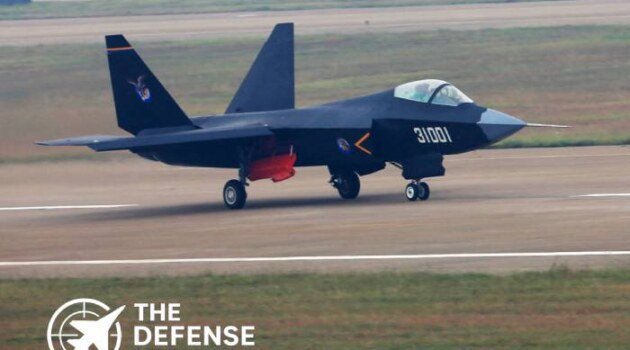
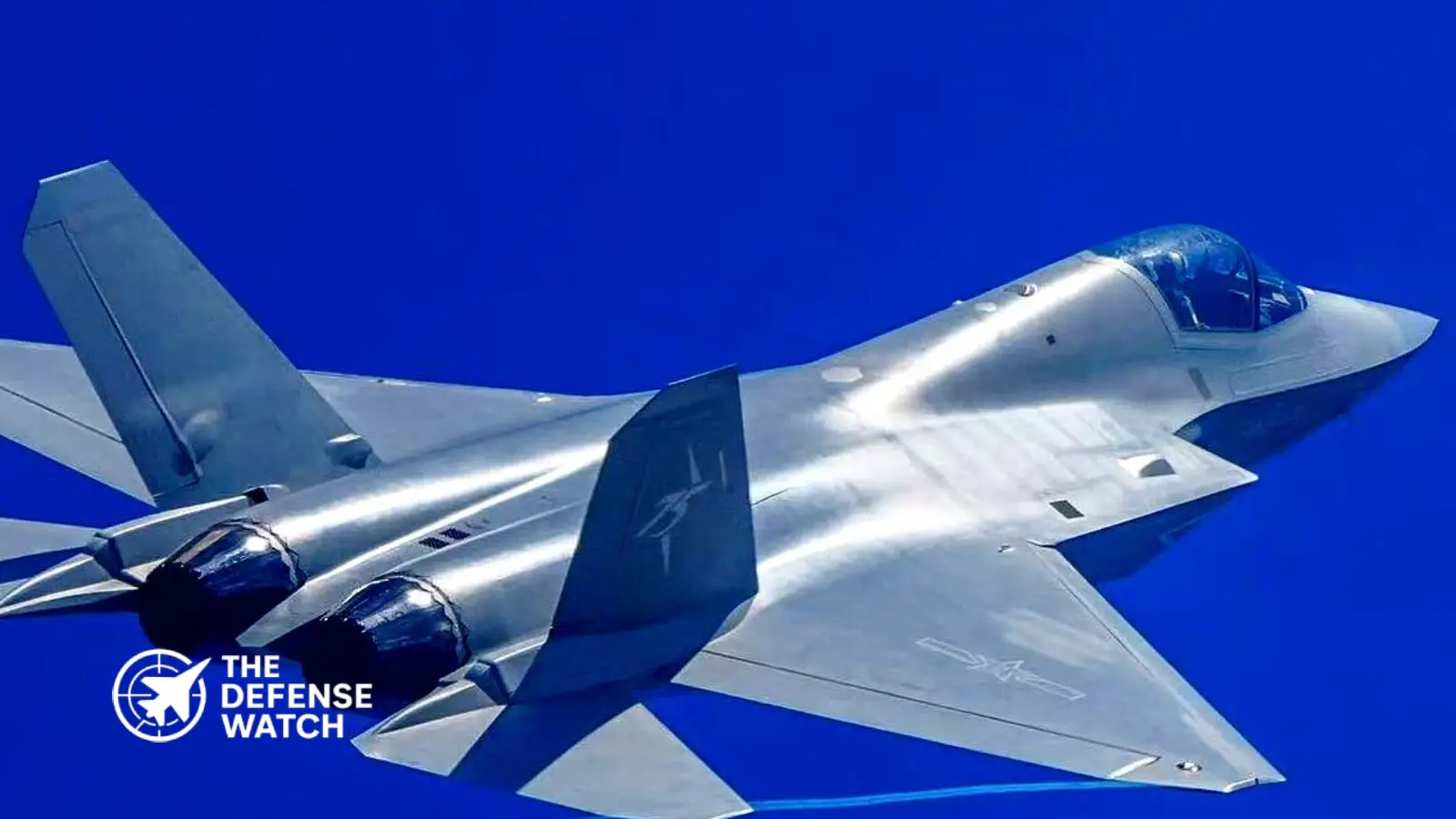
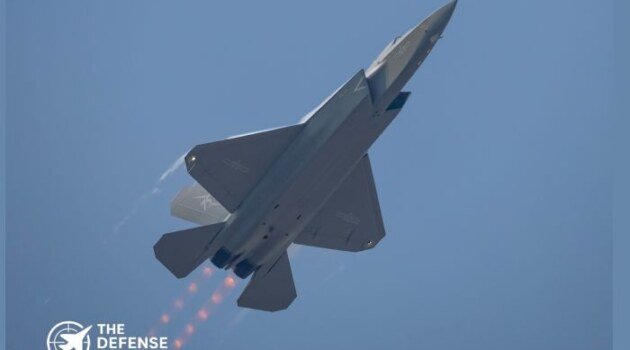
The J-35 is a twin-engine, fifth-generation multirole combat aircraft developed by China’s Shenyang Aircraft Corporation.
Designed with low-observable characteristics, internal weapons bays, advanced sensors, and networked combat capabilities, the aircraft is intended to perform both air superiority and
strike missions. The platform is widely viewed as China’s second operational stealth fighter family after the J-20.
Recent footage aired by Chinese state media showed what analysts identified as the export-oriented J-35AE variant carrying Aviation Industry Corporation of China (AVIC) markings rather than People’s Liberation Army Air Force insignia. Defense analysts interpreted the appearance as a signal that Beijing is actively preparing the aircraft for foreign customers.
The emergence of the J-35AE is particularly noteworthy because it demonstrates China’s intention to compete in the global market for advanced combat aircraft, a sector traditionally dominated by the United States and, to a lesser extent, European manufacturers.
(adsbygoogle = window.adsbygoogle || []).push({});Why Pakistan Matters As The First Export Customer
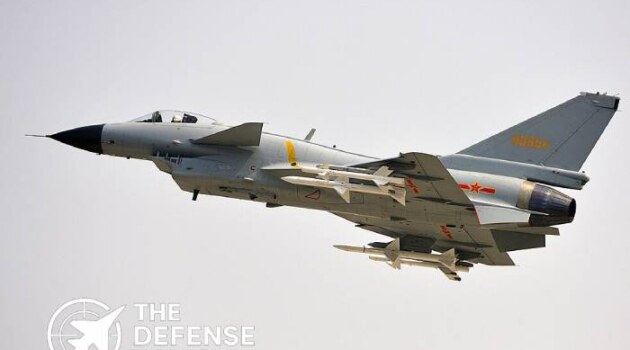
Pakistan has long been China’s most important defense partner and already operates several major Chinese-built systems, including the JF-17 Thunder and J-10CE fighter aircraft.
The reported J-35 acquisition would represent the next phase of that partnership. From an operational perspective, the aircraft would provide the Pakistan Air Force with access to stealth capabilities that have not previously existed within its inventory.
Becoming the first foreign operator is also strategically significant for China.
Defense exports serve as both an economic and geopolitical tool. Successfully delivering a fifth-generation fighter to an overseas customer would demonstrate confidence in China’s aerospace industry and could help open additional export opportunities across Asia, the Middle East, and Africa.
This aspect of the deal may ultimately prove as important as the aircraft itself.
(adsbygoogle = window.adsbygoogle || []).push({});Regional Implications For South Asia
The potential introduction of the Pakistan J-35 stealth fighter would inevitably draw attention across South Asia.
India continues to modernize its fighter fleet through a combination of imported and indigenous programs, including the Rafale and the Advanced Medium Combat Aircraft (AMCA) project. The arrival of a fifth-generation Chinese-built fighter in Pakistan would add a new dimension to the region’s evolving air power balance.
However, it is important to separate confirmed facts from speculation.
Although reports have referenced possible aircraft numbers and delivery timelines, neither China nor Pakistan has publicly released a comprehensive acquisition roadmap. Some earlier claims regarding deliveries were later challenged due to a lack of official evidence, highlighting the need for caution when assessing timelines and operational readiness.
China’s Growing Defense Export Ambitions
The J-35 program also reflects a broader trend within China’s defense industry.
Over the past decade, Beijing has steadily expanded exports of military aircraft, drones, missile systems, and air defense platforms. The reported J-35 export effort represents the highest-profile example yet of China’s attempt to enter the elite market for stealth combat aircraft.
(adsbygoogle = window.adsbygoogle || []).push({});If Pakistan formally receives the aircraft, China would achieve a milestone that few nations have reached: exporting an operational fifth-generation fighter to a foreign military customer.
For global defense markets, that development could reshape future competition in advanced military aviation.
Outlook
Although questions remain regarding contract details, financing, production schedules, and delivery timelines, the available reporting points toward a significant expansion of China-Pakistan defense cooperation centered on the J-35 stealth fighter.
Should the acquisition proceed as reported, Pakistan would become the first foreign customer for China’s fifth-generation fighter program, while Beijing would secure a landmark export success for one of its most advanced aerospace platforms.
The coming months will likely provide greater clarity on procurement milestones, training arrangements, and the timeline for the aircraft’s eventual entry into Pakistan Air Force service.


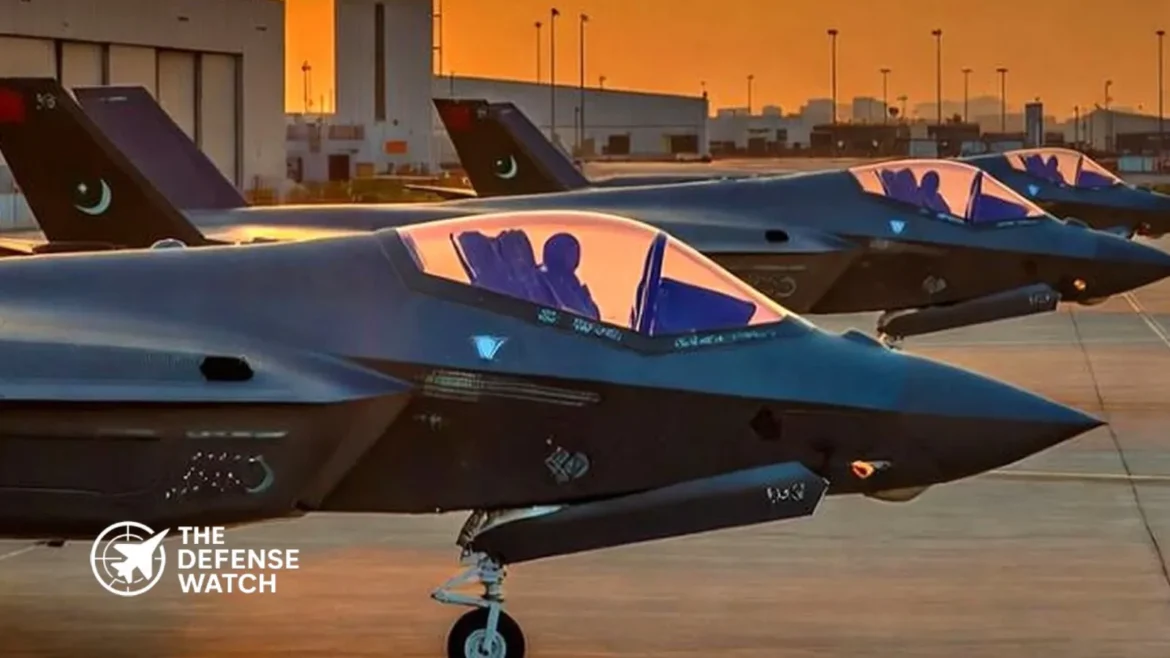
- Viral social media claims in late March 2026 alleged that the Pakistan Air Force (PAF) received its first batch of six J-35 stealth fighters from China.
- Defense sources and senior officials have categorically rejected the reports, stating no official announcement, photographs, or supporting airfield activity exists.
- The earliest possible delivery window for J-35 aircraft to Pakistan remains 2027, according to officials familiar with the program.
- Pakistan signed a framework agreement in principle for up to 40 J-35A export variants following talks in Beijing in June 2025, potentially making Islamabad the first export customer.
- Pakistan’s Defence Minister Khawaja Asif previously dismissed similar speculation as “only in the media.”
Pakistan J-35 Stealth Jet Claims Remain Unverified
The Pakistan Air Force has not taken delivery of any J-35 stealth fighter jets from China, according to defense sources familiar with the program.
Reports circulating on social media in late March 2026 claimed that the PAF had received an initial batch of six aircraft. These assertions, amplified by some regional media outlets, included unverified videos and posts but lacked any official confirmation from PAF headquarters or Pakistan’s Ministry of Defence.
Senior officials told local defense correspondents that the earliest realistic delivery timeline for the J-35 remains 2027 at best. The Shenyang J-35, a twin-engine fifth-generation platform developed from the FC-31/J-31 program, entered limited series production for China’s People’s Liberation Army Air Force and Navy in late 2025.
Background on the Proposed Acquisition
Pakistan and China have maintained close defense ties for decades, with collaborative projects including the JF-17 Thunder multirole fighter. In June 2025, following high-level talks in Beijing, Pakistan’s government referenced an offer that included up to 40 J-35A export-variant stealth aircraft, alongside other systems such as the KJ-500 airborne early warning and control platform and HQ-19 air defense systems.
Defence Minister Khawaja Asif addressed similar speculation in mid-2025, describing it as “only in the media” during an interview. No formal contract signing has been publicly confirmed by either government, though preparatory activities—including potential pilot training—have been reported in defense circles.
If realized, the acquisition would mark Pakistan’s entry into fifth-generation fighter operations and position Islamabad as the first export customer for the J-35 platform. The aircraft is designed for low-observable penetration of contested airspace, equipped with advanced avionics, internal weapons bays, and multirole capabilities.
Current PAF Fleet Context
The Pakistan Air Force operates approximately 450 combat aircraft. Key assets include around 76 F-16 fighters in multiple variants, more than 180 JF-17 Thunder aircraft co-produced with China, a growing number of J-10CE multirole fighters inducted since 2022, and aging Mirage III and V platforms approaching the end of their service lives.
Introduction of a stealth platform would represent a significant qualitative upgrade, enabling improved survivability against advanced integrated air defense systems in the region. However, operational integration would require substantial investments in infrastructure, training, maintenance, and logistics.
Strategic Implications for Regional Air Power
A successful J-35 induction would contribute to evolving air power dynamics in South Asia. India has expanded its own capabilities with Rafale fighters and continues development of indigenous platforms, including the Advanced Medium Combat Aircraft program.
For Pakistan, the J-35 would complement existing Chinese-origin systems and address requirements for deep-strike and contested-environment operations. Analysts note that any such capability would form part of a broader layered approach potentially including improved airborne early warning and surface-to-air defenses.
However, challenges remain. Engine reliability concerns have surfaced in testing of carrier-based J-35 variants for the Chinese Navy. Export versions may incorporate modifications, but performance data for the specific configuration offered to Pakistan is limited in open sources.
Analysis: Tempering Expectations Amid Ongoing Modernization
The repeated pattern of unverified claims followed by official denials underscores the need for caution in assessing defense procurement timelines. Pakistan’s air force modernization proceeds steadily through proven platforms like the JF-17 Block III and J-10CE, while fifth-generation ambitions face technical, financial, and industrial hurdles common to new platforms.
At present, no evidence supports claims of operational J-35 aircraft in PAF service. Delivery expectations cited by officials align with realistic production and integration schedules for a complex stealth fighter. Future developments will likely depend on final contract terms, funding arrangements, and progress in China’s own J-35 production ramp-up.
TheDefenseWatch will continue monitoring authoritative statements from Islamabad and Beijing for confirmed milestones.

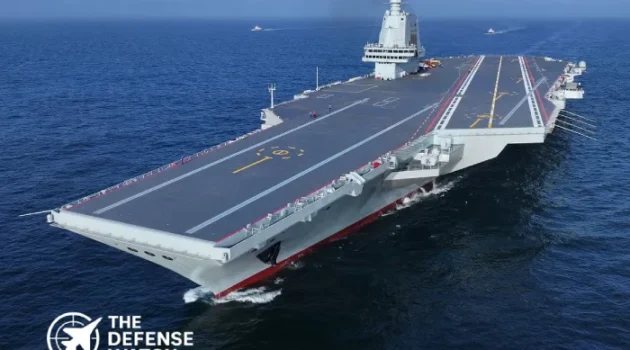
China’s newest aircraft carrier, the Fujian (hull number 18), has officially entered service with the People’s Liberation Army Navy, equipped with a domestic electromagnetic aircraft launch system that represents a significant milestone in China’s naval aviation development. The event took place at a commissioning ceremony in early November 2025 at the Yulin Naval Base in Hainan Province.
New Era in Chinese Naval Aviation
The Fujian is China’s third aircraft carrier and its first to use electromagnetic catapults for aircraft launch and recovery. The carrier displaces more than 80,000 tonnes and features a flat-deck design that departs from the ski-jump approach used on China’s first two carriers, the Liaoning and Shandong. Unlike steam-powered systems, electromagnetic launch systems use electrical drives to accelerate aircraft along the flight deck.
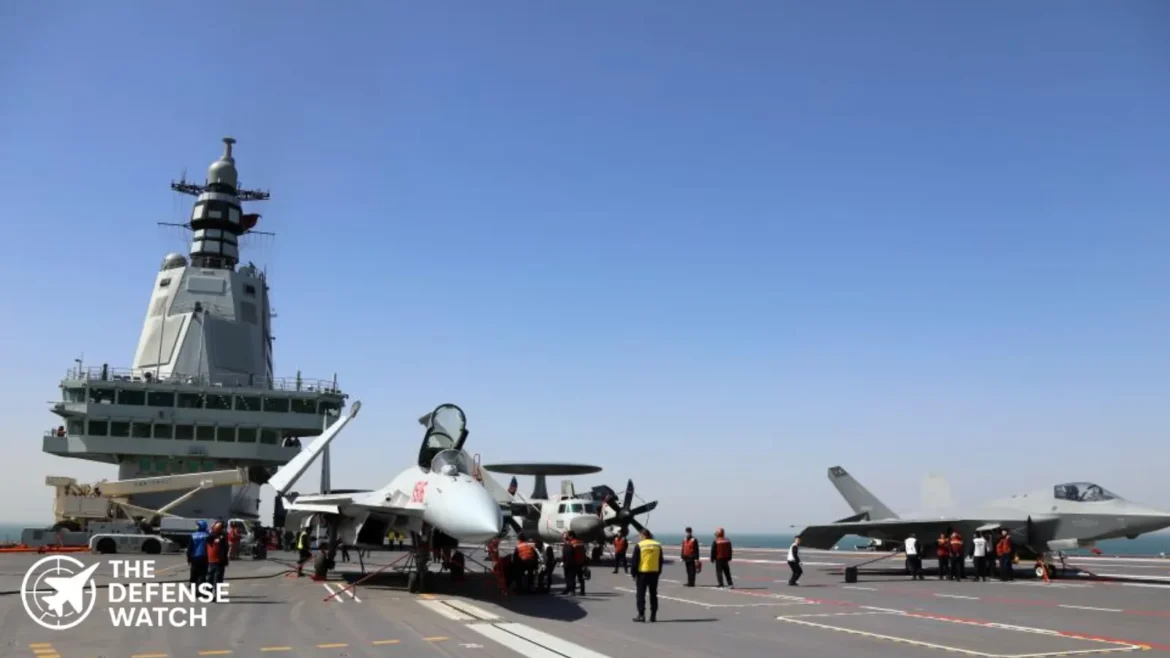
State media report that the Chinese navy has successfully completed initial training using the electromagnetic catapults and new arresting gear systems. This training saw carrier-borne aircraft including the Shenyang J-15T fighters, the new J-35 stealth fighter, and the KJ-600 airborne early warning aircraft complete takeoff and landing cycles.
Electromagnetic Catapult Technology
Electromagnetic aircraft launch systems (EMALS) represent an advanced alternative to steam catapults. They are designed to provide smoother acceleration, improved reliability, and more precise control. China’s system is a domestically developed version of the technology, powered by a medium-voltage direct current integrated power system.
In September 2025 Chinese officials released footage showing J-35 stealth fighters using the EMALS for launch and recovery operations at sea. The J-35 is a fifth-generation stealth fighter adapted for carrier operations with folding wings and reinforced landing gear.
The Fujian’s electromagnetic launch capability allows it to support a broader range of aircraft types with heavier fuel loads and armaments, including early warning aircraft that enhance carrier group situational awareness and command and control.
Strategic and Operational Context
China’s shift to electromagnetic launch systems aligns with its long-term goal of modernizing the People’s Liberation Army Navy (PLAN) and expanding its blue-water capabilities. Electromagnetic launch systems were once exclusive to the U.S. Navy’s new Ford-class carriers. With Fujian now operational, China becomes the second country to field such technology on a carrier.
At the commissioning ceremony, Chinese leaders underscored the Fujian’s role in advancing the PLAN’s broader strategic objectives. Analysts note the carrier increases China’s ability to project air power from the sea and to operate a more capable carrier air wing.
Comparison With Global Carriers
Even with its new technology, the Fujian does have differences compared to the U.S. Navy’s nuclear-powered carriers. The Fujian uses conventional propulsion rather than a nuclear reactor, so its endurance and range are more limited compared with U.S. nuclear carriers capable of nearly unlimited deployment without refueling.
The U.S. Navy operates a larger carrier fleet, but few of its carriers have shown public footage of electromagnetic catapult operations with fifth-generation aircraft. China’s Fujian has publicly showcased J-35 and other aircraft operations with its EMALS, contributing to global interest in its capabilities.
What This Means for Regional Security
Analysts see the successful integration of electromagnetic catapult systems on Fujian as a tangible sign of China’s advancing naval aviation technology. While the carrier still must complete further trials and integration with support ships and training units, its operational status reflects China’s investment in enhancing its maritime force projection.
Regional navies and defense partners will monitor the Fujian’s deployment patterns as the PLAN seeks to extend its operating range beyond the immediate waters around China. This carrier may have implications for operations in the South China Sea, East China Sea, and other strategic maritime areas.
Looking Ahead
The Fujian’s electromagnetic catapults and new generation aircraft operations signal a new chapter for the PLAN’s carrier force. China continues to research and develop future carrier designs, including larger nuclear-powered ships that could carry more aircraft and operate with greater endurance.
As the Fujian transitions from trials to a fully integrated carrier strike group role, global naval watchers will assess how this technology influences carrier aviation norms and operational doctrines.