- Australia has provided AIM-120 AMRAAM missiles to strengthen the United Arab Emirates air defense against Iranian drones and aerial threats.
- The AIM-120 AMRAAM is an advanced active radar-guided air-to-air missile widely used by Western fighter aircraft and integrated air defense systems.
- The move reflects growing international concern about Iran’s expanding drone and missile capabilities across the Middle East.
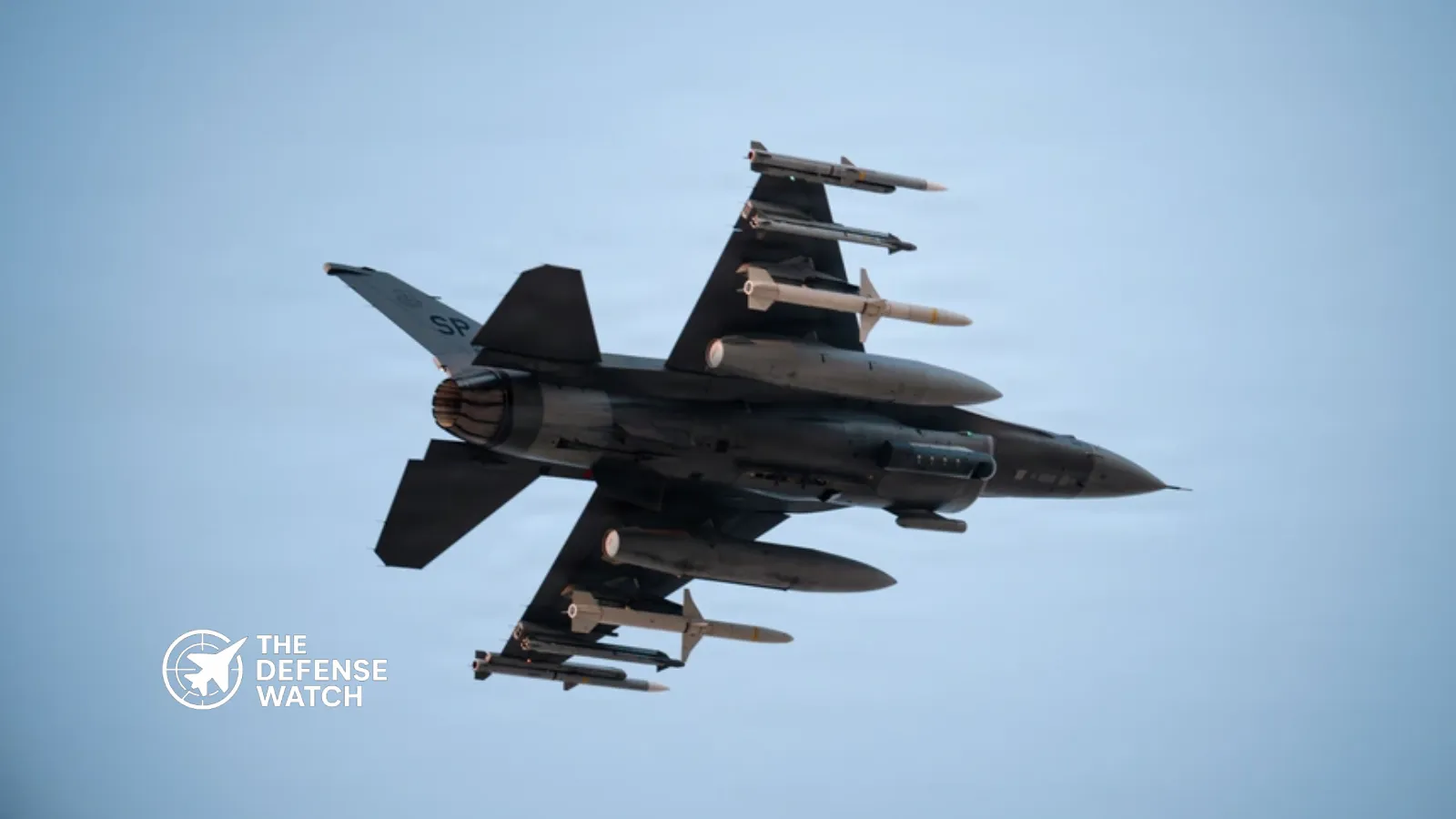
- UAE operates modern Western fighter fleets including F-16 and Mirage 2000 aircraft capable of employing AMRAAM missiles.
- The transfer strengthens regional air defense networks aimed at countering unmanned aerial threats.
Australia Supplies AIM-120 AMRAAM Missiles To Strengthen UAE Air Defense
The transfer of AIM-120 AMRAAM missiles from Australia to the United Arab Emirates marks a new step in strengthening UAE air defense against Iranian drones and other aerial threats. The move reflects growing concern among regional and Western partners about the increasing use of unmanned systems in Middle Eastern conflicts.
(adsbygoogle = window.adsbygoogle || []).push({});Australia’s decision highlights expanding defense cooperation between Western partners and Gulf states seeking to improve their ability to intercept drones, cruise missiles, and hostile aircraft.
The Big Picture
Drone warfare has become a defining feature of modern conflict across the Middle East. Iran and its regional partners have invested heavily in low cost unmanned aerial systems capable of conducting reconnaissance and long range strike missions.
These drones have already appeared in multiple conflicts and security incidents involving Gulf infrastructure, shipping lanes, and military facilities. Countries in the region are therefore expanding layered air defense systems capable of detecting and destroying small, fast moving targets.
Missiles such as the AIM-120 AMRAAM play a critical role in this evolving defensive architecture. Originally developed for air to air combat, the missile has also been adapted for ground based air defense systems such as NASAMS.
By supplying additional missiles to the UAE, Australia contributes to a broader effort by Western aligned nations to strengthen regional deterrence against drone and missile threats.
What’s Happening
Australia has reportedly supplied AIM-120 Advanced Medium Range Air-to-Air Missiles (AMRAAM) to support the UAE air defense system as regional tensions involving Iran continue to rise.
The missile is one of the most widely deployed air-to-air weapons in Western inventories. Developed by the United States and produced by Raytheon, it uses active radar guidance to engage targets beyond visual range.
AMRAAM missiles can intercept:
- fighter aircraft
- cruise missiles
- unmanned aerial vehicles
- other aerial threats
The UAE operates several advanced fighter aircraft capable of employing the missile, including its fleet of F-16 Block 60 fighters and Mirage 2000 aircraft.
The additional missiles strengthen the UAE’s ability to counter drone swarms and other aerial attacks that may originate from regional adversaries.
Why It Matters
The supply of AIM-120 AMRAAM missiles highlights how air defense priorities are shifting as drones become more common on the battlefield.
Traditional air defense networks focused heavily on high performance aircraft and ballistic missiles. However, modern threats increasingly involve smaller systems such as loitering munitions and one way attack drones.
(adsbygoogle = window.adsbygoogle || []).push({});These platforms often fly at low altitude and can appear in large numbers, making interception more difficult.
Missiles like the AMRAAM offer several advantages in this environment:
- high speed interception
- advanced radar guidance
- compatibility with multiple launch platforms
- proven combat reliability
For countries such as the UAE, expanding missile inventories is essential to maintain sustained air defense operations during prolonged security crises.
Strategic Implications
The transfer of missiles reflects a wider international effort to strengthen Gulf security against Iran’s expanding drone and missile arsenal.
Iran has developed a diverse portfolio of unmanned systems ranging from reconnaissance drones to long range strike platforms capable of carrying explosive payloads. These systems have been exported or shared with regional partners and proxy groups.
Improving the UAE air defense system helps close potential vulnerabilities in protecting critical infrastructure such as:
- energy facilities
- military bases
- ports and shipping routes
- major urban centers
Enhanced air defense coverage also contributes to broader regional deterrence by raising the cost of any attempted drone or missile attacks.
Competitor View
From Tehran’s perspective, the reinforcement of Gulf air defense systems fits into a broader pattern of Western aligned states strengthening military cooperation against Iranian capabilities.
Iran has repeatedly emphasized the strategic value of its drone and missile forces as asymmetric tools that can challenge technologically superior adversaries.
Expanded missile inventories among Gulf states may therefore encourage Iran to further invest in:
- larger drone swarms
- stealthier unmanned systems
- longer range strike capabilities
- electronic warfare measures
This dynamic reflects the continuing competition between offensive drone capabilities and defensive interception technologies.
Capability Gap
The deployment of additional AIM-120 AMRAAM missiles addresses a key operational challenge facing many modern air defense systems: the ability to counter large numbers of low cost aerial threats.
Drone attacks often rely on saturation tactics designed to overwhelm defensive systems. Each interception consumes a missile, meaning defenders must maintain significant stockpiles to sustain operations.
(adsbygoogle = window.adsbygoogle || []).push({});While AMRAAM provides a reliable interception capability, it remains a relatively expensive weapon compared with many drones. This cost imbalance has driven many countries to explore complementary defenses such as:
- directed energy systems
- short range interceptors
- electronic warfare tools
Despite these limitations, AMRAAM remains one of the most trusted missile systems available for high probability aerial interception.
What To Watch Next
Several developments may shape how this capability evolves in the coming years.
First, Gulf states are likely to continue expanding integrated air defense networks linking fighter aircraft, ground based missile systems, and early warning radars.
Second, drone detection and counter drone technologies will receive increasing investment as unmanned threats grow more sophisticated.
Finally, deeper defense cooperation between Western countries and Gulf partners may result in additional missile transfers, training programs, and joint exercises focused on air defense readiness.
The Bottom Line
Australia’s delivery of AIM-120 AMRAAM missiles strengthens the UAE air defense system and underscores the growing importance of counter drone capabilities in Middle Eastern security.
Growing Concerns Over Naval Vulnerability to Drone Swarms
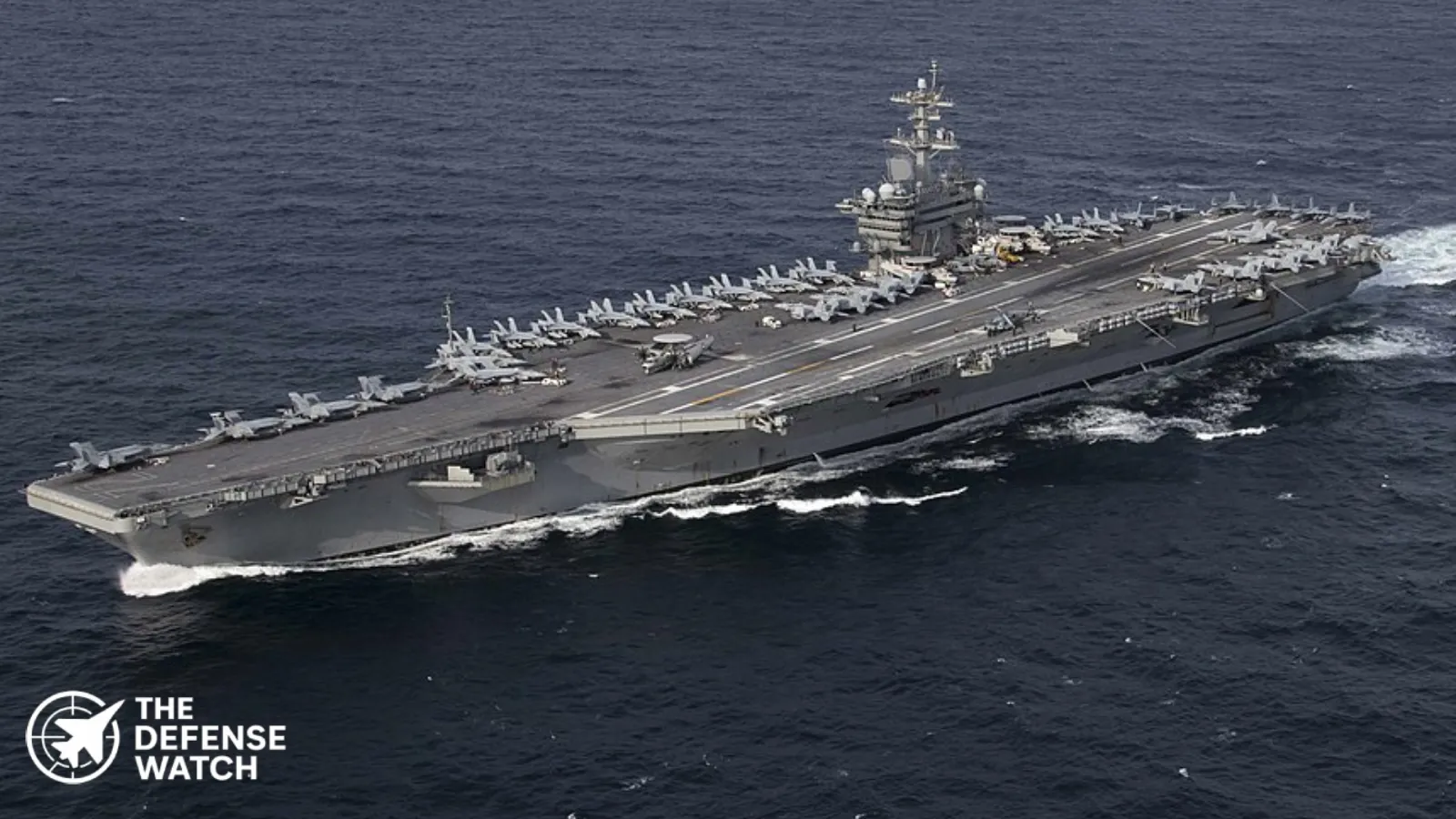
The USS Abraham Lincoln aircraft carrier and other U.S. naval assets face a credible threat from Iranian drone swarm attacks, according to Cameron Chell, CEO of Canadian drone manufacturer Draganfly. The warning comes as the aircraft carrier operates in strategically sensitive waters near Iran’s sphere of influence.
(adsbygoogle = window.adsbygoogle || []).push({});Chell’s assessment highlights a critical vulnerability in modern naval warfare: the ability of low-cost unmanned aerial vehicles to potentially overwhelm sophisticated ship-based air defense systems through sheer numerical superiority.
Canadian Defense Executive Outlines Attack Scenario
Cameron Chell, who leads Draganfly—a publicly-traded drone technology company based in Canada—emphasized the mathematical challenge facing naval defenders. If hundreds are launched in a short time, some are almost certain to penetrate air defenses and reach their targets,” Chell stated in his warning about Iranian capabilities.
The Draganfly CEO’s comments reflect growing recognition within the defense industry that traditional layered air defense systems, designed primarily to counter aircraft and anti-ship missiles, may struggle against coordinated swarm attacks involving dozens or hundreds of small, low-cost drones.
This assessment aligns with observations from recent conflicts, including the ongoing war in Ukraine and various Middle East engagements, where drone swarms have demonstrated effectiveness against conventional military targets.
Iranian Drone Capabilities and Regional Tensions
Iran has developed an extensive unmanned aerial vehicle program over the past two decades, producing a range of platforms from small quadcopters to larger fixed-wing strike drones. The Islamic Revolutionary Guard Corps and Iranian military forces have showcased these capabilities through proxy forces in Yemen, Iraq, Syria, and Lebanon.
The Houthi movement in Yemen, backed by Iran, has repeatedly deployed drone and missile attacks against maritime targets in the Red Sea and Gulf of Aden, forcing U.S. and allied naval forces to maintain heightened defensive postures. These attacks have demonstrated Iran’s ability to project power through asymmetric means.
Iranian-designed drones, including the Shahed-136 and various reconnaissance platforms, have been deployed in multiple conflict zones. The relatively low cost of these systems—often thousands of dollars per unit compared to millions for interceptor missiles—creates a concerning cost-exchange ratio for defenders.
Aircraft Carrier Defense Systems Face New Challenges
The USS Abraham Lincoln Carrier Strike Group employs multiple layers of defense, including the Aegis Combat System, Rolling Airframe Missiles (RAM), Evolved Sea Sparrow Missiles (ESSM), and Close-In Weapon Systems (CIWS) like the Phalanx. However, these systems were primarily designed to counter traditional aerial threats.
Naval air defense doctrine has historically focused on defeating sophisticated anti-ship cruise missiles and aircraft rather than large numbers of small, slow-moving targets. The saturation point—where incoming threats exceed a ship’s ability to engage them—becomes a critical vulnerability in swarm scenarios.
Recent U.S. Navy exercises and assessments have acknowledged the drone swarm challenge, leading to increased investment in counter-drone technologies, including electronic warfare systems, directed energy weapons, and artificial intelligence-enabled targeting solutions.
The carrier strike group’s defensive perimeter typically extends dozens of miles from the vessel, with E-2D Advanced Hawkeye aircraft providing airborne early warning and F/A-18 Super Hornets capable of intercepting threats. However, small drones flying at low altitudes can be difficult to detect and track using conventional radar systems.
Cost Asymmetry Favors Attackers
Defense analysts have long warned about the economic imbalance inherent in counter-drone operations. A small quadcopter costing $1,000 might require a $2 million missile to intercept, creating an unsustainable cost ratio for defenders facing mass attacks.
Chell’s warning underscores this mathematical reality: even with sophisticated defenses, a numerically superior attack has statistical advantages. The sheer volume problem is real,” noted one U.S. defense official speaking on background about counter-drone challenges, though not specifically addressing Chell’s comments.
(adsbygoogle = window.adsbygoogle || []).push({});The Pentagon has prioritized development of more cost-effective counter-drone solutions, including high-power microwave weapons, laser systems, and electronic warfare capabilities that can disable or redirect multiple drones simultaneously at a fraction of the cost of kinetic interceptors.
Regional Security Implications
The USS Abraham Lincoln has operated in U.S. Central Command’s area of responsibility, which includes the Persian Gulf, Arabian Sea, and surrounding waters where Iranian forces maintain significant presence. The carrier’s proximity to potential Iranian launch sites reduces warning time and complicates defensive operations.
Iran’s Islamic Revolutionary Guard Corps Navy operates numerous small, fast attack craft in addition to drone capabilities, creating multi-domain threats that could support coordinated swarm attacks. The convergence of unmanned aerial systems with traditional naval threats represents a evolving challenge for U.S. maritime forces.
Recent incidents in the region, including attacks on commercial shipping and oil infrastructure, have demonstrated Iran’s willingness to employ asymmetric tactics. While direct attacks on U.S. naval vessels remain unlikely given potential escalation risks, the technical capability exists and continues to develop.
U.S. Navy Counter-Drone Initiatives
The United States Navy has accelerated counter-unmanned aerial systems (C-UAS) programs in response to the evolving threat landscape. These initiatives include:
Directed Energy Weapons: The Navy has deployed laser weapon systems aboard several vessels, with plans for wider adoption. These systems can engage multiple targets at minimal cost per shot, addressing the economic asymmetry problem.
Electronic Warfare: Jamming and spoofing capabilities can disrupt drone navigation and control systems, potentially neutralizing multiple threats simultaneously without kinetic engagement.
AI-Enabled Detection: Advanced sensor fusion and artificial intelligence systems improve detection and tracking of small, low-radar-cross-section targets that might evade traditional systems.
Layered Defense Integration: The Navy continues refining integration between ship-based systems, aircraft, and land-based assets to create comprehensive defense networks.
Despite these investments, military analysts acknowledge that perfect defense against determined swarm attacks remains elusive. The fundamental challenge of defending high-value assets against numerous low-cost threats continues to drive doctrinal and technological evolution.
International Perspectives on Drone Warfare
Chell’s position as CEO of a Canadian drone technology company provides him with industry insight into unmanned systems capabilities and limitations. Draganfly specializes in commercial and public safety drone applications, though the company’s expertise in autonomous flight systems offers relevant perspective on military applications.
International defense cooperation on counter-drone technologies has intensified, with NATO allies sharing intelligence and developing coordinated responses to drone threats. The challenge transcends individual national concerns, affecting coalition naval operations worldwide.
(adsbygoogle = window.adsbygoogle || []).push({});Allied naval forces operating in Middle Eastern waters have coordinated defensive measures, sharing sensor data and intercept responsibilities to maximize coverage. However, the distributed nature of modern naval operations means individual vessels or small groups may face threats without immediate support.
Future of Naval Air Defense
The drone swarm threat represents a broader shift in military technology where quantity can challenge quality. Traditional naval superiority, built on platforms like aircraft carriers, faces new asymmetric challenges that demand innovative responses.
Military experts anticipate continued evolution in both offensive drone tactics and defensive countermeasures. The race between swarm capabilities and counter-swarm technologies will likely define naval warfare dynamics for the coming decades.
Chell’s warning, while focused on current Iranian capabilities, applies broadly to any adversary developing drone swarm technologies. China, Russia, and other nations have invested heavily in unmanned systems, creating global implications for naval operations.
The U.S. Navy’s response will likely include continued technological investment, tactical adaptation, and potentially doctrinal changes in how carrier strike groups operate in contested environments. The fundamental question remains whether traditional high-value platforms can be adequately defended against distributed, low-cost threats—or whether naval strategy must evolve to reduce vulnerability.