- The United Kingdom and France have launched early work on a successor to the Meteor beyond-visual-range air-to-air missile.
- The project is part of long-term efforts to maintain European air combat superiority against advanced threats.
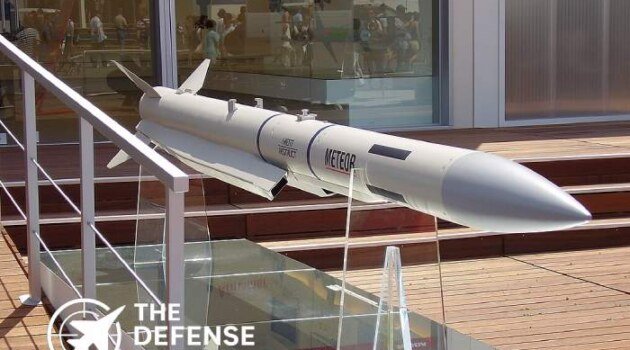
- The Meteor missile, developed by MBDA, is currently one of the most capable BVRAAM systems in service.
- The successor missile is expected to support future combat aircraft programs including FCAS and Tempest.
- Early-stage development signals growing urgency to counter next-generation adversary air capabilities.
- The United Kingdom and France have launched early work on a successor to the Meteor beyond-visual-range air-to-air missile.
- The project is part of long-term efforts to maintain European air combat superiority against advanced threats.
- The Meteor missile, developed by MBDA, is currently one of the most capable BVRAAM systems in service.
- The successor missile is expected to support future combat aircraft programs including FCAS and Tempest.
- Early-stage development signals growing urgency to counter next-generation adversary air capabilities.
UK And France Meteor Successor Missile Program Gains Momentum
The Meteor successor missile program has officially entered early development, as the United Kingdom and France move to sustain their edge in beyond-visual-range air combat.
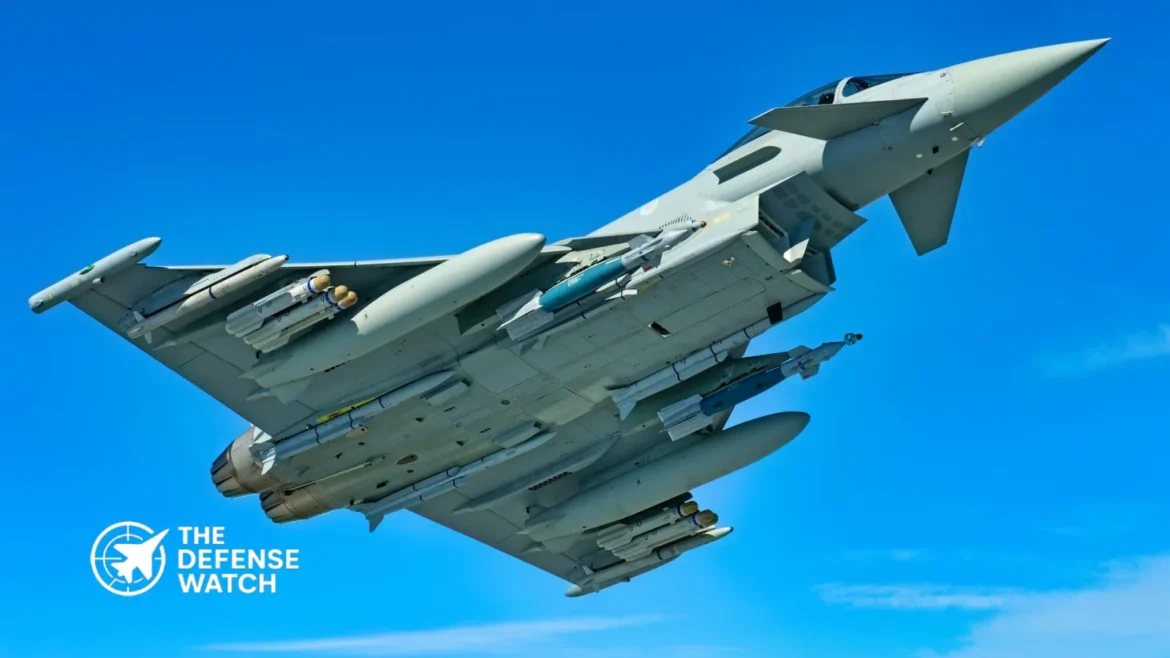
The initiative builds on the success of the current Meteor missile, widely regarded as one of the most advanced BVRAAM systems in operational service. Developed by European missile manufacturer MBDA, Meteor is fielded on platforms such as the Eurofighter Typhoon, Dassault Rafale, and Saab Gripen.
Officials in London and Paris are now looking beyond Meteor’s capabilities, recognizing that evolving threats from peer adversaries demand a new generation of air-to-air weapons with greater range, survivability, and network integration.
Why A Meteor Replacement Is Already Underway
Although the Meteor missile remains highly capable, defense planners are working years ahead of operational timelines. Modern air combat is rapidly shifting due to advances in stealth aircraft, electronic warfare, and long-range sensors.
The Meteor successor missile program reflects a broader strategic trend. Western air forces are preparing for contested environments where adversaries may deploy advanced fighters, including fifth- and sixth-generation platforms, supported by sophisticated air defense systems.
By starting early, the UK and France aim to avoid capability gaps as current systems approach obsolescence in the 2030s and beyond.
This approach mirrors U.S. efforts to develop next-generation air dominance capabilities and long-range missile systems designed to operate in denied environments.
Link To Future Combat Air Systems
A key driver behind the Meteor successor missile program is its expected integration with next-generation combat aircraft.
Europe is currently pursuing two major sixth-generation fighter initiatives. The UK-led Global Combat Air Programme, often associated with the Tempest fighter, and the Franco-German-Spanish Future Combat Air System (FCAS).
Both programs emphasize networked warfare, sensor fusion, and long-range engagement capabilities. A new air-to-air missile will need to match these requirements, offering enhanced data-link connectivity, improved targeting flexibility, and resistance to electronic countermeasures.
The successor to Meteor is therefore not just a replacement weapon, but a core component of future air combat ecosystems.
Industrial And Strategic Implications
The development effort is also significant for Europe’s defense industrial base. MBDA, the consortium behind Meteor, is expected to play a central role in the new program.
Sustaining indigenous missile development capabilities is a priority for both the UK and France, particularly as geopolitical tensions underscore the importance of strategic autonomy in defense manufacturing.
The Meteor successor missile program reinforces long-standing defense cooperation between the two countries, building on previous joint initiatives under frameworks such as the Lancaster House Treaties.
It also highlights Europe’s intent to remain competitive with U.S., Russian, and Chinese missile technologies, especially in the high-end air combat domain.
What The Next-Generation Missile Could Deliver
While specific technical details remain undisclosed, the Meteor successor missile is likely to focus on several key capability areas:
- Extended engagement range beyond current BVRAAM limits
- Improved propulsion systems for sustained high-speed performance
- Advanced seekers capable of operating in contested electronic environments
- Enhanced two-way data links for real-time targeting updates
- Greater compatibility with unmanned and optionally manned platforms
These features align with emerging operational concepts where aircraft act as nodes within a wider combat network, sharing targeting data across multiple platforms.
Strategic Analysis: Preparing For High-End Air Warfare
The timing of the Meteor successor missile program underscores a growing recognition among Western defense planners. Air superiority can no longer be taken for granted.
Potential adversaries are investing heavily in long-range air-to-air missiles, stealth aircraft, and integrated air defense systems designed to challenge NATO air dominance.
In this context, incremental upgrades are no longer sufficient. Instead, a generational leap in missile capability is required to maintain operational advantage.
The UK and France appear to be aligning their efforts with this reality, ensuring that their future air forces are equipped to operate in increasingly contested and complex battlespaces.
Conclusion
The launch of the Meteor successor missile program marks a critical step in Europe’s long-term air combat strategy.
By initiating early development, the United Kingdom and France are positioning themselves to counter emerging threats and support next-generation fighter programs well into the mid-21st century.
As the security environment continues to evolve, the success of this program will play a key role in shaping the balance of air power in future conflicts.

France Launches Major Recruitment Initiative For Military Aviation Technical Training
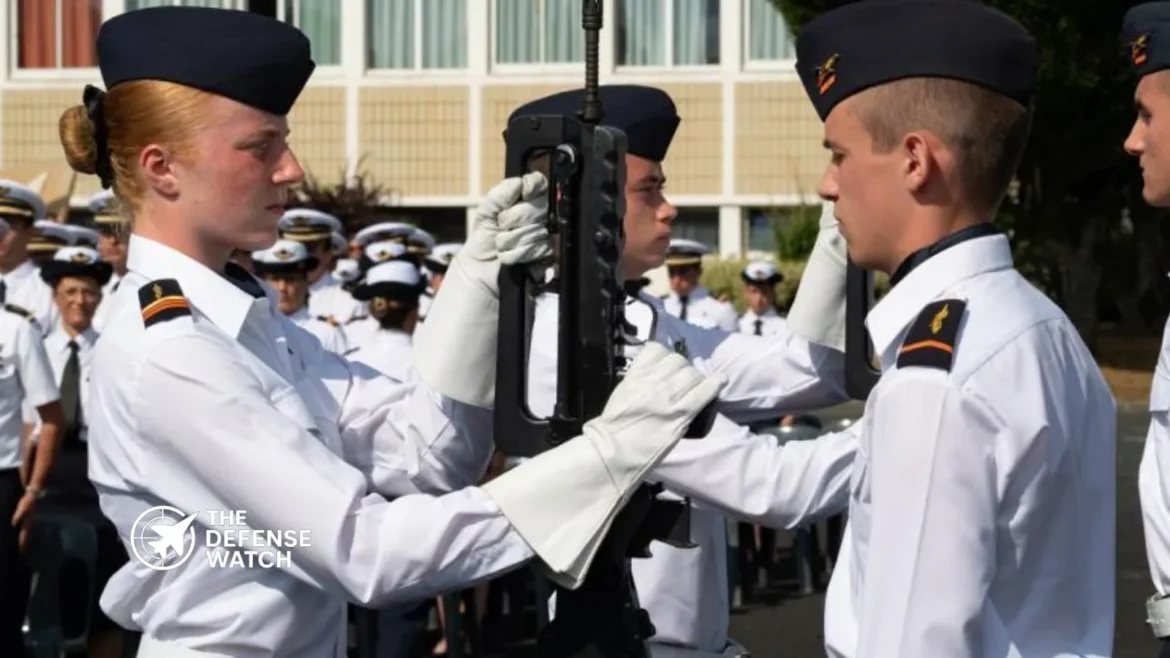
The French Air and Space Force technical school (École d’enseignement technique de l’armée de l’Air et de l’Espace – EETAAE) has opened applications for its 159th graduating class, according to an official announcement from France’s Ministry of Armed Forces. The recruitment drive runs from February 2 through April 26, 2026, with 352 positions available for students entering the program in late August 2026.
Located at Air Base 722 in Saintes, Charente-Maritime, the EETAAE represents a unique pathway for young French citizens to combine military service with technical education in aerospace fields. The institution has trained more than 47,000 airmen since its establishment in 1949, making it a cornerstone of France’s military aviation workforce development strategy.
Academic Excellence Meets Military Discipline
The French Air and Space Force technical school accepts candidates as young as 16 years old, who enter either as high school juniors (première) or seniors (terminale). Students pursue general, technological, or professional baccalaureate tracks while simultaneously receiving military instruction. The dual-track program integrates academic coursework delivered by national education teachers with military training provided by specialized instructors and physical education staff.
The school’s academic performance metrics demonstrate the effectiveness of this integrated approach. In 2025, EETAAE achieved a 100% first-attempt pass rate on the baccalaureate examination, with 91% of students earning honors distinctions. These results reflect the rigorous standards maintained by the institution’s faculty, which includes civilian educators from France’s national education system working alongside military instructors and sports training specialists.
Strategic Workforce Development For French Aerospace Defense
For the 2026 academic year, the French Air and Space Force technical school has allocated 322 positions for students entering as juniors and 30 positions for direct senior-year entry. Upon completing their two-year academic and military formation, graduates receive specialized assignments at French air bases throughout metropolitan France and overseas territories.
The recruitment initiative supports France’s broader strategy to maintain a technically proficient aerospace force capable of operating advanced military aviation platforms. As European nations continue modernizing their air capabilities with next-generation fighter aircraft, unmanned systems, and space-based assets, programs like EETAAE serve as critical talent pipelines for specialized technical personnel.
Application Process And Selection Criteria
Prospective students must submit applications through the school’s digital platform using France’s simplified administrative procedures system (démarches simplifiées). The Ministry of Armed Forces has not disclosed specific selection criteria, though the competitive nature of the program and limited enrollment capacity suggest rigorous evaluation of academic performance, physical fitness, and motivation for military service.
The EETAAE conducted an open house event in early 2026, providing interested candidates and their families opportunities to tour facilities and meet with instructional staff. Detailed information about the institution’s programs and selection process remains available through official French Air and Space Force channels.
Context: European Military Aviation Training Programs
France’s approach to military aviation technical education reflects broader European trends in defense workforce development. As NATO allies confront evolving security challenges and technological complexity in aerospace systems, member nations have emphasized early-career technical training programs.
The EETAAE model differs from U.S. military service academies in its acceptance of students at secondary school age rather than requiring completion of high school before entry. This approach allows the French Air and Space Force to begin military acculturation and technical skill development earlier in candidates’ educational trajectories.
Similar programs exist across European armed forces, though specific structures vary by nation. Germany’s Bundeswehr operates technical schools for various service branches, while the United Kingdom maintains apprenticeship programs combining military service with vocational training in aerospace maintenance and operations.
Implications For French Defense Capabilities
The sustained investment in technical education through institutions like EETAAE demonstrates France’s commitment to maintaining autonomous aerospace defense capabilities. With domestic production of Rafale fighter aircraft, development of future combat air systems through international partnerships, and expansion of space-based military assets, France requires a steady supply of technically trained personnel.
The school’s location at Air Base 722 in Saintes provides students access to operational military aviation facilities, enabling practical training alongside theoretical instruction. This integration of academic and operational environments distinguishes military technical schools from civilian vocational programs.
As France continues its role as a leading European defense power with global military commitments, programs ensuring technical competency among enlisted personnel remain strategically important. The EETAAE’s consistent performance metrics and long operational history suggest the model effectively meets French Air and Space Force requirements for qualified technical specialists.
Looking Ahead
Applications for the 159th EETAAE class remain open through April 26, 2026. Selected candidates will begin their program in late August 2026, joining a tradition of military aviation technical education spanning more than seven decades.
The French Ministry of Armed Forces has not announced plans for enrollment expansion beyond the 352 positions allocated for 2026, though demographic trends and defense modernization requirements may influence future recruitment targets. Additional information about French Air and Space Force career pathways and educational programs is available through official Ministry channels and the service’s recruitment website.
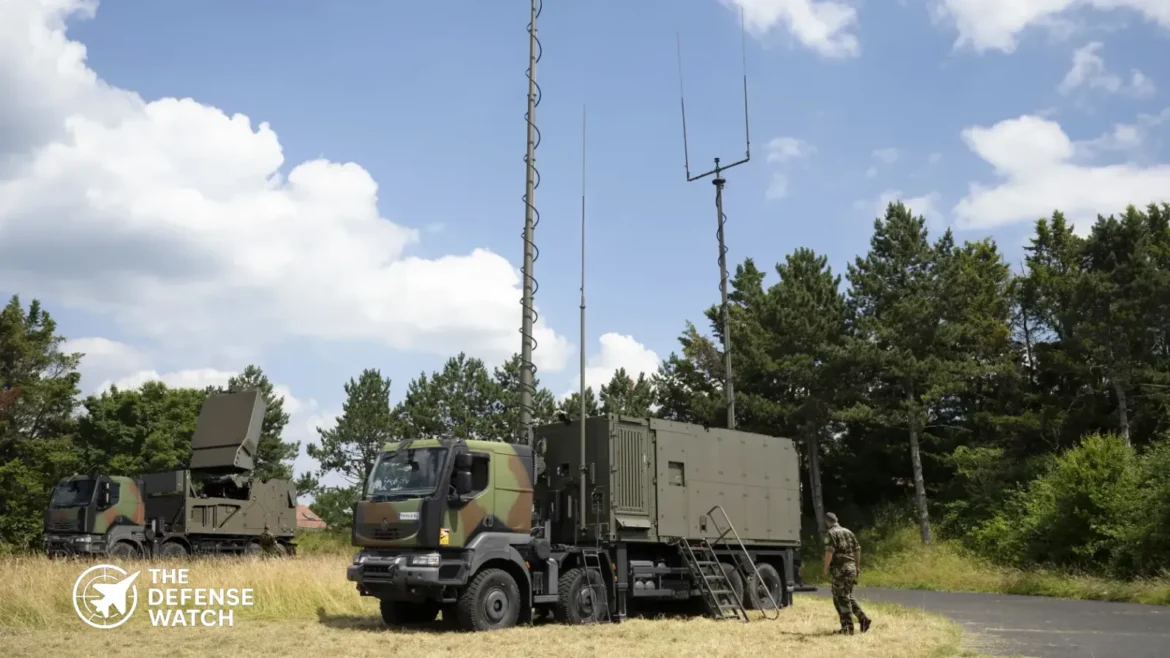
French SAMP/T NG Live-Fire Success Spurs Ukraine Deployment Talk
France’s next-generation SAMP/T NG air defense system completed its first live fire test in December 2025, validating core elements of the upgraded system and prompting renewed discussion about potential deployment to Ukraine in 2026, according to a French defense announcement.
(adsbygoogle = window.adsbygoogle || []).push({});The December 22 firing at the DGA Essais de Missiles range in Biscarrosse, southwest France, paired SAMP/T NG’s new engagement module with its Ground Fire radar in a live demonstration of target engagement. The trial is part of a qualification campaign ahead of planned service entry in 2026 for French and Italian armed forces.
Thales, the system’s radar and sensor lead, highlighted the test as a key step toward operational capability. First deliveries of SAMP/T NG units are slated for 2026 under existing Eurosam development schedules.
French President Emmanuel Macron has said the new system could be deployed initially in Ukraine once it enters service, a position amplified by French government and industry channels. Observers note that this would follow Ukraine’s ongoing use of existing SAMP/T systems supplied by France.
What SAMP/T NG Brings
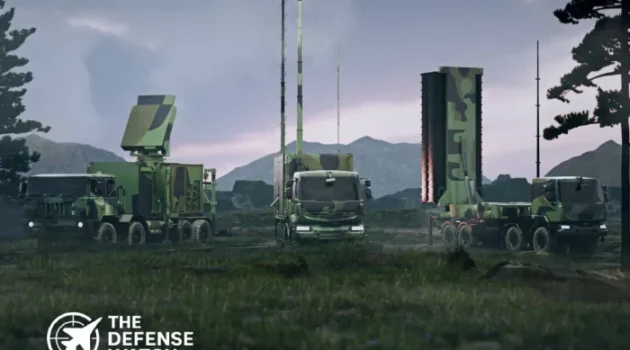
The SAMP/T NG system is the latest evolution of the Franco-Italian surface-to-air missile family managed by the Organization for Joint Armament Cooperation (OCCAR). It builds on the SAMP/T baseline with a new multi-function engagement module, a 360-degree Ground Fire AESA radar, and advanced Aster interceptors.
SAMP/T NG is designed to engage aircraft, cruise missiles, drones, and theatre-class ballistic threats at extended ranges. It integrates launchers with multiple ready-to-fire Aster missiles and can operate both standalone and as part of an integrated air and missile defense network.
(adsbygoogle = window.adsbygoogle || []).push({});Earlier tests of the Aster 30 B1NT missile, the primary interceptor for SAMP/T NG, showed enhanced reach and engagement performance, supporting qualification efforts.
Ukraine and Future Deliveries
Ukraine currently fields older SAMP/T systems supplied by France. These have contributed to Ukraine’s layered air defense alongside Western counterparts.
Under a 2025 bilateral defense agreement, France committed to delivering next-generation SAMP/T NG systems to Ukraine once they enter production. French officials and Ukrainian sources anticipate initial deliveries in 2026.
The exact timing and numbers of systems for Ukraine have not been confirmed publicly by French defense authorities. Delivery schedules will depend on successful qualification, production ramp-up, and political approval.