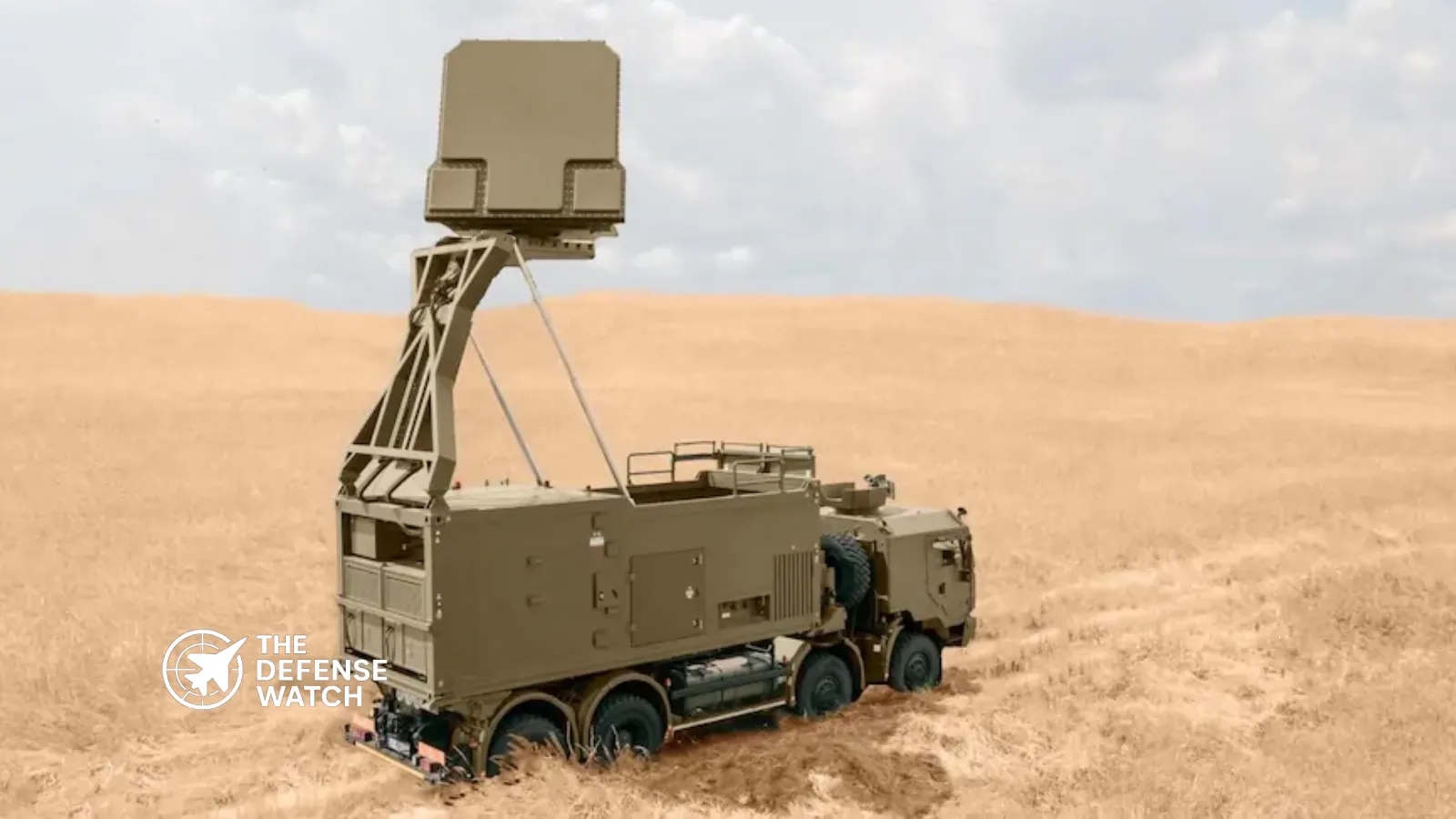
Qatar Boosts Air Surveillance With Thales Radar Contract
Qatar has ordered Thales air surveillance radars to improve its national airspace defense, signing a contract for medium- and long-range ground-based systems with the French defense firm at the DIMDEX exhibition in Doha in late January 2026. This procurement adds both GM400α and GM200 MM/A radars to the Qatar Emiri Air Force inventory.
Radar Systems in the Contract
The order covers two key radar types from Thales:
• Ground Master 400 Alpha (GM400α) long-range air surveillance radar. It is designed for wide-area monitoring and can track airborne targets at distances up to about 515 kilometers. This system supports detection of high-altitude, fast, and maneuvering threats across large sectors.
• Ground Master 200 Multi-Mission All-in-One (GM200 MM/A) medium-range radar. It provides air and surface surveillance out to roughly 350 kilometers and can support fire control for air defense systems.
Both systems use Thales’s Secure Digital Integration Platform, which allows radar data to be fused into a unified air picture and supports future integration of non-U.S. sensors.
Contract Elements and Support
The agreement includes long-term maintenance and training support. Thales will provide a national supervision and maintenance system and run operator and technician training, with local support activities extending through 2036.
Officials from Thales described the contract as part of a long-standing partnership with Qatar, aimed at strengthening the country’s airspace sovereignty and its ability to counter evolving airborne threats including drones and low-signature targets.
Strategic Context
The radar acquisition comes amid a broader regional focus on improving early warning and integrated air defense networks. Ground-based multi-mission radars like the GM400α and GM200 MM/A form a core layer in national air surveillance, feeding data to command and control systems and layered defense networks.
Qatar has previously invested in air defense assets including fighter aircraft sensors and long-range L-band surveillance radars. The new Thales systems add scalable, mobile, and digitally integrated radar capability that aligns with ongoing modernization efforts.
What Comes Next
Deliveries and system integration timelines have not been publicly detailed. Implementation will likely involve deploying the radars at strategic sites and integrating them with existing defense infrastructure. Long-term operations and maintenance by Thales personnel aim to build local capacity and ensure sustained readiness.
DIMDEX 2026 Defense Exhibition Report
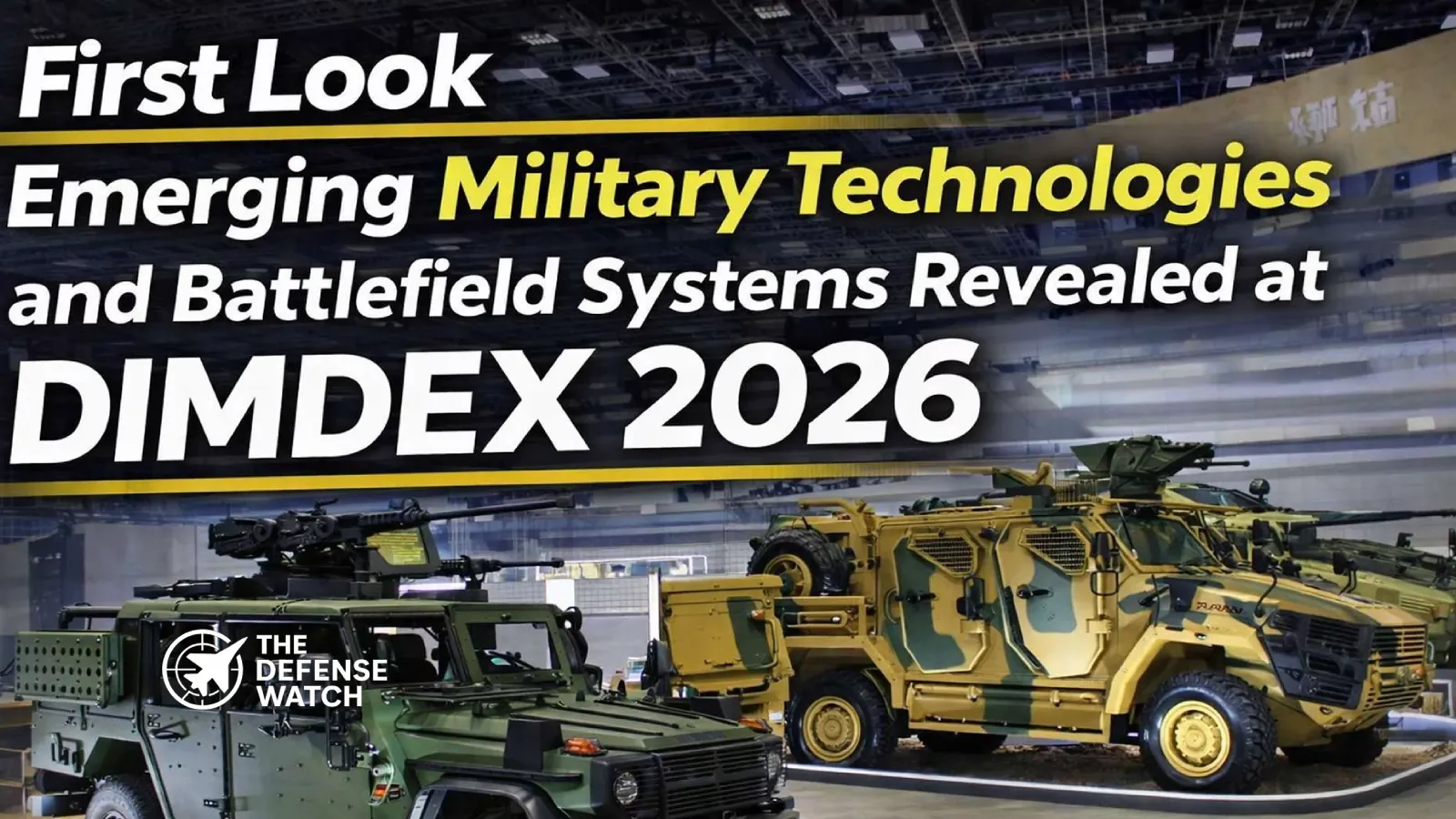
The DIMDEX 2026 defense exhibition in Doha saw defense technology leaders and military officials gather to highlight emerging military systems, sign major agreements and discuss global security challenges. More than 200 exhibitors and over 130 delegations from 82 countries took part, making this edition the largest in the show’s history.
Exhibition Overview
The ninth edition of the Doha International Maritime Defence Exhibition and Conference, held 19 through 22 January at the Qatar National Convention Centre, concluded with more than 70 agreements, contracts and memoranda of understanding valued above QR 18.5 billion.
Organizers described DIMDEX as a key global platform for defense cooperation and innovation. The show’s scope extended beyond maritime systems to include land, air and unmanned technologies, cybersecurity and command and control solutions.
Unmanned and Remote Systems
One of the standout trends at DIMDEX 2026 was the emphasis on unmanned and remote systems across domains. The Qatar Emiri Coast Guard displayed its first operational ULAQ armed unmanned surface vessel, delivered by Türkiye’s Ares Shipyard, complete with remote weapon station, SAR radar and LIDAR sensors tailored to coast guard missions.
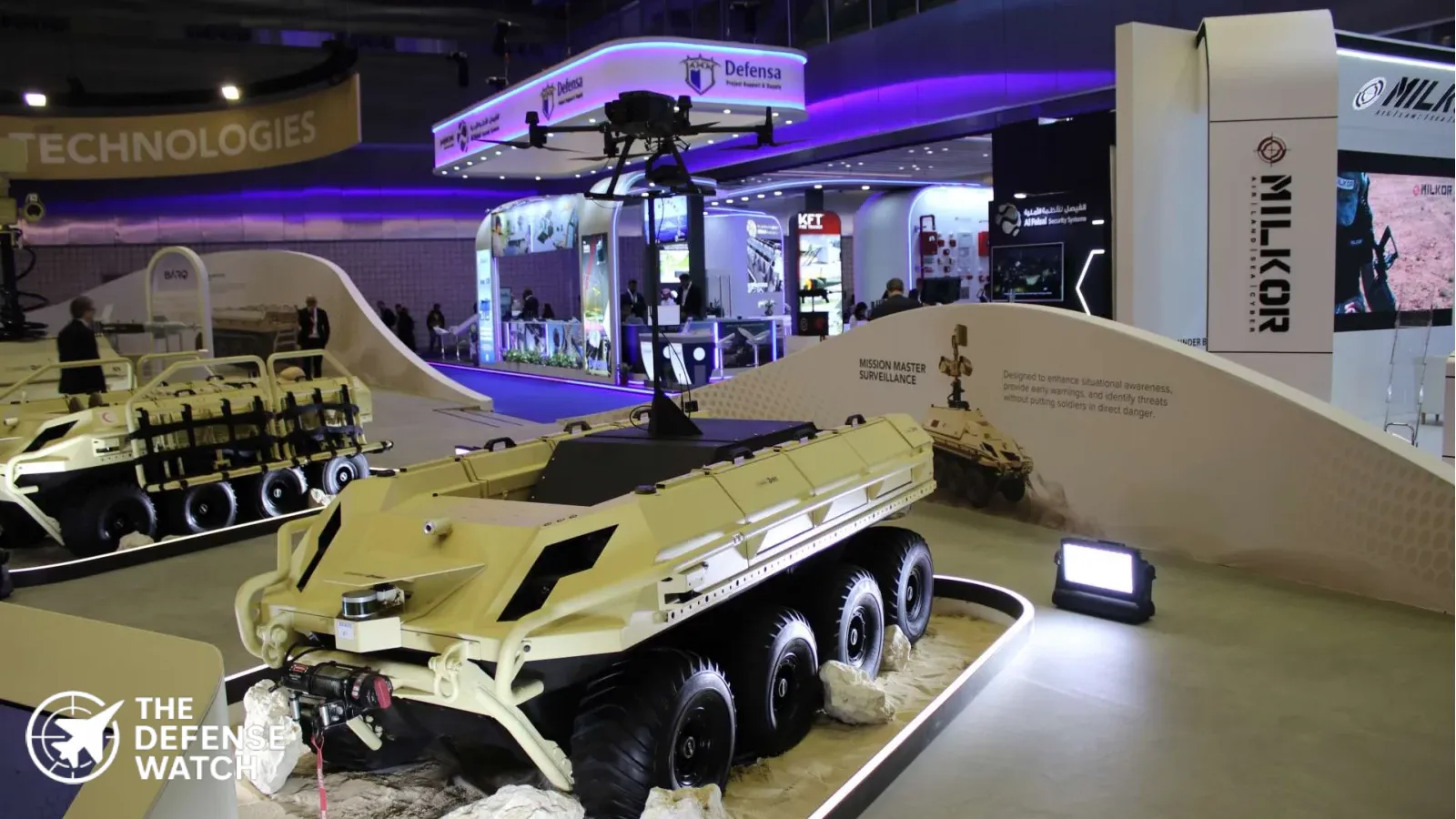
Qatari defense firms also showed unmanned ground solutions. Barzan Holdings presented the Mission Master unmanned ground vehicle equipped with a tethered quadcopter for extended aerial reconnaissance and persistent surveillance tasks.
Armored and Land Platforms
U.S. defense industry participation included the display of the General Dynamics LAV 700 Desert Viper 8×8 wheeled infantry fighting vehicle, optimized for hot climates with extended range and serviceability.
Singapore’s ST Engineering used DIMDEX to unveil its amphibious Terrex s5 infantry fighting vehicle variant, capable of operating in maritime environments and carrying substantial payloads.
Air Defense and Combat Tech
Defense exhibitors also highlighted air defense and forward air systems. Coverage from industry sources and social media reports noted displays and deployments of air defense gear including configurations tied to the Patriot PAC-3 Missile Segment Enhancement system and 35 mm point defense artillery sets, indicating renewed focus on layered air defense in response to evolving threats.
Informal reports from the show floor suggest U.S. firms also presented full-scale uncrewed fighter concepts, broadening the aerial focus beyond traditional naval and air defense equipment.
Naval and Amphibious Displays
DIMDEX continued to serve as a major showcase for naval platforms and associated technologies. Industry posting highlighted scale models and concepts for landing helicopter docks and medium landing craft designed for amphibious assault and coastal logistics.
Regional shipbuilders also revealed new unmanned surface vessels, such as the Ghost 7 USV, planned for sea trials in 2026 with export discussions in motion.
Strategic Dialogues and Partnerships
Beyond equipment displays, DIMDEX hosted the Middle East Naval Commanders Conference under the theme Defence Diplomacy and Maritime Security Challenges. The forum brought senior military leaders and experts together to discuss regional maritime security concerns and cooperation frameworks.
Major sponsors and partners for the event included leading global defense groups, underscoring the show’s strategic value as a defense industry marketplace and dialogue platform.
Outlook and Industry Impact
DIMDEX 2026 reinforced Qatar’s role as a hub for defense engagement. The range of technologies on display and the volume of deals point to continued interest from international firms and military buyers in maritime, unmanned and integrated defense systems.
Qatar Debuts Mission Master Ground Robot With Integrated Surveillance Drone
At the Doha International Maritime Defence Exhibition and Conference 2026, Qatar showcased an unmanned ground vehicle fitted with a rooftop drone launch and recovery system, marking a new step in unmanned surveillance integration. The Mission Master ground robot on display combines mobile patrol capability with persistent aerial observation to support reconnaissance and security missions.
UGV Meets Persistent ISR
The platform shown at DIMDEX 2026 is based on the Mission Master unmanned ground vehicle, equipped with a fully electric 8×8 chassis designed for low acoustic signature and endurance patrols. Mounted on top is a drone launcher and recovery system that lets a small quad‑rotor UAV deploy from the UGV, hover for extended periods, and return for tethered power and data connection.
This configuration allows forces to extend their situational awareness beyond line of sight while keeping personnel and main units at safer distances. By carrying its own aerial sensor, the ground robot can monitor road junctions, rooflines, or other key points that might be hard to see from the ground.
Platform Details
The underlying Mission Master design emphasizes modularity and scalability. The UGV weighs around 1,200 kilograms and offers about six hours of autonomy at moderate speed on battery power. It integrates with Barzan Holdings command and control systems, giving operators the ability to manage multiple unmanned assets from a remote control station rather than relying on line‑of‑sight handheld controllers.
Communications are handled over configurable radio bands and GPS navigation provides positional accuracy suitable for coordinated patrols. The tethered drone system improves data links and flight persistence by drawing power from the ground vehicle itself.
Mission Roles and Context
Qatar positions the system for multiple missions, including forward reconnaissance, base and border security, checkpoints, and observation posts. The pairing of ground mobility with an aerial sensor extends the UGV’s coverage, letting commanders see around obstacles without sending troops into potentially hazardous areas.
The Mission Master family can also accept other payloads, from standard surveillance kits to medical evacuation modules and weapon stations. This flexibility could let operators adapt the same base vehicle for diverse mission sets, depending on threat level and operational need.
Strategic Value at DIMDEX
DIMDEX 2026, held in Doha from January 19 to 22, brought together more than 200 companies and over 130 official delegations, with deals worth more than QR 18.5 billion signed across the event. Exhibits ranged from maritime systems to electronic warfare and unmanned platforms.
The Mission Master UGV with an integrated drone launch system fits into broader regional trends of adopting unmanned solutions for persistent surveillance, border security, and infrastructure protection. The system’s mobility and sensor fusion link into wider command networks, allowing operators to pull data into shared battlespace pictures in real time.
Qatar’s emphasis on unmanned systems at DIMDEX reflects its broader defense planning focus, which includes collaboration with international partners on unmanned surface vessels, autonomous ISR platforms, and local production of defense technologies.
Gulf Warships Arrive in Doha for DIMDEX 2026
Four warships from Gulf Cooperation Council nations have arrived at Hamad Port in Doha, Qatar, ahead of the ninth edition of the Doha International Maritime Defence Exhibition and Conference (DIMDEX 2026), providing a tangible display of regional naval modernization efforts.
The vessels, representing Kuwait, Oman, Saudi Arabia, and host nation Qatar, moored together to open DIMDEX 2026, which runs from January 19 to 22, 2026, at the Qatar National Convention Centre (QNCC). Organized by the Qatar Armed Forces under the patronage of His Highness Sheikh Tamim bin Hamad Al Thani, the Amir of Qatar, the event serves as a premier platform for maritime defense technologies, industry leaders, and military delegations.
Public viewing of the visiting warships at Hamad Port was available from January 20 to 22, requiring pre-registration via the official DIMDEX website (dimdex.com).
The arrivals, reported on January 18, 2026, underscore the exhibition’s focus on operational naval assets. According to detailed coverage from Army Recognition (published January 21, 2026), the four ships illustrate a strategic shift toward layered maritime capabilities suited to the Arabian Gulf’s congested and high-threat waters.
Kuwait’s KNS Al-Garoh, an Um Al Maradim-class missile patrol combatant (approximately 42 meters, 250 tons), emphasizes rapid response and coastal defense. Powered by twin MTU diesels with waterjets, it carries Sea Skua anti-ship missiles, a 40 mm gun, and electronic warfare systems for threats ranging from small boats to aerial targets.
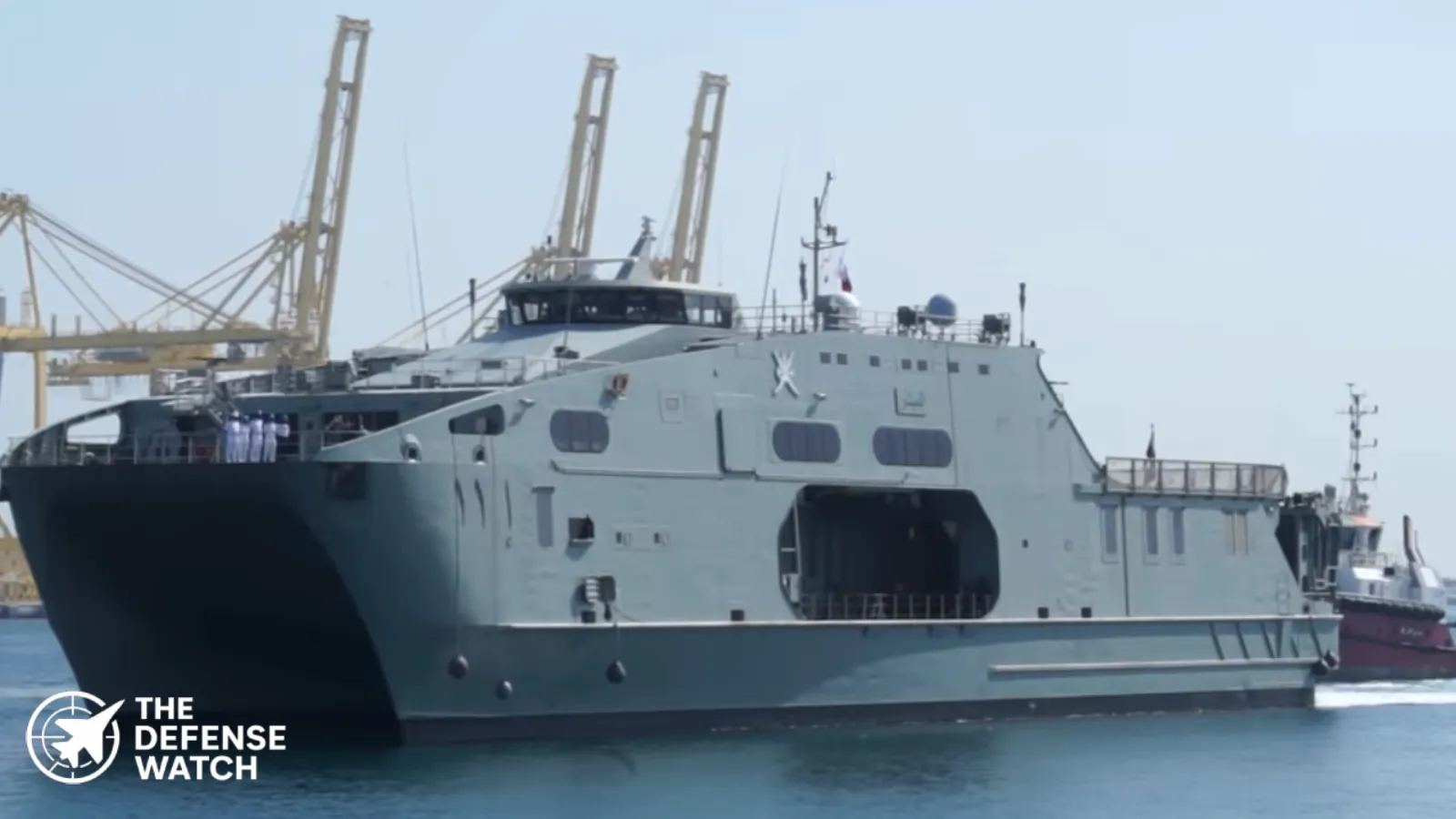
Oman’s Al Mubashir (S11), a 72.5-meter Austal-built aluminum catamaran, prioritizes high-speed mobility (up to 38 knots) and logistical support. Its large deck supports roll-on/roll-off operations, vehicle transport, and NH90 helicopter operations for resupply or evacuation, reflecting intra-theater lift requirements.
Saudi Arabia’s Onaizah (832), an Al Jubail-class corvette (based on the Avante 2200 design, ~104 meters, 2,500 tons), delivers multi-role capabilities with the TRS-4D AESA radar and indigenous Hazem combat management system. Armament includes a 76 mm gun, 35 mm CIWS, vertical-launch air defense missiles, anti-ship missiles, and torpedoes, plus helicopter embarkation for extended reach.
Qatar’s Al Fulk (L141), a 143-meter Fincantieri-built amphibious transport dock, stands out as the most capable in the group. It supports hundreds of personnel, NH90 helicopters, landing craft from a well deck, and features Sylver VLS for Aster missiles alongside advanced radars for fleet air and missile defense, enabling command functions in contested environments.
These platforms collectively demonstrate Gulf states’ investments in speed, sensor fusion, air defense integration, and amphibious projection—key for maintaining sea control in a region marked by strategic chokepoints and asymmetric threats.
DIMDEX 2026 also features broader exhibits on naval innovations, unmanned systems, and air defense, with related reports noting Qatar’s unveilings of new platforms. The Middle East Naval Commanders Conference (MENC) on January 20 addressed maritime security challenges and defense diplomacy.
The event draws international attention amid ongoing regional tensions, highlighting collaborative and individual modernization trends among Gulf navies.
Qatar Highlights Skynex 35mm Air Defense at DIMDEX 2026
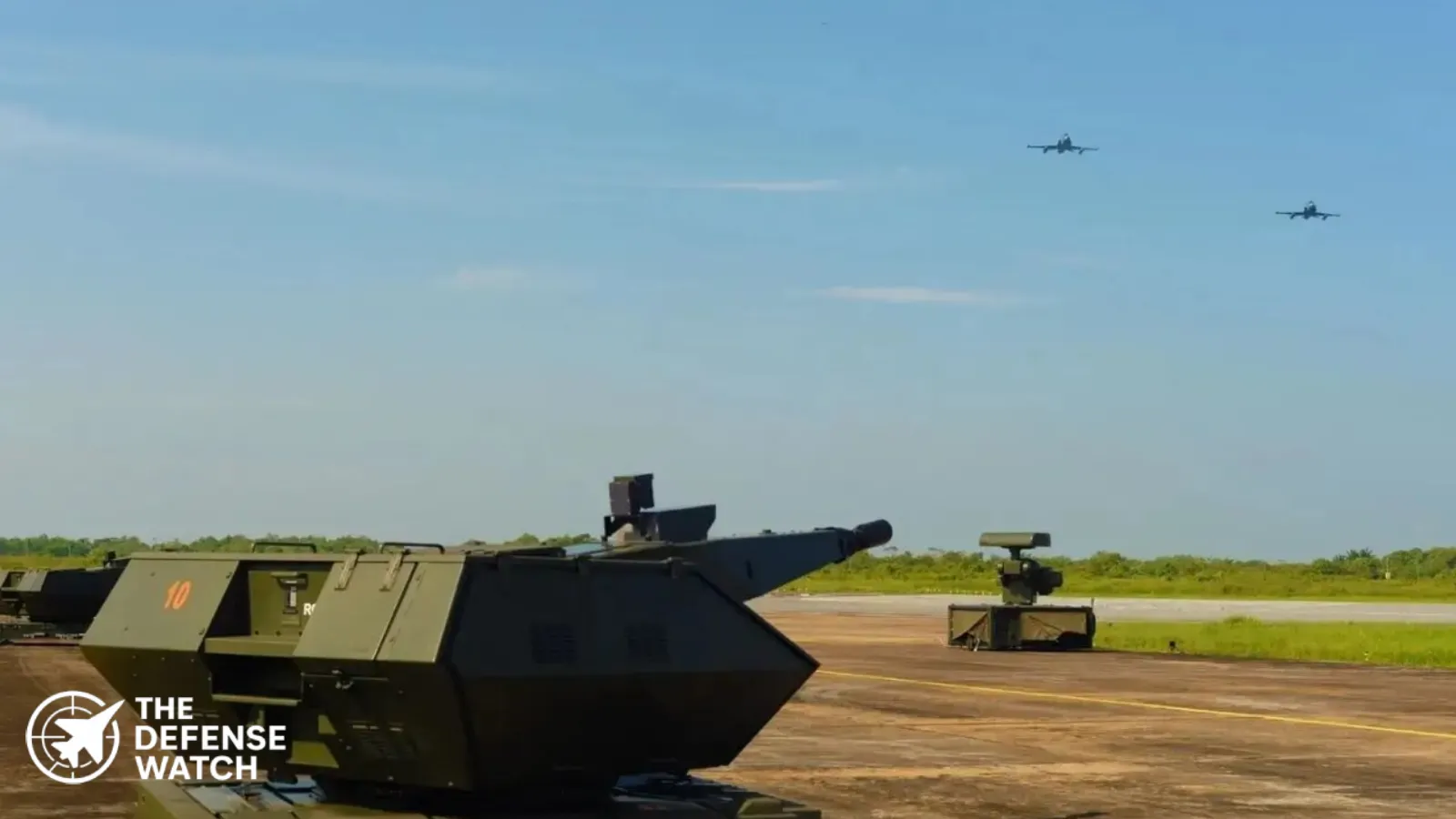
Qatar put the focus on its Rheinmetall Skynex 35mm air defense system at the Doha International Maritime Defence Exhibition and Conference, or DIMDEX 2026, underscoring efforts to improve point defense against drones and other aerial threats.
The event opened January 19 at the Qatar National Convention Centre, drawing global defense firms and military delegations. In Doha, air and missile defense systems drew particular attention amid evolving regional threats and renewed emphasis on integrated layered defense.
Skynex System Focused on Close-In Defense
On display at the Qatar Emiri Air Defence Forces booth was a configuration of Rheinmetall’s Skynex system built around a 35mm gun effector. The setup highlighted the system’s role in countering a range of low-signature targets, including unmanned aerial systems (UAS), rockets, and cruise missiles in point-defense roles.
The Skynex architecture integrates networked sensors, a command and control node, and effectors such as the Oerlikon Revolver Gun Mk3 firing programmable AHEAD ammunition. This architecture is designed to create a coherent local air picture and accelerate engagement decisions against fast, agile, and inexpensive aerial threats that can otherwise strain traditional air defense interceptors.
Technical Highlights on Display
The featured 35mm gun effector showcased at DIMDEX incorporates autonomous tracking and engagement features tied into the broader Skynex battle management system. The Oerlikon Revolver Gun Mk3 fires programmable air-burst ammunition, which is tailored to increase hit probability against small drones and similar targets while managing collateral risk.
On the sensor side, Skynex can be built around the X-TAR3D tactical acquisition radar, offering three-dimensional surveillance up to 50 kilometers with modes optimized for low-altitude threats. The system also offers options for multi-sensor units and passive early-warning measures to support situational awareness under electronic warfare pressure.
Strategic Context for Qatar
For Qatar, Skynex sits beneath longer-range interceptors in a layered air defense network. High-end missile systems remain important for broader regional threats, but they are not optimized for repeated engagements against low-cost drones and loitering munitions probing defended airspace. Skynex fills the close-in gap with sustained firepower and rapid response suited to fixed infrastructure and bases.
Qatar’s defense modernization at DIMDEX 2026 reflects broader trends across the Gulf toward cost-effective, layered defenses capable of countering saturation attacks using combined drone, rocket, and cruise missile salvos.
Exhibition Highlights and Broader Trends
DIMDEX 2026 is hosting a range of international defense firms and technologies, with a strong regional focus on air and missile defense systems. Other exhibitors include integrated air defense solutions from global suppliers and expanded demonstrations of unmanned systems and sensors tailored to Gulf security needs.
As Gulf states continue to balance strategic deterrence with cost-effective defenses, systems like Skynex signaling a shift toward networked short-range options that complement existing long-range interceptors.