

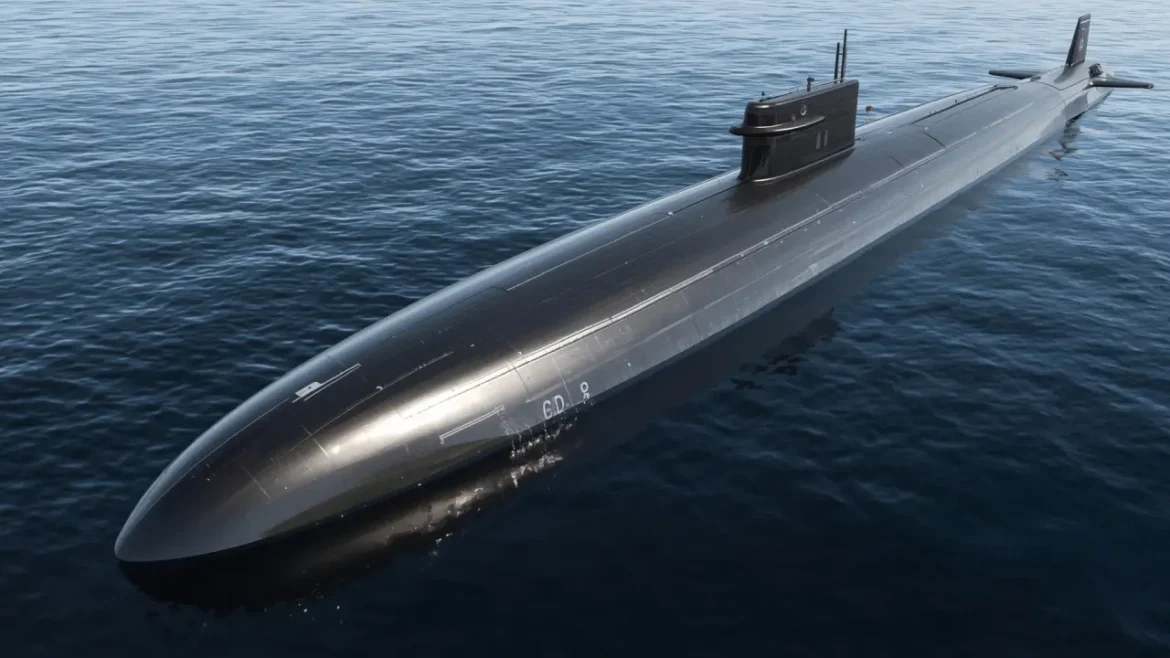
The U.S. Navy’s Columbia-class (SSBN-826) ballistic missile submarines represent the backbone of the future nuclear triad, slated to succeed the aging Ohio-class fleet. With construction already underway and service entry anticipated by 2031, Washington is betting heavily on this platform to sustain underwater strategic deterrence—despite growing costs, schedule slips, and industrial strain.
The Columbia-class is intended to replace the Ohio-class SSBNs one-for-one, maintaining continuous at-sea deterrent posture. The first vessel, USS District of Columbia (SSBN-826), commenced construction in October 2020, with delivery targeted around 2029–2031.
Contractors & Industrial Base
General Dynamics Electric Boat serves as the prime contractor and lead design yard, with Newport News Shipbuilding handling about 22–23% of the workload. Key suppliers, such as Leonardo DRS, are supplying the permanent magnet electrical propulsion systems through shipset 12, amounting to over $3 billion in contracts
Cost and Schedule Challenges
Escalating Budgets
Initial projected lifecycle costs for the class totaled approximately $347 billion in FY2010 dollars, with the lead boat forecast at $6.2 billion and follow-on boats averaging $4.9 billion. More recent estimates put total acquisition costs for all 12 subs between $130 and $132 billion.
Delivery Delays
The Government Accountability Office (GAO) warns of material delays: delivery of the first Columbia-class submarine is now estimated to be 12 to 16 months late—potentially arriving between October 2028 and February 2029—endangering the goal to maintain deterrent patrols by 2030 Government Accountability Office. Navy officials have confirmed delivery delays up to 18 months, attributing them to “critical-path challenges” at shipyards USNI News.
Industrial and Supply Chain Pressure
General Dynamics Electric Boat has expanded its Groton, CT campus—adding land and administrative facilities—and registered strong earnings growth (22% year-over-year) driven by Columbia and Virginia-class construction, though supply chain issues persist. Lawmakers like Senator Jon Ossoff have also secured Navy commitments to upgrade Kings Bay to handle Columbia-class submarines, indicating broader infrastructure demand.
Strategic Context and Analysis
These SSBNs are more than mere platforms—they are central pillars of U.S. strategic deterrence, offering stealthy second-strike capability. Yet, the program’s scale and complexity test the limits of the American naval industrial base. Rising budgets and delayed timelines risk undermining the Navy’s ability to retire aging submarines in time, potentially leaving gaps in deterrent coverage.
Crucially, congressional and naval oversight (via GAO recommendations) must ensure accurate risk forecasting, cost reporting, and supplier performance tracking. Continued emphasis on infrastructure investments—from yards to submarine bases—will be vital to sustain program momentum.
Submarine Naming Pipeline
- USS District of Columbia (SSBN-826): Lead boat, under construction.
- USS Wisconsin (SSBN-827): Second boat, scheduled for FY2024 construction.
- USS Groton (SSBN-828): Third boat, named in January 2025 U.S. NavyWikipedia
FAQ
It ensures continuous survivable sea-based nuclear capability by replacing an aging Ohio-class fleet, maintaining strategic parity.
Escalating costs, delivery delays (12–18 months), industrial capacity strain, and supplier performance uncertainty.
GAO recommends updating cost forecasts with identified risks; investments in infrastructure and supplier base resilience are also crucial.
The lead boat is expected to be delivered around 2029, entering service by 2031, with all twelve completed by 2042