

Takeaways
Key facts from the contract announcement
1. $511.5 Million Radar Contract
Raytheon Missiles & Defense received a $511,533,484 modification to produce AN/SPY-6(V) family radar hardware and associated spares.
2. Production Extends Through 2031
The announcement states that the work is expected to be completed by November 2031, with the same date applying if all stated options are exercised.
Raytheon Wins $511.5M Navy SPY-6 Radar Contract
The U.S. Navy has awarded Raytheon a $511.5 million contract modification for continued hardware production of the AN/SPY-6(V) family of naval radars and associated spares.
According to the Sept. 28, 2026 contract announcement, Naval Sea Systems Command in Washington, D.C., awarded Raytheon Missiles & Defense a $511,533,484 modification to previously awarded contract N00024-22-C-5500. The action combines fixed-price incentive, firm-fixed-price and cost-only contract elements.
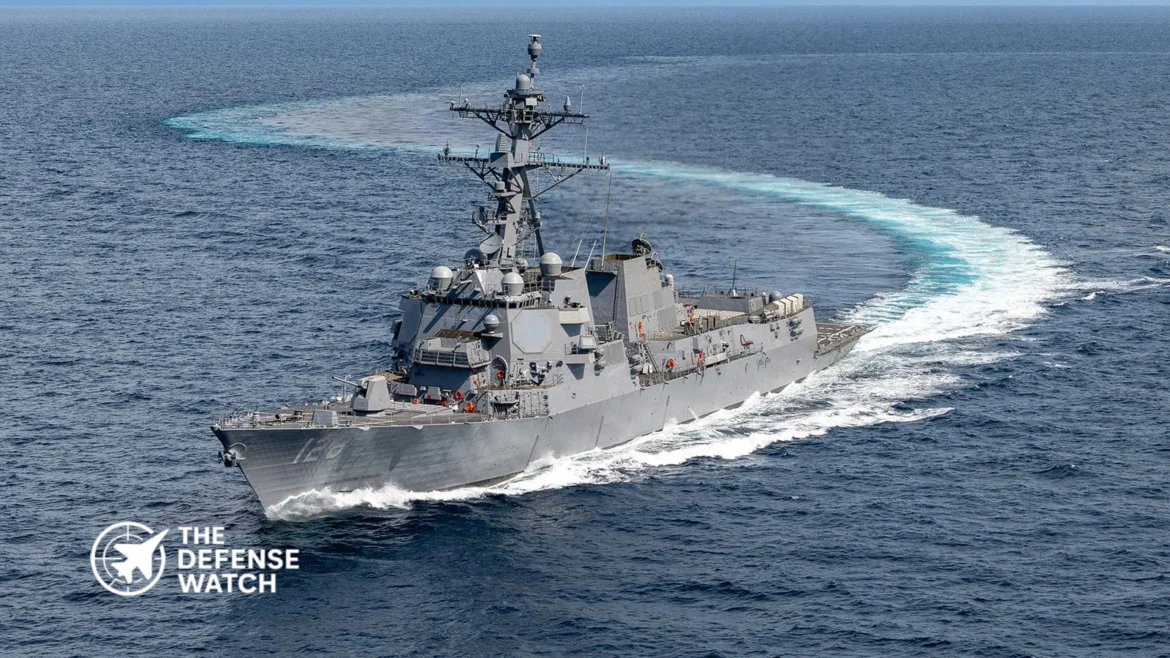
The award is part of the Navy’s continuing procurement of the SPY-6 radar family, which is being introduced across multiple classes of surface ships. The Navy describes AN/SPY-6(V)1 as an integrated air and missile defense radar for the DDG 51 Flight III destroyer program.
Scope of the AN/SPY-6 Raytheon Contract
The Sept. 28 modification covers options and the purchase of spares for hardware production of the AN/SPY-6(V) family and associated hardware.
The announced value of $511,533,484 represents the value of this contract modification. It should not be interpreted as the total value of the underlying N00024-22-C-5500 contract or as an amount that has already been spent on the entire SPY-6 program.
The announcement states that work is expected to continue through November 2031. It also says that if all options are exercised, work will continue through November 2031.
The procurement was conducted under 10 U.S.C. 3204(a)(1), citing only one responsible source and a determination that no other supplies or services would satisfy the agency’s requirements. The announcement states that the modification was not competitively procured.
AN/SPY-6 Radar Technical and Operational Context
The AN/SPY-6 is a family of active electronically scanned array radars developed for U.S. Navy surface combatants and other ship classes. Raytheon has described the family as supporting air, surface and ballistic missile threat detection and tracking.
The Navy’s AN/SPY-6(V)1 Air and Missile Defense Radar is central to the DDG 51 Flight III configuration. Navy documentation states that the Flight III design incorporates electrical power and cooling improvements associated with the radar and is intended to provide increased detection and tracking capacity for integrated air and missile defense.
The broader SPY-6 family also includes variants intended for different ship configurations. Raytheon has identified SPY-6(V)4 as the variant designed for the modernization of Flight IIA Arleigh Burke-class destroyers. In August 2026, the company reported installation of the first SPY-6(V)4 array at the Navy’s Wallops Island test facility ahead of planned integration with USS Pinckney, DDG 91.
The radar’s architecture is based on modular radar assemblies, allowing the SPY-6 family to be configured for different ship applications. Raytheon has said its production facilities use this modular approach across multiple SPY-6 variants.
Operational Impact on the U.S. Navy Surface Fleet
For the United States Navy, continued SPY-6 production supports the transition from legacy shipboard radar systems to newer sensors designed for integrated air and missile defense missions.
The capability is particularly important to the DDG 51 Flight III destroyer fleet. The Navy identifies AN/SPY-6(V)1 as the centerpiece of the Flight III sensor upgrade, while the broader family is being adapted for other ship classes.
Raytheon’s previous production activity also shows that SPY-6 procurement has continued through successive contract actions. In July 2026, the company announced a separate $1.8 billion hardware production and sustainment contract extension for the SPY-6 family.
The latest September modification therefore fits within an established production and sustainment effort rather than representing a new radar development program.
Contract Breakdown: Raytheon SPY-6 Award Details
Contract Value
The modification is valued at $511,533,484.
The announcement separately identifies the funds obligated at award:
- $499,876,573, or 98%, from fiscal 2025 shipbuilding and conversion, Navy funds
- $9,640,327, or 2%, from fiscal 2026 operations and maintenance, Navy funds
- $2,016,584, less than 1%, from fiscal 2026 other procurement, Navy funds
Of the obligated funding, $9,640,327 will expire at the end of the fiscal year.
Contractor
The contractor is Raytheon Missiles & Defense, based in Marlborough, Massachusetts.
Raytheon is an RTX business responsible for the company’s naval radar portfolio, including the SPY-6 family.
Contract Type
The modification uses a combination of:
- Fixed-price incentive, firm-target
- Firm-fixed-price
- Cost-only
This structure allows different portions of the procurement to use different pricing and cost mechanisms. The announcement does not provide a line-by-line breakdown showing which contract type applies to each hardware or option element.
Work Locations
The largest share of the work will be performed in Andover, Massachusetts, at 30%.
Other major locations include:
- San Diego, California, 10%
- Scottsdale, Arizona, 10%
- Syracuse, New York, 8%
- Stafford Springs, Connecticut, 6%
- Sykesville, Maryland, 4%
- Tulsa, Oklahoma, 3%
- Indianapolis, Indiana, 2%
- Cerritos, California, 2%
- Chippewa Falls, Wisconsin, 2%
- Eau Claire, Wisconsin, 2%
- Riverside, California, 2%
- Portsmouth, Rhode Island, 2%
- Chantilly, Virginia, 1%
- Bloomfield, Connecticut, 1%
Another 15% will be performed at various locations across the United States, with each individual location accounting for less than 1%.
The concentration of work in Andover is consistent with Raytheon’s established SPY-6 radar production infrastructure. The company has identified its Andover Radar Development Facility as a major site for SPY-6 production.
Performance Period
Work is expected to be completed by November 2031.
The announcement states that the same November 2031 endpoint applies if all options are exercised.
Funding
The contract uses Navy funding from shipbuilding and conversion, operations and maintenance, and other procurement accounts.
The largest portion of the award is funded through fiscal 2025 shipbuilding and conversion funds, reflecting the connection between the radar hardware procurement and Navy shipbuilding activity.
Options Or Follow-On Work
The modification exercises options under the existing contract and includes procurement of spares.
The announcement does not provide a separate quantity of radar systems, arrays or spare components associated with the $511.5 million action. It therefore would be inappropriate to convert the contract value into an estimated number of radars without additional procurement data.
Raytheon Defense Industrial Base and Acquisition Impact
The award extends a production effort that requires a geographically distributed supplier and manufacturing network.
The work locations listed in the announcement span radar manufacturing, electronics, engineering and associated hardware activities across numerous U.S. states. This structure illustrates how a major naval sensor program can distribute procurement activity beyond the prime contractor’s principal production site.
Raytheon has also reported investment in its radar manufacturing infrastructure. In 2026, the company said it had invested more than $800 million to modernize radar manufacturing facilities and expand production capacity, while targeting increased SPY-6 output. Those statements are company-reported production plans rather than Navy delivery commitments.
From an acquisition perspective, the use of an existing contract modification and options allows the Navy to continue production without establishing a separate procurement vehicle for each hardware requirement. The sole-source determination cited in the announcement also reflects the government’s conclusion that another source could not satisfy the specific requirement.
Program Milestones and Next Steps
The immediate focus of the Sept. 28 award is continued production of AN/SPY-6(V) hardware and associated spares.
The Navy’s SPY-6 effort is also moving through different stages of ship integration. The first Flight III destroyer, USS Jack H. Lucas, was built around the AN/SPY-6(V)1 radar, while the Navy’s Flight IIA modernization effort is incorporating the SPY-6(V)4.
The announcement does not disclose a specific number of radar systems or spare units tied to the September modification. It also does not identify individual ships receiving hardware under this particular action.
The contract therefore represents a continued production and support step within the Navy’s broader SPY-6 modernization effort, with work scheduled to extend through November 2031.