

Executive Summary:
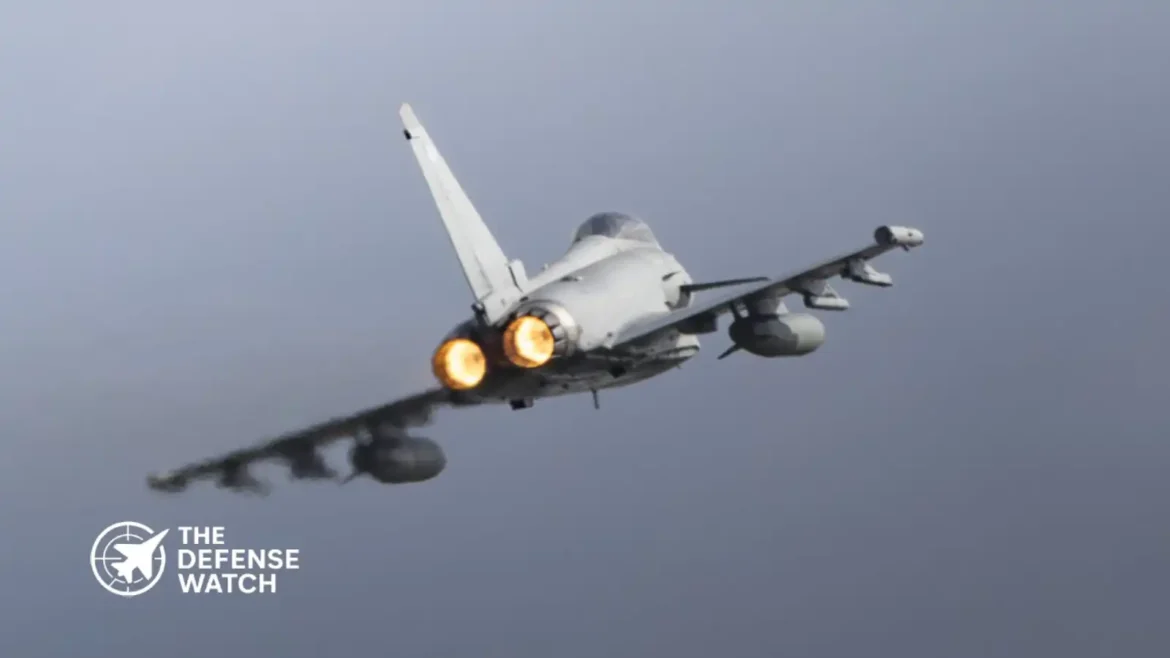
The Royal Air Force has deployed Eurofighter Typhoon jets to patrol NATO’s eastern flank, reinforcing alliance air defense. The missions aim to deter potential airspace violations and reassure member states amid ongoing regional tensions. The deployment reflects NATO’s continued emphasis on rapid response and collective security.
RAF Typhoons Strengthen NATO Air Policing Mission
The Royal Air Force has intensified its contribution to NATO air policing operations by deploying Eurofighter Typhoon fighters to the alliance’s eastern flank. These missions are part of NATO’s standing effort to secure allied airspace and deter unauthorized or hostile aircraft activity near its borders.
Operating from forward bases in Eastern Europe, RAF Typhoons conduct quick reaction alert sorties, intercept missions, and joint training exercises with allied air forces. The deployment comes amid sustained geopolitical tensions, particularly involving Russian military aviation activity near NATO airspace.
Operational Role and Mission Profile
The Typhoon is a cornerstone of NATO’s air defense architecture due to its speed, agility, and advanced sensor suite. RAF crews are tasked with:
- Intercepting unidentified aircraft approaching NATO-controlled airspace
- Conducting air-to-air patrols to maintain persistent presence
- Participating in joint exercises to enhance interoperability
- Supporting quick reaction alert (QRA) readiness at all times
These missions are coordinated through NATO’s integrated air and missile defense system, ensuring seamless communication and rapid response across multiple member states.
Eurofighter Typhoon vs Legacy Air Policing Platforms
Platform Range Payload Status Key Technology Eurofighter Typhoon ~2,900 km ~7,500 kg Active AESA radar, supercruise, advanced EW suite Panavia Tornado F3 ~1,850 km ~6,000 kg Retired Pulse-Doppler radar, legacy avionics F-16 Fighting Falcon ~2,200 km ~7,700 kg Active (NATO) Multirole radar, proven combat record Technical Advantages of the Typhoon Platform
- Supercruise capability, allowing sustained supersonic flight without afterburners
- Advanced Captor radar systems, improving detection and tracking range
- Integrated electronic warfare suite for survivability in contested environments
- High thrust-to-weight ratio, enhancing maneuverability in interception scenarios
- Compatibility with NATO data links, enabling real-time information sharing
Strategic Context: NATO’s Eastern Flank and Deterrence Posture
NATO’s eastern flank has become a focal point of alliance defense planning since the Annexation of Crimea and subsequent tensions between Russia and Western nations. Increased Russian air activity near Baltic and Black Sea regions has prompted NATO to expand its air policing rotations.
The RAF deployment serves several strategic purposes:
- Deterrence: Demonstrates NATO’s readiness to defend its airspace
- Reassurance: Signals commitment to Eastern European allies
- Interoperability: Strengthens coordination among multinational forces
The presence of advanced fighters like the Typhoon complicates any potential adversary’s operational planning, raising the cost of airspace incursions.
Broader Implications for European Air Security
The continued use of Typhoon jets in NATO missions underscores a shift toward high-readiness, technologically advanced air forces capable of rapid deployment. As NATO adapts to evolving threats, including hybrid warfare and advanced aerial platforms, air policing missions are becoming more complex and strategically significant.
The RAF’s role highlights the UK’s ongoing commitment to collective defense, even as broader geopolitical dynamics continue to evolve across Europe.

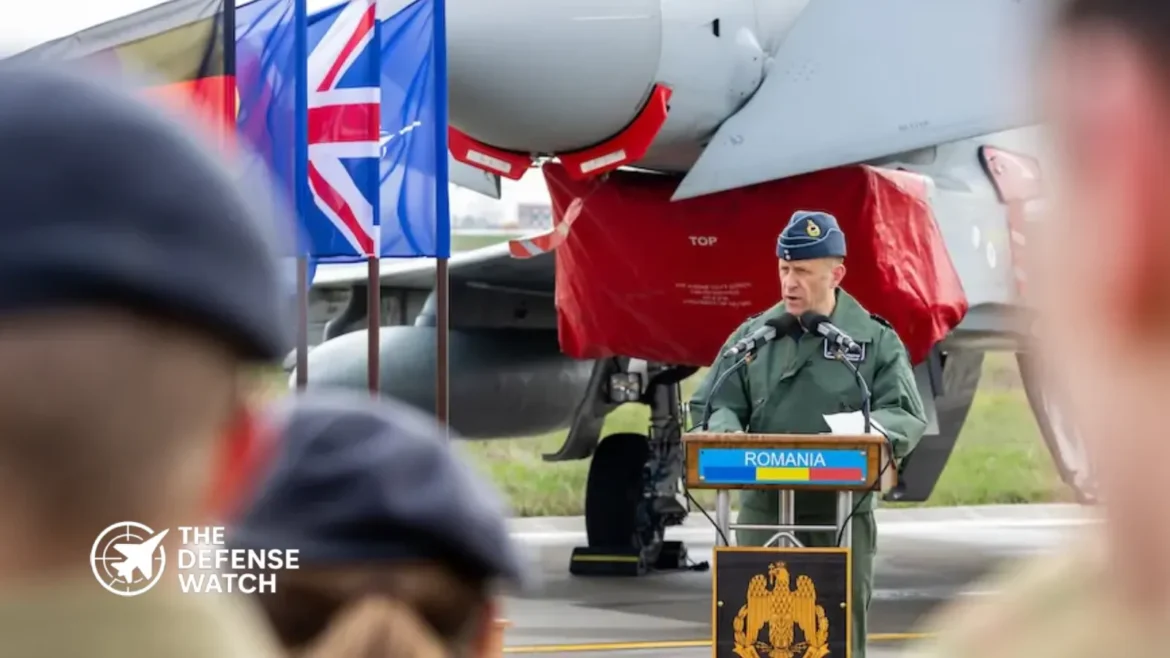
- The Royal Air Force has taken over NATO’s enhanced Air Policing mission in Romania.
- RAF Typhoon fighter jets are deployed to secure NATO airspace along the eastern flank.
- The mission operates from Mihail Kogălniceanu Air Base near the Black Sea.
- The deployment aims to deter potential airspace violations and reassure NATO allies.
- The rotation underscores NATO’s sustained focus on eastern Europe amid ongoing regional tensions.
RAF NATO Air Policing Romania Mission Strengthens Eastern Flank Defense
The RAF NATO air policing Romania mission has officially transitioned to the United Kingdom, reinforcing NATO’s eastern flank as alliance members continue to respond to heightened security pressures near the Black Sea.
The deployment, led by the Royal Air Force, involves advanced Eurofighter Typhoon jets operating under NATO command to secure Romanian airspace and deter potential incursions.
Operating from Mihail Kogălniceanu Air Base, the RAF contingent replaces previous allied rotations as part of NATO’s enhanced Air Policing framework. The mission ensures rapid response capability to unidentified or non-compliant aircraft approaching alliance airspace.
Strategic Context: NATO’s Eastern Flank Under Pressure
The RAF NATO air policing Romania mission reflects a broader strategic shift by NATO to maintain persistent air defense coverage along its eastern perimeter.
Since Russia’s invasion of Ukraine in 2022, NATO has significantly expanded its forward presence across Eastern Europe. Romania, located on the Black Sea and bordering Ukraine, has emerged as a critical node in the alliance’s defensive architecture.
Air policing missions, while not new, have taken on increased operational importance. These deployments now serve not only as deterrence but also as a visible signal of alliance unity and readiness.
From an operational standpoint, RAF Typhoons provide quick reaction alert capabilities, meaning aircraft can be scrambled within minutes to intercept potential threats. This includes unidentified aircraft, military probes, or civilian planes deviating from flight plans.
RAF Typhoon Capability and Mission Role
The RAF NATO air policing Romania mission leverages the Typhoon’s multirole capabilities, particularly its air superiority and interception strengths.
Equipped with advanced radar systems and beyond-visual-range missiles, the Typhoon is optimized for quick interception missions. Its ability to operate in contested environments makes it suitable for NATO’s current threat landscape.
In Romania, the aircraft operate under strict NATO rules of engagement. Missions typically include:
- Airspace surveillance and patrol
- Identification of unknown aircraft
- Interception and escort operations
- Coordination with Romanian and NATO air defense networks
This layered approach ensures that NATO maintains a continuous and credible air defense posture in the region.
Operational Impact on Regional Security
The RAF NATO air policing Romania mission contributes directly to regional stability, particularly in the Black Sea area, where air and naval activity has increased in recent years.
Romania’s geographic position places it at the intersection of several strategic concerns, including proximity to Crimea and key maritime routes. As a result, maintaining secure and monitored airspace is critical.
From a deterrence perspective, the presence of RAF fighters complicates any adversary’s operational planning. It raises the cost and risk of airspace violations while ensuring rapid NATO response.
At the same time, these missions provide reassurance to frontline NATO states. For countries like Romania, visible allied deployments reinforce collective defense commitments under Article 5.
Alliance Integration and Interoperability
Another key dimension of the RAF NATO air policing Romania mission is interoperability. RAF personnel work closely with Romanian forces and other NATO allies to ensure seamless coordination.
This includes joint training, shared command structures, and integrated air defense systems. Such cooperation enhances overall readiness and reduces response times during real-world incidents.
Rotational deployments also allow NATO members to distribute operational burden while maintaining a continuous presence. The UK’s participation highlights its ongoing commitment to European security despite evolving geopolitical dynamics.
Analysis: A Persistent Mission With Growing Importance
While air policing missions have long been part of NATO’s toolkit, their role has evolved significantly. The RAF NATO air policing Romania mission is no longer a routine rotation but a frontline deterrence measure.
Three key trends stand out:
First, frequency and scale have increased. NATO is sustaining more continuous deployments across multiple eastern locations, including the Baltic states and southeastern Europe.
Second, missions are becoming more integrated with broader defense strategies. Air policing is now linked with ground forces, missile defense systems, and intelligence networks.
Third, the geopolitical signaling value has grown. Deployments like this send a clear message to both allies and adversaries about NATO’s readiness to defend its airspace.
In this context, the RAF’s role in Romania is part of a larger pattern of sustained vigilance rather than a temporary response.
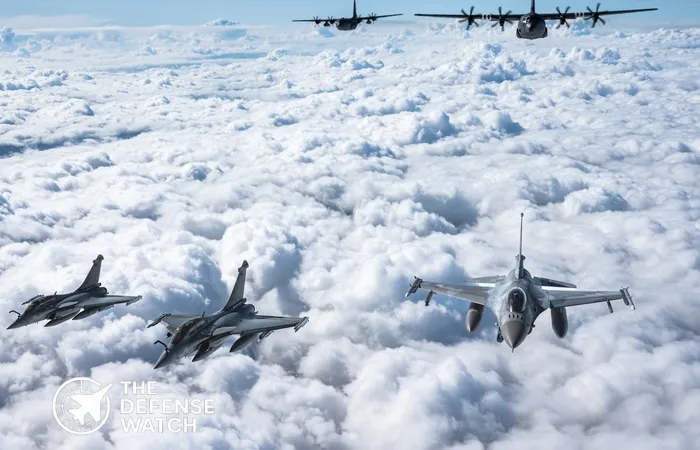
NATO air intercepts 2025 reached a significant milestone, with alliance fighter aircraft conducting around 500 intercept missions over the course of the year, according to NATO Air Command. The figures highlight the steady operational tempo of NATO air policing missions across Europe and the North Atlantic.
The intercepts involved quick reaction alert aircraft scrambled to identify and monitor military aircraft approaching or operating near NATO controlled airspace, often without prior coordination or use of transponders.
NATO Air Policing Remains a Core Mission
NATO air policing is a standing peacetime mission designed to safeguard the integrity of alliance airspace. Aircraft assigned to quick reaction alert duties remain on continuous readiness, typically launching within minutes of an alert.
In 2025, the majority of NATO air intercepts occurred along the alliance eastern flank and in northern operating areas, reflecting persistent air activity near NATO borders. NATO Air Command has stated that these missions are routine, defensive, and conducted in accordance with international law.
Where the Intercepts Took Place
According to NATO officials, intercepts were carried out across several regions, including the Baltic Sea, the Black Sea region, and the North Atlantic. Aircraft from multiple NATO members took part, operating from forward bases in countries such as Poland, Romania, the Baltic states, and Iceland.
The missions typically involved NATO fighters identifying approaching aircraft, visually confirming type and markings, and escorting them while they remained near alliance airspace.
Aircraft and Capabilities Involved
A wide range of NATO fighter aircraft supported the 2025 air policing mission. These included F 16 Fighting Falcons, Eurofighter Typhoons, F A 18 Hornets, and F 35A Lightning II aircraft deployed by several allies.
Modern sensors, secure datalinks, and integrated command and control networks allowed NATO Air Command to coordinate responses across national boundaries. The sustained number of intercepts also highlighted the growing role of fifth generation fighters in routine air defense tasks.
Strategic Context and Operational Pressure
NATO officials have emphasized that the 500 intercepts do not represent an escalation but rather a continuation of long standing patterns. However, the volume of missions reflects ongoing pressure on air forces tasked with maintaining continuous readiness.
Air policing rotations require significant personnel, maintenance, and logistics support. Smaller NATO members in particular rely on rotational deployments by allies to maintain airspace security, especially in regions without indigenous fighter fleets.
Implications for NATO Modernization
The tempo of NATO air intercepts in 2025 reinforces the alliance focus on air and missile defense modernization. Investments in advanced radar systems, integrated air defense networks, and next generation fighters are increasingly tied to lessons learned from daily operational missions.
NATO has repeatedly cited air policing data in discussions on burden sharing and the need for sustained defense spending among member states.
Outlook
NATO Air Command expects air policing missions to remain a constant requirement in the coming years. While the nature of intercepts is unlikely to change, alliance officials continue to stress the importance of professionalism and safety during encounters in international airspace.
As NATO adapts its force posture and modernizes its air fleets, routine missions like these remain a key indicator of alliance readiness and collective defense in practice.