

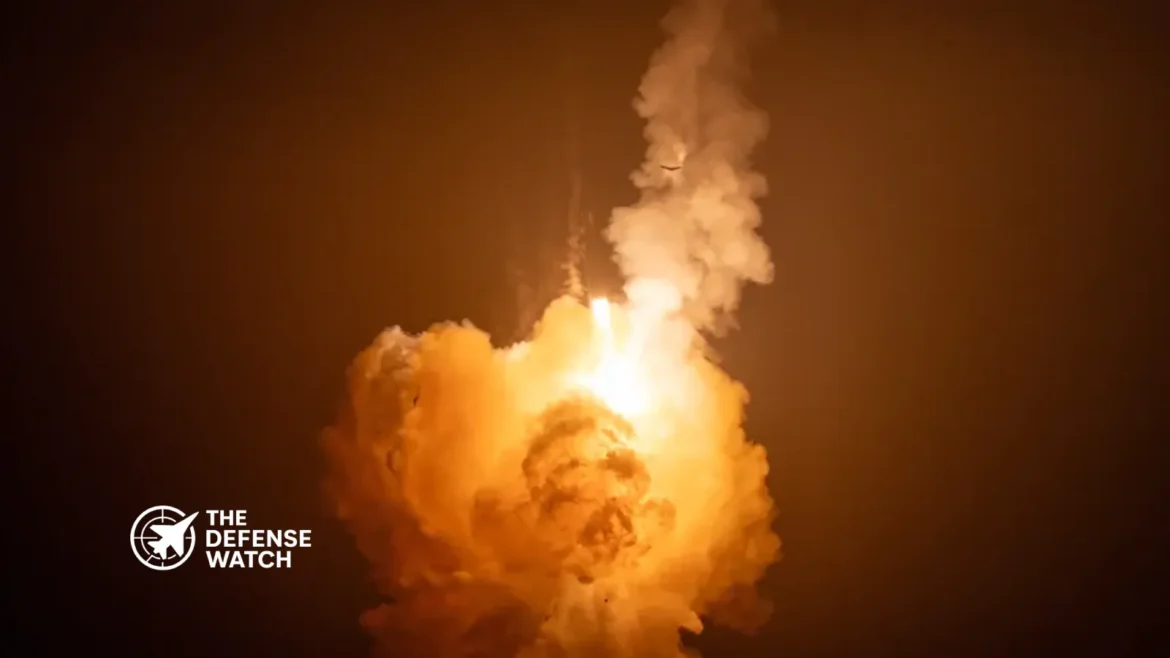
- ► U.S. Air Force launched an unarmed Minuteman III ICBM from Vandenberg Space Force Base.
- ► Test vehicle carried multiple reentry vehicles to validate system performance and accuracy.
- ► Launch conducted by Air Force Global Strike Command as part of routine operational testing.
- ► Data supports ongoing modernization and transition to the Sentinel ICBM program.
- ► Officials stress the test was pre planned and not linked to current geopolitical tensions.
U.S. Air Force Tests Minuteman III ICBM With Multiple Reentry Vehicles
The U.S. Air Force tested a Minuteman III ICBM with multiple reentry vehicles in a routine launch from Vandenberg Space Force Base, reaffirming the operational readiness of the nation’s land based nuclear deterrent.
(adsbygoogle = window.adsbygoogle || []).push({});The unarmed missile lifted off under the supervision of Air Force Global Strike Command. According to official statements, the test was scheduled years in advance and forms part of a regular series of evaluations designed to ensure the reliability, accuracy, and effectiveness of the intercontinental ballistic missile force.
Validating The Minuteman III ICBM
The LGM-30G Minuteman III remains the backbone of the U.S. ground based nuclear triad. First deployed in the 1970s, the missile has undergone multiple life extension programs to sustain its viability well beyond its original service life.
In this latest Minuteman III ICBM test, the Air Force equipped the missile with multiple reentry vehicles. While the United States currently deploys single warhead configurations in line with arms control commitments, test configurations often include multiple reentry vehicles to validate performance parameters, targeting accuracy, and system resilience.
The reentry vehicles traveled roughly 4,200 miles to a designated impact area at the Ronald Reagan Ballistic Missile Defense Test Site in the Marshall Islands, a standard endpoint for such launches. Officials said telemetry and tracking data will be analyzed to assess system performance.
Routine Testing, Strategic Message
Air Force officials emphasized that the Minuteman III ICBM test was routine and not a response to any specific global event. The United States typically conducts several ICBM test launches each year to demonstrate the reliability of its strategic forces.
That said, such launches inevitably carry strategic weight. In an era marked by renewed competition among nuclear armed states, routine validation of long range missile systems reinforces deterrence credibility. Adversaries track these events closely, even when the Pentagon underscores their planned and predictable nature.
The transparency surrounding these tests also reflects U.S. adherence to existing arms control notification protocols, including advance notifications under bilateral agreements where applicable.
Bridging To The Sentinel Era
The Minuteman III ICBM test comes as the Air Force moves toward replacing the aging system with the LGM-35A Sentinel, previously known as the Ground Based Strategic Deterrent.
Sentinel is expected to assume the land based leg of the nuclear triad in the coming decade. However, delays and cost growth in the modernization program have increased scrutiny in Washington. Until Sentinel reaches full operational capability, the Minuteman III fleet must remain fully mission capable.
Each successful Minuteman III ICBM test therefore carries dual importance. It confirms present readiness while buying time for the transition to a next generation system.
The Role Of Vandenberg
Vandenberg Space Force Base serves as the primary West Coast site for U.S. ICBM test launches. Its geographic position allows safe downrange trajectories over the Pacific Ocean toward established impact zones.
(adsbygoogle = window.adsbygoogle || []).push({});Test missiles launched from Vandenberg are drawn from operational silos at bases across the continental United States. They are transported to California, reassembled, and prepared for flight in coordination with operational crews. This process ensures that the test reflects real world readiness conditions.
Sustaining The Nuclear Triad
The Minuteman III ICBM test also highlights the enduring importance of the land based leg of the nuclear triad, alongside ballistic missile submarines and strategic bombers. Defense planners argue that silo based ICBMs complicate adversary attack planning by presenting hundreds of hardened targets across multiple states.
Critics, however, continue to debate the long term cost and strategic logic of maintaining a large ICBM force. That policy debate remains active on Capitol Hill, particularly as modernization programs across all three legs of the triad move forward simultaneously.
For now, the operational focus remains clear. Routine testing, data analysis, and incremental upgrades aim to keep the Minuteman III force credible until its eventual retirement.
Strategic Context
The Minuteman III ICBM test underscores a broader reality. Even as emerging domains such as cyber and space gain attention, nuclear deterrence remains central to U.S. national defense strategy.
(adsbygoogle = window.adsbygoogle || []).push({});By conducting transparent, scheduled launches, the Air Force seeks to demonstrate both capability and restraint. The missile was unarmed. The flight was planned. The data gathered will inform sustainment and modernization efforts.
In strategic terms, consistency matters. Reliability underpins deterrence. Each successful Minuteman III ICBM test reinforces that message.

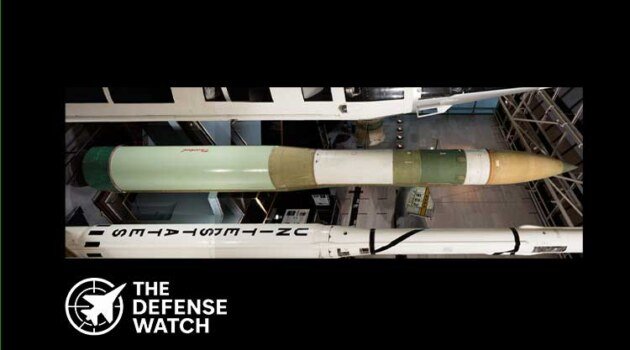

The LGM‑30G Minuteman III intercontinental ballistic missile (ICBM) will be launched in an operational test by the U.S. military from Vandenberg Space Force Base in California during a scheduled window beginning 11:01 p.m. Pacific Time on 4 November 2025. According to public notification, the unarmed test is part of a long-planned readiness program rather than a reaction to recent events.
Background
The Minuteman III system is the land-based leg of the U.S. nuclear triad, alongside submarine-launched ballistic missiles (SLBMs) and strategic bombers. Designated LGM-30G (where “L” = silo launch, “G” = surface attack, “M” = guided missile) the missile has been in service since the 1970s and has undergone continuous life-extension upgrades. With about 400 missiles deployed across hardened silos, the system remains a pillar of U.S. deterrence.
Routine test launches like this one serve to validate accuracy, reliability, guidance and re-entry performance of the missile and its related systems. According to the announcement, more than 300 similar tests have been conducted over the missile’s life.
Details of the Upcoming Test
The U.S. military’s window for launch runs from 11:01 p.m. to 5:01 a.m. Pacific Time on 4 November 2025, from Vandenberg. The missile will be unarmed and will fly across a designated test corridor—likely from California toward the Pacific test range—though specific impact location has not been publicly detailed. The event follows a directive by Donald Trump to restart aspects of U.S. nuclear testing, though U.S. officials emphasize that no nuclear explosion is planned in connection with this test.
LGM-30G Minuteman III Ballistic Missile – Full Specifications
- Guidance System: Advanced inertial navigation with modernized upgrades
- Maximum Speed: Mach 23+
- Launch Compatibility: Underground silo launch
- Warhead Technology: Nuclear MIRV (limited to single RV per treaty)
Officials from the Air Force Global Strike Command (AFGSC) and the test-range authority have stated that the launch is part of standard validation of the ICBM fleet, ensuring the weapon remains safe, secure and credible. For example, a May 2025 launch carried a single Mark-21 high fidelity re-entry vehicle and collected data on performance across the system.
Technology and Capability of the System
The Minuteman III is a three-stage solid-fuel rocket system with a range in excess of 6,000 miles (approximately 10,000+ km). It is silo-based, dispersed across multiple states, and maintained on 24/7 alert by highly trained crews. The system’s guidance integrates inertial navigation with updates in later modifications to achieve high accuracy against hardened targets. While initially capable of carrying multiple independently-targetable re-entry vehicles (MIRVs), current U.S. practice is to field a single warhead configuration to reduce escalation risk and maintain treaty compliance.
Strategic & Geopolitical Context
Although the test is nominally routine, its timing coincides with heightened strategic signalling. The launch comes in the wake of increased tensions in the great-power domain—particularly competition with both Russia and China—and after the directive from President Trump concerning nuclear-test posture. By conducting a public, announced launch of the Minuteman III, the U.S. signals the credibility of the land-based leg of its deterrent without needing a nuclear explosion.
Analysts note that by utilizing a well-established test corridor (California to Pacific), and publicly scheduling the launch, the U.S. demonstrates both transparency and operational readiness—important for allies reassured by U.S. extended deterrence and for adversaries monitoring capability. The test also generates telemetry and performance data that feed modernization decisions, particularly as the U.S. plans to eventually replace the Minuteman with the next-generation LGM‑35A Sentinel system.
Expert / Policy Perspectives
According to Air Force public affairs materials, the data gathered from operational launches enables the Department of Defense and Department of Energy to evaluate performance trends and maintenance needs across the ICBM enterprise. AFGSC commander Gen. Thomas Bussiere has stated that such tests “underscore the strength of the nation’s nuclear deterrent and the readiness of the ICBM leg of the triad.” The public announcement of the launch window is also consistent with prior notice procedures under the Hague Code of Conduct and bilateral notification with Russia.
The modernization challenge remains significant: the Minuteman III fleet has been in service for decades, and its eventual replacement by the Sentinel program is scheduled for the 2030s. Ensuring the legacy missile remains reliable until that transition is a policy and technical imperative.
What’s Next
Following the launch on 4 November, the U.S. Air Force and test-range teams will analyse flight telemetry, re-entry vehicle performance, guidance accuracy and launch-crew control-loop timings. The results will inform maintenance, sustainment and future modernization work. While this test does not mark a change in nuclear policy, it solidifies the fact that the U.S. land-based ICBM force remains active, visible and exercised.
Looking ahead, as the Sentinel replaces Minuteman in the decades to come, further operational tests and modernization steps will shape the next generation of land-based deterrence. In the interim, routine launches like this underscore that the U.S. maintains the technical and operational capability of its silo-launched ICBM force.