Executive Summary:
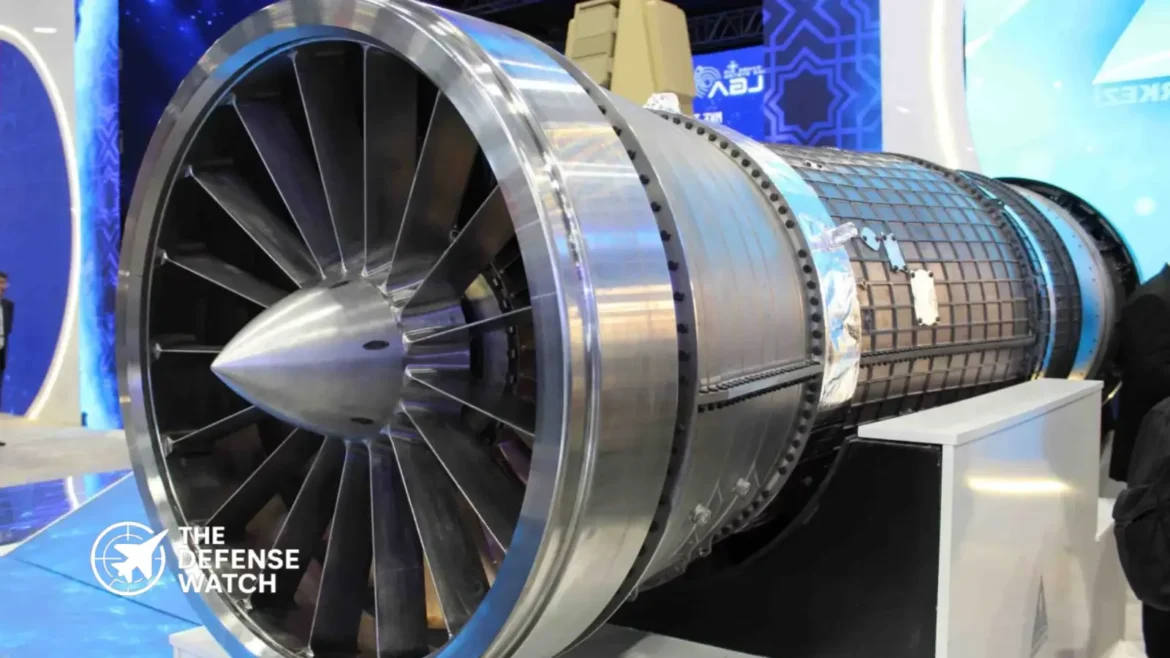
Türkiye has revealed the new GUECHAN turbofan engine, a 42,000-pound-thrust indigenous propulsion system aimed at powering future combat aircraft. The program supports Ankara’s long-term effort to reduce dependence on foreign engines and strengthen its next-generation aerospace sector.
Türkiye Unveils GUECHAN Turbofan Engine For Future Fighter Programs
Türkiye’s aerospace sector has introduced the new GUECHAN turbofan engine, a domestically developed propulsion system designed to deliver up to 42,000 pounds of thrust, placing it in the same performance category as engines used by fifth-generation combat aircraft.
The engine is being positioned as a strategic step toward supporting Türkiye’s expanding military aviation ambitions, including future variants of the KAAN next-generation fighter program.
The unveiling reflects Ankara’s broader push to reduce reliance on foreign defense suppliers following years of export restrictions, procurement disputes, and licensing challenges affecting several Turkish aerospace programs.
The GUECHAN turbofan is expected to support high-performance combat aircraft operations, including sustained supersonic flight, advanced maneuverability, and larger payload capacities. Turkish defense officials have repeatedly emphasized the importance of sovereign propulsion technology as a core requirement for long-term defense autonomy.
Indigenous Engine Development Gains Strategic Importance
The development of an indigenous fighter engine has become increasingly important for Türkiye’s defense planning over the last decade. The country’s defense industry has expanded rapidly across drones, missiles, naval systems, armored vehicles, and combat aircraft, but propulsion technology remains one of the most difficult areas to localize.
Modern fighter engines require advanced metallurgy, precision manufacturing, thermal management systems, and highly sophisticated turbine technologies. Only a limited number of countries currently possess the industrial base needed to independently design and manufacture high-thrust military turbofans.
The GUECHAN program appears intended to narrow that gap.
Türkiye’s KAAN stealth fighter currently relies on imported propulsion systems during prototype development and flight testing phases. However, Ankara has repeatedly stated its goal of integrating a fully indigenous engine in future production configurations.
The reported 42,000 lbf thrust rating places the GUECHAN engine within the performance range associated with modern fifth-generation fighter propulsion systems. For comparison, the Pratt & Whitney F135 engine used in the Lockheed Martin F-35 Lightning II generates roughly similar thrust output depending on configuration.
That comparison is strategically significant. It suggests Türkiye is not simply pursuing a replacement engine for legacy aircraft, but rather attempting to establish an independent high-performance propulsion capability suitable for advanced stealth platforms.
KAAN Fighter Program Remains Central To Türkiye’s Aerospace Ambitions
The indigenous KAAN fighter program remains one of Türkiye’s largest defense modernization projects. Led by Turkish Aerospace Industries, the aircraft is intended to replace portions of the Turkish Air Force’s aging F-16 fleet over the coming decades.
The KAAN prototype completed its maiden flight in 2024, marking a major milestone for Türkiye’s domestic aerospace industry. Future development phases are expected to focus on avionics integration, stealth optimization, weapons testing, and propulsion improvements.
An indigenous engine program could reduce long-term exposure to export controls or political restrictions affecting combat aircraft operations and upgrades.
This issue has gained greater relevance since Türkiye’s removal from the F-35 program following Ankara’s acquisition of the Russian-made S-400 air defense system. The dispute highlighted the risks associated with reliance on foreign-controlled supply chains for strategic military platforms.
As a result, Turkish defense planners have increasingly prioritized domestic production capabilities across key technologies, particularly propulsion, sensors, radar systems, and electronic warfare components.
Regional And Global Implications
The unveiling of the GUECHAN turbofan also carries broader geopolitical implications for regional aerospace competition.
Türkiye has emerged as a major exporter of defense systems, particularly unmanned aerial vehicles and armored platforms. A successful indigenous high-thrust engine program could strengthen its position in the global defense market by enabling greater control over export licensing and aircraft customization.
Countries seeking alternatives to Western or Russian combat aircraft suppliers may view Turkish aerospace products as increasingly attractive if Ankara can independently provide propulsion systems without third-party approval requirements.
The move also reflects a wider global trend toward defense industrial self-sufficiency. Several middle powers are investing heavily in indigenous aerospace manufacturing capabilities amid rising geopolitical tensions and concerns over supply chain vulnerability.
Still, developing an operational fifth-generation-class fighter engine remains an exceptionally difficult and expensive undertaking. Engine reliability, durability, thermal efficiency, and maintenance cycles often require years of testing before operational deployment.
Industry analysts note that while prototype demonstrations are important milestones, large-scale production and long-term sustainment capabilities ultimately determine whether a propulsion program achieves strategic success.
Technical Challenges Remain Ahead
Although the unveiling marks a significant symbolic and industrial milestone, major technical hurdles remain before the GUECHAN engine can enter operational service.
Military turbofan development programs typically require extensive ground testing, high-altitude validation, thermal endurance assessments, and integration trials with combat aircraft platforms. Certification timelines can stretch for years, even among established aerospace powers.
Türkiye’s growing experience in aerospace manufacturing may provide a stronger foundation than in previous decades, particularly through lessons learned from drone engines, helicopter propulsion systems, and advanced aerospace composites.
However, transitioning from smaller propulsion systems to a 42,000-pound-thrust class fighter engine represents a major technological leap.
The long-term success of the GUECHAN program will likely depend on sustained government funding, industrial cooperation, supply chain resilience, and successful flight integration with future KAAN variants.
Why The GUECHAN Engine Matters
The GUECHAN turbofan represents more than a new aerospace product. It reflects Türkiye’s broader strategic effort to establish greater independence in advanced military technologies amid a changing geopolitical and defense environment.
If successful, the engine could become a cornerstone capability for future Turkish combat aviation programs while strengthening Ankara’s standing as an emerging aerospace power.
At the same time, the program underscores how propulsion technology remains one of the defining competitive areas in modern military aviation.

U.S. Clears Major GBU‑39 Sale to South Korea
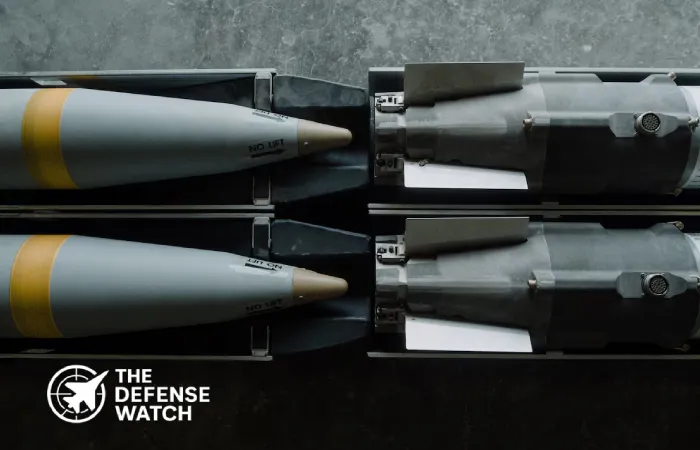
The U.S. State Department has approved a Foreign Military Sale (FMS) package worth US$111.8 million for the sale of 624 units of the GBU-39/B Small Diameter Bomb (SDB‑I) to the Republic of Korea (South Korea). The clearance — announced on 5 December 2025 under transmittal No. 25‑111 — follows a previous, smaller contract that remained under the congressional notification threshold.
South Korean defense officials, speaking on background, state the additional SDBs will expand the country’s precision‑strike inventory to well over one thousand bombs, enhancing Seoul’s ability to meet long-range strike requirements across the Indo‑Pacific region.
What Is the GBU‑39/B Small Diameter Bomb?
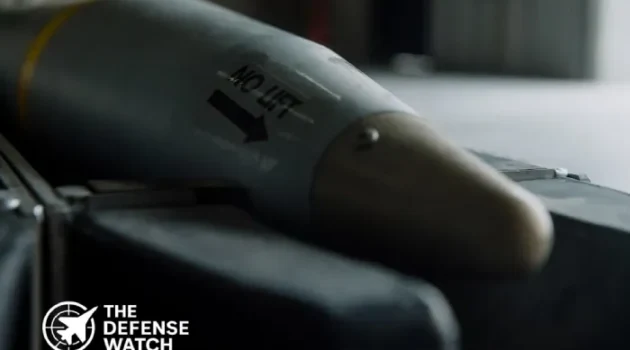
The GBU-39/B is a 250‑lb class, GPS/INS‑guided glide bomb developed by Boeing to meet a 1997 requirement from U.S. Air Combat Command for a “miniaturized smart bomb” capable of carrying more munitions per sortie.
- Size & Weight: Approximately 70.8 inches (1.8 m) in length, 7.5 inches (19 cm) in diameter when packed, and weighing about 285 lb (≈ 129 kg).
- Warhead: Penetrating blast‑fragmentation (AFX‑757), capable of punching through more than three feet (~0.9 m) of steel‑reinforced concrete — making it effective against hardened fixed targets such as bunkers or fortifications.
- Guidance & Accuracy: Combines GPS with inertial navigation (INS) for all‑weather, day/night operations; when released, the bomb glides autonomously to pre‑programmed coordinates.
- Range & Loadout: When dropped from high altitude, the SDB can glide over 40 nautical miles (≈ 74 km) or more, sometimes quoted up to 60 nmi (≈ 110 km) depending on release conditions. Crucially, thanks to a dedicated carriage (e.g., the BRU‑61/A rack), four SDBs can replace a single 1,000‑ or 2,000‑lb bomb, greatly multiplying target coverage per sortie.
The SDB system officially entered service in 2006, and has since become a mainstay of precision strike arsenals for multiple air forces worldwide.
Why the Sale Matters for South Korea
Seamless Integration
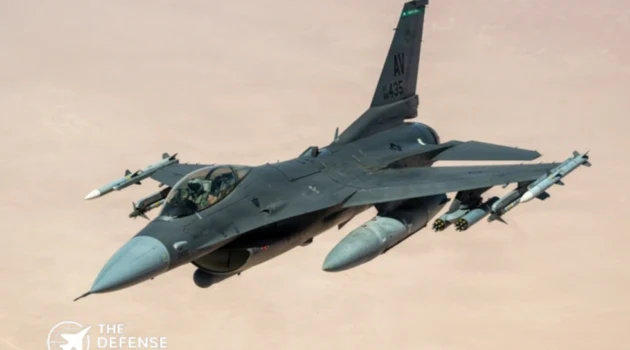
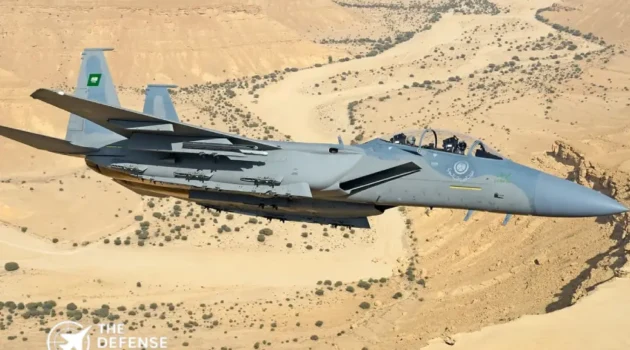
South Korea’s current combat aircraft fleet — notably the F-15K Slam Eagle and its modernized F-16 Fighting Falcons — already supports the hardware, software, and cabling required for SDB integration. As a result, the addition of these 624 SDBs will come with little to no need for extensive modifications.
This plug-and-play compatibility reduces both cost and time for induction, enabling rapid deployment and boosting sortie generation rates under existing logistics frameworks.
Enhanced Strike Flexibility and Deterrence
With the small size and low‑collateral damage profile of SDBs, South Korean air planners can now consider multi‑target, deep‑strike missions that would have been riskier or less efficient with conventional heavy bombs. The ability to load four SDBs per rail or internal bay dramatically increases target coverage and flexibility.
Given regional security dynamics — including tensions on the Korean Peninsula and broader Indo‑Pacific strategic competition — enhanced precision‑strike capability gives Seoul increased deterrence value and a wider range of military responses without requiring a larger sortie footprint.
Broader Strategic & Alliance Implications
The sale aligns with a wider U.S. effort to standardize precision‑guided munitions across allied air forces. By equipping partners such as South Korea with the same bomb architectures — here, the GBU‑39/B — interoperability is improved, both for coalition planning and real‑time allied air operations. Several U.S. allies already employ the SDB.
Moreover, the modest per‑unit cost — approximately US$40,000 — makes procurement of large stockpiles economically viable, allowing allies to steadily scale up inventories without imposing major budget strain.
Finally, wider distribution of precision‑smart munitions like the GBU‑39/B supports a modern deterrence architecture emphasizing accuracy, modularity, and controlled escalation — key elements under evolving Indo‑Pacific security dynamics.
Risks, Limitations, and What’s Next
Despite its strengths, the SDB is fundamentally a glide bomb: once released, it follows a predetermined path using GPS/INS, which may reduce flexibility in dynamic combat situations compared with missiles or weapons with terminal guidance against moving targets.
That said, newer variants and related developments — such as the heavier hitting warhead options and ground‑launched versions (e.g., the GLSDB)— point to future upgrades. For now, the Republic of Korea’s certified platforms and mission architecture will mostly exploit the air‑launched SDB-I variant.
Short term, expect deliveries to begin once the formal contract is signed, followed by ramp-up of training and integration into South Korea’s air‑to‑surface mission planning. Medium-term, the expanded SDB stockpile will likely influence how Seoul designs its strike doctrine — especially for deep-strike strikes against hardened or fixed installations without exposing launch platforms to high-threat air defenses.

What Is a Fighter Jet?
A fighter jet is a high-performance military aircraft designed primarily for air-to-air combat, interception, and securing air superiority. In modern warfare, these aircraft serve as the backbone of national air forces, providing rapid response, deterrence, and offensive capability. Fighter jets remain essential because control of the skies often determines the outcome of conflicts, shaping everything beneath—from ground operations to naval movements.
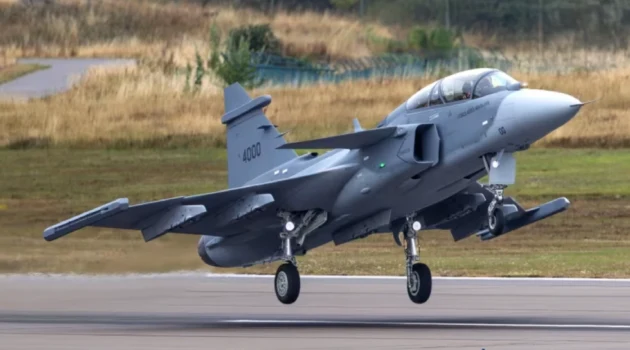
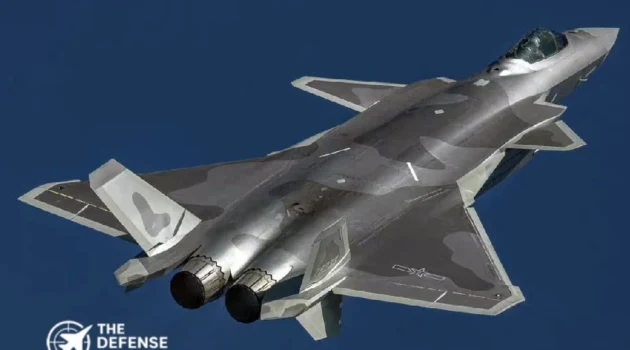
Today’s fighter jets combine speed, stealth, avionics, and precision weapons to engage both airborne and ground threats. From the F-35 and F-22 to the Rafale, J-20, and Gripen, they reflect a nation’s technological capability and defense priorities.
What Defines a Fighter Jet?
1. Designed for Air Superiority
The primary mission of any fighter jet is to defeat enemy aircraft. Air-to-air missiles, high-G maneuverability, advanced radar, and electronic warfare systems make this possible.
2. High-Speed, High-Altitude Capability
Modern fighters routinely operate at speeds above Mach 1 and at altitudes exceeding 50,000 ft. This provides tactical advantage and battlefield dominance.
3. Advanced Sensors and Avionics
Fighter jets carry powerful radars, infrared sensors, data-links, and cockpit displays that fuse information, giving pilots a real-time view of the battlefield.
4. Multi-Role Flexibility
Most current-generation fighters are multirole, able to conduct:
- Air-to-air combat
- Precision strikes
- Close air support
- Reconnaissance
- Maritime operations
This flexibility reduces the need for separate aircraft types.
Why Fighter Jets Matter in Modern Warfare
1. Securing Air Superiority
Nations must protect their airspace. Fighter jets intercept and neutralize hostile aircraft before they reach critical areas. Without air superiority, ground forces and naval fleets remain vulnerable.
2. Deterrence and Strategic Signaling
A capable fighter fleet serves as a deterrent, signaling to adversaries that any aggression will face a rapid and effective military response.
3. Precision Strike Capability
Modern fighters can engage ground targets using guided bombs, cruise missiles, and stand-off weapons. This allows nations to strike with accuracy while minimizing collateral damage.
4. Rapid Reaction and Global Reach
Fighter jets can deploy within minutes, project power across long distances, and reinforce allies as part of international coalitions.
5. Technology Leadership
Advances in stealth, sensors, hypersonic weapons, and AI-driven warfare are closely tied to fighter jet development. Nations leading in airpower often lead in overall military innovation.
Generations of Fighter Jets: A Quick Overview
Early Jets (1st–2nd Generation)
- Subsonic or early supersonic
- Basic radar
- Primitive missiles and gun combat
3rd–4th Generation
- High maneuverability
- Advanced air-to-air missiles
- Multi-role capabilities
4.5 Generation
- AESA radars
- Electronic warfare suites
- Network-centric operations
5th Generation
- Stealth shaping
- Sensor fusion
- Supercruise
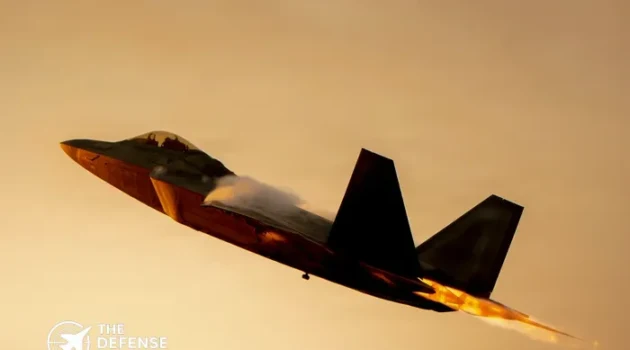
- Example: F-22, F-35, J-20
6th Generation (In Development)
- AI copilots
- Directed energy weapons
- Loyal wingman drones
- Adaptive engines
How Fighter Jets Work: Key Systems
1. Propulsion
Most fighters use afterburning turbofan engines, enabling supersonic flight. New engines focus on lower fuel burn and higher thrust.
2. Stealth Technology
Shaping, radar-absorbent materials, and internal weapon bays reduce detection by enemy radar.
3. Weapons
Typical armament includes:
- Short- and long-range air-to-air missiles
- Precision-guided bombs
- Anti-ship missiles
- Internal cannons
4. Avionics
Fighters carry advanced avionics such as:
- AESA radar
- Infrared search and track (IRST)
- Helmet-mounted displays
- Electronic countermeasures
Global Competition: Why Nations Invest in Fighter Jets
Airpower is a symbol of national strength. Countries like the U.S., China, India, France, and Russia invest heavily in fighter programs to maintain strategic advantage.
Rising tensions—from the Indo-Pacific to Eastern Europe—have renewed global demand. Joint fighter programs like the F-35, GCAP, and AUKUS aviation initiatives show how fighter jets have become diplomatic tools as well as military assets.
Strategic Analysis: The Future of Fighter Jets
Air combat is evolving. Pilots now rely on AI, drones, and long-range missiles more than close-range dogfighting. Future fighters will emphasize stealth, electronic warfare, hypersonic weapons, and loyal wingman drones.
Despite emerging technologies, fighter jets will remain central to military strategy because speed, reach, and air dominance are irreplaceable.
FAQs
A fighter jet is a high-performance military aircraft designed for air combat, interception, and securing airspace.
They provide air superiority, deterrence, rapid response capability, and precision strike options.
Stealth, advanced sensors, network-centric warfare, and multirole capability distinguish modern fighters.
The United States, China, Russia, France, the UK, and several NATO/Asian partners field advanced fleets.
Drones will complement—not replace—manned fighters. Future jets will operate alongside autonomous wingmen.