

Executive Summary:
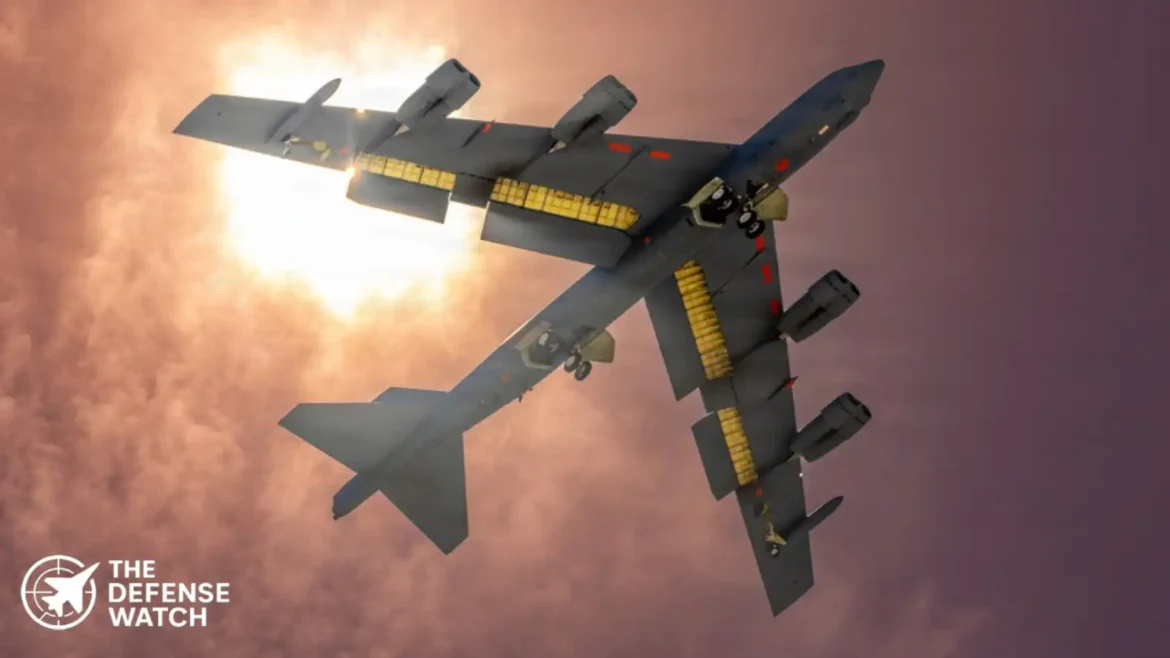
The U.S. Air Force has advanced its B-52J modernization program as the engine replacement effort completes a critical design review milestone. The upgrade, led by Rolls-Royce, will improve fuel efficiency, reliability, and mission capability. The initiative ensures the long-serving B-52 Stratofortress remains operational into the 2050s.
B-52J Engine Upgrade Reaches Critical Milestone
The U.S. Air Force has marked a key step in its long-term bomber modernization strategy with the successful completion of the Critical Design Review (CDR) for the B-52J engine replacement program. This milestone validates the system’s design maturity and clears the path toward production and integration.
The upgrade replaces the aircraft’s aging Pratt & Whitney TF33 engines with the new F130 turbofan engines, developed by Rolls-Royce. The program is part of a broader effort to sustain the B-52 fleet, which has been in service since the 1950s, while significantly improving performance and lifecycle costs.
Key Technical Improvements of the B-52J Upgrade
The B-52J modernization introduces several critical enhancements:
- Up to 30% improved fuel efficiency, reducing operational costs
- Extended unrefueled range, increasing mission flexibility
- Lower maintenance requirements, improving aircraft availability
- Digital engine controls, enhancing performance and diagnostics
- Reduced logistics footprint, simplifying sustainment operations
These improvements are expected to deliver both operational and economic benefits across the bomber fleet.
Comparison: B-52J vs Legacy B-52H Configuration
Feature B-52J (Upgraded) B-52H (Legacy) Range Increased (fuel-efficient engines) Standard range Payload Unchanged (approx. 70,000 lbs) Approx. 70,000 lbs Status In development / upgrade phase Active service Key Technology Rolls-Royce F130 engines, digital controls TF33 engines (1960s-era tech) Strategic Role of the B-52J in Future Warfare
The B-52J is central to the U.S. Air Force’s long-range strike capability. Despite its age, the aircraft remains a highly versatile platform capable of delivering:
- Conventional and nuclear payloads
- Stand-off weapons such as cruise missiles
- Maritime strike capabilities
- Persistent global presence missions
With upgraded engines and avionics, the B-52J will complement newer platforms like the B-21 Raider, providing a mix of stealth and high-capacity strike options.
Industrial and Program Implications
The engine replacement program represents a major industrial effort, involving multiple contractors and long-term sustainment planning. The CDR milestone confirms that the design is stable enough to proceed toward production, reducing technical risk.
The U.S. Air Force plans to retrofit 76 B-52 aircraft, transforming them into the B-52J configuration. The program is expected to span several years, with initial operational capability projected later this decade.
Strategic Context: Sustaining Legacy Platforms in a High-Threat Environment
The B-52J upgrade reflects a broader trend in global defense strategy, where legacy platforms are modernized to meet evolving threats. In an era defined by near-peer competition, particularly with China and Russia, long-range strike assets remain critical.
Key strategic drivers include:
- The need for persistent global strike capability
- Increasing reliance on stand-off weapons in contested environments
- Cost-effective modernization compared to developing entirely new fleets
By extending the service life of the B-52, the U.S. ensures continuity in its strategic bomber force while balancing investment in next-generation systems.
The B-52J program underscores the enduring relevance of legacy platforms when paired with modern technology. As the engine replacement effort progresses beyond the design phase, the upgraded bomber is set to remain a cornerstone of U.S. airpower well into the mid-21st century.

First F-47 Now Under Construction, USAF Predicts Maiden Flight in 2028
The United States Air Force’s (USAF) much-anticipated next-generation air dominance fighter, known as the F-47, is now being built and its first flight is expected in 2028, Chief of Staff Gen. David Allvin announced during the Air, Space and Cyber Conference.
Boeing was selected in March to lead the program, previously called Next Generation Air Dominance (NGAD), to develop what will become the successor to the F-22 Raptor. In a show of accelerated momentum, Boeing’s team has already begun manufacturing the first airframe just months after the contract was awarded.
What We Know So Far: Specifications & Ambition
Though many details remain classified, Gen. Allvin has released some public sketchwork of what the USAF expects from the F-47:
- Combat radius exceeding 1,000 nautical miles.
- Maximum speeds in excess of Mach 2 (or more than 1,500 miles per hour).
- Advanced stealth features, new engines, and integration with autonomous “wingmen” drones, often called collaborative combat aircraft.
- USAF aims to procure at least 185 units — a number that would match or surpass the current size of the F-22 fleet.
Strategic Rationale: Why the F-47 Matters
The F-47 is central to USAF’s push to retain air superiority in an era of increasingly capable peer competitors. Gen. Allvin emphasized that dominance in future air warfare will require systems that can not only “land the punch,” but also visibly communicate strength to deter aggression.
According to Allvin, Boeing and its workforce are deeply committed and energized by the project. In his words, “these aren’t people who just show up to work … they want to put together the dominance for the future.”
Challenges & Unknowns
Given the high degree of classification around the F-47, several key aspects remain opaque:
- Operational costs, maintainability, and integration into existing force structures have yet to be detailed.
- The success of the collaborative drones and autonomous systems depends heavily on software, AI, and secure communications, which often lag behind expectations.
- The geopolitical environment and budgetary pressures may affect delivery timelines or the total number of units purchased.
Broader Context & Implications
Historically, the USAF’s transition from one generation of fighters to the next (e.g., from F-15/F-16 to F-22) has involved long lead times, cost overruns, and technical trade-offs. The speed indicated by this announcement — that construction has already begun within months of selection — suggests a desire to compress those phases.
In addition, the emphasis on radius and high speed reflects anticipated requirements in the Indo-Pacific region, where long over-water range and rapid response are increasingly critical. This suggests that the F-47 is not just built for peer contests over Europe, but also to project U.S. air power across oceans and contested zones.
Analysis: What to Watch Going Forward
- Testing & Flight Envelope
The timeline to first flight by 2028 is ambitious. Key milestones to track include engine development, stealth signature verification, and the performance of its autonomous wingmen. Delays in any of these could push back operational capability. - Force Structure & Production Rates
Though 185 airframes are planned, how quickly they can be produced and deployed will matter, especially if the F-22 fleet continues to age. The degree to which the F-47 replaces or complements existing fighters (like F-35s) will impact USAF strategy and budget allocations.
FAQs
The F-47 is the U.S. Air Force’s next-generation air dominance fighter, previously referred to as NGAD, intended to succeed the F-22 Raptor.
The first F-47 is expected to fly in 2028.
At least 185 units are planned, which matches or exceeds the size of the current F-22 fleet.
Publicly disclosed ambitions include a combat radius over 1,000 nautical miles, speeds above Mach 2, stealth characteristics, advanced engines, and collaborative combat with autonomous drone wingmen.
Key challenges include technical risk (stealth, autonomous systems, engines), cost and procurement pacing, maintaining ambitious timelines, and integration into existing strategic posture amid budget constraints.

B-52 Stratofortress Modernization Faces New Delays
The U.S. Air Force’s effort to modernize its B-52 Stratofortress fleet—a bomber in continuous service since the 1950s—has encountered fresh schedule setbacks. The upgrade program, intended to transform the current B-52H into the B-52J variant, will now see its radar modernization delayed until 2030 and its engine replacement effort stretched to 2036, according to recent assessments from the Government Accountability Office (GAO).
These delays affect the Pentagon’s timeline to extend the bomber’s life into the 2050s, ensuring the aircraft remains operational even alongside the next-generation B-21 Raider.
Radar Modernization Slips to 2030
The Radar Modernization Program (RMP) aims to replace the B-52’s aging 1960s-era radar with the AN/APG-79 Active Electronically Scanned Array (AESA) system. This upgrade will significantly improve targeting accuracy, navigation, and weather detection.
However, the GAO reports that Initial Operational Capability (IOC) for the radar will not be achieved until mid-2030, about three years later than planned. The reasons include environmental testing issues, parts procurement delays, and software development challenges.
Engine Replacement Program Extended to 2036
The Commercial Engine Replacement Program (CERP) is a centerpiece of the B-52J upgrade. Rolls-Royce’s F130 turbofan will replace the obsolete Pratt & Whitney TF33 engines, promising better fuel efficiency, lower maintenance demands, and longer range.
Originally expected to be completed earlier, the re-engining effort across all 76 aircraft is now scheduled to conclude by 2036. Key causes include inlet design revisions, testing delays, and supply chain bottlenecks. Even so, the Air Force expects the first operational aircraft with new engines to be ready by 2033.
Additional B-52J Enhancements
Beyond radar and engines, the B-52J will integrate a suite of upgrades:
- Digital cockpit displays and advanced avionics
- Link-16 and satellite communications for networked operations
- Expanded weapons bay capacity to support precision-guided munitions and potential hypersonic missiles
Earlier modernization programs, such as CONECT (Combat Network Communications Technology), have already introduced digital systems to enhance mission planning and real-time data exchange.
Strategic Context
The B-52 remains one of the most enduring strategic platforms in aviation history, with the Air Force marking its 70th anniversary of service in 2025. Despite its age, the bomber’s large payload, global reach, and adaptability make it indispensable for deterrence and long-range strike missions.
Analysts note that modernization delays mirror broader challenges in U.S. defense acquisition—balancing ambitious upgrade goals with technical and budgetary hurdles. Still, the B-52J’s upgrades are considered essential, ensuring the aircraft remains a credible complement to stealth bombers like the B-21 and conventional strike platforms.
FAQs
The B-52J is the upgraded version of the B-52H, featuring new engines, radar, digital avionics, and enhanced weapons integration.
The program faces environmental testing issues, parts shortages, and software integration challenges, pushing IOC to 2030.
The first aircraft with Rolls-Royce F130 engines is expected to be ready by 2033, with full fleet completion by 2036.
Despite being a legacy aircraft, its payload, range, and upgrade potential make it cost-effective and strategically valuable.
A Legacy Platform Holding Ground in 2025
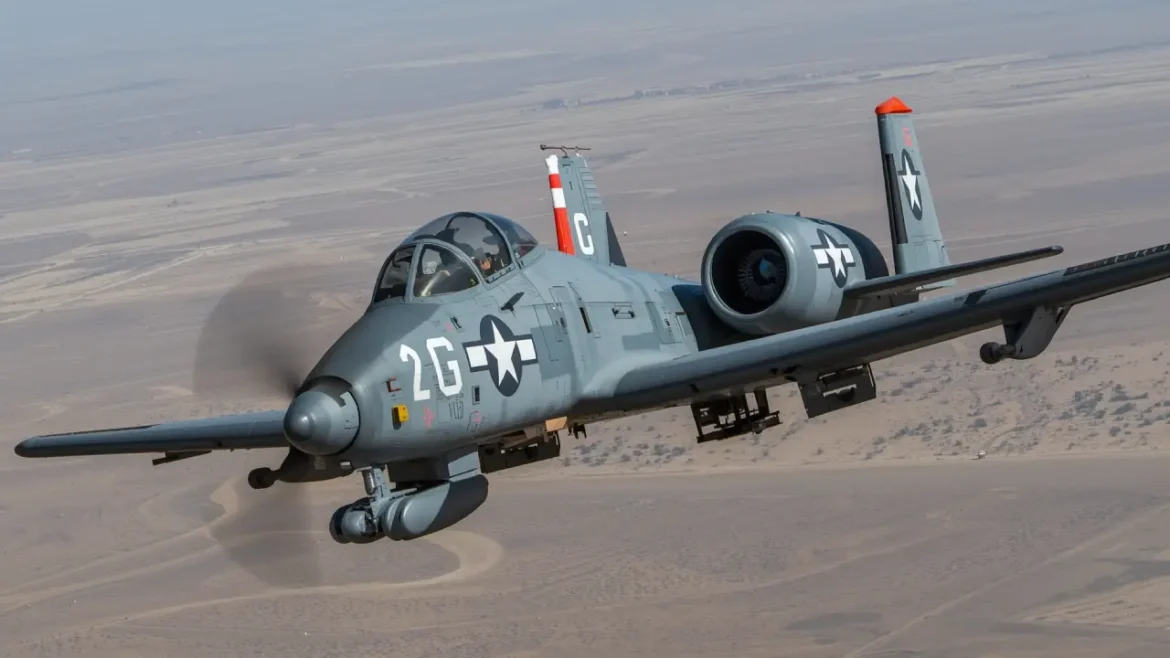
Despite plans to retire the A-10 Thunderbolt II, popularly known as the Warthog, the U.S. Air Force (USAF) continued operating the aircraft through 2025, particularly in permissive environments where its close air support (CAS) capabilities remain unmatched. The A-10 continues to earn praise for its rugged design, survivability, and devastating GAU-8 Avenger 30 mm cannon—attributes that ground troops and pilots alike value in combat zones.
Why the A-10 Persists in an Era of Modern Aircraft
Built in the 1970s, the A-10 was purpose-designed for CAS, loitering protection, and anti-armor attacks. Its titanium “bathtub” cockpit, redundant flight systems, and ability to return safely under severe damage make it one of the most survivable aircraft in the U.S. arsenal. Unlike modern stealth jets, it offers heavy munitions at loitering speeds—key advantages when enemy air defenses are minimal.
Pivot to Modernization and Peer-Conflict Needs
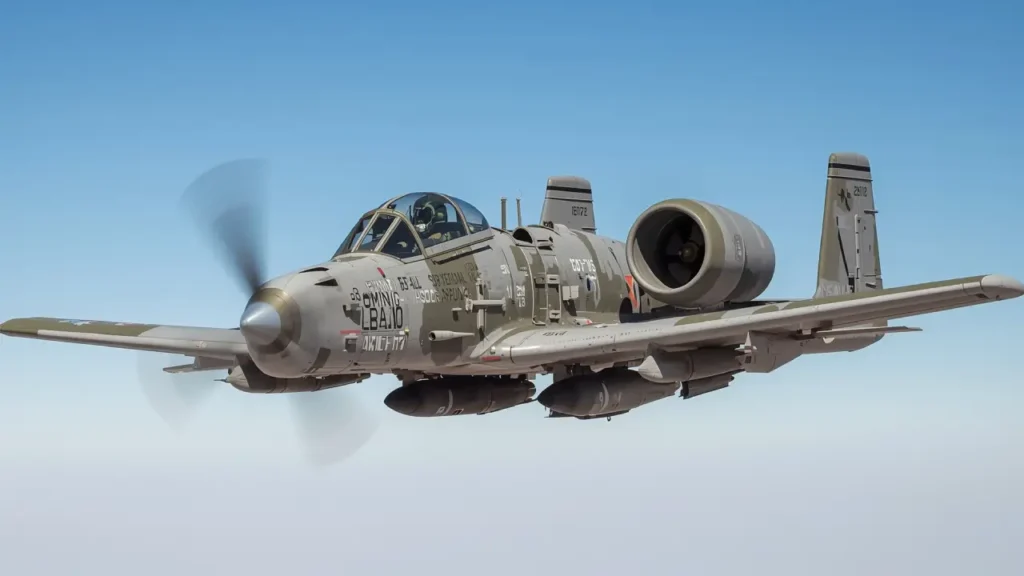
However, the A-10’s advantages are less relevant in contested environments. Its slow speed and lack of stealth make it vulnerable to advanced air defenses, particularly in scenarios involving near-peer threats like China or Russia. Accordingly, the USAF is refocusing resources toward multirole platforms such as the F-15EX, F-35, and the next-generation “F-47” fighter, aligning with the broader strategic shift toward advanced, survivable systems.
Accelerated Retirement Timeline
Originally slated for retirement by the end of the decade, the A-10’s exit has been accelerated. The defense budget for fiscal year 2026 proposes retiring all remaining 162 A-10s by the end of FY2026—about two years earlier than previously planned. This step is part of a broader divestment of 340 aging aircraft to shift funding toward developing and procuring next-generation platforms.
Congressional Resistance and Legacy Considerations
Congress has historically blocked A-10 retirements, citing concerns over CAS capability gaps and the aircraft’s enduring reputation among ground forces. Despite budget proposals, legislative approval remains uncertain, especially from lawmakers representing districts with strong support for the Warthog and its missions.
FAQs
Its unmatched survivability, loiter time, and firepower (notably the GAU-8 30 mm cannon) made it invaluable in permissive environments and for protecting ground troops, earning it enduring support within the military community.
Its slow speed and lack of stealth make it vulnerable to sophisticated air defense systems, particularly those deployed by near-peer adversaries.
The USAF plans to rely on the F-15EX, F-35, and future F-47 platforms. However, none match the A-10’s dedicated CAS capabilities, leaving potential gaps without supplementary solutions.
Congress has authorized partial retirements (e.g., 21 in FY2023 and 42 in FY2024) but has yet to approve full divestment. The FY2026 proposal still awaits legislative action.