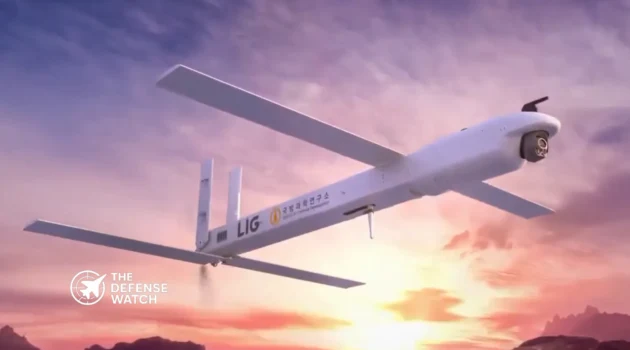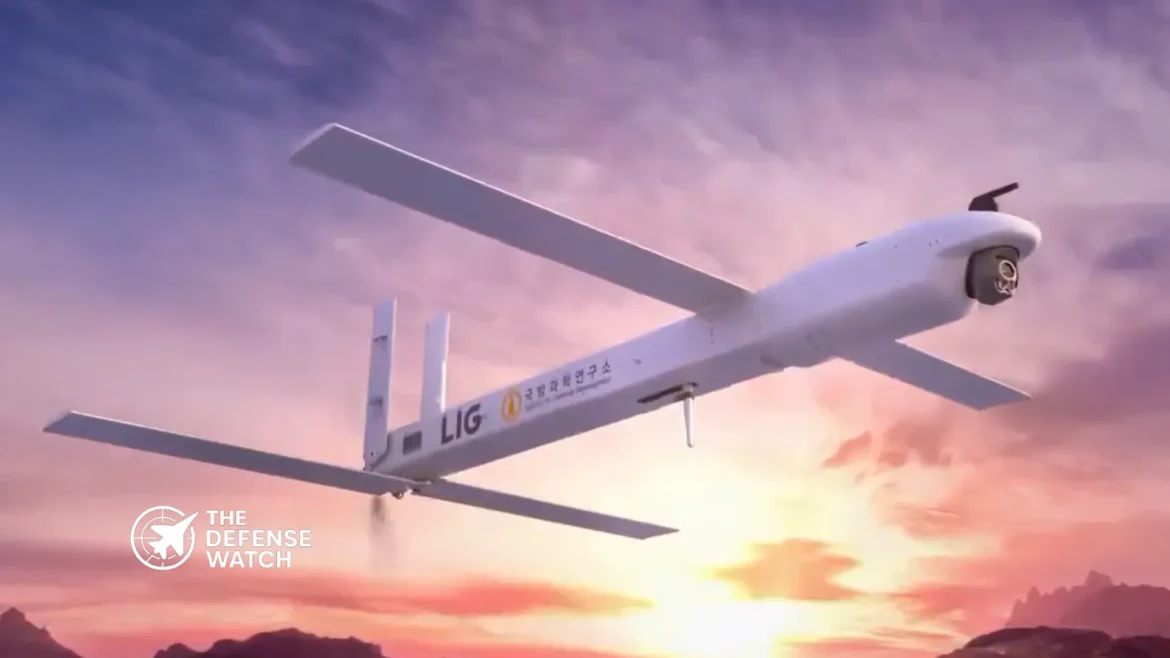
- South Korea’s Agency for Defense Development plans to complete the S-9 swarm drone development in October.
- The S-9 system uses dozens of coordinated drones equipped with AI-based automatic target recognition capabilities.
- The drone swarm can conduct reconnaissance, strike, re-attack, and recovery missions in coordinated formations.
- South Korean defense contractor LIG Nex1 is developing the system alongside ADD as part of the S-series drone program.
- The system can also operate in a rocket artillery style mass launch configuration for saturation attacks.
South Korea’s S-9 Swarm Drone Program Approaches Development Milestone
South Korea’s S-9 swarm drone program is approaching a key development milestone as the country’s Agency for Defense Development (ADD) plans to complete the system’s development in October this year. The project, developed in cooperation with South Korean defense contractor LIG Nex1, represents a significant step toward operational autonomous drone swarm capabilities within the Republic of Korea’s military modernization strategy.
The S-9 is part of ADD’s broader S-series unmanned systems initiative, which focuses on deploying coordinated drone formations capable of reconnaissance, strike operations, and autonomous targeting using artificial intelligence.
If successfully deployed, the S-9 swarm drone could provide South Korea with a new class of low-cost, scalable strike capability designed to overwhelm adversary defenses through mass and coordination.
The Big Picture
Drone swarm technology is emerging as one of the most significant transformations in modern warfare. Militaries worldwide are investing in autonomous or semi-autonomous unmanned systems capable of operating in coordinated groups rather than as individual platforms.
Swarm systems allow commanders to deploy dozens, or potentially hundreds, of small drones simultaneously. These systems can perform reconnaissance, electronic warfare, and precision strike missions while complicating enemy air defense responses.
South Korea’s S-9 swarm drone program reflects this global trend. Countries including the United States, China, Israel, and Türkiye are pursuing similar technologies designed to combine artificial intelligence with distributed unmanned systems.
For South Korea, the operational logic is particularly clear. The Korean Peninsula features dense air defenses, hardened military infrastructure, and a large concentration of artillery and missile assets. Swarm drones offer a potential method to penetrate or saturate these defensive networks.
What’s Happening
The S-9 swarm drone is currently under development by the Agency for Defense Development in cooperation with LIG Nex1, one of South Korea’s leading defense electronics and missile system manufacturers.
According to available information, the system is designed to deploy several dozen drones that can operate in coordinated formations. The drones rely on artificial intelligence based automatic target recognition technology, allowing them to identify, track, and engage targets with limited operator intervention.
Key capabilities reported for the S-9 system include:
Reconnaissance and surveillance missions
Precision strike operations
Re-attack capability after an initial strike attempt
Drone recovery operations
Mass launch deployment similar to rocket artilleryDemonstration footage suggests the drones can be launched in large groups, enabling a rapid saturation attack profile that mirrors the operational concept of multiple launch rocket systems.
The program remains under development, with ADD targeting completion in October. Additional testing phases are expected before operational deployment with South Korean armed forces.
Why It Matters
The S-9 swarm drone highlights a shift in how militaries approach precision strike and reconnaissance missions.
Traditional strike platforms such as fighter aircraft or cruise missiles are expensive and often limited in number. Drone swarms offer a more scalable alternative. A large number of smaller unmanned systems can achieve similar operational effects at lower cost while creating greater complexity for enemy defenses.
Autonomous target recognition also reduces the workload for human operators. Instead of controlling each drone individually, commanders can assign mission parameters while the swarm coordinates internally.
In high intensity conflicts, this capability could enable rapid suppression of enemy air defenses, radar systems, artillery units, or command nodes.
South Korea’s interest in swarm technology reflects the growing importance of distributed and autonomous warfare systems across the Indo-Pacific region.
Strategic Implications
The development of the S-9 swarm drone could strengthen South Korea’s deterrence posture on the Korean Peninsula.
North Korea maintains a large arsenal of artillery, ballistic missiles, and hardened military facilities positioned near the Demilitarized Zone. Swarm drones could provide a flexible capability for reconnaissance and rapid strike missions against these targets.
A coordinated swarm could also complicate North Korean air defense systems, which are primarily designed to counter conventional aircraft and ballistic missile threats.
Beyond the Korean Peninsula, the S-9 program demonstrates South Korea’s growing role as a developer of advanced unmanned and AI-enabled military technologies. The country has increasingly positioned its defense industry as a major exporter of advanced systems ranging from artillery to fighter aircraft.
Swarm drone technologies could eventually follow the same path, particularly as global demand for autonomous systems continues to grow.
Competitor View
China has already invested heavily in swarm drone research and has demonstrated large-scale drone swarm launches in military exercises and defense exhibitions.
Beijing’s military planners view drone swarms as a key component of future networked warfare concepts. The People’s Liberation Army has explored swarm deployments for reconnaissance, maritime strike missions, and electronic warfare operations.
Russia has also expanded its use of loitering munitions and unmanned strike systems following battlefield experiences in Ukraine.
In this context, South Korea’s S-9 program reflects a broader technological competition surrounding autonomous weapons systems and AI-enabled targeting.
Capability Gap
The S-9 swarm drone appears designed to address several operational challenges faced by modern militaries.
Air defense systems are becoming increasingly capable, particularly against traditional aircraft and large missiles. Smaller, distributed drones present a much harder target set for defensive systems designed to intercept limited numbers of high value threats.
Swarm drones can also provide persistent surveillance over contested areas where crewed aircraft may face significant risk.
However, swarm systems face several limitations. Autonomous coordination requires resilient communications networks and strong electronic warfare protection. Enemy jamming, cyber attacks, or signal disruption could degrade swarm performance.
Command and control frameworks will also determine how effectively human operators can supervise large autonomous formations during complex missions.
What To Watch Next
Several key milestones will determine the future trajectory of the S-9 swarm drone program.
First, the completion of development in October will likely be followed by operational testing with South Korean military units.
Second, integration with broader command and control networks will be critical. Swarm drones become significantly more effective when linked to real-time intelligence and targeting data from other military systems.
Finally, South Korea may explore export opportunities if the technology matures successfully. The country has increasingly marketed advanced defense systems to global partners seeking modern but cost-effective capabilities.
The Bottom Line
South Korea’s S-9 swarm drone program signals the country’s growing investment in AI-enabled autonomous warfare systems designed to deliver scalable, coordinated strike capability in future conflicts.

China Tests Jet Powered Swarm Carrier Drone for the First Time
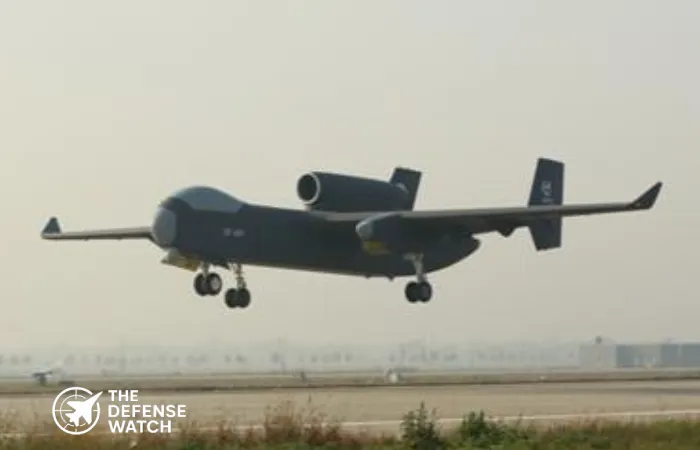
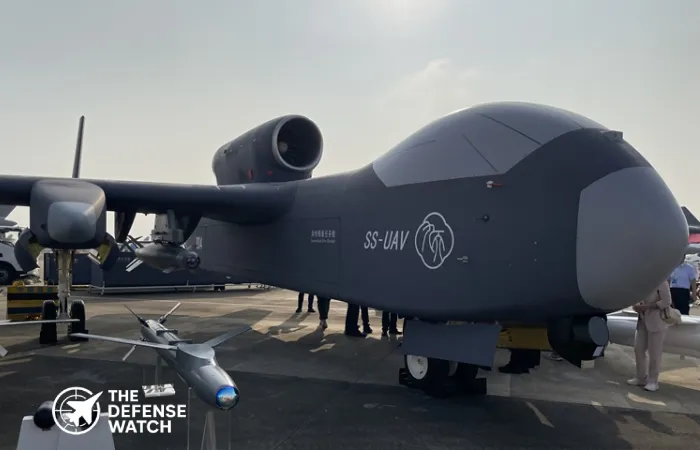
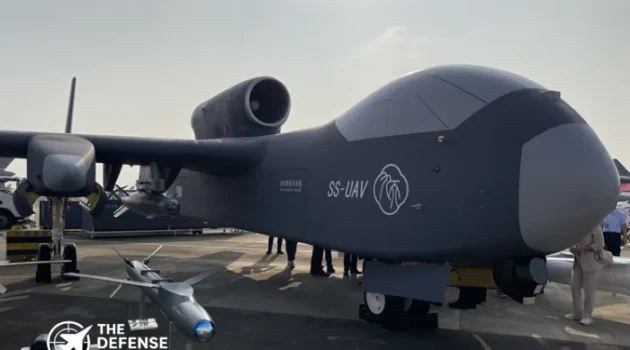
China has completed the first flight of a jet powered swarm carrier drone, a new unmanned aerial vehicle designed to deploy multiple smaller drones during combat missions. The test flight marks a significant milestone in China’s expanding military drone program and highlights continued investment in advanced unmanned warfare concepts.
The flight was confirmed by Chinese aerospace sources and first reported by FlightGlobal. The test took place recently at an undisclosed location inside China, with the aircraft reportedly performing a full mission profile focused on flight stability and systems validation.
Background: China Expands Swarm Drone Capabilities
Over the past decade, China has become one of the world’s most active developers of unmanned aerial systems. The country already fields a wide range of intelligence, surveillance, reconnaissance, and strike UAVs, many of which are comparable in size and capability to U.S. systems such as the MQ-9 Reaper.
The newly tested jet powered swarm carrier drone represents a different approach. Instead of acting solely as a sensor or strike platform, the aircraft is designed to function as a launch and control node for multiple smaller drones. This concept mirrors growing global interest in distributed airpower, where large numbers of inexpensive drones complicate enemy defenses.

The main keyword, China jet powered swarm carrier drone, reflects increasing online interest in how China plans to use swarm technology in future conflicts.
Design and Technical Details of the Carrier Drone
According to available information, the jet powered swarm carrier drone features a sleek airframe optimized for speed and altitude. The aircraft uses a turbojet or small turbofan engine, allowing it to operate at higher speeds and longer ranges than propeller driven swarm launch platforms.
The internal bay of the drone is designed to carry multiple loitering munitions or reconnaissance drones. These sub drones can be released mid flight and operate independently or as part of a coordinated swarm.
Key reported features include:
- Jet propulsion for extended range and rapid deployment
- Internal payload bay for swarm drones
- Networked command and control architecture
- Compatibility with electronic warfare and reconnaissance payloads
The Chinese swarm carrier UAV is believed to rely on artificial intelligence assisted mission management, enabling it to coordinate drone launches with minimal human input.
Strategic Implications for U.S. and Allied Forces
The emergence of a China jet powered swarm carrier drone has potential implications for U.S. military planning, particularly in the Indo Pacific region. Swarm capable UAVs could be used to saturate air defenses, conduct wide area surveillance, or deliver precision strikes against high value targets.
U.S. defense analysts have previously warned that drone swarms could challenge traditional air defense systems by overwhelming radar and interceptor capacity. A jet powered carrier platform further extends the reach of such swarms, allowing launches from outside contested airspace.
While the Pentagon has its own swarm and collaborative combat aircraft programs, China’s latest test suggests it is moving quickly to field operational systems.
Expert Perspectives on Swarm Carrier UAVs
Defense technology experts note that swarm carrier drones are still an emerging capability, with many technical hurdles remaining. Reliable communication links, autonomous decision making, and resistance to electronic jamming are all critical challenges.
However, the successful first flight indicates that China has moved beyond the conceptual phase. Even limited operational use could provide valuable experience and data for future designs.
From a policy standpoint, the development reinforces concerns about rapid military innovation in Asia and the growing role of unmanned systems in high intensity conflict scenarios.
What Comes Next After the First Flight
Following the maiden flight, additional testing is expected to focus on payload deployment, swarm coordination, and endurance. Live drone release trials will likely be the next major milestone.
If development continues at its current pace, the jet powered carrier drone could enter limited service within the next few years. This would further expand China’s already diverse UAV inventory.
For U.S. and allied defense planners, tracking the progress of the China jet powered swarm carrier drone will be important for understanding future air combat dynamics and adjusting counter swarm strategies.
Conclusion
China’s first flight of a jet powered swarm carrier drone marks a notable advance in unmanned aerial warfare. By combining long range jet propulsion with swarm deployment capability, the system reflects a broader shift toward distributed and autonomous combat operations.
As testing continues, the platform will draw close attention from military analysts worldwide, particularly in the United States, where countering advanced UAV threats remains a top defense priority.