Strategic milestone in Indian fighter production
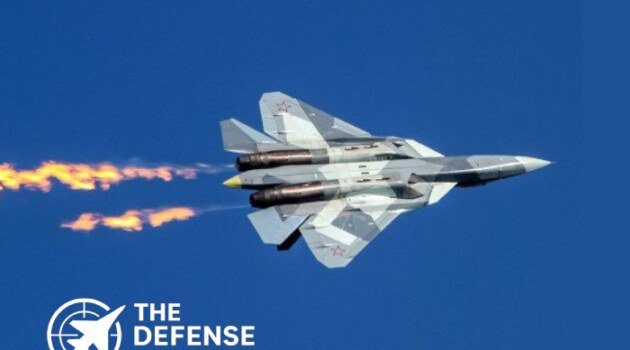
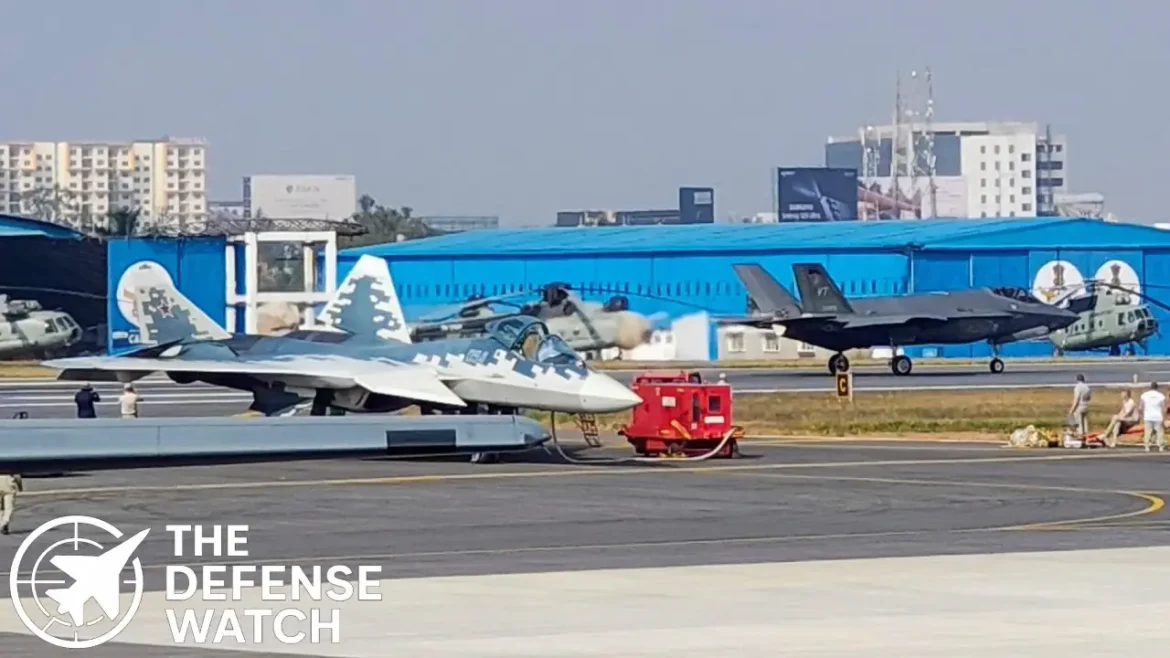
India appears to have crossed a significant threshold in its push to domestically build advanced combat aircraft. According to a technical assessment by a Russian delegation, China’s long-term partner Hindustan Aeronautics Limited (HAL) has achieved approximately 50 % of the industrial capacity required to locally produce the export variant of Russia’s fifth-generation fighter, the Su-57E.
The evaluation, conducted in September 2025 of key HAL facilities at Nashik (air-frame production), Koraput (engine division) and Kasaragod (avionics unit), found that HAL is “technologically ready” in major areas such as air-frame manufacturing, engine integration and advanced avionics assembly. The Russian team still identified significant work ahead in low-observable materials, sensor fusion and production tooling to reach full scale.
From a capability perspective, the Su-57E is the export version of Russia’s flagship fifth-generation multirole fighter and features internal weapon bays, thrust-vectoring engines and modern sensor suites. Local production would mark India’s entry into a very select club of nations able to manufacture stealth fighters.
HAL’s current capability and production roadmap
HAL’s existing manufacturing experience stems in large part from the licensed production of the Su-30MKI for the Indian Air Force (IAF). The Nashik facility, which has produced Su-30MKI aircraft, was judged “ideal” for the Su-57E air-frame line with minimal retrofitting. The Koraput engine division and the Kasaragod avionics facility likewise feature infrastructure that the Russian delegation considered adaptable for the Su-57E program.
Sukhoi Su-57E Fighter Jet – Full Specifications
- Generation: 5th
- Maximum Speed: Mach 2.0
- No. of Engines: 2
- Radar Range: 400 km
HAL is reportedly preparing an internal report for the Indian Ministry of Defense (MoD) detailing investment needs, tooling upgrades, workforce training and supply-chain reforms required for full production. The aim is to initiate local assembly in the late 2020s and ramp to full production in the early 2030s.
Key gaps remain: stealth materials and coatings, sensor fusion software and high-precision engine manufacturing. Addressing those will likely involve foreign collaboration (with Russia) and large-scale investment in India’s aerospace base.
What this means for U.S. defense, global security and technology trends
U.S. defense industrial implications
From a U.S. perspective, this development underscores two trends. First, it signals India’s accelerating defense-industrial autonomy, reducing its dependence on Western suppliers and shifting job- and production-flows towards the Indo-Pacific region. For U.S. defense firms engaged in India, this means increased competition but also partnership opportunities — especially in avionics, stealth coatings and sensor systems where India may still need Western-origin inputs.
Second, the U.S. will likely monitor how India balances its strategic partnerships. India’s closer defense ties with Russia — especially for advanced systems — may complicate interoperability with U.S. platforms and multilateral exercises (e.g., in Quad or NATO-partnered operations). The possibility of U.S. export controls (such as CAATSA) or technology-access restrictions may weigh in future procurement decisions.
Global security and regional air-power balance
In the Indo-Pacific theatre, India’s move toward local stealth fighter production is significant. The regional air-power equation has already been shifting: China’s J‑20 stealth fleet is growing, and Pakistan is exploring next-gen combat aircraft options. A locally produced fifth-generation fighter would enhance India’s ability to conduct deep-strike, stealth penetration and air-dominance missions — particularly across contested areas such as the Himalayas, the Indian Ocean Region and the sub-continent.
Technology and manufacturing trends
HAL’s progress mirrors a broader global trend: major defense platforms being built in modular, export-friendly form in multiple nations, rather than monolithic production in a single country. This co-production model allows emerging aerospace producers to jump quickly into advanced manufacturing. From a technology-trend view, the emphasis on sensor fusion, low-observable materials and thrust-vectoring engines puts India in the path of next-generation fighter development (including sixth-generation concepts).
Conclusion: Looking ahead
India’s achievement of roughly 50 % readiness for local production of the Su-57E represents a watershed moment in its aerospace and defense journey. If the remaining infrastructure, supply-chain and technological gaps are resolved, HAL may soon begin assembly of a fifth-generation fighter — with profound implications for regional security, flows and India’s status as a major aerospace power.
In the coming years we will likely see further milestones: formal co-production agreements with Russia, first fly-able India-assembled, and possible integration of indigenous systems (radars, missiles) into the platform. For U.S. defense stakeholders, this provides both a reminder of the changing global manufacturing landscape and an opportunity to engage in India’s evolving aerospace ecosystem — if aligned with strategic policy and export-control frameworks.
The full realization of this program will help define India’s air-power trajectory for the next decade — and shape its role in the 21st-century defense architecture of the Indo-Pacific.