India Moves Forward With Largest Fighter Jet Procurement In Decades
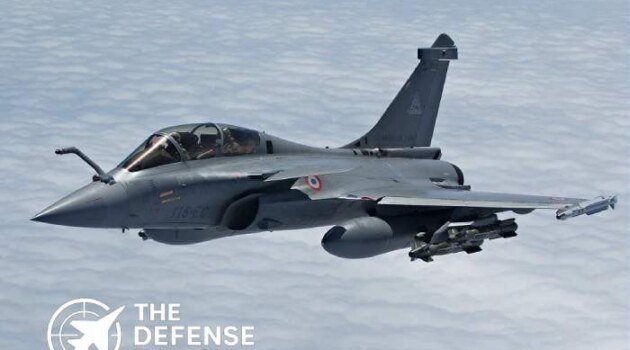
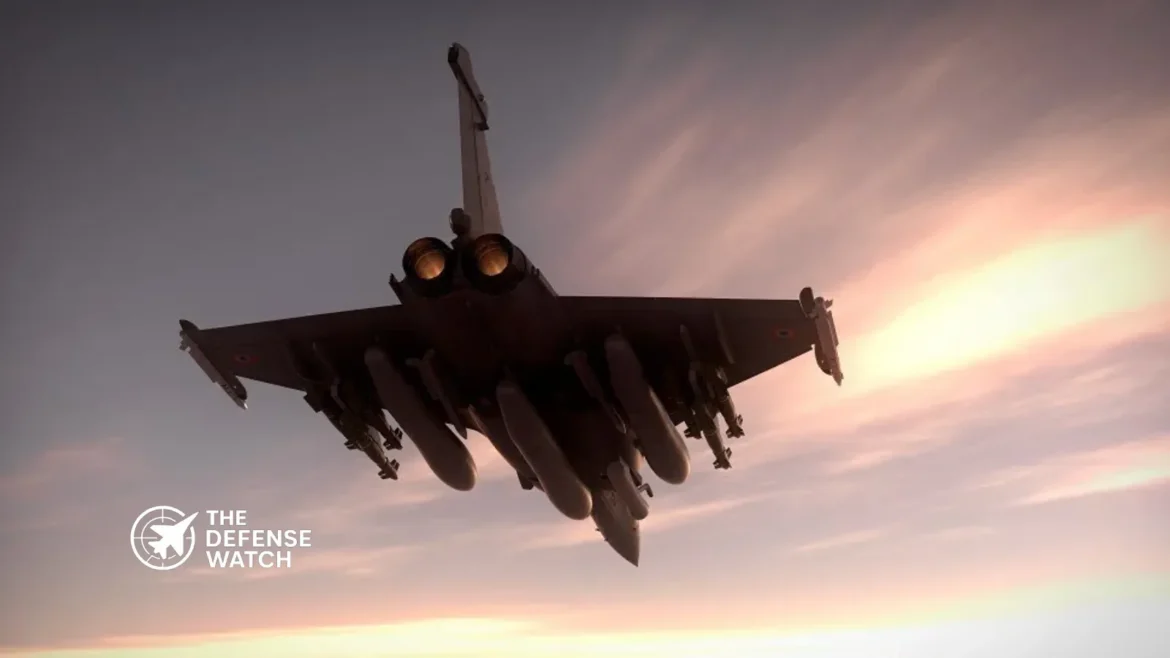
India’s Defence Acquisition Council granted preliminary approval Thursday for the procurement of 114 Rafale fighter jets from France’s Dassault Aviation, marking one of the largest defense acquisitions in the nation’s history. The deal, valued at approximately 3.25 trillion rupees ($39 billion), represents a critical step toward addressing the Indian Air Force’s acute squadron shortage while modernizing its combat capabilities against evolving regional threats.
(adsbygoogle = window.adsbygoogle || []).push({});Defense Minister Rajnath Singh-led Defence Acquisition Council approved the Acceptance of Necessity for the Multi-Role Fighter Aircraft program, according to India’s Ministry of Defence. The clearance paves the way for detailed commercial and technical negotiations between New Delhi and Paris, though final approval from the Cabinet Committee on Security remains pending.
Strategic Timing Ahead Of Macron’s India Visit
The approval comes just days before French President Emmanuel Macron’s scheduled visit to India from February 17-19, where he will launch the India-France Year of Innovation and Artificial Intelligence Impact Summit. Defense analysts view the timing as strategically significant, demonstrating the deepening defense partnership between the two nations.
Under the proposed framework, 18 Rafale aircraft will be delivered directly from France in fly-away condition to meet immediate operational requirements. The remaining 96 jets will be manufactured in India through a partnership involving state-owned Hindustan Aeronautics Limited and private Indian defense contractors, officials familiar with the matter told The Associated Press.
Make In India Integration Drives Local Manufacturing
The indigenous production component represents a substantial commitment to India’s Make in India initiative. Initial Indian content is expected to reach 30 percent of production value, progressively increasing to more than 60 percent as the program matures. This technology transfer agreement will provide Indian aerospace manufacturers with advanced capabilities in fourth-generation-plus fighter production.
(adsbygoogle = window.adsbygoogle || []).push({});The deal structure reflects lessons learned from India’s earlier Rafale acquisition. In 2016, India contracted for 36 Rafale jets under a government-to-government agreement with France, with deliveries completed in December 2024. The aircraft have since equipped two squadrons: No. 17 Squadron “Golden Arrows” at Air Force Station Ambala in Haryana, and No. 101 Squadron “Falcons” at Hasimara in West Bengal.
Rejection Of F-35 And Su-57 Proposals
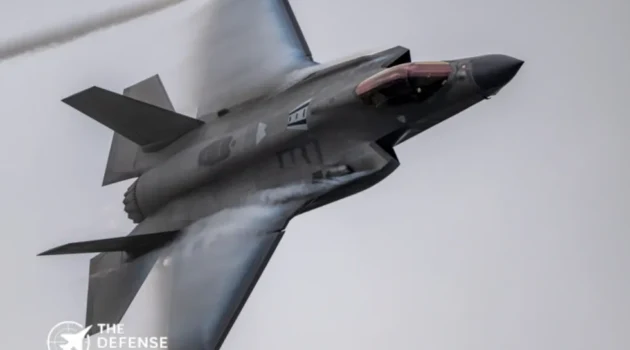
By selecting the Rafale, India simultaneously rejected competing offers from the United States and Russia for fifth-generation fighters. Lockheed Martin’s F-35 Lightning II and Russia’s Sukhoi Su-57 were both evaluated but ultimately not selected. Defense industry sources indicate concerns that procuring either fifth-generation platform could have undermined India’s indigenous Advanced Medium Combat Aircraft development program.
Indian defense officials consider the Rafale a proven, readily deployable solution capable of rapidly addressing capability gaps. The twin-engine, multi-role fighter has demonstrated effectiveness in Indian service, including during Operation Sindoor in May 2025, when Indian Air Force Rafales struck targets in Pakistan using SCALP cruise missiles following the Pahalgam terror attack.
Addressing Critical Squadron Shortfall
The Indian Air Force currently operates approximately 29-31 fighter squadrons, significantly below its authorized strength of 42 squadrons. This shortfall has grown more acute as aging Dassault Mirage 2000, SEPECAT Jaguar, and early-model Mikoyan MiG-29 aircraft approach retirement without sufficient replacement capacity.
(adsbygoogle = window.adsbygoogle || []).push({});India’s domestically produced HAL Tejas light combat aircraft, while entering serial production, cannot fill the gap at the required pace. The Tejas remains classified as a light fighter and lacks the payload capacity and range required for many roles currently filled by medium and heavy fighters.
Once the 114-aircraft order is completed alongside the 26 naval Rafale-M variants ordered in April 2025, India’s total Rafale fleet will reach 176 aircraft, making it the largest Rafale operator outside France.
Comprehensive Defense Package Approved
The Rafale approval forms part of a broader defense procurement package worth 3.6 trillion rupees approved by the Defence Acquisition Council. Additional acquisitions include six Boeing P-8I maritime patrol aircraft for the Indian Navy, valued at approximately 28,000 crore rupees ($3.3 billion).
(adsbygoogle = window.adsbygoogle || []).push({});The P-8I aircraft will enhance anti-submarine warfare and maritime surveillance capabilities across the Indian Ocean Region, where Indian naval planners have expressed concern about expanding Chinese naval activities. India currently operates 12 P-8I aircraft, which have proven critical for maritime domain awareness.
The council also approved High Altitude Platform Systems worth approximately 15,000 crore rupees. These long-endurance pseudo-satellite aircraft will provide persistent intelligence, surveillance, and reconnaissance capabilities for operations along India’s contested northern borders with China.
For the Indian Army, the Defence Acquisition Council granted Acceptance of Necessity for procurement of Vibhav anti-tank mines and overhaul programs for Armoured Recovery Vehicles, T-72 tanks, and BMP-II Infantry Combat Vehicles.
Advanced Capabilities Package
The Rafale’s multirole capabilities align with Indian Air Force operational requirements across the full spectrum of conflict scenarios. The aircraft can execute air superiority, ground attack, reconnaissance, anti-ship, and nuclear deterrence missions during single sorties.
Key weapon systems integrated with Indian Rafales include the Meteor beyond-visual-range air-to-air missile, SCALP-EG cruise missile with ranges exceeding 250 kilometers, and the HAMMER modular air-to-ground weapon. The aircraft’s SPECTRA electronic warfare suite provides advanced self-protection capabilities against surface-to-air missiles and air-to-air threats.
(adsbygoogle = window.adsbygoogle || []).push({});The Rafale features an integrated sensor suite including the RBE2 active electronically scanned array radar, which can track multiple targets simultaneously while maintaining low probability of intercept characteristics. Its Optronique Secteur Frontal infrared search and track system enables passive target detection and engagement.
Technology Transfer And Industrial Cooperation
In June 2025, France and India announced four landmark production transfer agreements between Dassault Aviation and Tata Advanced Systems Limited. These partnerships are expected to accelerate production capabilities and reduce delivery timelines for the new order.
The technology transfer encompasses aircraft engines, avionics systems, weapons integration protocols, and composite materials manufacturing. French defense officials have indicated willingness to support future joint development projects beyond the current procurement program.
Defense analysts note that France has proven more willing than competing suppliers to share advanced technologies and support indigenous development programs. This flexibility has positioned French defense contractors as preferred partners for multiple Indian military modernization initiatives.
Regional Security Context
The procurement decision reflects India’s strategic calculus amid evolving security challenges along its borders with Pakistan and China. Tensions along the Line of Actual Control with China have remained elevated since the 2020 Galwan Valley clash, while terrorist threats from Pakistan-based groups continue to require robust air defense and strike capabilities.
(adsbygoogle = window.adsbygoogle || []).push({});The Rafale’s proven performance during Operation Sindoor demonstrated its effectiveness for precision strikes against hardened targets in contested airspace. Military planners view the expanded Rafale fleet as essential for maintaining credible deterrence across both northern and western borders.
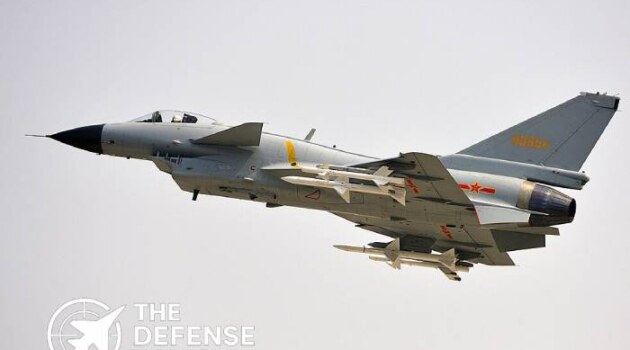
India’s fighter modernization also occurs within the broader context of regional military competition. Pakistan has taken delivery of Chinese-built J-10C fighters and continues to operate upgraded F-16 aircraft, while China operates large fleets of fourth and fifth-generation fighters along the Tibetan border regions.
Next Steps In Procurement Process
Following the Defence Acquisition Council’s Acceptance of Necessity, India’s Ministry of Defence will conduct detailed commercial negotiations with Dassault Aviation through the government-to-government framework established with France. These discussions will finalize aircraft unit costs, weapons packages, support systems, training requirements, and technology transfer terms.
(adsbygoogle = window.adsbygoogle || []).push({});Defense industry observers do not expect contract signature before late 2026, given the complexity and scale of the procurement. The final agreement requires approval from the Cabinet Committee on Security, chaired by Prime Minister Narendra Modi.
Initial aircraft deliveries from France could begin within 36 months of contract signature based on Dassault’s current production capacity, with Indian-manufactured aircraft following as domestic production lines achieve certification. Full fleet delivery is projected to extend through the early 2030s.
The comprehensive acquisition positions India’s defense relationship with France as among its most significant strategic partnerships, with implications for naval aviation, missile systems, and future collaborative development programs across the aerospace sector.

France pledges Rafale jets and air defense amid renewed Russian strikes
France pledges Rafale jets and expanded air defense support to Ukraine following a fresh wave of Russian attacks on critical energy infrastructure, signaling a deepening of Paris military assistance to Kyiv.
(adsbygoogle = window.adsbygoogle || []).push({});Ukrainian President Volodymyr Zelenskyy met French Minister of Armed Forces and Veterans Affairs Catherine Vautrin in Kyiv on February 7, 2026, as Russia carried out its largest coordinated strike on Ukrainian energy targets in several weeks, according to Ukrainian and European officials.
The talks focused on accelerating delivery of air defense systems, increasing missile stocks, and expanding Ukraine combat aviation capacity through French made aircraft. The meeting marked Vautrin first visit to Ukraine since taking office in October 2025 and underscored France intent to play a larger operational role in European security.
Air defense takes priority after energy strikes
Ukrainian officials said Russian forces targeted power generation and transmission facilities across multiple regions, renewing pressure on the national grid during winter conditions. Ukraine Air Force reported extensive use of cruise missiles, ballistic missiles, and long range drones.
Against this backdrop, France pledged additional support for Ukraine layered air defense network. Central to the discussions were further deliveries of the SAMP T medium range surface to air missile system, jointly developed by France and Italy.
The SAMP T system, also known as Mamba, is designed to counter aircraft, cruise missiles, and certain ballistic missile threats. Ukraine already operates at least one SAMP T battery, which has been credited by Ukrainian defense officials with successful interceptions of Russian missiles.
French officials indicated that Paris would work with partners to speed the supply of additional interceptor missiles, addressing a persistent shortage caused by the high tempo of Russian attacks.
(adsbygoogle = window.adsbygoogle || []).push({});According to the French Ministry of Armed Forces, strengthening Ukraine air defense remains a top priority as Russia continues to target civilian infrastructure in an effort to degrade economic resilience and public morale.
Rafale and Mirage aircraft discussions expand aviation support
Beyond air defense, France pledged to expand aviation cooperation, including steps toward providing Rafale multirole fighter aircraft to Ukraine. While no specific delivery timeline was announced, the commitment represents a significant potential escalation in Western supplied combat aircraft.
The Rafale is the French Air and Space Force primary frontline fighter, capable of air superiority, ground attack, reconnaissance, and nuclear strike missions. If delivered, it would offer Ukraine advanced sensors, electronic warfare capabilities, and compatibility with a wide range of Western munitions.
Discussions also covered continued support for Mirage aircraft, which France has previously committed to transfer for Ukrainian pilot training and operational use. French officials emphasized that any aircraft deliveries would be paired with training, maintenance support, and integration planning.
Defense analysts note that introducing Rafale aircraft would require extensive preparation, including pilot conversion training, ground crew instruction, and infrastructure upgrades. However, Ukrainian officials have repeatedly stressed their ability to adapt quickly to new Western platforms.
Strategic message to Moscow and European allies
France pledges Rafale jets and air defense at a time when European leaders are seeking to demonstrate unity and resolve as the war enters another year. Paris has increasingly framed its Ukraine policy as part of a broader effort to deter further Russian aggression against Europe.
President Emmanuel Macron has previously stated that a Russian victory in Ukraine would pose a direct threat to European security. The latest commitments reinforce France position as one of Ukraine most capable military backers within the European Union.
(adsbygoogle = window.adsbygoogle || []).push({});The visit also carried symbolic weight. A senior French defense minister traveling to Kyiv during an active Russian strike campaign sends a clear political signal, according to European diplomats familiar with the discussions.
Coordination with allies and NATO partners
French officials stressed that the new pledges would be coordinated closely with NATO allies and European partners. The SAMP T system complements other Western air defense assets already in Ukrainian service, including Patriot, NASAMS, and IRIS T systems.
Ukraine defense planners have emphasized the need for a diverse and resilient air defense architecture to counter evolving Russian tactics. Moscow has increasingly mixed missile types and drones in single attack waves to overwhelm defenses.
By contributing additional SAMP T systems and interceptors, France aims to help close coverage gaps and reduce strain on other allied supplied systems.
Military aid and industrial implications
The potential transfer of Rafale aircraft also carries implications for the French defense industry. Dassault Aviation, the Rafale manufacturer, has seen strong export demand in recent years, and any decision to divert aircraft to Ukraine would require careful production planning.
French defense officials said industrial considerations would not slow support for Ukraine, but acknowledged that timelines depend on training pipelines and sustainment arrangements.
Ukraine has pushed for long term commitments rather than ad hoc deliveries, arguing that predictable support enables better operational planning and force development.
Outlook as conflict grinds on
France pledges Rafale jets and air defense as the conflict shows no sign of de escalation. Russian forces continue to target energy infrastructure, logistics hubs, and urban areas, while Ukraine seeks to protect its population and maintain economic stability.
(adsbygoogle = window.adsbygoogle || []).push({});Western military aid remains a critical factor in Ukraine ability to withstand continued pressure. French officials said Paris would continue to adapt its support based on battlefield needs and consultations with Kyiv.
For Ukraine, the combination of strengthened air defense and expanded combat aviation could help counter Russia aerial advantages and reduce the impact of future strike campaigns.
Historic Defense Pact Signed in Paris
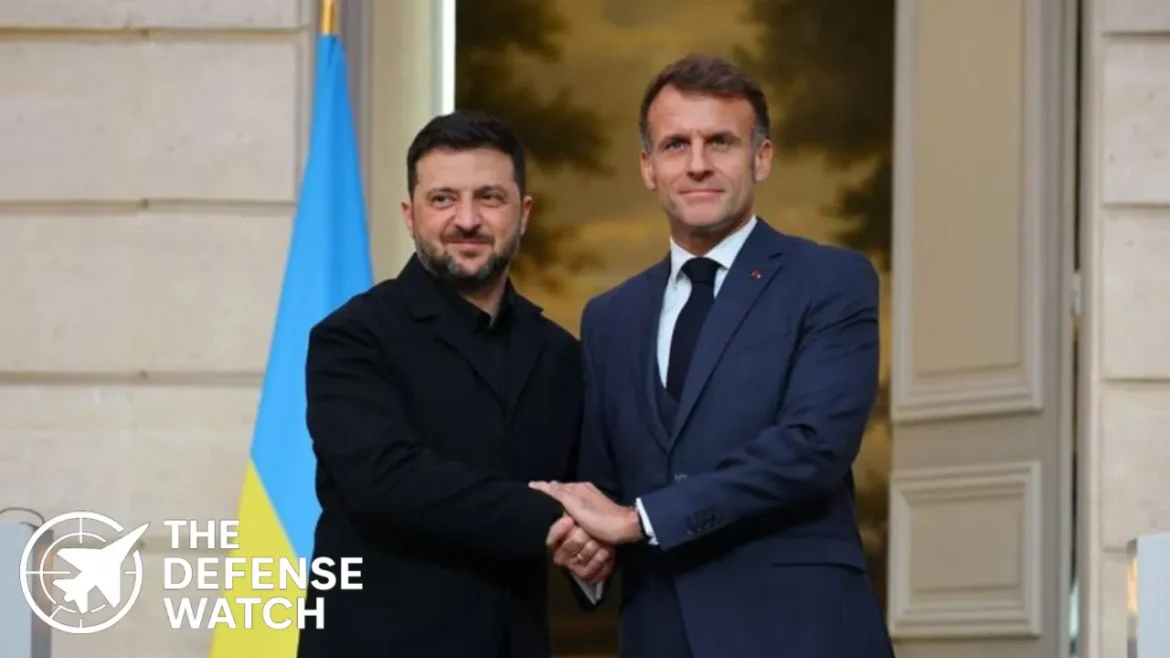
Ukrainian President Volodymyr Zelenskyy and French President Emmanuel Macron signed a historic defense agreement on November 17, 2025, at Villacoublay Air Base near Paris, establishing a framework for Ukraine to acquire up to 100 Dassault Rafale F4 fighter jets and eight SAMP/T next-generation air defense systems. The 10-year strategic cooperation agreement represents one of the largest single combat aircraft acquisitions in Ukrainian military history and signals France’s commitment to Ukraine’s long-term security architecture.
The agreement was signed as heavy Russian drone and missile attacks on Ukraine have increased in recent weeks and Moscow has reported sharp ground advances in the southeastern Zaporizhzhia region. Zelenskyy described the signing as a truly historic moment for both nations, emphasizing that it will significantly strengthen Ukraine’s combat aviation and air defense capabilities.
Background: Ukraine’s Multi-Platform Fighter Strategy
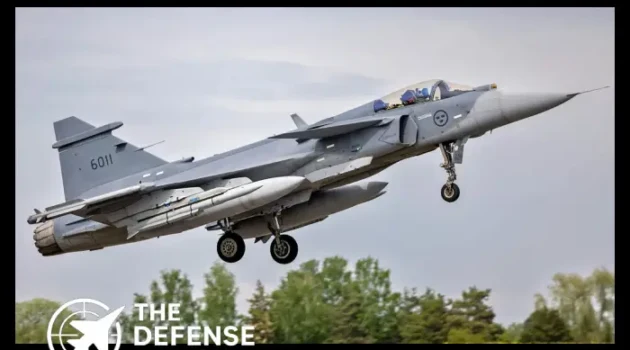
The Rafale acquisition is part of Ukraine’s broader efforts to increase its long-term fighter fleet to 250 warplanes, including the U.S. F-16 and Sweden’s Gripen. This three-platform strategy represents a fundamental transformation of the Ukrainian Air Force from Soviet-era aircraft to a modern Western-equipped force capable of deterring future Russian aggression.
France has emerged as a critical pillar of Western support for Ukraine since the February 2022 full-scale invasion. Paris previously supplied Mirage 2000-5F fighter jets, SCALP long-range cruise missiles, and jointly delivered with Italy a SAMP/T air defense battery that proved its effectiveness by shooting down its first Russian aircraft in March 2025. The current agreement builds upon this foundation while addressing Ukraine’s urgent need for enhanced air defense capabilities against Russia’s sustained aerial campaign, which currently involves approximately 1,700 drone strikes per week plus ballistic and cruise missile attacks.
Details of the Defense Agreement
Rafale F4 Fighter Acquisition
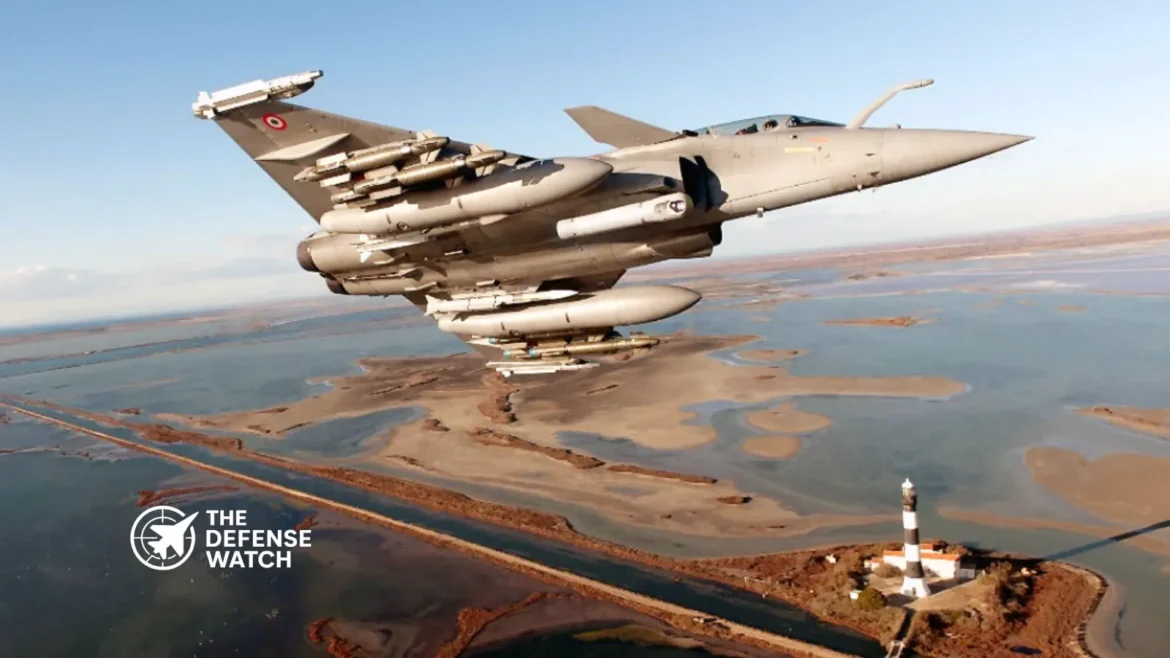
The agreement enables Ukraine to purchase 100 Rafale F4 aircraft for Ukraine’s combat aviation by 2035. The Rafale F4, manufactured by Dassault Aviation, represents one of Europe’s most advanced 4.5-generation multirole fighters, capable of air-to-air combat, precision ground strikes, maritime operations, and even nuclear strike delivery missions.
The Elysee Palace confirmed that the purchases covered by the letter of intent would span the next 10 years. Initial deliveries are not expected until at least 2029, with the full fleet operational by 2035. The extended timeline reflects both the rigorous training programs required for pilots transitioning from Soviet-era platforms and the production capacity constraints faced by Dassault Aviation.
The Rafale package includes associated advanced weaponry systems, including SCALP long-range cruise missiles, AASM Hammer precision-guided bombs, MICA short- and medium-range air-to-air missiles, and Meteor beyond-visual-range air-to-air missiles. These weapons systems will provide Ukrainian forces with standoff strike capabilities and enhanced air superiority options against Russian aviation.
SAMP/T Next-Generation Air Defense Systems
Ukraine aims to acquire eight SAMP/T systems, each comprising six launchers. Macron announced that Ukraine will receive a “new generation” of the SAMP/T missile interceptor, largely comparable to the U.S.-made Patriot system, which will be available in 2026.
The SAMP/T NG (next generation) system represents a significant upgrade over current models. According to French defense officials, the system demonstrates superior performance against advanced Russian missile threats, including adapted flight profiles designed to evade interception. Ukraine’s existing SAMP/T batteries have proven highly effective, with French sources noting the system successfully intercepts Russian missiles that evade Patriot defenses.
Eight complete systems will be supplied, each comprising six launchers of eight missiles. The package includes Aster 30 surface-to-air missiles produced by European consortium MBDA, designed to counter ballistic missiles, cruise missiles, and aircraft across multiple threat vectors.
Additional Defense Cooperation
The wider package includes the Ground Master 200 radar from Thales, and unmanned platforms including the X-Wing Interceptor drone from Alta Araes for counter-UAS missions and Delair’s DT-46 and UX-11 tactical UAVs for reconnaissance, mapping, and artillery correction.
Macron stated that some deliveries of drones, interceptor drones and guided bombs would come in the “very short term” with manufacturing commitments made for the coming three years. This indicates immediate capability enhancements even as longer-term platform acquisitions proceed through development and training cycles.
Strategic and Operational Implications
Transformation of Ukrainian Air Power
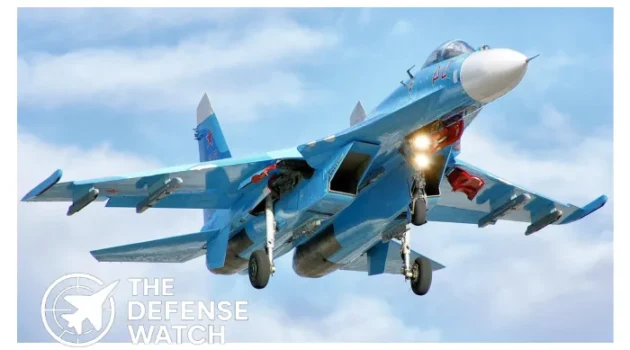
The Rafale acquisition marks a watershed moment for the Ukrainian Air Force. Moving from legacy MiG-29 and Su-27 platforms to advanced Western fighters like the Rafale F4 represents a generational leap in combat capability across every domain: sensor fusion, network-centric warfare, precision strike, electronic warfare, and sustained operations tempo.
Together with the previous agreement signed with Sweden, this new deal would in theory see Ukraine’s air force as the first operator of both the Dassault Rafale and Saab Gripen, which would quickly catapult the Ukrainian Air Force to become one of the most well equipped air arms in Europe if full numbers are realized.
Ukraine signed a letter of intent with Sweden in October 2025 to explore acquiring up to 150 Gripen E fighters. Combined with ongoing F-16 deliveries from Denmark and the Netherlands, Ukraine is positioning itself to field a diverse, interoperable fleet of Western combat aircraft exceeding 250 fighters. This multi-platform approach provides operational flexibility, reduces single-source dependency, and complicates adversary targeting and planning.
Industrial Cooperation and Co-Production
When questioned over the financing of the deal, Zelenskyy indicated Ukraine was examining the possible co-production of the French-made jets. Co-production arrangements could address several strategic objectives simultaneously: reducing per-unit costs through economies of scale, establishing indigenous aerospace manufacturing capabilities within Ukraine, creating high-value employment opportunities, and ensuring long-term sustainment and upgrade paths independent of foreign supply chains.
Such arrangements would follow established precedents in European defense cooperation, where partner nations participate in manufacturing and maintain their own sustainment capabilities. For France, expanded production runs help amortize development costs and strengthen Dassault’s position in the competitive international fighter market.
Air Defense Architecture Enhancement
The SAMP/T NG systems address Ukraine’s most pressing operational requirement: defending against Russia’s relentless missile and drone campaign targeting critical infrastructure, particularly energy facilities as winter approaches. The system’s demonstrated effectiveness against advanced Russian threats makes it a cornerstone of Ukraine’s layered air defense architecture.
The integration of eight complete SAMP/T NG batteries would provide Ukraine with theater-level air and missile defense capabilities comparable to major NATO member states. Combined with existing Patriot systems supplied by the United States and Germany, NASAMS batteries from Norway, and shorter-range systems from various partners, Ukraine is constructing one of the most comprehensive integrated air defense networks in Europe.
Policy and Geopolitical Context
France’s Leadership in European Security
France, along with Britain, has pushed for the creation of a coalition of about 30 countries willing to send troops and assets to Ukraine or along its western borders once a peace deal with Russia is agreed. This Coalition of the Willing framework aims to provide credible security guarantees that deter future Russian aggression even in the absence of formal NATO membership.
Standing alongside Zelenskyy at a news conference, Macron stated the two countries were putting in place the security guarantees required for any possible peace agreement with Russia that may be negotiated down the line. This positions military aid not merely as assistance during active conflict, but as foundational elements of a future European security architecture.
Macron’s approach reflects broader French strategic thinking about European defense autonomy and France’s historic role as a leading military power on the continent. With questions surrounding long-term American commitment to European security, particularly given political volatility in Washington, France and Britain are positioning themselves as anchors of sustained support for Ukraine.
Financing and Budget Considerations
Sources indicated it was not clear how these deals would be financed. French defense officials acknowledged that political and budgetary instability in Paris raises questions about funding mechanisms. Potential approaches include direct French government financing, European Union instruments like the European Peace Facility, international consortium funding, or long-term credit arrangements.
The Ukrainian government may also explore creative financing structures leveraging frozen Russian assets, international loans backed by future reconstruction commitments, or deferred payment schedules tied to post-war economic recovery. These mechanisms would allow Ukraine to secure critical capabilities without immediate cash outlays during wartime fiscal constraints.
Timeline and Training Requirements
Operating advanced jets would take time given the rigorous training program for would-be pilots. Transitioning pilots from Soviet-era aircraft and tactics to Western platforms requires comprehensive retraining encompassing flight operations, weapons employment, maintenance procedures, and integration with NATO-standard command and control systems.
Initial deliveries beginning in 2029 provide a realistic timeline for establishing training pipelines, potentially at French military flight schools or specialized international training centers. France may leverage its existing Rafale training infrastructure, which already supports international customers including Egypt, Qatar, India, and Greece.
The extended timeline also allows for infrastructure development within Ukraine: construction or modification of airbases to Western standards, establishment of maintenance and logistics facilities, and creation of secure operational dispersal sites to protect valuable assets from Russian strikes.
Expert Analysis: Building Deterrence Through Capability
Defense analysts emphasize that the letter of intent, while not a binding contract, sends powerful strategic signals. By publicly committing to long-term defense cooperation, France and Ukraine demonstrate resolve that the conflict will not result in Ukrainian capitulation and that Western nations are prepared to support Ukrainian sovereignty for decades.
The multi-platform fighter strategy reduces risk compared to single-source dependencies. If production delays, technical issues, or political complications affect one platform, Ukraine maintains alternatives. This approach also creates competitive pressures among suppliers to deliver quality products and support on favorable terms.
Several analysts note, however, that a letter of intent differs substantially from executed contracts with firm delivery schedules and payment terms. Converting intent into operational capabilities requires sustained political will, consistent funding, and successful navigation of complex defense industrial processes across multiple nations.
The psychological and political dimensions may prove as significant as the military hardware itself. Russia must plan for a Ukrainian military capable of fielding several hundred modern Western fighters with advanced weapons systems. This fundamentally alters the strategic calculus for any future Russian military action and may influence current battlefield decision-making as Moscow assesses long-term trends unfavorable to Russian objectives.
Looking Ahead: Implementation Challenges and Next Steps
Converting this historic agreement into operational capability faces several challenges. First, financing mechanisms must be finalized and sustained across multiple budget cycles in both France and Ukraine despite political uncertainties. Second, training pipelines must be established to produce sufficient numbers of qualified pilots, maintainers, and support personnel. Third, infrastructure development within Ukraine must occur while the country remains under active attack.
Fourth, industrial production rates must meet ambitious delivery schedules while Dassault fulfills existing commitments to other international customers. Fifth, weapons integration and tactical doctrine development must occur to effectively employ these platforms within Ukraine’s operational environment and command structure.
Despite these challenges, the agreement represents tangible progress toward Ukraine’s strategic objective of building a military capable of deterring future Russian aggression. The combination of advanced fighters and state-of-the-art air defense systems addresses Ukraine’s most critical capability gaps while signaling long-term Western commitment to Ukrainian security.
France will prepare a new defense aid package for Ukraine by year’s end, according to Ukrainian presidential statements. Additional announcements may clarify interim capability deliveries, financing arrangements, and specific implementation timelines for various agreement elements.
The Ukrainian defense establishment faces the complex task of simultaneously fighting a present war while building forces for future contingencies. Success requires balancing immediate operational needs against long-term force structure goals, integrating multiple disparate weapons systems from different suppliers, and maintaining combat effectiveness during fundamental organizational transformation.
Conclusion: Historic Milestone in Ukraine-France Relations
The November 17 agreement between Ukraine and France marks a historic milestone in bilateral defense relations and European security architecture. By committing to supply up to 100 advanced Rafale fighters and eight next-generation SAMP/T air defense systems over the next decade, France demonstrates long-term commitment to Ukrainian sovereignty and deterrence of Russian aggression.
While implementation challenges remain significant, the agreement establishes a framework for transforming the Ukrainian Air Force into a modern, Western-equipped force capable of defending the nation’s airspace and projecting power across operational theaters. Combined with parallel agreements with Sweden and ongoing F-16 integration, Ukraine is positioning itself to field one of Europe’s most capable air forces.
The strategic implications extend beyond immediate military capabilities. France and its partners are constructing security architecture designed to function whether or not Ukraine achieves NATO membership, providing credible deterrence against future Russian adventurism. This approach acknowledges current geopolitical realities while creating pathways toward long-term stability in Eastern Europe.
As winter approaches and Russian aerial attacks intensify, the agreement offers both immediate hope through near-term deliveries of drones and guided weapons, and long-term assurance that Ukraine will possess the capabilities necessary to defend itself for decades to come.