Ukraine Seeks PAC-3 Patriot Missiles as Air Defense Pressure Grows
Ukraine has formally asked the European Union to finance PAC-3 Patriot interceptor missiles through the bloc’s €90 billion Ukraine Support Loan, marking the first time Kyiv has sought to use the new funding mechanism specifically for U.S.-made Patriot interceptors. The request comes as Russian missile and drone attacks continue to place heavy demands on Ukraine’s air defense network.
Takeaways
Ukraine is asking the European Union to finance a new purchase of U.S.-made PAC-3 Patriot interceptors as Russian missile attacks continue to place pressure on the country’s air defense network.
European Commission President Ursula von der Leyen confirmed the request on Sept. 2 alongside NATO Secretary General Mark Rutte. She said European officials were reviewing the request and indicated that the process for allowing the purchase of U.S.-made PAC-3 systems was moving forward.
The issue is significant because the Ukraine Support Loan was designed to strengthen both Ukraine’s defense capabilities and Europe’s defense industrial base. The €90 billion package covers 2026 and 2027, with approximately €60 billion allocated to defense-related support and €30 billion for budget assistance.
Why Ukraine Needs More PAC-3 Interceptors
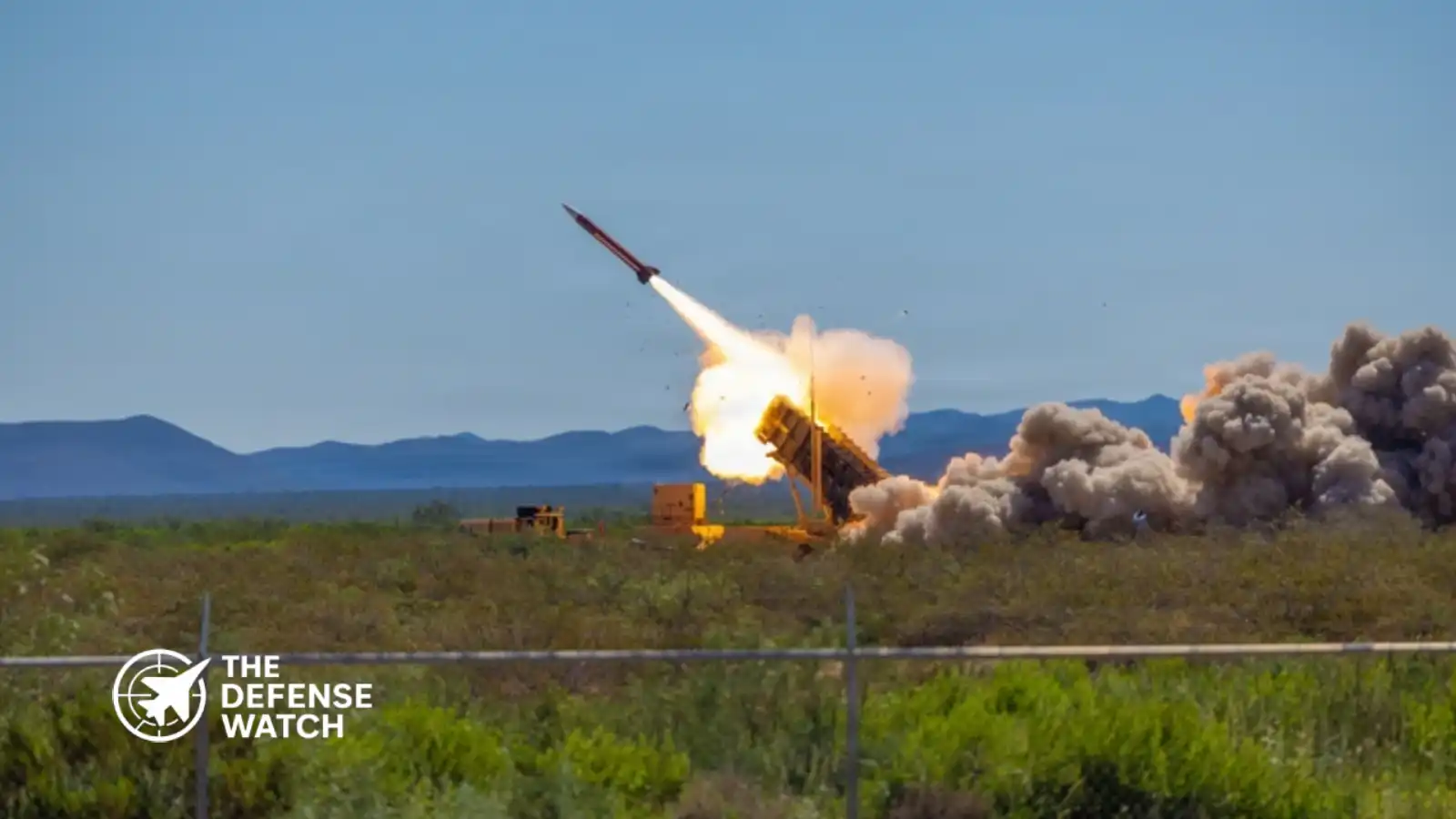
Patriot has become a central element of Ukraine’s defense against high-end aerial threats, particularly ballistic missiles. The U.S. Army describes PAC-3 MSE as a hit-to-kill interceptor designed to counter tactical ballistic missiles, cruise missiles and aircraft.
Unlike conventional interceptors that rely primarily on a blast-fragmentation warhead, PAC-3 uses kinetic impact to destroy the incoming target. The PAC-3 MSE variant adds improved propulsion, guidance and maneuverability, expanding its engagement performance against evolving threats.
This capability is particularly relevant to Ukraine because ballistic missiles compress the time available for detection, decision-making and interception. A limited inventory of high-end interceptors can therefore become a major constraint even when the wider air defense architecture includes multiple missile and gun systems.
Ukraine’s Defense Ministry has repeatedly identified PAC-3 deliveries as an urgent requirement. In July, Ukrainian officials called for faster deliveries of PAC-3 and PAC-2 GEM-T interceptors and discussed potential cooperation with the United States on Patriot missile production and localization.
The EU Funding Challenge
The central obstacle is not simply whether Europe is willing to finance additional air defense. It is whether the Ukraine Support Loan’s procurement rules can accommodate a U.S.-manufactured missile.
The EU framework places a preference on European and Ukrainian defense products. Defense procurement funded through the mechanism is generally subject to requirements concerning the origin of components and production, with non-EU and non-Ukrainian content restricted under the applicable rules.
PAC-3 interceptors are manufactured in the United States, meaning Ukraine needs a formal procurement exemption. Defense News reported that EU representatives were expected to consider the exemption as member states reviewed Kyiv’s request.
The European Commission has already established a precedent for limited exemptions when urgent operational requirements cannot be met by European or Ukrainian industry at the required scale and speed. In April, the Commission approved a derogation connected to Ukraine’s procurement of drones containing substantial non-European content.
That precedent matters because air defense presents an especially difficult procurement problem. Ukraine needs large quantities of interceptors quickly, while building a European alternative to Patriot-class ballistic missile defense would require years of development, testing and production expansion.
EU Support Loan Has Already Begun Funding Defense Procurement
The proposed PAC-3 purchase would not be the first defense procurement financed through the EU’s new support mechanism.
The European Commission has already disbursed multiple payments under the defense component of the Ukraine Support Loan. By August, the EU had approved €6.1 billion in additional defense procurement covering air and missile defense systems, missiles, ammunition and radars.
The Commission also reported a €3.47 billion defense disbursement in July covering drones, missiles, air defense and fighter aircraft. Earlier payments supported Ukrainian drone procurement and other defense requirements.
This means the institutional framework for using the loan to support major defense purchases is already operating. The PAC-3 request instead raises a more specific question: whether the EU will allow the mechanism to finance a strategically important U.S. capability when no comparable European interceptor can immediately meet Ukraine’s requirement.
PAC-3 Production Is a Separate Constraint
Even if the EU approves the funding exemption, money alone will not solve Ukraine’s interceptor shortage.
The PAC-3 MSE production base has been under pressure from demand from the U.S. military and international Patriot operators. In April 2026, the U.S. Army announced a $4.7 billion contract action with Lockheed Martin intended to accelerate PAC-3 MSE production and expand manufacturing capacity.
The Army had previously increased the annual maximum production rate from 550 to 650 PAC-3 MSE missiles under a 2024 contract action. The service said the increase was intended to address growing demand from U.S. forces and allies.
Area Current Situation Requested capability PAC-3 Patriot interceptors Proposed funding source EU Ukraine Support Loan Total loan €90 billion for 2026 and 2027 Defense allocation Approximately €60 billion Main procurement issue PAC-3 is U.S.-made Required EU action Procurement exemption Key industrial constraint Limited interceptor production capacity Primary threat focus Tactical ballistic missiles, cruise missiles and aircraft The production issue has strategic consequences. A European decision to finance PAC-3 procurement could secure a funding source, but delivery schedules would still depend on U.S. production capacity, existing commitments and the ability of manufacturers to increase output.
The Role of European Governments
European countries have already become major financial contributors to U.S.-origin weapons for Ukraine.
Ukraine said in July that the Prioritized Ukraine Requirements List, or PURL, had attracted approximately $6.7 billion in contributions from 29 countries. Kyiv said the mechanism had become a major source of U.S.-made weapons and that approximately 95% of its Patriot interceptors were being supplied through PURL.
Germany has also directly funded Patriot missile procurement. In April, Ukraine and Germany announced a €4 billion defense cooperation package that included a €3.2 billion contract with Raytheon for several hundred Patriot missiles.
These arrangements demonstrate that European governments can finance U.S.-made interceptors outside the EU’s centralized procurement mechanism. The current request is different because Kyiv wants to use a common EU financial instrument whose rules were explicitly designed to strengthen European and Ukrainian industrial capacity.
Why the Decision Matters Beyond Ukraine
The PAC-3 request exposes a wider tension in European defense policy.
The EU is trying to expand its own defense industrial capacity while also meeting urgent battlefield requirements in Ukraine. Those objectives can sometimes point in different directions.
Buying European systems can support domestic production, supply chains and long-term industrial independence. But Ukraine’s immediate air defense requirement is based on the threats it faces now, and Patriot is already integrated into its operational architecture.
For ballistic missile defense, substituting a different European system is not simply a matter of selecting another missile from a catalog. Interceptors are tied to launchers, radars, command-and-control networks, training, maintenance and established operational procedures.
That makes interoperability and delivery speed important factors in procurement decisions.
The European Commission has acknowledged this broader challenge. Its Ukraine Support Loan framework allows derogations when urgent operational requirements cannot be met by European or Ukrainian industry in the necessary quantities and within the required time.
For Ukraine, the practical calculation is therefore straightforward: an available, combat-proven interceptor integrated into an existing Patriot network has immediate operational value. For the EU, the decision also tests how flexible its new defense financing architecture can be when immediate military requirements conflict with longer-term industrial policy.
U.S. Defense Industry Also Faces Rising Demand
The issue has implications for U.S. defense planning as well.
Patriot is operated by the United States and a growing group of allied nations, while PAC-3 MSE production supports requirements across multiple theaters. The U.S. Army has described the interceptor as a key part of its layered air and missile defense architecture and has made expanded production a priority.
Ukraine’s demand therefore competes with a broader requirement to replenish U.S. inventories and support allied Patriot operators.
This is one reason why the Ukraine funding debate cannot be separated from the defense industrial base. Increasing European financial contributions can reduce the direct funding burden on Washington, but it does not immediately create additional missile production capacity.
The longer-term answer is higher production rates, expanded supplier capacity and sustained investment in the industrial base.
What Happens Next
The immediate decision is whether EU member states will approve the exemption needed for Ukraine to use the support loan for U.S.-made PAC-3 interceptors.
If approved, Kyiv would gain another funding channel for a capability it has repeatedly identified as a priority. The next constraints would be contracting, production allocation and delivery schedules.
The request also sets an important precedent for future European defense procurement. If the EU permits U.S.-made PAC-3 missiles under the urgent-needs exemption, other non-European defense requirements could face similar questions when European alternatives are unavailable or cannot be delivered quickly enough.
For Ukraine, however, the issue is more immediate. Its air defense network must sustain operations against continuing Russian missile and drone attacks, making interceptor availability as important as the launchers, radars and command systems that support them. Ukraine’s Defense Ministry said in September that ballistic missiles and jet-powered drones remain among the country’s key aerial threats.
The proposed EU financing would therefore address one part of the problem: paying for additional interceptors. The harder challenge remains ensuring that enough PAC-3 missiles can be produced and delivered quickly enough to meet Ukraine’s operational demand.

