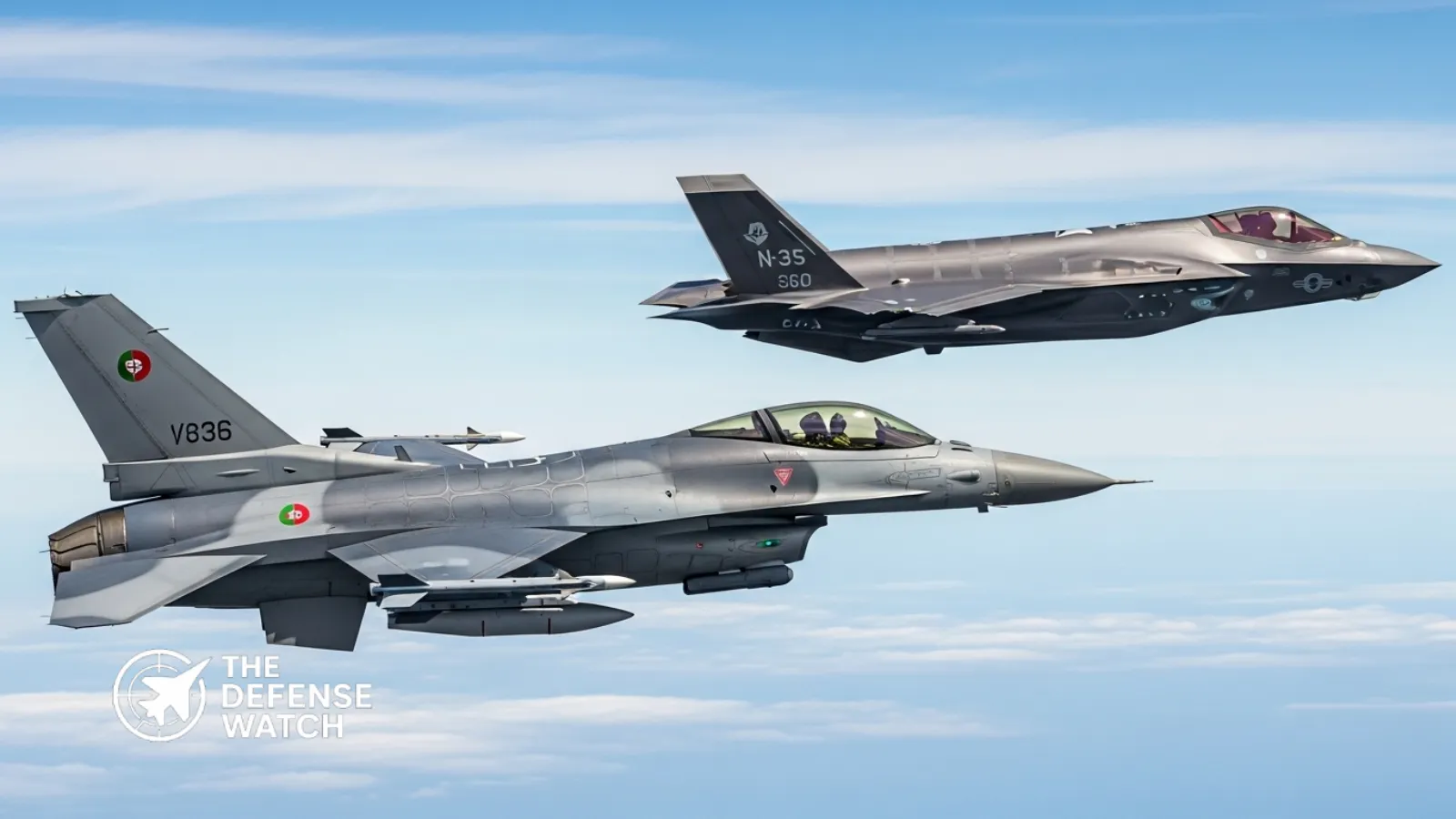
- â–º The US ambassador to Portugal publicly urged Lisbon to consider acquiring F-35 fighter jets.
- â–º Portugal currently operates F-16 aircraft that are approaching long term replacement planning.
- â–º The F-35 is operated by multiple NATO allies across Europe, including Italy, the Netherlands, and the UK.
- â–º Washington framed the proposal as strengthening NATO interoperability and airpower integration.
- â–º Lisbon has not announced a formal fighter replacement decision.
US Ambassador Urges Portugal To Buy F-35 Fighter Jets
The F-35 fighter jets are at the center of renewed defense discussions between Washington and Lisbon, after the US ambassador to Portugal publicly encouraged the country to consider joining what he described as the top tier of allied air forces.
According to a report by Reuters, the ambassador said Portugal should look at acquiring the F-35 Lightning II as it evaluates the future of its combat aviation fleet. The remarks come as Portugal continues to operate upgraded F-16 Fighting Falcon aircraft, which will eventually require replacement or deep modernization.
While no formal procurement decision has been announced, the public nature of the comments underscores Washington’s interest in aligning Portuguese airpower with the broader NATO shift toward fifth generation platforms.
Strategic Context Behind The F-35 Fighter Jets Push
The F-35 fighter jets have become the backbone of NATO’s next generation airpower strategy. European operators now include Italy, the Netherlands, Norway, Denmark, Poland, Belgium, Finland, Germany, Switzerland, and the United Kingdom. Many of these countries are either replacing legacy F-16 fleets or supplementing Eurofighter and other fourth generation aircraft.
From a US perspective, expanding F-35 adoption enhances interoperability. The aircraft’s sensor fusion, secure data links, and low observable design enable joint operations across air, land, sea, cyber, and space domains. For smaller NATO air forces such as Portugal’s, integration into this network could offer operational advantages that go beyond basic air policing.
Portugal’s air force has relied on F-16s since the 1990s. Though upgraded under Mid Life Update programs, the aircraft will face structural and capability limits over the coming decade. Any replacement program would require long term financial planning and parliamentary approval.
Budget Realities And Political Considerations
Defense spending remains a central factor. Portugal, like several southern European allies, has faced pressure to meet NATO’s two percent of GDP defense spending benchmark. A fleet of F-35 fighter jets would represent one of the largest defense investments in the country’s recent history.
Acquisition costs, sustainment expenses, infrastructure upgrades, pilot training, and industrial participation agreements would all shape the debate. The F-35 program also involves strict security and data handling requirements, which may influence national policy discussions.
Lisbon could also examine European alternatives, such as advanced Eurofighter variants or participation in future European sixth generation fighter programs. However, those programs remain years from operational deployment, while the F-35 is already fielded at scale.
NATO Interoperability And Operational Impact
The core argument advanced by US officials centers on interoperability. F-35 fighter jets are designed to operate as information nodes within a coalition network. In a NATO scenario, Portuguese F-35s could seamlessly share targeting data with allied aircraft, naval vessels, and ground based air defense systems.
This network centric capability has been tested in multinational exercises across Europe. According to NATO officials, fifth generation aircraft have played increasing roles in Baltic Air Policing missions and joint exercises aimed at deterring Russian aggression.
For Portugal, whose strategic location includes Atlantic sea lanes and proximity to Africa, modern airpower also supports maritime security and expeditionary commitments.
What Happens Next
There is no confirmed procurement timeline. The Reuters report indicates the ambassador’s remarks were advisory rather than linked to an active contract negotiation. Any move toward F-35 fighter jets would require a structured defense review, cost analysis, and formal request through the US Foreign Military Sales process.
Still, the public endorsement reflects broader geopolitical dynamics. As NATO modernizes in response to the war in Ukraine and evolving security threats, alliance members are under increasing pressure to align capabilities.
Whether Portugal ultimately selects the F-35 or another platform, the discussion signals that Lisbon’s next fighter decision will carry strategic weight well beyond national borders.
Sweden Procures Rheinmetall SeaSnake 30 Naval Weapon System
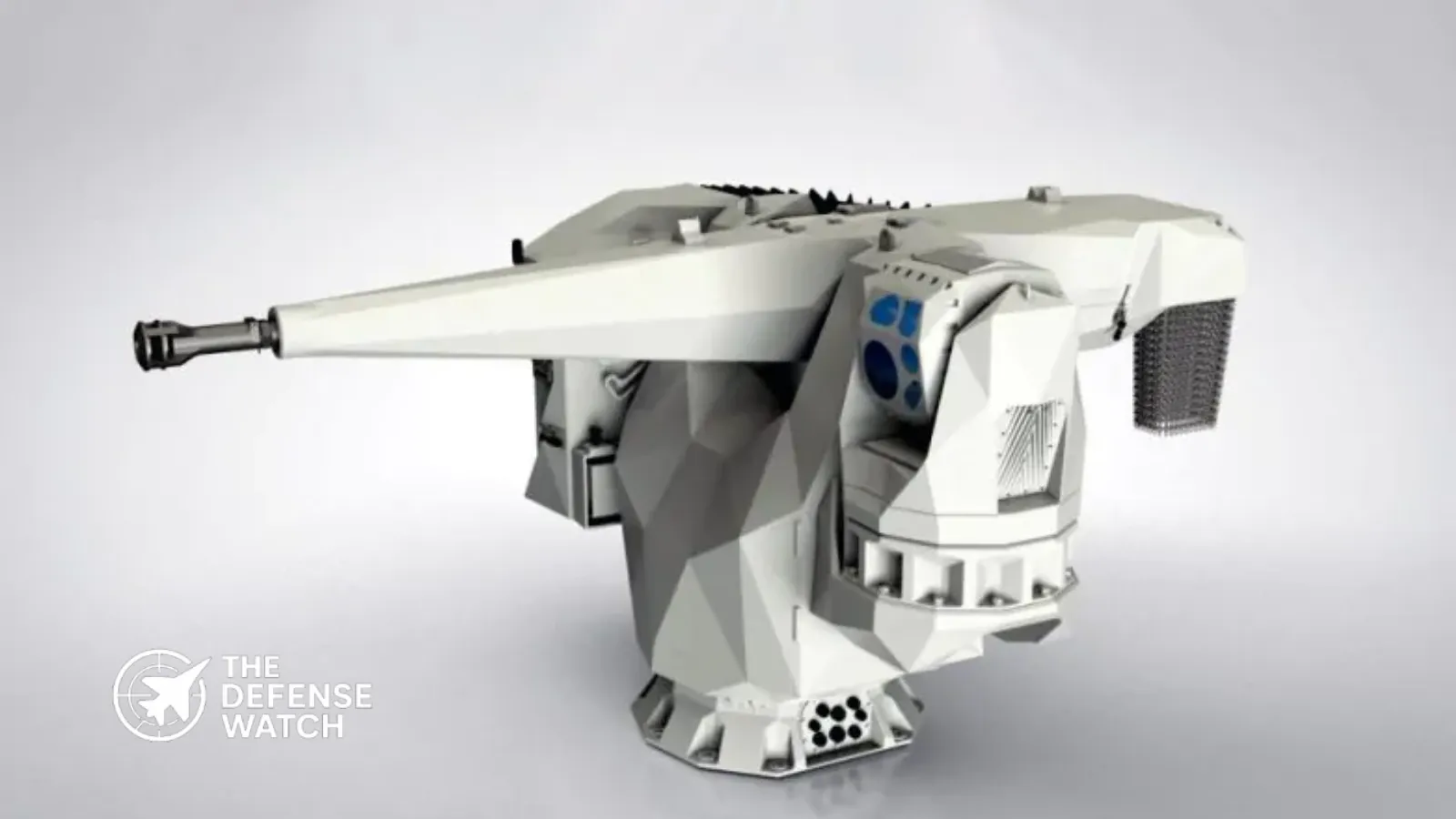
Sweden has become the first NATO customer to procure the Rheinmetall SeaSnake 30 naval weapon system, marking a significant step in the country’s ongoing naval modernization program.
The announcement was made by Rheinmetall, which confirmed that Sweden selected the SeaSnake 30 as part of efforts to strengthen the close-in protection of its surface vessels. The system is designed to counter aerial threats, unmanned systems, and fast attack craft in complex maritime environments.
The procurement underscores Sweden’s commitment to enhancing fleet survivability following its accession to NATO in 2024.
Strengthening Close-Range Naval Defense
The Rheinmetall SeaSnake 30 naval weapon system is a remotely operated, stabilized naval gun mount built around a 30mm automatic cannon. It is optimized for short-range engagements against asymmetric and conventional threats.
According to Rheinmetall, the SeaSnake 30 integrates modern fire control, electro-optical sensors, and programmable ammunition options. The system can be configured for both manual and automated engagement modes, allowing rapid response to evolving threat scenarios.
The 30mm caliber provides a balance between firepower and integration flexibility, making it suitable for patrol vessels, corvettes, and larger surface combatants.
Sweden’s decision to adopt the SeaSnake 30 aligns with a broader European trend toward modular, digitally integrated naval weapon systems capable of operating within networked combat environments.
Integration Into Swedish Naval Platforms
While specific platform details have not been publicly disclosed, the SeaSnake 30 is expected to be installed on Swedish Navy surface vessels undergoing upgrades or entering service in the coming years.
The Swedish Armed Forces have prioritized modernization across naval, air, and ground domains as part of long-term defense expansion plans. According to Sweden’s Ministry of Defence, Stockholm is increasing defense spending to meet and exceed NATO’s 2 percent of GDP benchmark.
The SeaSnake 30 will likely complement existing naval armament systems, providing an additional defensive layer against drones, helicopters, low-flying aircraft, and small boat swarms.
This layered approach reflects lessons observed in recent maritime conflicts, where low-cost unmanned systems and precision-guided munitions have posed significant challenges to surface fleets.
A Milestone For Rheinmetall In NATO Markets
For Rheinmetall, securing Sweden as the first NATO customer for the SeaSnake 30 represents a notable commercial and strategic milestone.
The company has expanded its naval systems portfolio in recent years, leveraging experience in land-based cannon systems and adapting them for maritime use. The SeaSnake family is positioned as a flexible solution for navies seeking modern close-in weapon capabilities without the size and cost footprint of larger caliber systems.
Rheinmetall has emphasized interoperability with NATO standards, a key factor for alliance members seeking common operational frameworks and logistical compatibility.
Sweden’s selection may strengthen the SeaSnake 30’s visibility among other NATO navies evaluating short-range naval defense upgrades.
NATO Context And Regional Security
Sweden’s accession to NATO has reshaped security dynamics in Northern Europe, particularly in the Baltic Sea region. Enhanced naval capabilities are central to Stockholm’s strategy of contributing to collective defense while protecting national waters.
The Baltic Sea remains a strategically sensitive area due to its dense shipping lanes, critical infrastructure, and proximity to multiple NATO and non-NATO states.
Modern naval gun systems such as the Rheinmetall SeaSnake 30 are intended to provide credible deterrence and rapid-response capability against a range of conventional and hybrid threats.
Defense analysts note that close-in weapon systems have gained renewed importance as unmanned aerial and surface threats proliferate across maritime theaters.
Technical Overview Of The Rheinmetall SeaSnake 30
Key characteristics of the SeaSnake 30 naval weapon system include:
- 30mm automatic cannon
- Stabilized remote-controlled turret
- Integrated electro-optical targeting suite
- Compatibility with programmable ammunition
- Modular architecture for different ship classes
The system is designed for high reliability in harsh maritime conditions, including saltwater corrosion environments and high sea states.
Rheinmetall states that the SeaSnake 30 can be integrated into existing combat management systems, supporting networked operations and coordinated defense.
What This Means For Sweden’s Naval Modernization
Sweden’s procurement of the Rheinmetall SeaSnake 30 signals continued investment in layered maritime defense. As threats evolve, navies are increasingly prioritizing systems capable of engaging small, fast, and unmanned platforms at short range.
By becoming the first NATO customer to procure the Rheinmetall SeaSnake 30 naval weapon system, Sweden positions itself at the forefront of adopting next-generation close-in maritime protection solutions within the alliance framework.
The move reflects a broader shift across NATO navies toward modernized, digitally integrated weapon systems that enhance readiness and interoperability.
Norway Approves K239 Chunmoo MLRS for Long Range Strike Capability
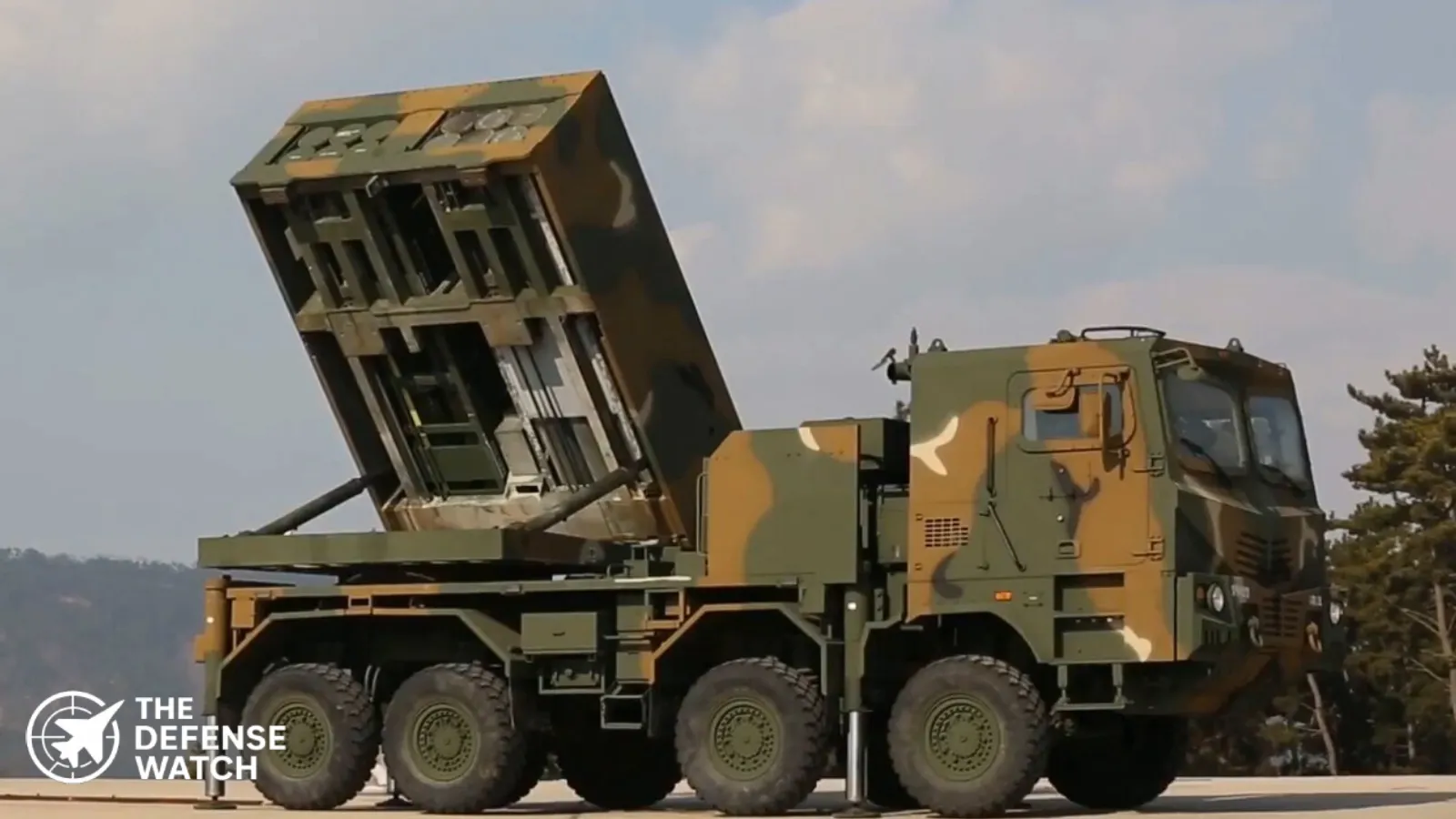
Norway has approved a $1.9 billion acquisition of the K239 Chunmoo multiple launch rocket system as part of its effort to modernize long range fires and strengthen NATO deterrence. The decision marks one of Oslo’s largest recent artillery investments and expands South Korea’s growing footprint in the European defense market.
The deal, reported by Army Recognition, reflects Norway’s focus on rapid strike, survivability, and interoperability as regional security pressures increase in Northern Europe. The K239 Chunmoo will replace aging rocket artillery assets and provide extended range precision fires for the Norwegian Army.
Strengthening Norway’s Long Range Fires
The K239 Chunmoo is a tracked multiple launch rocket system developed by Hanwha Aerospace for the Republic of Korea Armed Forces. It is designed to deliver high volume and precision fires at extended ranges while operating in harsh climates, a key requirement for Norwegian terrain and Arctic conditions.
Under the approved program, Norway will procure launch vehicles, ammunition, support equipment, and related logistics and training packages. While detailed delivery schedules have not been publicly disclosed, the acquisition aligns with Norway’s broader force modernization roadmap through the late 2020s.
According to the reporting, the system will enhance Norway’s ability to conduct deep fires against high value targets, improve battlefield responsiveness, and support joint operations within NATO frameworks.
Why Norway Selected the K239 Chunmoo
Norway’s choice of the K239 Chunmoo reflects several operational and strategic factors. The system offers modular launch pods capable of firing different rocket calibers, giving commanders flexibility across mission sets. It can deploy guided rockets with ranges exceeding 80 kilometers, and in some configurations, significantly longer range strike options.
Mobility and survivability were also decisive. The K239 Chunmoo is designed for shoot and scoot operations, reducing exposure to counter battery fire. Its tracked chassis improves off road performance in snow, forest, and mountainous terrain common across Norway.
Interoperability with allied command and control networks was another priority, ensuring the system can integrate with NATO targeting and fire coordination standards.
Expanding South Korea’s Defense Exports to Europe
The Norway K239 Chunmoo MLRS decision adds to South Korea’s expanding defense export portfolio across Europe. In recent years, countries such as Poland, Romania, and Estonia have turned to South Korean systems to rapidly rebuild artillery and armored forces.
Hanwha Aerospace has positioned the Chunmoo as a competitive alternative to legacy Western rocket artillery, offering shorter delivery timelines and adaptable configurations. The Norwegian deal reinforces Seoul’s role as a key supplier to NATO aligned countries seeking fast modernization amid rising regional threats.
Defense analysts note that European demand for long range fires has increased sharply since 2022, driven by lessons from the war in Ukraine and renewed focus on deterrence by denial.
Strategic Context for Norway and NATO
Norway’s investment in the K239 Chunmoo comes as NATO emphasizes long range precision fires as a core capability for collective defense. For Oslo, the system supports national defense of its northern regions while contributing to alliance wide deterrence along NATO’s northern flank.
The acquisition complements Norway’s broader modernization efforts, including upgrades to air defense, maritime surveillance, and land based maneuver forces. It also reflects closer defense industrial ties between Norway and South Korea, expanding beyond traditional US and European suppliers.
Officials have emphasized that the program strengthens both national readiness and NATO operational depth without altering Norway’s defensive posture.
What Comes Next
With parliamentary approval secured, contract finalization and implementation planning are expected to proceed in coordination with Norwegian defense authorities and industry partners. Initial integration and training activities are likely to begin well before full operational capability is reached later in the decade.
As European armies continue to rearm, the Norway K239 Chunmoo MLRS program underscores a broader shift toward diversified suppliers and rapid fielding of proven systems.