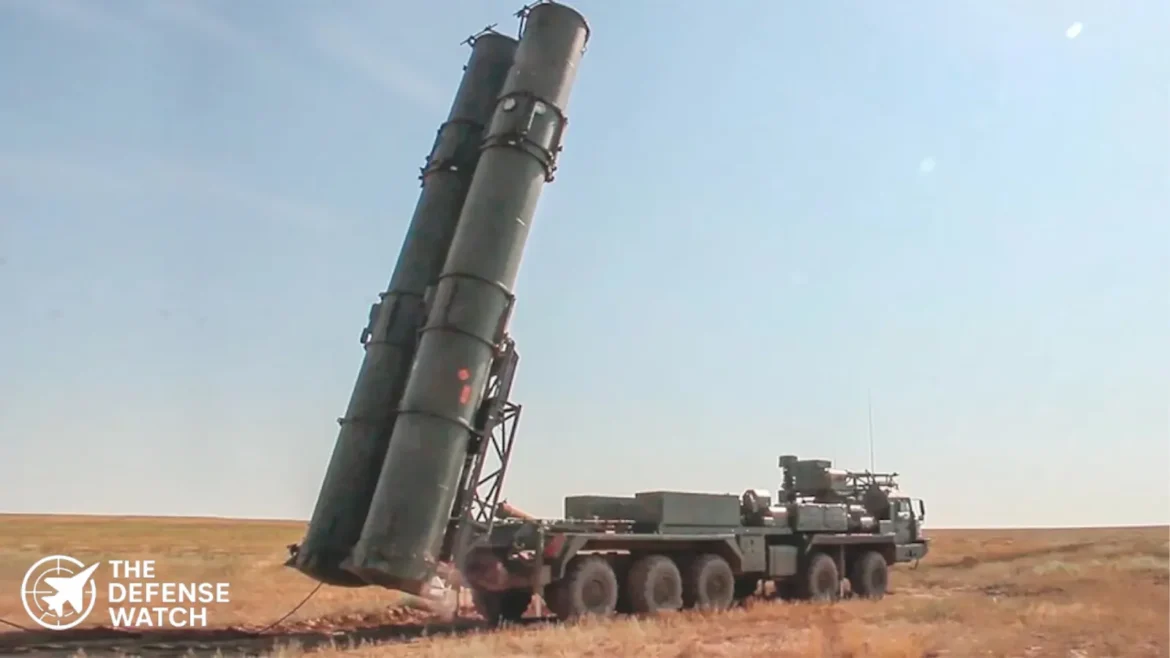
- 🎯 The S-400 Triumf remains the world’s most widely exported advanced air defense system, deployed by Russia, China, India, and Turkey.
- 🎯 THAAD (Terminal High Altitude Area Defense) is the only U.S. system proven to intercept ballistic missiles in their terminal phase at high altitude.
- 🎯 Israel’s Iron Dome has achieved an interception rate exceeding 90% against short-range rockets and artillery shells in live combat conditions.
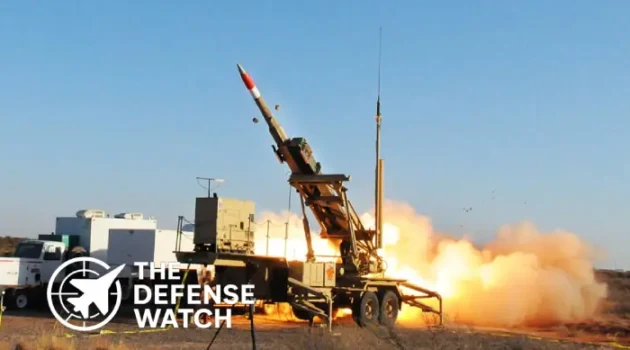
- 🎯 The Patriot PAC-3 system, operated by over 17 nations, has evolved into a layered multi-threat interceptor capable of targeting cruise missiles, drones, and ballistic threats.
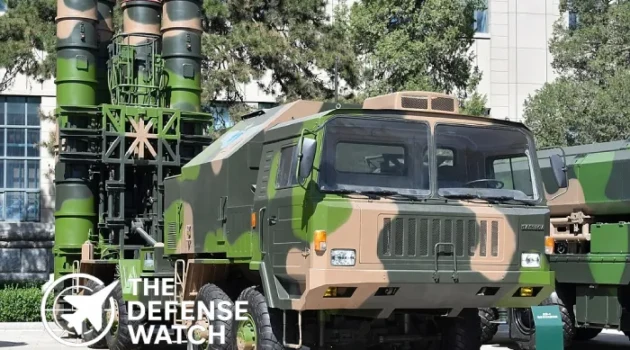
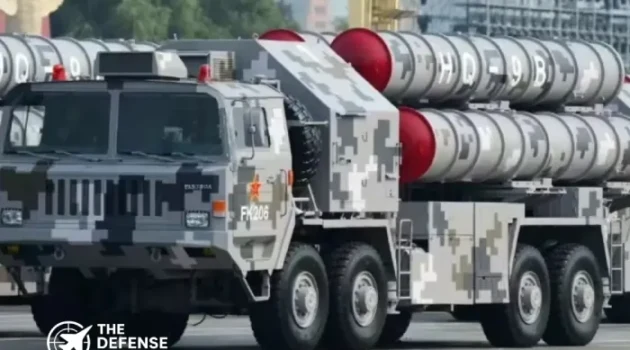
- 🎯 China’s HQ-9B, the domestic challenger to the S-400, extends engagement range to approximately 300 km and is actively deployed across the Indo-Pacific.
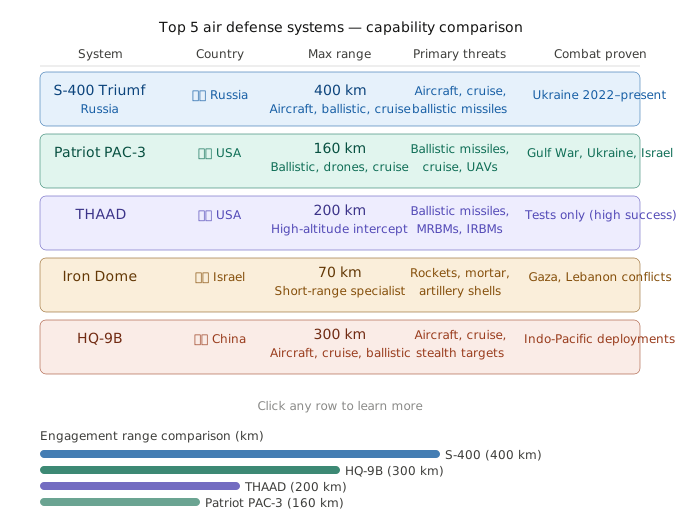
Top 5 Air Defense Systems in the World: The Most Powerful Shield Technologies of 2026
As aerial threats evolve from supersonic fighters to swarms of autonomous drones, the race to field the most capable air defense systems in the world has never been more consequential.
Why Air Defense Defines Modern Warfare
The battlefields of Ukraine, the Middle East, and the South China Sea have delivered a sobering lesson to defense planners worldwide: air superiority alone no longer guarantees victory. The ability to deny an adversary access to your airspace — and protect critical infrastructure, forward forces, and civilian populations from aerial attack — has emerged as a decisive factor in 21st-century conflict.
The top 5 air defense systems in the world represent the pinnacle of ground-based air defense technology. From Russia’s export-dominant S-400 to Israel’s battle-tested Iron Dome, each system reflects a distinct strategic philosophy and threat environment. Understanding how they compare is essential for anyone tracking the balance of military power in 2025.
1. S-400 Triumf (Russia) — The Global Benchmark
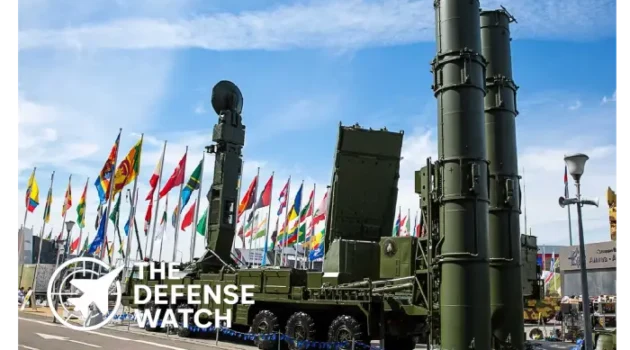
Russia’s S-400 Triumf (NATO reporting name: SA-21 Growler) remains the most widely discussed and diplomatically contested air defense platform on the planet. Developed by Almaz-Antey and entering service with the Russian Armed Forces in 2007, the S-400 is designed to engage virtually every class of aerial threat simultaneously — from low-flying cruise missiles to manned aircraft and intermediate-range ballistic missiles.
The system’s headline specification is an engagement range of up to 400 kilometers, supported by the 40N6E very-long-range missile. It can simultaneously track up to 160 targets and engage 80 of them at once, using a layered combination of the 40N6, 48N6, and 9M96 missile family to cover low-, medium-, and high-altitude threats.
What has made the S-400 geopolitically explosive is its export success. India, China, and Turkey — all significant U.S. partners or allies — have purchased or received the system, triggering sanctions disputes and alliance tensions. Turkey’s acquisition in 2019 resulted in its expulsion from the F-35 program. The system’s ongoing deployment in Russia’s war against Ukraine has provided real-world data on both its capabilities and its vulnerabilities, particularly against Western-supplied counter-drone and standoff strike weapons.
The S-400’s operational record in Ukraine has been mixed. While it has successfully engaged several Ukrainian aircraft and cruise missiles, Ukraine’s use of Neptune anti-ship missiles, Storm Shadow cruise missiles, and ATACMS has exposed gaps in the system’s ability to counter low-observable, terrain-hugging threats. Russia has reportedly lost multiple S-400 batteries to Ukrainian strikes, suggesting that even sophisticated systems are vulnerable when persistently targeted by intelligent standoff munitions.
2. Patriot PAC-3 (USA) — The West’s Most Proven Defender
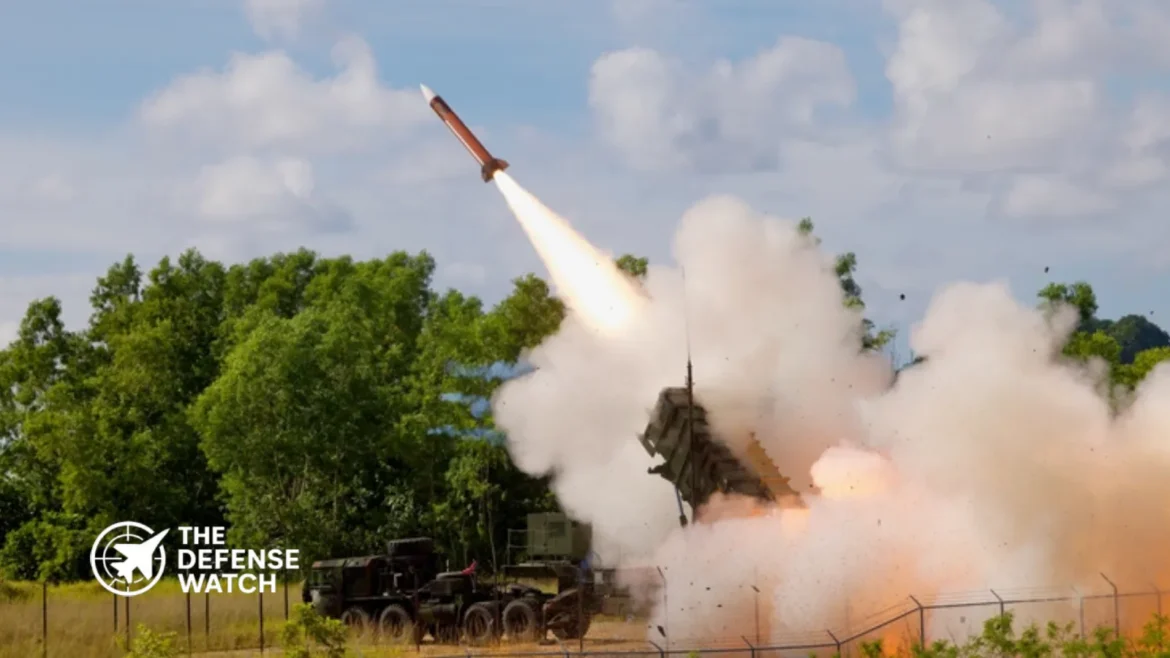
The Patriot Advanced Capability-3 (PAC-3) is America’s most combat-tested long-range air defense system and the backbone of NATO’s integrated air defense architecture. First fielded in the early 1980s and continuously upgraded, the PAC-3 MSE (Missile Segment Enhancement) variant now represents a genuinely multi-role interceptor capable of engaging ballistic missiles, cruise missiles, tactical aircraft, and — increasingly — large-format drones.
Unlike the S-400, which relies primarily on fragmentation warheads, the PAC-3 uses a hit-to-kill intercept technology, colliding directly with incoming threats at closing speeds exceeding Mach 5. With a maximum engagement range of approximately 160 kilometers and ceiling exceeding 24 kilometers, the system is less capable of engaging long-range strategic threats than the S-400 but significantly more reliable in a dense, multi-threat environment.
More than 17 nations currently operate Patriot variants, including Germany, the Netherlands, Japan, Saudi Arabia, Ukraine, and Israel. The transfer of Patriot batteries to Ukraine in 2023 marked a strategic watershed — the system has since claimed multiple Russian cruise missiles, hypersonic Kinzhal missiles, and aircraft. Its engagement of the Kh-47M2 Kinzhal — previously described by Russian officials as “unstoppable” — was a particularly significant operational milestone.
3. THAAD — Terminal High Altitude Area Defense (USA)
THAAD occupies a unique niche in the global air defense hierarchy: it is explicitly designed to intercept ballistic missiles during their terminal phase at high altitudes of 40 to 150 kilometers, filling a critical gap between the lower-tier Patriot system and the upper-tier, space-based layers of the U.S. Missile Defense Architecture.
Developed by Lockheed Martin and deployed by the U.S. Army since 2008, THAAD uses a purely kinetic interceptor — no warhead, just a 900-kilogram kill vehicle guided by an advanced infrared seeker. With a defended footprint of approximately 200 kilometers, each THAAD battery includes six launchers, 48 interceptors, a powerful AN/TPY-2 X-band radar, and a command suite. The AN/TPY-2 is itself a strategic asset — its forward deployment in South Korea, Israel, and Turkey provides early warning data shared across the broader U.S. missile defense network.
THAAD has achieved a 17-for-17 perfect intercept record in controlled flight tests, though it has not been used in live combat. Its deployment to South Korea in 2017 triggered a major diplomatic crisis with China, underscoring how air defense systems have become instruments of geopolitical signaling as much as military protection.
Analyst Note: THAAD’s Achilles’ heel is cost and capacity. Each interceptor costs approximately $10 million, and each battery carries only 48 rounds. Against a saturation attack employing dozens or hundreds of ballistic missiles — the scenario China or North Korea might employ — THAAD’s magazine depth is a serious constraint. This has driven investment in lower-cost interceptors and directed-energy alternatives under the Next Generation Interceptor program.
4. Iron Dome (Israel) — Combat’s Most Tested Shield
Israel’s Iron Dome is unlike any other system on this list: it was designed for a specific, persistent, and operationally demanding threat — the mass employment of short-range unguided rockets, mortars, and artillery shells by non-state actors operating across contested urban terrain.
Developed by Rafael Advanced Defense Systems and IAI, Iron Dome entered service in 2011 and has since participated in every major Gaza and Lebanon conflict, accumulating what is arguably the most extensive live-combat air defense record in history. The system uses a Tamir interceptor missile with a proximity-fuzed fragmentation warhead and is guided by the ELM-2084 multi-mission radar, which continuously calculates whether an incoming projectile will land in a populated area before authorizing an intercept — an economically critical algorithm that prevents wasteful engagement of harmless rural impacts.
With a maximum engagement range of approximately 70 kilometers and proven intercept rates above 90% in operational conditions, Iron Dome has saved thousands of lives. The United States has purchased two Iron Dome batteries under a co-production agreement with Raytheon, reflecting serious interest in short-range air defense for U.S. forward bases.
Analyst Note: The October 7, 2023 Hamas attack, while primarily a ground infiltration operation, demonstrated that Iron Dome can be numerically overwhelmed if a mass salvo is launched at a precise timing window. The system’s success rate, while extraordinary, is not absolute — and Israel’s subsequent investment in multi-layer defense integration (Arrow-3, David’s Sling, Iron Dome working in concert) reflects the understanding that no single layer is sufficient.
5. HQ-9B (China) — The Indo-Pacific Challenger
China’s HQ-9B (Red Flag-9B) is the People’s Liberation Army Air Force’s most capable ground-based long-range surface-to-air missile system and Beijing’s direct answer to both the S-400 and the Patriot. Developed by CASIC (China Aerospace Science and Industry Corporation), the HQ-9B is an evolution of the original HQ-9, which itself was developed with significant study of the Russian S-300 architecture.
The HQ-9B boasts an engagement range of approximately 300 kilometers, capable of targeting aircraft, cruise missiles, ballistic missiles, and stealth platforms. Its phased-array radar and multi-channel engagement capability allow simultaneous tracking of over 100 targets. China has deployed the system extensively across the South China Sea, including its artificial island network, and has exported variants (FD-2000) to Uzbekistan, Turkmenistan, and other regional partners.
Unlike the S-400 or Patriot, the HQ-9B has not been tested in major live-combat conditions, which makes independent performance assessment difficult. Its integration into China’s broader Integrated Air Defense System (IADS) — combining long-range sensors, datalinks, and multi-layer missile batteries — is the more significant operational development. In any Taiwan Strait contingency, the HQ-9B network would be one of the most complex air defense environments U.S. and allied forces have ever faced.
The Broader Picture: Layered Defense Is the New Standard
The five systems profiled here are rarely deployed in isolation. Modern air defense doctrine — whether in Israel, Russia, the United States, or China — is built around layered integration: multiple systems covering different altitude bands, ranges, and threat types, networked together through common command-and-control architecture.
Israel’s three-layer system (Iron Dome for short range, David’s Sling for medium range, Arrow-3 for exo-atmospheric threats) is the most mature example. The U.S. Army’s emerging Integrated Air and Missile Defense (IAMD) architecture seeks to replicate this layering globally, connecting Patriot, THAAD, and future interceptors through a common battle management system.
What the Ukraine conflict has confirmed above all is that magazine depth, supply chain resilience, and interceptor cost are as important as raw performance specifications. A system that runs out of missiles — or one that costs $3 million per shot to defeat a $50,000 drone — is a system with a fundamental strategic problem. This calculus is now driving investment in directed-energy weapons, high-energy laser systems, and hypervelocity railgun interceptors as cost-competitive complements to traditional missile defense.
FAQs
Which is the best air defense system in the world in 2026?There is no single “best” system — each excels in its design role. The S-400 offers the greatest range and export reach; THAAD is unmatched for high-altitude ballistic intercept; Iron Dome holds the most combat-proven record in live operations against high-volume short-range threats.
Does the U.S. have a better air defense system than Russia’s S-400?The U.S. does not have a direct S-400 equivalent but operates a layered architecture that, in combination, exceeds the S-400’s capability. THAAD, Patriot PAC-3, and the Ground-Based Midcourse Defense (GMD) system together cover short-, medium-, and strategic-range ballistic threats.
How many countries operate the S-400?Russia, China, India, Turkey, and Belarus operate the S-400. Its export has been a significant source of U.S.-Russia and U.S.-ally diplomatic tension, particularly with Turkey’s acquisition in 2019.
Can Iron Dome stop ballistic missiles?Iron Dome is not designed for ballistic missile defense. That role in Israel’s layered architecture is handled by the Arrow-2 and Arrow-3 systems. Iron Dome is optimized for short-range rockets, mortars, and artillery.
What is the difference between THAAD and Patriot?Patriot PAC-3 intercepts threats at lower altitudes (up to approximately 24 km) and shorter ranges, making it suitable for theater air defense against aircraft, cruise missiles, and short-range ballistic missiles. THAAD engages ballistic missiles at high altitudes (40–150 km) during terminal phase flight, covering a much wider geographical area per battery.

The World’s Five Most Advanced Air Defense Systems Redefining Battlefield Dominance in 2026
Modern warfare has entered a new era where control of the airspace determines victory or defeat on the battlefield. As nations face increasingly sophisticated aerial threats ranging from hypersonic missiles and stealth aircraft to coordinated drone swarms, the world’s top air defense systems have evolved into technological marvels capable of detecting, tracking, and neutralizing multiple targets simultaneously. The global air defense market, valued at approximately $46 billion in 2024, is projected to reach nearly $82 billion by 2035, reflecting the critical importance nations place on protecting their airspace and critical infrastructure.
(adsbygoogle = window.adsbygoogle || []).push({});In 2026, five air defense systems stand above the rest, representing the pinnacle of military engineering and strategic deterrence. These platforms combine cutting-edge radar technology, precision-guided interceptors, and artificial intelligence-enhanced targeting to create multi-layered defensive shields capable of countering threats that would have been considered impossible to stop just a decade ago.
Russia’s S-500 Prometheus: The Apex Predator
Russia’s S-500 Prometheus system has entered operational service with the first regiment fully equipped as of December 2024, marking a significant milestone in air defense technology. Known to NATO as the 55R6M Triumfator-M, this mobile surface-to-air missile system represents a quantum leap in defensive capabilities, filling the gap between tactical air defense and strategic missile defense.
The S-500 can reportedly engage targets over 300 miles away with the ability to hit high-altitude threats up to 120 miles in altitude, effectively creating a defensive umbrella that extends into near-space. What distinguishes the Prometheus from its predecessors is its claimed ability to intercept hypersonic maneuvering targets, not just ballistic missiles following predictable trajectories.
The system employs the 77N6-N and 77N6-N1 hit-to-kill interceptor missiles, which destroy incoming threats through kinetic energy rather than explosive warheads. Another critical advancement is the system’s response time, reportedly reduced from the S-400’s ten seconds to just three to four seconds. This rapid-reaction capability proves essential when engaging hypersonic weapons traveling at Mach 10 or faster.
According to defense analysts, the S-500’s multi-band radar architecture includes the 91N6A(M) battle management radar and the 96L6-TsP acquisition radar, mounted on mobile BAZ-series heavy trucks. This mobility allows rapid deployment to any strategic location while its integration with Russia’s A-235 Nudol anti-ballistic missile system creates overlapping layers of defense.
(adsbygoogle = window.adsbygoogle || []).push({});The deployment timeline reflects the system’s complexity and strategic importance. The first S-500 prototype entered combat duty protecting Moscow in October 2021, with full regiment deployment achieved by late 2024. Russia reportedly plans to field ten battalions of S-500 systems to replace aging S-300 platforms while working alongside S-400 batteries.
United States’ THAAD: Precision at the Edge of Space
The Terminal High Altitude Area Defense system occupies a specialized niche in America’s layered missile defense architecture. THAAD uses hit-to-kill technology to destroy incoming ballistic missiles purely through kinetic energy, operating at altitudes up to 150 kilometers. Unlike explosive-warhead systems, THAAD’s interceptors must achieve direct impact with their targets, demanding exceptional precision in guidance and tracking.
Developed by Lockheed Martin, THAAD focuses on the terminal phase of ballistic missile flight, the critical final moments when warheads descend toward their targets. The system’s AN/TPY-2 radar can detect, track, and discriminate between actual warheads and decoys at ranges exceeding 1,000 kilometers, providing early warning that feeds into the broader integrated air and missile defense network.
THAAD batteries have been strategically deployed in high-threat regions including South Korea, where they provide protection against potential ballistic missile launches from North Korea, and throughout the Middle East, where they guard against regional ballistic missile threats. Each THAAD battery typically consists of six truck-mounted launchers, 48 interceptors, a fire control and communications unit, and the powerful X-band radar.
The system’s effectiveness stems from its ability to engage targets both within the atmosphere (endo-atmospheric) and outside it (exo-atmospheric), providing two opportunities for interception. This dual-capability makes THAAD a crucial component of America’s homeland defense posture and a valuable asset for protecting deployed forces and allied nations.
Israel’s Iron Dome: Battle-Proven Urban Shield
While lacking the extended range of strategic systems, Israel’s Iron Dome has demonstrated a remarkable success rate exceeding 90% in intercepting rockets, earning its reputation through continuous real-world combat testing. Developed jointly by Rafael Advanced Defense Systems and Israel Aerospace Industries, the Iron Dome provides short-range protection against rockets, artillery shells, and mortars threatening populated areas.
(adsbygoogle = window.adsbygoogle || []).push({});The system’s effectiveness lies in its selective engagement capability. Rather than attempting to intercept every detected launch, Iron Dome’s sophisticated algorithms calculate trajectory projections to identify which projectiles pose actual threats to populated areas or critical infrastructure. Only those deemed dangerous are engaged, optimizing both cost-effectiveness and interceptor availability.
Each Iron Dome battery features three to four truck-mounted launchers holding 20 Tamir interceptors, a battlefield radar for detection and tracking, and a Battle Management and Weapon Control unit that coordinates the entire engagement sequence. The system can protect an area of approximately 150 square kilometers, though multiple batteries are required for comprehensive coverage of larger regions.
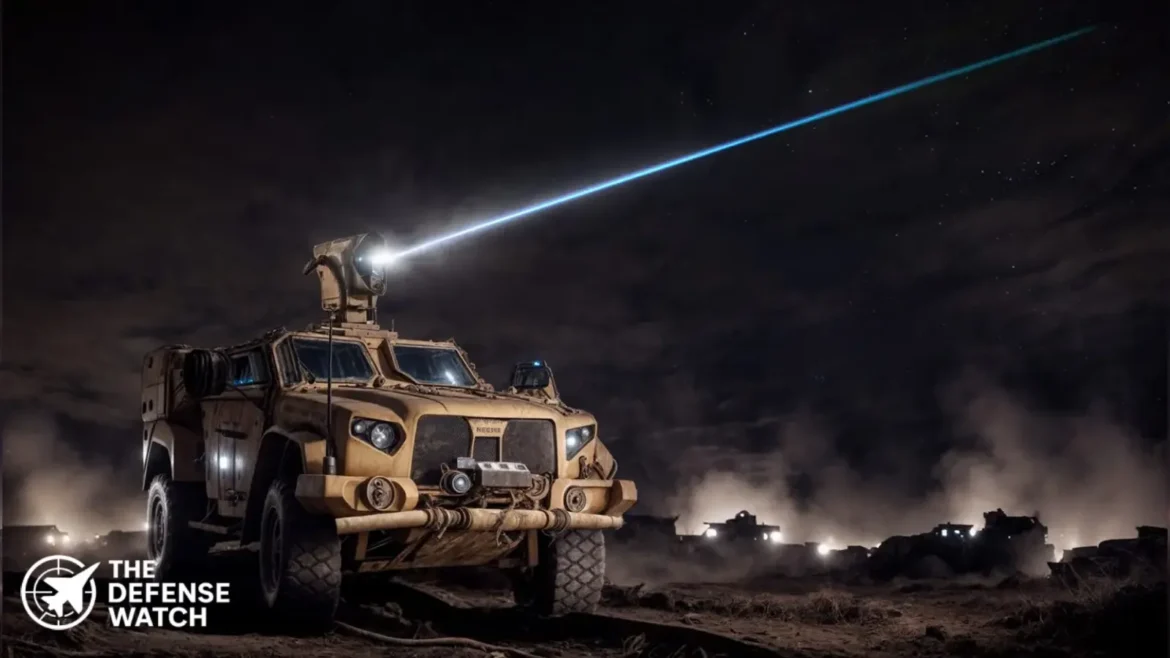
Israel is developing the Iron Beam laser-based system to complement Iron Dome, promising significantly lower interception costs. This directed-energy weapon, which achieved operational status in October 2024, can engage targets at approximately $3.50 per shot compared to Iron Dome’s $50,000-$100,000 interceptor costs, addressing the economic sustainability challenge of high-volume rocket defense.
The system has faced operational challenges when confronted with massive saturation attacks designed to overwhelm its capacity. During recent conflicts, coordinated barrages exceeding the number of available interceptors exposed the limitations of even the most advanced point-defense systems, underscoring the need for layered defensive architectures.
MIM-104 Patriot PAC-3: The Enduring Workhorse
The Patriot Advanced Capability-3 system represents decades of continuous evolution, transforming from its origins as an anti-aircraft platform into a comprehensive air and missile defense solution. The PAC-3 variant employs hit-to-kill technology through the PAC-3 MSE (Missile Segment Enhancement) interceptor, which combines enhanced maneuverability with extended range.
(adsbygoogle = window.adsbygoogle || []).push({});Patriot batteries have been deployed globally, forming the backbone of air defense for the United States and more than a dozen allied nations. The system’s phased-array radar can track over 100 targets simultaneously while guiding multiple interceptors, providing the multi-target engagement capability essential for modern battlefield environments.
Recent combat experience in Ukraine has validated the system’s effectiveness while revealing areas for improvement. According to reports from the conflict zone, Patriot batteries have successfully engaged Russian ballistic missiles, cruise missiles, and aircraft, though questions remain about its performance against the newest generation of hypersonic weapons.
The PAC-3 MSE interceptor features improved kinematics with dual-pulse solid rocket motors, enabling engagement ranges exceeding 30 kilometers and altitudes reaching 20 kilometers. This extended envelope provides commanders with greater flexibility in positioning batteries while maintaining coverage of critical assets.
Production capacity has become a strategic concern, with demand far exceeding manufacturing output. Raytheon’s production facilities are working to increase interceptor production rates, but the complex supply chains and precision manufacturing requirements limit rapid expansion. This supply constraint has emerged as a critical vulnerability in extended conflicts where interceptor consumption exceeds peacetime replacement rates.
China’s HQ-9C: The Dragon’s Strategic Shield
China revealed the HQ-9C missile system during Beijing’s military parade on September 3, 2025, representing the latest evolution in the nation’s air defense capabilities While technical specifications remain partially classified, Western intelligence assessments suggest the HQ-9C serves as China’s upper-tier defense layer, designed to intercept high-flying ballistic missiles during their terminal phase.
The HQ-9 family originated in the 1970s but has undergone continuous modernization, with each iteration incorporating improvements in radar sensitivity, interceptor kinematics, and electronic warfare resistance. The naval variant, designated HQ-9B, equips multiple classes of People’s Liberation Army Navy destroyers, providing fleet air defense capabilities during blue-water operations.
Intelligence analysis suggests the HQ-9C employs active radar homing interceptors with enhanced anti-ballistic missile capabilities compared to earlier variants. The system’s phased-array radar reportedly provides 360-degree coverage with simultaneous multi-target tracking, though exact performance parameters remain subject to speculation due to China’s information security practices.
Strategic deployment patterns indicate the HQ-9C forms part of China’s integrated air defense network protecting major cities, military installations, and critical infrastructure. The system’s role in China’s anti-access/area-denial strategy for the Western Pacific makes it a significant factor in regional military calculations and contingency planning.
Beijing’s ambitious military modernization includes plans to deploy the HQ-29 system, designed specifically for intercepting intermediate and intercontinental ballistic missiles along with anti-satellite capabilities. The HQ-29 system was announced as operational in 2025, representing China’s entry into the strategic missile defense tier previously dominated by the United States and Russia.
(adsbygoogle = window.adsbygoogle || []).push({});The Strategic Context: Technology and Geopolitics Converge
The evolution of air defense systems reflects broader shifts in military technology and international security dynamics. The global air defense systems market is expected to grow from $46.55 billion in 2024 to $81.92 billion by 2035, at a compound annual growth rate of 5.27%, driven by escalating geopolitical tensions and the proliferation of advanced aerial threats.
Regional conflicts have served as testing grounds for these systems, validating some capabilities while exposing vulnerabilities. The ongoing conflict in Ukraine has demonstrated both the effectiveness of modern air defense when properly integrated and its limitations when faced with coordinated attacks combining multiple threat types. Similarly, operations in the Middle East have shown how point-defense systems perform under sustained high-volume attacks.
The emergence of hypersonic weapons represents perhaps the most significant challenge for contemporary air defense. These weapons combine extreme speed with maneuverability, compressing decision timelines while complicating intercept geometry. Claims by Russia regarding the S-500’s hypersonic interception capabilities, if validated, would represent a major strategic development, potentially negating the offensive advantages hypersonic weapons were designed to provide.
Directed-energy weapons are emerging as a complementary technology addressing the cost-sustainability challenge. Israel’s Iron Beam achieved operational combat use in October 2024 with 40 successful UAV intercepts at approximately $3.50 per shot, demonstrating the potential for laser systems to provide economical defense against drones and rockets. European nations including the United Kingdom, Germany, France, and Italy are pursuing similar directed-energy programs with accelerated timelines.
(adsbygoogle = window.adsbygoogle || []).push({});The proliferation of small unmanned aerial systems presents a different challenge, as demonstrated in Ukraine where low-cost interceptors ranging from $1,150 to $15,000 have entered service to counter Iranian-origin Shahed-136 drones. This asymmetric threat requires defensive solutions that can be employed in volume without bankrupting defense budgets, driving innovation in counter-drone technologies.
International collaboration has become increasingly important in air defense development. The European Sky Shield Initiative, launched in October 2022, brings together 22 European nations for collective procurement and maintenance of air defense systems. Similarly, systems like the Barak-8, jointly developed by Israel and India, demonstrate how strategic partnerships can pool resources and expertise to field advanced capabilities.
Analysis: The Future Battlefield Demands Layered Defense
The five systems profiled represent different approaches to the fundamental challenge of airspace protection. Strategic systems like the S-500 and THAAD provide wide-area coverage against high-end threats, creating defensive umbrellas protecting entire regions. Point-defense systems like Iron Dome excel at protecting specific locations from shorter-range threats. Medium-range systems like Patriot and HQ-9C fill the middle ground, offering balanced capabilities across various threat types.
No single system can address all aerial threats effectively, which drives the development of integrated air and missile defense architectures. These networks combine complementary systems, sharing sensor data and coordinating engagement responsibilities to maximize defensive coverage while minimizing gaps and redundancies. The most sophisticated implementations, such as NATO’s Integrated Air and Missile Defense System, link national systems across multiple countries into a unified defensive structure.
The economic dimension cannot be ignored. Defensive interceptors often cost significantly more than the threats they engage, creating sustainability challenges in extended conflicts. A $3 million Patriot interceptor engaging a $20,000 drone represents an economically unsustainable exchange ratio, highlighting the need for tiered defensive approaches matching threat value with appropriate countermeasures.
(adsbygoogle = window.adsbygoogle || []).push({});Looking forward, artificial intelligence and machine learning will play increasingly central roles in air defense operations. The compression of engagement timelines, particularly against hypersonic threats, may exceed human decision-making capabilities, necessitating automated engagement sequences under appropriate policy constraints. Simultaneously, electronic warfare and cyber capabilities will become integral to air defense, as adversaries seek to blind radars or spoof sensors rather than penetrate defensive fires.
The five systems examined here represent the current state of the art, but the technologies and tactics of air warfare continue evolving rapidly. Nations investing in robust, layered air defense capabilities today are positioning themselves for strategic advantage in an era where air superiority cannot be assumed and must be actively contested across all domains.
FAQs
What is the most advanced air defense system in the world in 2026?The S-500 Prometheus is widely considered the most technologically advanced system, featuring claimed capabilities against hypersonic weapons, ranges exceeding 300 miles, and engagement altitudes up to 120 miles. However, “most advanced” depends on specific mission requirements, as systems like THAAD excel at ballistic missile defense while Iron Dome dominates short-range rocket interception.
Can modern air defense systems actually intercept hypersonic missiles?Russia claims the S-500 can intercept maneuvering hypersonic weapons, though these capabilities remain unproven in combat. Traditional systems like Patriot and THAAD can engage ballistic missiles traveling at hypersonic speeds along predictable trajectories, but maneuvering hypersonic glide vehicles present significantly greater challenges due to their ability to change course during flight.
How much does it cost to operate advanced air defense systems?Operational costs vary dramatically by system. Iron Dome’s Tamir interceptors cost $50,000-$100,000 each, while Patriot PAC-3 interceptors range from $3-4 million. THAAD interceptors cost approximately $12-13 million. Emerging laser systems like Iron Beam promise dramatically lower per-shot costs around $3.50, potentially addressing the economic sustainability challenge of high-volume defensive operations.
Why are there different types of air defense systems instead of one universal solution?Different threats require different intercept methods. High-altitude ballistic missiles demand long-range, exo-atmospheric interceptors like THAAD. Short-range rockets need rapid-reaction systems like Iron Dome. Medium-range cruise missiles require balanced capabilities like Patriot. No single system can optimally address all threat types across all ranges and altitudes, necessitating layered defensive architectures.
How effective are air defense systems against drone swarms?Traditional air defense systems struggle with large drone swarms due to interceptor costs and magazine depth limitations. Ukraine’s experience has driven development of low-cost counter-drone interceptors costing $1,150-$15,000 each, which can be employed in volume. Directed-energy weapons offer another solution, with systems like Iron Beam demonstrating economical drone engagement at approximately $3.50 per shot.
Israel Missile Defense Systems Explained, How Lasers Missiles and Radar Protect Against Iran Threats
Israel Missile Defense Systems Face Growing Iran Threat
Israel missile defense systems are once again under global focus as tensions with Iran remain high across the Middle East. Iranian ballistic missiles cruise missiles and long range drones present a complex and evolving threat. To counter this risk Israel has built one of the worlds most advanced multi layer air and missile defense networks combining radar interceptors and emerging laser weapons.
The system is designed to detect track and destroy incoming threats at different ranges and altitudes. This layered approach gives Israeli decision makers multiple chances to intercept an attack before it reaches population centers or critical military infrastructure.
(adsbygoogle = window.adsbygoogle || []).push({});Recent analysis by international media has highlighted how Israel would respond if attacked by Iran using missiles and drones. According to reporting by WION News Israels defensive shield relies on a combination of early warning radar interceptor missiles and directed energy weapons to blunt large scale strikes.
A Layered Missile Defense Architecture
Early Warning and Radar Networks
At the core of Israel missile defense systems is an extensive radar and sensor network. Long range radars such as the Green Pine system detect ballistic missile launches hundreds of kilometers away. These sensors provide early warning data to command centers allowing rapid engagement decisions.
Radar data is fused with intelligence inputs and satellite tracking to build a real time picture of incoming threats. This integration is critical when facing Iranian ballistic missiles that could reach Israel in minutes.
Arrow System for Ballistic Missile Defense
The Arrow interceptor family forms Israels top tier defense against long range ballistic missiles. Arrow Two and Arrow Three are designed to engage threats outside the atmosphere or in the upper atmosphere.
Arrow Three in particular is optimized to destroy ballistic missiles in space reducing the risk of debris falling over populated areas. This capability is considered essential against Iranian medium and intermediate range missiles.
(adsbygoogle = window.adsbygoogle || []).push({});Mid Range Defense with Davids Sling
Davids Sling fills the gap between Arrow and short range systems. It is designed to intercept cruise missiles heavy rockets and some ballistic threats at medium ranges.
The system uses advanced radar seekers and hit to kill technology. Davids Sling adds flexibility to Israel missile defense systems by addressing threats that fall outside the engagement envelope of Iron Dome or Arrow.
Iron Dome and Short Range Protection
Iron Dome remains the most well known component of Israels air defense. It is optimized to intercept short range rockets artillery shells and drones launched from nearby territories.
Iron Dome uses battle management software to determine which incoming projectiles pose a threat to populated areas. Only those threats are intercepted conserving interceptor missiles during sustained attacks.
Lasers as the Next Defensive Layer
Iron Beam Directed Energy Weapon
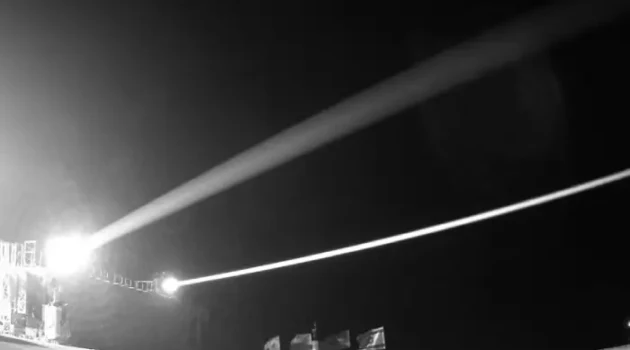
One of the most significant developments in Israel missile defense systems is the introduction of high energy laser technology. Known publicly as Iron Beam this system is designed to destroy rockets drones and mortars using directed energy.
Lasers offer several advantages. Each engagement costs far less than firing a missile interceptor. They also allow rapid repeat engagements as long as power is available. This is especially important in scenarios involving mass drone or rocket attacks.
Israeli defense officials have stated that laser systems will initially complement missile interceptors rather than replace them. Weather limitations and line of sight constraints mean lasers work best as part of a broader defensive network.
Defending Against Iranian Drones and Cruise Missiles
Iran has invested heavily in long range drones and cruise missiles capable of flying at low altitudes. These weapons are harder to detect and intercept than ballistic missiles.
Israel missile defense systems counter this threat through a mix of radar electro optical sensors and interceptor missiles. Iron Dome Davids Sling and future laser systems are expected to play a major role in neutralizing drone swarms and low flying cruise missiles.
(adsbygoogle = window.adsbygoogle || []).push({});Electronic warfare and cyber capabilities also support air defense operations by disrupting guidance systems and command links.
Strategic Context and Regional Implications
A Deterrence Focused Defense Strategy
Israel views missile defense as a defensive and deterrent tool rather than a substitute for offensive power. By reducing the effectiveness of Iranian missile attacks Israel aims to deny adversaries strategic leverage.
However missile defense is not foolproof. Large scale salvos could overwhelm interceptors. This reality drives Israels emphasis on layered defenses and continuous technological upgrades.
Implications for Regional Security
Israels missile defense systems influence military planning across the Middle East. Gulf states and NATO partners closely study Israels experience with integrated air and missile defense.
The deployment of lasers in particular could reshape future air defense doctrines by lowering costs and improving sustainability during prolonged conflicts.
FAQs
How effective are Israel missile defense systems against Iran?They are designed to intercept a wide range of threats including ballistic missiles drones and rockets but no system offers complete protection.
What is the role of lasers in Israels air defense?Lasers provide low cost rapid engagement against short range threats and complement missile interceptors.
Can Iron Dome stop Iranian ballistic missiles?No Iron Dome is optimized for short range threats Ballistic missiles are handled by Arrow and Davids Sling.
Is Israel the first country to deploy laser air defense?Israel is among the first to operationalize high energy lasers as part of an integrated national defense network.