- China is increasing production capacity for both J-20 and J-35 stealth fighters.
- Expanded manufacturing lines aim to accelerate delivery of fifth-generation aircraft to the PLA.
- The move supports China’s broader strategy to compete with U.S. and allied airpower in the Indo-Pacific.
- J-20 production continues to scale, while J-35 is positioned for both naval and export roles.
- China is shifting from limited production to sustained high-rate output of stealth fighters.
China Stealth Fighter Production Expands Rapidly
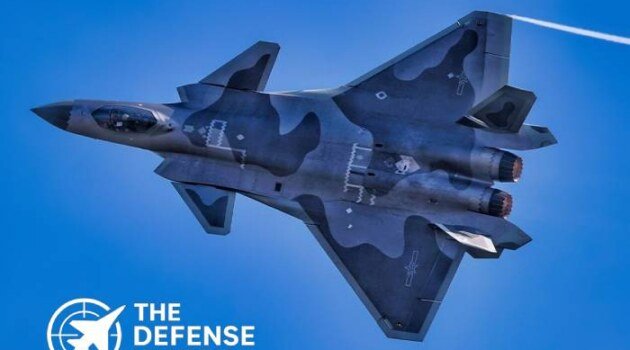
China stealth fighter production is accelerating as Beijing increases manufacturing capacity for both the J-20 and the emerging J-35 programs, signaling a sustained push to expand its fifth-generation combat aircraft fleet.
The Big Picture
China is moving from incremental modernization to large-scale force expansion. The focus is no longer just on fielding advanced platforms, but on producing them in volume.
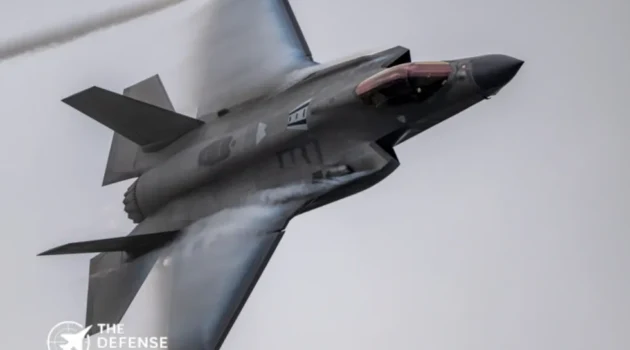
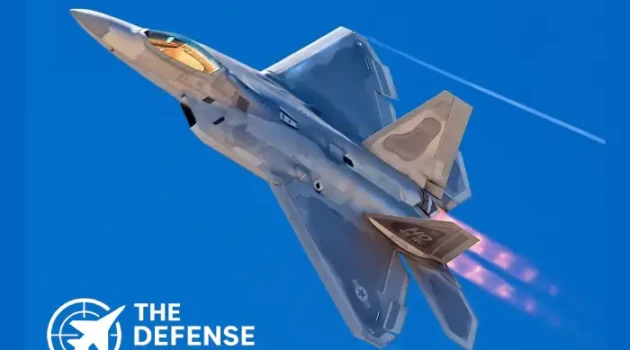
The United States has long maintained an advantage in fifth-generation aircraft numbers through the F-22 and F-35 programs. China’s current effort suggests a shift toward narrowing that gap, not only in capability but in fleet size.
The Indo-Pacific remains the central theater for this competition. Air superiority, long-range strike, and survivability against advanced air defenses define operational planning for both sides.
What’s Happening
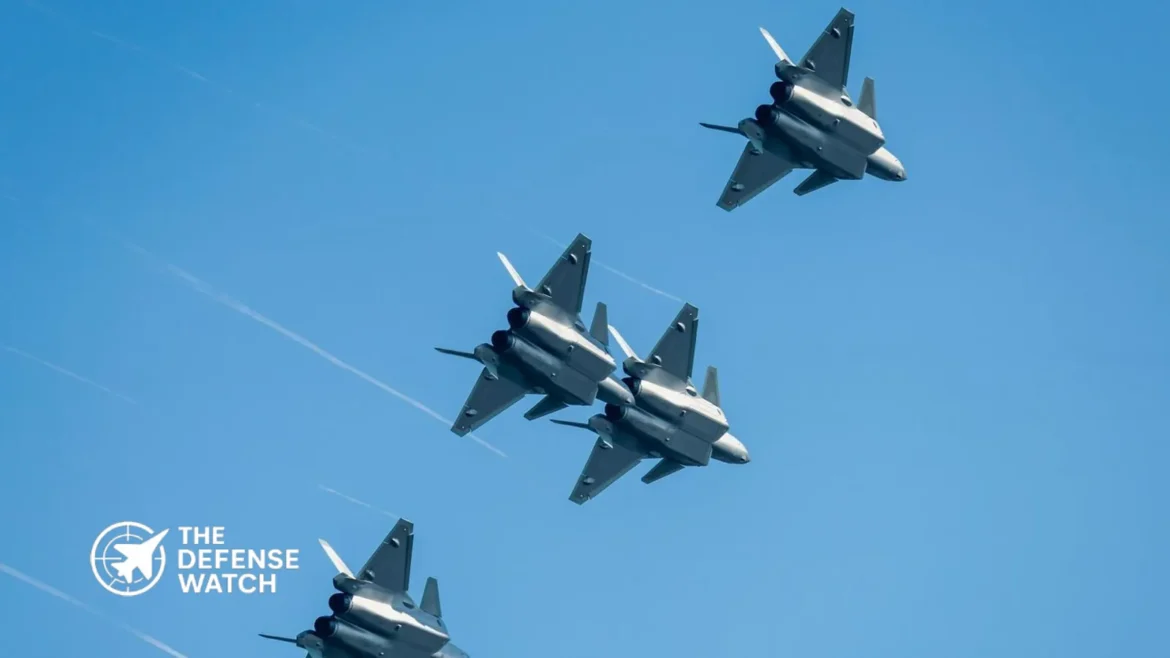
China is increasing production capacity for the J-20, its primary fifth-generation stealth fighter, while also advancing the J-35, a carrier-capable platform under development.
According to Source, new or expanded production lines are enabling higher output rates. The J-20 program, already in serial production, continues to scale, with improved variants and engine upgrades expected to support sustained manufacturing.
The J-35, often compared to U.S. carrier-based stealth fighters, is progressing toward operational deployment. It is expected to serve both the People’s Liberation Army Air Force and the People’s Liberation Army Navy.
Chinese industry appears to be transitioning toward parallel production of multiple stealth aircraft types, a capability historically associated with mature aerospace powers.
Why It Matters
Higher production capacity directly translates into operational mass. Even the most advanced aircraft cannot shape the battlefield if available in limited numbers.
China’s ability to produce the J-20 at scale strengthens its air dominance strategy. The aircraft’s stealth profile, long-range engagement capability, and networked operations make it central to Beijing’s air combat doctrine.
The addition of the J-35 expands flexibility. A carrier-capable stealth fighter enhances naval aviation, supporting power projection beyond China’s immediate coastline.
This dual-track production model reduces reliance on a single platform and creates redundancy in force structure.
Strategic Implications
China’s expanding stealth fighter production affects regional military balance in several ways.
First, it increases pressure on U.S. and allied air forces to maintain qualitative and quantitative advantages. Countries such as Japan and Australia rely heavily on the F-35 program, but production rates and fleet size remain critical factors.
Second, it strengthens China’s anti-access and area denial strategy. A larger stealth fleet complicates adversary planning by increasing the number of survivable strike and interception assets.
Third, it enhances China’s ability to sustain operations in a prolonged conflict. High production capacity suggests resilience, allowing the replacement of losses and continuous force generation.
Competitor View
The United States and its allies are likely to view China’s production surge as a signal of long-term strategic intent rather than a short-term buildup.
Washington has emphasized distributed operations and advanced networking to offset numerical challenges. However, increased Chinese output could erode that advantage over time.
Regional actors may interpret the J-35’s development as a direct response to carrier-based airpower in the Pacific. Its potential export role could also influence defense partnerships, particularly in regions where access to Western systems is limited.
Russia, while a traditional aerospace competitor, may view China’s industrial scaling as a benchmark for its own production challenges.
What To Watch Next
Key indicators will shape how this development unfolds.
Engine maturity remains critical. Indigenous engine programs will determine whether China can sustain high production rates without foreign dependencies.
Operational deployment timelines for the J-35 will also be closely watched, particularly its integration with aircraft carriers.
Production tempo is another factor. If China maintains consistent output growth, it will signal a durable industrial base rather than a temporary surge.
Export activity could further amplify the impact. If the J-35 enters the international market, it could reshape the global fighter landscape.
Capability Gap
China’s push addresses a clear gap in fleet size relative to the United States and its allies.
While the J-20 provides advanced capabilities, earlier production levels limited overall operational impact. Scaling production helps close that gap.
The J-35 addresses another gap, carrier-based stealth aviation. China’s naval air wing has historically relied on non-stealth platforms, limiting survivability in contested environments.
However, challenges remain. Engine performance, pilot training, and integration into joint operations will determine real-world effectiveness.
The Bottom Line
China’s expansion of J-20 and J-35 production marks a shift toward sustained, high-volume stealth fighter output that could reshape the balance of airpower in the Indo-Pacific.

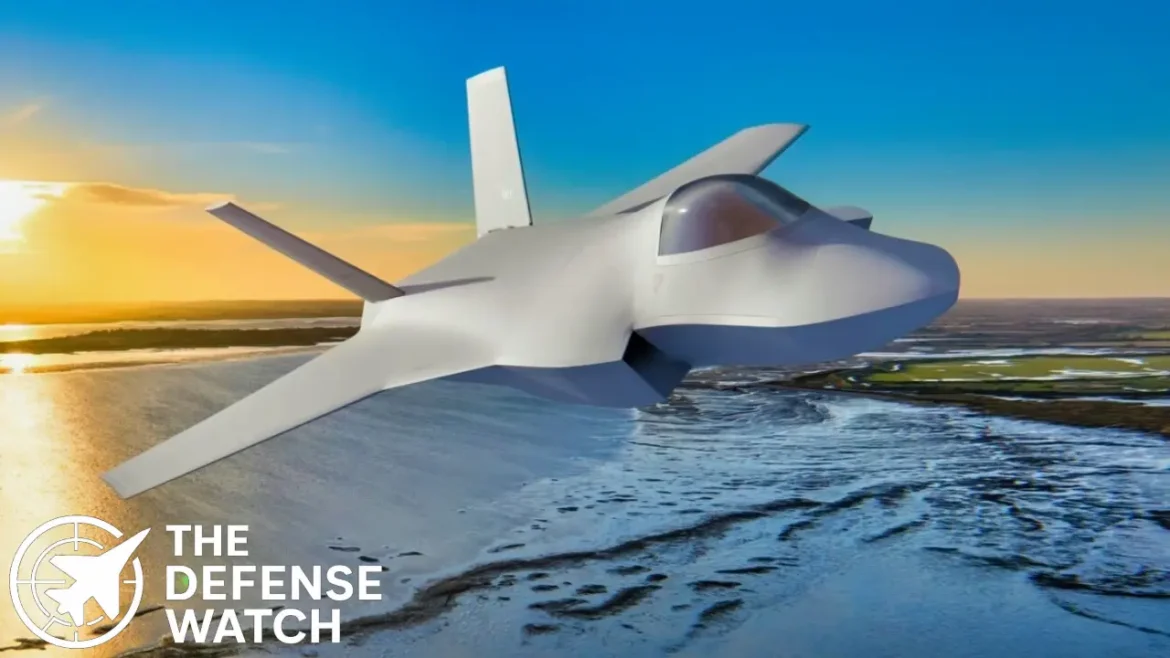
A recent article in *National Security Journal analyzed a futuristic concept for a seventh-generation fighter that could reach speeds of Mach 5 or more — far beyond today’s operational supersonic combat jets. The piece, titled “Forget NGAD or the J-20: A 7th Generation Fighter Could Hit Mach 5”, proposes that while current sixth-generation efforts dominate headlines, a more radical leap may be underway.
Background
The aviation industry currently categorizes modern combat jets into generations: the fifth generation (such as the F‑22 Raptor, F‑35 Lightning II and China’s J‑20), and the emerging sixth generation (for example the Next Generation Air Dominance (NGAD) program in the U.S.). The 5th-gen fighters bring stealth, sensor fusion and high performance; 6th-gen plans add unmanned teaming, directed energy and deeper connectivity.
In that context, the proposed seventh-generation fighter concept takes the next leap: ultra-high speed (hypersonic or near-hypersonic flight), novel propulsion, very long-reach sensors, and full integration into networked warfare ecosystems. The National Security Journal article argues that designers are already thinking beyond NGAD and the J-20 upgrades.
Details of the Concept
According to the article, the key characteristics of the proposed seventh-gen fighter include:
- Speed: A top speed target around Mach 5 (five times the speed of sound), enabling greatly reduced engagement and transit times.
- Survivability and reach: By combining high-speed transit with stealth and long-range sensors, the aircraft could penetrate deep into contested airspace and evade or outrun sophisticated air-defence systems.
- Advanced sensors and network: Emphasis on a “family of systems” approach, with the fighter functioning as a node in a larger sensor-shooter architecture (including unmanned wingmen, satellites and airborne sensors). The article references earlier studies of this trend.
- Role and paradigm shift: Rather than simply being a platform that improves incrementally over the 5th and 6th gen, the article suggests a shift in mindset—more focus on speed, reach and networked warfare than dog-fight agility alone.
While specifics such as manufacturer, engine type, operational date or cost are lacking (given the classified nature of next-gen programs), the article places the speed envelope of Mach 5 as a disruptive threshold. One academic study noted that to evade advanced missile-defenses, vehicles often need sustained speeds above Mach 5 during glide or manoeuvre phases.
Expert / Policy Perspective
Defense analysts have long remarked on the blurred boundary between manned fighters and unmanned systems, especially as AI, sensor fusion and remote operations become central. The National Interest recently cautioned that a seventh-generation fighter “may not include human operators” at all, given the pace of drone and AI capability.
From a policy and procurement standpoint, targeting Mach 5 raises major engineering, cost and operational questions:
- Propulsion and materials: Sustained Mach 5 flight imposes extreme thermal loads, engine demands and structural challenges. Historical hypersonic-flight research underlines high failure rates in development.
- Cost-effectiveness: Many countries still field 4th- and 5th-gen fighters and are upgrading rather than leaping generations. The risk of technological overreach is real.
- Strategic relevance: If speed becomes the dominant attribute, does air-superiority shift from maneuverability and stealth to reach and strike time? The article argues yes, but that operational concepts must evolve accordingly.

SR-72 Darkstar. Image Credit: Creative Commons. Impact and What’s Next
If this seventh-generation fighter concept moves from speculative to procurement reality, the implications are significant. Air forces would require new operational doctrines, infrastructure (e.g., high-speed engines, thermal management), and a rethink of adversary air-defence and counter-air strategies. The velocity leap to Mach 5 could compress decision cycles and increase vulnerability for slower platforms.
Key next steps to watch: announcements by major aerospace firms or defence ministries regarding “Mach x ” high-speed fighters; technology demonstrations of propulsion systems enabling sustained high-Mach flight; and shifts in air-force investment from incremental upgrades toward radical new platforms.
In short, while the current talking point remains the sixth-generation programs like NGAD and the J-20 upgrades, the horizon of a Mach 5-capable, seventh-generation fighter may mark the next major turn in combat aviation.
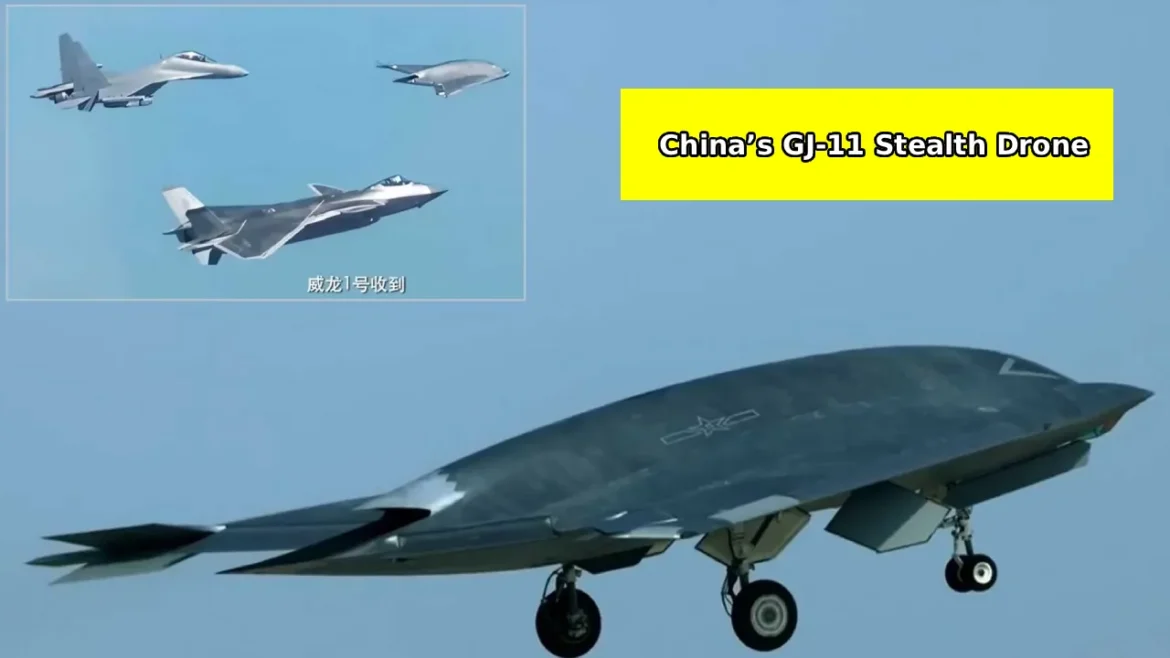
China Showcases GJ-11 Stealth Drone with J-20 Fighter in Public Flight
In a significant development for China’s military aviation sector, the GJ-11 stealth drone conducted its first publicly observed flight in formation with the J-20 fifth-generation fighter. The flight occurred during a demonstration at a Chinese airbase, highlighting Beijing’s ongoing focus on integrating unmanned aerial vehicles (UAVs) with manned combat aircraft.
Background on the GJ-11 and J-20 Integration
The GJ-11, also known as the “Sharp Sword,” is China’s advanced stealth combat drone designed for autonomous strike and reconnaissance missions. Developed under the auspices of the Chengdu Aircraft Industry Group, the GJ-11 features low-observable technology, internal weapon bays, and advanced avionics, enabling it to operate in contested airspace alongside manned aircraft such as the J-20 fighter.
The J-20, China’s flagship fifth-generation fighter, is a long-range stealth platform capable of air superiority and strike missions. Pairing the GJ-11 with the J-20 reflects China’s strategy to develop “loyal wingman” drones, which can accompany piloted aircraft to enhance situational awareness, extend reach, and provide additional strike capabilities without endangering human pilots.
Chinese GJ-11 Stealth Drone – Full Specifications
- Maximum Speed: ~1,000 km/h
- Endurance: ~6–8 hours
- Operational Range: 1,500+ km
- Payload Capacity: ~400–500 kg
Flight Demonstration Details
During the demonstration, the GJ-11 flew in close formation with the J-20, signaling progress in autonomous flight coordination between manned and unmanned systems. Observers noted the drone maintained stable flight alongside the fighter jet, demonstrating its navigation and flight control capabilities.
While specific performance data was not released, analysts suggest the GJ-11’s internal weapons bays and stealth profile indicate its potential for precision strikes while evading radar detection. Reports also highlight the drone’s modular payload capability, which could allow it to carry a variety of munitions, including air-to-ground precision-guided bombs and advanced electronic warfare equipment.
Expert Analysis and Strategic Implications
Military analysts view the public display as a clear signal of China’s growing capabilities in UAV technology and autonomous combat systems. Professor Zhang Wei, an aerospace analyst at the Beijing Institute of Technology, stated, “The GJ-11’s flight with the J-20 demonstrates a maturing of China’s UAV integration concept. It represents a shift towards more sophisticated joint operations between manned and unmanned platforms.”
The deployment of stealth drones such as the GJ-11 may also influence regional air power dynamics, offering China a means to project force while minimizing pilot risk. Autonomous drones capable of operating in high-threat environments could complement the J-20 fleet, extending operational flexibility in complex scenarios, including contested maritime and border regions.
Looking Forward: Next Steps in Drone Development
China’s demonstration of the GJ-11 alongside the J-20 reflects broader trends in modern air combat, where “loyal wingman” drones are increasingly seen as force multipliers. Future developments may include enhanced artificial intelligence for autonomous target recognition, cooperative swarm operations, and integration with other Chinese stealth platforms such as the J-31 fighter.
The demonstration also underscores Beijing’s investment in dual-use UAV technology, which has implications for both military strategy and regional security. Analysts expect the GJ-11 will continue testing and gradual integration into operational air units in the coming years, complementing the existing manned fighter fleet.