International Fighter Jets Challenge American Air Dominance
While best non-American fighter jets continue gaining global recognition, the United States maintains its position as the world’s foremost military aerospace designer. However, international competitors have fielded combat aircraft demonstrating exceptional capabilities across multiple domains. Five platforms stand out as particularly impressive: Russia’s Sukhoi Su-57 Felon, China’s Chengdu J-20 Mighty Dragon, France’s Dassault Rafale, the multinational Eurofighter Typhoon, and Sweden’s Saab JAS 39 Gripen.
(adsbygoogle = window.adsbygoogle || []).push({});These aircraft represent the pinnacle of non-American military aviation engineering, each bringing unique strengths to their respective air forces. From stealth technology to combat-proven versatility, these fighters have earned their place among the world’s elite combat platforms.
Russia’s Su-57 Felon: Fifth-Generation Stealth Fighter
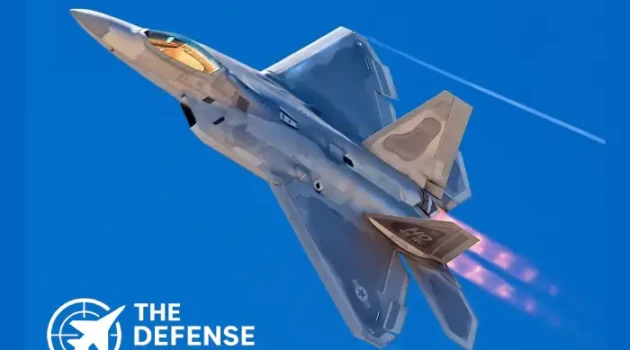
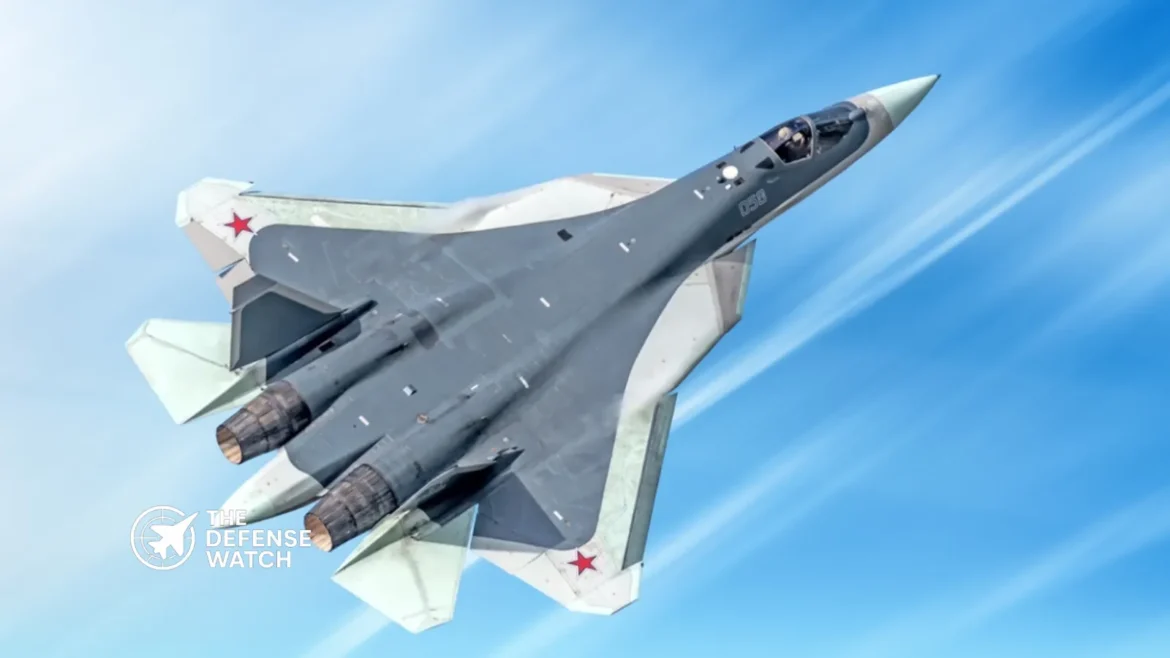
The Sukhoi Su-57 Felon represents Russia’s first fifth-generation stealth fighter, designed for both air superiority and multirole missions. With a stealth-optimized airframe, supercruise capability, and thrust-vectoring engine nozzles, the Su-57 stands as arguably the most advanced non-American fighter currently operational.
Technical Specifications:
- Armament: Internal 30mm GSh-30-1 cannon
- Weapons Systems: R-77M long-range and R-37M extended-range air-to-air missiles
- Stealth Features: Internal weapons bay for reduced observability
- Advanced Capabilities: Hypersonic missile compatibility
The Su-57’s exceptional maneuverability stems from its thrust-vectoring nozzles and advanced aerodynamic design. According to defense analysts, the aircraft can deliver serious ordnance while maintaining low observability against modern radar systems.
- (adsbygoogle = window.adsbygoogle || []).push({});
However, production challenges have limited the Su-57’s operational deployment. Only a handful of aircraft have achieved operational readiness, with full-scale deployment still pending. Current production models utilize interim AL-41F1 engines, while the more advanced Izdeliye 30 engine remains under development.
Despite these constraints, the Su-57 continues supporting Russian operations, progressing from launching standoff cruise missiles to executing precision ground strikes. The platform demonstrates formidable capabilities in contested airspace environments.
China’s J-20 Mighty Dragon: Asian Stealth Power
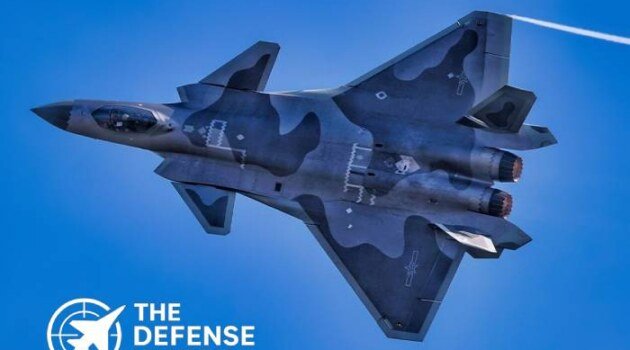
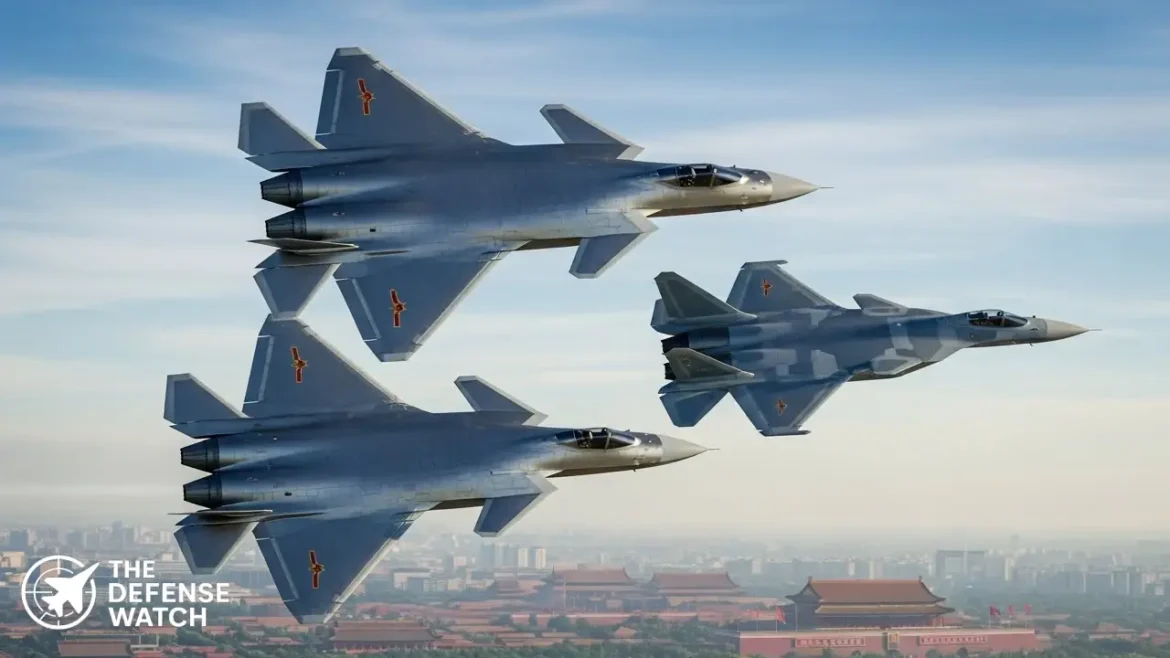
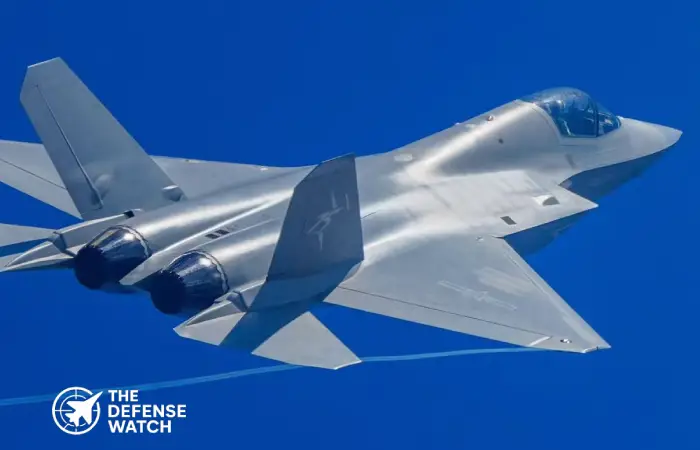
China’s Chengdu J-20 Mighty Dragon represents Beijing’s emergence as a peer competitor in advanced aerospace technology. Entering service in 2017, the J-20 has been produced in significant numbers, with estimates suggesting over 200 aircraft operational by early 2026.
Key Features:
- Role: Long-range patrol and high-value target hunter
- Design: Large airframe with significant fuel reserves
- Weapons: Internal weapons bays plus external hardpoints
- Engines: Latest variants feature domestically-produced WS-15 engines
The J-20 regularly patrols contested airspace over the East and South China Seas, signaling China’s growing airpower capabilities. While speculation suggests the aircraft may have incorporated technology from the F-22 Raptor program, the J-20 demonstrates capabilities inferior to American fifth-generation platforms in stealth performance.
(adsbygoogle = window.adsbygoogle || []).push({});Defense experts note the J-20’s mission focuses on hunting high-value targets including USAF tanker aircraft and airborne command and control platforms. China’s lack of airborne tankers influenced the design toward a very large plane with substantial internal fuel capacity.
France’s Dassault Rafale: Combat-Proven Omnirole Fighter
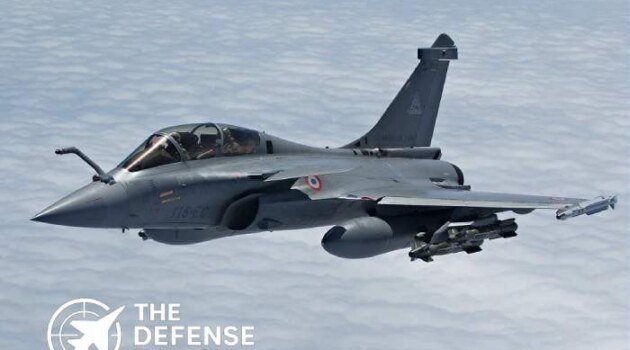
The Dassault Rafale has emerged as one of the most successful fourth-generation-plus fighters globally, combining multirole versatility with proven combat effectiveness. France’s flagship fighter delivered record numbers in 2025, with 26 aircraft delivered—exceeding the company’s target.
Combat Record:
- First Deployment: Afghanistan (2007)
- Combat Operations: Iraq, Libya, Mali, Syria
- Recent Action: India-Pakistan operations (2025)
- Operational Nations: France, India, Egypt, Qatar, Greece, Croatia, Indonesia, UAE, Serbia
Dassault Aviation reported 220 Rafales in backlog as of December 31, 2025, with 175 aircraft destined for export customers. The company plans to increase production to four aircraft per month to meet growing international demand.
Technical Capabilities:
- Radar System: RBE2 AA active electronically scanned array (200 km detection range)
- Engines: Twin Snecma M88 (supercruise capable)
- Speed: Mach 1.6 (Mach 2+ with afterburners)
- Electronic Warfare: Advanced SPECTRA self-protection suite
The Rafale’s omnirole capability allows it to perform multiple missions in a single sortie, from air superiority to ground attack, reconnaissance, and nuclear deterrence. This versatility has proven particularly attractive to nations seeking alternatives to American or Russian platforms.
(adsbygoogle = window.adsbygoogle || []).push({});India’s selection of the Rafale over the F-35 and Su-57 demonstrates the aircraft’s international appeal. The Indian Air Force operates Rafales from strategically positioned bases at Ambala and Hasimara, with a reported proposal for 114 additional aircraft under consideration.
The carrier-capable Rafale M variant remains the only non-American fighter cleared for operation on U.S. aircraft carriers, highlighting the platform’s exceptional engineering and interoperability.
Eurofighter Typhoon: European Air Defense Backbone
Developed through a joint defense program among the United Kingdom, Germany, Italy, and Spain, the Eurofighter Typhoon represents multinational European aerospace cooperation at its finest. The fourth-generation-plus aircraft demonstrates excellent aerodynamics and maneuverability, achieving a top speed of Mach 2 (1,480 mph).
Key Specifications:
- Armament: 27mm Mauser BK-27 revolver cannon
- Hardpoints: 13 total (8 underwing, 5 under-fuselage)
- Payload Capacity: 9,000 kg (19,800 lb)
- Advanced Features: Modular architecture for technology integration
The Typhoon’s modular design allows for easy integration of new technology, keeping the platform continuously relevant and adaptable. Recent upgrades include the Captor-E AESA radar, updated mission systems, and next-generation air-to-air missile integrations.
(adsbygoogle = window.adsbygoogle || []).push({});Defense analysts note the Typhoon excels in both air-to-air and ground-attack missions. With upgrades planned into the 2040s, the aircraft is expected to remain crucial to European defense for another generation, bridging capabilities until sixth-generation platforms like FCAS and GCAP become operational.
Sweden’s Saab JAS 39 Gripen: Cost-Effective Multirole Platform
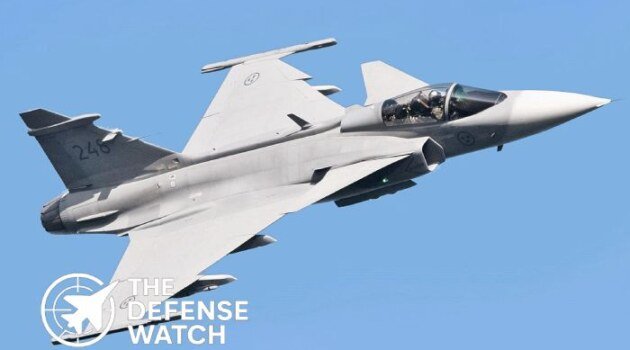
Sweden’s Saab JAS 39E Gripen represents a cost-effective multirole fighter with advanced capabilities that punch above its weight class. The latest E variant features significant upgrades over previous generations, offering capabilities that compete with larger, more expensive platforms.
Technical Advancements:
- Engine: GE F414 with increased fuel capacity
- Radar: Raven ES-05 AESA radar
- Sensors: Skyward-G infrared search and track (IRST)
- Electronic Warfare: Advanced survivability systems
- Armament: 27mm Mauser BK-27 cannon (omitted on two-seat variants)
The Gripen’s design emphasizes cost-effectiveness, versatility, and ease of maintenance. Defense experts highlight the aircraft’s highly survivable profile in contested airspace, achieved through its all-new avionics suite and electronic warfare capabilities.
Weapons Integration:
- Air-to-air: AIM-9 Sidewinder missiles
- Air-to-ground: AGM-65 Maverick missiles
- Anti-ship: RBS-15 missiles
The Gripen’s affordability and performance have attracted international customers seeking to democratize access to advanced fighter capabilities. Nations in Africa and Southeast Asia view the platform as an attractive alternative to more expensive American or European options.
Global Fighter Market Dynamics
The dominance of non-American platforms reflects changing geopolitical dynamics and technological proliferation. While U.S. fighters like the F-35 and F-22 maintain technological edges in certain domains, international competitors have successfully carved out market niches through different value propositions.
Export Success Factors:
- Technology Transfer: France’s willingness to include technology sharing
- Strategic Autonomy: ITAR-free supply chains (particularly Rafale)
- Cost Considerations: More affordable alternatives to fifth-generation platforms
- Combat Proven: Operational track records in real-world conflicts
- Versatility: Multirole capabilities reducing need for specialized platforms
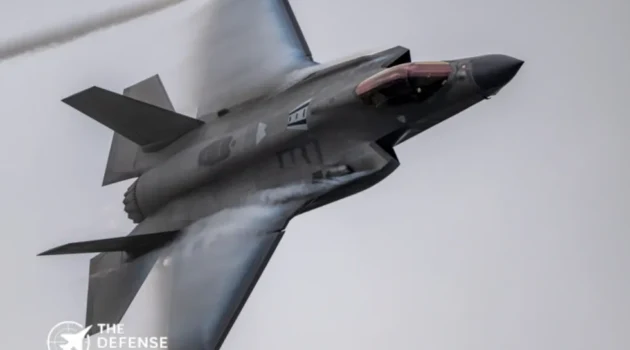
The F-35’s sensor fusion and network-centric warfare capabilities remain unmatched, with over 1,000 units delivered by mid-2025. However, platforms like the Rafale have successfully positioned themselves as capable alternatives for nations seeking proven performance without full fifth-generation investment.
Future Developments and Sixth-Generation Programs
The global fighter landscape continues evolving rapidly. The United States awarded Boeing the Next-Generation Air Dominance (NGAD) contract in 2025, designating the future jet as the F-47. This sixth-generation platform will introduce collaborative combat aircraft, allowing crewed fighters to quarterback up to five unmanned wingmen.
European nations are developing the Future Combat Air System (FCAS) and Global Combat Air Programme (GCAP), both targeting operational capability in the 2030s. The upcoming Rafale F5 variant, scheduled for around 2030, will integrate AI-assisted mission systems, enhanced stealth coatings, and expanded sensor fusion.
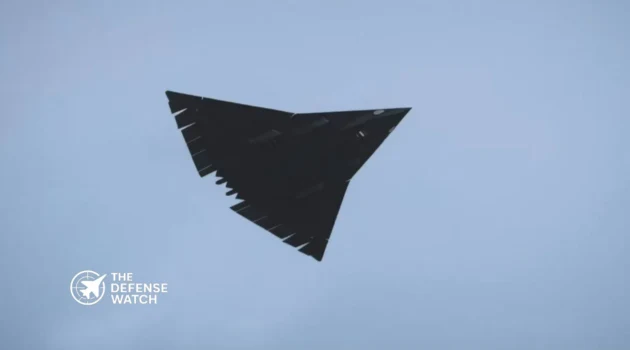
China continues advancing its aviation sector, with the mysterious J-36 featuring a unique stealth design configuration. Russia faces production and industrial challenges limiting Su-57 deployment, though the platform continues evolving with improved engines and weapons integration.
Strategic Implications
The proliferation of capable non-American fighter platforms signals a multipolar aerospace industry landscape. Nations increasingly have options beyond traditional U.S. or Soviet/Russian suppliers, enabling strategic diversification and reduced dependence on single sources.
For U.S. defense planners, this reality demands continued innovation and competitive pricing. The F-35 program’s falling unit costs (approximately $80-90 million for the F-35A variant as of 2025) reflect market pressures from capable international competitors.
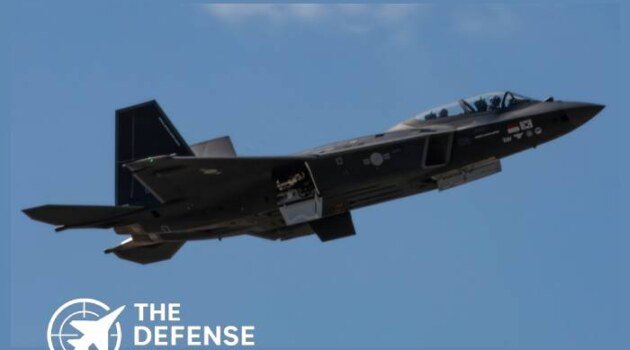
(adsbygoogle = window.adsbygoogle || []).push({});Mid-tier powers benefit from expanded choices, with collaborative programs and technology transfer arrangements enabling indigenous aerospace industry development. South Korea’s KF-21, Turkey’s TF-X (later renamed Kaan), and India’s AMCA represent this trend toward domestic fifth-generation fighter development.
Conclusion
The best non-American fighter jets demonstrate that while U.S. aerospace manufacturers lead in certain technological domains, international competitors field formidable platforms across multiple capability areas. From Russia’s Su-57 Felon to Sweden’s cost-effective Gripen, these aircraft represent diverse approaches to modern air combat requirements.
France’s Rafale stands out for combat-proven versatility and export success, delivering 26 aircraft in 2025 and maintaining a backlog of 220 orders. The Eurofighter Typhoon continues serving as Europe’s air defense backbone with planned upgrades through the 2040s. China’s J-20 Mighty Dragon demonstrates Beijing’s rapid advancement in stealth technology, while Sweden’s Gripen offers an attractive cost-effective alternative.
(adsbygoogle = window.adsbygoogle || []).push({});As sixth-generation programs advance globally, the competition for air superiority will intensify. Nations investing in advanced aerospace capabilities position themselves for strategic advantage in an increasingly contested environment. The integration of artificial intelligence, directed energy weapons, and unmanned systems will further transform air combat in the coming decades.
For defense analysts and military planners, understanding these platforms’ capabilities and limitations remains essential for assessing global military balance and future conflict dynamics.

China Emerges as Second Nation With Multiple Stealth Fighter Programs
China has become the second country after the United States to develop two types of stealth fighter jets—the J-20 and J-35 families—marking a transformative milestone in global aerospace competition. As of December 2025, more than 300 J-20 china stealth fighter jets have been manufactured, with the People’s Liberation Army Air Force (PLAAF) simultaneously integrating the newly operational J-35A and advancing development of the sixth-generation J-36. This triad of platforms represents Beijing’s comprehensive approach to challenging U.S. air dominance across the Indo-Pacific theater.

The rapid expansion of China’s stealth capabilities reflects both industrial maturity and strategic urgency. In 2025 alone, China is expected to procure up to 120 J-20s, a figure that dwarfs the U.S. Air Force’s planned acquisition of just 24 F-35s. This production disparity, coupled with the operational debut of multiple stealth variants, signals a fundamental shift in the regional balance of airpower.
The J-20: China’s Heavy Stealth Fighter Reaches Critical Mass
Production Surge and Operational Deployment
The Chengdu J-20, also known as Weilong or “Mighty Dragon,” is a twin-engine all-weather stealth fighter developed for the People’s Liberation Army Air Force. First achieving operational capability in March 2017, the J-20 program has accelerated dramatically in recent years. Between mid-2024 and late 2025 alone, more than 50 aircraft were delivered, with current estimates indicating annual output between 70 and 100 units.
The aircraft’s deployment pattern reflects Beijing’s strategic priorities. In the Eastern Theater Command, J-20 brigades conduct patrols over the Taiwan Strait and East China Sea, frequently shadowing U.S. and Japanese reconnaissance aircraft, while in the Southern Theater Command, J-20s are now a permanent fixture over the South China Sea. This operational tempo provides the PLAAF with a persistent stealth presence across China’s most sensitive flashpoints.
Twin-Seat Variant Expands Mission Capabilities
On July 7, 2025, China officially fielded a two-seat version of the J-20 fighter, identified as the J-20S, the first fifth-generation stealth fighter globally to feature a tandem crew configuration. The second crew member functions as a mission systems officer responsible for managing electronic warfare, coordinating strikes, and potentially controlling unmanned combat aerial vehicles in loyal wingman formations.
Chief Technical Expert Gong Feng described the J-20 as possessing outstanding stealth capabilities with an extremely small radar cross-section, allowing it to “pierce the opponent’s defense network like a needle”. The twin-seat configuration addresses the cognitive challenges of processing enormous sensor data while maintaining tactical effectiveness during extended-range operations.
Technical Evolution and Engine Upgrades
The aircraft has evolved into variants including the initial production model, the revised airframe variant with new engines and thrust-vectoring control, and the twin-seat variant. Early J-20s were powered by Russian AL-31F or Chinese WS-10C engines, but newer variants feature the indigenous Shenyang WS-15 afterburning turbofan producing 161.86-180 kN of thrust with afterburner, significantly enhancing supercruise performance and combat agility.
The J-20’s canard-delta configuration, once controversial among Western analysts, has proven effective. Chinese aerospace researchers have concluded that the canard delta configuration is comparable with conventional arrangements in terms of stealth when properly managed through flight-control software.
J-35A Stealth Fighter: China’s Multirole Solution
From Export Demonstrator to Frontline Asset
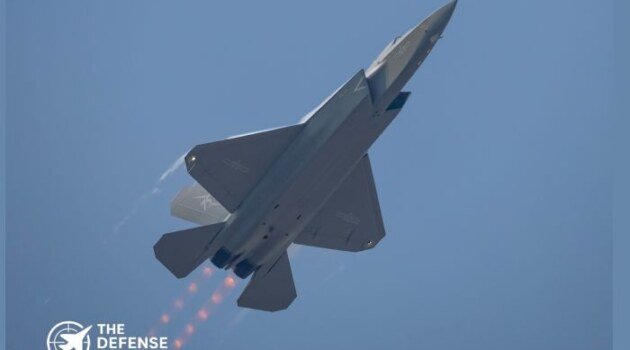
The Shenyang J-35 was developed from the FC-31 Gyrfalcon, a stealth aircraft prototype that initially aimed to secure export customers after Shenyang Aircraft Corporation lost the J-XX bid to Chengdu’s J-20. However, PLA Navy interest in a carrier-capable stealth fighter led to extensive redesign work. On 3 September 2025, Chinese state media announced the J-35 and J-35A to be part of the aircraft fleet of the PLA Navy and the PLAAF.
The land-based J-35A variant officially entered PLAAF service in October 2025, complementing the heavier J-20 with a medium-weight multirole platform. Wang Yongqing, the J-35A’s chief researcher, stated the aircraft was created to neutralize high-level threats, especially hostile stealth aircraft, while establishing a considerable scale fleet of affordable, powerful stealth jets.
Networked Warfare Capabilities
The J-35A’s defining characteristic is its integration into China’s broader air defense architecture. Wang explained that the aircraft “can lock on targets, share the targets’ position with other weapon systems, such as surface-to-air missiles, and even use its own radar to guide other weapons to bring the targets down” in what he described as “systems coordination” or “multi-domain coordination”.
This network-centric approach mirrors the U.S. F-35’s sensor fusion philosophy but adapts it to China’s integrated air defense systems. The J-35A functions as both a shooter and a sensor node, enabling non-stealthy platforms and ground-based systems to engage targets beyond their organic detection ranges.
Carrier Operations and Naval Variant
On 22 September 2025, the PLA Navy announced that the Shenyang J-35 had been certified for catapult launch and recovery operation using the electromagnetic catapult onboard the Fujian aircraft carrier. This milestone makes the J-35 the first stealth fighter to successfully conduct electromagnetic catapult-assisted operations at sea, preceding the U.S. Navy’s F-35C integration aboard USS Gerald R. Ford.
The carrier-based J-35 features folding wings, reinforced landing gear, and structural modifications for the demanding catapult and arresting gear environment. Its deployment aboard the Fujian—China’s first carrier equipped with electromagnetic launch systems—will substantially enhance the PLA Navy’s ability to project airpower beyond the first island chain.
J-36: China’s Sixth-Generation Demonstrator
Tailless Flying Wing Design Breaks Cover
On 26 December 2024, an aircraft believed to be the J-36 was spotted conducting test flights in Chengdu, featuring a trijet tailless diamond-double-delta winged design. The aircraft’s public emergence surprised Western analysts and sparked immediate debate about its classification and capabilities.
Open imagery and specialist analysis describe a tailless, trijet flying wing with a stretched diamond double-delta wing, broad chine running into the leading edge, and side-by-side seating under a wide canopy. Three engines buried deep in the fuselage are fed by lateral inlets and a prominent dorsal diverterless supersonic intake, maximizing internal volume while minimizing radar signature.
Weapons Bay and Payload Capacity
The primary weapons bay has an approximate length of 7.6 meters, apparently capable of housing PL-17 beyond-visual-range air-to-air missiles or large air-to-surface munitions, flanked by two smaller bays. This internal capacity exceeds that of the J-20 and approaches that of heavy strategic bombers, suggesting a platform optimized for long-range strike and air dominance missions.
The overall aircraft design is speculated to emphasize all-aspect broadband stealth, high speed, long endurance, high payload capacity, large power generation, and multispectral situational awareness. The wing sweep angles indicate aerodynamic optimization for supercruise, potentially enabling sustained supersonic flight without afterburner.
Rapid Prototyping and Development Timeline
On 17 March 2025, images emerged of a second J-36 prototype featuring redesigned exhausts with two-dimensional thrust vectoring petals and revised side intakes with diverterless supersonic inlets. The rapid iteration between prototypes demonstrates an accelerated development approach, with significant design changes occurring within months rather than years.
USAF official Andrew P. Hunter acknowledged the J-36 may achieve initial operational capability earlier than American sixth generation fighter programs, though he believed the USAF system would likely produce the better product. U.S. Air Force leadership has cited the J-36’s progress as justification for continuing the Next Generation Air Dominance (NGAD) program despite budget pressures.
Strategic Implications and Mission Profile
According to Chinese military magazine Shipborne Weapons, when the sixth-generation fighter is in service, the PLA can intercept U.S. warplanes trying to penetrate the first island chain, potentially blocking the airspace to foreign bases in Guam for up to two hours from 1,000 km away. This assessment highlights the aircraft’s intended role as a long-range interceptor and strike platform capable of operating deep into the Pacific.
The J-36 fits Beijing’s need for a deep-reach air-dominance and strike asset over the Indo-Pacific’s vast maritime spaces, tailored to patrol far beyond China’s coastline while cueing long-range anti-ship and anti-air missiles against U.S. carrier strike groups. In future air combat, the platform could function as the central node of a kill web, absorbing targeting data from satellites and drones while pushing track-quality information to other shooters.
Comparative Analysis: China vs. U.S. Stealth Fighters
Production Rates and Fleet Size
The disparity in production rates represents a critical strategic factor. If the present tempo continues, China’s J-20 inventory may exceed 500 units by 2026 and approach 1,000 by 2030—potentially surpassing the combined numbers of F-22s and F-35As in U.S. Air Force service. The U.S. operates 187 F-22 Raptors with no additional production planned, while F-35 deliveries continue at approximately 156 units annually across all services and international partners.
However, raw numbers tell only part of the story. The F-35 program has delivered over 1,000 aircraft globally, with extensive combat experience and a mature logistics infrastructure. The F-22, despite limited numbers, remains undefeated in simulated combat and possesses stealth characteristics refined over decades of development.
Technological Maturity and Operational Experience
Western analysts remain cautious about Chinese stealth capabilities. Questions persist regarding radar cross-section reduction, sensor fusion effectiveness, engine reliability, and pilot training standards. The PLAAF has limited experience integrating fifth-generation fighters into complex air campaigns, whereas the U.S. has employed stealth aircraft operationally since 1991.
Some analysts describe the J-35A as requiring time to reach full operational capacity, with potential gaps in engines, frontal stealth, sensor fusion, interoperability, and maintenance ecosystems compared to the F-35. Software development, mission mode updates, and data link security represent critical challenges for achieving true networked warfare capability.
Design Philosophy Differences
The J-20, with a canard wing configuration, is a heavy fighter jet focused on air superiority missions comparable to the F-22, while the medium-sized J-35A uses a tailplane wing configuration similar to the F-35 with strong surface attack capabilities. This high-low mix mirrors U.S. force structure but with China achieving simultaneous serial production of both aircraft classes—something the U.S. never accomplished with the F-22 and F-35.
The J-36’s tailless configuration and tri-engine layout represent a distinct design philosophy. China’s tri-engine approach suggests it chose brute-force thrust and power over the weight savings of two larger engines, potentially implying differences in engine technology maturity or specific performance goals.
Regional Security Implications
First Island Chain Dynamics
The concentration of Chinese stealth fighters in the Eastern and Southern Theater Commands directly challenges U.S. and allied freedom of operation. Taiwan, Japan, and South Korea face an adversary capable of contesting airspace with low-observable platforms supported by integrated air defenses and long-range sensors.

The stealth capabilities of the J-35A make it difficult for Taiwan’s air defense systems to detect and track the planes, making surprise attacks easier for China while advanced avionics and weapon systems give China a significant edge in achieving air superiority. Taiwan’s F-16V fighters, while upgraded with modern radars, lack the stealth characteristics necessary for survivability in heavily contested environments.
U.S. Response and Force Posture Adjustments
Facing China’s growing military threat, the U.S. has deployed all three variants of its F-35 jet in Japan, its key ally for projecting power and deterring Chinese aggression under the island chain strategy. The U.S. Air Force has also reactivated aggressor squadrons equipped with F-35s to replicate Chinese stealth threats during training.
The emergence of the J-36 has intensified pressure on U.S. sixth-generation programs. Bryan Clark of the Hudson Institute suggested the Chengdu aircraft could be a potential adversary to NGAD and provide American planners incentives to continue the program. However, the NGAD program faces budget scrutiny and questions about optimal configuration, with some officials questioning whether a crewed fighter remains cost-effective.
Export Potential and International Proliferation
In January 2024, Pakistan announced its intention to buy FC-31 aircraft, with Pakistani media reporting in December 2024 that 40 aircraft had been approved for purchase. Export versions of the J-35 could provide countries unable to access Western fifth-generation fighters with stealth capabilities, fundamentally altering regional power dynamics in South Asia and the Middle East.
In May 2025, Egypt was reportedly considering the purchase of the J-35, with military officials showing interest during an event celebrating 45 years of military ties between Egypt and China. Chinese willingness to export advanced stealth technology—something the U.S. has restricted to close allies—could accelerate global proliferation of fifth-generation capabilities.
Industrial Base and Technological Foundations
Digital Manufacturing and AI-Assisted Production
The sheer pace of J-20 production highlights the industrial discipline and resource allocation underpinning China’s defense manufacturing ecosystem, where digitalized factories and AI-assisted quality control ensure consistent output. China’s state-directed aerospace sector enables rapid scaling and coordinated supply chains across multiple manufacturers.
The J-20 program has become an integration benchmark, linking Aviation Industry Corporation of China (AVIC), Aero Engine Corporation of China (AECC), and China Electronics Technology Group Corporation (CETC) in synchronized production networks. This industrial coordination allows China to maintain high production rates while managing the complexity of stealth manufacturing.
Indigenous Engine Development Progress
Engine technology has historically represented a critical weakness in Chinese aerospace programs. Early J-20s relied on Russian AL-31F engines or interim Chinese WS-10C powerplants. The development of the WS-15 engine represents a major milestone, providing thrust levels comparable to the F-22’s F119 while incorporating thrust-vectoring nozzles for enhanced maneuverability.
The J-36 appears to use thrust-vectoring nozzles similar to those on the F-22A fighter, providing additional maneuverability throughout different areas of the flight envelope and allowing better overall controllability on a highly unstable tailless design. Mastery of two-dimensional thrust vectoring technology demonstrates China’s progress in advanced propulsion systems.
Future Trajectory and Uncertainties
Manned-Unmanned Teaming Integration
The two-seat J-20S’s rear cockpit capabilities have sparked discussion about managing collaborative combat aircraft and loyal wingman systems. China is developing multiple unmanned platforms including the AVIC Dark Sword and GJ-11 Sharp Sword stealth UAVs designed to operate in coordination with manned fighters.
The integration of stealth UCAVs with the J-20S and potentially the J-36 would create layered attack formations capable of overwhelming air defenses through saturation while preserving high-value manned platforms. This manned-unmanned teaming concept parallels U.S. efforts with the Collaborative Combat Aircraft program but may advance more rapidly given China’s industrial capacity.
Sixth-Generation Definition and Classification Debate
Experts have not yet reached a consensus on the J-36’s primary role or specific capabilities, with uncertainty about what jet fighter generation and tactical usage the aircraft would be classified under. Some analysts view it as a fighter-bomber hybrid optimized for range and payload rather than a pure air superiority platform.
From the PLAAF perspective, Wang Wei, deputy commander of PLAAF, confirmed in an interview that J-36 is PLAAF’s interpretation of a sixth-generation aircraft. However, without clear international consensus on sixth-generation criteria, classification remains fluid and dependent on observed capabilities as testing progresses.
Timeline to Operational Capability
If China’s sixth-generation fighters follow a similar pace to previous programs, they could potentially enter service as early as January 2031, possibly outpacing the U.S. Air Force’s projected sixth-generation fighter timeline However, significant development challenges remain, particularly in advanced sensor integration, artificial intelligence systems, and directed energy weapons that may define true sixth-generation capability.
The J-36 is unlike any fighter now in frontline service, and while China moved first in flight-test chronology with public flights since late 2024, the United States still holds deep advantages in adaptive engines, combat networking, and the broader drone ecosystem underpinning NGAD.
FAQs
How many J-20 stealth fighters does China currently operate?As of late 2025, China has manufactured over 300 J-20 fighters, with the majority integrated into active PLAAF service across multiple theater commands. Production rates suggest the fleet could exceed 500 aircraft by 2026.
What distinguishes the J-35A from the carrier-based J-35?The J-35A is a land-based variant optimized for PLAAF operations from conventional runways with a single nose wheel and revised wing design. The carrier-based J-35 features folding wings, reinforced landing gear, a catapult launch bar, and arresting gear tailhook for electromagnetic catapult operations aboard the Fujian carrier.
Is the J-36 truly a sixth-generation fighter?The classification remains debated among analysts. The J-36 features advanced characteristics including tailless configuration, all-aspect stealth, tri-engine layout, and extensive weapons capacity. Chinese officials describe it as their sixth-generation interpretation, though its operational capabilities relative to U.S. NGAD concepts remain unclear.
Can Chinese stealth fighters match U.S. F-22 and F-35 capabilities?While Chinese stealth fighters represent significant technological achievements, questions remain about stealth effectiveness, sensor fusion maturity, pilot training standards, and combat-proven reliability compared to U.S. platforms with decades of operational experience. Production numbers increasingly favor China, but technological sophistication likely still favors U.S. systems.
What export markets exist for Chinese stealth fighters?Pakistan has committed to purchasing approximately 40 FC-31/J-35 aircraft with pilot training already underway in China. Egypt has reportedly expressed interest in the J-35. Chinese willingness to export fifth-generation technology to partners unable to access Western platforms could significantly alter regional power balances.