


Saab Gripen E/F Production Ramps With Brazil Assembly Line
Saab’s target to build 36 Gripen E/F fighters per year marks a major shift in production capacity for one of the world’s key light combat aircraft programmes. The Swedish defence firm is boosting output as its Brazilian assembly line prepares to deliver its first aircraft to the Brazilian Air Force (FAB) this year.
The plan was outlined at the Singapore Airshow where Saab’s marketing lead for the Gripen programme said the company is investing heavily to raise production capacity. The goal is to reach a steady annual rate of 36 aircraft, reflecting both existing orders and potential future contracts.
Brazil Becomes First Latin American Fighter Producer
Saab and Brazilian partner Embraer established a final assembly line in Gavião Peixoto, São Paulo State, where the first locally assembled Gripen will be delivered in early 2026. This facility will handle final assembly for a portion of Brazil’s 36-aircraft order, under a broad tech transfer agreement between the two companies.
The Brazil line is the only Gripen final assembly site outside Sweden and represents a major milestone in Brazil’s aerospace sector. Embraer’s workforce has been trained in Sweden and will complete fighter assembly, functional testing and production flights prior to delivery.
Growing Global Demand for Gripen E/F
Brazil is the launch customer for the F-39 designation of the Gripen E/F, but the production increase is linked to wider international interest. Saab cites firm orders and ongoing opportunities in markets including Sweden, Colombia, and Thailand as underpinning the need for greater output.
Other countries have expressed interest in the aircraft as a cost-effective alternative to heavier jets, and Saab has discussed production options in Canada, potentially duplicating the Brazil model of local assembly.
Production Challenges and Delivery Timeline
Aircraft programmes of this scale often face schedule pressures. Independent reporting suggests Brazil’s deliveries, originally expected to finish in the mid-2020s, may now extend to around 2032 given contractual changes and budgetary factors.
So far Brazil has received several Swedish-built Gripen Es, with the locally assembled jets soon to join the fleet. Fifteen of the 36 jets are slated for assembly at the Brazilian line, with the balance completed in Sweden.
Strategic Context for Saab and Global Air Forces
The effort to scale Gripen production comes against a backdrop of shifting global fighter markets. Non-US manufacturers such as Saab are gaining traction as some customers seek alternatives to traditional suppliers amid changing geopolitical currents.
For the Brazilian Air Force, the F-39 fleet is central to its modernisation drive, replacing older jets and providing a multi-role capability. The expansion of production throughput could give Saab a competitive edge in future international tenders.

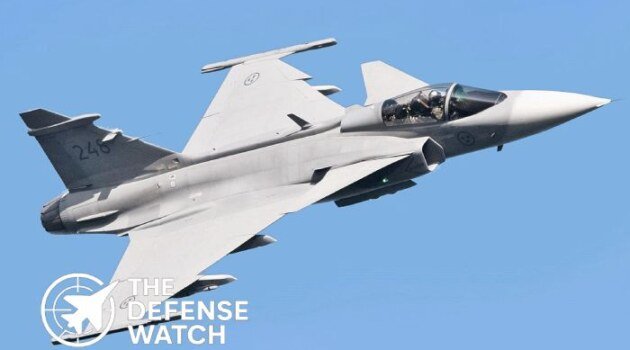

The Government of Canada has begun a formal review of its planned order for 88 F‑35A Lightning II fighters from the U.S., exploring the possibility of significantly reducing the number of F-35A aircraft and instead acquiring a complementary batch of Saab JAS 39 Gripen E/F jets as part of a mixed-fleet solution. This assessment was publicly confirmed by Minister of Innovation, Science and Industry Mélanie Joly on 17 October 2025 in an interview with Radio-Canada.
Background
In March 2025, newly incumbent Prime Minister Mark Carney ordered a review of the C$19-billion contract to procure 88 F-35A aircraft from Lockheed Martin, citing concerns around Canada’s dependency on U.S. defence suppliers and other procurement dynamics. The deal includes a legally committed purchase of at least 16 aircraft, while the remainder remains under examination. The proposed total cost has since been revised upward, with Canada’s Auditor General estimating a minimum of C$27.7 billion — potentially reaching C$33.2 billion.
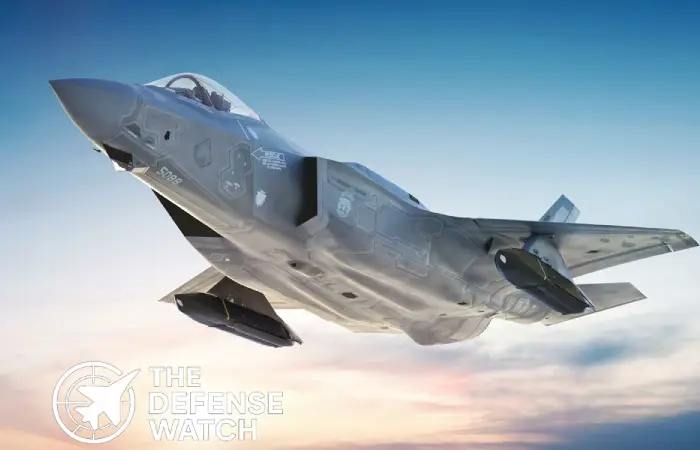
Canada’s defence-modernisation impetus stems from the need to replace its aging fleet of McDonnell Douglas CF‑18 Hornet fighters, enhance Arctic and continental-defence capability, and maintain interoperability with U.S. and NATO partners. The F-35A was selected in 2022 as the lead contender in the future fighter competition, with deliveries scheduled to begin in 2026.
Details of the Review and Alternative Proposal
In her comments on 17 October, Minister Joly confirmed that Ottawa is simultaneously negotiating for “greater industrial benefits” from Lockheed Martin should the full fleet proceed, while also “continuing conversations with Saab” regarding an alternative two-batch approach. She emphasised that the sovereign objectives are three-fold: strengthen Canada’s military capability, deepen strategic alliances, and maximise domestic industrial participation.
According to the current contract structure, Canada is legally committed to ordering at least 16 F-35A aircraft; the remaining 72 are unfixed and subject to the results of this review. Minister Joly indicated that a mixed-fleet approach (for instance, a reduced number of F-35As complemented by Gripen E/F aircraft) “would not pose a problem” for the Royal Canadian Air Force, citing precedents among G7 countries operating mixed platforms.
The alternative on the table is Sweden’s Saab offering the JAS 39 Gripen E/F, proposed to be assembled in Canadian territory under a transfer-of-technology model — a feature pitched to enhance domestic industrial benefit and job creation. Zona Militar
Analysis by observers notes several underlying drivers for the review: first, the rapid escalation in projected costs of the F-35A program, including infrastructure upgrades for Canadian bases such as CFB Cold Lake and CFB Bagotville, aligned to F-35 standards. Second, ongoing trade and political friction between Canada and the U.S., which has prompted Ottawa to revisit the risk of over-reliance on a single supplier. Third, industrial policy considerations favouring domestic job creation and technology transfer.
Expert or Policy Perspective
Defence procurement analysts caution that diverging from a single-platform strategy (i.e., splitting the fleet between F-35As and another type such as the Gripen E/F) may impose higher lifecycle costs. These include separate training programmes, maintenance and supply chains, and potential operational interoperability impacts — especially given Canada’s tight integration with U.S. and NORAD assets.
Other analysts highlight that the industrial-benefit dimension could tip the scales. The Canadian aerospace sector would potentially gain if local final-assembly or major-component opportunities are secured under the Gripen alternative. That said, the modular nature of the F-35 global supply chain already engages many Canadian firms as sub-contractors, which adds complexity to assessing the comparative industrial gain.
Closing / What’s Next
The outcome of Canada’s review will have significant implications for the country’s fighter-fleet trajectory, defence-industrial policy and strategic alignment with traditional partners. If Ottawa opts to reduce the F-35A order and adopt a mixed fleet including the Gripen E/F, a formal procurement process or amendment will follow — potentially adding months to schedule. Conversely, reaffirming the full 88-aircraft F-35A buy would streamline logistics and interoperability, but may leave unanswered the domestic-industry and diversification objectives.
In the near term, the government is expected to issue a decision on the review in late 2025. In parallel, Canada may negotiate amendments to the Lockheed Martin contract (regarding industrial benefits and delivery schedules) and engage in more detailed discussions with Saab on the proposed Gripen offering. The decision will influence delivery timelines, base infrastructure upgrade plans and the future shape of the Royal Canadian Air Force’s combat-aviation capability.