

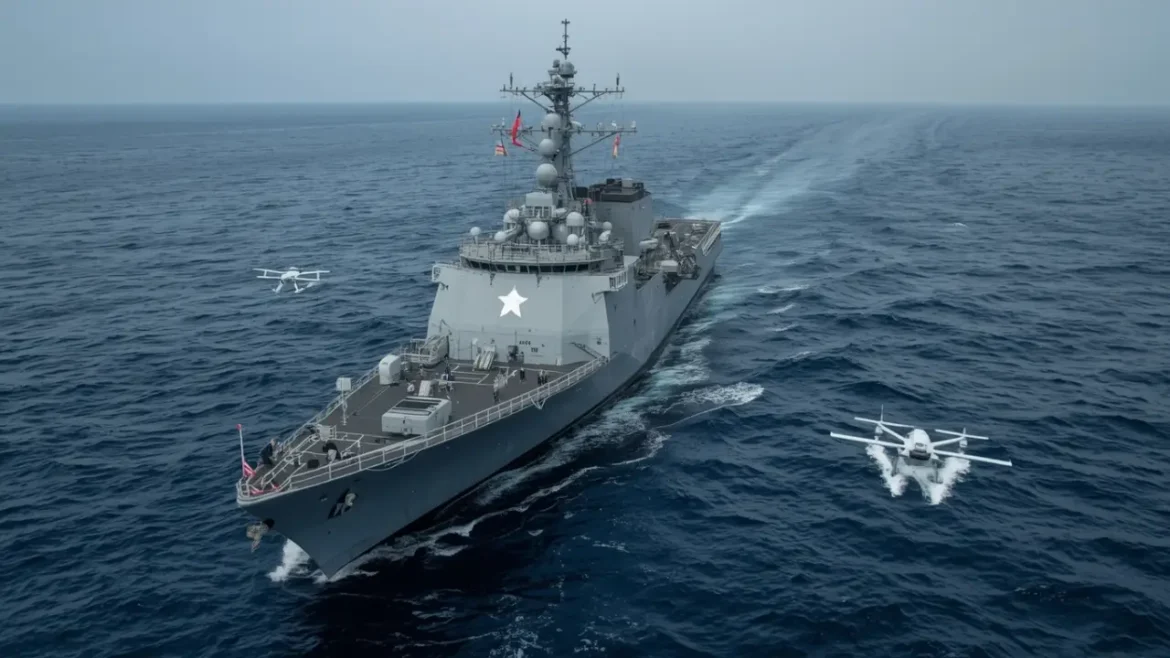
In response to emerging maritime threats and lessons from modern conflict zones, the U.S. Navy is transforming how it trains sailors for operations involving drone-ships and unmanned surface vessels (USVs). The focus now spans defensive drills against hostile drone attacks and operational training to incorporate autonomous systems into the fleet.
The Rise of Drone-Boat Threats and Defensive Training
Ukraine’s effective use of low-cost drone boats in the Black Sea warzone forced Moscow to relocate a large portion of its fleet—highlighting a formidable asymmetric threat. The U.S. Navy’s Task Force 66, established to integrate robotic and autonomous systems into operations, has launched intensive training exercises simulating drone-boat attacks. During Baltic Operations 2025, sailors aboard vessels such as the USS Mount Whitney and USS Paul Ignatius confronted swarming drone threats launched by high-speed USVs like the Global Autonomous Reconnaissance Craft.
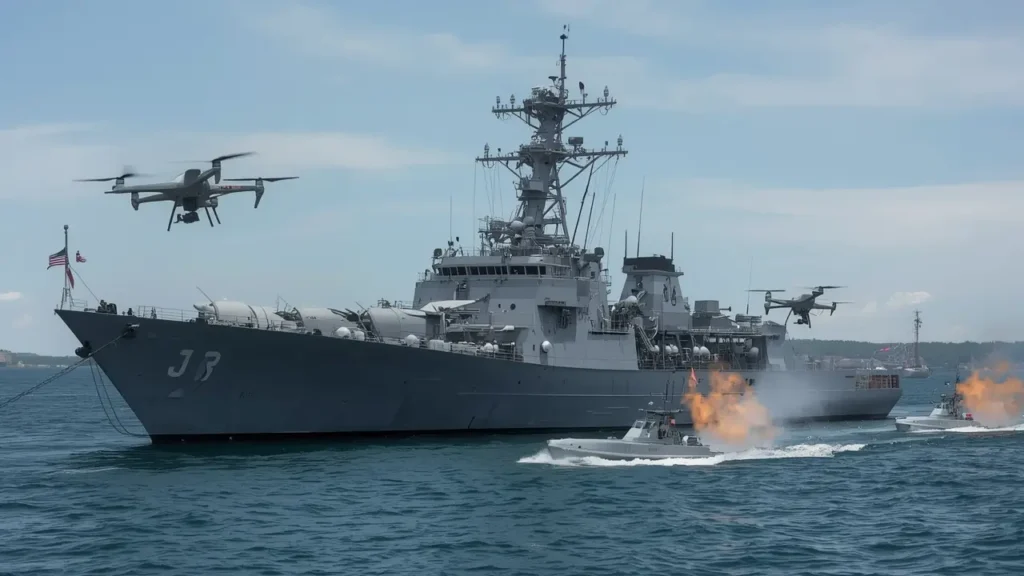
These drills—designed to force split-second decision-making under constrained visibility—did not involve live fire. However, the Navy does conduct live engagements elsewhere; for instance, sailors aboard the USS Thomas Hudner practiced using their guns against drone craft in a separate European exercise.
Training for Counter-Drone Warfare: Live-Fire Drills
At NATO’s Formidable Shield 25, a USS Thomas Hudner sailor successfully shot down a small aerial quadcopter drone using a deck-mounted M2 Browning .50 caliber machine gun—a clear sign of the Navy’s growing emphasis on counter-drone readiness.
Operational Development—Integrating Uncrewed Surface Vessels
Beyond defensive drills, the Navy is advancing its own unmanned platforms. Under DARPA’s ACTUV program, Sea Hunter debuted in 2016, followed by Seahawk. These USVs have conducted long-endurance, autonomous operations and even live-fire missions, advancing Ghost Fleet Overlord goals: performing risky, dull, or dirty missions remotely.
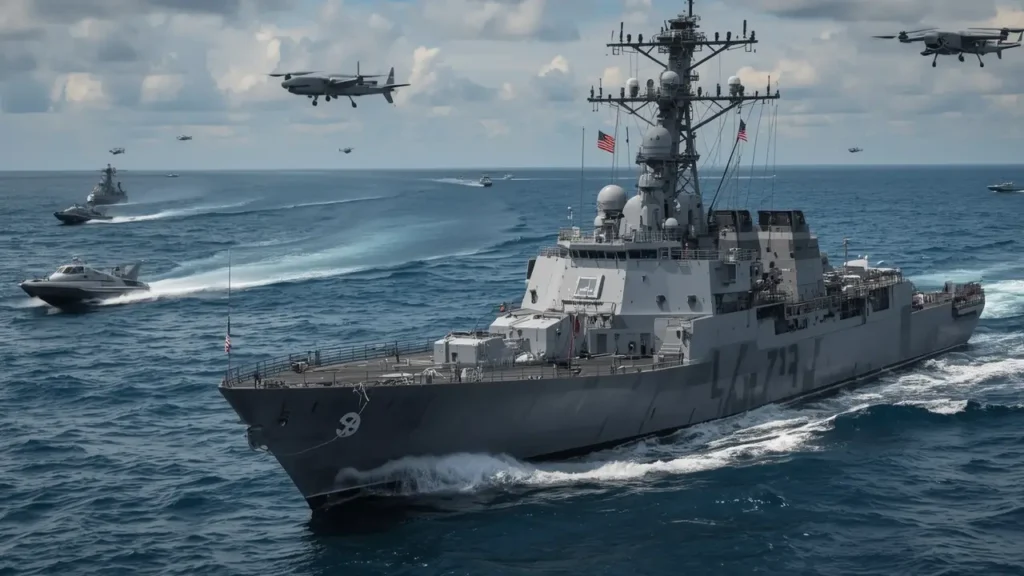
Unmanned Surface Vessel Squadron One (USVRON-1) reflects this operational push, offering summer training aboard USNA midshipmen and developing fleet habits around robotic systems.
Looking ahead, the Navy’s Future USV program will field open-ocean, high-endurance, autonomous vessels capable of carrying large containerized payloads—potentially for ISR or strike roles.
Challenges and Program Setbacks
Yet, efforts to field unmanned fleets face growing pains. In August 2025, tests off the California coast revealed key software issues: one drone stalled, another crashed into it—resulting in an overturned support boat and suspended contract with L3Harris.
Broader funding remains modest. In 2024, the Navy budgeted just $172 million for small and medium sea-drone development—minuscule compared to a $63 billion procurement budget—highlighting a lack of scale in capability development .
Analysis and Context
The U.S. Navy’s current efforts reflect dual imperatives: countering low-cost asymmetric threats and developing its own unmanned force‐multipliers. The swarms of drone boats that destabilized the Black Sea Fleet serve both as a warning and a model. Task Force 66’s training bridges that gap, but operationalizing autonomous platforms remains hampered by technical glitches, budget constraints, and institutional inertia.
Progress on ships like Sea Hunter, the Future USV program, and training via USVRON-1 are promising—but as recent mishaps show, software integration and safety vigilance are imperative. To keep pace with near-peer competitors and non-state proxies alike, the Navy must accelerate not only funding and procurement but also tactical innovation and crew training.
FAQs
A U.S. Navy initiative to integrate robotic and autonomous systems into fleet operations, especially to train against drone-boat threats.
Yes. Crews have engaged both aerial drones and surface drone boats using deck guns during NATO exercises like Formidable Shield 25.
A Navy plan to procure high-endurance, open-ocean autonomous vessels with containerized payload capabilities for ISR or strike missions.
Yes. Recent trials experienced software glitches and collisions. One incident overturned a support boat and led to contract suspension.